Kalkan has a habit of turning first-time visitors into regulars.
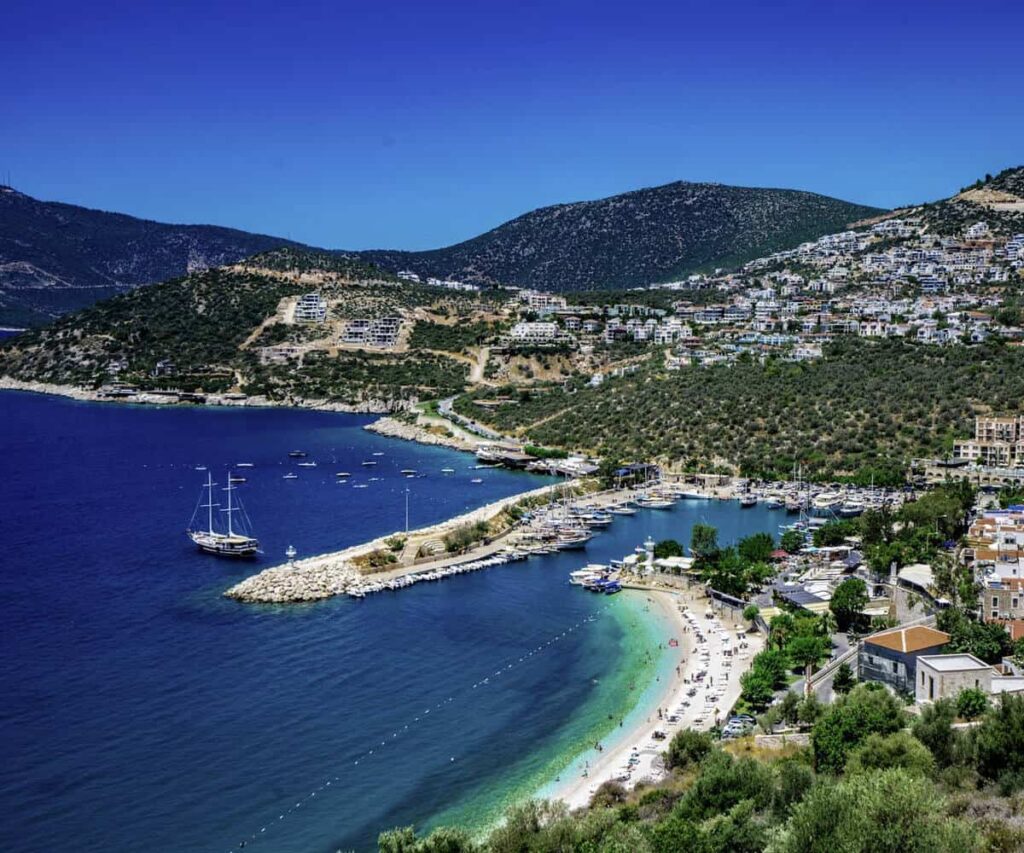
Set on Turkey’s Turquoise Coast, the town offers a mix that’s increasingly hard to find in the Mediterranean: polished villa living, a working harbour, old stone streets and major ancient sites close enough for a morning outing.
It isn’t trying to become louder or glossier than it is, and that restraint is a large part of its pull.
At a glance
- Kalkan is known for unusually loyal repeat visitors, especially among travellers who prefer private villas over resort hotels.
- The strongest draw is the combination of modern hillside living, Ottoman-Greek old town character and nearby Lycian ruins.
- Summer planning matters, with popular rooftop restaurants, gulet trips and private excursions often needing advance arrangement.
Hillside villas with an old town below
The villa experience in Kalkan is shaped by the town’s geography.
Many of the best properties sit on the hillsides above the harbour, looking down over tiled rooftops, the old town and the open Mediterranean beyond.
That contrast is central to the appeal.
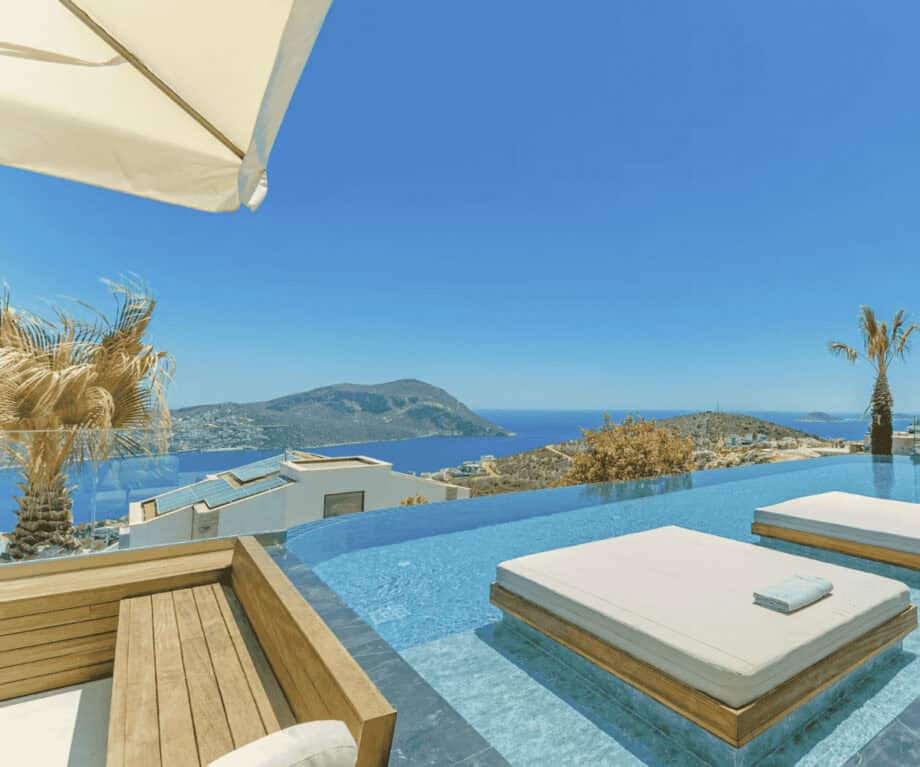
You can spend the afternoon beside a contemporary infinity pool, then walk down into a town whose streets still carry the imprint of 19th-century Ottoman-Greek houses.
Luxury villas here have become more sophisticated over the past decade, but the difference between a good stay and a memorable one often comes down to practical details.
A shaded terrace in the heat of the day, a proper outdoor dining area, a usable rooftop after dark and a pool positioned for the view all matter more over a week than they might in a photo.
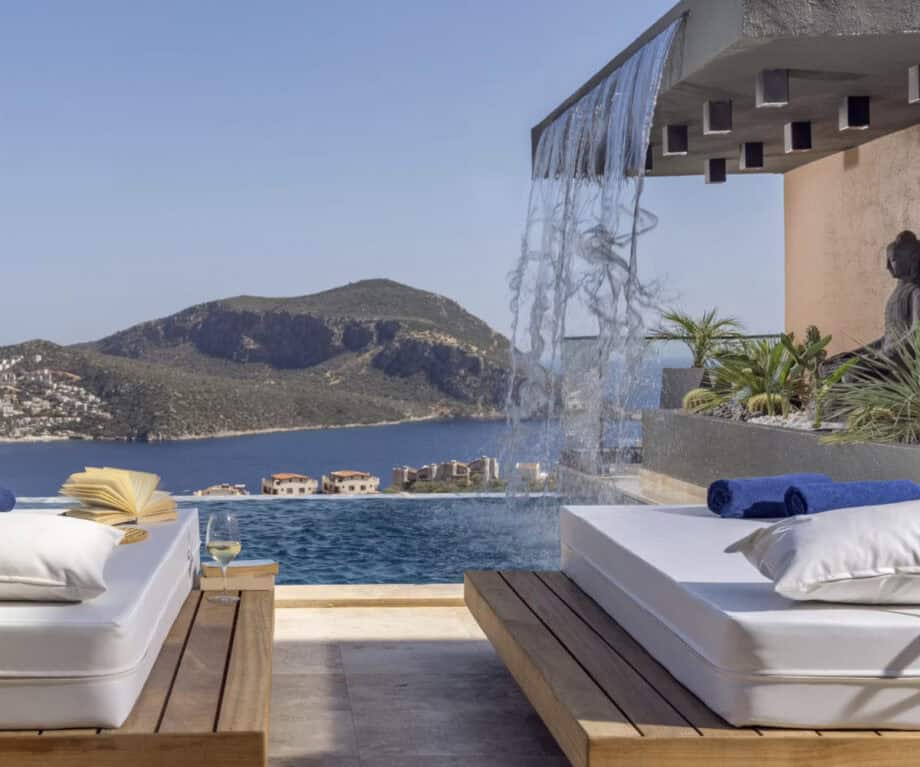
Privadia manages a directly inspected portfolio of luxury villas across the Kalkan hillsides, with concierge support that can be particularly useful for guests arriving for the first time.
For many returning visitors, the defining Kalkan moment is simple: watching dusk settle over the old town from the terrace, then heading down for dinner ten minutes later.
The old town rewards slow evenings
Kalkan’s old town is small, steep and atmospheric without feeling staged.
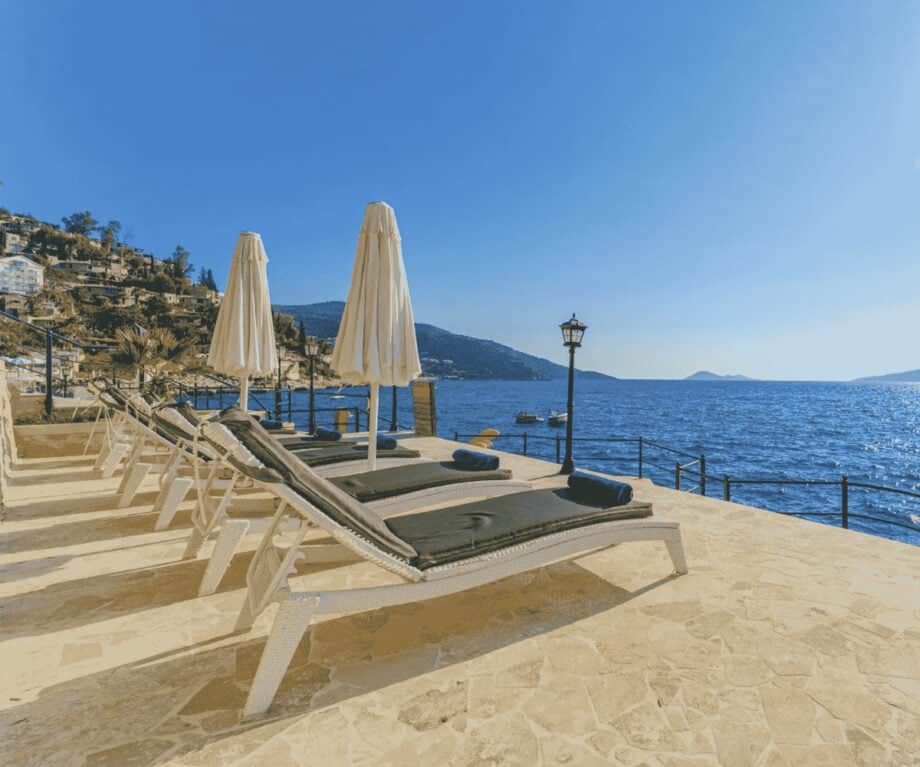
Its cobbled streets are lined with houses from a period when Greek and Turkish communities shared the bay, leaving a layered architectural character that still gives the centre its identity.
Restaurants are densely packed here, and the claim that Kalkan has more restaurants per square metre than anywhere else in Turkey feels plausible once you start walking uphill.
The rooftop tables are often the most rewarding, especially at sunset, with menus built around fish, mezze and slow-cooked lamb.
In July and August, the better rooftops need planning rather than luck.
At the top of Slippery Street stands a 4th-century BC Lycian sarcophagus known as the King’s Tomb.
There’s no theatrical presentation around it, which is exactly the point.
People pass it on the way to dinner, and Kalkan lets the moment feel casual rather than curated.
Lycian history within easy reach
One reason Kalkan works so well for repeat trips is that its surroundings have real depth.
Patara is only 15 kilometres away, with the remains of an ancient Lycian city sitting behind the dunes of Turkey’s longest beach.
Visitors can walk through an agora, Roman baths, a theatre, a Byzantine basilica and a ceremonial arch in the morning, then be back at a villa pool by mid-afternoon.
The beach is also known for loggerhead turtle nesting in season, adding another layer to a day that can move easily between archaeology, sand and sea.
Xanthos, the former Lycian capital, is around 20 minutes away by car.
Its history is stark, with the city remembered for choosing destruction over surrender during sieges by both Persians and Romans.
The site includes an amphitheatre, pillar tombs, sarcophagi and ongoing valley excavations, while nearby Letoon forms part of the same UNESCO-listed cultural landscape.
Kekova makes the most memorable full-day excursion for many visitors.
About an hour east of Kalkan by road, it is known for the remains of an ancient coastal settlement that slipped beneath the water after a second-century earthquake.
The best way to experience it is by traditional gulet, looking down through clear water at staircases, doorways and foundations below the surface.
Concierge planning makes the best days easier
Kalkan is relaxed, but the best summer experiences still require organisation.
Restaurant tables, private gulets and well-timed day trips are the kind of arrangements that are easier with local contacts, particularly in August.
Privadia’s concierge team can arrange gulet bookings, private transfers to sites such as Patara and Xanthos, restaurant reservations and private charters to Kekova.
Car hire can also be organised in advance for travellers who want to explore Lycian sites independently.
In-villa services are another reason the destination suits longer stays.
After a day among the ruins or a late night in the old town, a massage at the property can feel more useful than another appointment in town.
That kind of ease helps Kalkan settle into a rhythm rather than becoming a checklist holiday.
What to know before booking Kalkan
Kalkan is not a universal fit, and that honesty is part of understanding the destination properly.
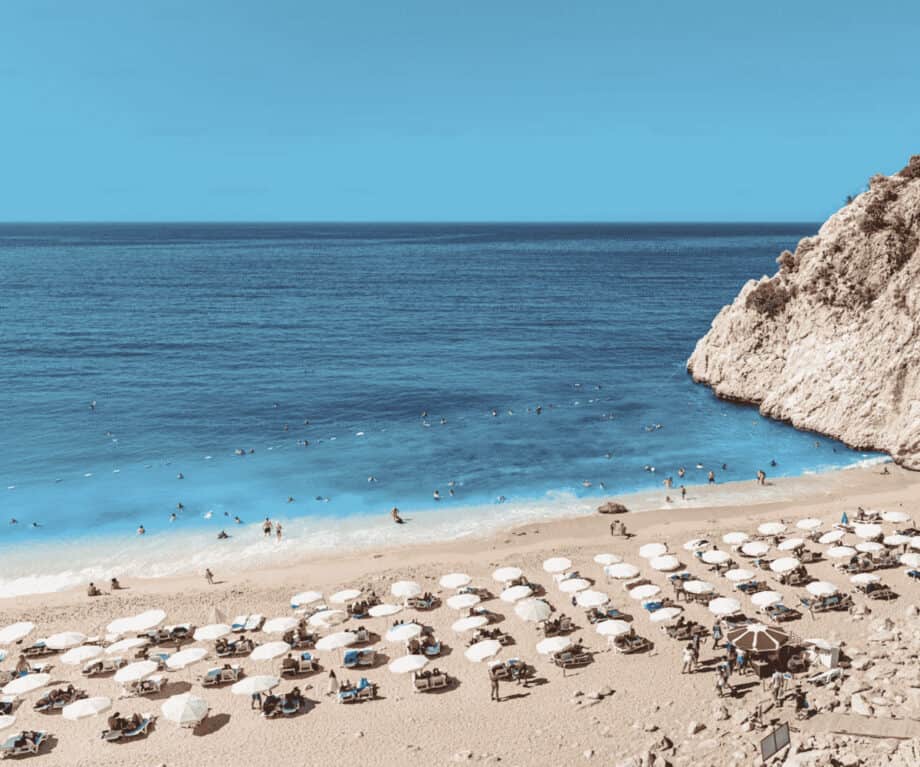
The main beach is pebbly, while nearby Kaputaş has the dramatic cliff-framed setting seen in many photographs of the coast, but it requires a steep walk down and can become busy in high summer.
The town’s slopes also matter for older travellers or anyone with mobility concerns.
This is a place of steps, hills and terraces rather than flat promenades.
For travellers who value food, villa privacy, sea views and meaningful history within easy reach, Kalkan has a rare staying power.
It’s not the flashiest stop on the Turkish coast, and that may be exactly why so many guests keep coming back.