Akira Back’s arrival at The St. Regis Rome is more than a new restaurant opening inside one of the city’s best-known luxury hotels.
It marks the chef’s first restaurant in Rome, with House of Black shaping the interiors as a journey through colour, texture and threshold.
The result is a restaurant that treats movement through the space as part of the experience, drawing on Rome’s historic interiors while introducing a contemporary Japanese sensibility.

At a glance
- House of Black has completed the interior design for Akira Back at The St. Regis Rome, the chef’s first restaurant in the city.
- The restaurant is organised as a sequence of intimate dining rooms linked by portal-like transitions and layered with artwork by Young Hee Back.
- The project brings Akira Back’s global restaurant vision into one of Rome’s established luxury hospitality addresses.
A restaurant shaped by thresholds
House of Black has built the design narrative around Rome as a city of connections, where different periods, stories and architectural moods sit close together.
That idea is expressed through a series of interconnected rooms, with each space designed to feel like a distinct stage in the Akira Back experience.
Toni Black, CEO of House of Black, described the concept as one rooted in transition.
“Rome reveals itself through a sequence of thresholds, portals that connect stories, eras and experiences. These moments of transition became the anchor for how we shaped the spatial journey.”
The portal motif gives the restaurant a sense of discovery without turning the historic setting into a theatrical set piece.
Instead, textured glass, warm metals and layered materials frame the dining rooms while preserving the building’s existing architectural character.
Young Hee Back’s artwork gives the rooms a personal layer
Although Akira Back is an international restaurant name, the Rome interior leans into personal storytelling.
Artwork by Young Hee Back, Chef Akira Back’s mother, appears throughout the space, printed across fabrics and wall coverings.
Her work informs the mood of several rooms, from deeper atmospheric tones to warmer reds and burgundies.
Toni Black said, “Each portal opens into a space with its own character, layered through colour inspired by Rome’s stained glass. The artistry of Young Hee, Akira Back’s mother, creates a sequence of distinct destinations, each with its own story, identity and personal connection.”
That personal connection helps separate the project from a more standard global hospitality rollout.
It also gives the restaurant a visual language that belongs specifically to this Rome address.
Four dining rooms with distinct atmospheres
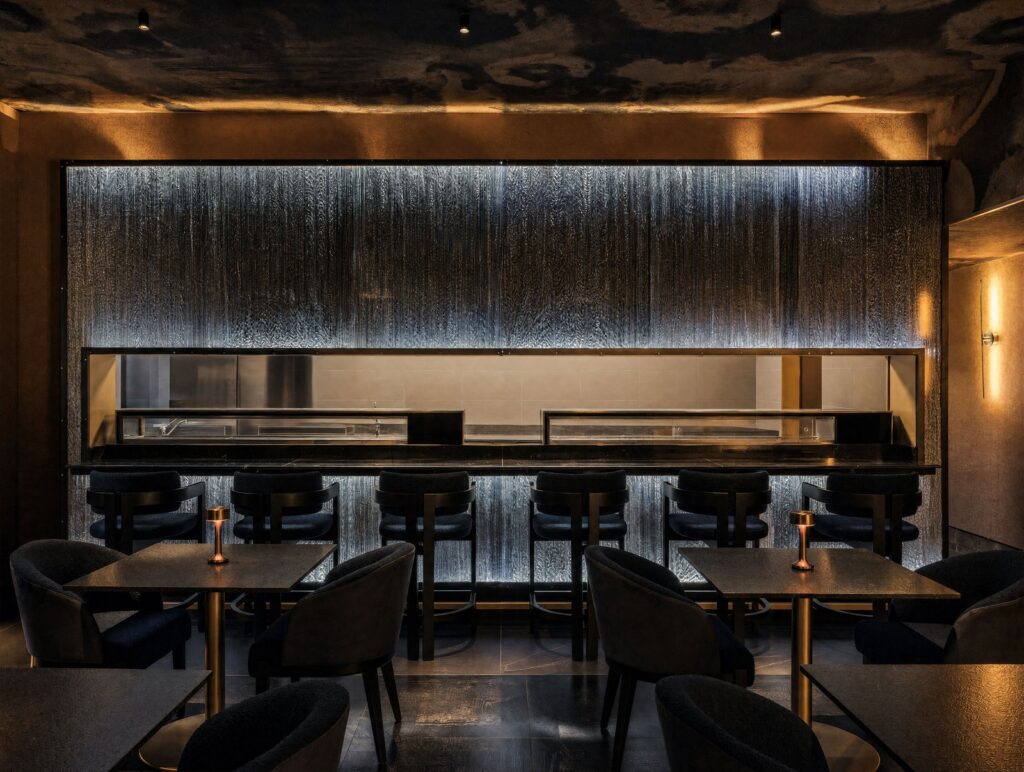
The dining spaces unfold with deliberate shifts in colour and materiality.
Dining Room 02 draws on the movement and drama of Young Hee Back’s artwork, using richer furniture tones and timber flooring to bring warmth and intimacy.
Three glass portals connect it to neighbouring dining spaces, creating a quiet rhythm of reveal and conceal as guests move through the restaurant.
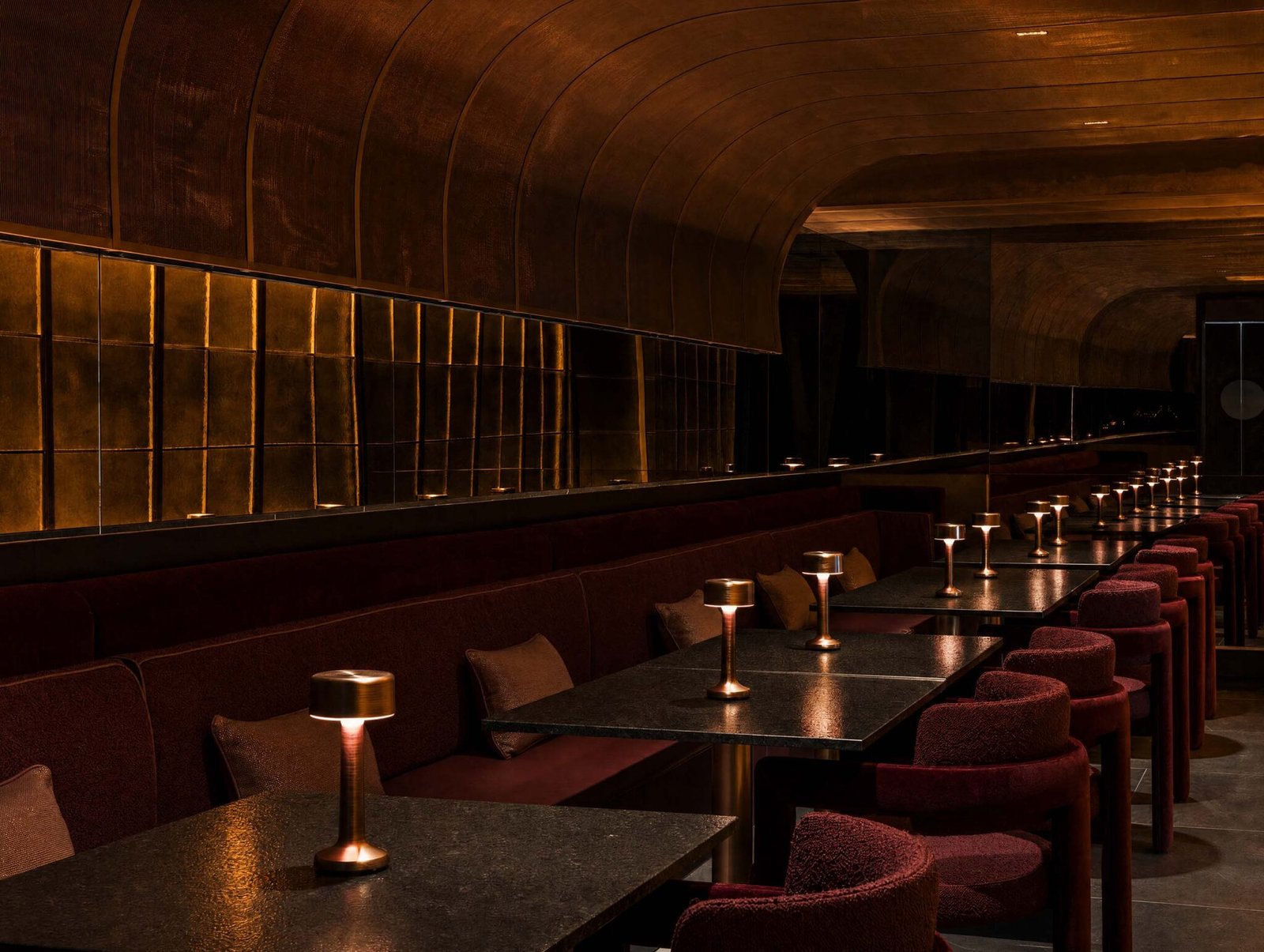
Dining Room 03 takes its cue from deep red and burgundy tones found in the artwork, as well as stained-glass colour influences.
A bronze mesh arch extends across the ceiling, softening the room with a layered glow.
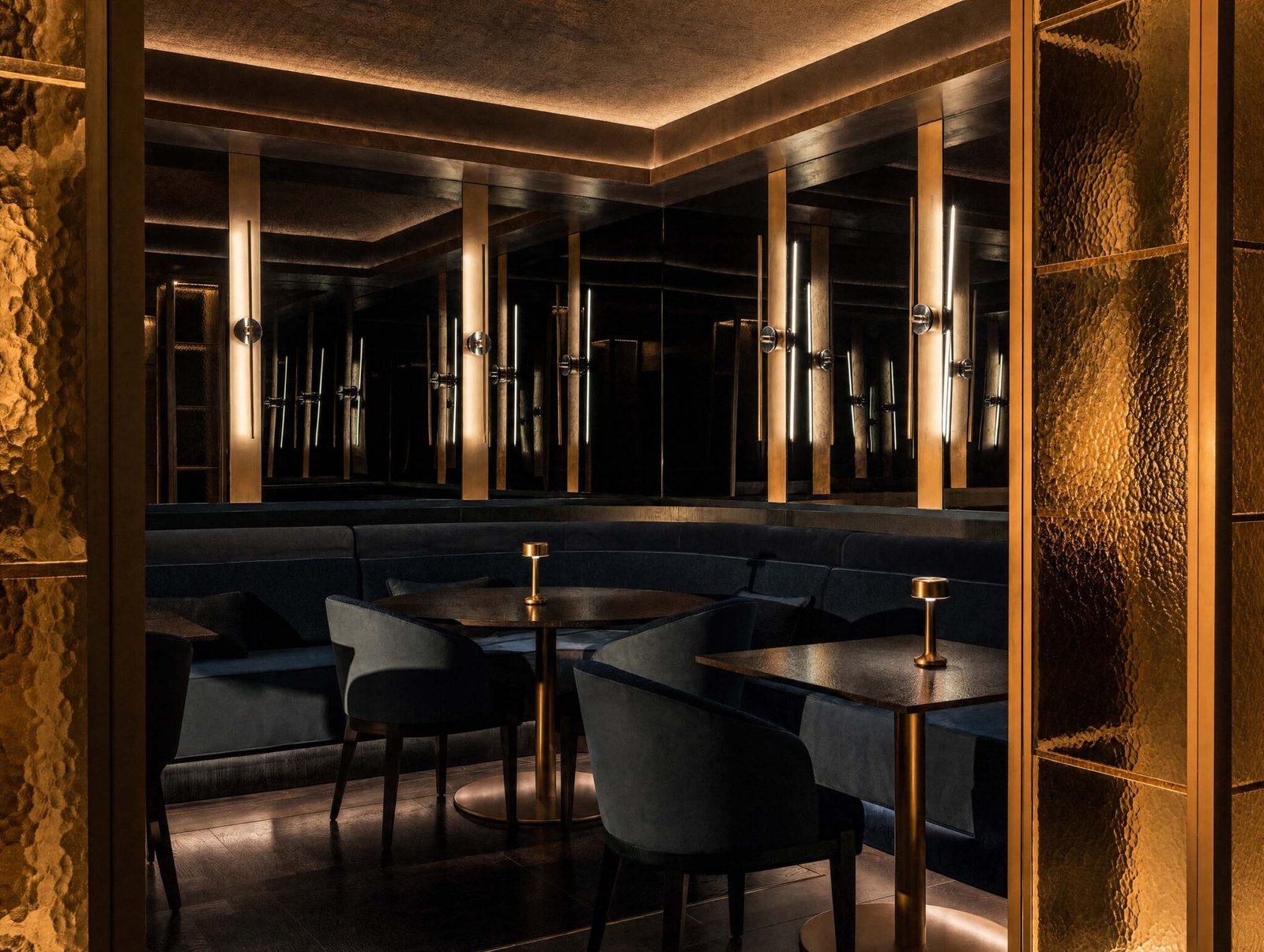
Beyond a glowing portal, Dining Room 04 shifts into an inky blue atmosphere with its own identity.
The change in tone allows the room to read as a separate chapter rather than a continuation of the same decorative scheme.
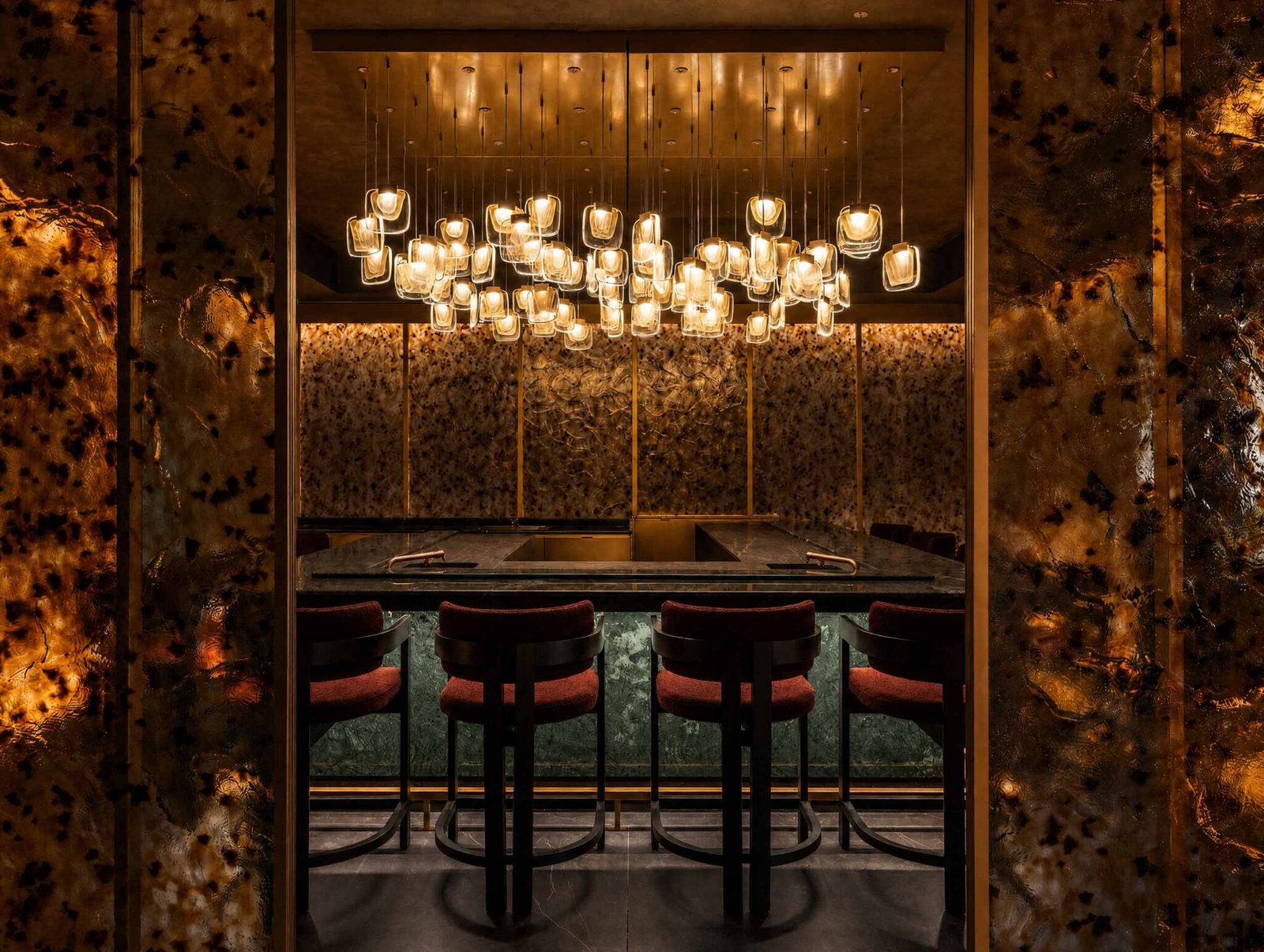
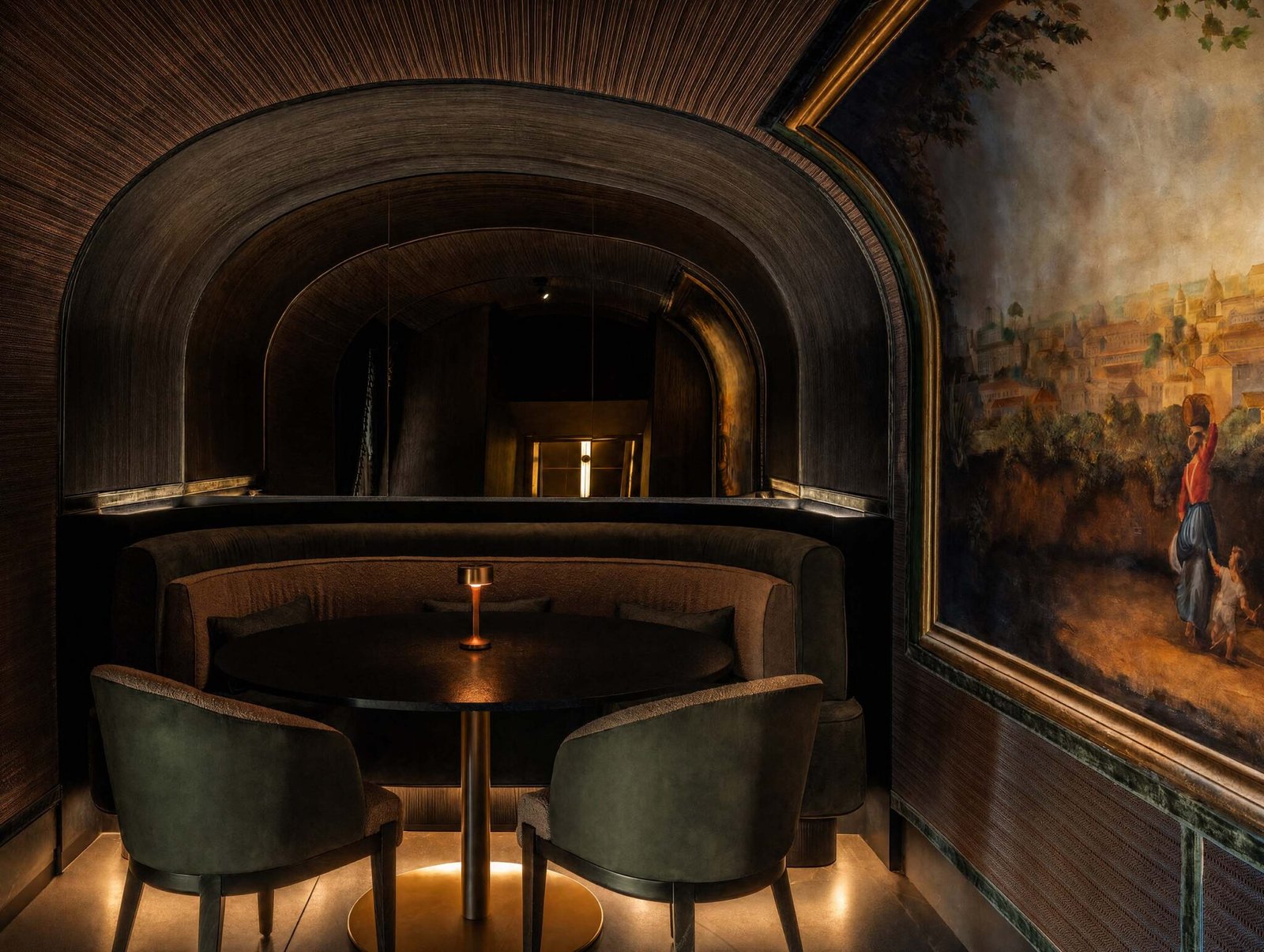
The Private Dining Room is treated as a hidden discovery, reached by its own discreet corridor.
Set apart in a secluded enclave, it draws on deep green and gold tones from a painting identified during the project’s initial site visit.
Materiality within a Roman landmark
The material palette is built around layering, with surfaces that veil, reveal and frame the restaurant experience.
Textured jewel-toned glass references Rome’s cathedral windows, while woven metals, tactile fabrics and textured wall coverings add depth.
Original features such as ornate cornicing and marble detailing have been preserved and enhanced rather than erased.
Rich timber floors, plush velvets, supple leathers, stone and antique bronze accents bring a sensorial quality to the interiors.
Soft, curved furniture, including banquettes and dining armchairs, gives the rooms a more enveloping character.
Lighting developed in collaboration with Artin Lighting is used to heighten each space’s mood while reinforcing ideas of mystery, intrigue and hidden portals.
For The St. Regis Rome, the restaurant adds a new contemporary layer to a property long associated with Roman hospitality.
For Akira Back, it establishes a first foothold in Italy, while for House of Black it is a confident example of how a global restaurant concept can be translated through a specific city, building and personal story.