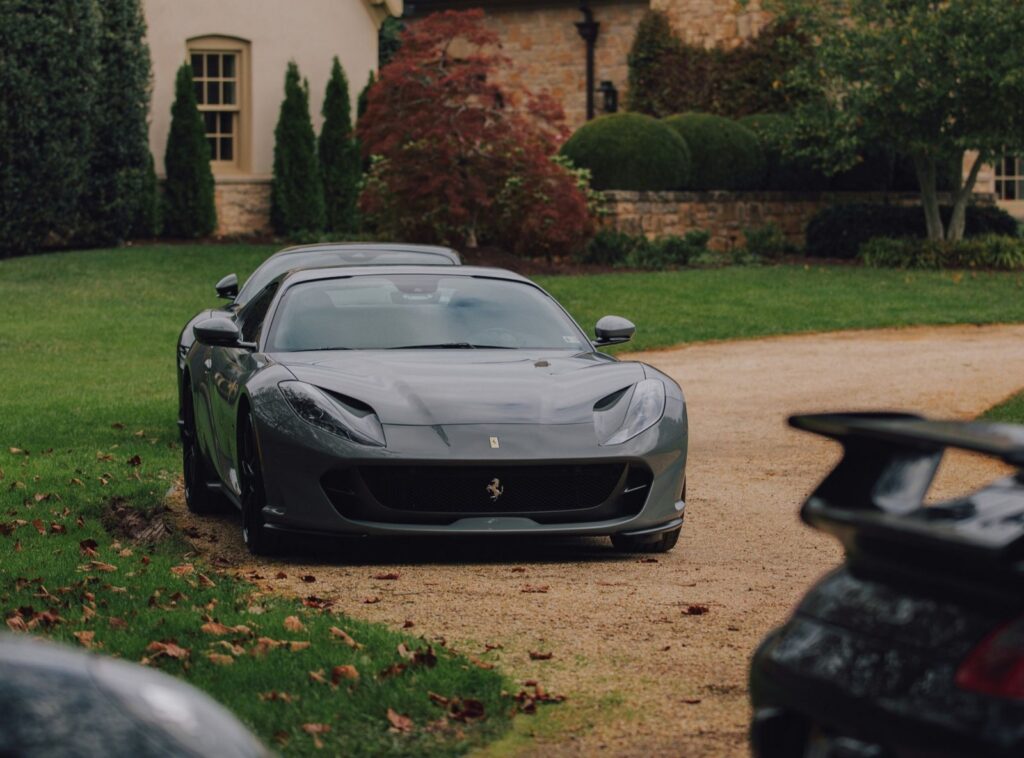
A serious car collection rarely stops at the cars.
Over time, the garage begins to gather helmets, race suits, signed parts, watches, artwork, books, models and objects picked up at auctions, concours events and family homes.
The problem is that many of these pieces are accumulated quietly, while the insurance conversation remains focused on the vehicle sitting at the centre of the collection.

At a glance
- Motor enthusiasts are increasingly building valuable collections around their cars, from racing memorabilia to watches, art and specialist collectibles.
- Storage location, environmental conditions, documentation and provenance can all affect the risk profile of these assets.
- Insurance cover should be reviewed regularly, as standard contents policies may not reflect the value, rarity or location of a growing collection.
The collection around the car
For many enthusiasts, collecting begins without a plan.
A souvenir from a race weekend, a helmet, a framed photograph or a vintage poster may sit in the garage for years before it becomes part of something far more valuable.
That gradual build-up is exactly why some owners don’t see themselves as collectors, even when the combined value of what they own has become significant.

Recent auction results show why the category deserves attention.
Charles Leclerc’s helmet for the Monaco Grand Prix sold for £262,700 in 2023, while a charity auction connected with Emilia-Romagna also saw his Ferrari race suit sell for £52,500, boots for £17,500 and gloves for £36,100.
The interest doesn’t stop at racing material.
Luxury watches have become an important companion category for car collectors, and in 2026 a Cartier Cheich watch sold for $3.4 million at a Sotheby’s auction in Hong Kong after a lengthy bidding contest.
Knight Frank’s 2026 research also pointed to a broader shift towards more specialist collecting fields, including eclectic categories such as vintage fashion and haute couture.
For the modern enthusiast, the car may still be the anchor, but the wider collection can include assets with their own market, history and insurance implications.
Where the risk actually sits
The risks facing a collection are often less dramatic than theft, but no less damaging.
Water from burst pipes, leaking plumbing or roof failure can cause mould, corrosion and rust, particularly when items are kept in garages, barns, outbuildings or storage units.
Fire is another major concern, especially where faulty wiring or unattended appliances are present in spaces not maintained to the same standard as the main residence.
Environmental exposure can be just as destructive.
Heat, ultraviolet light, humidity and dust can cause irreversible damage to luxury goods, paper-based memorabilia, textiles, watches, art and other delicate objects.
For that reason, valuable possessions should be kept in controlled spaces that are cool, dark and dry wherever possible.
Physical security also needs to reflect where the items are actually stored.
A main home, secondary residence, detached garage, barn, outbuilding and external storage facility all present different risks, so measures such as safes, alarms, CCTV and monitored security may be relevant depending on the location and value of the items.
Insurance should follow the whole collection
The issue for many collectors isn’t that they have no insurance at all.
It’s that the cover hasn’t kept pace with what they have accumulated, where it is stored or how values have moved.
Many owners track the value of their cars closely, while watches, jewellery, artwork and rare collectibles may go years without a fresh valuation.
Inherited items can be especially vulnerable to this gap, as professional valuations may never have been obtained.
Documentation matters.
Receipts, photographs and provenance records can all help support insurance arrangements, particularly where an item is rare, unique or difficult to replace.
Provenance can also carry value that is not always obvious from a simple market comparison.
Collectors should be especially careful with items kept away from the main residence.
A piece stored in a garage or outbuilding may not be protected in the way an owner assumes, and standard contents policies can include single article limits for jewellery, artwork and other valuable possessions.
Chyna Kenward, Vice President and Producer for Private Clients and Family Office at Lockton, frames the more effective approach as one that looks beyond the car itself and considers the client’s wider world.
That means assessing the principal home, secondary spaces, garages, outbuildings, storage arrangements and the objects within them as one connected risk picture.
A living collection needs regular review
Collections rarely stand still.
New purchases, inherited pieces, auction wins and changing market values can quickly make an older insurance programme feel out of date.
Regular reviews with a broker can help identify material additions, changes in value and possible gaps before a claim occurs.
For serious motor enthusiasts, that kind of review is becoming part of responsible collection management rather than an administrative afterthought.
The garage may still be the emotional centre of the hobby, but the possessions surrounding it now deserve the same level of attention, documentation and protection.