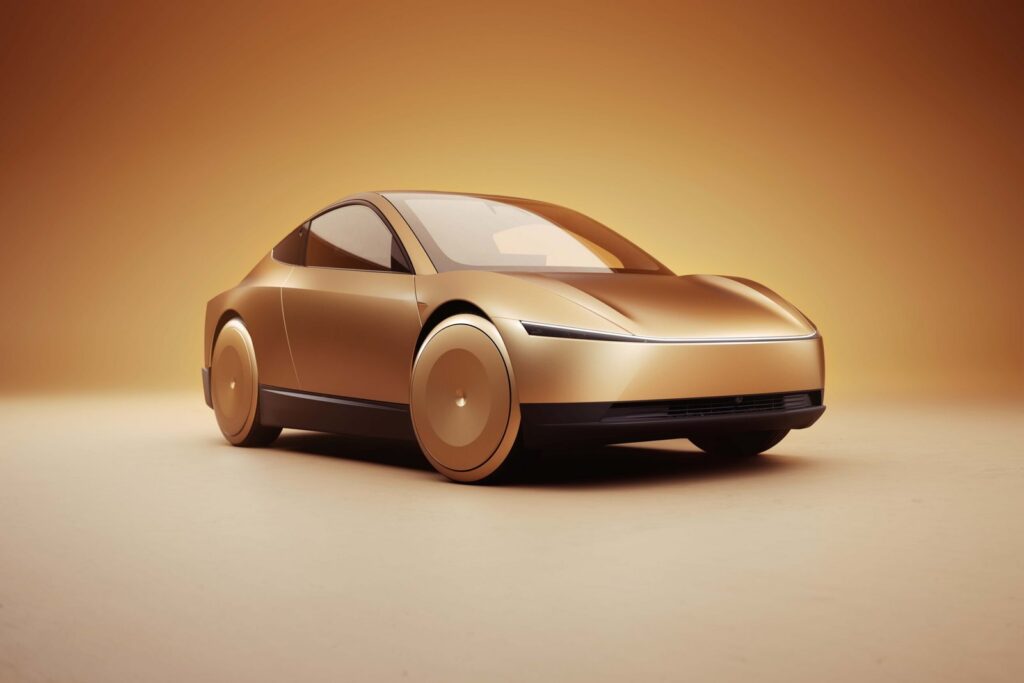
Tesla’s most consequential European factory could soon become the centre of its robotaxi ambitions.
Reuters has reported that the company is preparing a €3 billion investment at Grünheide, near Berlin, with an eventual target of producing up to 1 million Cybercab vehicles a year.
That’s a striking number for a driverless two-seater that has not yet reached large-scale commercial production anywhere, and it would push Tesla’s German site into a different class of industrial importance.
At a glance
- Tesla is reportedly planning a major Grünheide expansion aimed at producing up to 1 million Cybercab robotaxis annually.
- The Cybercab is described as a driverless two-seat vehicle, with production at the German site scheduled to start in 2029.
- The plan is tied to a €3 billion investment, with a permit application expected before the end of 2026.
Grünheide moves beyond a regional role
The Grünheide factory is already Tesla’s only European manufacturing site, but the Cybercab plan would give it a much broader strategic role.
If the expansion reaches its stated target, the facility could become Germany’s largest car factory by capacity, surpassing Volkswagen’s Wolfsburg plant.
That comparison matters because Wolfsburg is not just a large factory, it is one of the symbolic centres of Europe’s traditional car industry.
For Tesla to position Grünheide ahead of it in potential output would underline how seriously the company is treating both Europe and autonomous mobility.
The investment figure attached to the plan is also substantial.
At €3 billion, or about $3.3 billion, the programme points to a long-term manufacturing bet rather than a modest line adjustment.
A production timeline with several moving parts
Tesla intends to submit its building permit application before the end of 2026, Reuters reported.
Construction is expected to begin in the first half of 2027, with Cybercab production scheduled to start in 2029.
That timeline leaves several years between the permit process and the first planned production, which is not unusual for a project of this scale.
It also gives Tesla time to reshape its manufacturing footprint around the Cybercab, including a reported plan to wind down Cybertruck production around mid-2027 to free up capacity.
The link between Cybertruck and Cybercab capacity is notable because it suggests Tesla is already thinking about how its more specialised vehicles fit into a broader production system.
Cybertruck has been one of the company’s most distinctive products visually, while Cybercab represents a different kind of statement, one based less on personal ownership and more on autonomous transport as a service.
The Cybercab bet is bigger than another Tesla model
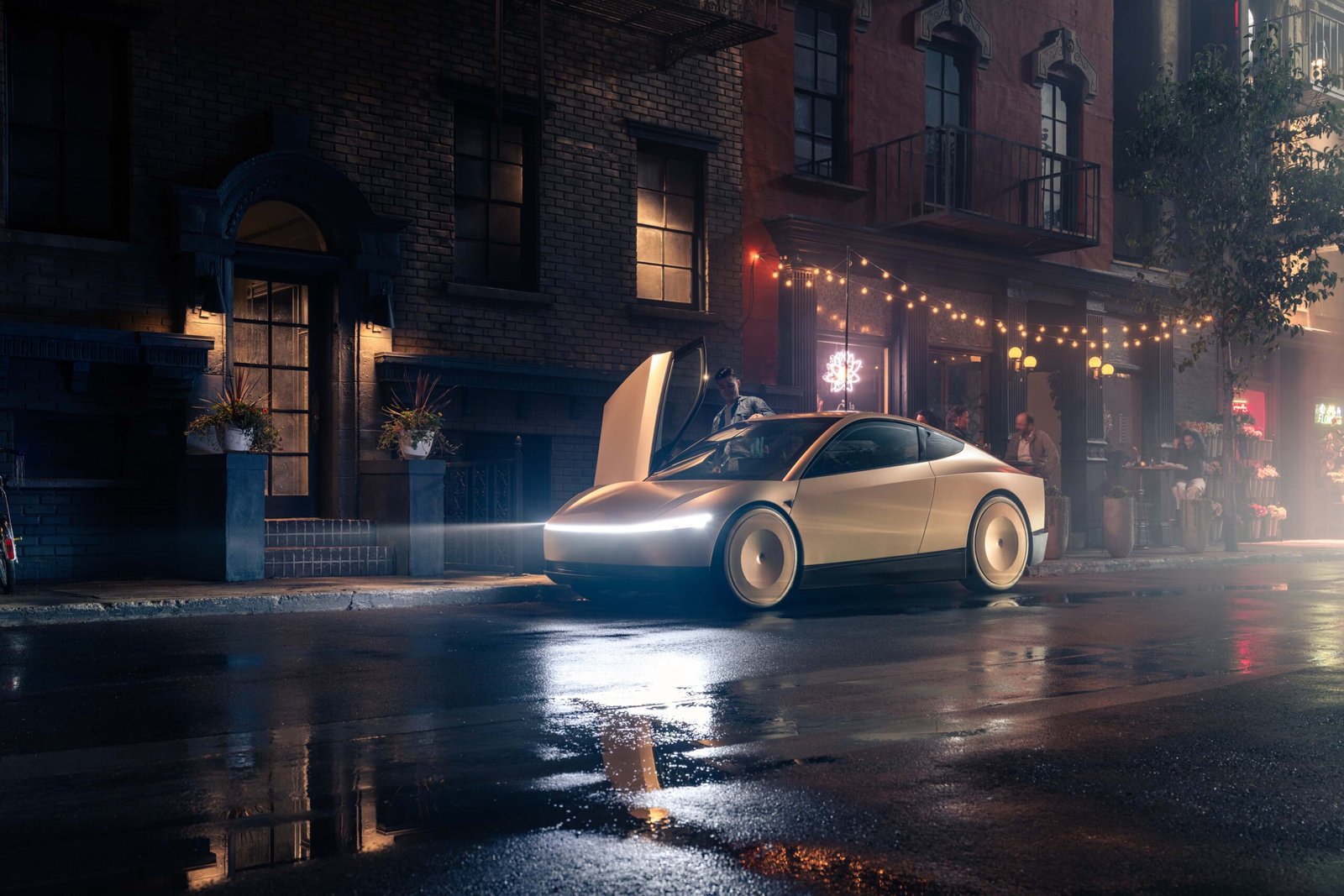
The Cybercab is described as a driverless two-seater, which immediately separates it from conventional private cars and most current electric vehicles.
Its role is not simply to add another body style to Tesla’s range, but to support the company’s long-running push into autonomous ride-hailing.
That makes the proposed production number especially ambitious.
A target of up to 1 million units a year would imply confidence not only in manufacturing, but also in the market and regulatory environment required for robotaxi deployment.
For now, the most concrete element is the factory plan.
The vehicle itself has not entered large-scale commercial production, and the path from concept to mass robotaxi operation remains one of the most closely watched questions around Tesla.
Details & Specifications
| Brand | Tesla |
|---|---|
| Model | Cybercab |
| Vehicle type | Driverless two-seat robotaxi |
| Planned production site | Grünheide factory near Berlin, Germany |
| Target annual output | Up to 1 million units |
| Investment | €3 billion, about $3.3 billion |
| Permit application target | Before the end of 2026 |
| Construction target | First half of 2027 |
| Production start target | 2029 |
| Related manufacturing plan | Cybertruck production reportedly set to wind down around mid-2027 to free capacity |
What it means for Europe’s car industry
For European automakers, the significance is not only that Tesla wants to build more vehicles in Germany.
It is that the company may use a German factory as the base for one of the boldest autonomous mobility projects in the industry.
Traditional manufacturers have scale, supplier networks and deep regional roots, but Tesla is trying to align factory capacity with a future transport model that may not depend on the familiar car-buying cycle.
That makes Grünheide a useful measure of Tesla’s next phase in Europe.
If the project stays on schedule, 2029 could mark the moment when the factory’s identity shifts from European Tesla plant to a major industrial pillar for robotaxi production.