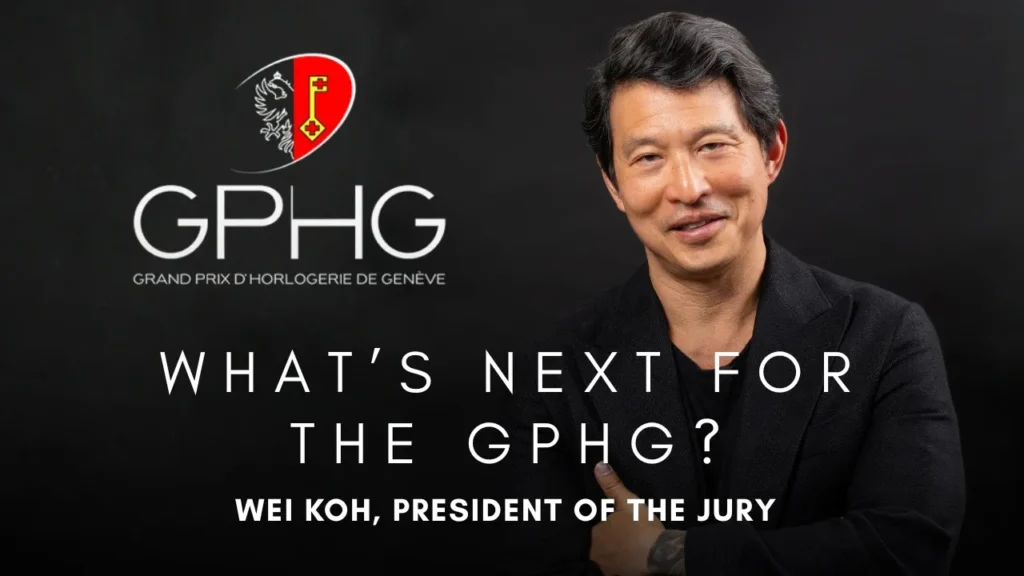
Wei Koh’s appointment as President of the Jury for the Grand Prix d’Horlogerie de Genève arrives at a moment when watchmaking’s most visible awards platform is being asked to speak to a bigger, more diverse audience.
In conversation with Joy Tully, Editor-in-Chief of Revolution Asia, Koh set out a three-year vision that looks beyond ceremony and medals.
The emphasis is on knowledge, openness and making the GPHG feel more relevant to the wider watch world without diluting the seriousness of the craft.
At a glance
- Wei Koh has discussed his role as President of the Jury for the Grand Prix d’Horlogerie de Genève and the priorities for his three-year term.
- His focus includes broader category access, deeper horological expertise and a more approachable format for younger and global audiences.
- The GPHG being held in English for the first time is positioned as a key step toward expanding the awards’ international reach.
A three-year brief for a wider GPHG
The Grand Prix d’Horlogerie de Genève sits in a rare position in modern watch culture.
It is both an industry prize and a public-facing signal of what the watch world chooses to celebrate.
Koh’s view of the presidency appears to start with that tension.
The GPHG can’t simply be a closed-room exercise for insiders if it wants to reflect the full energy of contemporary watchmaking.
One of the key themes of his term is opening the awards categories more meaningfully to the wider watch industry.
That matters because the most interesting watchmaking today is not confined to one geography, one price tier or one established idea of prestige.
Independent makers, specialist manufacturers and traditional houses all operate within the same cultural conversation, even when their commercial realities are vastly different.
A more open GPHG has the potential to recognise that breadth with greater clarity.
English and the push for a global audience
The decision for the GPHG to be held in English for the first time is more than a presentational change.
For an awards body with global ambitions, language shapes who feels invited into the room.
Koh links accessibility with knowledge, rather than treating accessibility as simplification.
That distinction is important in watchmaking, where enthusiasm often begins with beauty but deepens through understanding.
A younger collector or casual viewer may not arrive fluent in escapements, hand-finishing or category politics.
Give that audience a clearer way in, though, and the GPHG becomes not just a prize-giving event but a platform for education.
That could be especially valuable at a time when watch culture is increasingly digital, international and less dependent on old industry gatekeeping.
The jury and the revenge of the nerds
Koh’s comments on jury selection point to another central concern.
The credibility of any awards programme depends on the people making the decisions.
For the GPHG, that means jurors need more than visibility or status.
They need serious horological knowledge, the ability to read nuance and enough independence of thought to separate fashion from substance.
Koh’s description of this year’s jury as potentially representing the “revenge of the nerds” is telling.
It suggests a preference for people who have put in the hours, handled the watches, studied the movements and cared about details long before watch enthusiasm became a mainstream luxury category.
That is a healthy instinct for an awards platform where the difference between a good watch and a truly important one is often found in decisions that aren’t immediately obvious on a screen.
Légaré and the question of distance
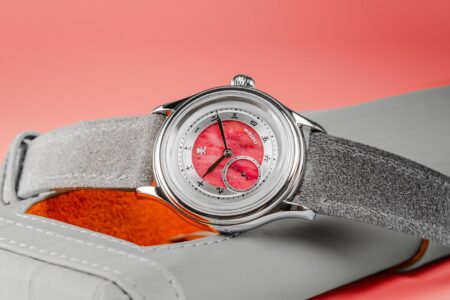
The conversation also addressed the upcoming launch of Légaré.
Koh noted that the brand will not participate in the GPHG while he serves as President of the Jury.
That decision is significant because perception matters in awards culture.
Even when procedures are carefully managed, the integrity of the institution depends on visible boundaries as much as private ones.
Keeping Légaré out of the competition during his term is a clean way to avoid ambiguity.
It also keeps the focus where Koh seems to want it, on the GPHG’s role as a stage for the wider craft rather than a platform entangled with personal commercial interests.
If Koh’s presidency delivers on the themes he has outlined, the GPHG could become both more rigorous and more widely understood.
That would be a worthwhile evolution for an awards body whose influence now extends far beyond Geneva, and for a watch community that is increasingly global, curious and technically literate.