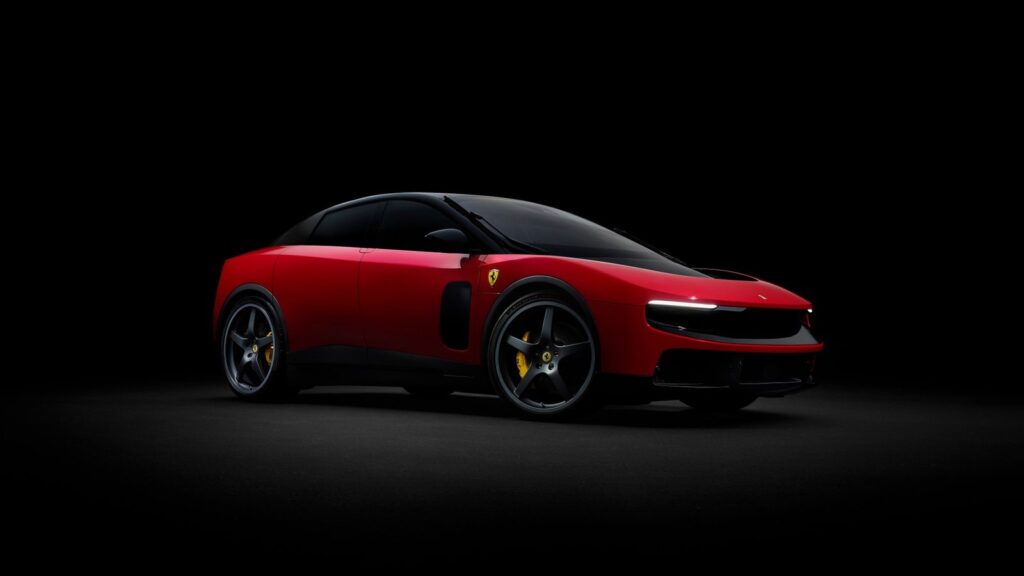
Ferrari’s first electric car now has a number attached to it in the United States, and it’s lower than early estimates suggested.
The Ferrari Luce will cost $560,800, a figure that undercuts initial expectations by about $80,000 while still placing Maranello’s first EV deep in the rarefied end of the market.
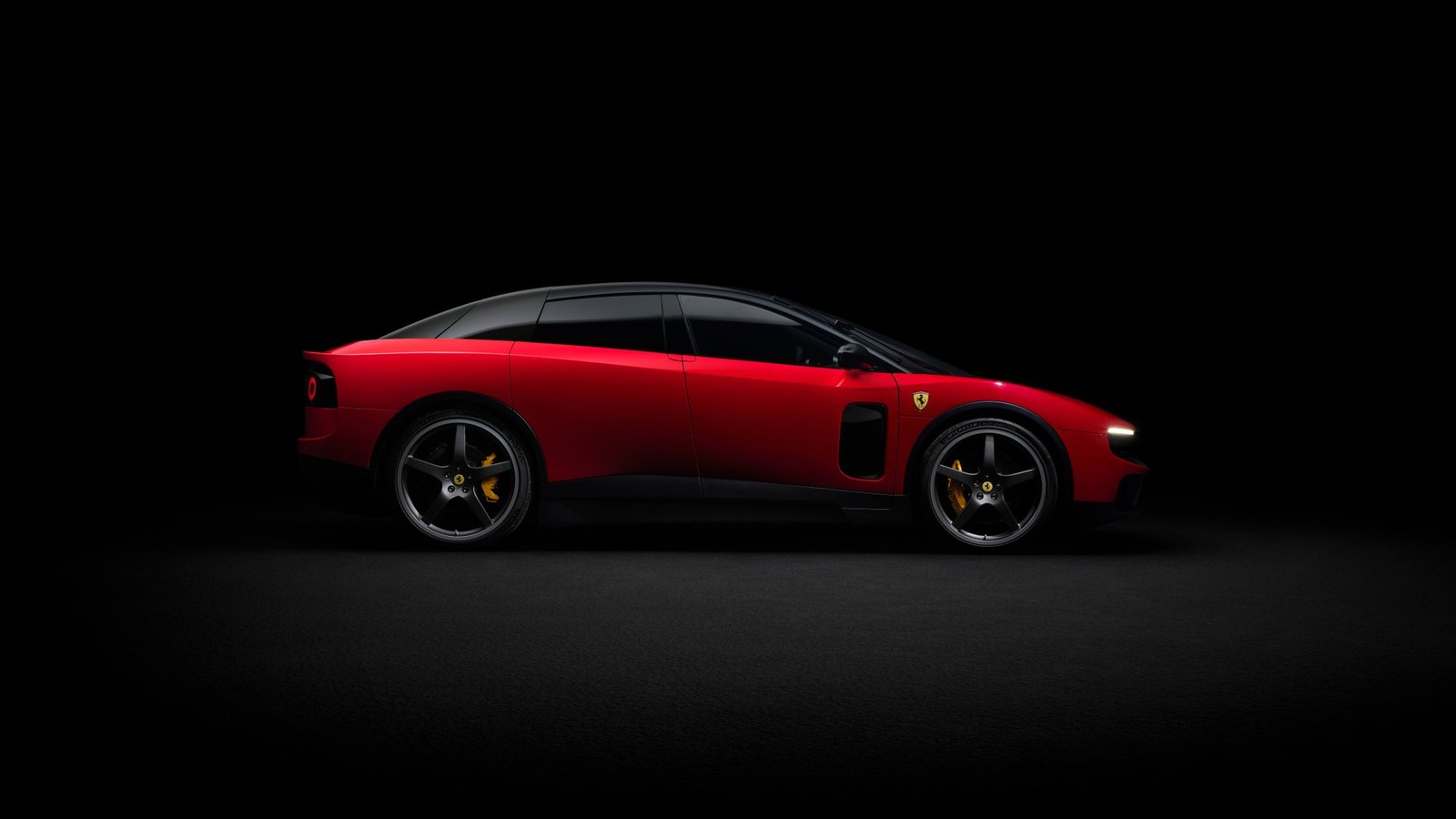
For Ferrari, the Luce is more than a new model line. It’s the first real test of how the brand’s performance identity translates into a five-seat electric car.
At a glance
- Ferrari has priced the Luce, its first fully electric model, at $560,800 in the United States.
- The five-seat EV uses four electric motors producing a combined 1,035 hp, with a claimed 0-62 mph time of 2.5 seconds.
- First customer cars are expected to reach the US in the second quarter of 2027.
A lower-than-expected price, but still unmistakably Ferrari
The headline is not that the Luce is affordable, because at $560,800 it plainly isn’t.
The surprise is that Ferrari has set the US price roughly $80,000 below early estimates, a meaningful adjustment for a car that will carry the weight of being the marque’s first EV.
That pricing puts the Luce in a familiar Ferrari space, where cost is part of the positioning rather than a mass-market barrier.

Its expected arrival in the second quarter of 2027 also gives Ferrari time to shape the model’s place in the line-up, particularly as the brand moves into electric performance without leaning on combustion drama.
Four motors and serious acceleration claims
The Luce is powered by four electric motors, with the front units producing 141 hp each and the rear units producing 476 hp each.
Combined output is listed at 1,035 hp, a number that makes clear Ferrari isn’t presenting the Luce as a soft entry into electrification.
Ferrari claims the car can sprint from 0-62 mph in 2.5 seconds, while 0-124 mph is said to take 6.8 seconds.
Those figures place the Luce firmly in modern supercar territory, even if its five-seat layout points to a broader kind of usability than many Ferrari buyers may expect.
The battery pack is rated at 122 kWh, with an expected maximum range of around 280 miles.
Designed with Jony Ive and Marc Newson
The Luce also stands out because of who helped shape it.
The car was designed by Sir Jony Ive and Marc Newson, both former Apple designers, bringing an unusually high-profile product design connection to Ferrari’s first electric model.
That detail matters because the Luce has to communicate change without making Ferrari feel unrecognisable.
A five-seat electric Ferrari asks a different question from a mid-engined sports car, and the design will be central to whether customers see it as a true Ferrari or simply an electric outlier wearing the badge.
Monterey set the tone early
Interest around the Luce has already produced one extraordinary result.
In August, the first Ferrari Luce “Chassis 0” was sold at a charity auction during Monterey Car Week for $40 million.
That figure shouldn’t be read as a market price for customer cars, but it does underline the symbolic weight attached to Ferrari’s first electric model.
For collectors, the Luce is likely to matter not only because of its performance or design, but because it marks a clear historical turning point for the brand.
Details & Specifications
| Brand | Ferrari |
|---|---|
| Model | Luce |
| Vehicle type | Five-seat electric car |
| Powertrain | Four electric motors |
| Front motor output | 141 hp each |
| Rear motor output | 476 hp each |
| Total output | 1,035 hp |
| Battery | 122 kWh |
| Estimated maximum range | Around 280 miles |
| 0-62 mph | 2.5 seconds, claimed by Ferrari |
| 0-124 mph | 6.8 seconds, claimed by Ferrari |
| US price | $560,800 |
| US deliveries | Expected from the second quarter of 2027 |
| Design | Sir Jony Ive and Marc Newson |
The Luce is not a quiet experiment tucked away from Ferrari’s core business.
With a half-million-dollar-plus price, four-motor performance and a design team that will draw attention far beyond the usual car world, it arrives as a statement about where Ferrari wants its electric era to begin.