A beautiful room can win attention in a photograph, but it earns affection through daily contact.
Texture is what makes an interior feel settled after the first impression fades, whether it’s the softness of a wool carpet, the coolness of stone or the quiet grain of a timber cabinet.
For homes that favour restraint, tactile luxury also offers a more enduring route to elegance than adding more objects.

At a glance
- Tactile luxury focuses on the surfaces people touch every day, not just the finishes they see.
- A balanced interior should combine soft, structured and smooth materials across flooring, walls, upholstery and furniture.
- Testing samples at home is essential because light, use and placement can change how a material feels.
Touch is the real test of a room
Colour and proportion still matter, but touch determines whether a space feels comfortable months after it’s finished.
The most important surfaces are often the ones encountered without thinking.
Feet meet the floor first, then hands find door handles, worktops, curtains, upholstery and cabinet edges throughout the day.

These repeated contact points deserve the same attention as the sofa shape or wall colour.
Samples should be handled in the room where they’ll be used, preferably at different times of day.
A fabric that appears plush under showroom lighting may feel rough against bare skin, while polished stone can read too cold in a room intended for rest.

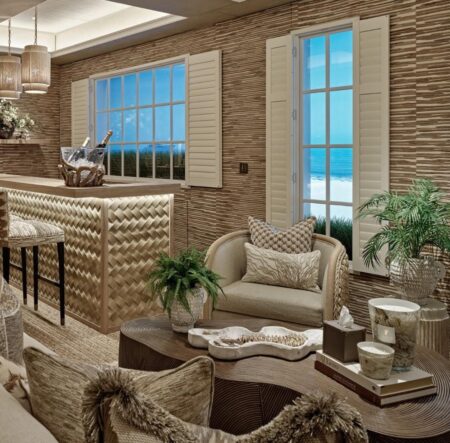
Soft dimensional surfaces, including felt wallcoverings, can add warmth and intimacy because they change both the look and the physical atmosphere of a room.
Flooring sets the tactile baseline
Flooring has a disproportionate effect on comfort because it stretches across the full room and shapes every step.
Wool carpet remains one of the clearest expressions of tactile luxury, offering natural softness, resilience and visual depth.
The underlay matters just as much as the surface.
A dense underlay gives carpet a more cushioned feel and can help reduce everyday noise, which is especially valuable in living rooms, bedrooms and family spaces.
Pile construction should always be checked in person.
Loop, twist and velvet carpets each create a different sensation underfoot, even when the colour appears similar.
Installation is part of the finish rather than a secondary detail.
A poorly tensioned carpet can ripple or wear unevenly, so fitting should be considered when assessing overall value.
For homeowners in Warrington, carpet services that include free fitting can make budgeting simpler while helping the chosen floor achieve a properly finished appearance.
Large rooms expose small mistakes
Expansive rooms make tactile design more demanding because every misalignment becomes easier to see and feel.
Patterned carpet can drift, joins can become obvious and a careless edge can undermine an otherwise calm scheme.
Accurate measuring is essential, especially because walls that look straight are often slightly uneven.
Alcoves, bay windows and built-in cabinetry should be included on the plan from the beginning.
The direction of the pile also needs consistency.
Depending on its orientation, carpet can appear lighter or darker, so each section should run the same way to avoid visual disruption.
If a join can’t be avoided, it’s usually better placed away from strong daylight and heavy circulation routes.
Neat trimming around thresholds and architectural details gives a room the tailored quality that separates considered interiors from simply expensive ones.
Balancing texture without clutter
The strongest tactile schemes usually begin with one dominant material and then build quieter contrasts around it.
A deep wool carpet might sit against crisp linen curtains, smooth timber furniture and a lightly textured plaster wall.
If every surface competes for attention, even a neutral palette can start to feel busy.
A sample board is useful because it forces the materials to be judged together rather than as isolated favourites.
Include the floor finish, wall treatment, upholstery, curtain fabric and any major timber or stone surface.
Aim for a balance of three qualities across the room.
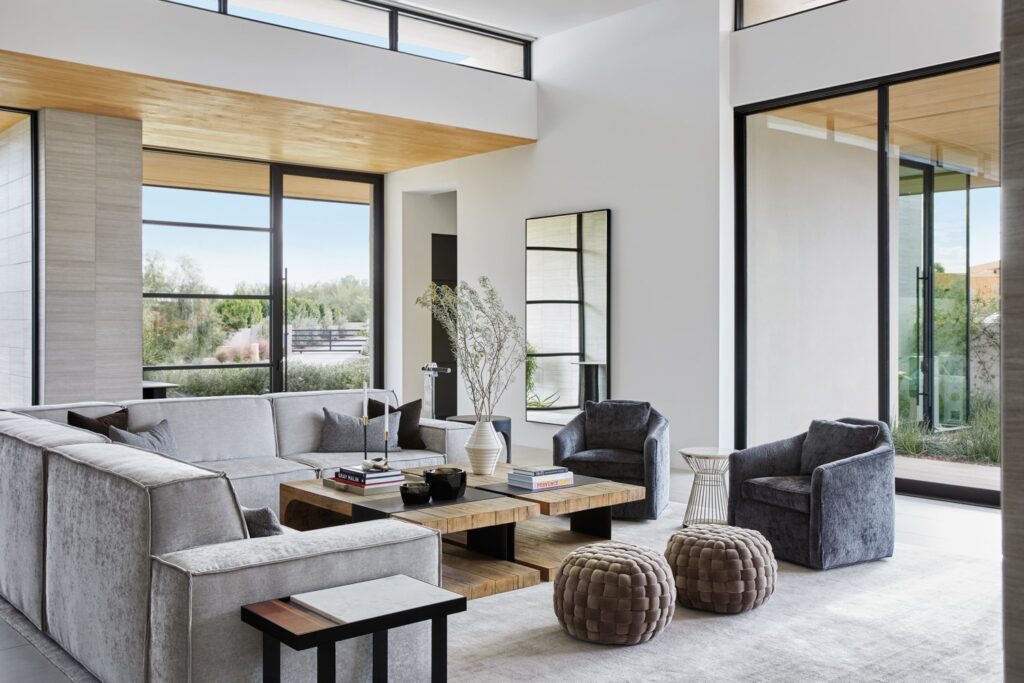
There should be something soft, something structured and something smooth.
Repetition helps the scheme settle.
The weave of a sofa can quietly echo the grain of a timber table without matching it exactly.
Durability should guide placement.
Delicate finishes belong in low-contact areas, while walkways, seating zones and family gathering spaces need textures that can withstand regular use.
The most luxurious interior is often the one that becomes more appealing the longer people live with it.
A softly cushioned floor, a curtain with satisfying weight and a well-finished timber edge create small moments of comfort that photographs rarely capture.
When choosing materials, don’t only judge them from across the room.
Handle them where they’ll actually live, because touch is where luxury proves itself.