Luxury boating has always promised escape, but the machinery has often interrupted the mood.
Vision Marine Technologies is one of the companies trying to change that equation, pairing high-performance electric propulsion with the quiet, polished experience expected by private owners, resorts and premium marina communities.
Led by CEO and Director Alexandre Mongeon, a marine industry veteran with more than 25 years of experience and a background in speedboat racing, the company is positioning electric power as a refinement upgrade rather than a compromise.

At a glance
- Vision Marine Technologies is advancing luxury electric boating through its E-Motion powertrain and high-performance electric vessels.
- The high-voltage E-Motion 180E system delivers 180 horsepower of continuous power with instant torque, low vibration and no exhaust at the point of use.
- The technology is aimed at premium protected-water use, resort fleets, waterfront estates and marinas with suitable charging infrastructure.
Silence as a performance feature
The most immediate difference aboard an electric powerboat isn’t visual.
It’s the absence of the clatter, rumble and vibration that usually frame the first moments after leaving the dock.
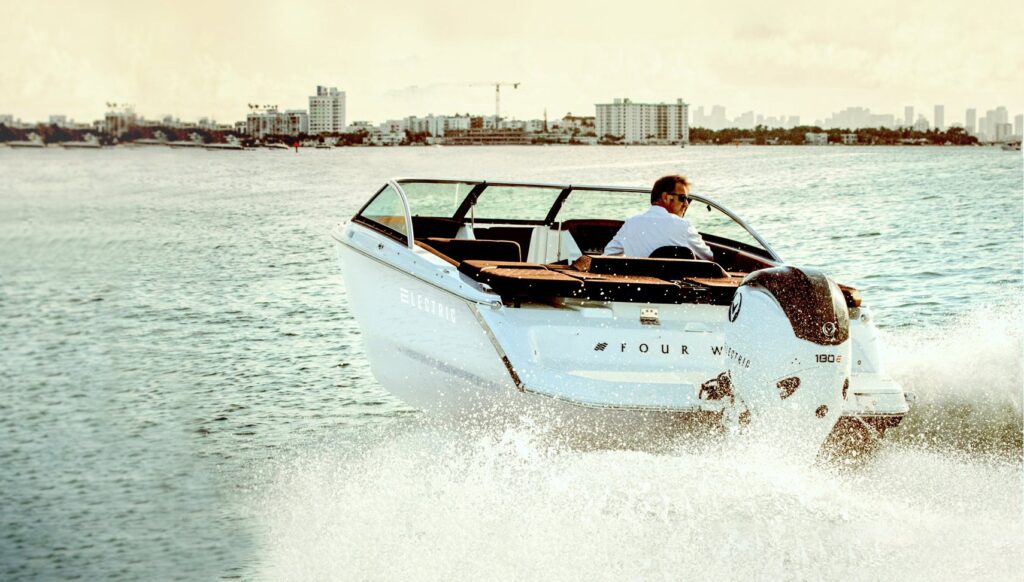
On vessels such as the SPECTR 26 and Sterk 31e, electric propulsion changes the tone of the entire outing, replacing mechanical background noise with the sound of water on the hull and wind across the deck.

That matters in luxury boating because comfort is not only about upholstery, deck space or finish quality.
It’s also about how conversation carries, how calmly a boat moves away from the marina and how little the propulsion system intrudes on the surroundings.
Electric propulsion also brings a different kind of response under throttle.

Instant torque and smooth acceleration give the boat a clean, confident feel, while near-zero vibration helps the experience feel more composed at cruising speeds.
The E-Motion 180E and the right boating mission
Vision Marine’s flagship E-Motion 180E is a high-voltage electric outboard system rated at 180 horsepower of continuous power.
For luxury buyers, the important point is not simply the number, but how the system is used.

Electric boating works best when the vessel, route, load, speed, weather and charging access are treated as part of the same plan.
Vision Marine is not presenting electric powerboats as a universal answer for long open-water crossings.
The stronger use case is more specific and, for many owners, more relevant.

Protected-water cruising, intercoastal routes, inland rivers, lakes, resort transfers and waterfront-estate use all play to the strengths of quiet propulsion and predictable charging.
That mission-led approach is essential for building confidence among owners who may be intrigued by electric performance but cautious about range.
When the route and charging plan match the boat’s intended use, the experience can feel less like managing a new technology and more like a cleaner way to enjoy familiar waters.
Resorts and marinas are becoming part of the system
The shift to electric boating is not just about the boat itself.
For private islands, eco-resorts and five-star waterfront properties, gasoline-powered guest tenders can feel increasingly out of step with broader sustainability goals.
Electric fleets make particular sense where the operating pattern is repeatable.
Short transfers between docks and beach clubs, lagoon cruises, watersports support and private guest outings are all suited to scheduled charging and controlled routes.
Vision Marine’s approach extends to charging systems designed to sit comfortably within high-end marina environments.
The goal is infrastructure that feels integrated rather than industrial, much like destination EV charging has become a normal part of luxury hotels and private residences on land.
Designing the hull and powertrain together
High-voltage marine electrification creates real packaging challenges.
Battery placement, centre of gravity, cable routing, liquid cooling, safety integration and service access all have to be considered before a sleek hull can deliver the right balance of performance, comfort and deck usability.
Vision Marine’s work with marine designers starts early in the development process, treating the vessel and propulsion system as one ecosystem.
That approach allows models such as the SPECTR 26 and Sterk 31e to preserve low-slung profiles and open deck layouts while keeping the technical complexity largely out of view.
For the owner, that discretion is part of the appeal.
The technology is there, but the experience is shaped around space, quietness and easy movement aboard.
Details & Specifications
| Company | Vision Marine Technologies |
|---|---|
| Key powertrain | E-Motion 180E |
| Power | 180 horsepower of continuous power |
| Propulsion type | High-voltage electric outboard system |
| Example vessels | SPECTR 26 and Sterk 31e |
| Use case | Protected waters, intercoastal corridors, lakes, rivers, resorts and waterfront estates |
| Ownership support | Dealer and aftersales platform strengthened through Nautical Ventures in Florida |
Ownership support for a new kind of boat
Electric propulsion raises expectations around service as much as performance.
A premium buyer doesn’t want to become a test pilot for unfamiliar infrastructure or maintenance routines.
Vision Marine’s acquisition of Florida-based dealer network Nautical Ventures gives the company a more direct link between manufacturing, retail delivery and ongoing client support.
That network can assist with vessel selection, powertrain configuration, dock power assessment, delivery coordination and electric-ready servicing.
Certified high-voltage technicians are a crucial part of that ownership model, particularly as electric boats move from early-adopter curiosity into serious consideration for private buyers and hospitality fleets.
The larger promise is simple and persuasive.
If marine electrification can deliver speed, quietness and reliable support without asking owners to give up the pleasure of a fast day on the water, it becomes less of a sustainability gesture and more of a better luxury experience.
For Vision Marine, the future of premium boating is not about making the engine louder, but making the water feel closer.