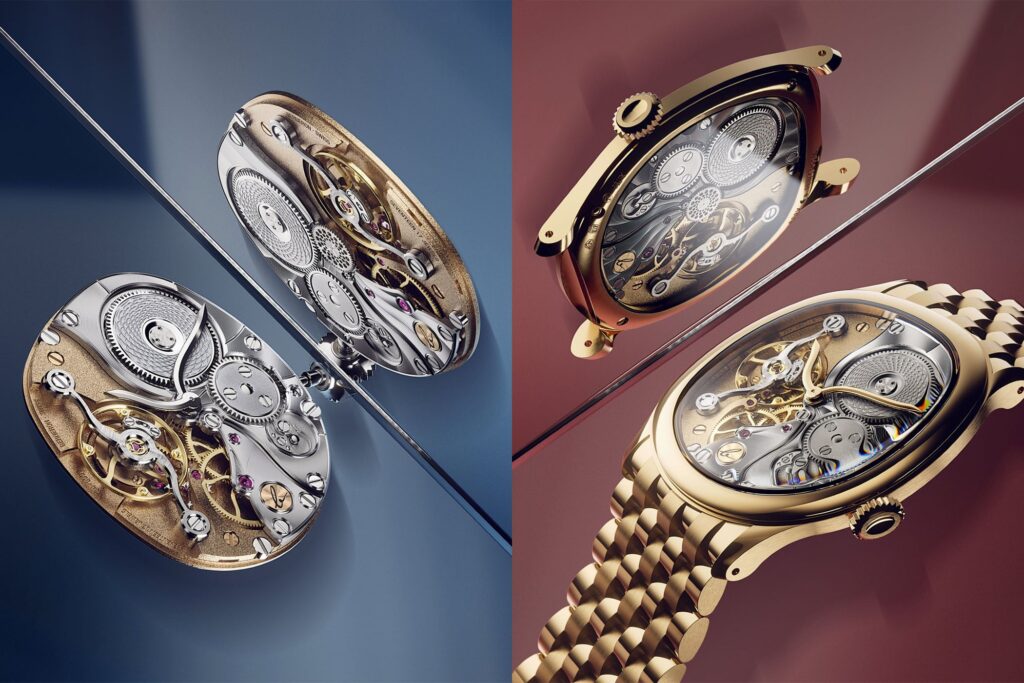
Sylvain Berneron’s Mirage has always treated watch design as something closer to sculpture than packaging.
With the Mirage Miroir, the young independent marque is taking that idea further, not by making the watch louder, but by turning its defining movement architecture back onto itself.
The result is a more jewellery-minded Mirage with a bracelet, a newly exposed Calibre 283 and the same organic asymmetry that made the original feel so unlike the usual independent watchmaking debut.
At a glance
- Berneron has revealed the Mirage Miroir, the next evolution of its asymmetrical Mirage watch.
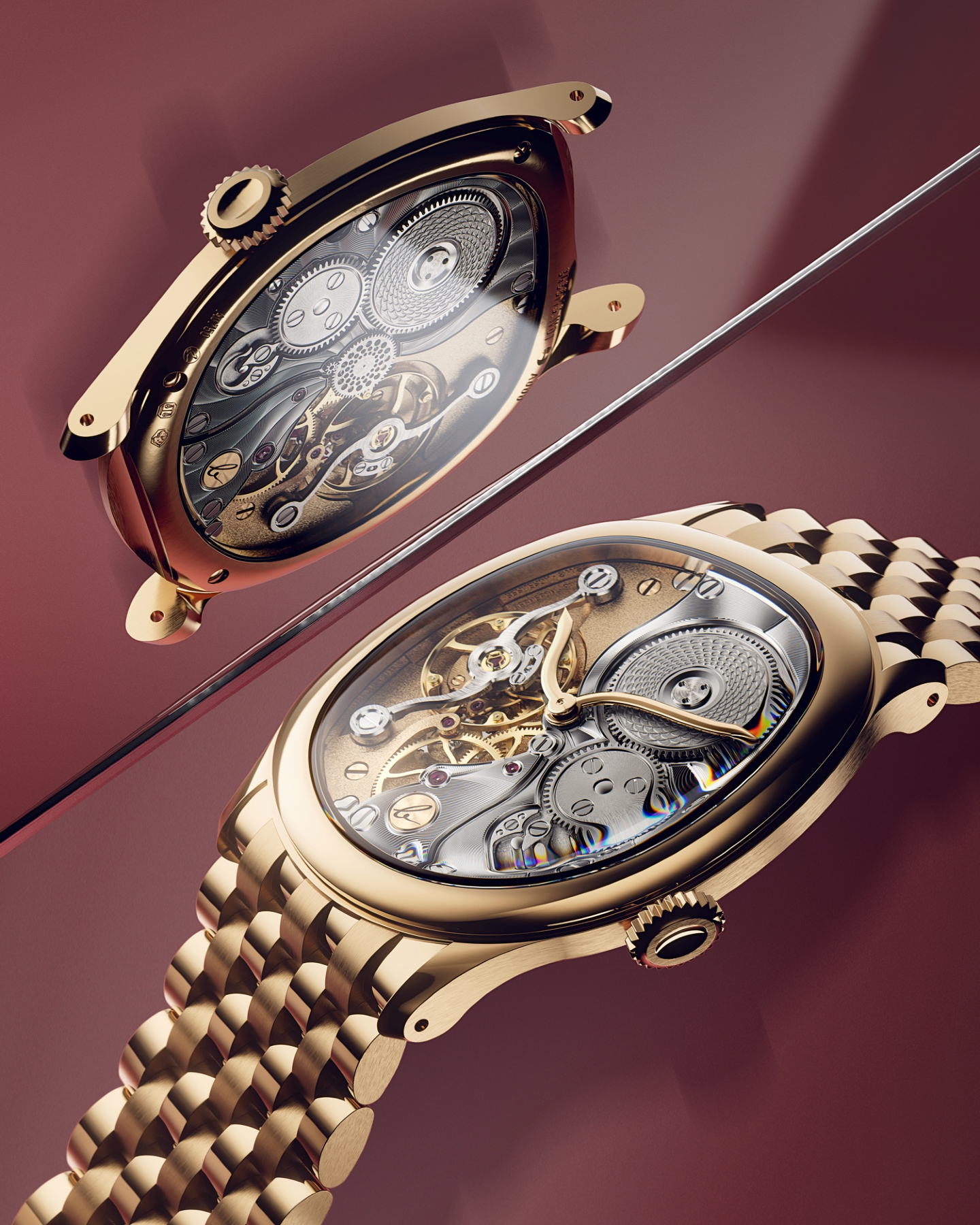
- The new Calibre 283 mirrors the architecture of the original Mirage movement on the dial side, with guilloché sectors serving as hour markers.
- The watch is shown in yellow gold and listed in yellow or white gold, with a 38 mm case and a multi-link gold bracelet.
A Mirage with more light on the wrist
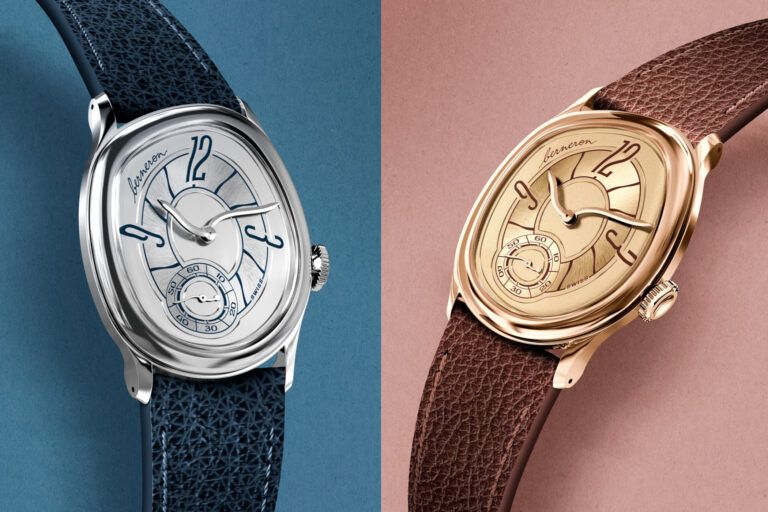
The Mirage Miroir keeps the essential silhouette of the 38 mm Mirage, a watch whose case, dial and movement were conceived as one continuous composition.
That matters because the Mirage was never a conventional case wrapped around an interesting calibre.
Berneron’s first model allowed the architecture of the movement to shape the watch itself, giving the case its soft asymmetry and the dial its flowing, almost liquid character.
The Miroir variation doesn’t abandon that language, but it changes the mood considerably.
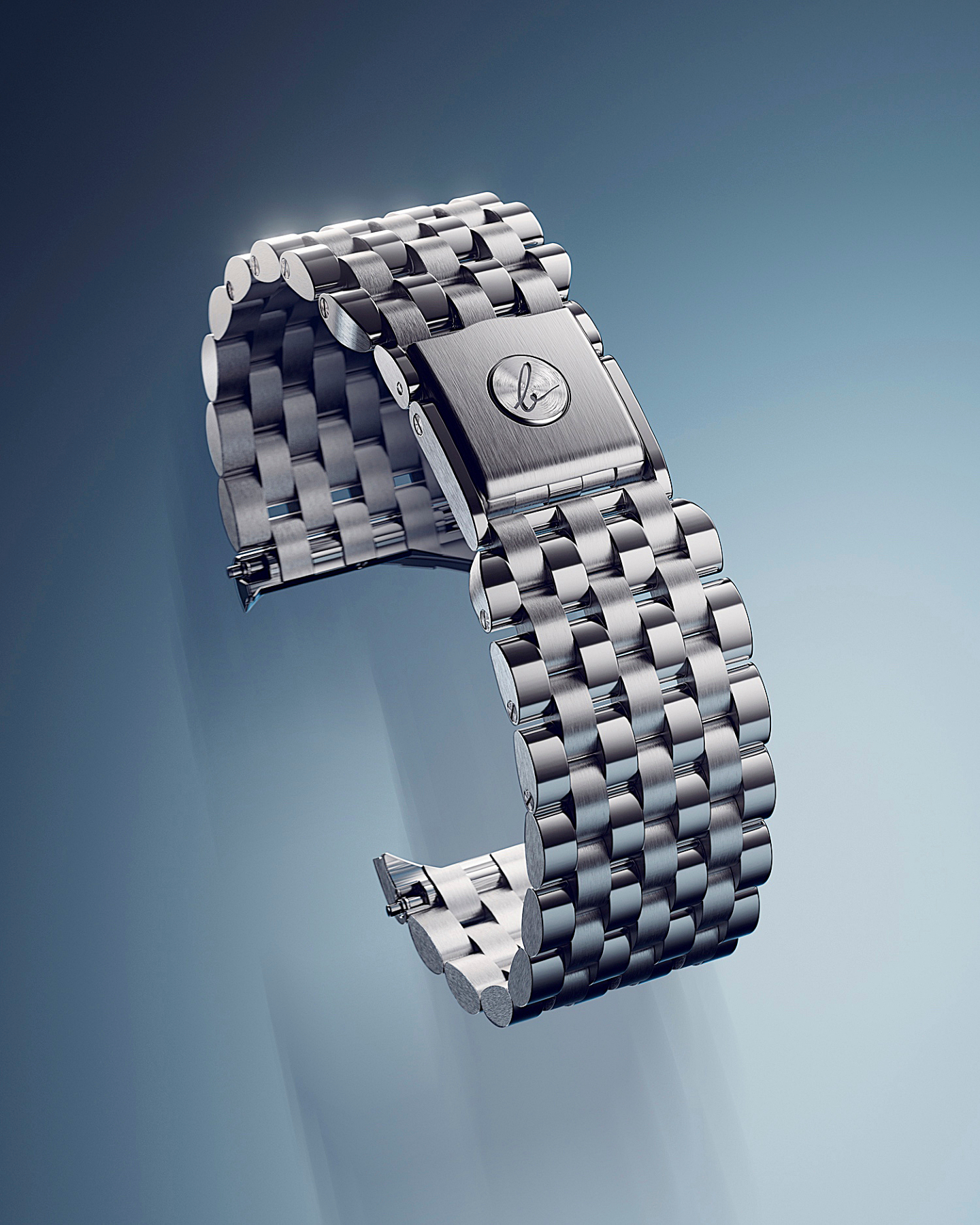
The most visible shift is the move from a leather strap to a gold bracelet, which gives the watch a brighter and more tactile presence without erasing the Mirage’s off-centre identity.
Calibre 283 turns the movement into its reflection
The name Miroir is doing real work here.
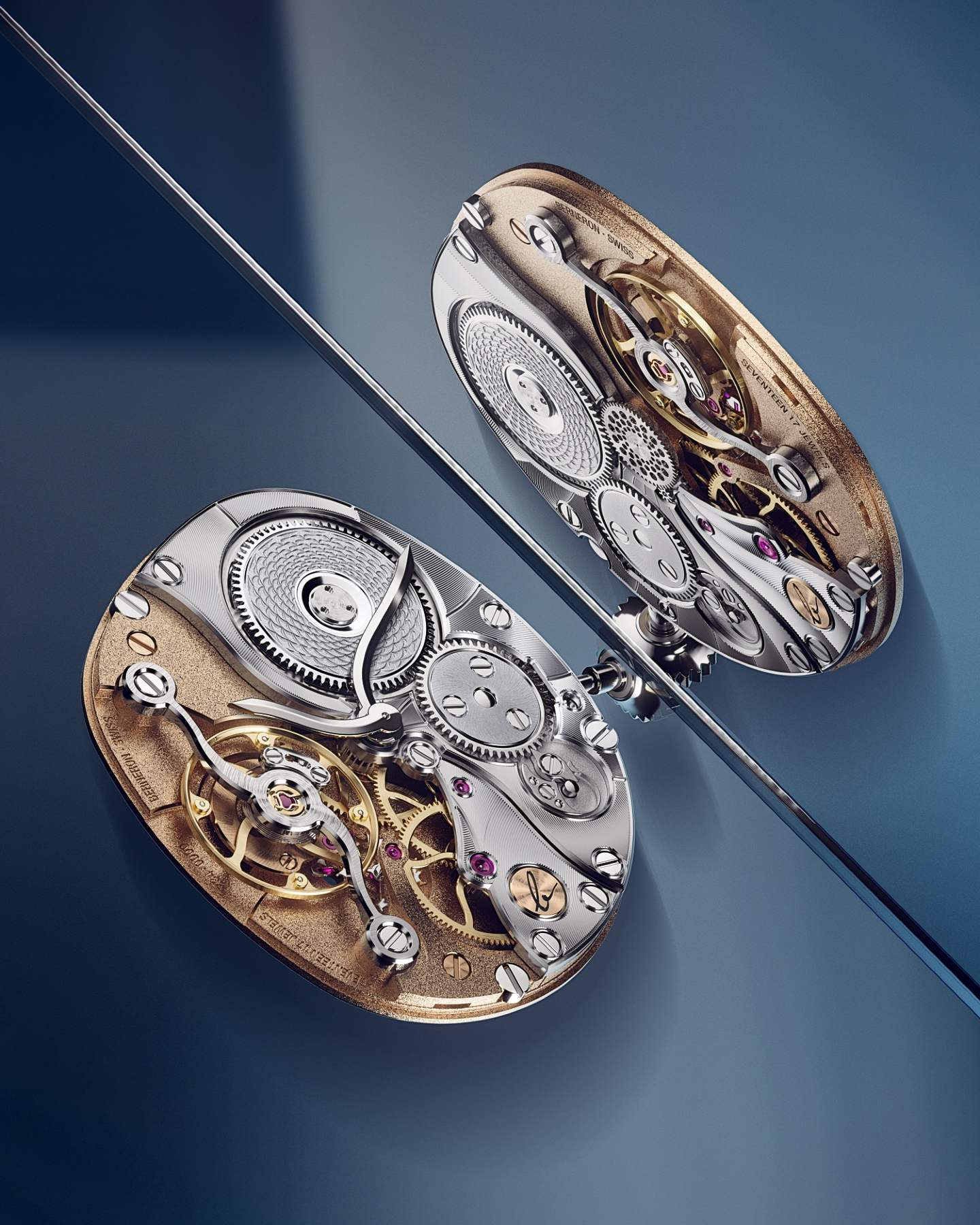
Inside the new model is Calibre 283, which shares the fundamental architecture of the earlier Calibre 233, then reinterprets it as a mirrored construction on the dial side.
It’s an elegant conceptual move for a watch already defined by the relationship between movement geometry and exterior shape.
Rather than simply skeletonising the original calibre for visual effect, Berneron has made the mirrored architecture part of the watch’s identity and legibility.
The guilloché sectors are not just decoration.
They double as hour markers, letting the eye read time from the patterned movement surface rather than from applied indexes placed above it.
The seconds indication has also been rethought, with the seconds wheel used as the running indicator to keep the dial-side architecture as open and uninterrupted as possible.
A gold bracelet changes the Mirage character
The bracelet is the other major departure.
Its multi-link construction appears to use several articulated rows, including a seven-row section that flows into the case and should give the watch a notably supple feel on the wrist.
On a Mirage, that matters visually as much as ergonomically.
The case already resists hard symmetry, so a bracelet that behaves like a continuation of the case feels more natural than a rigid, conventional attachment.
For now, the Mirage Miroir is listed in yellow gold and white gold.
The yellow gold version gives the design a warmer, more expressive character, while the white gold execution should sharpen the reflective idea in a quieter register once seen in full.
Details & Specifications
| Brand | Berneron |
|---|---|
| Model | Mirage Miroir |
| Case size | 38 mm |
| Case material | Yellow gold or white gold |
| Movement | Calibre 283 |
| Display | Mirrored dial-side movement architecture with guilloché sectors used as hour markers |
| Running indication | Seconds wheel used as the running indicator |
| Bracelet | Multi-link gold bracelet |
| Availability | Further details expected around Geneva Watch Days |
The Mirage Miroir looks like a carefully judged next step for Berneron, preserving the sculptural premise of the original while adding a more ornate, mechanically self-referential layer.
For collectors drawn to independent watchmaking at its most design-led, it’s the kind of quiet reveal that tends to become much louder once the watches are finally seen on the wrist.