Vanguart is the kind of watch company that makes the wider luxury industry look almost overbuilt.
In nine years, the La Chaux-de-Fonds maker has produced fewer than 200 watches, with just two retail partners and a team of 33 people. Yet its handless, high-complication watches have appeared on the wrists of Michael Jordan, Johnny Depp, Ed Sheeran and John Mayer, while Sam Altman commissioned seven numbered pieces engraved “Limited OpenAI” for the leadership team at OpenAI.
That unlikely visibility isn’t the result of volume, celebrity contracts or a conventional marketing machine. It comes from a very particular mix of technical nerve, scarcity and a product language that doesn’t look like anything else in contemporary watchmaking.
At a glance
- Vanguart has built fewer than 200 watches since its creation, yet has become one of the most visible names in ultra-independent watchmaking.
- Its signature Black Hole uses a handless time display, twin joystick-like crowns and a central flying tourbillon within a 750-component movement.
- The brand produces only a few dozen watches a year, with prices ranging from CHF 150,000 for the Orb in titanium to more than CHF 400,000 for certain Black Hole editions.
From a Basel living room to La Chaux-de-Fonds
Vanguart began in Basel in 2017, at a moment when the city was still tied to the old watch fair calendar and independent watchmaking was moving into a more experimental phase.
Axel Leuenberger, a mechanical designer trained at Audemars Piguet Renaud & Papi, started the company from his living room.
He was joined by Jérémy Freléchox, another APRP alumnus who had worked on movements for names including Audemars Piguet, Richard Mille and Chanel before leading movement creation projects after six years at Girard-Perregaux.
The conceptual spark came from industrial designer Thierry Fischer of Etude de Style, whose diploma project imagined a watch without hands and without much concern for whether a movement could actually make it work.
That concept became the Black Hole.
Mehmet Korutürk, an Istanbul financier with a Formula 1 background, completed the founding group by bringing outside capital and a network beyond the traditional Swiss watch industry.
What followed was not a quick route to market.
The Black Hole passed through four prototypes and more than a hundred case shapes before arriving as a finished watch, with a launch originally intended for 2020 and ultimately landing in 2021.
That long development arc says a great deal about Vanguart’s character.
The company positions itself less as a fashion-driven luxury label than as an engineering atelier that happens to make rare and expensive wristwatches.
Its output remains deliberately small, with no stated ambition to scale into conventional luxury production.
The Black Hole made Vanguart impossible to ignore
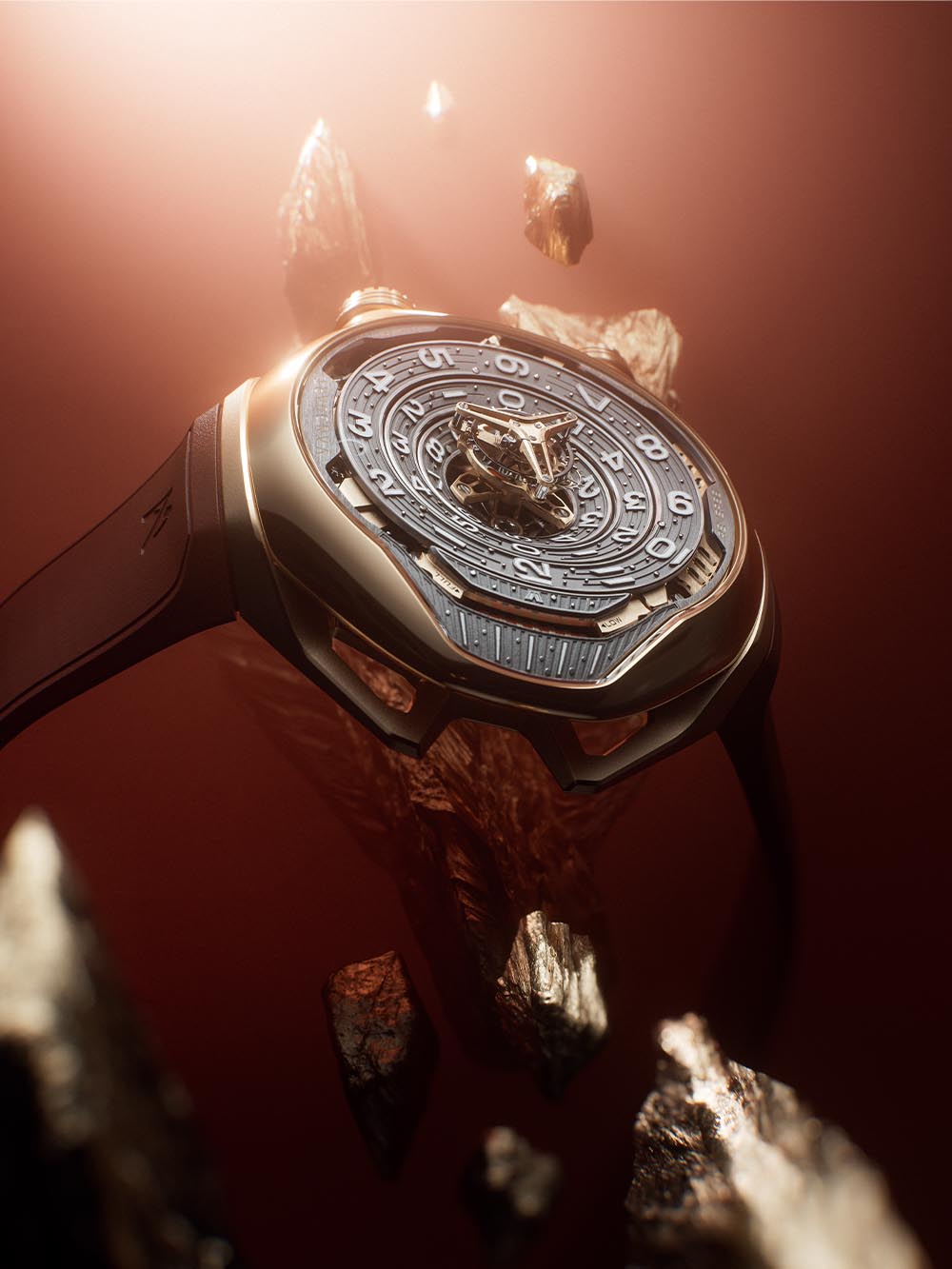
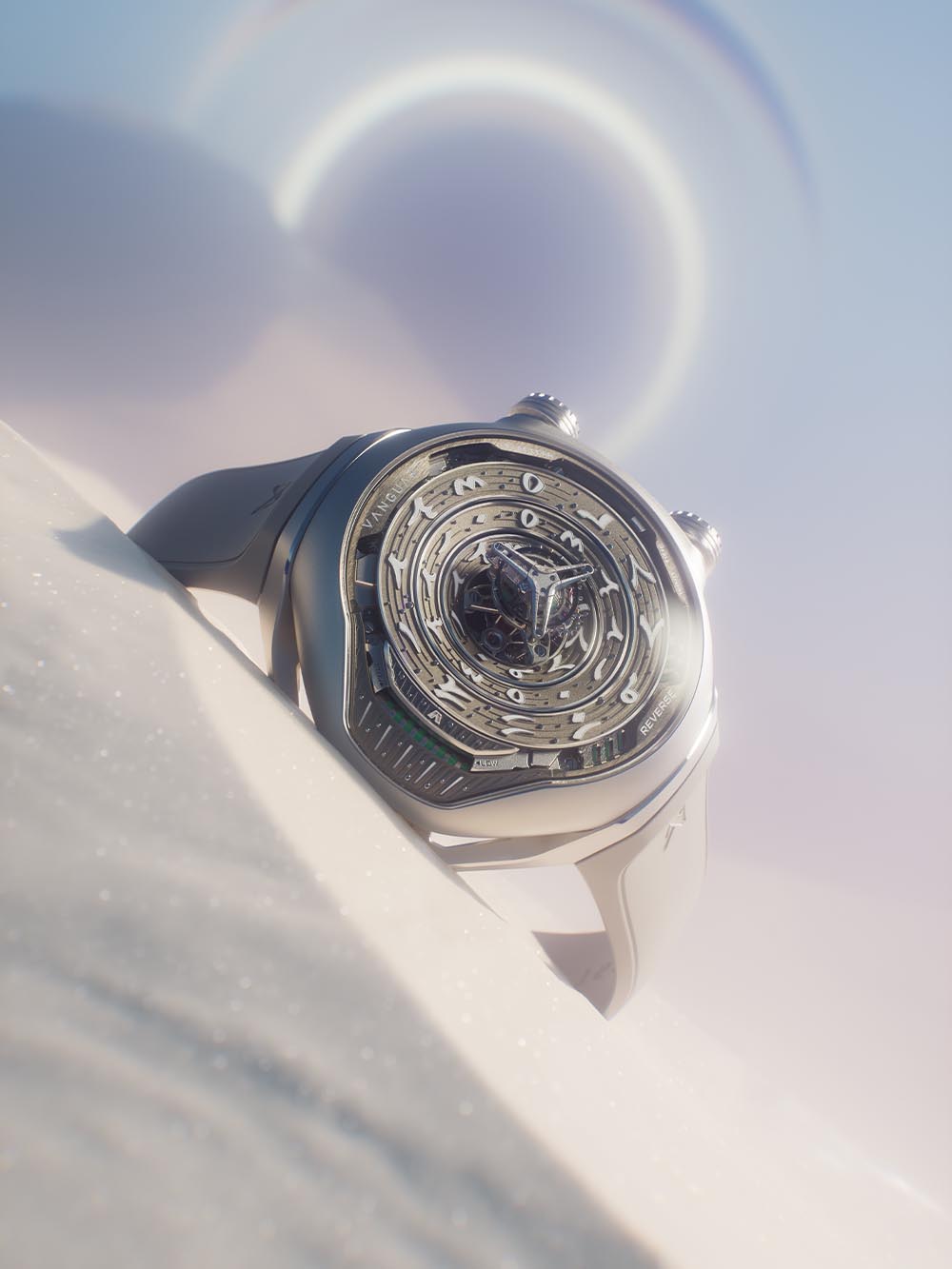
The Black Hole is still the watch that defines the brand.
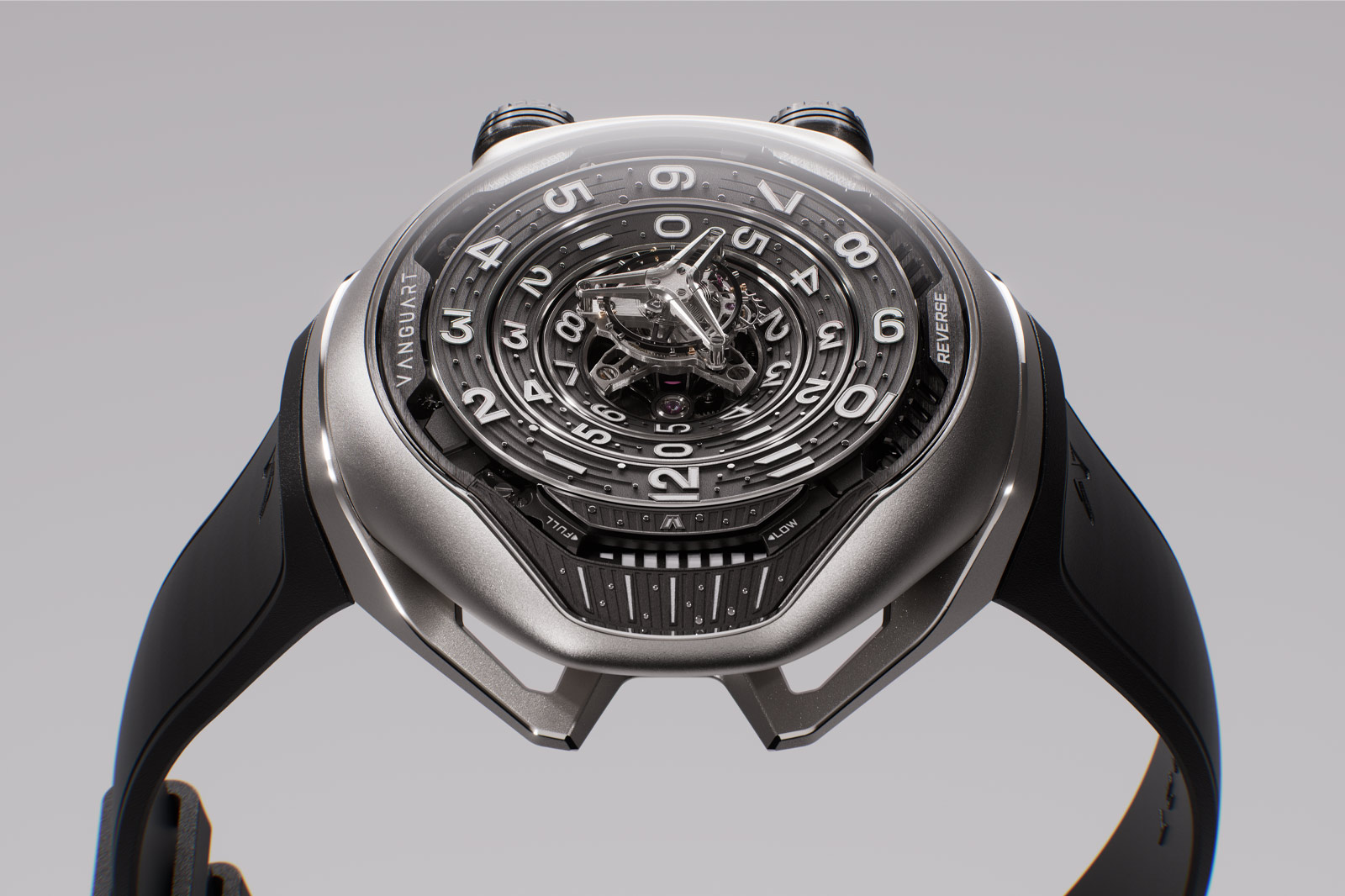
It has no hands, two crowns that operate more like joysticks and a flying tourbillon placed at the centre of the dial, exactly where it creates the greatest architectural challenge.
Around that tourbillon, three rotating discs display the hours and minutes through a linear readout that feels mechanical and strangely digital at the same time.
When the time is adjusted, the display jumps into position in 200 to 500 milliseconds, with a fractional pause that gives the mechanism an almost electronic tension.
The movement, calibre T-1701, is built from 750 components and uses two barrels, twin gear trains and titanium for the mainplate and bridges.
Finishing includes micro-blasting, satin finishing, black polishing and hand bevelling, all housed within a 43mm micro-blasted case that Vanguart describes as an exoskeleton.
The central flying tourbillon alone contains 88 parts and weighs just 0.225 grams.
It’s not a complication added for decoration, but the anchor point around which the entire watch is designed.
That is part of why the Black Hole has resonated beyond the usual collector circle.
On the wrist, it reads less like a traditional Swiss watch and more like a kinetic object with its own internal physics.
Michael Jordan wears the original Black Hole, while Johnny Depp has worn one publicly and other collectors in music and culture have helped put Vanguart into a space usually reserved for far larger brands.
The watch remains exceptionally limited, with editions typically capped at eight pieces and prices starting around CHF 300,000.
The Orb brings the idea closer to daily wear
If the Black Hole is Vanguart at its most extreme, the Orb is the model that makes the brand’s mechanical language easier to imagine on the wrist every day.

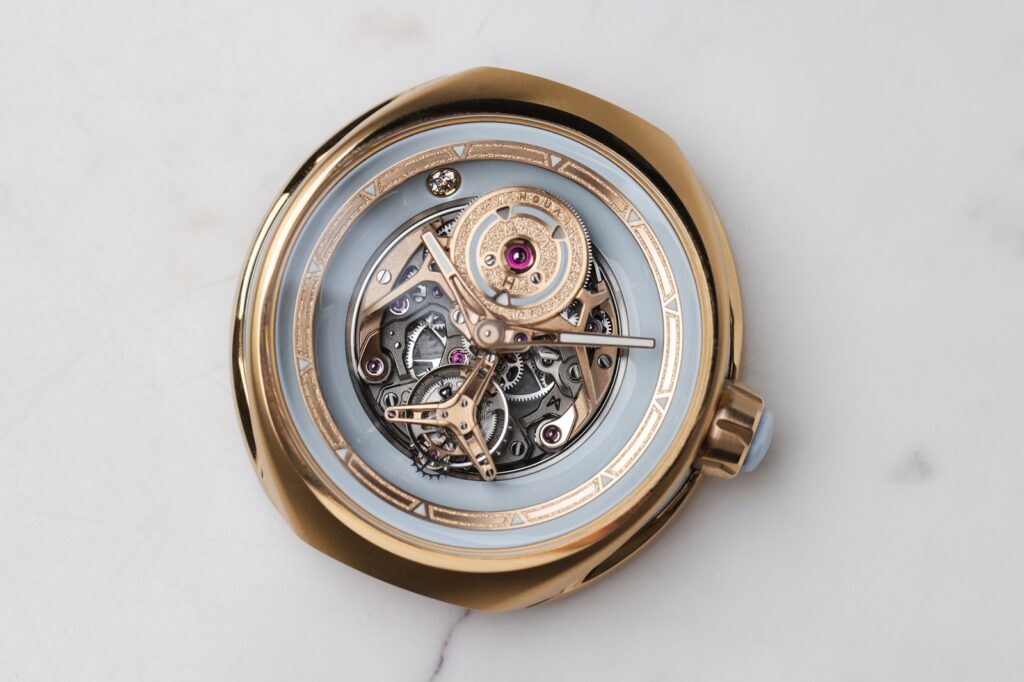
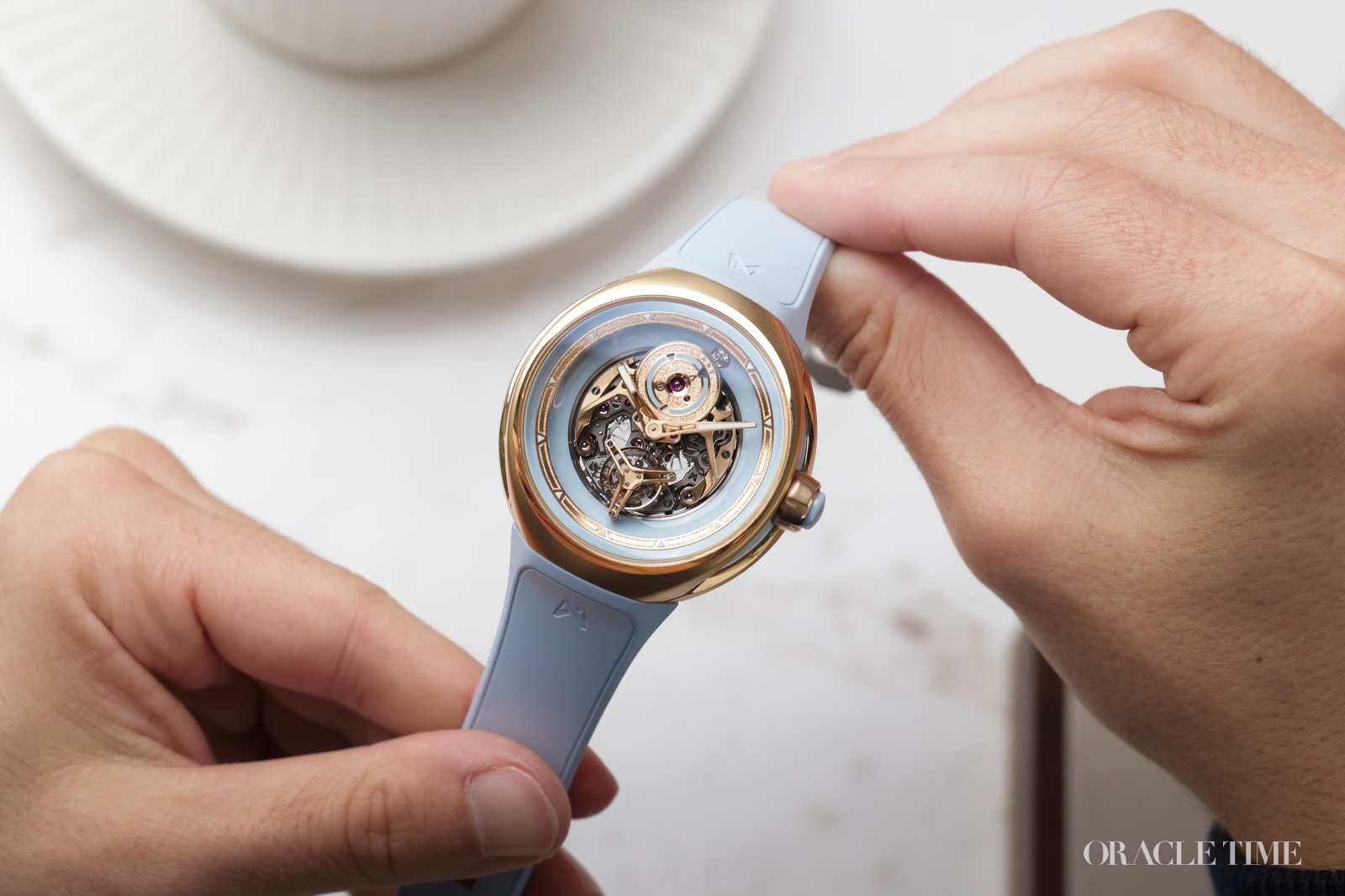
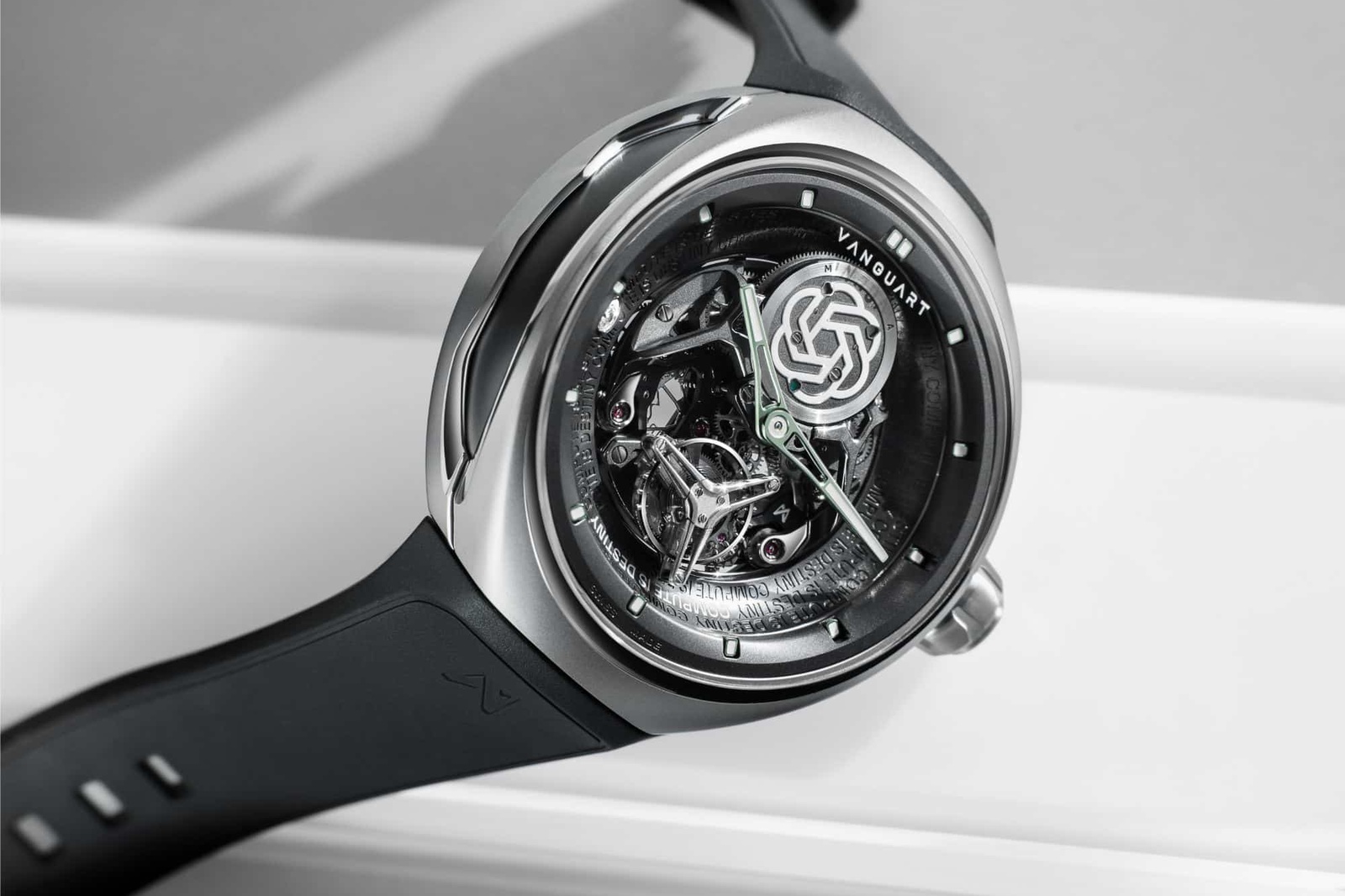
Launched in 2024, the Orb uses a round 41mm case and measures 10.5mm thick, with a curved caseback designed to sit closely against the wrist.
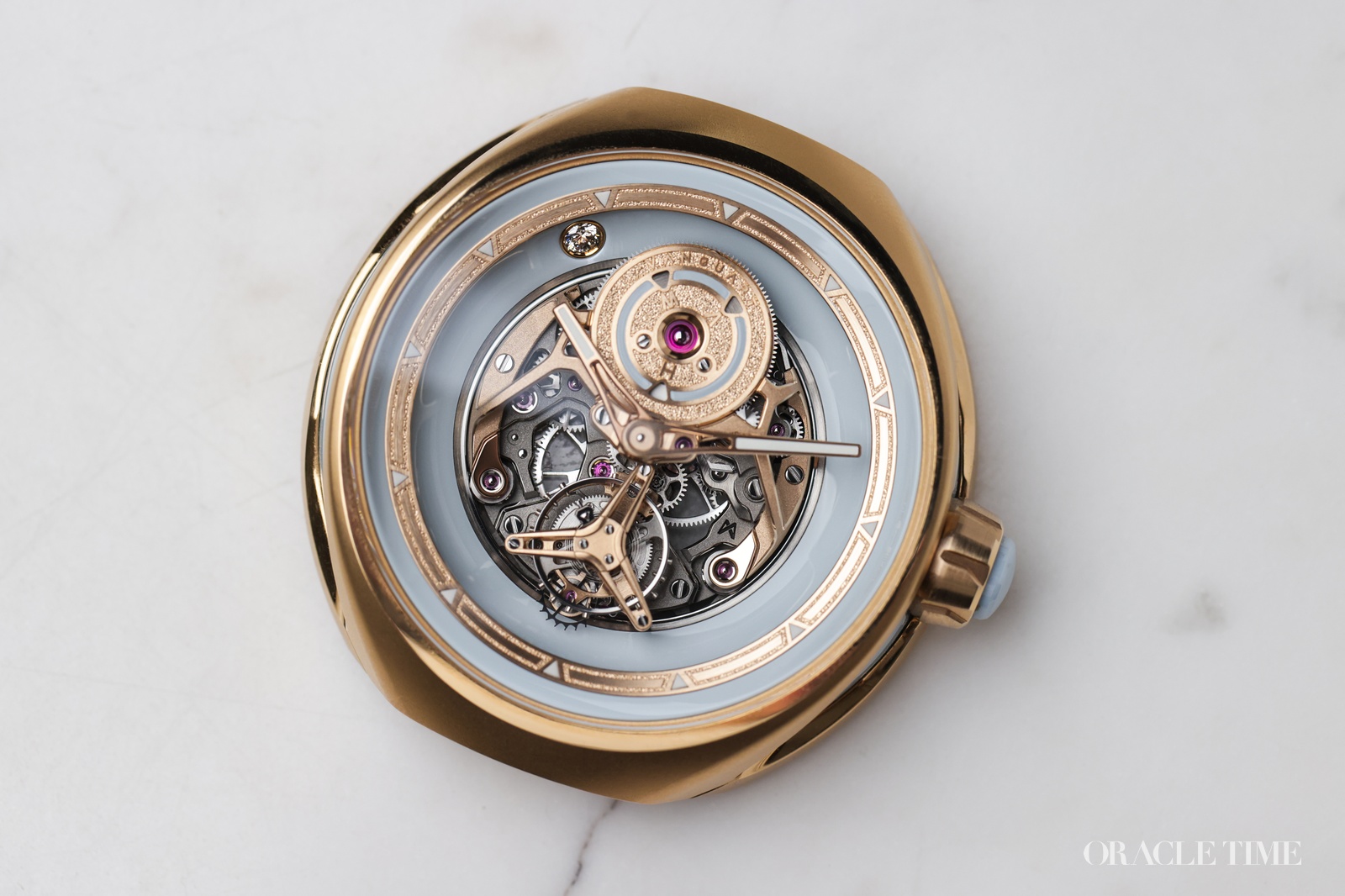
The movement remains fully exposed and emphatically technical.
It has 395 components, a 3Hz free-sprung balance, a flying tourbillon at six o’clock and a 60-hour power reserve.
The defining feature is a crown pusher that switches between three modes shown by a ring around the barrel at 12 o’clock.
M is for manual winding, A is for automatic winding and H is for time setting.
In automatic mode, a bowl-shaped titanium mass tipped with a two-millimetre diamond is released to orbit around the dial on a sloped track.
It could easily have been theatre for theatre’s sake, but on the Orb it becomes an unusually direct way to make the winding system visible.
The Orb is priced at CHF 150,000 in titanium and CHF 180,000 in rose gold.
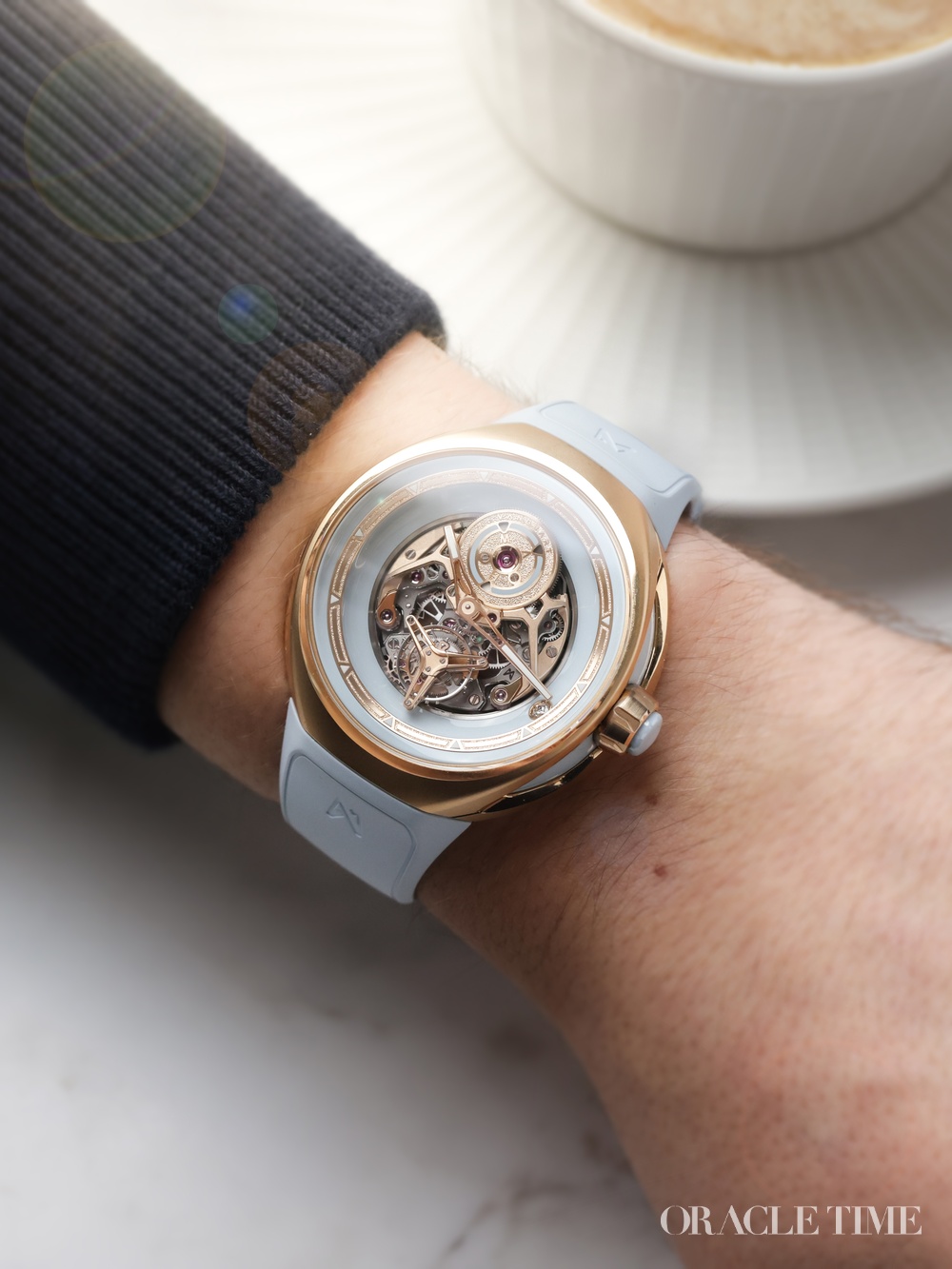
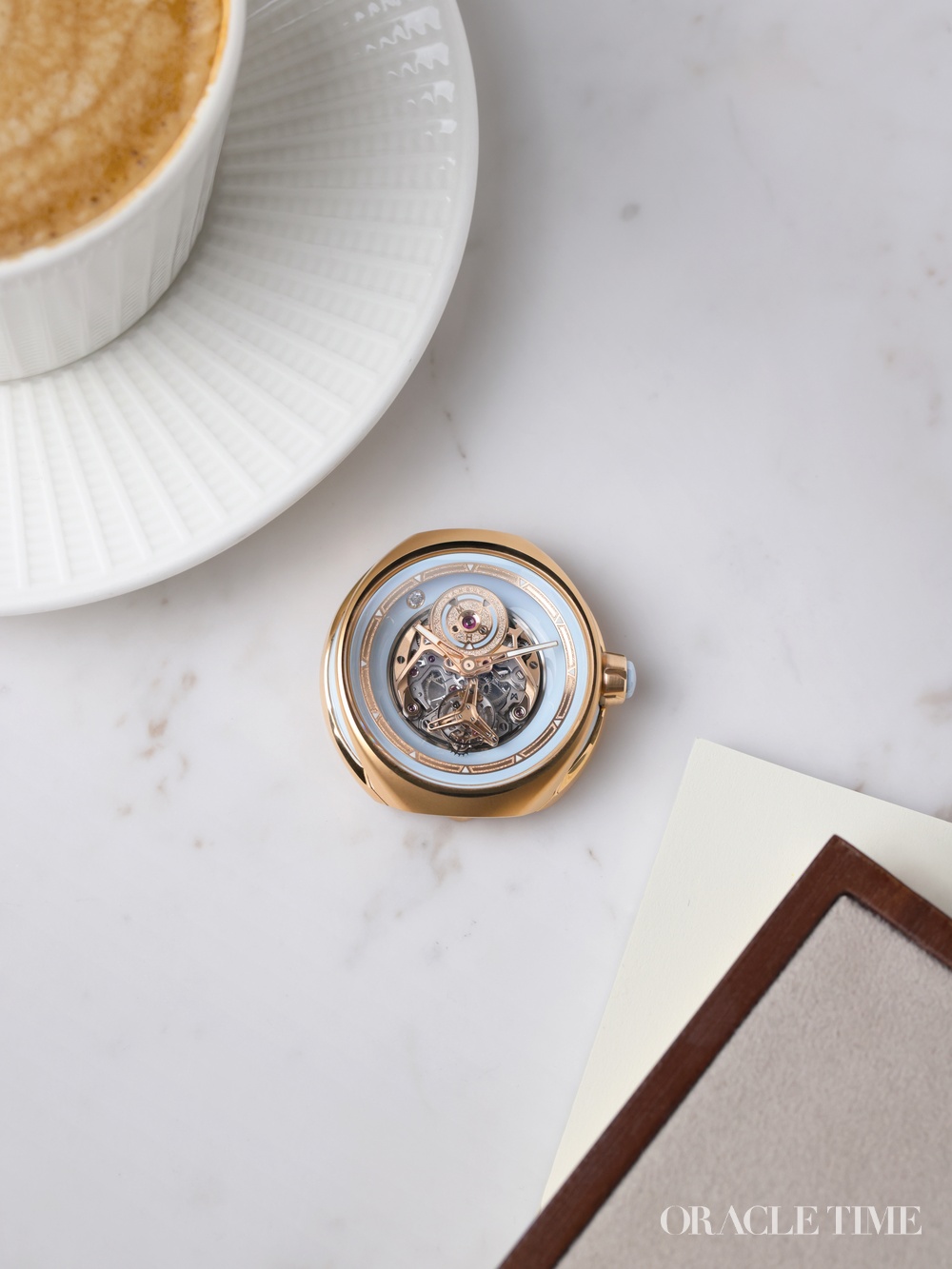
In 2025, the line gained its first ceramic editions after a private client asked for unique Orbs incorporating the material.
That project led to two 25-piece editions, the Orb Pink Ceramic Titanium and the Orb Blue Ceramic Rose Gold.
The colours are deliberately soft rather than severe, with dusty pink and powder blue ceramic set into the case flanks and the pusher inside the crown.
The ceramic components are shaped into the Orb’s compound curves and polished by hand, while the curved rehaut and orbital mass are colour-matched through a micro-painting process.
Scarcity with a modern cultural signal
Vanguart’s ascent also reflects a shift in what high-end collectors want from independent watchmaking.
Rarity alone is no longer enough, and neither is hand-finishing in isolation.
The most compelling contemporary independents tend to offer a complete point of view, where the mechanics, design, ownership experience and cultural presence all feel internally consistent.
Vanguart has managed that with an unusually narrow footprint.
Its watches are sold through only two retailers, Material Good in New York and Ahmed Seddiqi & Sons in Dubai, with the rest handled directly.
The OpenAI commission sharpened that positioning further.
Seven numbered, engraved watches made for the company’s leadership team were not offered for public sale, turning Vanguart into a private symbol inside one of the most watched companies in technology.
For a brand whose watches already look as if they belong at the meeting point of mechanics and computation, the connection felt unusually precise.
That doesn’t make Vanguart a mainstream name, and it probably shouldn’t become one.
Its appeal lies in the sense that the object could only exist at low volume, with a small group of people obsessing over an idea that most larger companies would sand down into something safer.
Details & Specifications
| Brand | Vanguart |
|---|---|
| Founded | 2017 |
| Base | La Chaux-de-Fonds, Switzerland |
| Total production | Fewer than 200 watches |
| Team size | 33 employees |
| Retail partners | Material Good in New York and Ahmed Seddiqi & Sons in Dubai |
| Black Hole case size | 43mm |
| Black Hole movement | Calibre T-1701 with 750 components |
| Black Hole complication | Central flying tourbillon and handless jumping time display |
| Black Hole power reserve | 42 hours |
| Black Hole edition size | Typically eight pieces |
| Black Hole pricing | From around CHF 300,000, with recent editions at CHF 355,000 and CHF 410,000 |
| Orb case size | 41mm |
| Orb thickness | 10.5mm |
| Orb movement | Exposed titanium movement with 395 components |
| Orb complication | Flying tourbillon at six o’clock and orbital automatic winding mass |
| Orb frequency | 3Hz |
| Orb power reserve | 60 hours |
| Orb pricing | CHF 150,000 in titanium and CHF 180,000 in rose gold |
| Orb ceramic editions | Pink Ceramic Titanium and Blue Ceramic Rose Gold, 25 pieces each |
Vanguart’s achievement is not simply that famous people have noticed it.
It’s that the watches feel genuinely difficult to categorise, even in a segment full of costly experiments.
For collectors who want independent watchmaking with contemporary force rather than nostalgic refinement alone, Vanguart has become one of the rare names that can make a six-figure mechanical watch feel like it came from the future rather than the archive.