Vacheron Constantin’s Métiers d’Art watches have long treated the dial as more than a place to read time.
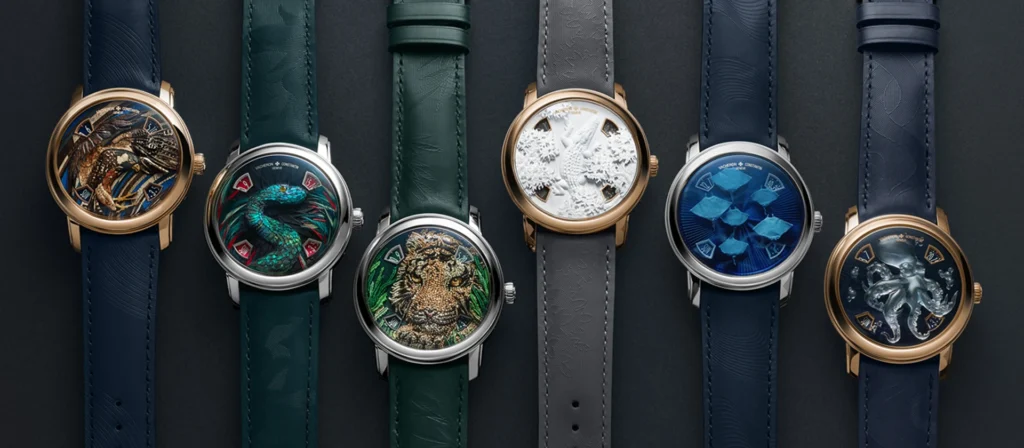
With Métiers d’Art Tribute to the Animal Kingdom, the manufacture gives that idea a particularly vivid form, presenting six concept watches that turn animals into highly detailed, three-dimensional scenes.
The series sits within the Maison’s One of Not Many Crafts Programme and brings outside artisans into close dialogue with its in-house craft workshops.
At a glance
- Vacheron Constantin has created six Métiers d’Art concept watches dedicated to the snake, octopus, manta ray, tiger, crocodile and falcon.
- Each watch uses the Calibre 2460 G4, with hours, minutes, day and date shown through four apertures to keep the dial open for artistic work.
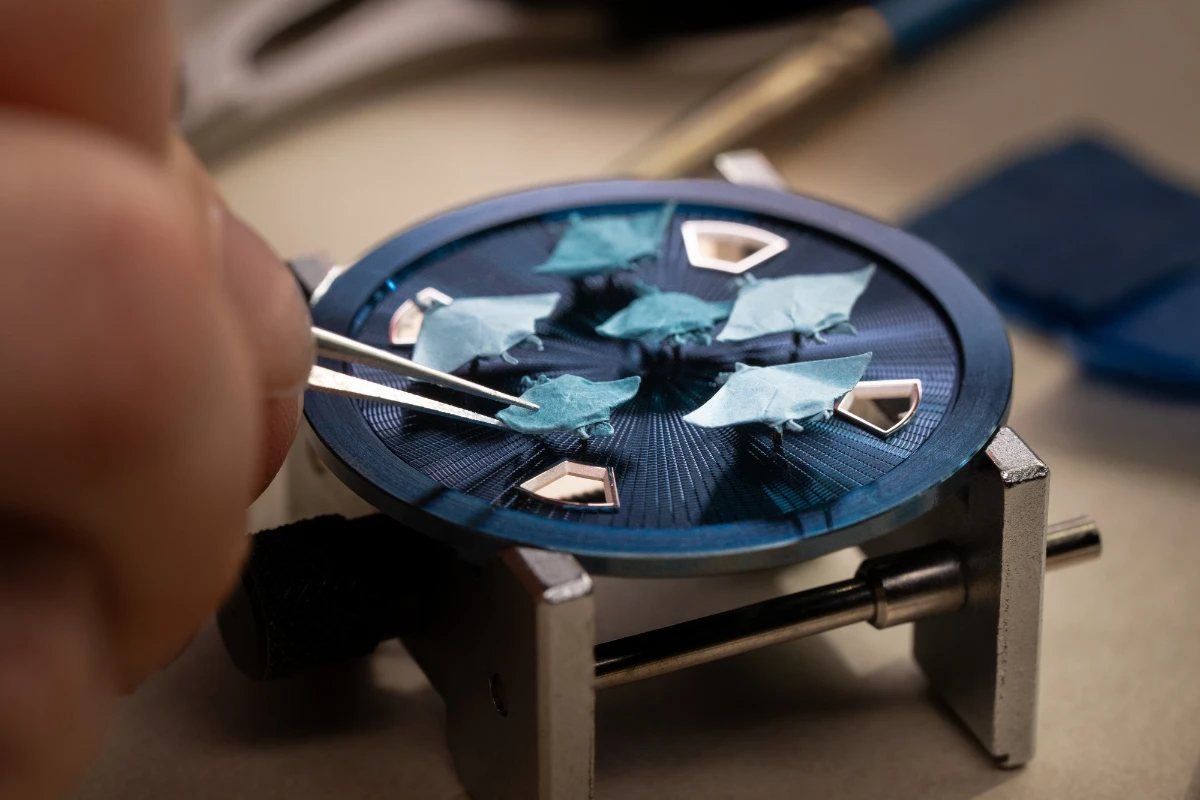
- The project explores rare crafts at wristwatch scale, including featherwork, gold embroidery, paper sculpting, wood marquetry, glass sculpting and micro-origami.
A dial architecture built for craft
The practical brilliance of the series begins with the movement.
Vacheron Constantin uses its Calibre 2460 G4, a mechanism that displays the hours, minutes, day and date through four apertures rather than central hands.
That decision leaves the central dial area clear, giving artisans a broad visual field for animals, foliage and sculptural depth.
The canvas is still brutally small.
Each watch is housed in a 42 mm case, with only 4 mm between the dial and the sapphire crystal for the entire composition to exist.
That narrow space is what gives the project its tension, because many of the techniques involved were not originally conceived for watchmaking, let alone for miniature work under glass.

Six animals, six different craft languages
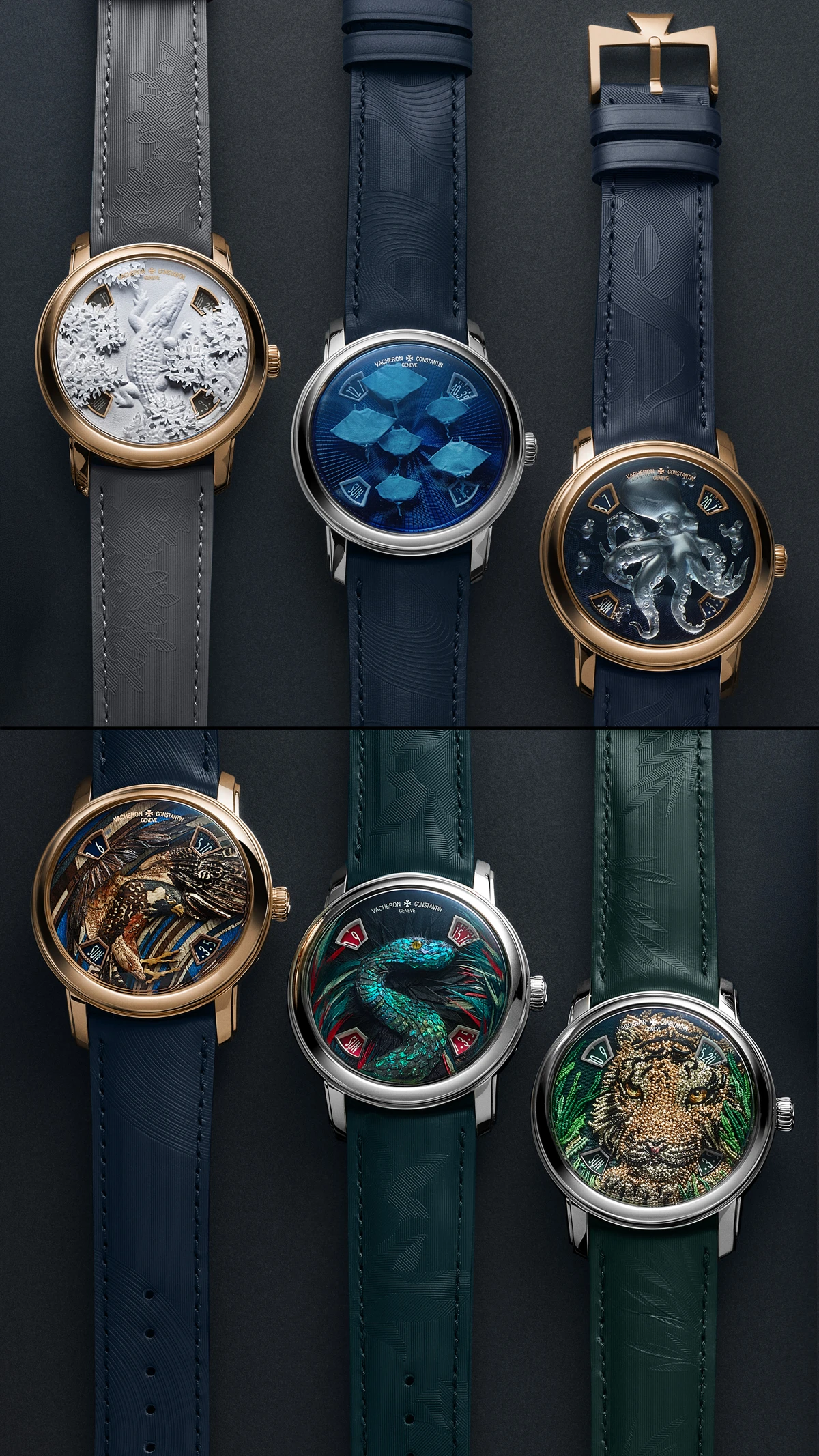
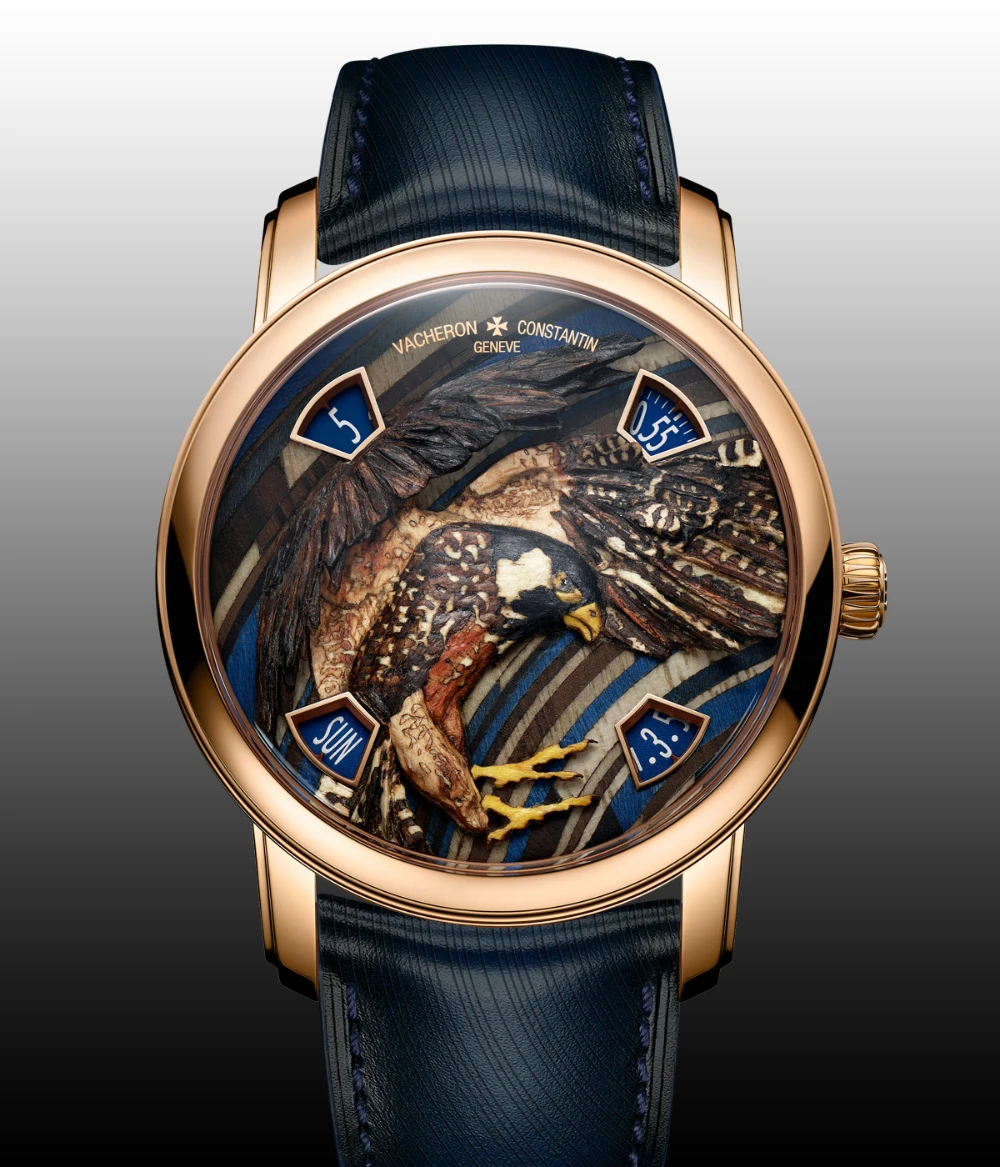
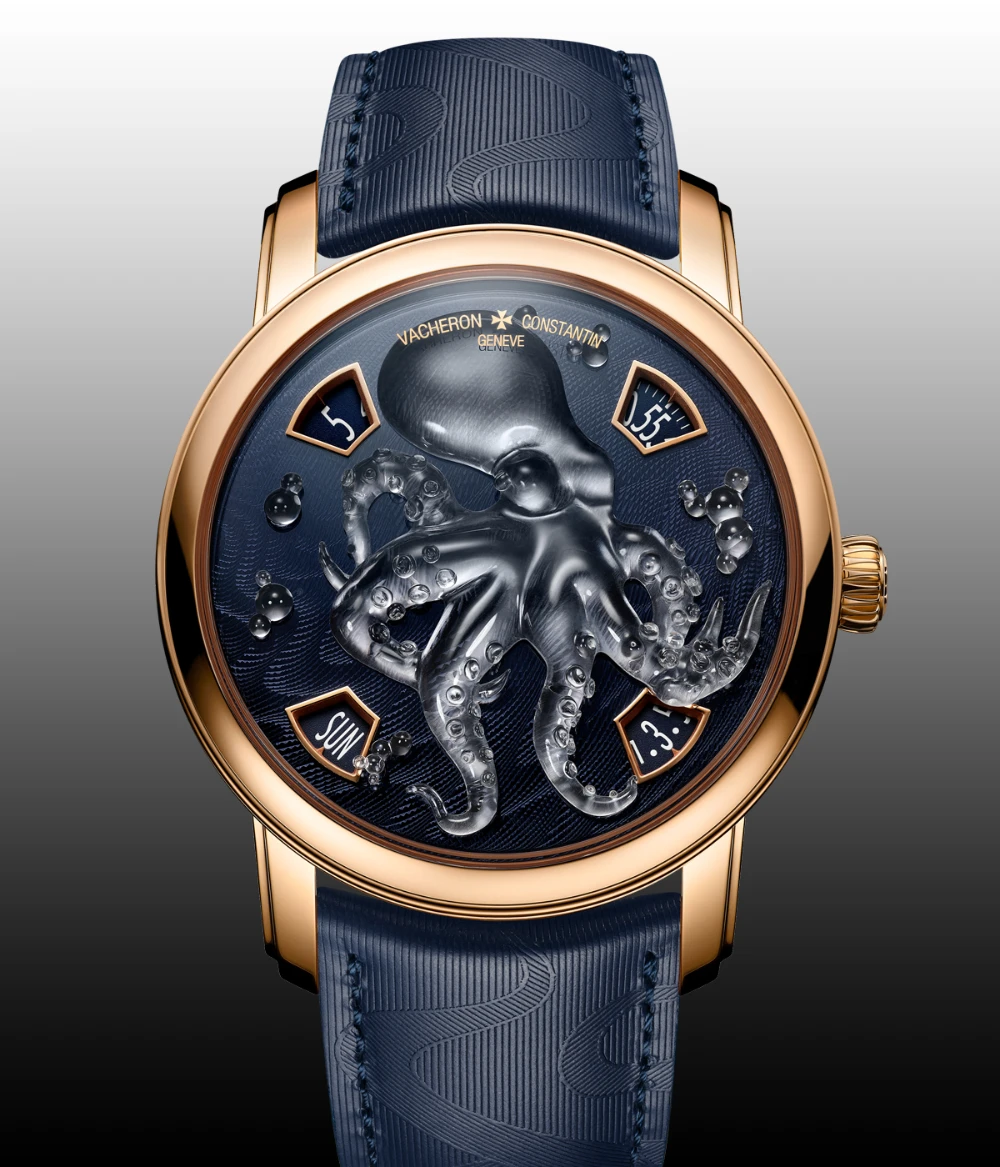
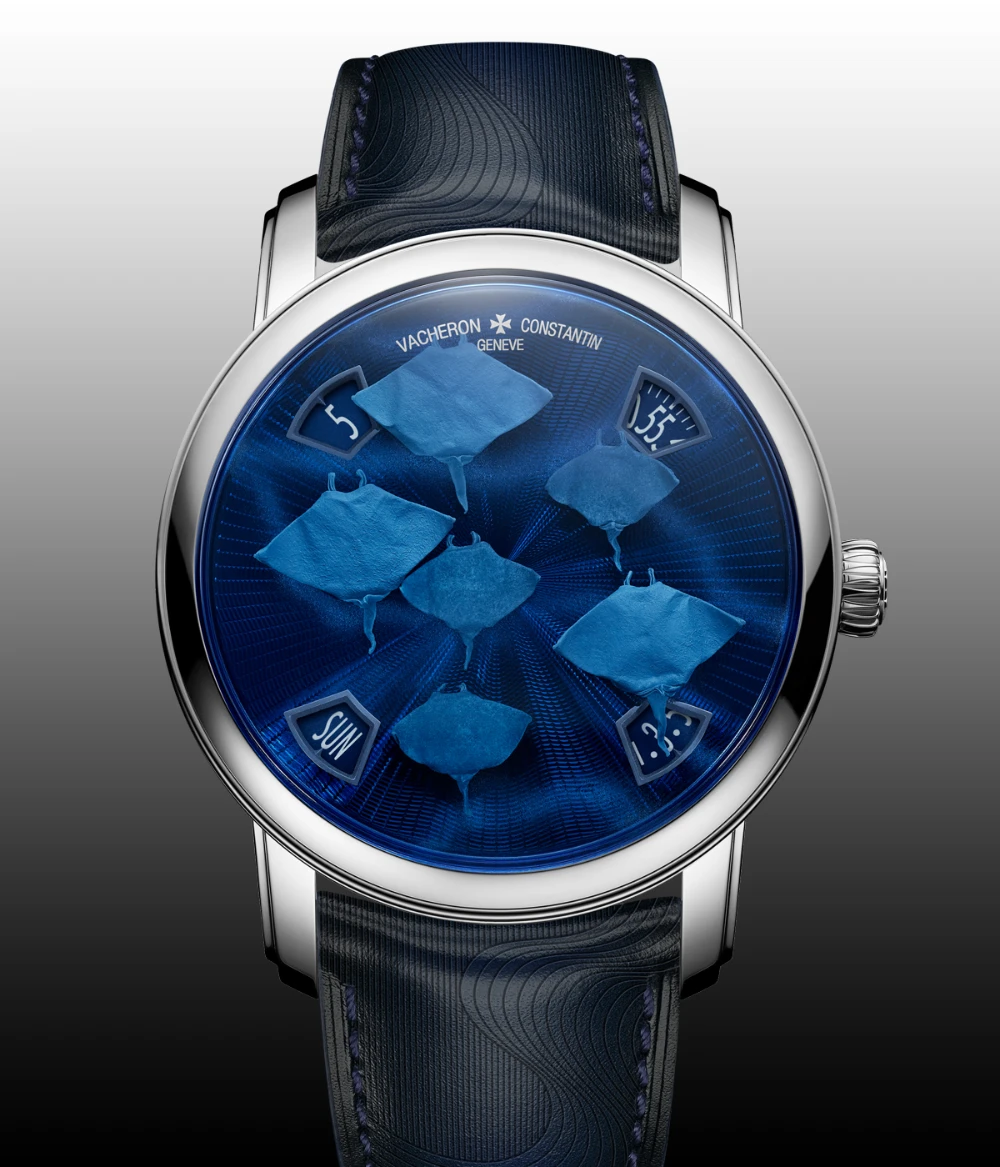
The collection forms a miniature bestiary of six creatures, each matched with a distinct artisanal discipline.
The chosen animals are the snake, octopus, manta ray, tiger, crocodile and falcon.
Across the series, Vacheron Constantin explores featherwork, gold embroidery, paper sculpting, wood marquetry, glass sculpting and micro-origami.
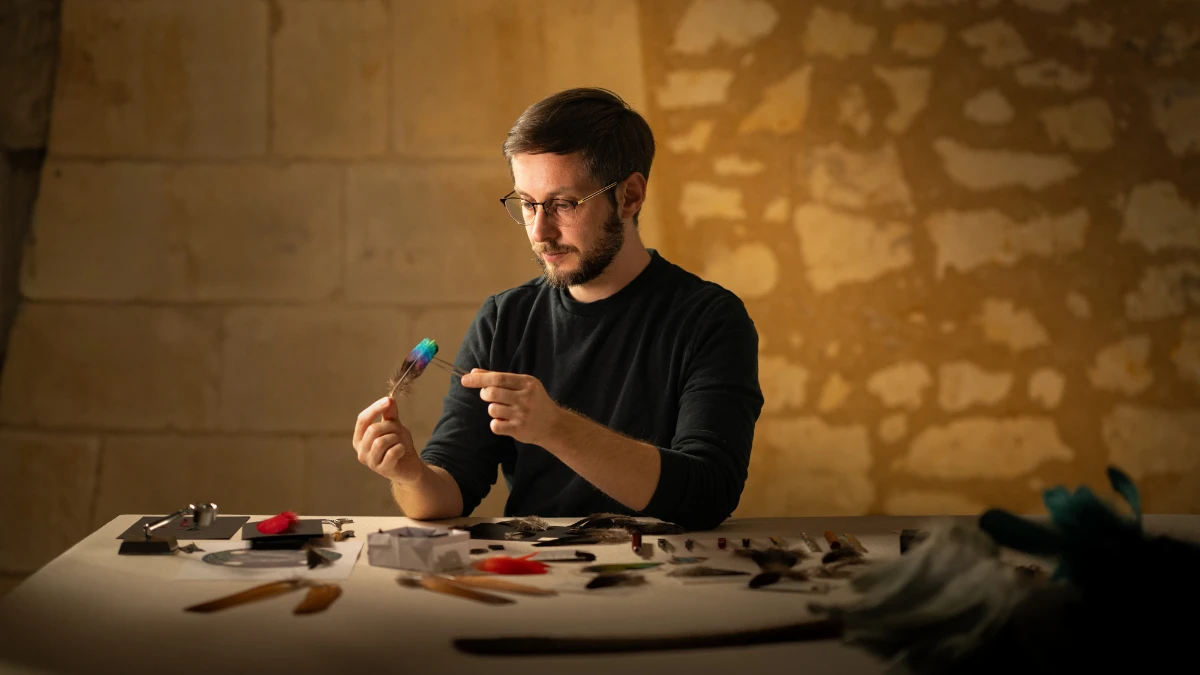
The approach is notable because the manufacture invited six independent artisans from outside conventional watchmaking to work alongside its Métiers d’Art specialists.
That collaboration required new tools, adapted processes and a willingness to rethink familiar crafts at a radically reduced scale.
The animal theme also fits naturally within Vacheron Constantin’s longer decorative history.
Animal motifs have appeared in the house’s creations for two centuries, from an 1826 pocket watch with a black enamelled serpent to more recent high jewellery and artistic pieces.
Feather Snake and Tiger broidery show the range
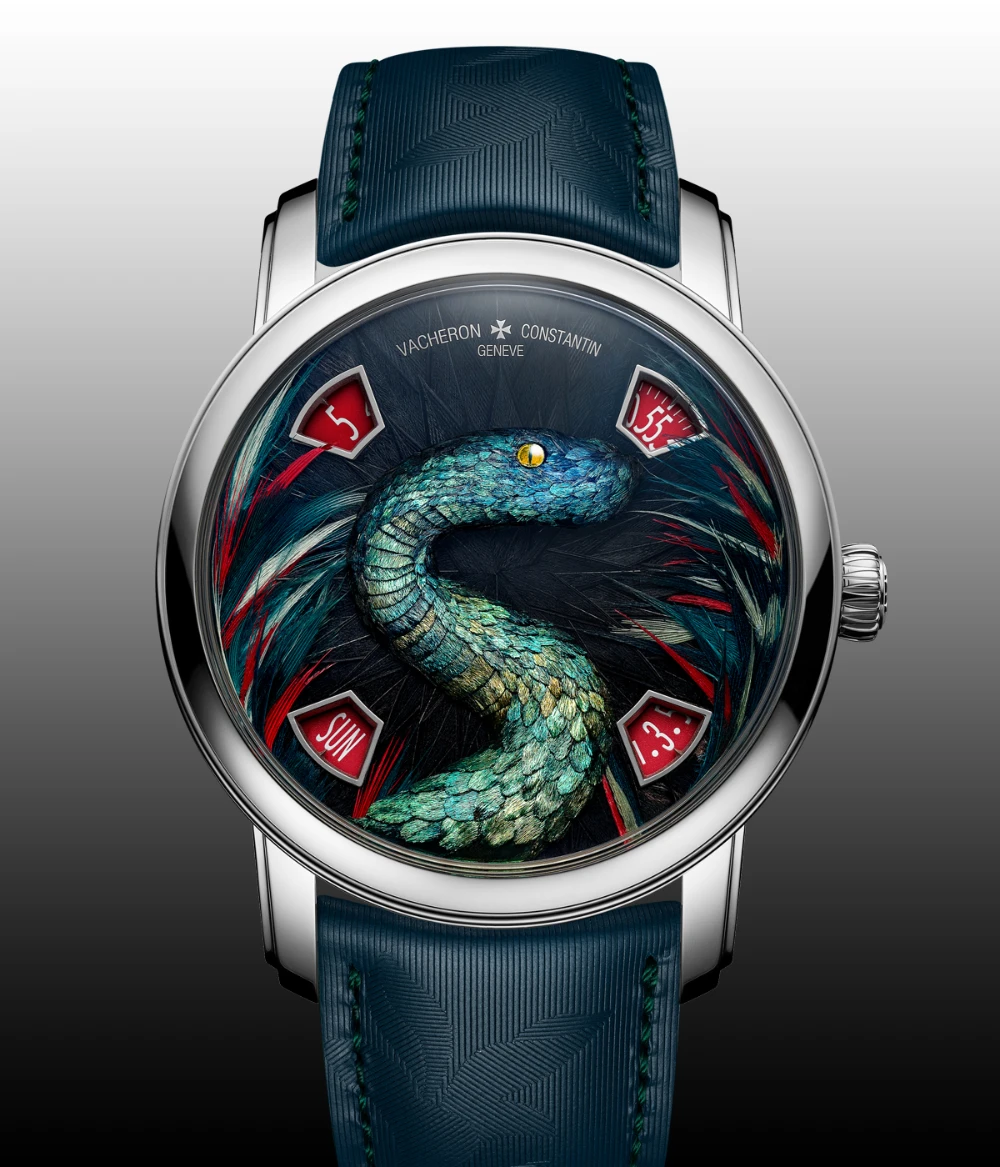
Feather Snake is among the most striking pieces in the series because it makes the limited dial volume feel almost impossible.
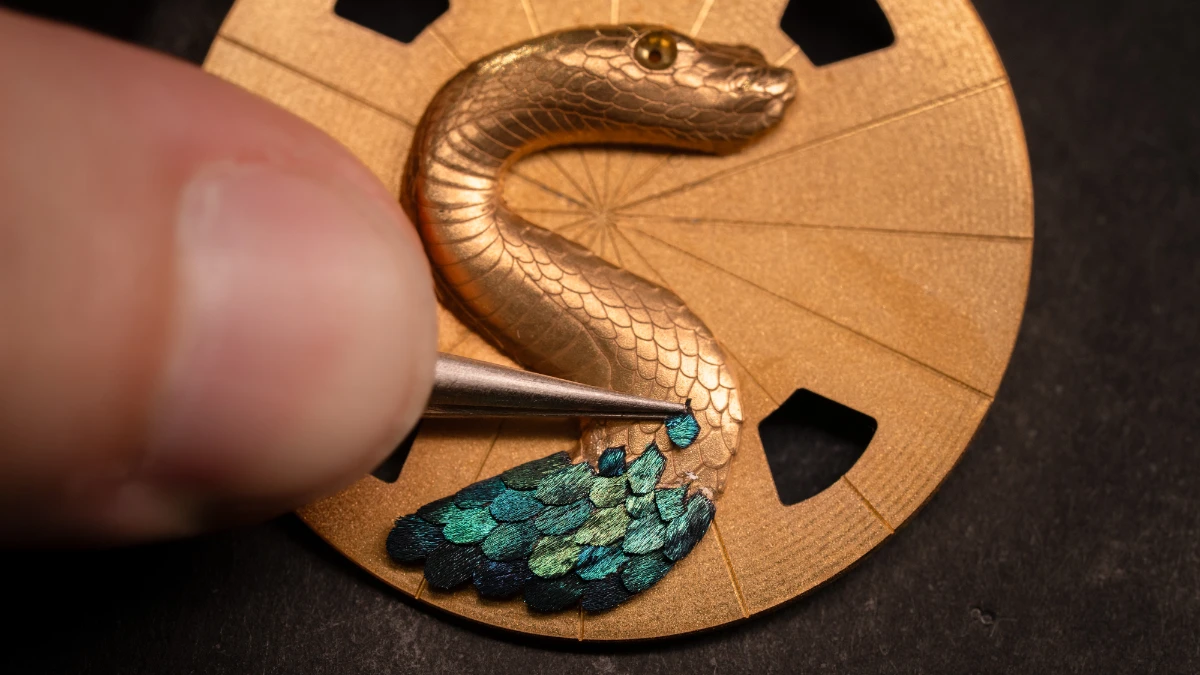
The snake appears to coil upward from the dial, its body supported by a custom metal applique beneath the featherwork.
The composition uses seven feathers from the male Lophophore, also known as the Himalayan monal, whose plumage shifts between metallic blue, green, purple and copper in changing light.
Those feathers were cut into around 200 tiny pieces and applied to silk paper to create the serpent’s body.
Goose feathers form the surrounding foliage, while the snake’s eye is crafted in 18K gold and enamel.
The dial took about 250 hours to complete, and the work required handmade micro-tools, including a tiny scalpel reshaped from a needle and an adapted sewing needle used to apply points of glue.
Tiger broidery takes a different route, using gold embroidery to build the animal’s body and its surrounding jungle.
The tiger’s orange and white tones are achieved with 9K yellow and white gold embroidery wires, while its black stripes use ceramic-coated black wires laid over a copper base.

The jungle setting is embroidered onto green silk specially commissioned from a British silk manufacturer.
Individual grasses are stitched in multiple shades of Japanese silk, adding movement and depth around the animal.
To support the embroidery, the silk is stitched directly to a specially engineered titanium dial plate, then layered with silk and cotton.
The use of 9K gold thread was technically demanding, since higher gold content changes how the material behaves during twisting, coiling and stitching.
The Tiger broidery dial required approximately 175 hours of work.
Paper Croc and the poetry of humble material
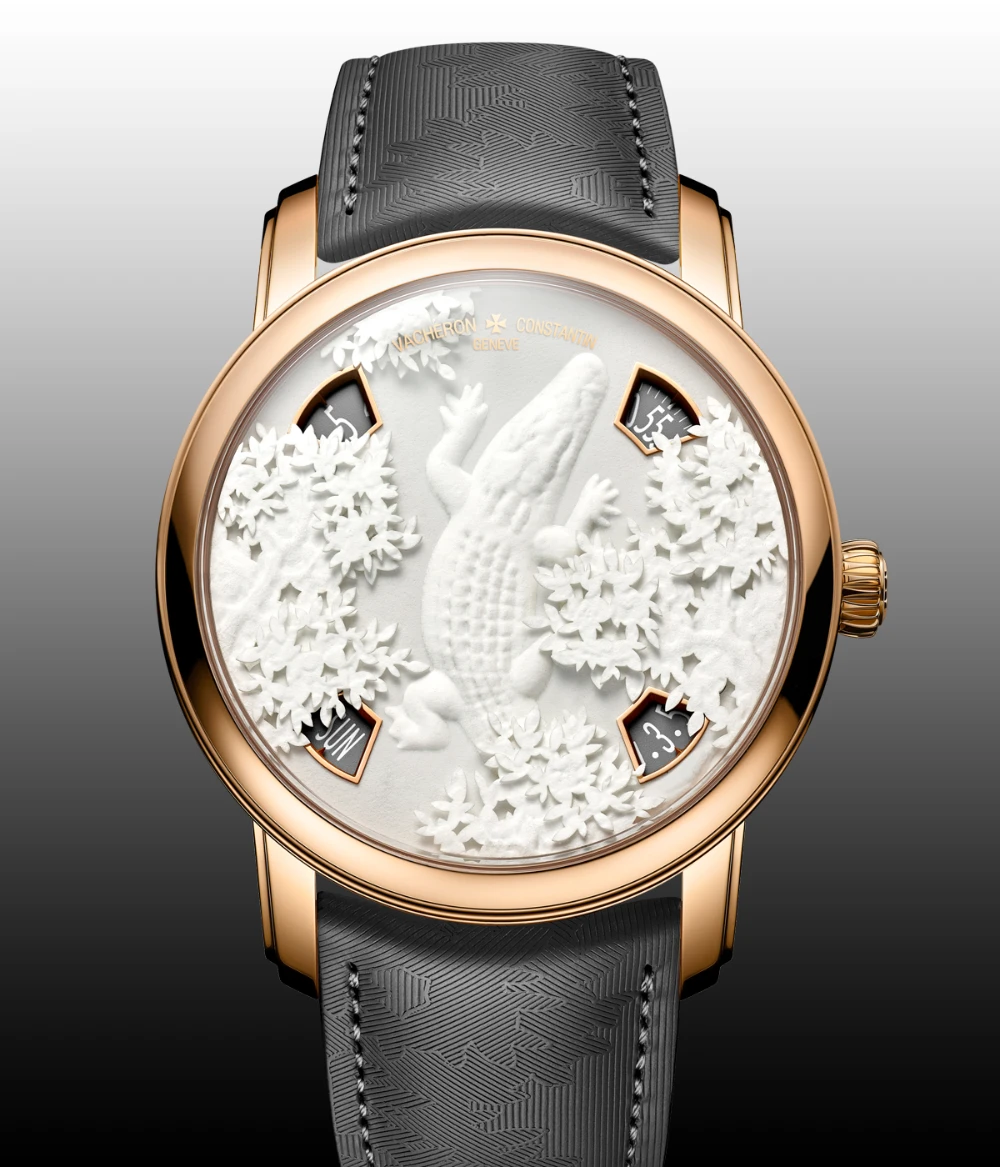
Paper Croc shows that preciousness in a Métiers d’Art watch doesn’t always come from the cost of the raw material.
Its white crocodile is constructed from acid-free white paper, creating a monochrome scene that looks closer to carved ice than conventional dial decoration.
The restraint gives the watch a different character from the iridescence of Feather Snake or the metallic depth of Tiger broidery.
It also underlines the point of the wider series, which is less about decoration for its own sake than about testing how far traditional craft can be compressed, stabilised and preserved inside a watch case.

Details & Specifications
| Brand | Vacheron Constantin |
|---|---|
| Collection | Métiers d’Art Tribute to the Animal Kingdom |
| Series type | Six concept watches |
| Animals represented | Snake, octopus, manta ray, tiger, crocodile and falcon |
| Case size | 42 mm |
| Dial clearance | 4 mm between dial and sapphire crystal |
| Movement | Calibre 2460 G4 |
| Display | Hours, minutes, day and date through four apertures |
| Craft techniques | Featherwork, gold embroidery, paper sculpting, wood marquetry, glass sculpting and micro-origami |
Métiers d’Art Tribute to the Animal Kingdom will speak most clearly to collectors who see watchmaking as a meeting point between mechanics and handcraft.
It’s a reminder that the most interesting artistic watches are not simply decorated objects, but small technical negotiations between movement, material, hand and space.