Luxor is not short of icons, which is both its privilege and its problem.
Karnak, Luxor Temple and the Valley of the Kings deserve their fame, but they can make the city feel like a sequence of headline monuments rather than a living landscape of ancient ambition, craft and rediscovery.
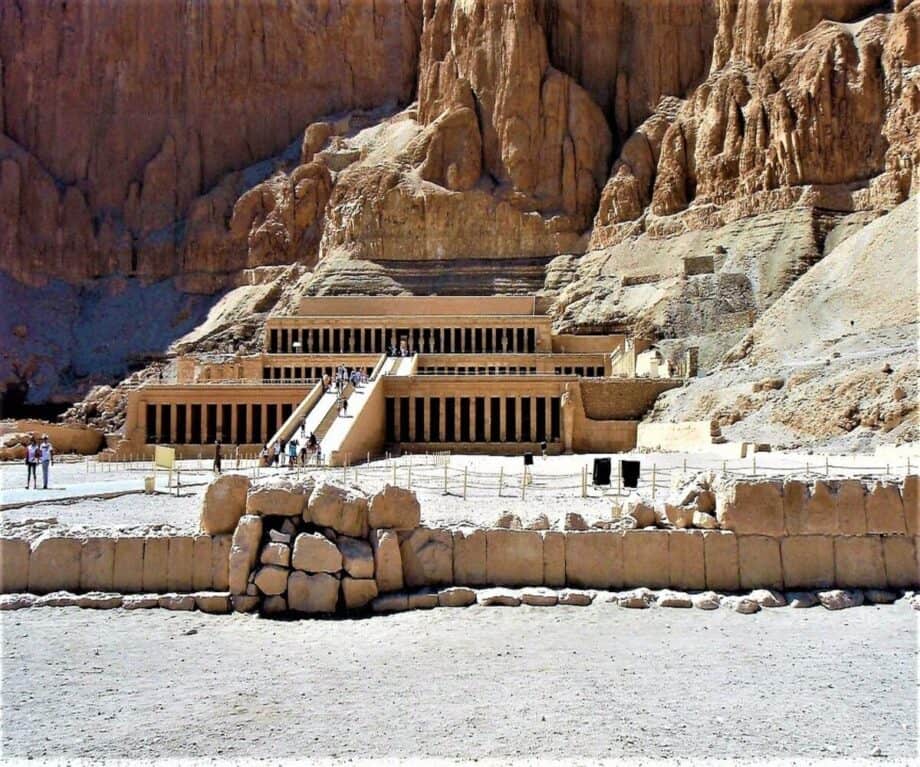
Give Luxor a little more time, especially on the West Bank, and a more intimate version of the city begins to appear.
At a glance
- Luxor’s quieter West Bank sites add depth beyond Karnak, Luxor Temple and the Valley of the Kings.
- Medinet Habu, Deir el-Medina, the Tombs of the Nobles, Carter House and the Ramesseum each show a different side of ancient and modern Egypt.
- These stops suit travellers with an extra afternoon or day who want a slower, more thoughtful Luxor itinerary.
Medinet Habu rewards the traveller who lingers
Medinet Habu is one of Luxor’s great under-sung pleasures.
The mortuary temple of Ramesses III has the scale and visual force expected of a royal monument, but it often allows for something harder to find at the busiest sites, which is time to stand still.
Its carved walls carry the kind of detail that’s easily lost when a visit becomes a march from one famous stop to another.
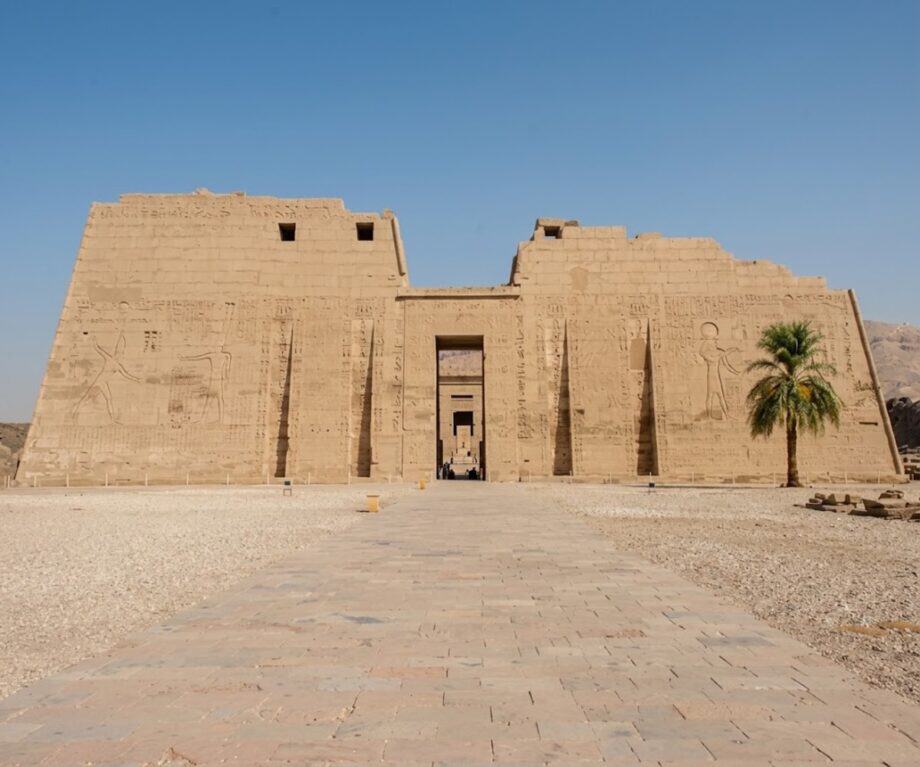
Here, the story is not only about grandeur, but about how carefully a pharaoh could shape his own memory in stone.
It’s especially rewarding after seeing Karnak, when the basic grammar of Egyptian temple architecture is already fresh in the mind.
Instead of registering it as another temple, you begin to notice personality, emphasis and atmosphere.
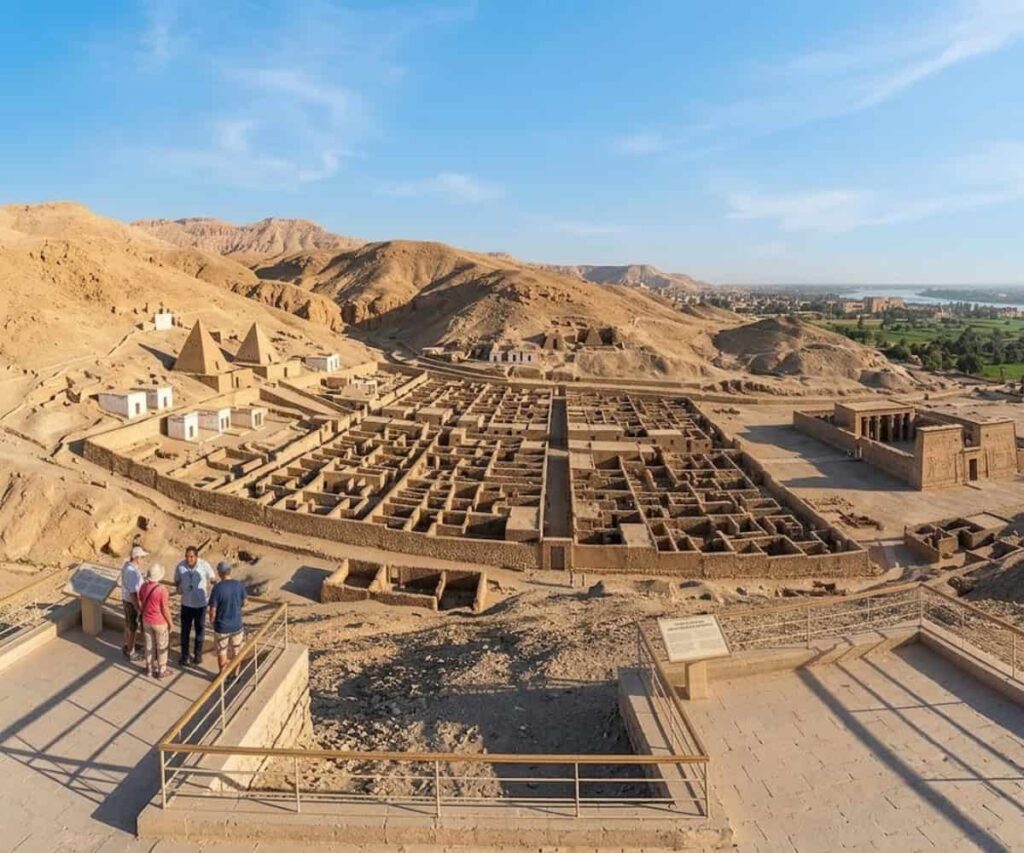
Deir el-Medina shifts attention from kings to makers
Deir el-Medina offers a sharp change in scale and mood.
This was the village of the craftsmen who worked on many of the tombs in the Valley of the Kings, including the artists and labourers behind some of ancient Egypt’s most memorable burial chambers.
That simple context changes the way Luxor feels.
After the drama of royal tombs, Deir el-Medina brings the focus back to a real community of skilled people who lived, worked and left their mark in the desert.
It’s a reminder that ancient Egypt was not built only by rulers with monumental ambitions.
It was also made by hands, households, routines and expertise passed between generations.
The Tombs of the Nobles reveal daily life in ancient Thebes
The Tombs of the Nobles occupy a different emotional register from the royal burial sites.
Where the Valley of the Kings is shaped by ideas of divine rule and the afterlife, these tombs often draw the eye toward scenes of ordinary life.
Farming, feasting, work and family appear with a directness that can feel surprisingly immediate.
For travellers curious about ancient Egypt beyond the pharaohs, these smaller tombs can be among the most absorbing stops in Luxor.
They don’t try to compete with Karnak or the royal tombs.
Their strength is quieter, more observational and often more human.
Carter House and the Ramesseum add modern and ruined layers
Carter House is a modest stop, but it has a particular pull for anyone interested in Tutankhamun and the modern rediscovery of ancient Egypt.
Howard Carter’s name is inseparable from the Valley of the Kings, yet seeing where he lived and worked brings that famous archaeological chapter down to a more personal scale.
It changes the rhythm of a day that might otherwise be devoted entirely to antiquity.
After standing in 3,000-year-old tombs, Carter House introduces the patience, uncertainty and persistence of the people who searched for them in the modern era.
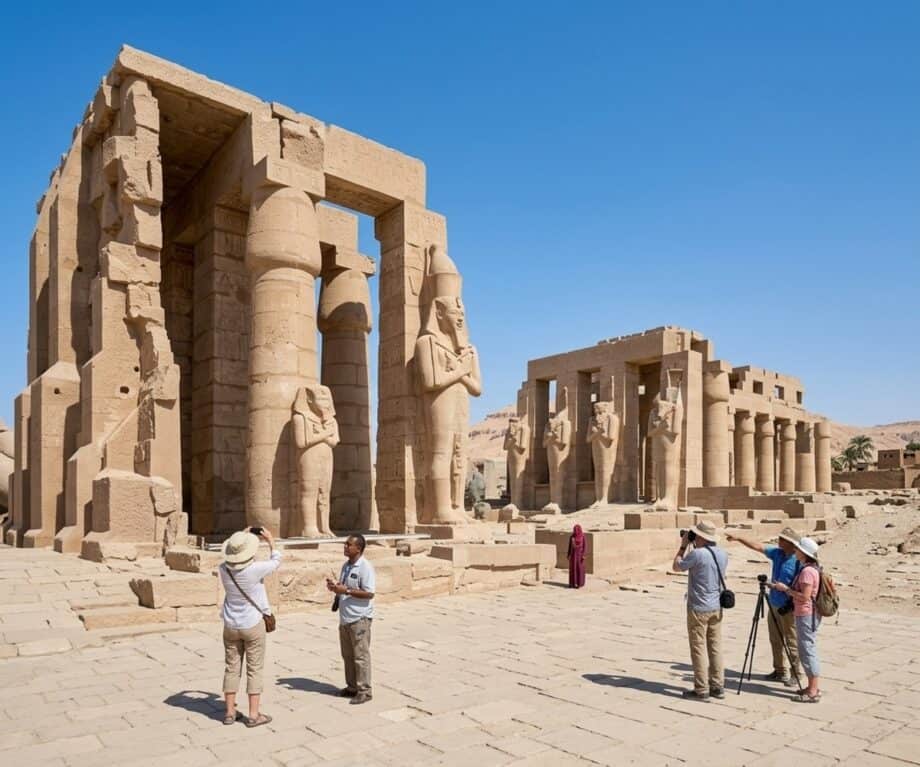
The Ramesseum, the mortuary temple of Ramesses II, offers another kind of encounter.
Much of it survives in fragments, but that is part of its force.
Broken columns and toppled stone still communicate scale, and the imagination starts to do what restoration cannot.
It’s a place that reminds you Luxor is not a neat set of isolated attractions, but a layered historical landscape spread across the desert edge.
How to build a slower Luxor itinerary
First-time visitors should not skip the celebrated sites.
Karnak, Luxor Temple and the Valley of the Kings remain essential, and the Valley of the Queens is well worth considering too.
The mistake is treating those names as the whole story.
With an extra afternoon, Medinet Habu and Deir el-Medina make a strong pairing, balancing royal display with the lives of the artisans who helped create Egypt’s tomb culture.
With a fuller day, the Tombs of the Nobles, Carter House and the Ramesseum can turn a standard Luxor visit into something more textured.
Private touring suits this part of Egypt particularly well because it gives the day room to breathe.
You can spend longer at a wall relief that catches your eye, adjust the pace when temple fatigue sets in, or choose a smaller site because it speaks to your interests rather than because it appears on a group schedule.
Luxor rewards patience more than speed.
See the famous monuments properly, then make space for the quieter places, because they often provide the details that stay with you long after the grand entrances and colossal statues have blurred together.