Aswan is easy to underestimate when it arrives at the end of a Nile journey.
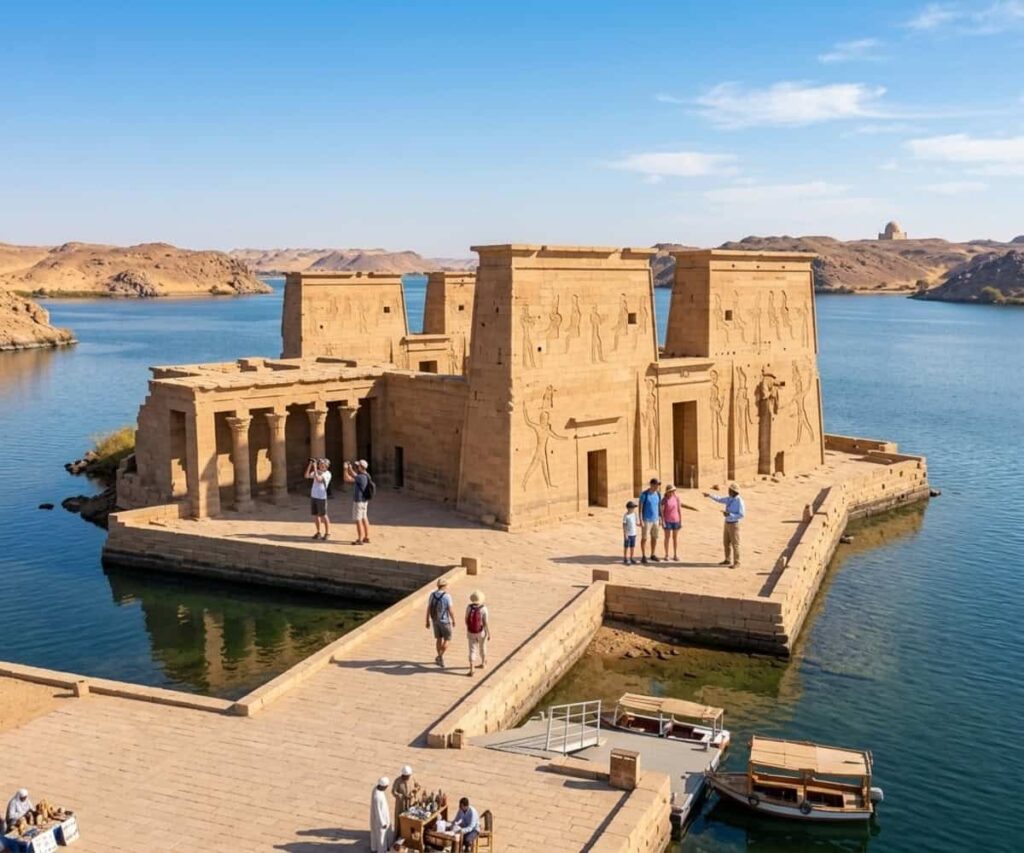
After Luxor’s temples and tombs, many travellers come here for Philae, the High Dam and a onward trip to Abu Simbel, then leave just as the city starts to reveal itself.
Stay another day and the mood changes from checklist to place, with Nubian villages, quiet islands, desert views and slow sailing showing a side of southern Egypt that’s very different from Luxor.
At a glance
- Aswan rewards travellers who look beyond the standard Nile cruise finale of Philae, the High Dam and Abu Simbel.
- Felucca sailing, Elephantine Island, Qubbet el-Hawa and the Nubian Museum reveal the city’s Nubian identity and river-led pace.
- Adding an extra day gives Aswan room to feel like a destination in its own right, not just the last stop on an itinerary.
The Nile sets the pace in Aswan
The first thing that distinguishes Aswan is the river itself.
Here, the Nile opens out, sand presses close to the water and small islands interrupt the current, giving the city a softer and more spacious character than the grand temple corridors of Luxor.
A felucca ride may be one of the simplest experiences in Egypt, but that simplicity is exactly its appeal.
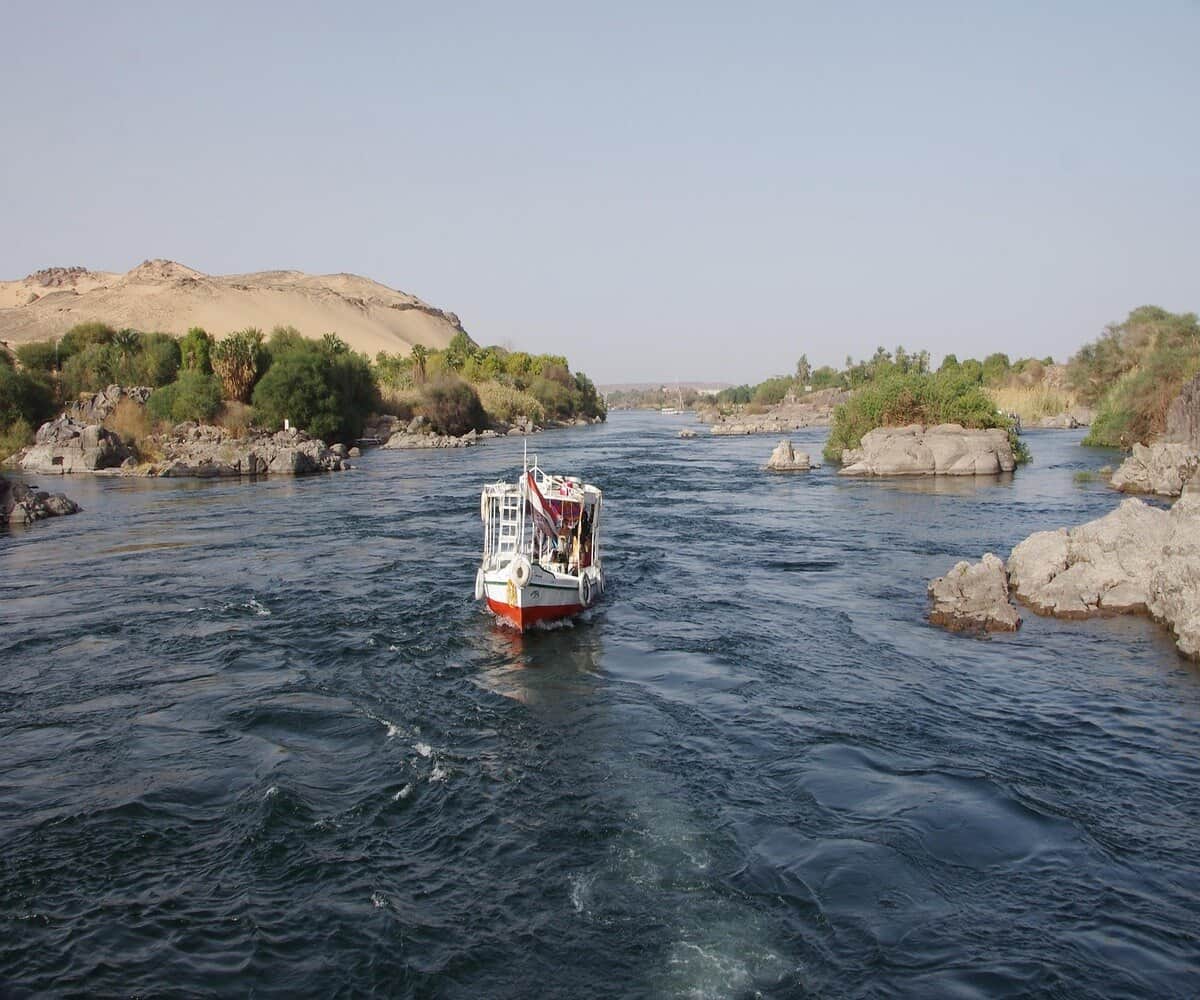
With the sail raised and the city slipping into the background, the river stops being scenery between monuments and becomes the point of the afternoon.
One rewarding route circles the Botanical Garden on Kitchener’s Island, where trees and plants from different parts of the world are best appreciated from the water as much as from the paths.
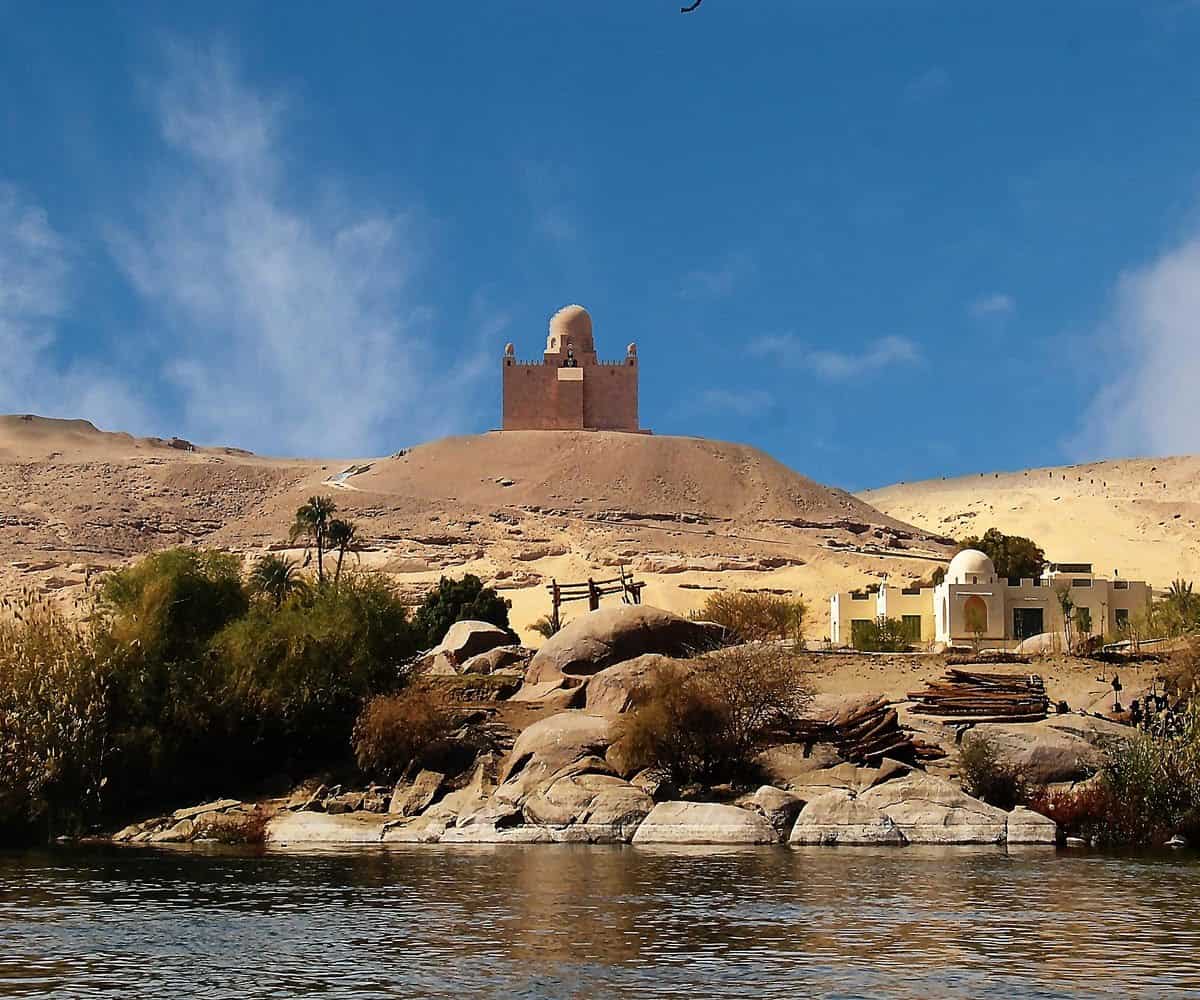
Another heads toward the Aga Khan Mausoleum on the West Bank, where the contrast between river traffic, island greenery and desert slope gives Aswan its unmistakable silhouette.
This is the kind of travel moment that doesn’t need much interpretation.
After several days of archaeology, there’s value in simply sitting still while the late light warms the sand and the sails move between the islands.
Elephantine and the Nubian Museum bring the city into focus
Elephantine Island is often treated as a short detour, but it deserves more than a hurried hour.
A quick boat ride from the corniche brings you to a place that feels close to the city and separate from it at the same time.
The island’s ruins matter because this was once a meeting point of Egypt’s southern border and trade with Nubia.
That position becomes easier to understand on the ground, where the Nile surrounds the island and the modern city feels momentarily distant.
Elephantine is also home to Nubian villages where people still live, work, cook, gather and go about daily life.
Brightly painted houses, narrow lanes and places to stop for food make the island feel less like a sight and more like a neighbourhood.
That distinction matters, because this isn’t a staged attraction.
Visitors should move through respectfully, remembering that the appeal of the island comes from the fact that it is lived in.
The Nubian Museum is the natural companion to Elephantine, and it’s arguably the most important indoor stop in Aswan.
Opened in 1997, the museum grew out of the international effort to save Nubian monuments after the construction of the High Dam.
Its collection brings Nubian and Egyptian history into the same frame, making clear that Nubia is not a colourful footnote to a Nile itinerary but a culture with its own depth, identity, language, food, music and traditions.
The building itself reinforces that point.
Made with local sandstone and pink granite and drawing on Nubian architecture, it feels rooted in the landscape rather than imposed on it.
Qubbet el-Hawa and Kalabsha widen the historical frame
Qubbet el-Hawa is one of Aswan’s most rewarding overlooked sites.
Set high on the West Bank, the cemetery holds tombs belonging to governors and other officials from the Old and Middle Kingdoms.
Some tombs include scenes of military campaigns, trading expeditions, hunting and fishing, while the tomb of Sarenput II is noted for coloured reliefs that reward close attention.
The climb is as important as the archaeology.
From the hillside, the Nile curves through the landscape, Elephantine sits in the river below, the desert opens out in all directions and Aswan’s role as Egypt’s southern gateway becomes physically legible.
Kalabsha tells a different but connected story.
The Roman-period temple was mainly dedicated to the Nubian god Mandulis, and it stands today at New Kalabsha because the original site was threatened by the waters associated with the High Dam.
The temple was dismantled and reconstructed, making a visit not only a study in ancient religion but also a reminder of one of the great archaeological rescue efforts linked to the reshaping of this landscape.
That relationship connects Kalabsha with Philae and the Nubian Museum, each offering a different angle on what was preserved, moved and remembered.
Desert monasteries, granite quarries and the value of slowing down
Aswan’s history is broader than temples and river islands.
St. Simeon Monastery, on the West Bank and away from the Nile, shifts the atmosphere completely.
Its medieval ruins speak to Christian monastic life in southern Egypt, adding another chapter to a city too often reduced to pharaonic monuments and boat excursions.
The journey there also changes the rhythm of a visit.
Instead of staying close to the water, you move out toward the desert, which can feel like a necessary reset after several days of temples.
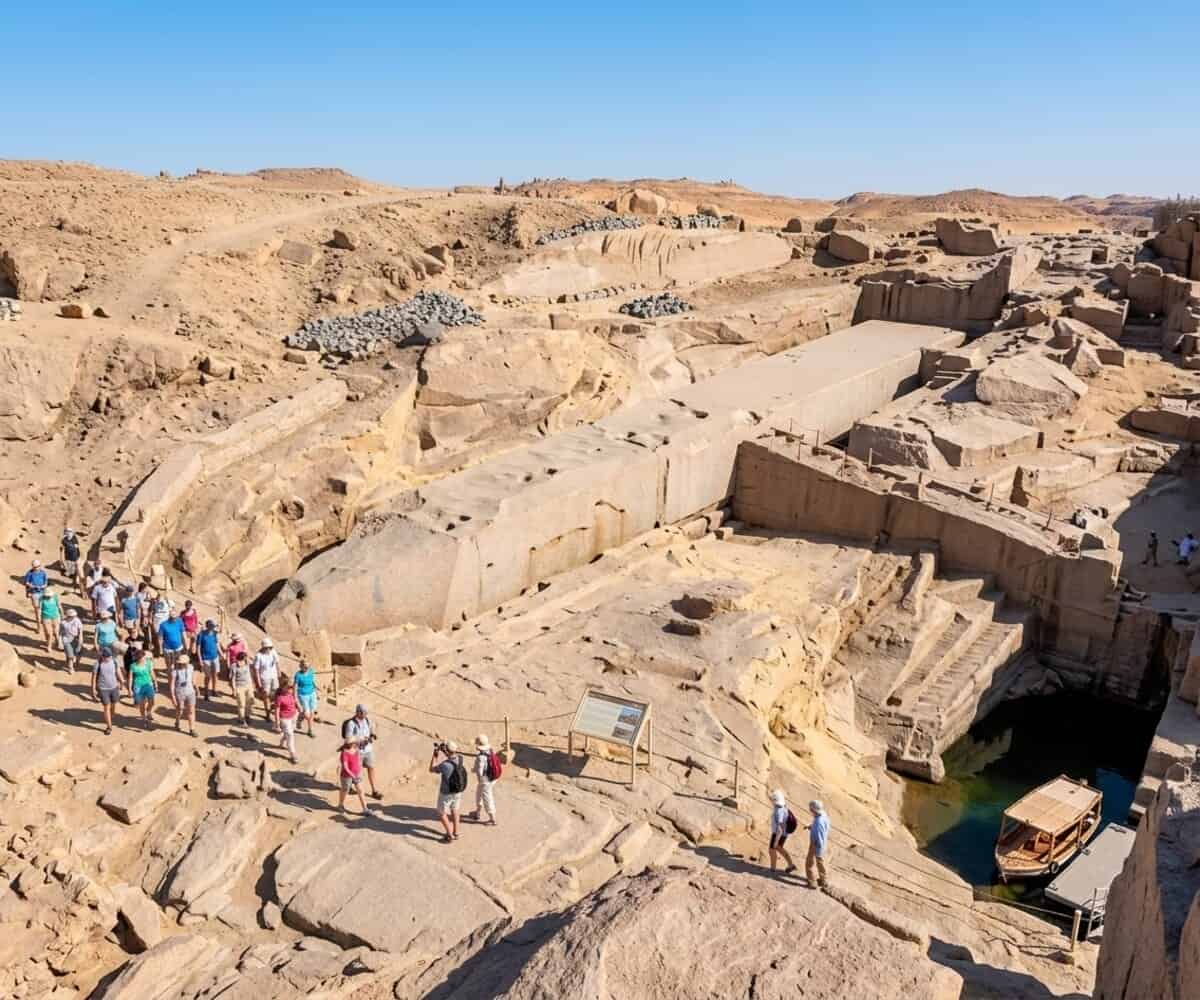
The Unfinished Obelisk is another site that benefits from time and context.
At first glance it can appear to be a huge fractured piece of granite, but the quarry preserves the evidence of ancient stone working.
Cracks in the granite caused the project to be abandoned, while trenches, tool marks and ancient stone tools help explain the labour behind Egypt’s monumental architecture.
A guide can make a real difference here, turning a quick photo stop into a clearer view of quarrying as skilled work rather than abstract engineering.
That is the wider lesson of Aswan.
The city is at its best when the schedule leaves space for the in-between moments, whether that’s a slow walk through Elephantine, a long look from Qubbet el-Hawa or an unhurried sail with nothing planned afterwards.
Philae, the High Dam and Abu Simbel all belong on the wider Aswan map, but they shouldn’t be allowed to crowd out the quieter places that give the city its character.
Aswan isn’t merely where the Nile cruise ends.
It’s where Egypt meets Nubia, where desert and river sit almost side by side, and where one extra day can change what you remember most from the journey.