Cartier is often treated as the house of elegance first and watchmaking second, but that reading misses a large part of what has made its watches endure.
The maison’s best-known designs have rarely been decorative objects alone. They’ve translated the machinery, movement and cultural shifts of their time into watches with their own clear point of view.
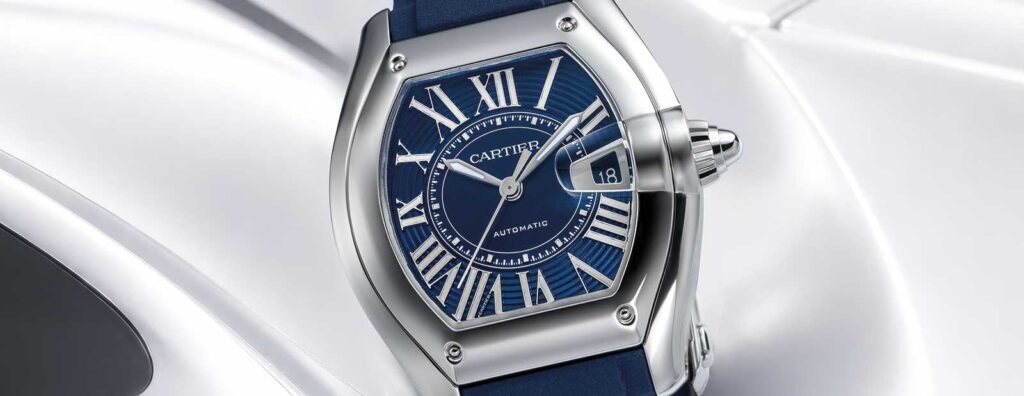
The Cartier Roadster sits squarely in that tradition, even if its early-2000s birth date makes it a more recent chapter than the Santos or Tank.
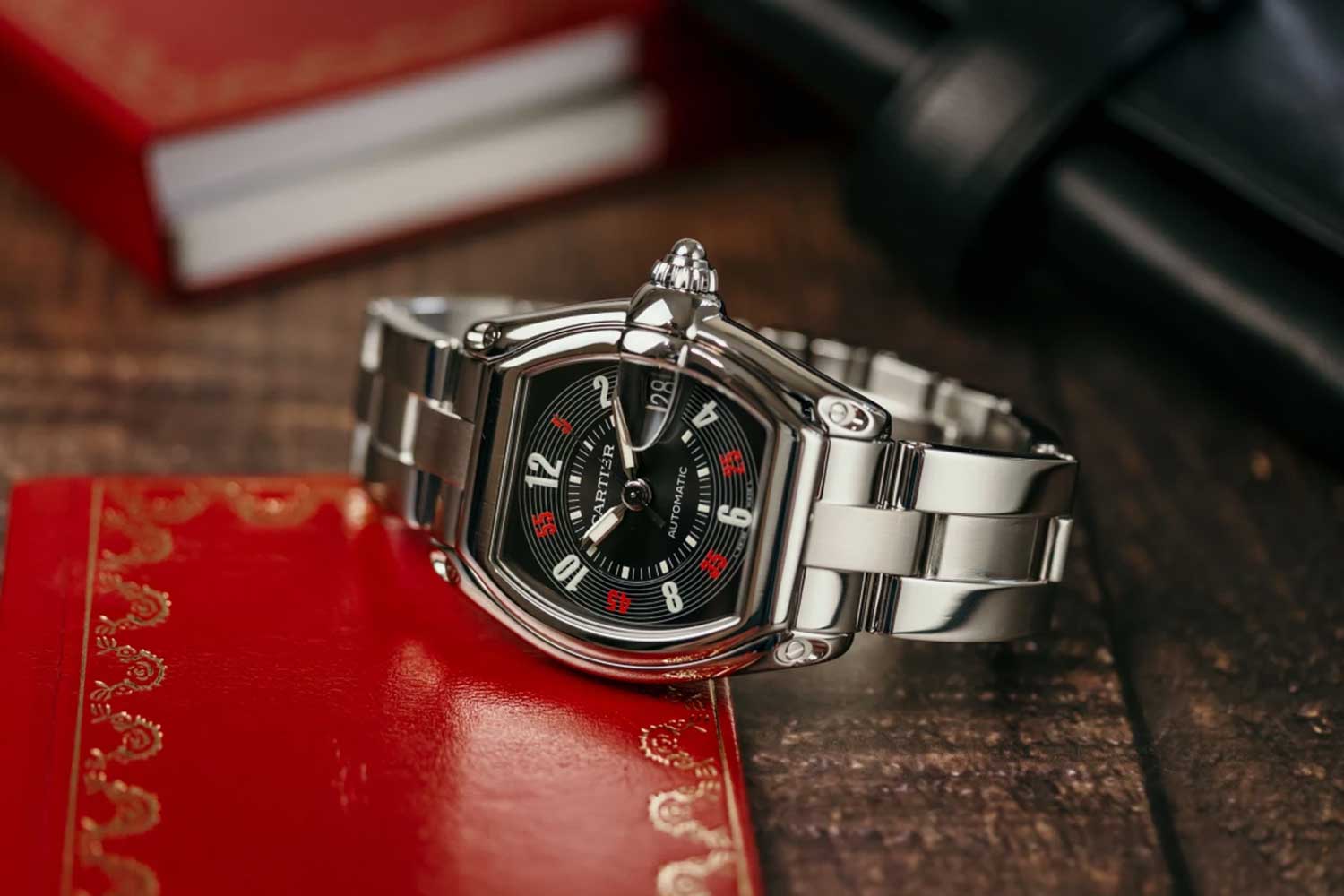
At a glance
- The Cartier Roadster debuted in 2002 as a new automotive-inspired collection for the maison.
- Its tonneau-style case and sweeping lines channel the romance of mid-century sports cars rather than literal dashboard design.
- Interest in distinctive shaped watches gives the Roadster fresh relevance for collectors looking beyond Cartier’s most familiar icons.
Cartier’s mechanical imagination
Cartier’s watch history is full of designs that began with a practical or mechanical idea, then became something more refined on the wrist.
The Santos is the obvious starting point.
Created in 1904 for Alberto Santos-Dumont, it answered a real problem faced by an early aviator who needed to read the time while flying, when a pocket watch was an awkward tool for the job.
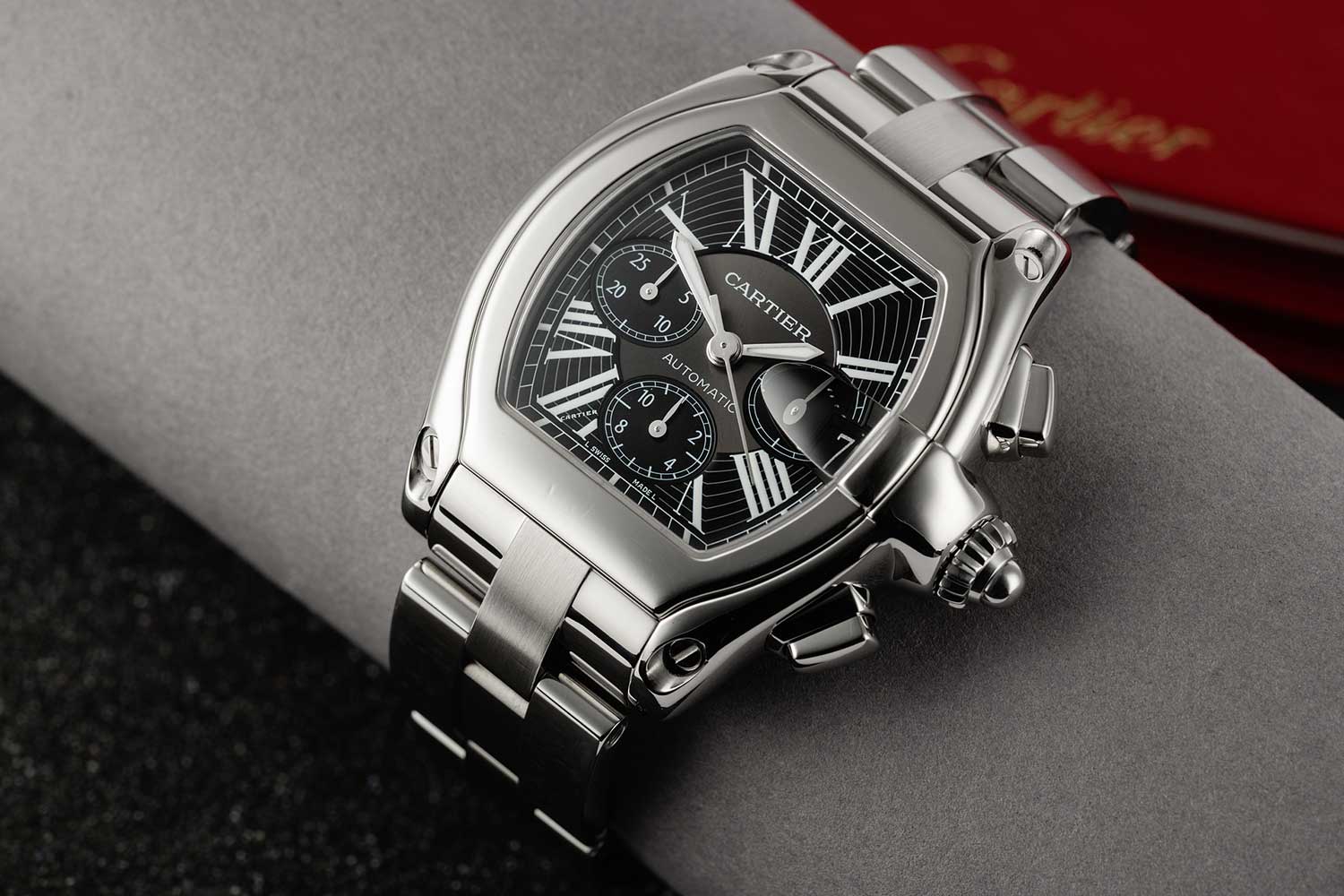
Seen from a distance, the Santos can seem inevitable. In its own moment, it was a radical answer to a very modern need.
The Tank followed with a different kind of machine in mind.
Introduced in the wake of World War I, its geometry drew from the form of the military tank, transforming a new and brutal piece of technology into one of the cleanest silhouettes in watch design.
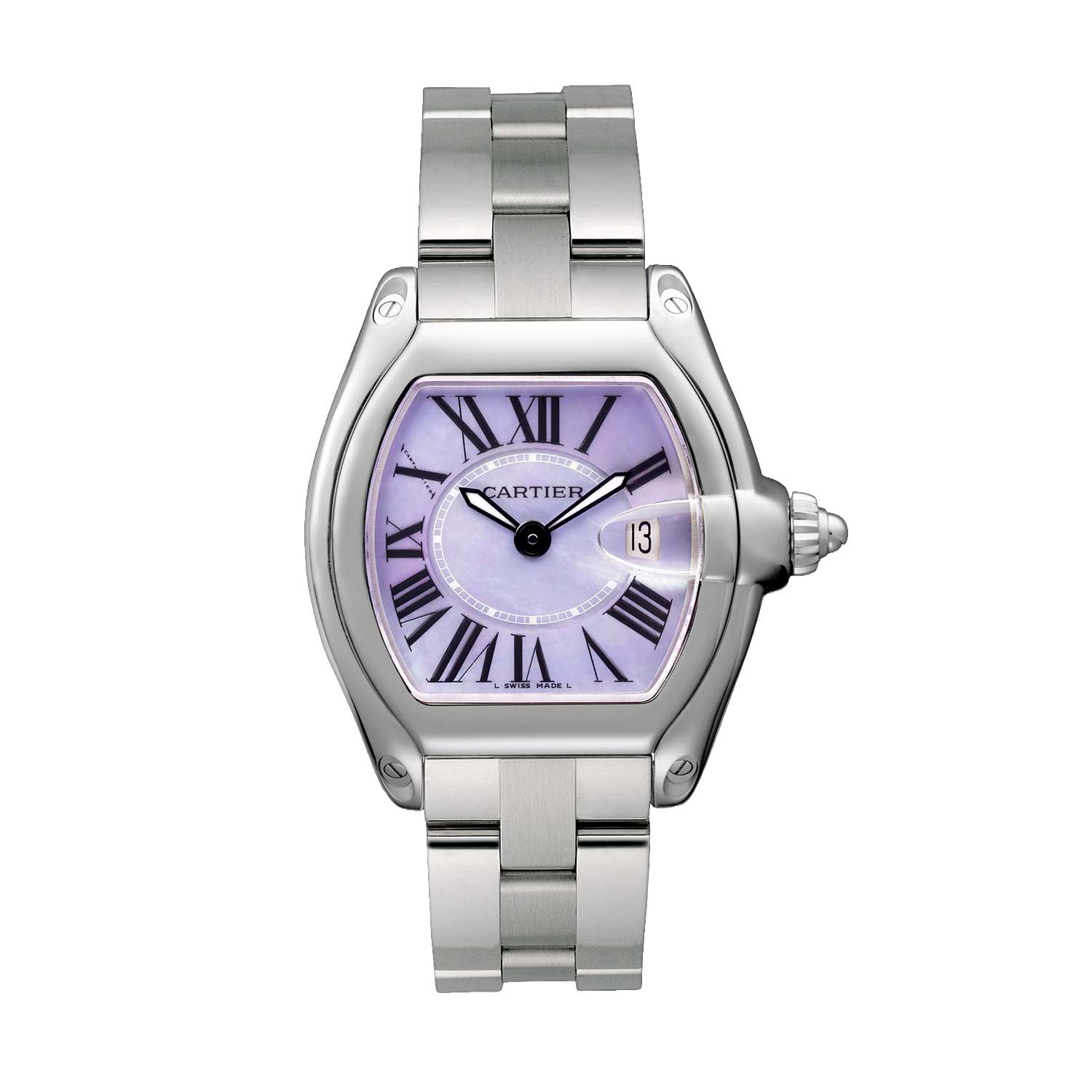
That ability to absorb the shape of the modern world without becoming costume is one of Cartier’s quiet strengths.
The Roadster belongs to the same family of thinking.
It’s not a vintage racing watch in the usual sense, and it doesn’t need a dial packed with gauges to make the point.
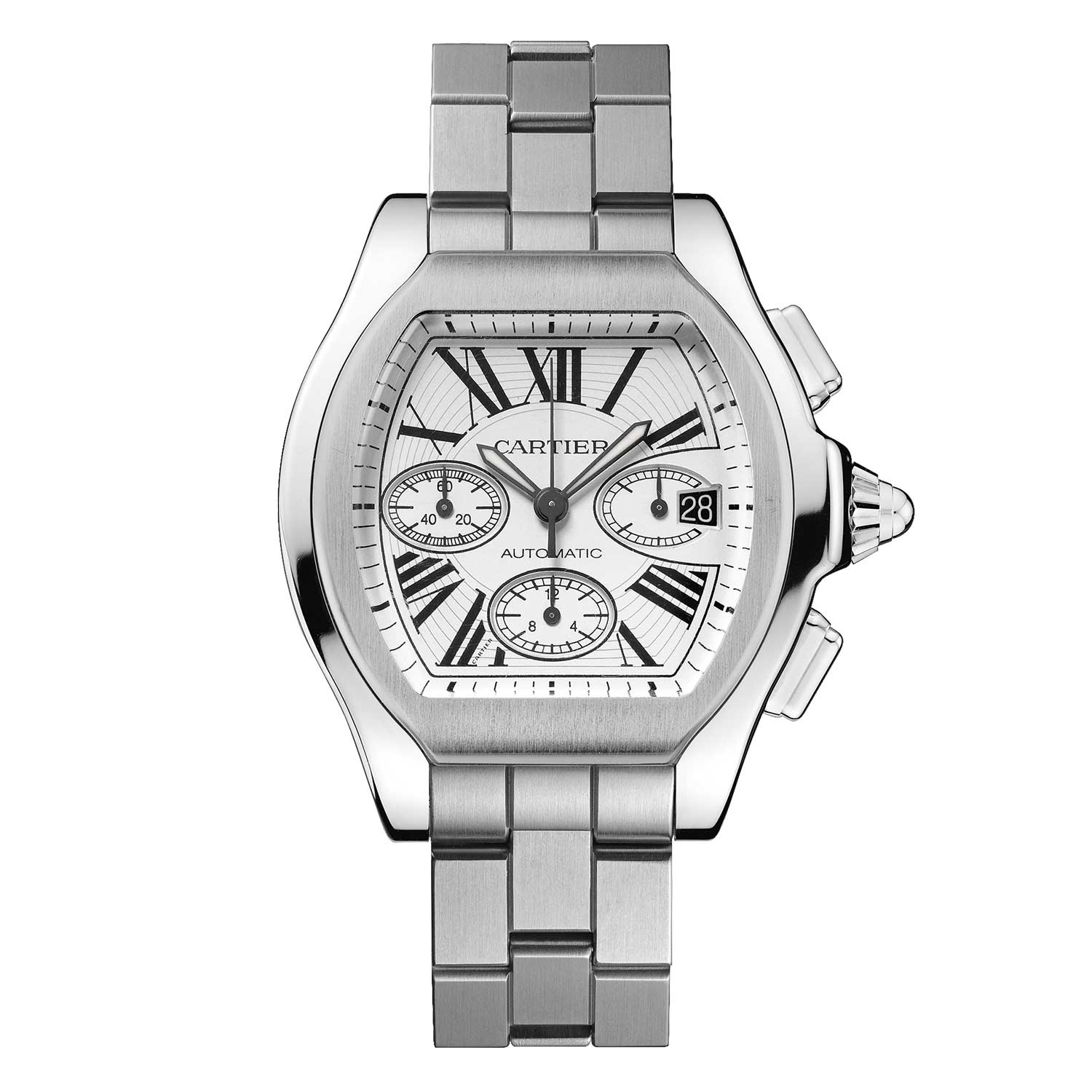
Instead, it takes the feeling of the automobile and turns it into a shaped Cartier watch.
The Roadster arrived at the right moment
The Roadster launched in 2002, making it Cartier’s first new collection of the 21st century.
That timing matters.
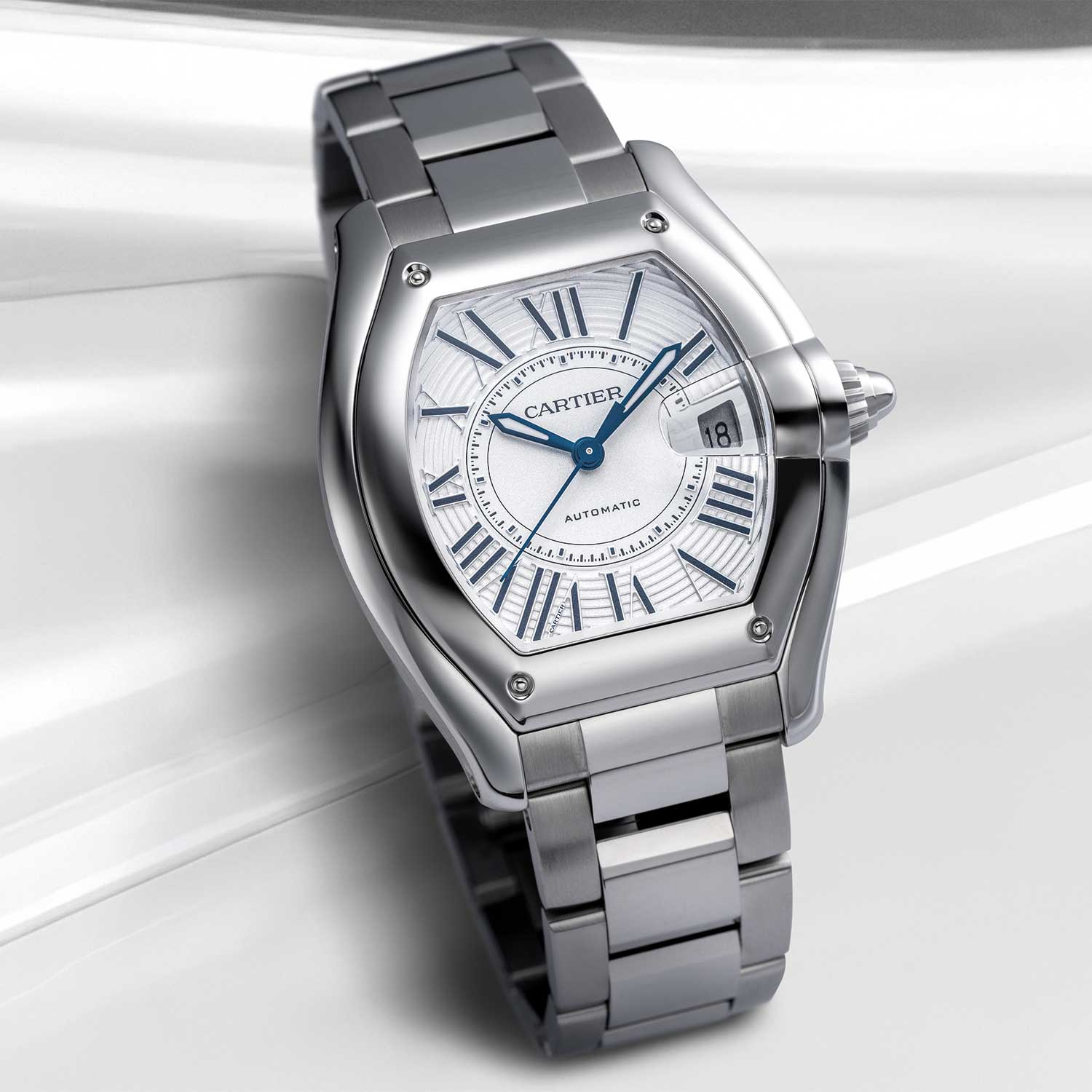
By the turn of the millennium, Swiss watchmaking had already moved well beyond its defensive posture after the quartz crisis, and mechanical watches were becoming objects of connoisseurship, identity and design again.
Collectors were paying closer attention to case shape, proportion and historical character.
The Roadster met that climate with a watch that was recognisably Cartier, but not simply another variation on the Tank or Santos.
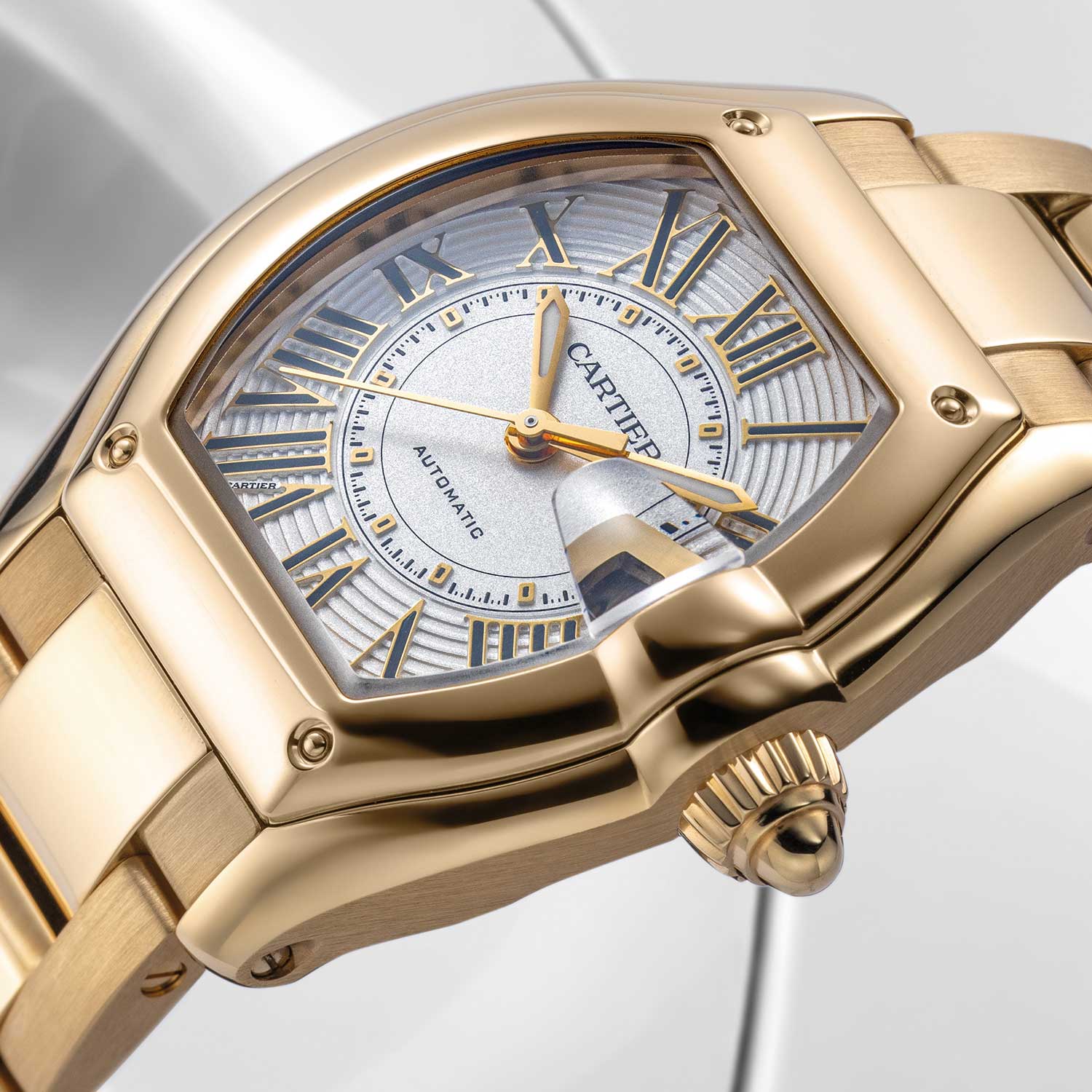
Its name pointed directly at the car world, though the execution was more suggestive than literal.
A roadster, in automotive language, has shifted in meaning over generations, but it’s rooted in open driving, reduced bodywork and the physical experience of speed.
Cartier didn’t translate that idea into a rugged instrument watch.
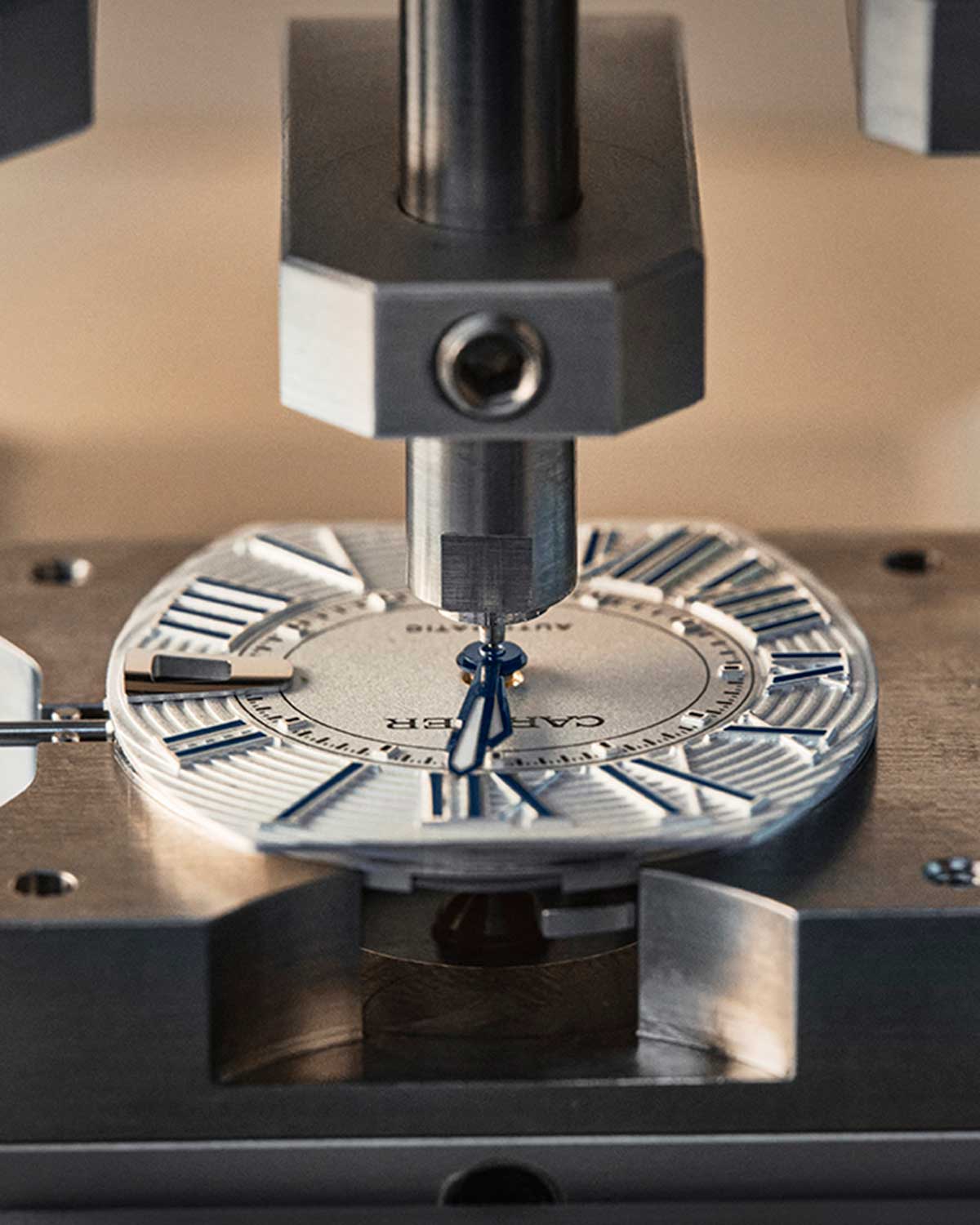
It made something smoother, more urbane and more sculptural.
A case shaped by speed and curve
The Roadster’s form sits within the broader world of tonneau watches, a shape whose name comes from the French word for barrel.
It’s a case architecture with deep roots in wristwatch history, and Cartier had already explored the idea early in the 20th century.
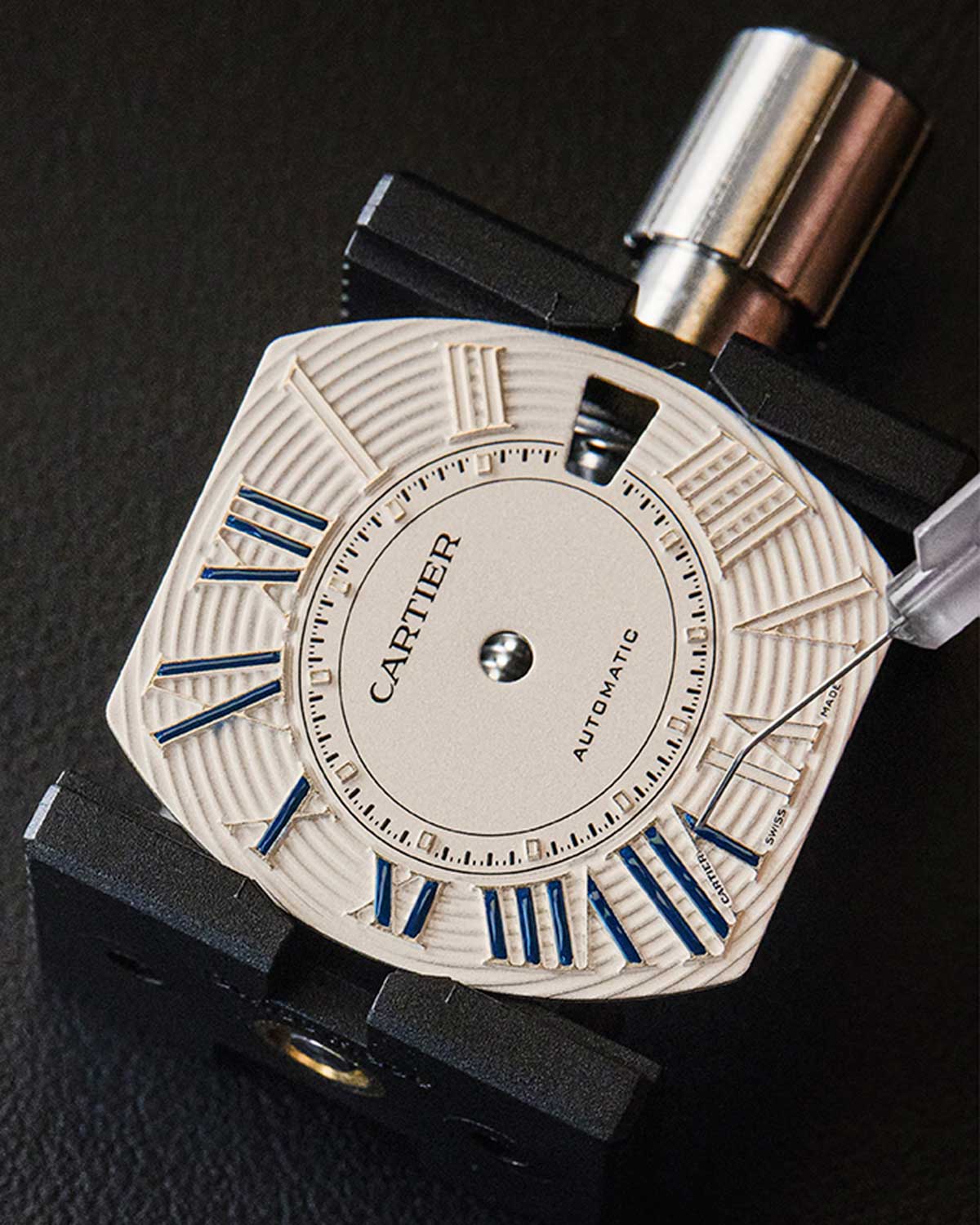
The Cartier Tonneau appeared in 1906, while the Tank Cintrée of 1921 developed a curved, elongated profile that remains one of the maison’s most elegant shapes.
The Roadster took that shaped-watch vocabulary and gave it a more contemporary, automotive charge.
Its flanks, curves and sense of forward motion feel closer to the middle of the 20th century than to the first days of the motor car.
The comparison that makes sense is less the raw speedster and more the elegantly aerodynamic sports car.
Erwin Komenda’s Porsche 356 is a useful cultural touchpoint, not as a one-to-one design template, but as an example of speed expressed through softness, flow and proportion.
That’s what separates the Roadster from more obvious motoring watches.
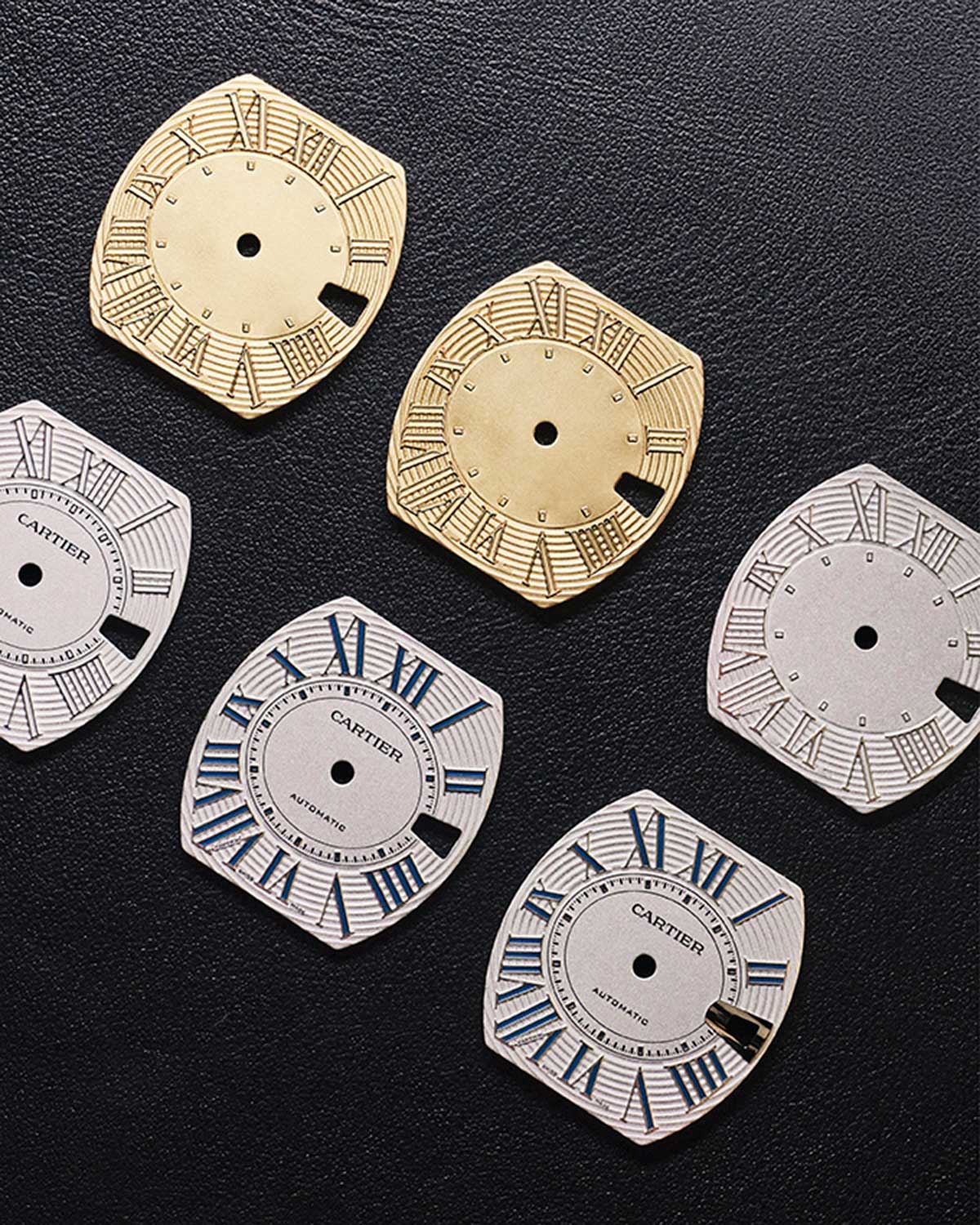
It doesn’t lean on motorsport graphics to announce itself.
Its personality comes from the case.
The collector appeal now
The Roadster is interesting today because shaped watches are no longer a niche curiosity for vintage specialists.
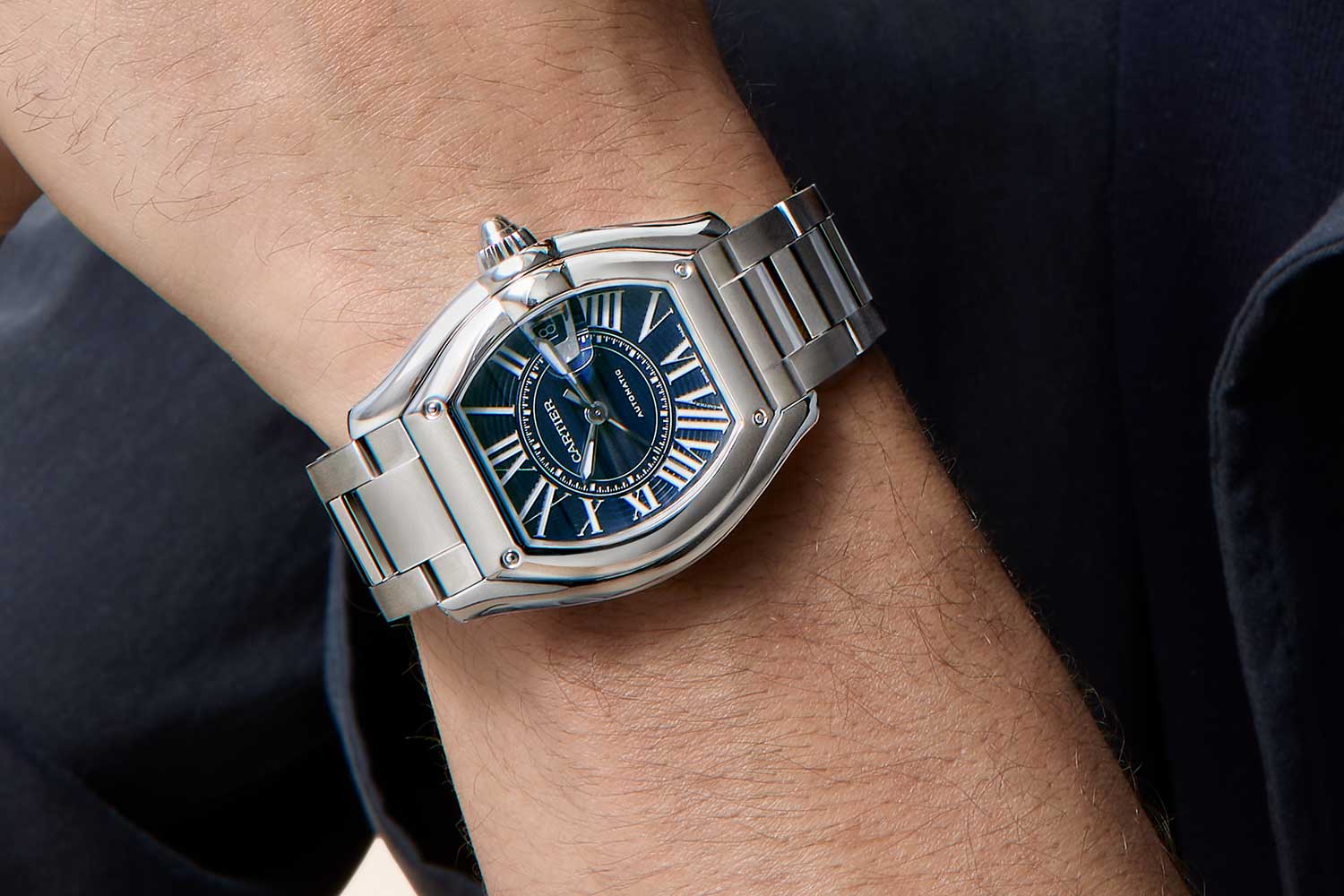
Collectors have become more comfortable with cases that aren’t round, and Cartier has benefited enormously from that shift.
Yet the Roadster still occupies a different space from the brand’s best-known icons.
It’s more recent than the Santos and Tank, more overtly automotive in attitude, and more tied to the early-2000s moment when the industry was rethinking how heritage and modernity could live together.
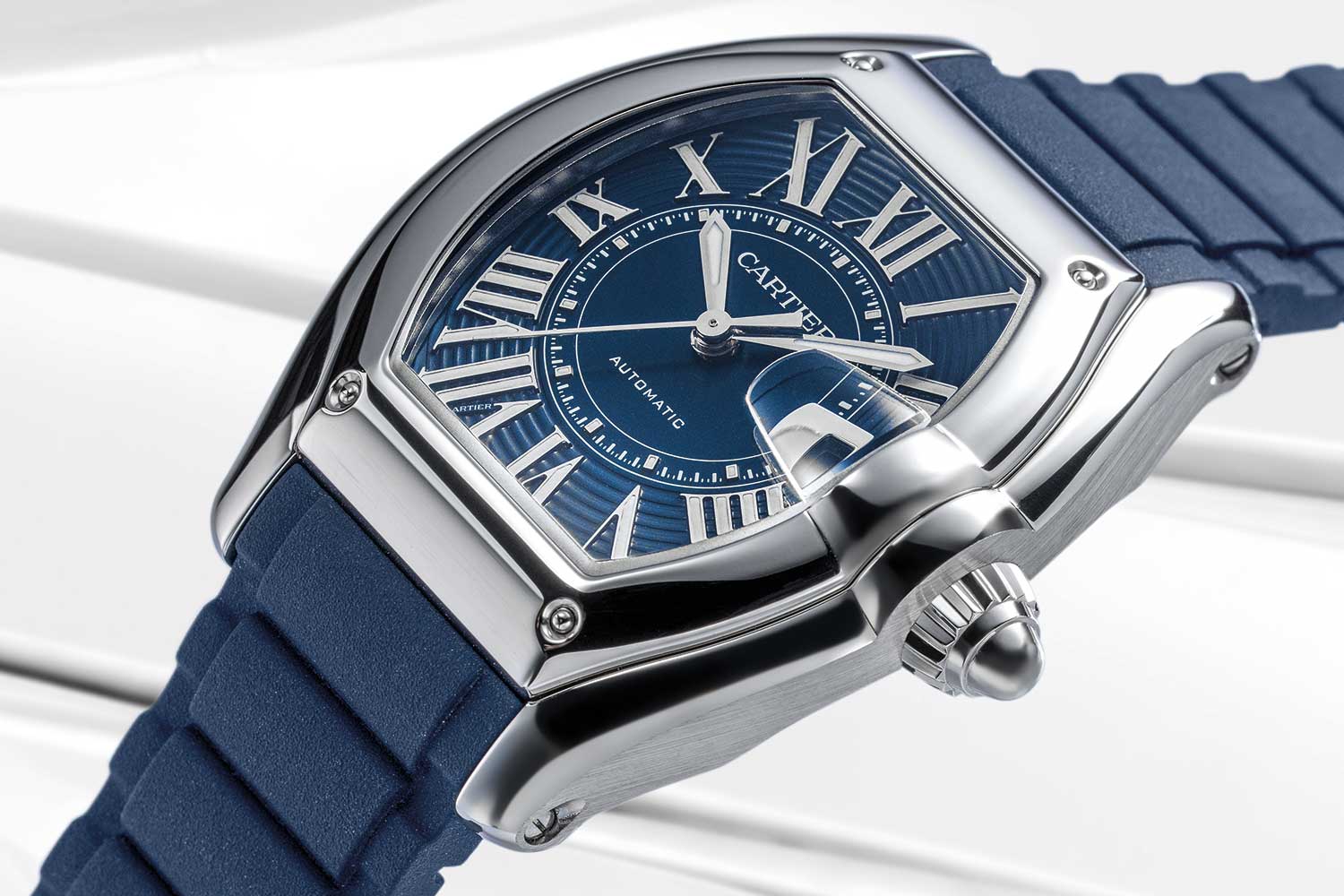
That makes it appealing for the collector who likes Cartier’s design discipline but wants something less expected.
It also suits the wearer who sees a watch as an object of form as much as mechanics.
The Roadster is not trying to be the most restrained Cartier in the room.
Its charm lies in how confidently it bends the maison’s elegance toward motion.
Details & Specifications
| Brand | Cartier |
|---|---|
| Model | Roadster |
| Debut year | 2002 |
| Design inspiration | Automotive roadsters and the visual language of speed |
| Case style | Tonneau-influenced shaped case |
| Collection context | Cartier’s first new watch collection of the 21st century |
The Roadster’s strength is that it doesn’t ask to be understood as a nostalgic exercise.
It’s a Cartier shaped watch with its own tempo, drawn from the road rather than the runway, and that may be exactly why it feels ready for a second look.