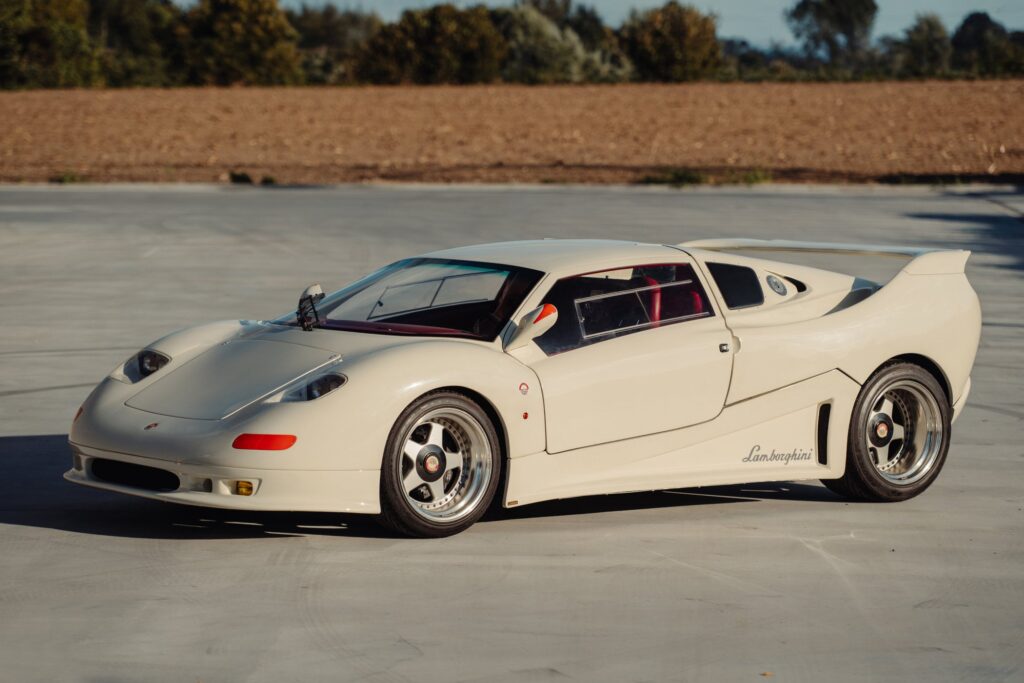
The early 1990s gave us some of the defining supercars of the modern era, but not every ambitious project became a bedroom-wall icon.
The Monte Carlo Automobile Centenaire had the ingredients to matter, from a carbon-fibre chassis to Lamborghini V12 power and a Monaco backstory that couldn’t be faked.
Only five were built, and the first chassis has just returned to the spotlight after crossing the block with Broad Arrow Auctions during Zoute Grand Prix Car Week.
At a glance
- The first Monte Carlo Automobile Centenaire built sold for €725,000 excluding buyer’s premium and VAT.
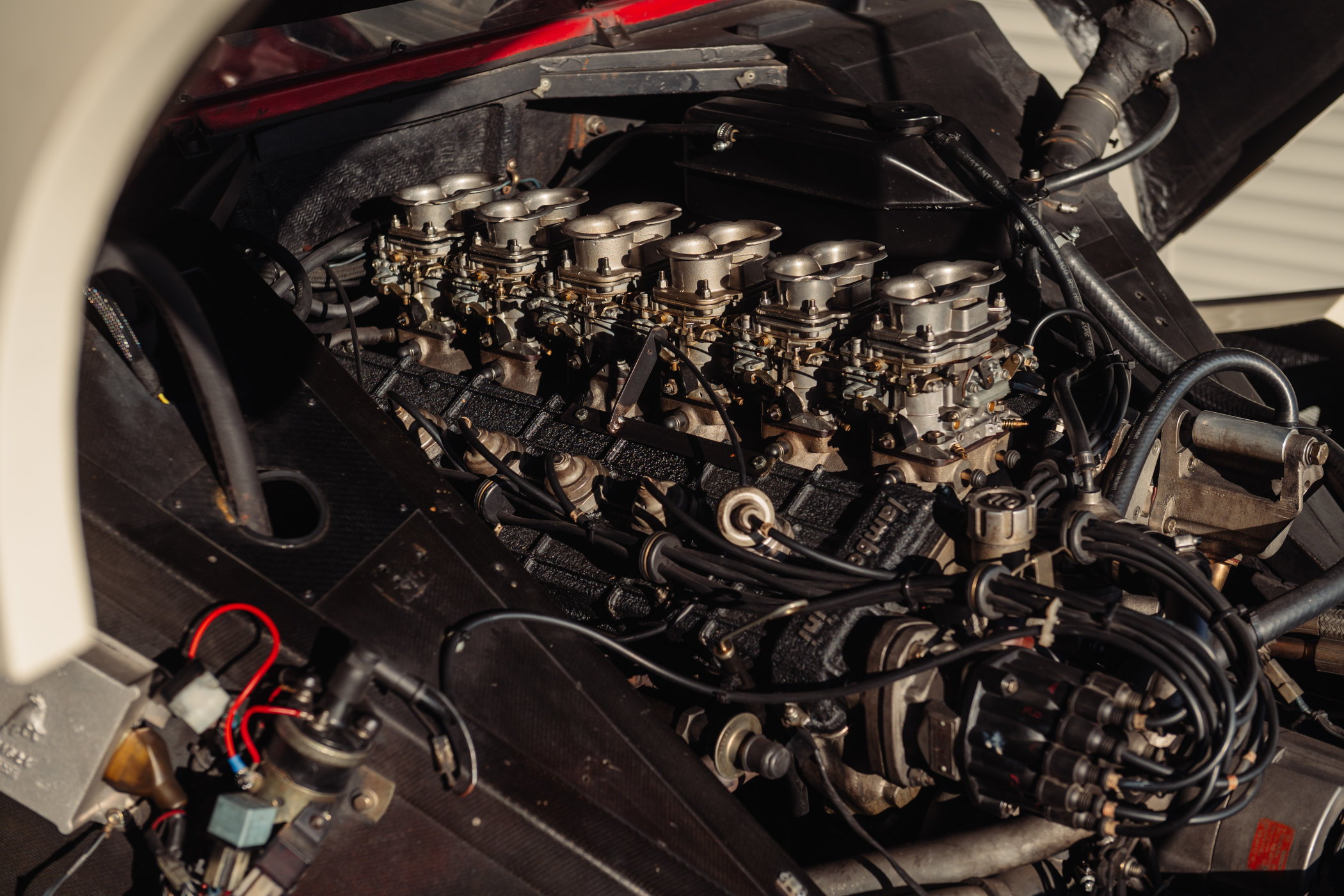
- The car pairs a carbon-fibre monocoque with a Lamborghini-sourced 5.2-litre V12 and ZF six-speed manual gearbox.
- Just five examples were produced, making it one of the rarer supercar projects of its era.
Monaco’s own supercar project
Monte Carlo Automobile was founded by Fulvio-Maria Ballabio, an Italian-born racing driver with Formula 2 and CART experience and the rare conviction to build a supercar in Monaco.
The Centenaire was created to mark the 100th anniversary of the Automobile Club de Monaco, the organisation behind the Monaco Grand Prix and the Monte Carlo Rally.
It was initially known as the GBT before receiving the Centenaire name, and it was presented to Prince Albert of Monaco as a statement of national automotive ambition.
Ballabio didn’t assemble the project in isolation.
The team drew on serious racing experience, including engineer Carlo Chiti, who had worked with Alfa Romeo and Ferrari and helped develop the Ferrari 156 “Sharknose” Formula 1 car.
Other names involved included former Formula 1 driver Guglielmo Bellasi, former Alfa Romeo sporting director Pierluigi Corbari and Formula 1 specialist Marcel Zunnino.
A compact carbon-fibre shape with racing intent
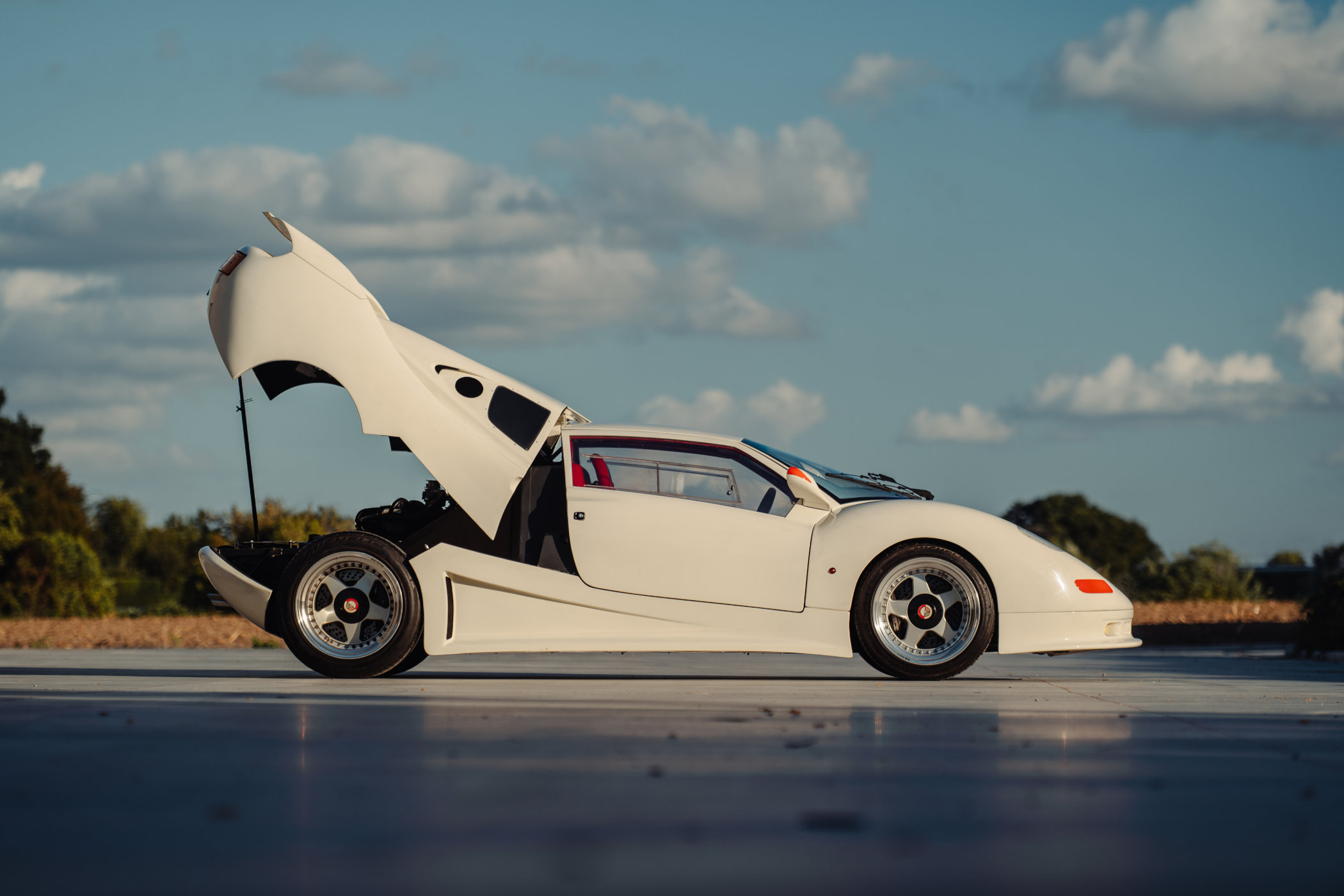
The Centenaire’s proportions are strikingly compact for a V12 supercar.
At 4.025 metres long, with a 2.520-metre wheelbase, it has a short, tightly packaged stance rather than the stretched drama of many period exotics.
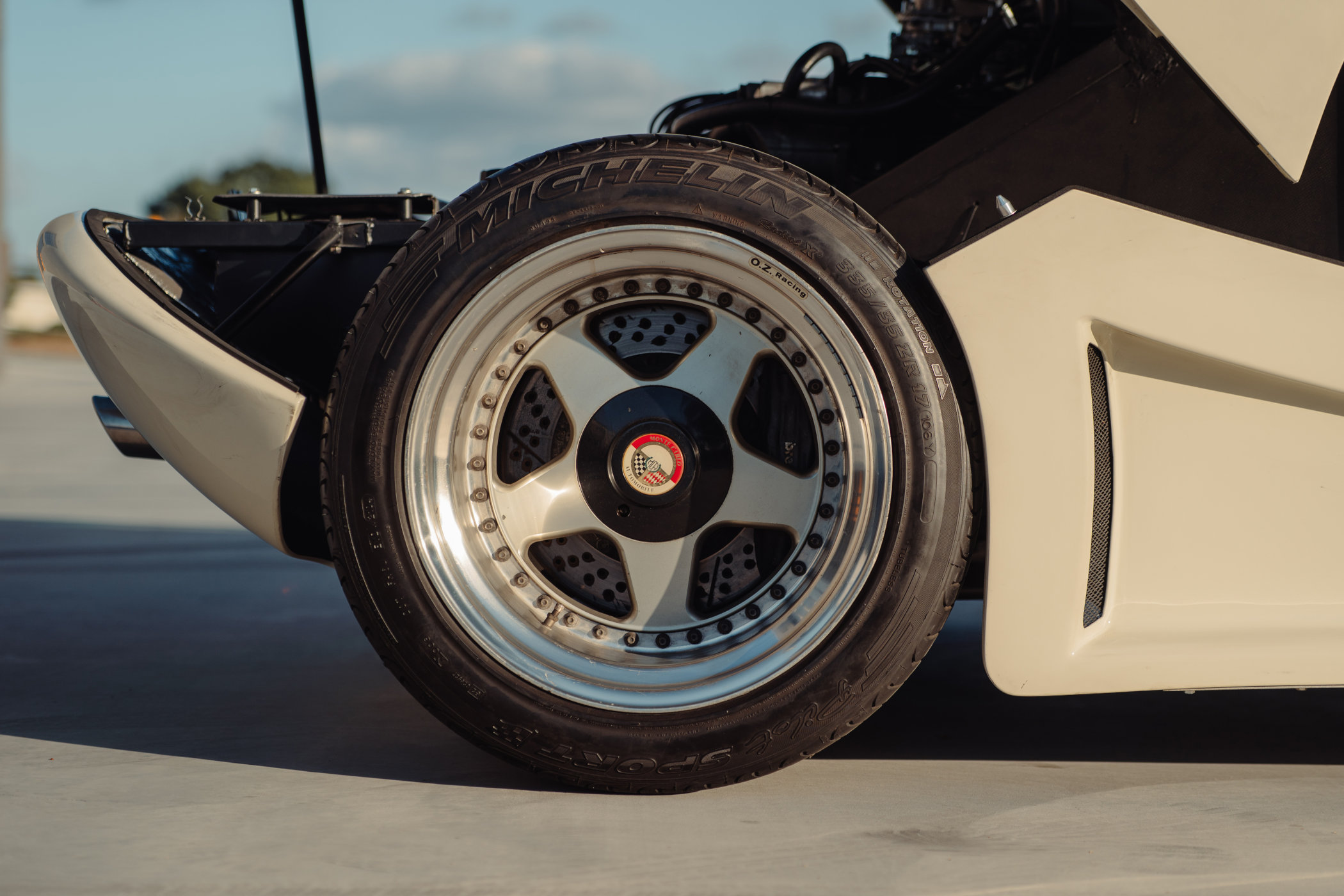
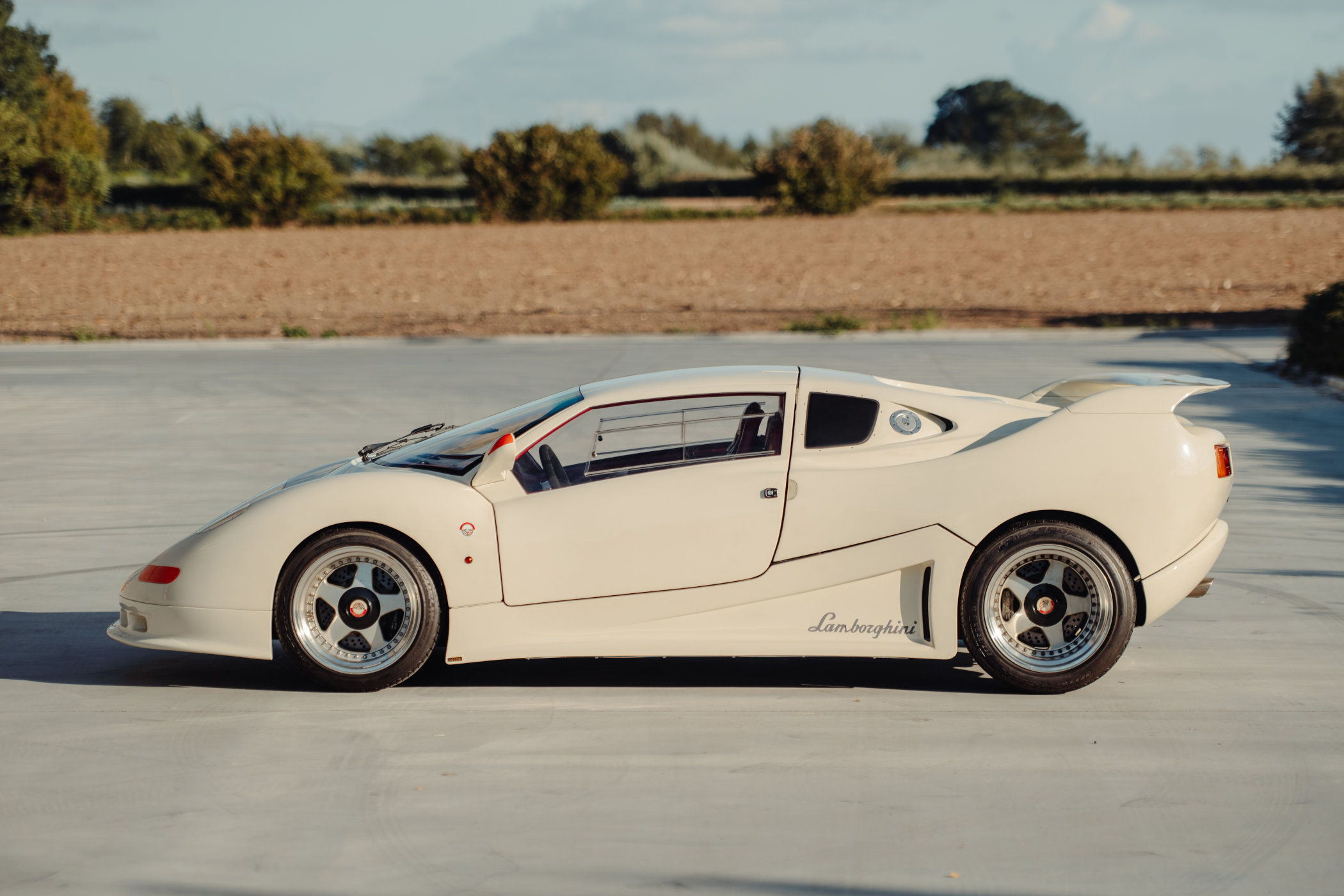
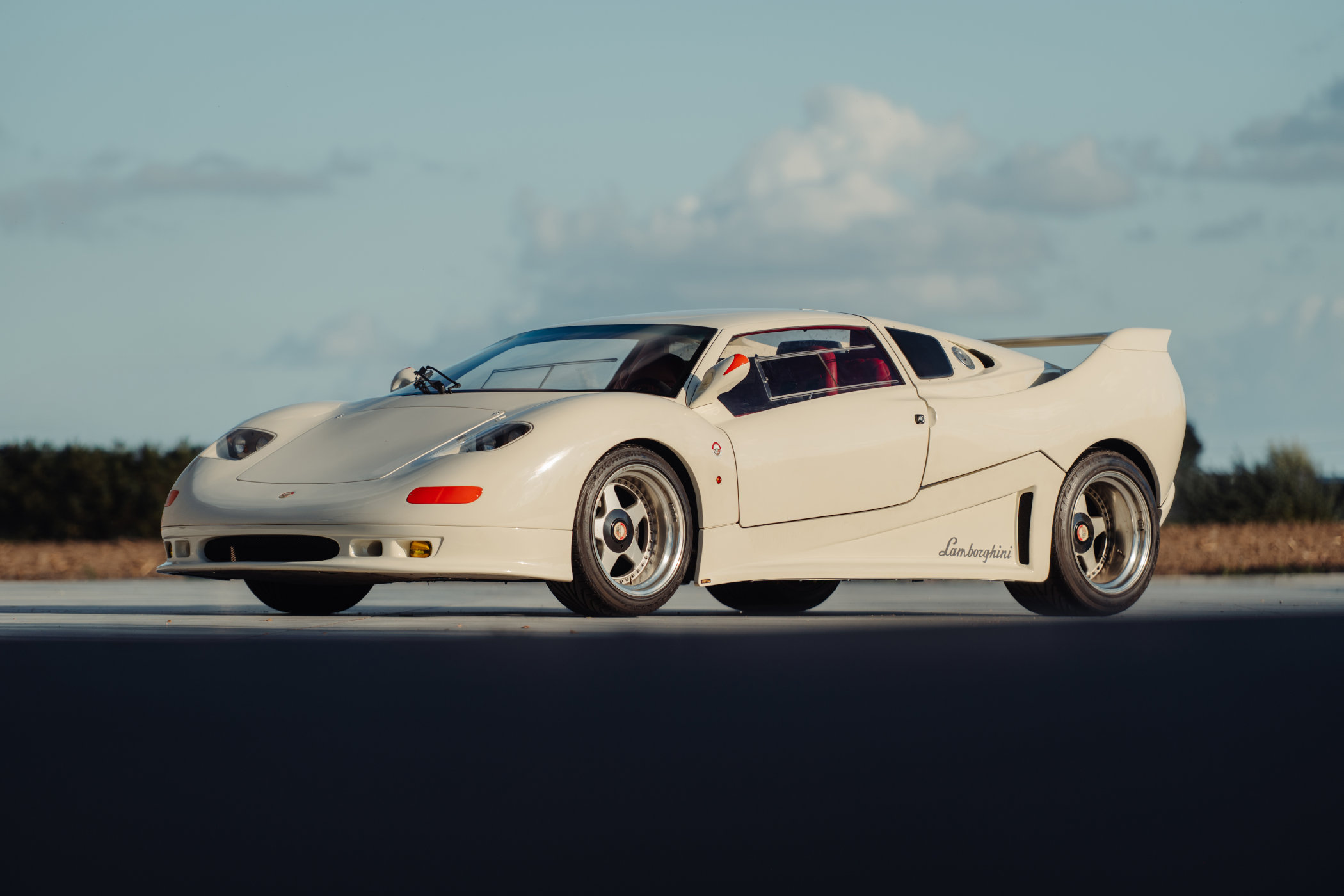
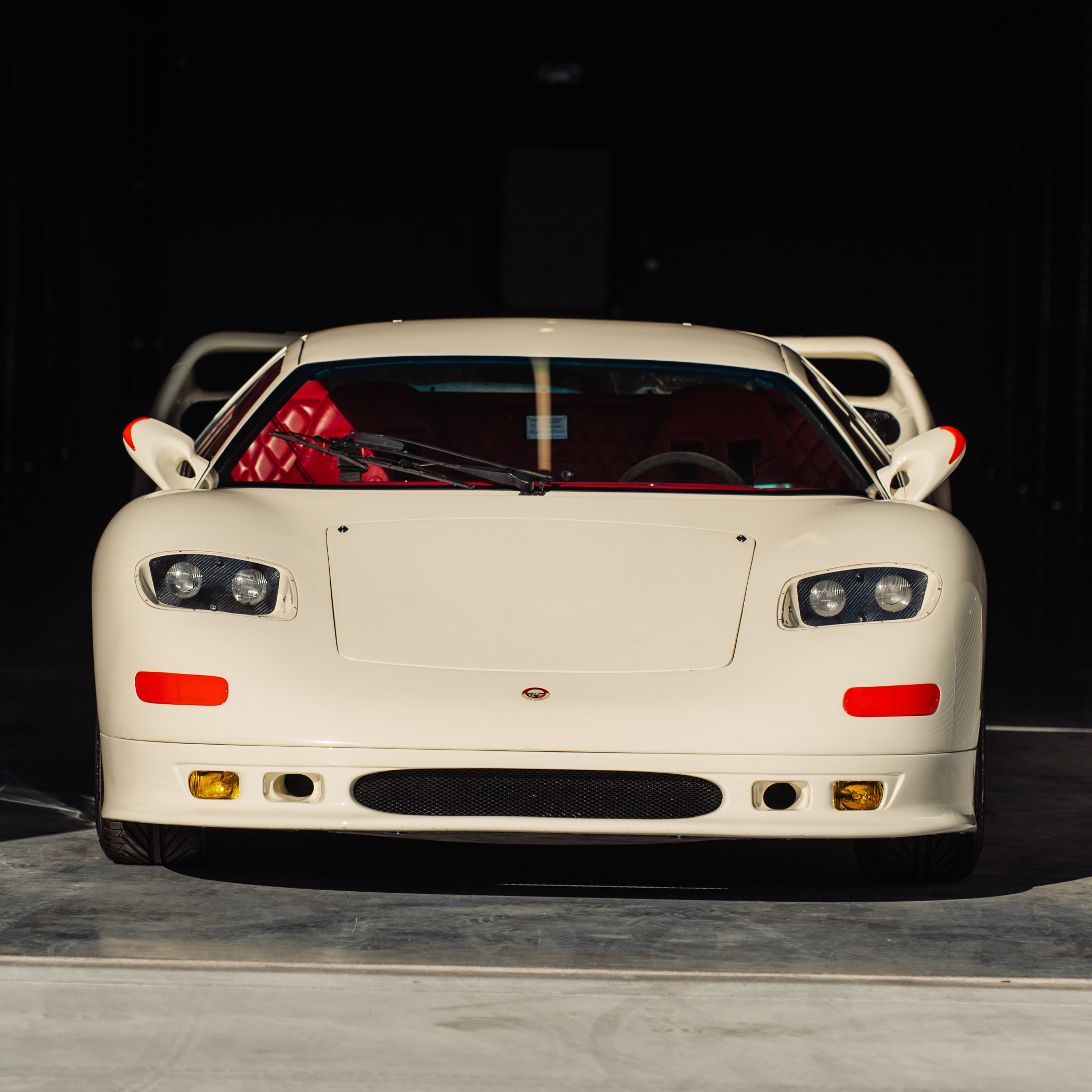
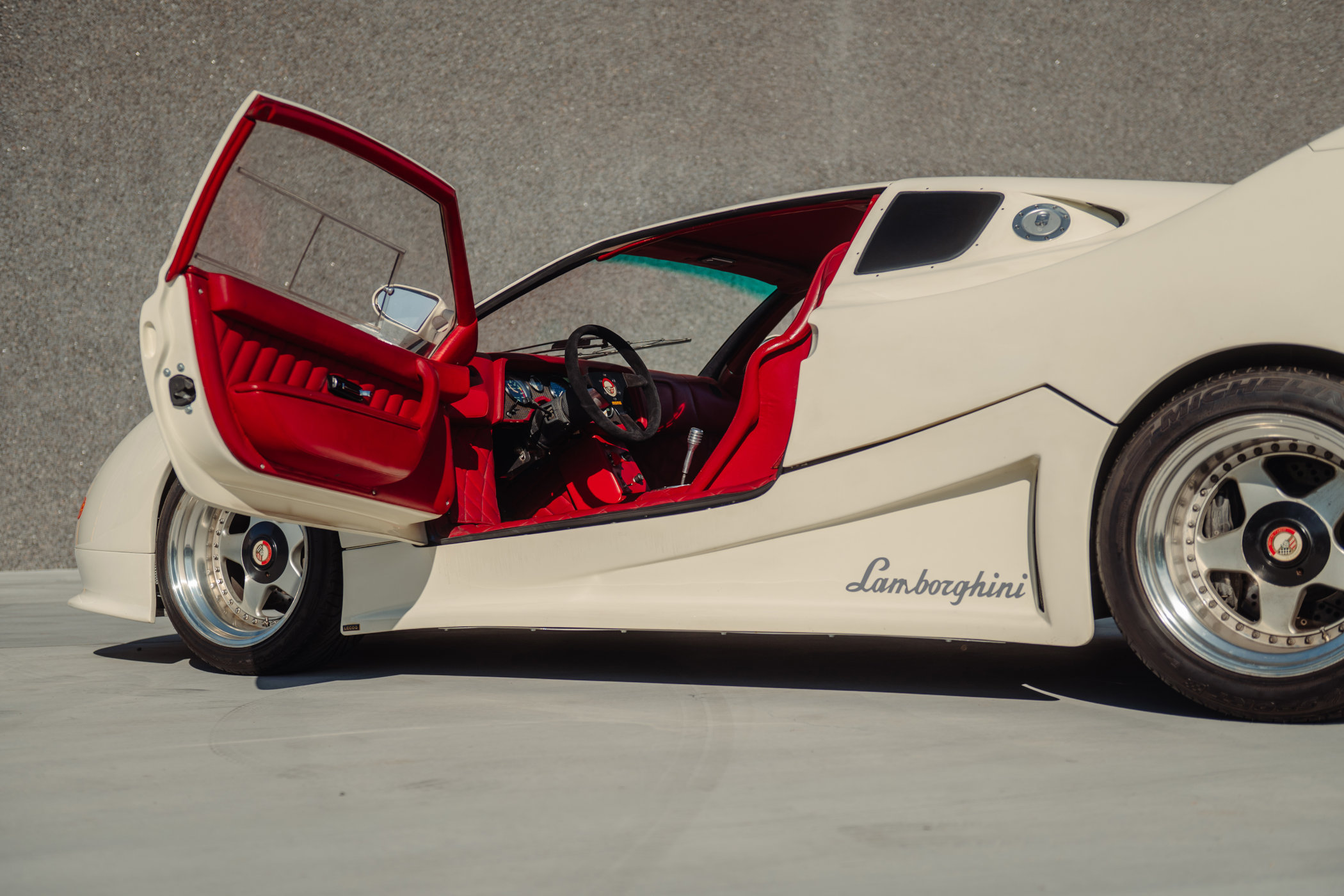
The body carries the familiar visual language of its era, with brief overhangs, a clamshell rear section, an integrated rear wing and a surface treatment full of vents, cuts and sharp directional lines.
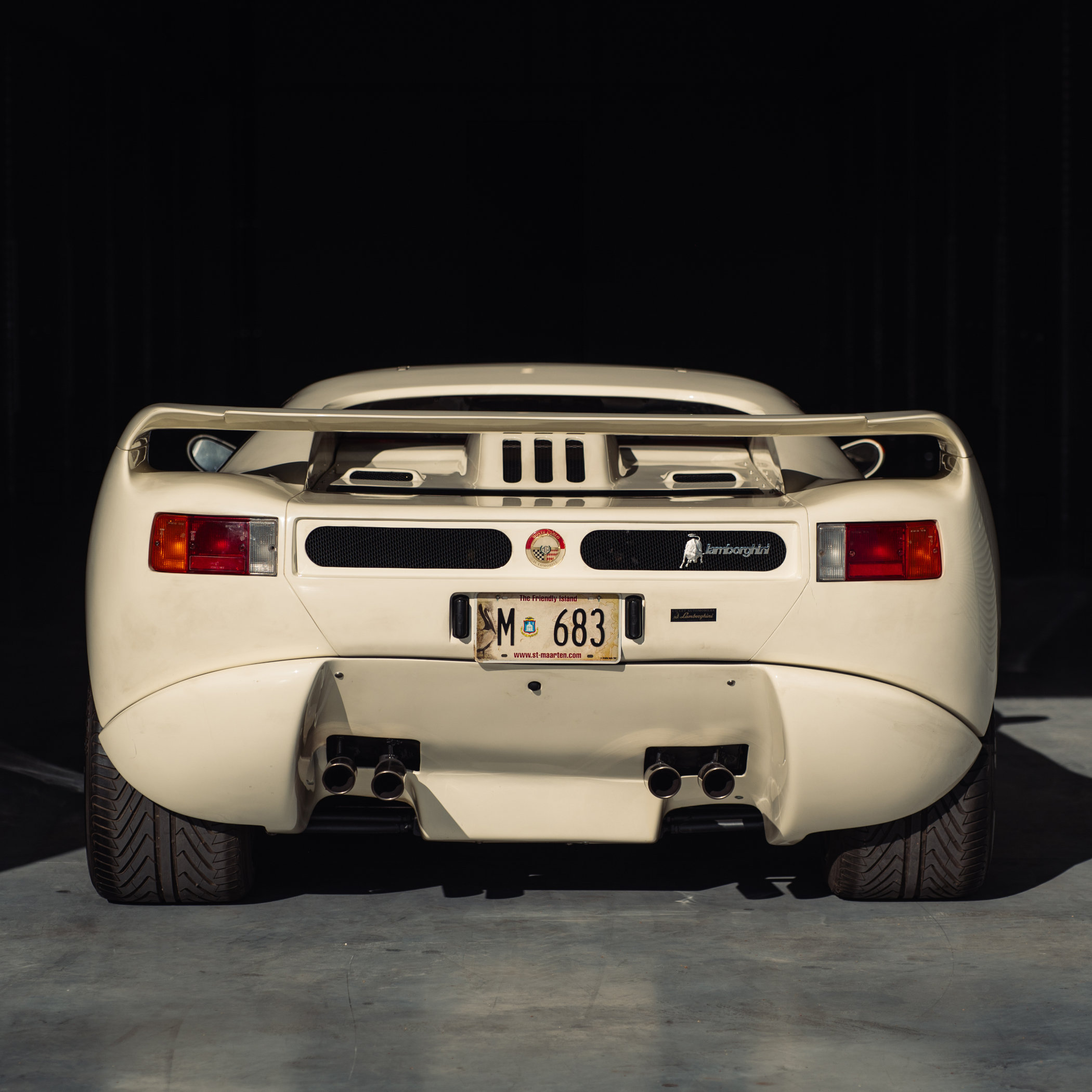
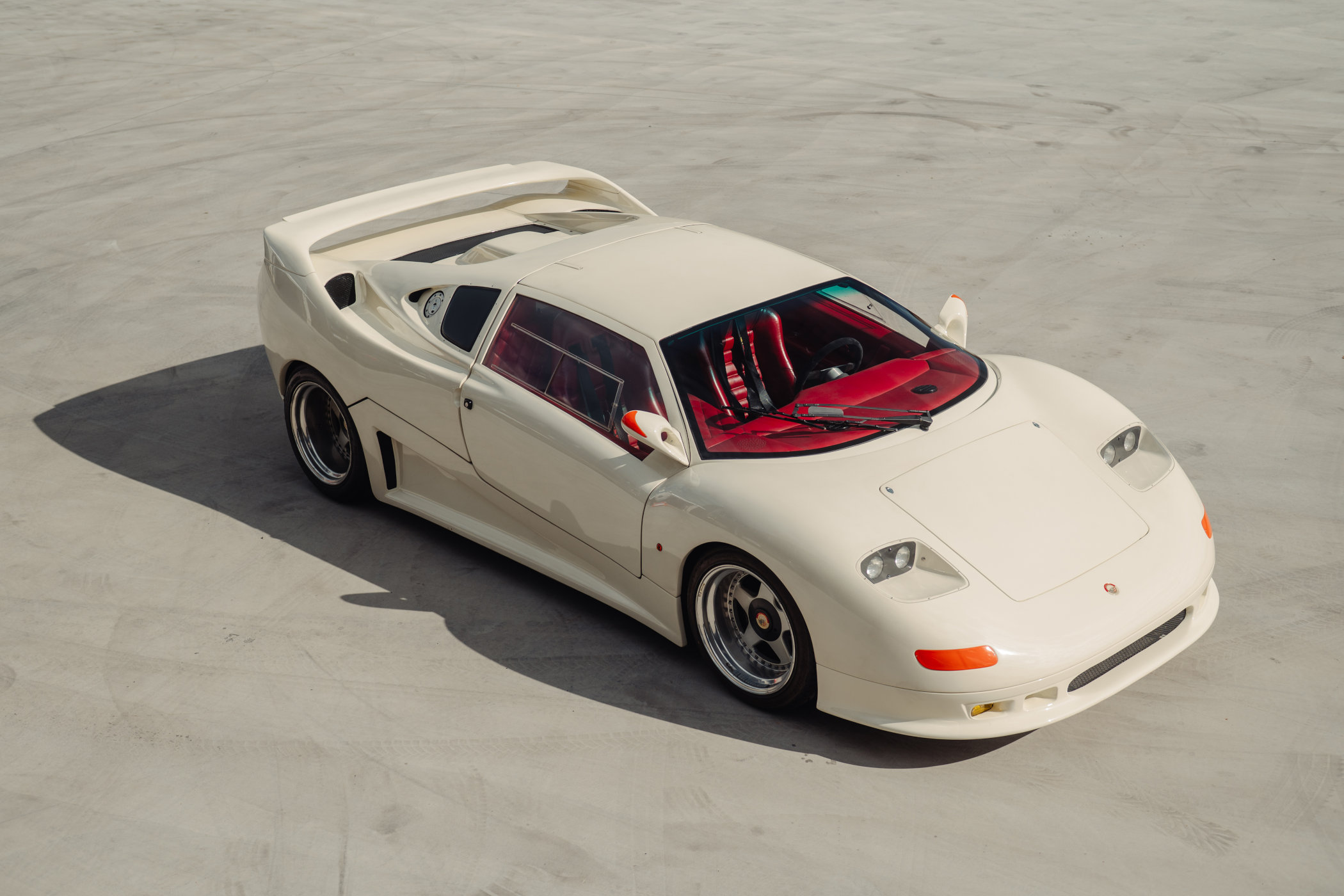
One of its defining styling moves is the rising character line that begins low at the front, climbs past the front wheel, emphasises the door and then sweeps through the rear bodywork.
Sliding plexiglass door windows add a motorsport flavour and hint at the packaging compromises behind the design.
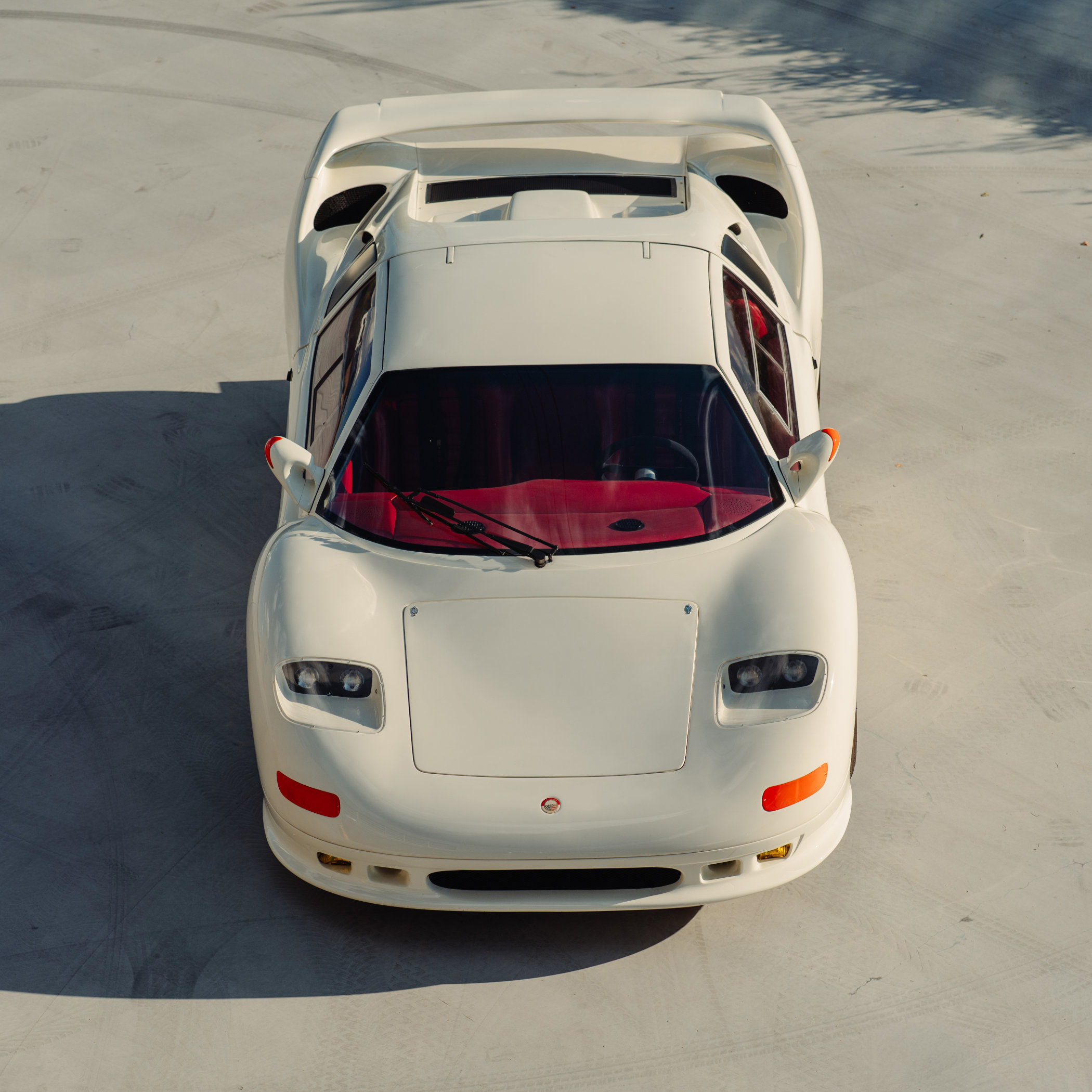
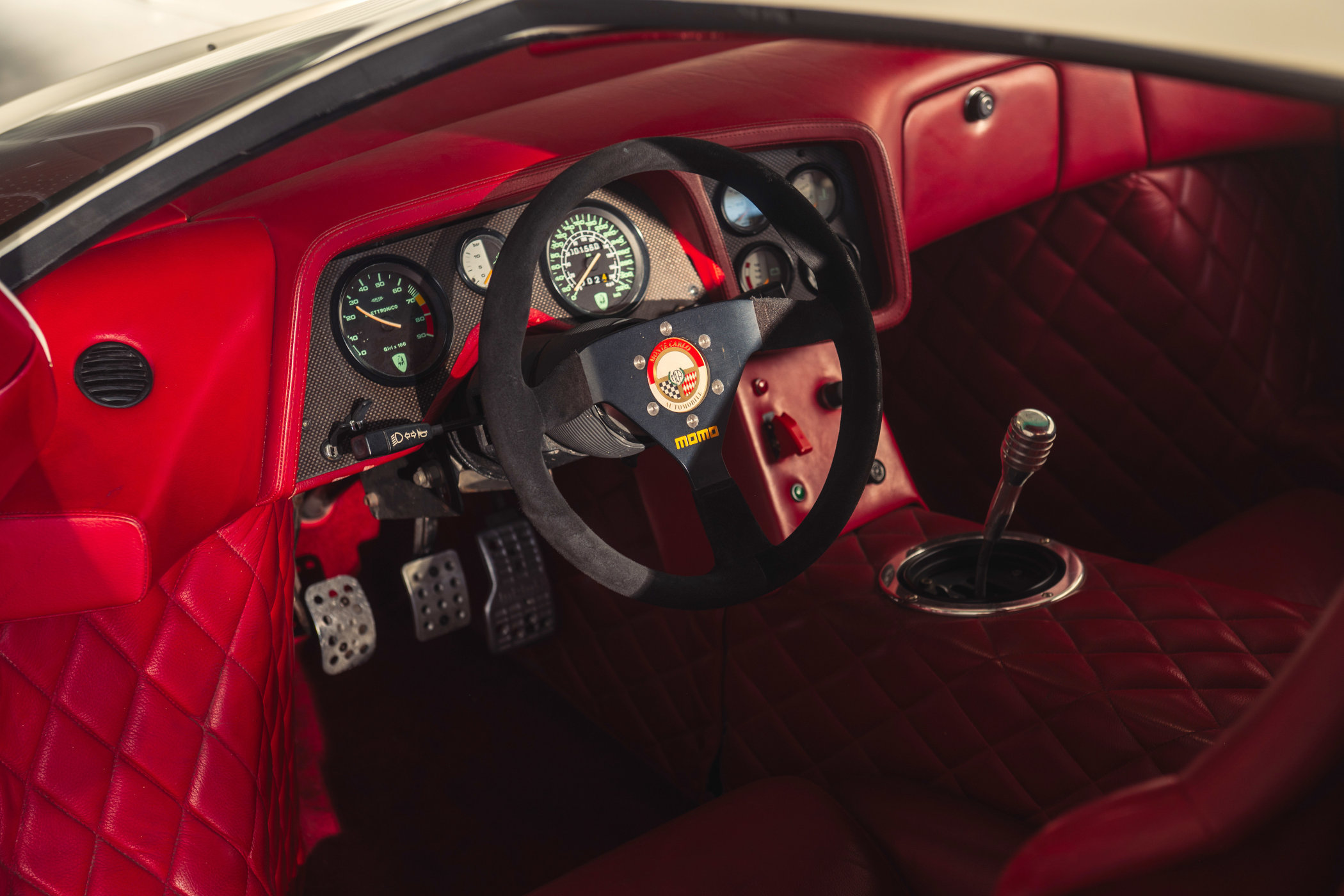
The first chassis was originally finished in ivory white over a red leather cabin.
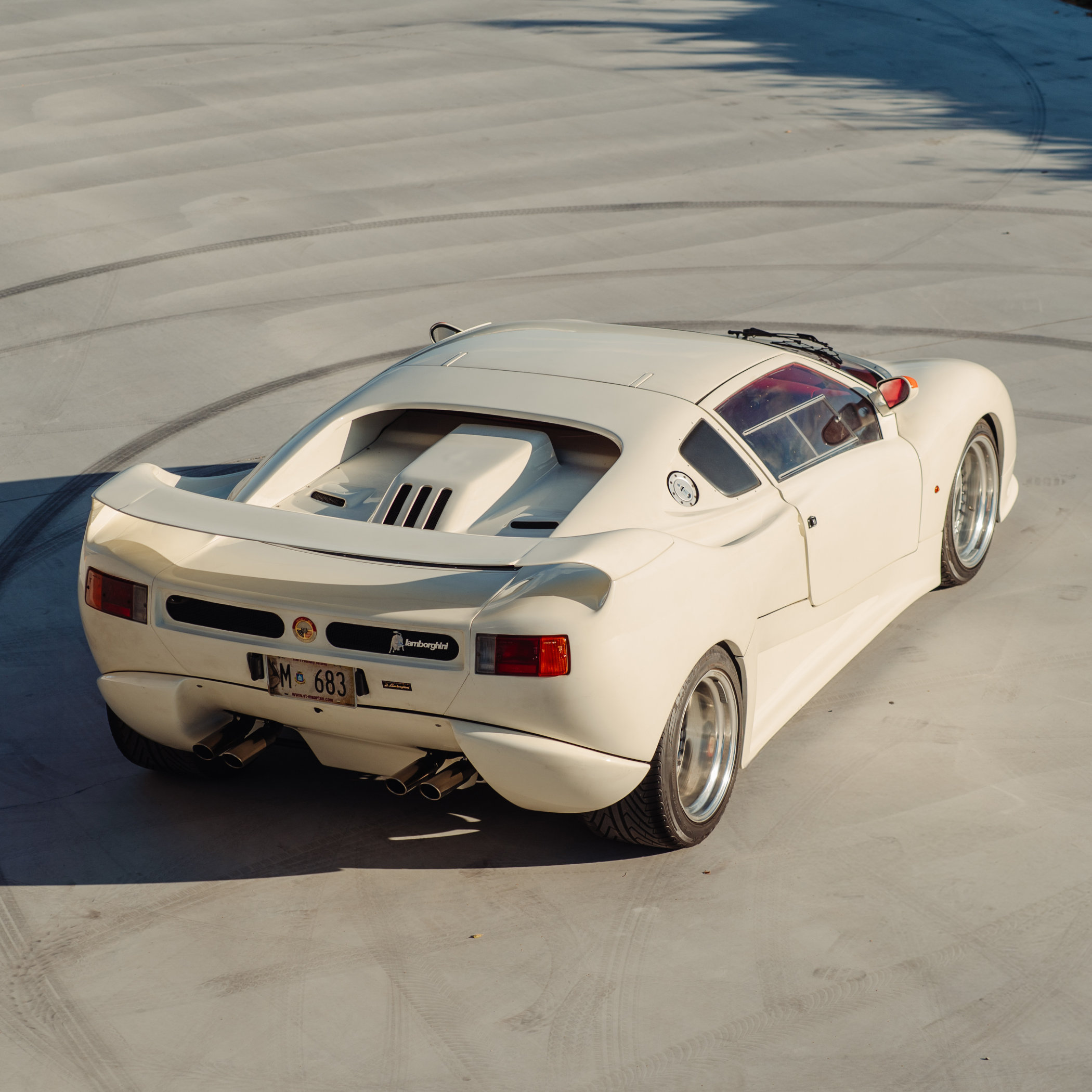
It was later repainted blue, then returned to a colour scheme matching its early specification before its most recent auction appearance.
The Lamborghini V12 connection
The Centenaire’s mechanical heart came from Lamborghini.
In 1989, Ballabio secured the 5.2-litre V12 used in the Countach 5000QV, here paired with a ZF six-speed manual gearbox.
Output was around 455 bhp, which placed the car firmly in serious supercar territory for the period.
Three of the five Centenaires are still fitted with the Lamborghini-sourced V12, including the first car.
MCA also considered a Formula 1-derived 3.5-litre twin-turbo V12 with more than 600 horsepower, though the Lamborghini engine remains the defining production configuration.
When Aixam Mega later reworked the concept into the Mega Monte Carlo, the Lamborghini unit was replaced by a 6.0-litre Mercedes V12, the same family of engine that would soon appear in the first Pagani Zonda.
A 1990s supercar caught by timing
The Centenaire had the ingredients that collectors now prize, but it arrived into a market that was turning sharply against extravagant low-volume supercars.
The early-1990s financial downturn hit specialist manufacturers hard, and demand for projects like the MCA collapsed before it had a chance to build momentum.
In 1993, the rights to the car and company were sold to a Georgian businessman with ambitions to take it to Le Mans, though the effort did not progress beyond qualification.
Aixam Mega took control two years later and developed the car into the Mega Monte Carlo.
Control eventually returned to Ballabio, and Monte Carlo Automobile continued to pursue later projects, including the W12-powered Monte Carlo BRC and the later Rascasse concept.
The first Centenaire carries particularly strong provenance.
It spent around a decade with Lamborghini before returning to Ballabio in the early 2000s, appeared at Rétromobile in 2007 beside the Lamborghini Pregunta concept car and is accompanied by history confirming its role as the first built, as well as a test and demonstration car.
Details & Specifications
| Brand | Monte Carlo Automobile |
|---|---|
| Model | Centenaire |
| Year introduced | 1990 |
| Production | Five examples |
| Chassis | Carbon-fibre monocoque |
| Engine | Lamborghini-sourced 5.2-litre V12 from the Countach 5000QV |
| Power | Approximately 455 bhp |
| Transmission | ZF six-speed manual |
| Length | 4.025 metres |
| Wheelbase | 2.520 metres |
| Exterior | Ivory white |
| Interior | Red leather |
| Recent sale price | €725,000 excluding buyer’s premium and VAT |
| Pre-sale estimate | €900,000 to €1,200,000 |
The MCA Centenaire is exactly the sort of car that makes the supercar fringe so interesting.
It wasn’t a fantasy sketch or a show-stand shell, but a functioning, carbon-fibre, V12 machine with a serious engineering cast and unfortunate timing.
For the collector who bought it, the appeal is less about fame and more about owning a rare moment when Monaco tried to build its own supercar legend.