Retrograde displays have a way of making a watch feel alive in a very specific, mechanical sense. Instead of simply circling the dial, the hand travels across a scale, reaches the end, then snaps back to start again. These six watches show how much personality can be found in that sudden reset.
At a glance
- Six retrograde display watches show how linear indications can add drama, motion and character to a dial.
- The selection ranges from biretrograde calendars and retrograde dates to automotive-style minutes and a 30-second retrograde seconds display.
- Prices span from €1199 for the Xeric Timeline Retrograde Automatic Prism to CHF 56,500 for the Roger Dubuis Excalibur Biretrograde Calendar.
The watches here include pieces from Roger Dubuis, Breguet, Reservoir, Xeric, Chronoswiss and Vacheron Constantin, each using the retrograde idea in a different way.
The appeal of a hand that refuses to go in circles
Most watch displays are built around rotation, which is practical, familiar and very old in the best possible way.
A retrograde display changes the rhythm by giving the hand a beginning and an end, creating a small burst of theatre when it jumps back to zero.
That reset can be used for dates, days, minutes or seconds, and the effect ranges from classical elegance to dashboard-style energy.
High horology with a visible reset
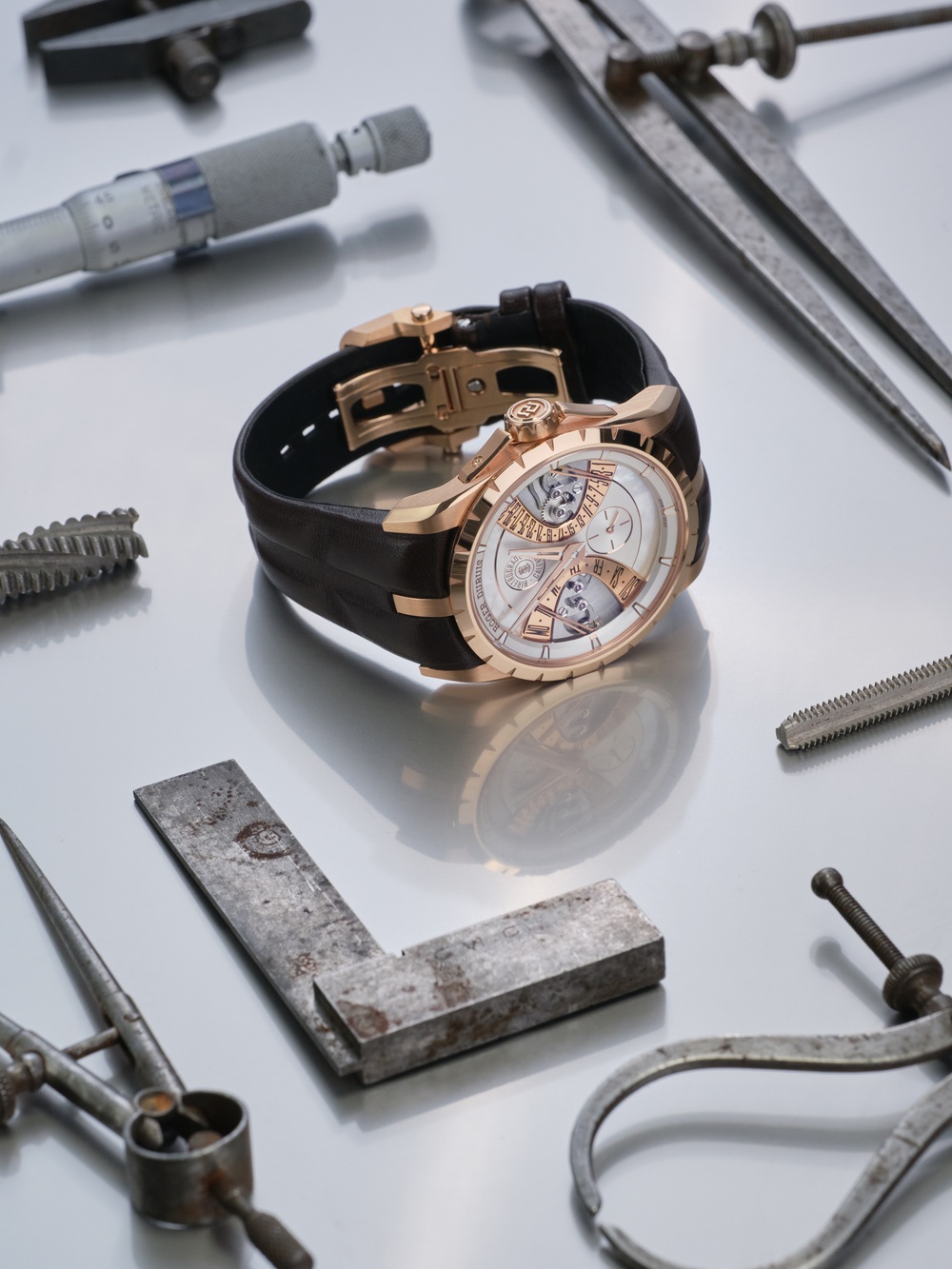
The Roger Dubuis Excalibur Biretrograde Calendar brings the brand’s assertive Excalibur language into a 40mm 18ct pink gold case, with day and date hands sweeping across opposing arcs at nine and three o’clock.
Its seven-layer dial uses a white base with Mother of Pearl accents at 12 and six, while the in-house automatic movement carries the Geneva Seal.
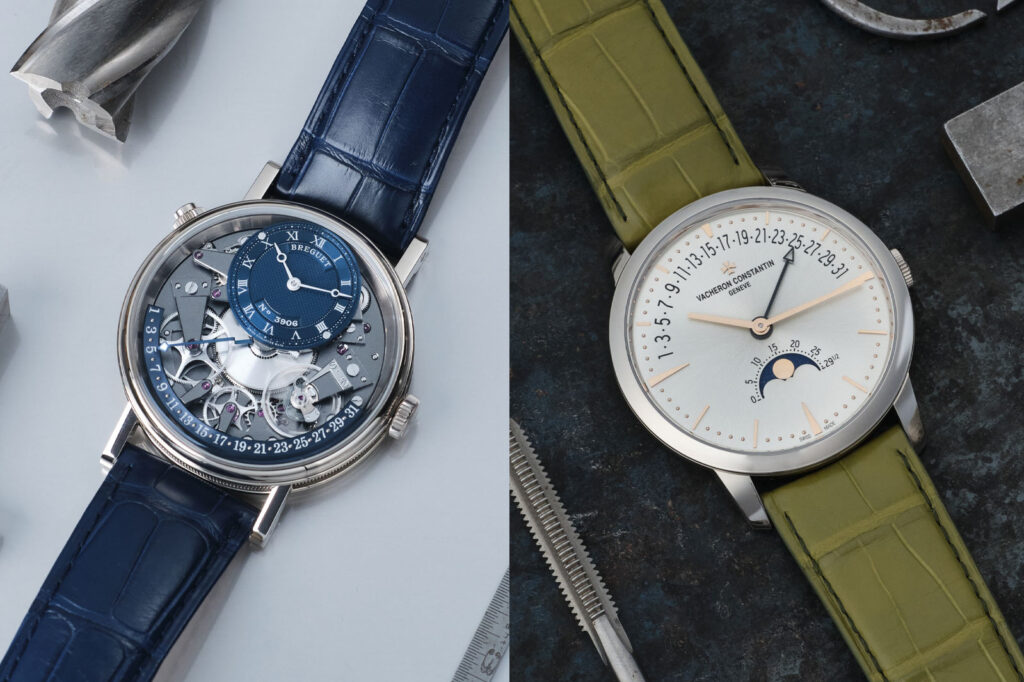
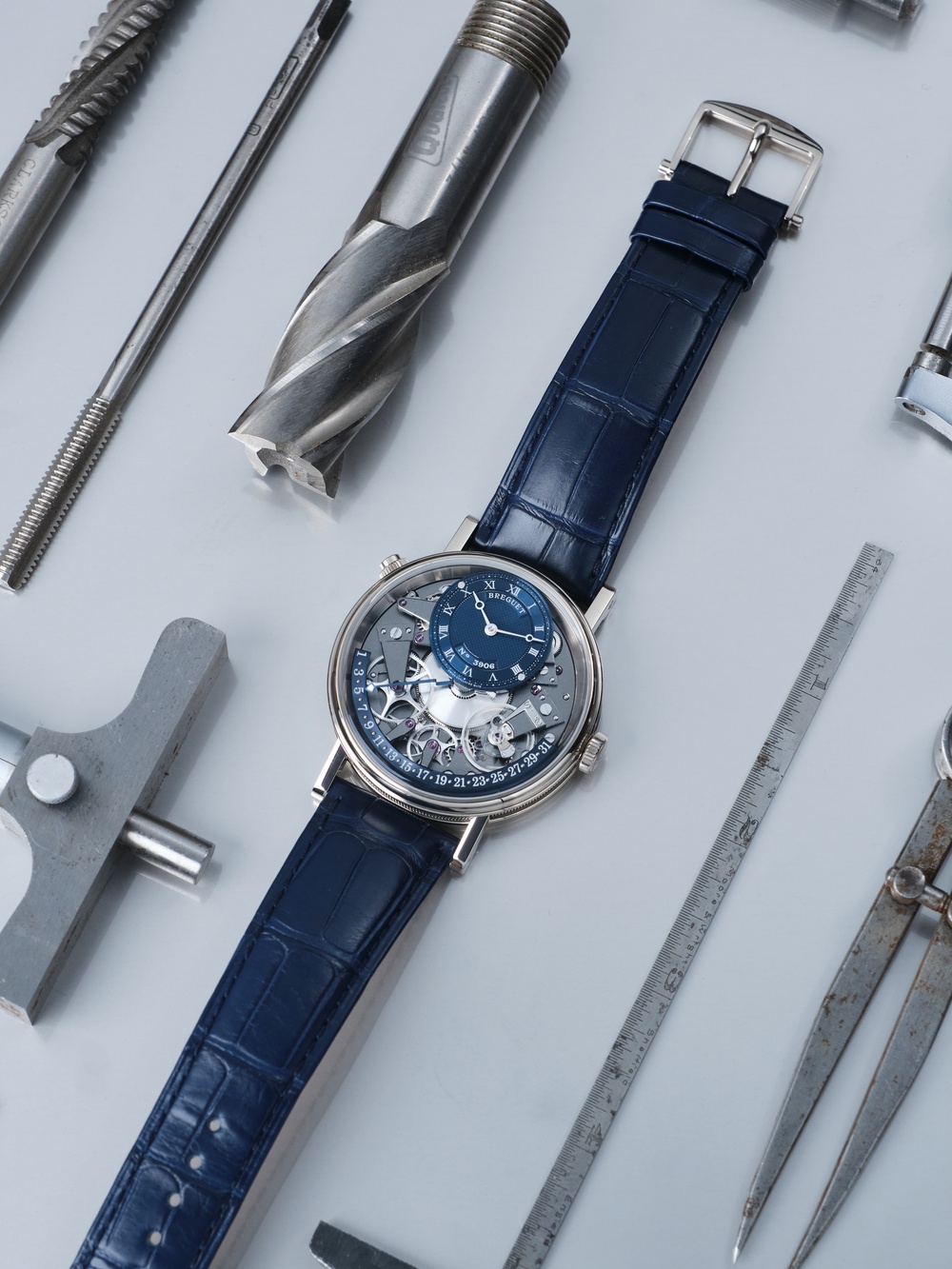
Breguet takes a very different path with the Tradition Quantième Retrograde 7597, where the skeletonised architecture puts the mechanics on display around an off-centre guilloché dial with traditional Breguet numerals.
Here, the retrograde date arcs across the dial and jumps back at the end of the month, adding motion without disturbing the watch’s classical balance.
Retrograde displays with automotive energy
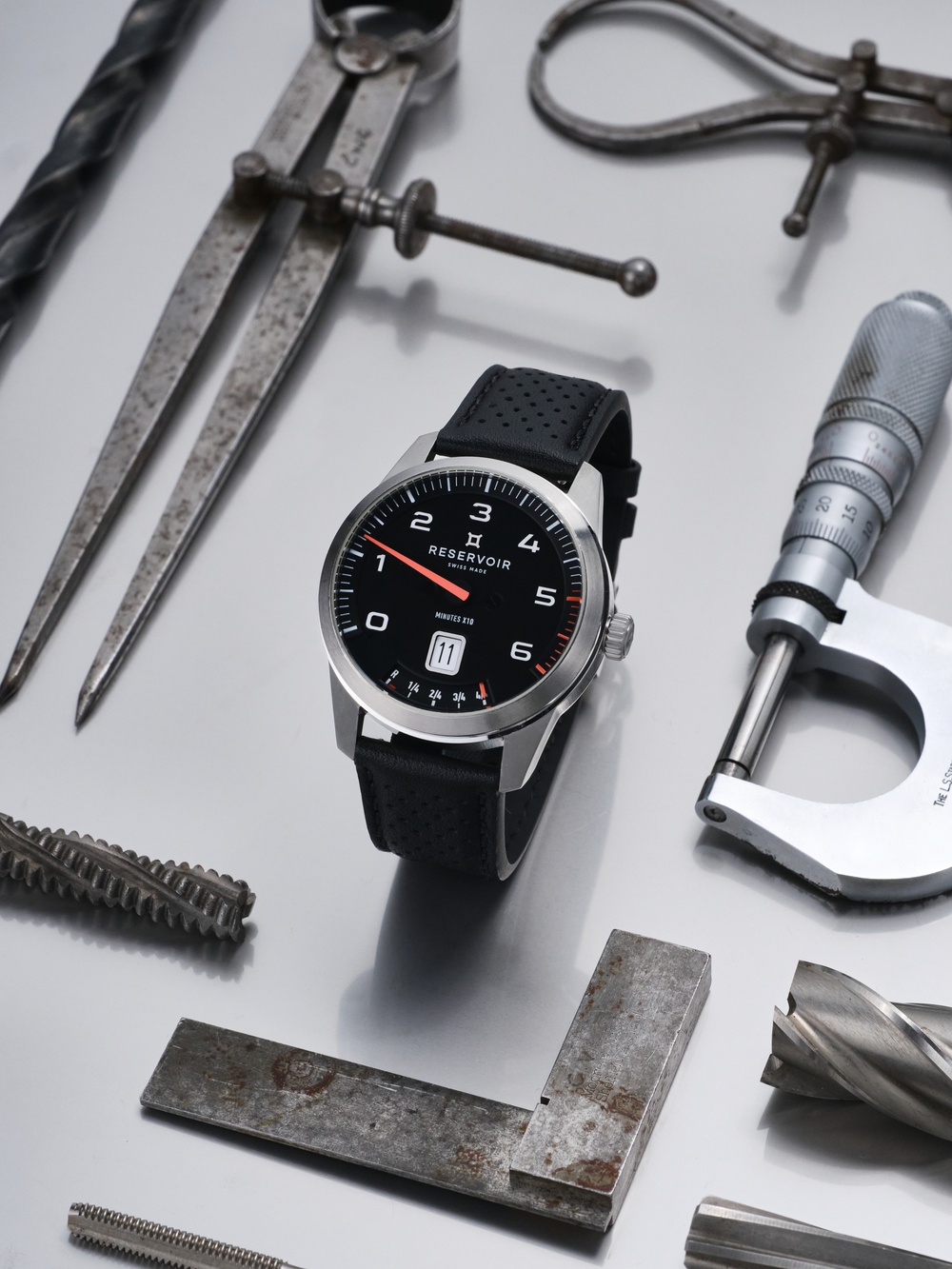
The Reservoir GT Tour uses the retrograde idea with clear motorsport intent, pairing a 240-degree minute arc with a jumping hour and a power reserve styled like a fuel gauge.
It’s a watch that reads closer to an instrument cluster than a conventional dial, and the minute hand’s hourly return to zero gives it a satisfyingly mechanical sense of acceleration and release.
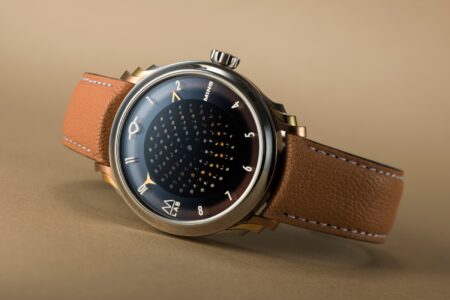
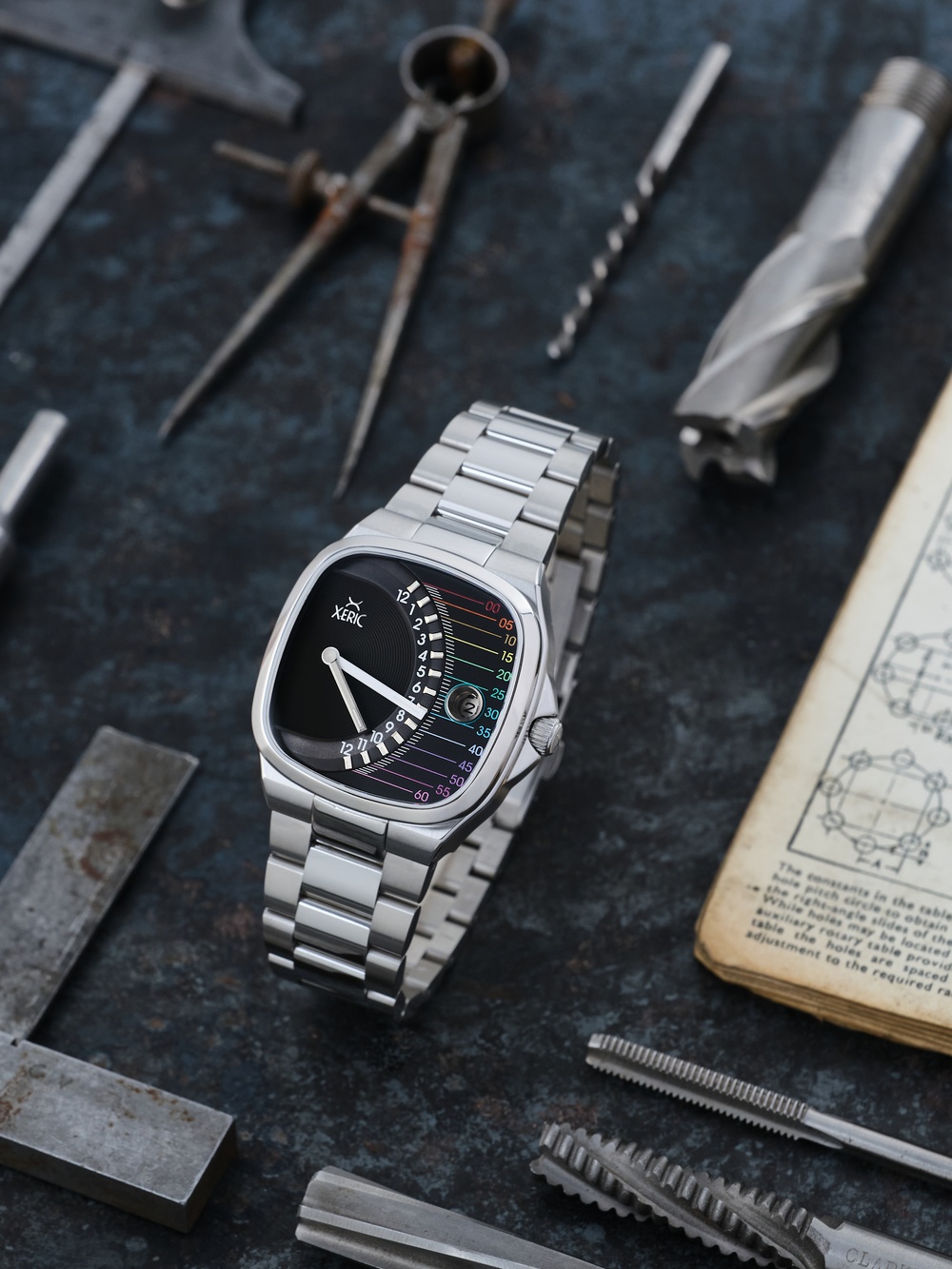
Xeric’s Timeline Retrograde Automatic Prism pushes the concept into more futuristic territory, using a layered dial, a magnified date window and a multicoloured ombre minute track.
Its minutes sweep across the display before snapping back every hour, while the hour indication resets every 12 hours, making it one of the most unconventional watches in this group.
Modern regulator style and classical moon phase restraint
The Chronoswiss Pulse One Blue brings the retrograde complication into a lightweight Grade 5 titanium case with an integrated bracelet and an electric blue layered dial.
Its regulator layout remains central to the identity of the watch, but the retrograde seconds hand adds the memorable flourish by sweeping across a curved track and snapping back every 30 seconds.

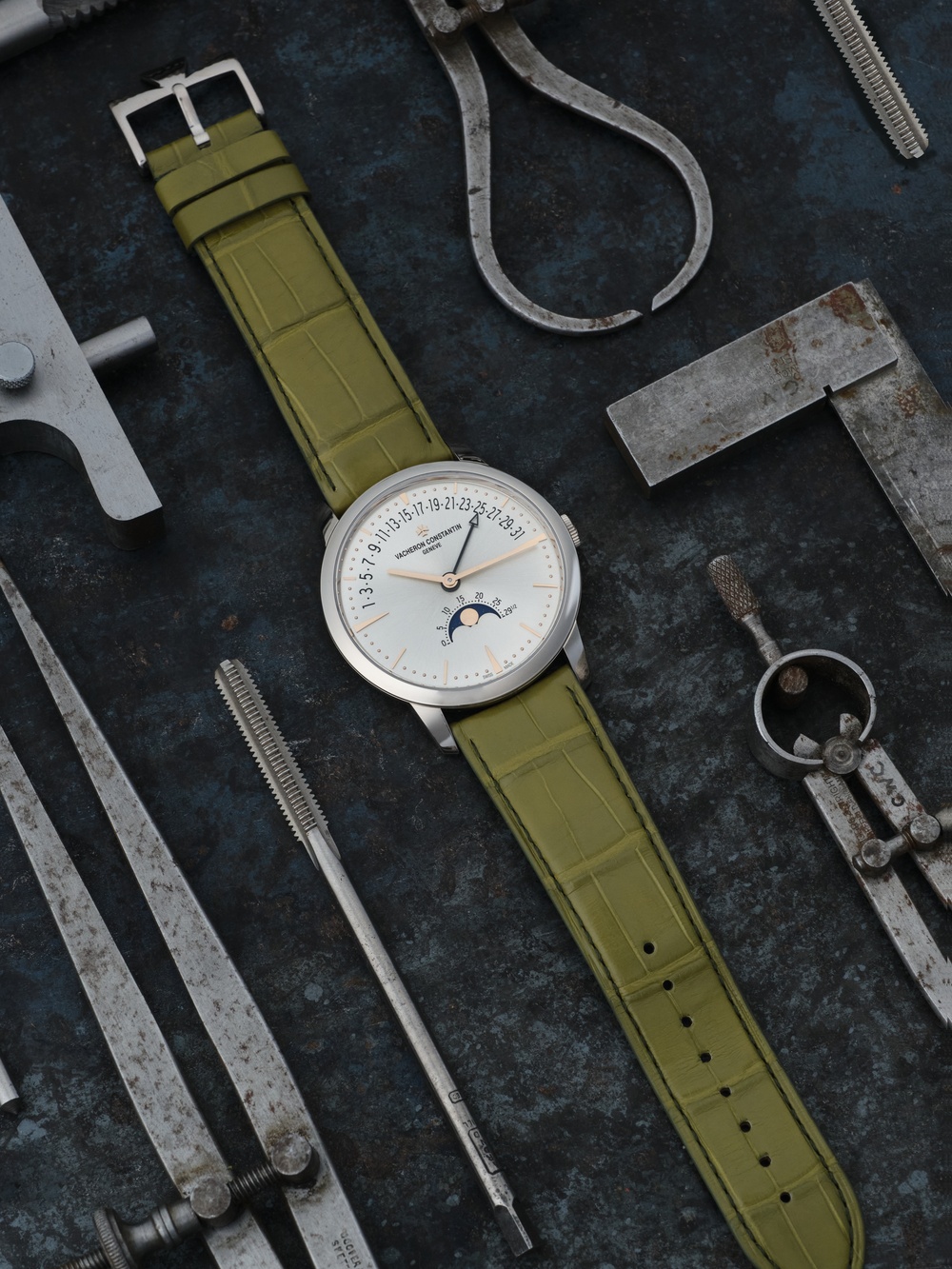
Vacheron Constantin’s Moon Phase Retrograde Date is the quietest execution here, using an 18ct white gold case, applied gold batons and a clean dial anchored by a moon phase at six o’clock.
The retrograde date spans the upper part of the dial and returns precisely at month’s end, giving the watch movement without sacrificing its formal composure.
Together, these six watches show that retrograde displays aren’t just technical curiosities, but useful design tools that can make a dial feel measured, animated, playful or poetic.
Details & Specifications
| Roger Dubuis Excalibur Biretrograde Calendar | 40mm 18ct pink gold case, biretrograde day and date, in-house automatic movement with Geneva Seal, CHF 56,500 |
|---|---|
| Breguet Tradition Quantième Retrograde 7597 | Skeletonised layout, off-centre guilloché dial, retrograde date, £42,500 |
| Reservoir GT Tour | Jumping hour, 240-degree retrograde minute display, fuel-gauge-style power reserve, £3,950 |
| Xeric Timeline Retrograde Automatic Prism | Retrograde minutes, 12-hour resetting hour display, magnified date window, €1199 |
| Chronoswiss Pulse One Blue | Grade 5 titanium case, integrated bracelet, retrograde seconds, CHF 11’800 |
| Vacheron Constantin Moon Phase Retrograde Date | 18ct white gold case, retrograde date, moon phase, £48,900 |
FAQ
What is a retrograde display on a watch?
A retrograde display uses a hand that moves along a scale rather than completing a full circle. When it reaches the end of that scale, it snaps back to the starting point and begins again. Watchmakers use the format for indications such as the date, day, minutes or seconds, which gives the dial a more animated, mechanical character than a conventional rotating hand.
Which retrograde display watches are featured in this selection?
The six watches are the Roger Dubuis Excalibur Biretrograde Calendar, Breguet Tradition Quantième Retrograde 7597, Reservoir GT Tour, Xeric Timeline Retrograde Automatic Prism, Chronoswiss Pulse One Blue and Vacheron Constantin Moon Phase Retrograde Date. They cover a wide range of interpretations, from classical retrograde dates and biretrograde calendars to automotive-style minute displays and a 30-second retrograde seconds hand.
Which watch is the most affordable retrograde model in the list?
The Xeric Timeline Retrograde Automatic Prism is the lowest-priced watch mentioned, at €1199. It uses retrograde minutes, a 12-hour resetting hour display and a magnified date window. At the other end of the group, the Roger Dubuis Excalibur Biretrograde Calendar is listed at CHF 56,500.
Which of these watches use a retrograde date display?
The Breguet Tradition Quantième Retrograde 7597 and Vacheron Constantin Moon Phase Retrograde Date both use a retrograde date that arcs across the dial and jumps back at the end of the month. The Roger Dubuis Excalibur Biretrograde Calendar goes further with a biretrograde layout, using separate retrograde displays for the day and date.
Are retrograde watches harder to read than standard watches?
They can take a little adjustment because the hand travels along an arc or scale instead of moving continuously around the dial. Once the layout is understood, the information is usually straightforward. The main appeal is the added motion: the hand’s return to zero creates a visible mechanical moment that a conventional display doesn’t offer.