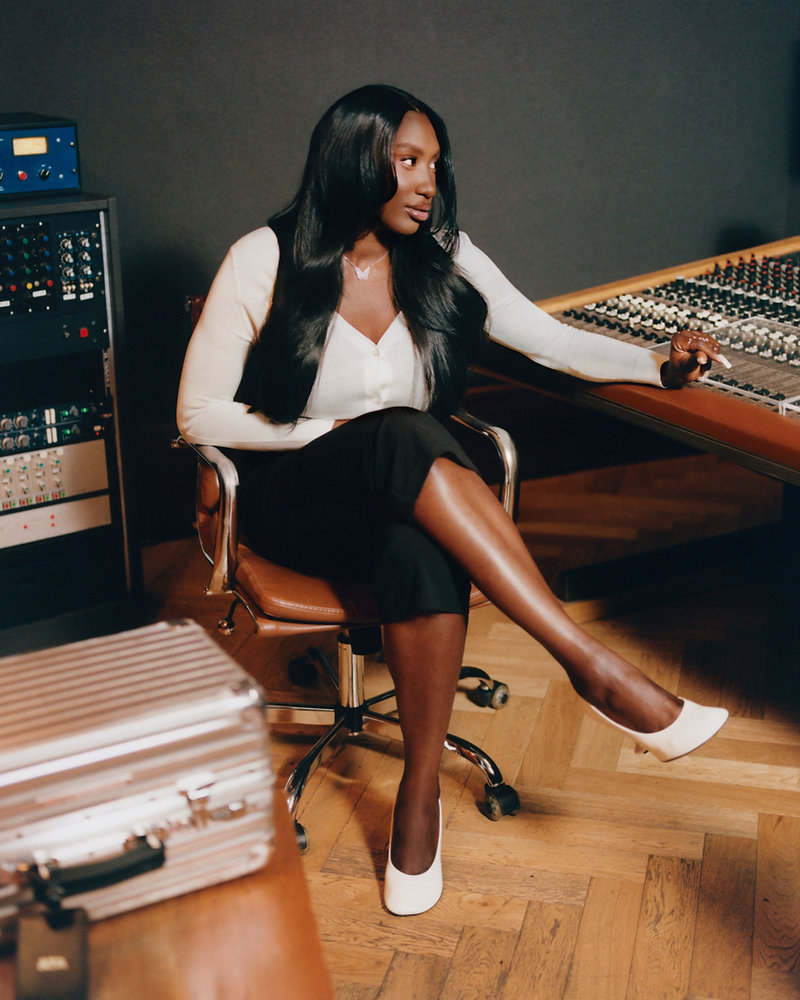
RIMOWA’s latest short-form film turns its attention to Aya Nakamura at a defining point in her career.
Directed by Otman Qrita, the episode follows the French-Malian artist as she prepares for, performs and processes three consecutive sold-out shows at Stade de France, a milestone that drew more than 220,000 fans.
It’s a polished brand film, but its most interesting moments sit away from the obvious spectacle.

At a glance
- RIMOWA’s newest short-form episode follows Aya Nakamura around her landmark Stade de France concerts.
- The film moves through rehearsals, backstage preparation, performances and the personal moments that follow.
- RIMOWA also created a bespoke Classic case in Cologne to carry Nakamura’s mic-set securely.
Aya Nakamura’s landmark Stade de France run
Nakamura’s Stade de France concerts carry significance beyond scale.
With three consecutive sold-out performances at the national stadium, she became the first French female artist to achieve that feat, placing her at the centre of a major cultural moment for Francophone pop.
Her reach has long extended beyond France, helped by a sound that moves fluidly across languages, genres and borders without sanding down its personality.

The film leans into that position without turning the story into a victory lap.
Instead, Qrita’s camera stays close to the working rhythm around the shows, from rehearsals to backstage preparations and the charged atmosphere just before Nakamura steps out in front of the crowd.
The discipline behind the spectacle
Stadium performances can look seamless from a distance, but this episode is more interested in the machinery that makes them feel effortless.

It captures dancers, technicians and production teams working through the details that shape a performance at this level.
That emphasis gives the film a useful sense of proportion.
Nakamura is the focal point, yet the frame widens enough to acknowledge the collaboration behind a night built for tens of thousands of people.

The quieter passages after the shows are just as important.
As the energy drops, the portrait becomes more intimate, following Nakamura back into her personal circle as she reflects on ambition, motherhood, creativity and the path that brought her to the stadium.
A bespoke RIMOWA Classic case for the mic-set
The luggage element is handled through a custom piece made for Nakamura’s touring life.

RIMOWA crafted a bespoke Classic case designed to transport her mic-set in a protective foam inlay.
The case was made at the brand’s historic factory in Cologne, Germany, using RIMOWA’s signature anodised grooved aluminium.
It also carries familiar Classic collection cues, including a leather handle, polished silver accents and TSA-approved locks.

It’s a neat fit for the project because the object has a practical role rather than feeling like a decorative placement.
For an artist who has travelled with RIMOWA cases for years, the custom build turns a piece of touring equipment into something closer to a career companion.
RIMOWA’s move into cultural portraiture
RIMOWA has increasingly treated travel as a broader cultural language, not just a category of product design.

This series follows that line by focusing on people whose work is shaped by movement, repetition and pressure.
With Nakamura, the connection feels especially clear.
Her career is international in practice, but the film’s strongest idea is more grounded than global reach or audience numbers.

It shows that a landmark performance is rarely just one night.
It’s built from preparation, trust, physical discipline, private doubt and the ability to keep going when the stage gets larger.
For RIMOWA, the project reinforces the brand’s place in the orbit of contemporary culture.

For Nakamura, it adds a restrained behind-the-scenes portrait to a stadium moment already defined by scale.