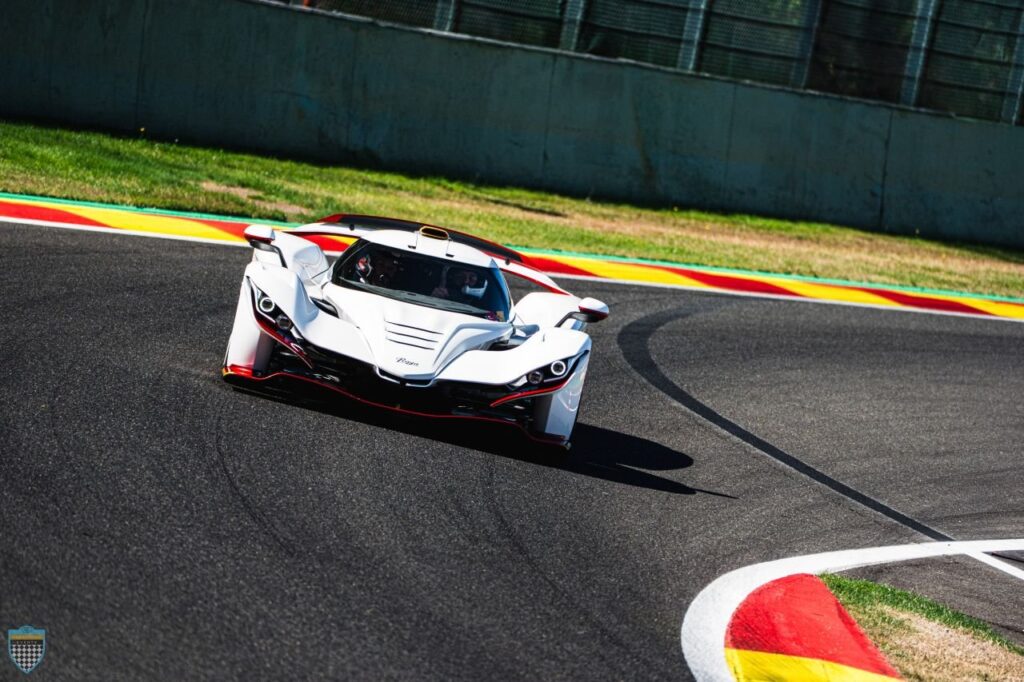
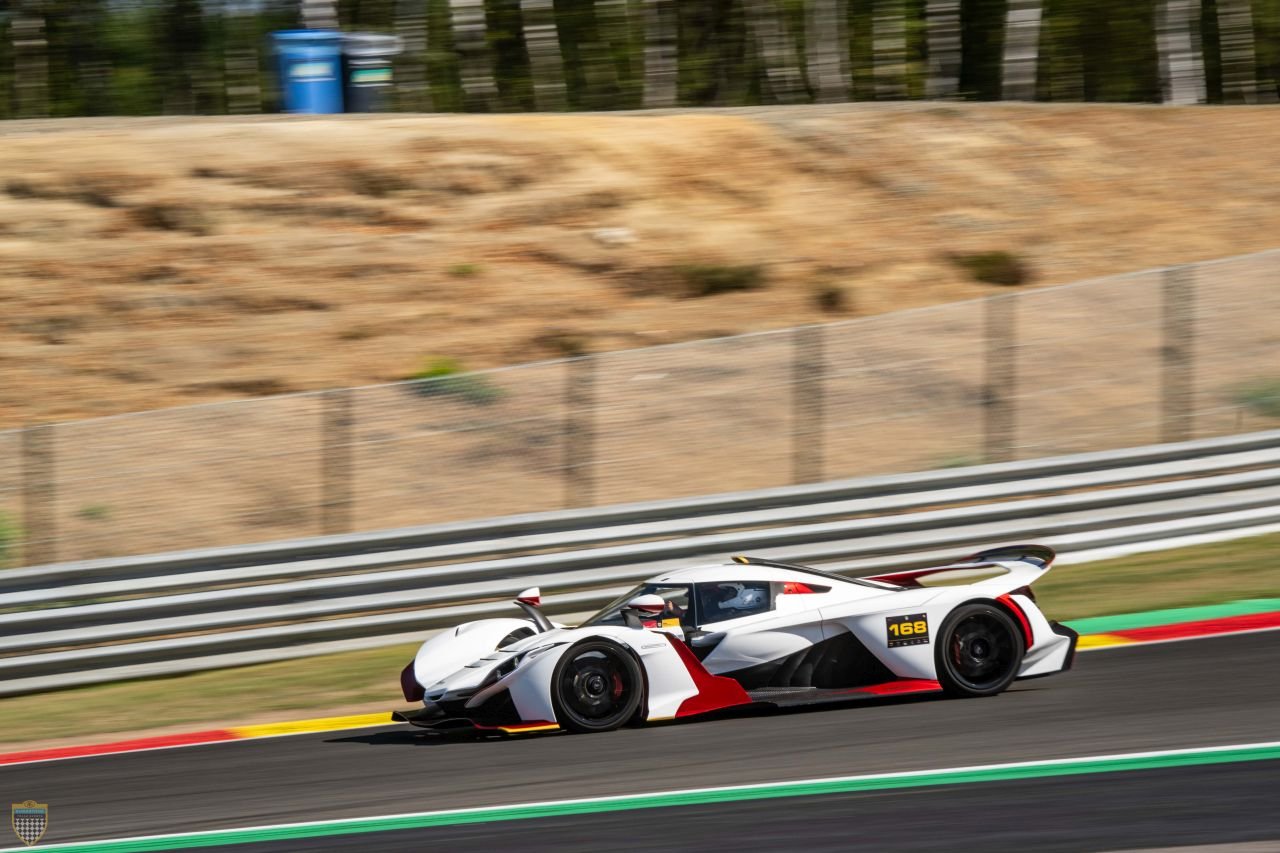
The Praga Bohema has delivered a serious statement at Spa-Francorchamps, one of the few circuits where downforce, nerve and high-speed stability all get judged in public.
During a customer track day in Belgium, the Czech-built hypercar recorded a lap time of 2 minutes 21.42 seconds, moving ahead of the Pagani Huayra Roadster BC’s 2 minutes 23.081 seconds.
The most compelling part is how it happened. The Bohema ran on road tyres, shared the circuit with other cars and was not given special preparation for a dedicated record attempt.
At a glance
- The Praga Bohema has posted a 2:21.42 lap at Spa-Francorchamps, beating the Pagani Huayra Roadster BC’s previous benchmark.
- The lap was achieved on road tyres during a customer track day, with other cars also on the circuit.
- Praga’s lightweight hypercar uses a 3.8-litre twin-turbo V6 with 690 hp and weighs under 1,000 kg.
A Spa lap that wasn’t planned as a record run
Spa is not a circuit that flatters weak engineering.
Its long full-throttle sections, compressions and fast direction changes expose how well a car balances power, aero load, braking confidence and tyre management.
Praga test driver Aleš Jirásek said the team was at Spa with customers rather than chasing a headline time.
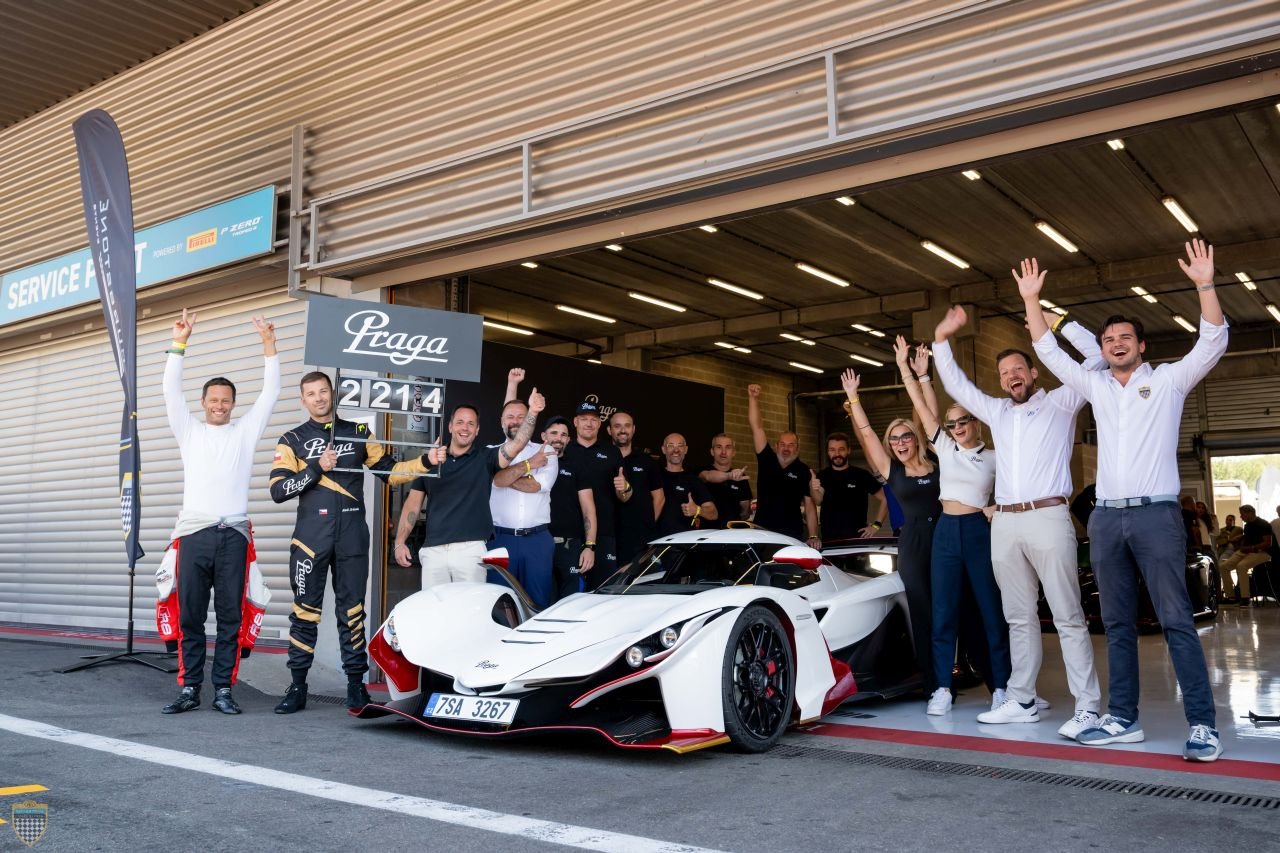
“We weren’t at Spa to chase a record. We were there with customers to enjoy driving one of the greatest circuits in the world. After a few sessions we realised the conditions were good and decided to see what the Bohema could do,” he said.
That context matters because controlled record attempts often involve a clear track, careful timing windows and heavy preparation.
Here, the Bohema’s time came in a more realistic track-day environment, which makes the margin over the Pagani Huayra Roadster BC particularly interesting.
Why the Bohema is so effective at speed
The Bohema’s numbers explain much of its pace, but not all of it.
Its 3.8-litre twin-turbocharged V6 produces 690 hp and 535 lb-ft of torque, but the defining figure is mass.
At less than 1,000 kg, the Bohema sits in a rare performance window where power, braking and cornering loads all benefit from the same core discipline.
It also generates 900 kg of downforce at 155 mph, which is a crucial detail at Spa, especially through the circuit’s fast uphill and high-commitment sections.
Jirásek pointed to the car’s lack of special setup as part of the achievement.
“It’s incredible how naturally the car delivers this level of performance. We were on road tyres, there was traffic on track, and the car received no special preparation. That speaks volumes about the underlying capability of the Bohema and the engineering behind it,” he added.
The Pagani benchmark it surpassed
The time to beat belonged to the Pagani Huayra Roadster BC, which had held firm with a 2 minutes 23.081 seconds lap for six years.
Pagani’s open-top carbon-bodied hypercar is hardly an easy target, so the Bohema’s 2 minutes 21.42 seconds run gives Praga a result with genuine weight among track-focused road cars.
It also puts renewed attention on a brand better known to dedicated enthusiasts than to mainstream supercar buyers.
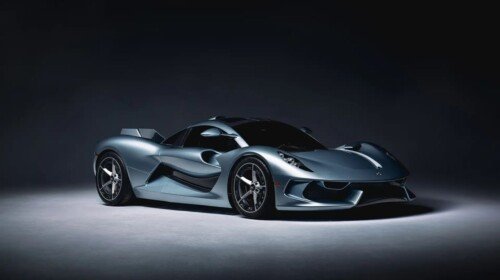
For Praga, Spa is a useful stage because it’s familiar, demanding and widely respected by drivers who understand what a fast lap there requires.
Details & Specifications
| Brand | Praga |
|---|---|
| Model | Bohema |
| Engine | 3.8-litre twin-turbo V6 |
| Power | 690 hp |
| Torque | 535 lb-ft |
| Weight | Less than 1,000 kg |
| Downforce | 900 kg at 155 mph |
| Top speed | 186 mph |
| Spa-Francorchamps lap time | 2 minutes 21.42 seconds |
| Tyres for Spa lap | Road tyres |
The result won’t make the Bohema a household name overnight, but it gives the car exactly the kind of credibility that matters in this corner of the market.
For buyers who care less about theatre and more about what a lightweight, aero-led machine can do on a real circuit, Spa has just made Praga much harder to ignore.