Porsche rarely lets a 911 generation fade out quietly, and the current 992 looks set to follow that tradition.
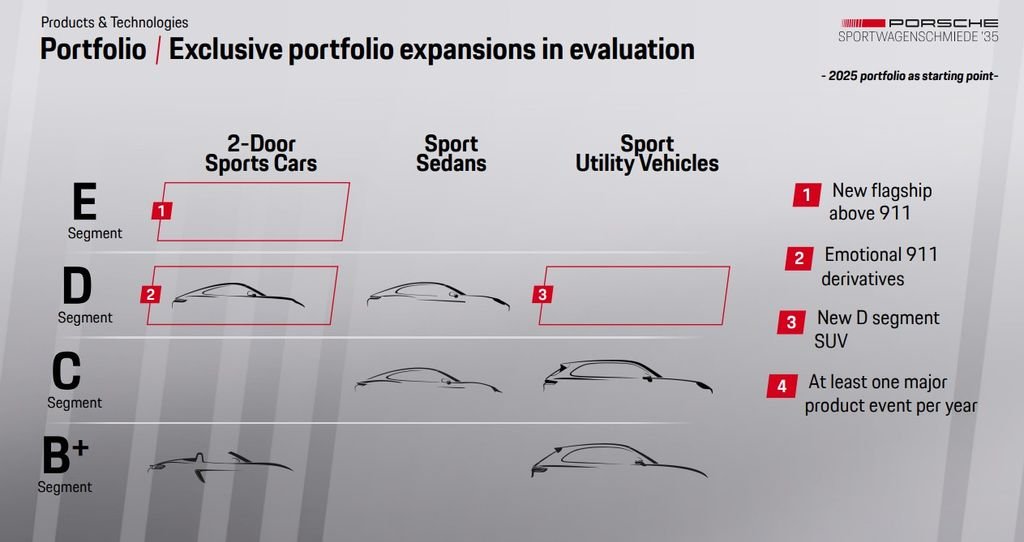
With the company talking openly about “highly emotive 911 derivatives”, attention has naturally turned to the car that usually arrives when Stuttgart wants to make a very loud point near the end of a model cycle.
That car is the 911 GT2 RS, and for the next one, hybrid power could become part of its character rather than a compromise.
At a glance
- Porsche could be preparing a new 911 GT2 RS for 2027 as the 992 generation approaches its later years.
- The car may use a version of Porsche’s T-Hybrid system, with a production output of 750 hp or more looking plausible.
- Porsche has also signalled future combustion-powered 911s, along with unique GT derivatives and limited special editions.
A late-cycle 992 with serious intent
The 992-generation 911 has been with us since 2019, which puts Porsche in familiar territory for a GT2 RS.
Historically, the GT2 RS is not an early-cycle car.
It tends to arrive after the rest of the range has already established itself, acting as the most aggressive expression of the rear-engined 911 idea.
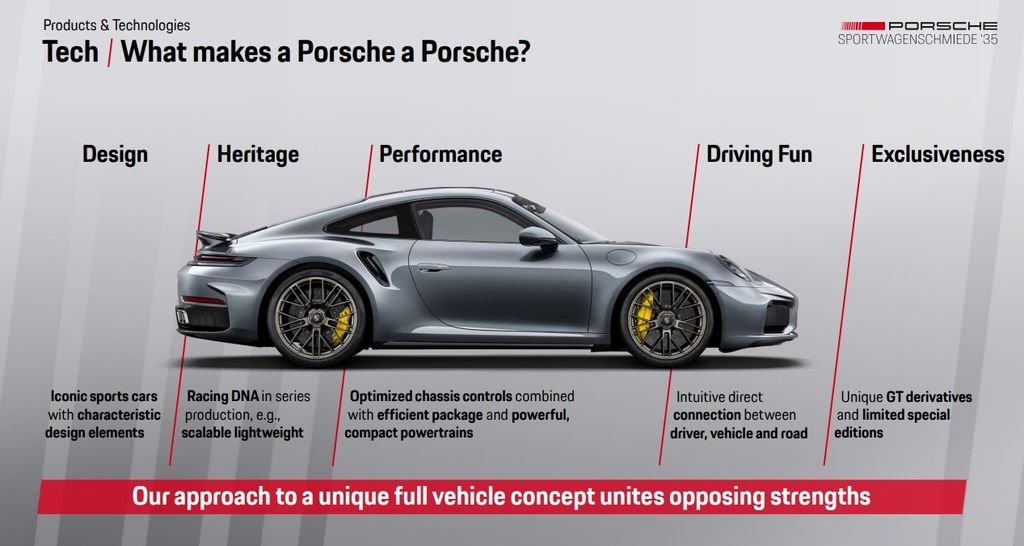
That timing matters because Porsche has already teased a future shaped by “unique GT derivatives and limited special editions”, language that leaves plenty of room for something more extreme than the current GT3 RS.
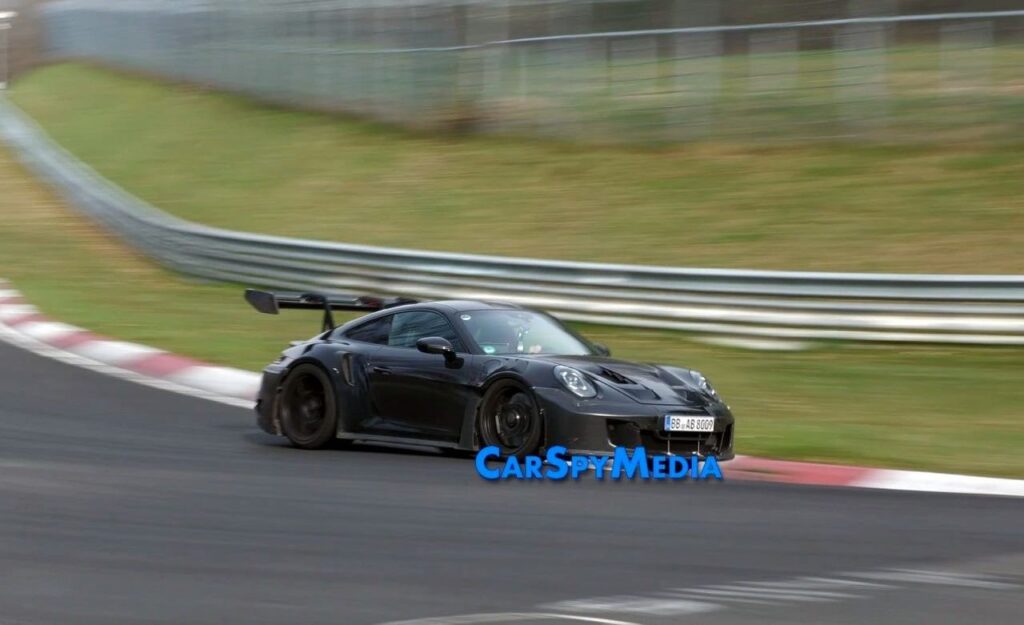
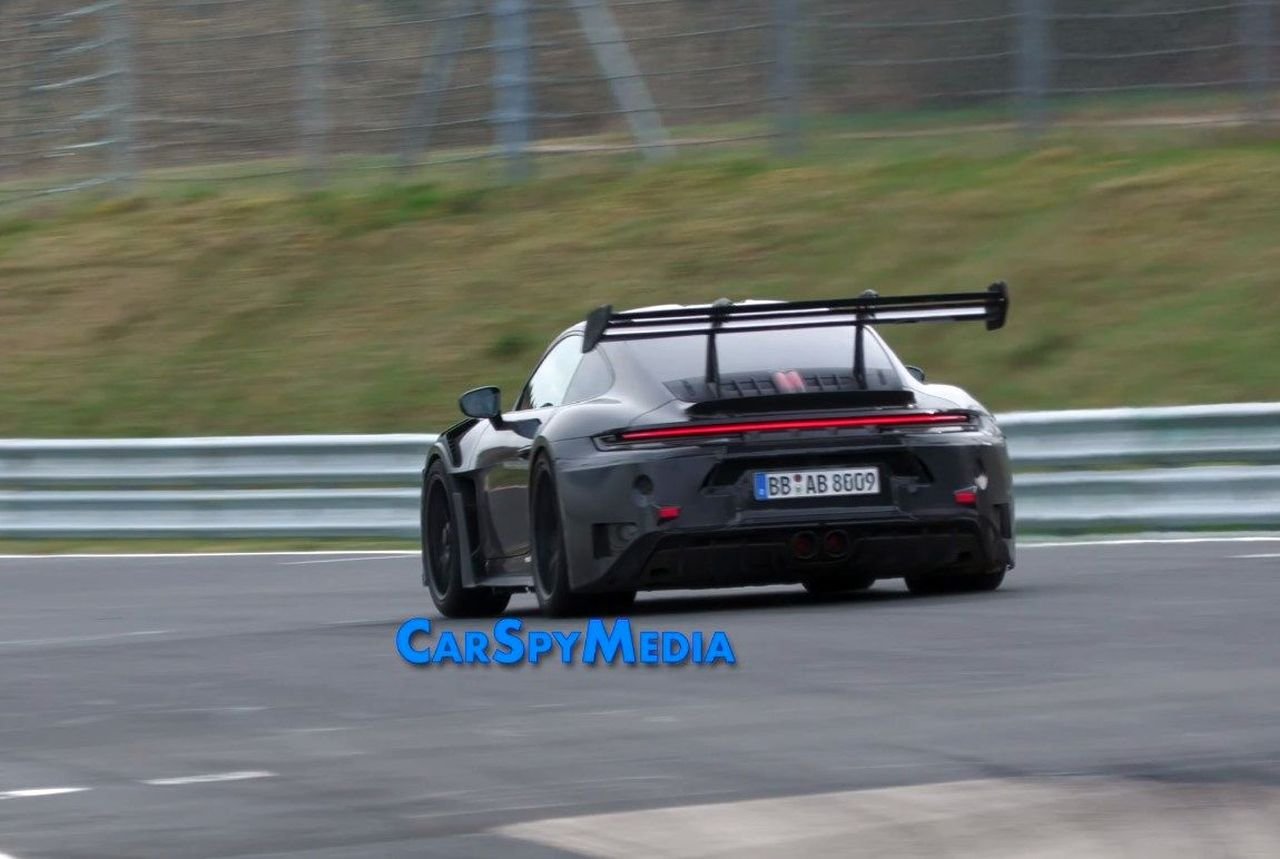
Prototype sightings at the Nürburgring have added weight to the idea that development is already moving beyond theory.
Hybrid power could reshape the GT2 RS formula
The most interesting thread is the possible use of Porsche’s T-Hybrid technology.
The system has already appeared in the 911 GTS and Turbo S, and its arrival in a GT2 RS would mark a notable shift for one of Porsche’s most unapologetically focused road cars.
During testing, the engine is said to have produced around 1,000 hp, though that figure is not expected to make it to customers.
A combined output of 750 hp or more is a more realistic expectation, and that would still place the next GT2 RS deep into supercar territory.
The question is not simply how much power Porsche can extract, but how it chooses to deploy electrification in a car defined by immediacy, precision and intimidation.
If Porsche does give the GT2 RS hybrid assistance, the appeal will depend on whether the technology sharpens response and performance without dulling the car’s raw edge.
Combustion remains central to the 911 story
For all the speculation around electrification, Porsche has made one crucial point clear.
The 911 will continue to use combustion engines in the future.
That distinction is important because it frames any hybrid GT2 RS as an evolution of the 911’s performance language, not a clean break from it.
For collectors and track-focused buyers, that could make the next GT2 RS especially compelling.
It may represent a rare intersection of traditional Porsche GT theatre and the new performance logic already emerging across the wider 911 range.
Rarity may be part of the attraction
Porsche’s mention of limited special editions suggests the most focused cars in the next wave may not be easy to obtain.
That would be entirely in character for a GT2 RS, a model that has never been about broad availability or everyday subtlety.
A hybrid-assisted GT2 RS would also land at a culturally important moment for Porsche, as the brand balances regulatory pressure, customer expectation and the emotional pull of combustion performance.
If it arrives in 2027, it could become one of the defining final acts of the 992 era.
For now, the outline is enough to make the next GT2 RS one of the most closely watched Porsche projects on the horizon.