Porsche’s interest in a convincing fake manual gearbox no longer looks like a passing experiment.
The German marque has filed a third patent with the European Patent Office for technology aimed at giving future performance cars the feel of a manual shift, even when the underlying transmission is automatic.
For a brand whose identity is closely tied to driver involvement, the idea matters because it suggests Porsche is looking for new ways to preserve mechanical theatre as drivetrains become more complex.
At a glance
- Porsche has filed a third European patent linked to simulated manual gearbox technology.
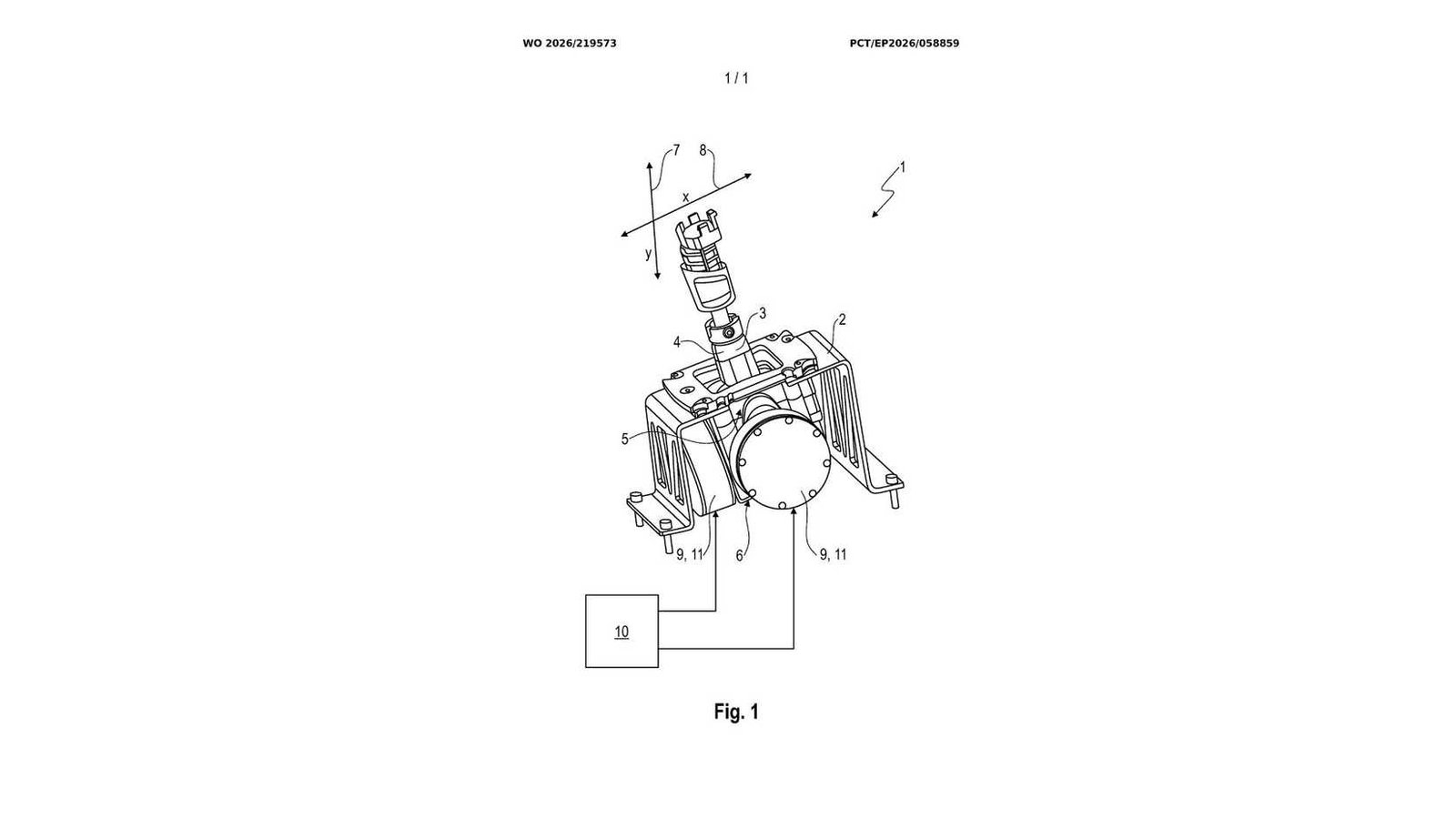
- The latest filing focuses on an actuator connected to the shift lever, using magnetorheological technology to vary resistance.
- Three separate filings suggest Porsche is investing serious development effort, though production use has not been confirmed.
A third filing points to a bigger plan
The latest patent follows an earlier filing that surfaced in March and another in September.
Taken alone, a patent can be little more than a protected idea, but a series of filings around the same theme suggests Porsche is actively exploring how this technology might work in a future car.
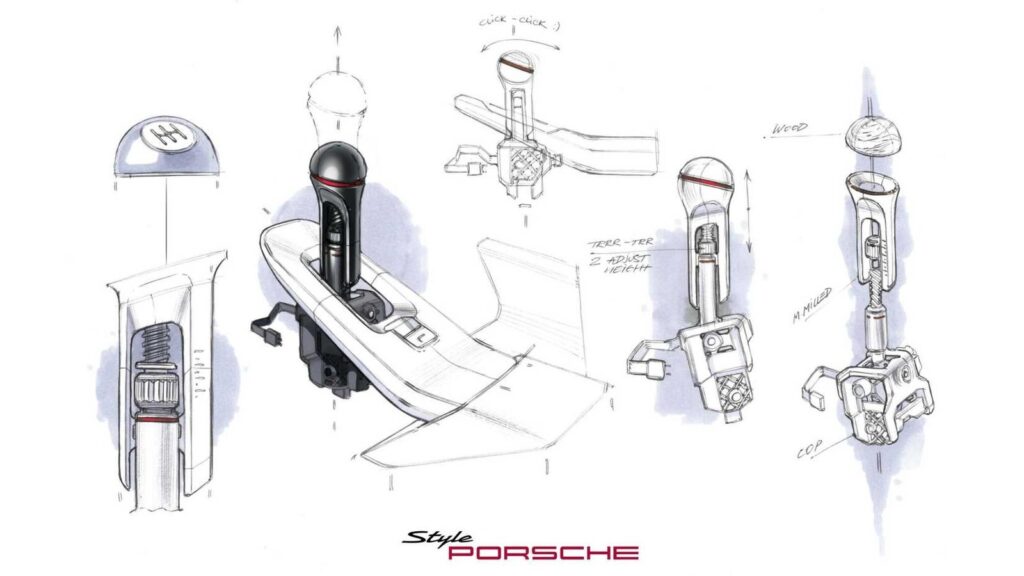
The timing is also notable because technical sketches linked to the upcoming Mission S supercar appear to show related hardware.
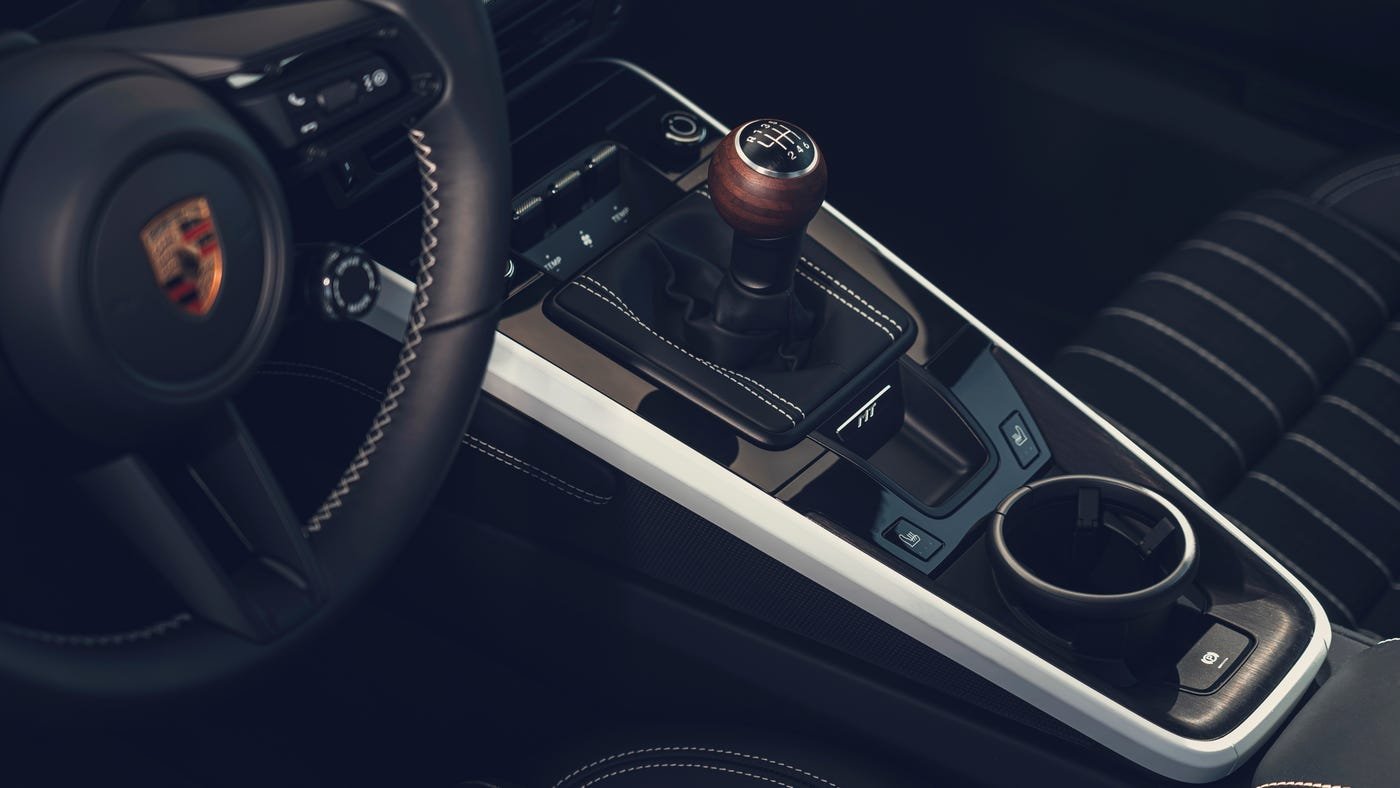
That doesn’t confirm the system will make production, and patent language is often deliberately broad, but it does place the concept within a more tangible development context.
Magnetorheological feel at the shift lever
The newest filing is centred on the actuator connected to the shift lever rather than simply the gearbox logic itself.
Porsche’s preferred solution in the patent describes magnetorheological actuators, a technology that uses magnetic fields and special fluids to change resistance.
In this context, the goal would be to make a simulated gear change feel less like a switch and more like a mechanical action.
That distinction is important because the appeal of a manual gearbox isn’t only the gear ratio selection, it’s also the texture of the movement, the resistance through the lever and the sense that something physical is happening beneath your hand.
A variable-resistance actuator could give Porsche room to tune that sensation with more subtlety than a fixed mechanical detent or a simple electronic shifter.
Why Porsche may want an imperfect shift
One of the more interesting details is that the system could adjust its behaviour depending on operating conditions.
The patent describes the possibility of making a cold transmission deliver rougher or more noticeable shifts, which could help the experience feel less artificial.
That’s a very Porsche-like problem to chase.
A modern automatic can shift with immense speed and consistency, but consistency is not always what makes a car feel memorable.
By allowing the shift action to change character, the system could mimic some of the nuance drivers associate with mechanical components warming up and settling into rhythm.
It’s a reminder that simulated feel doesn’t have to mean shallow feel, provided the engineering is detailed enough to avoid becoming a gimmick.
Not simply Ferrari’s idea in Porsche form
Ferrari has also drawn attention for its own take on simulated manual interaction, but Porsche’s latest patent suggests a different emphasis.
Rather than focusing only on the theatre of selecting gears, Porsche appears to be investigating how the shift lever itself can communicate more naturally with the driver.
That focus fits the brand’s wider reputation for obsessing over control weights and interface feel.
The steering, pedals and shifter are central to how a Porsche communicates, so any artificial manual system would need to do more than look nostalgic.
It would need to feel credible in repeated use, especially in a performance car where experienced drivers will quickly notice anything that feels vague or decorative.
There’s still no guarantee that magnetorheological actuators will reach a showroom model, and the patent describes them as a preferred solution rather than a confirmed production feature.
Even so, the third filing makes the direction hard to ignore.
Porsche seems to be working on a future where automatic performance and manual-style involvement don’t have to sit at opposite ends of the cabin, and that could make its next generation of driver’s cars more interesting than their transmission labels suggest.