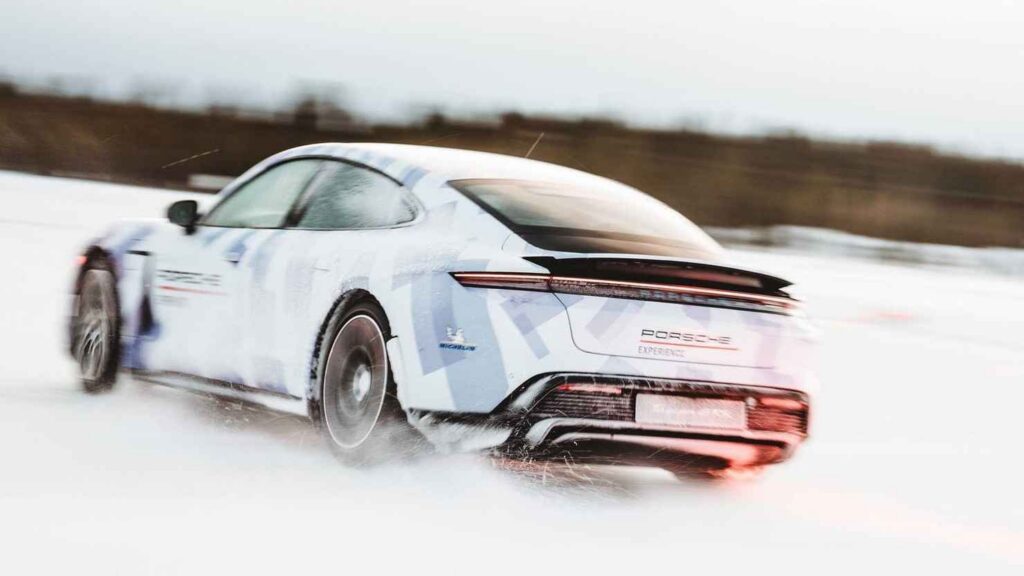
Porsche appears to be thinking about a very old driving trick in a very modern way.
A new patent from the brand outlines a system that could help electric models such as the Taycan or Cayenne Electric initiate handbrake-style slides without relying on a traditional mechanical lever.
It’s a niche idea, but an intriguing one, because it shows how EV hardware can be used for more than efficiency and straight-line performance.

At a glance
- Porsche has patented an EV system designed to mimic the effect of a handbrake turn without a conventional handbrake.
- The concept uses electric motors and regenerative braking to apply controlled braking torque at the rear wheels.
- The patent describes steering-wheel paddles as the driver control, with possible integration alongside torque vectoring.
How Porsche’s electric handbrake idea works
In a conventional car, a handbrake turn is simple in principle.
The driver pulls the handbrake, the rear wheels lock, and the rear of the car rotates as the tyres lose grip.
That mechanical directness has become harder to replicate in modern cars, particularly those fitted with electric parking brakes.
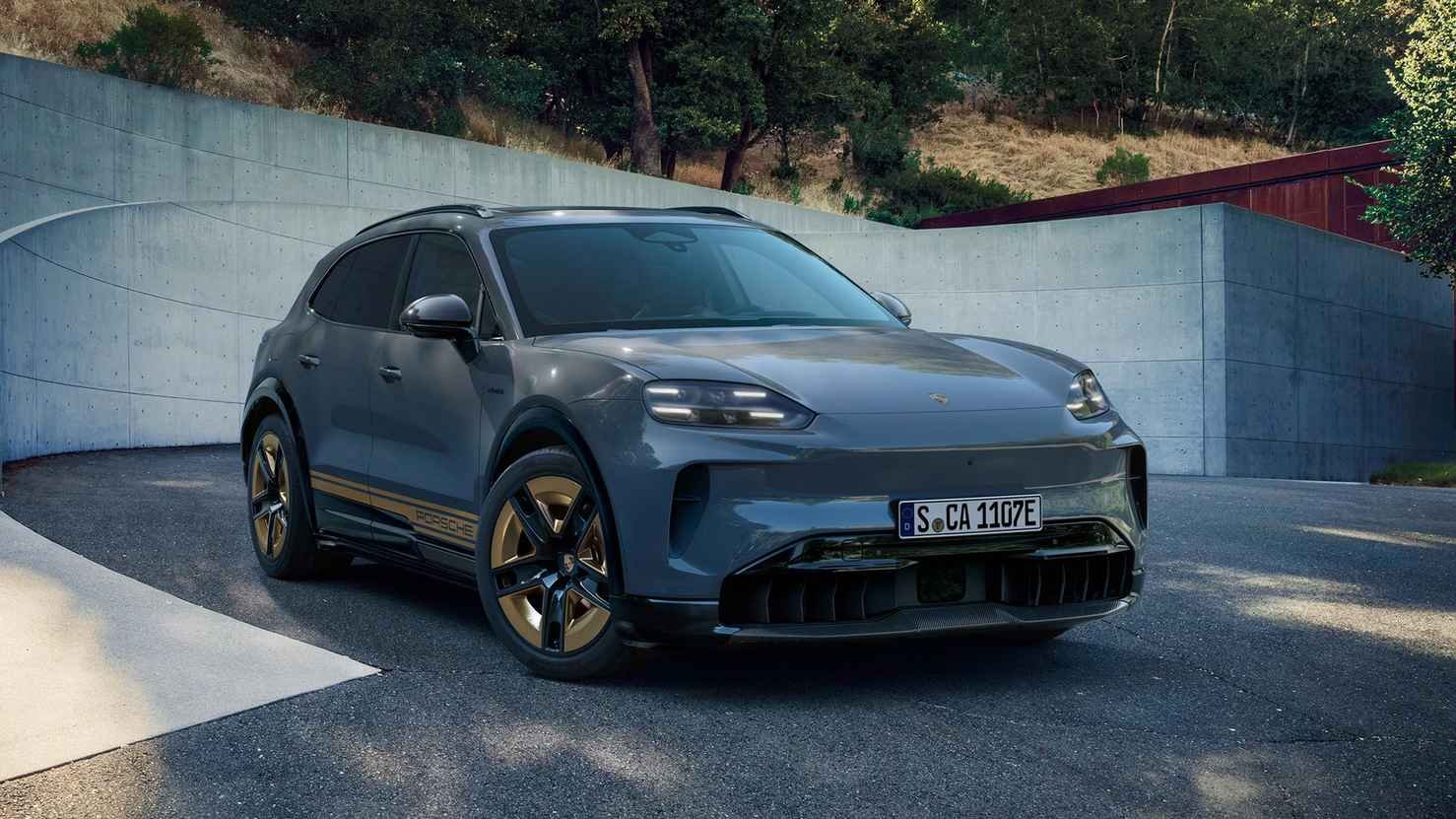
Electric parking brakes are designed for secure stopping and convenience, not for metering braking force mid-slide.
Porsche’s patent describes a different route, using the electric motors to generate braking torque at the rear wheels through regenerative braking.
That could allow the system to apply braking force more precisely than a typical electronic parking brake, helping the rear tyres break traction before adjusting the force to help maintain the slide.
Paddles replace the old lever
The driver interface is one of the more telling details.
Rather than adding a traditional handbrake lever to an EV cabin, Porsche’s concept proposes paddles behind the steering wheel.
That makes sense for a brand already comfortable with steering-wheel and paddle-based performance controls.
It also avoids trying to recreate an analogue mechanism for its own sake.
The patent describes a system that could work with torque vectoring as well, potentially allowing braking torque to be applied to one rear wheel independently of the other.
In theory, that could give the car a more nuanced way to start or sustain rotation than simply locking both rear wheels together.
Why this matters for performance EVs
EVs already use regenerative braking constantly, but mostly in the name of efficiency, range and brake energy recovery.
Porsche’s patent imagines the same hardware being used for driver engagement.
That’s significant because electric performance cars often have immense power and rapid torque response, yet they can feel more software-defined than mechanical performance cars.
A feature like this would lean into that software layer rather than pretending it isn’t there.
It could also make controlled slides easier to initiate, especially in cars where the absence of a conventional handbrake removes one of the familiar tools for low-speed rotation.
Nothing in the patent confirms production timing, model rollout or whether the system will appear on a customer car.
Patents often protect ideas long before any production decision is made, and some never reach showrooms at all.
A playful use of serious EV hardware
The interesting part isn’t that Porsche wants to make its EVs theatrical.
It’s that the company is exploring how electric motors, regenerative braking and torque control could create a new version of an old performance-car technique.
For drivers who still care about car control in the electric era, that’s a more compelling idea than another launch-control statistic.
If Porsche does bring this concept to production, it could become one of the more characterful examples of EV software serving the driver rather than simply managing the car.