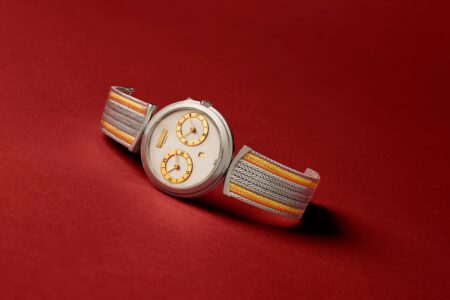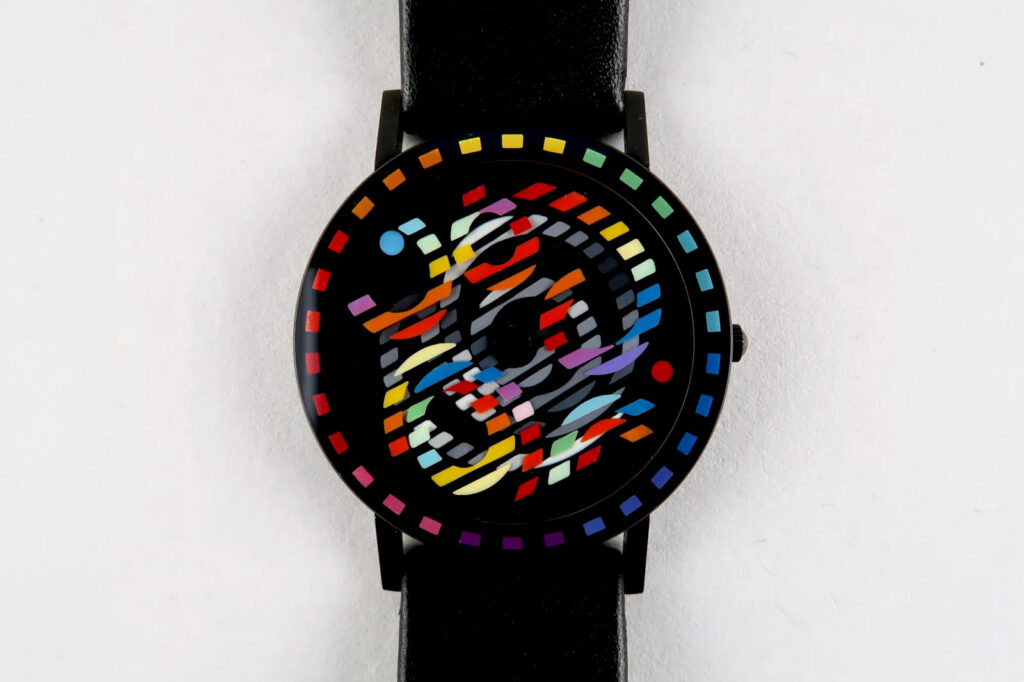
Movado is easy to underestimate if you only know it from retail counters and familiar black dials.
Look closer, though, and the brand has a design story most Swiss names would struggle to match.
Its signature dial is in the permanent collection of the Museum of Modern Art, and its artist commissions include the only watch Andy Warhol ever designed.
At a glance
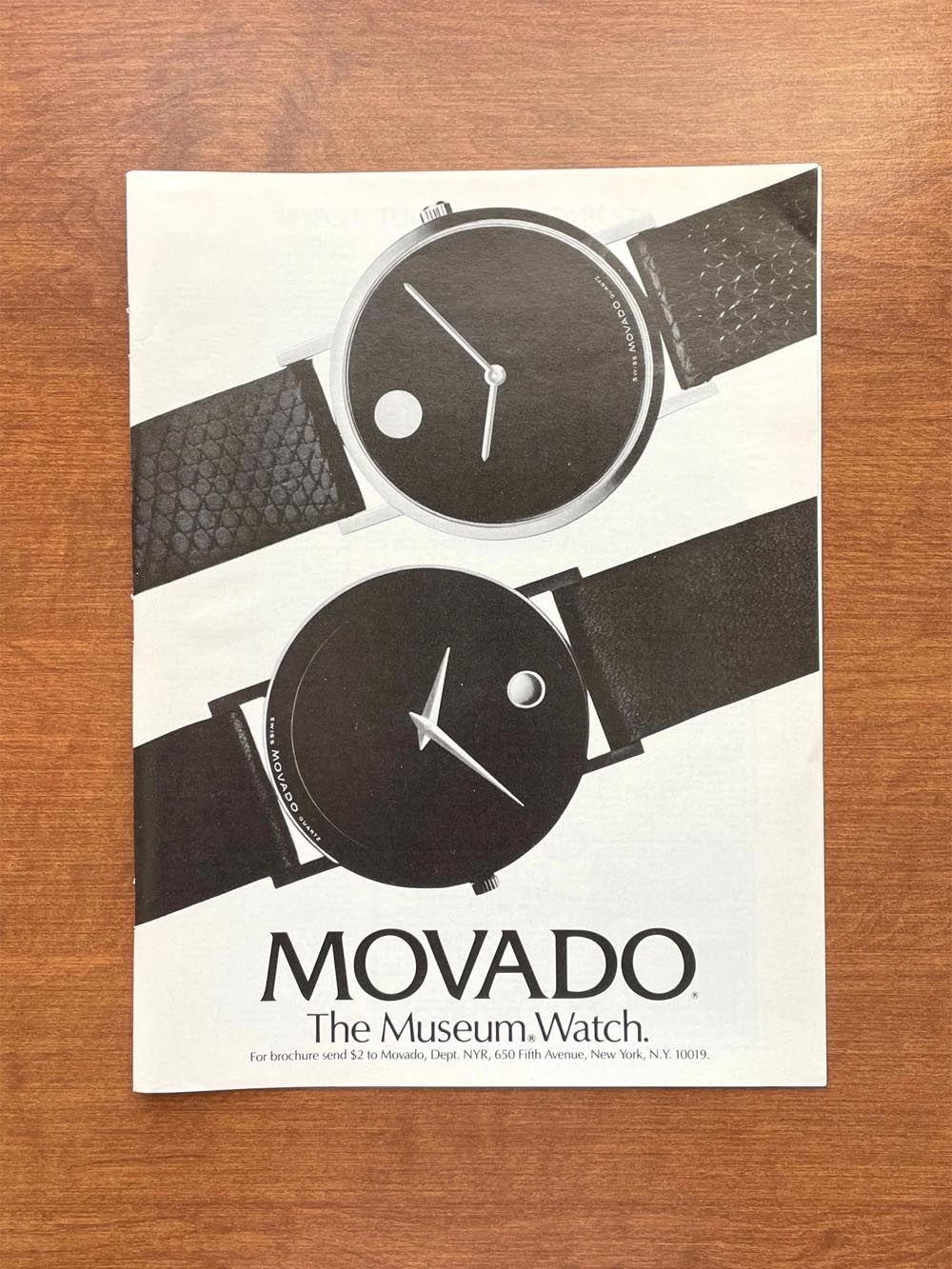
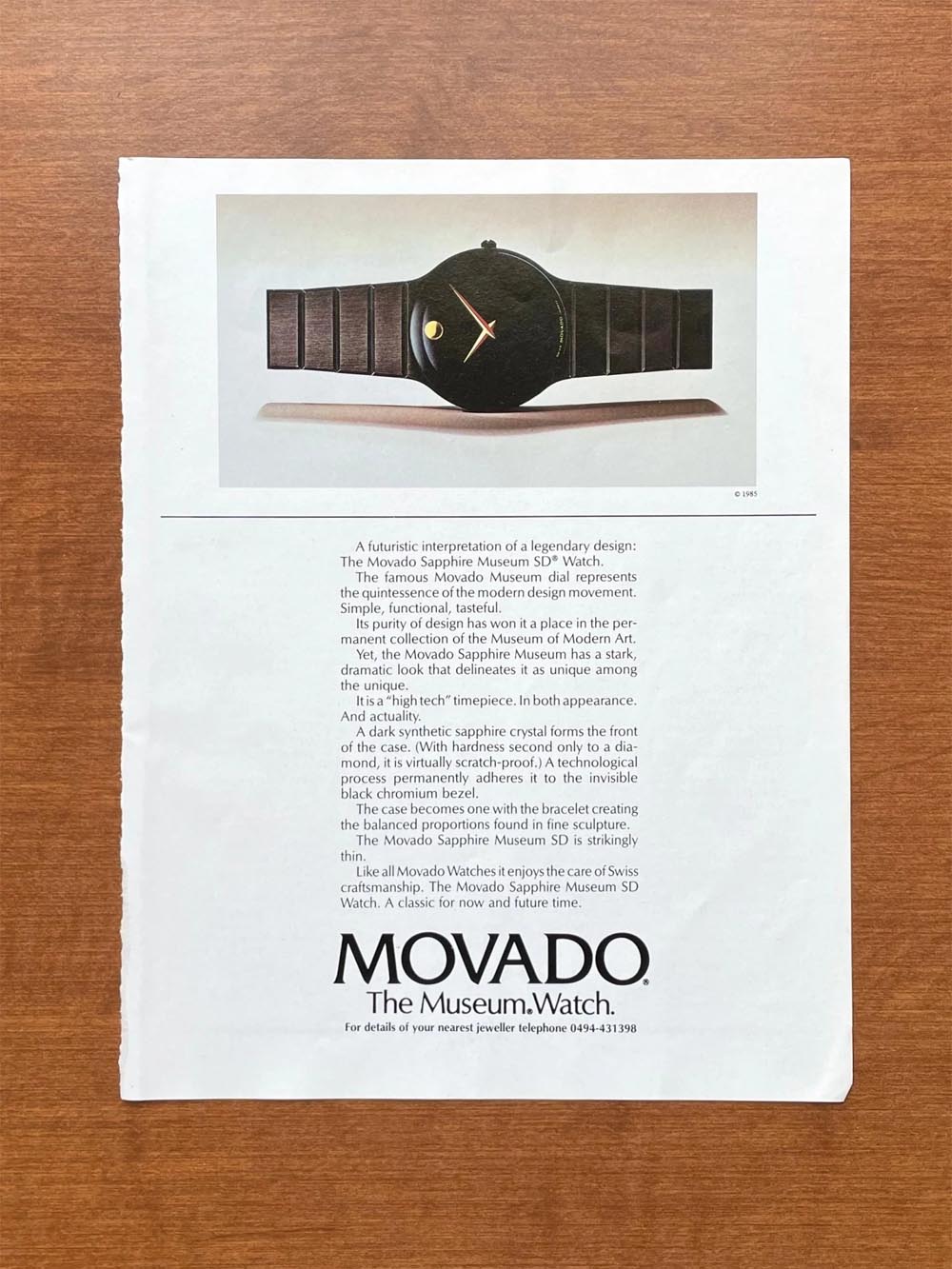
- Movado’s reputation is inseparable from the Museum dial, a minimalist design created by Nathan George Horwitt in 1947.
- The dial reduced timekeeping to a black field, two hands and a single gold dot at 12 o’clock, intended to evoke the sun at noon.
- Movado later built a wider artistic identity through commissions including Andy Warhol’s Times/5 and works by Yaacov Agam, Arman, Max Bill, Carmen Herrera and Derrick Adams.
Nathan George Horwitt and the power of subtraction
The Movado story that matters begins not with a factory, but with Nathan George Horwitt.
Born in Russia in 1898 and raised in New York, Horwitt moved from advertising into industrial design in the late 1920s.
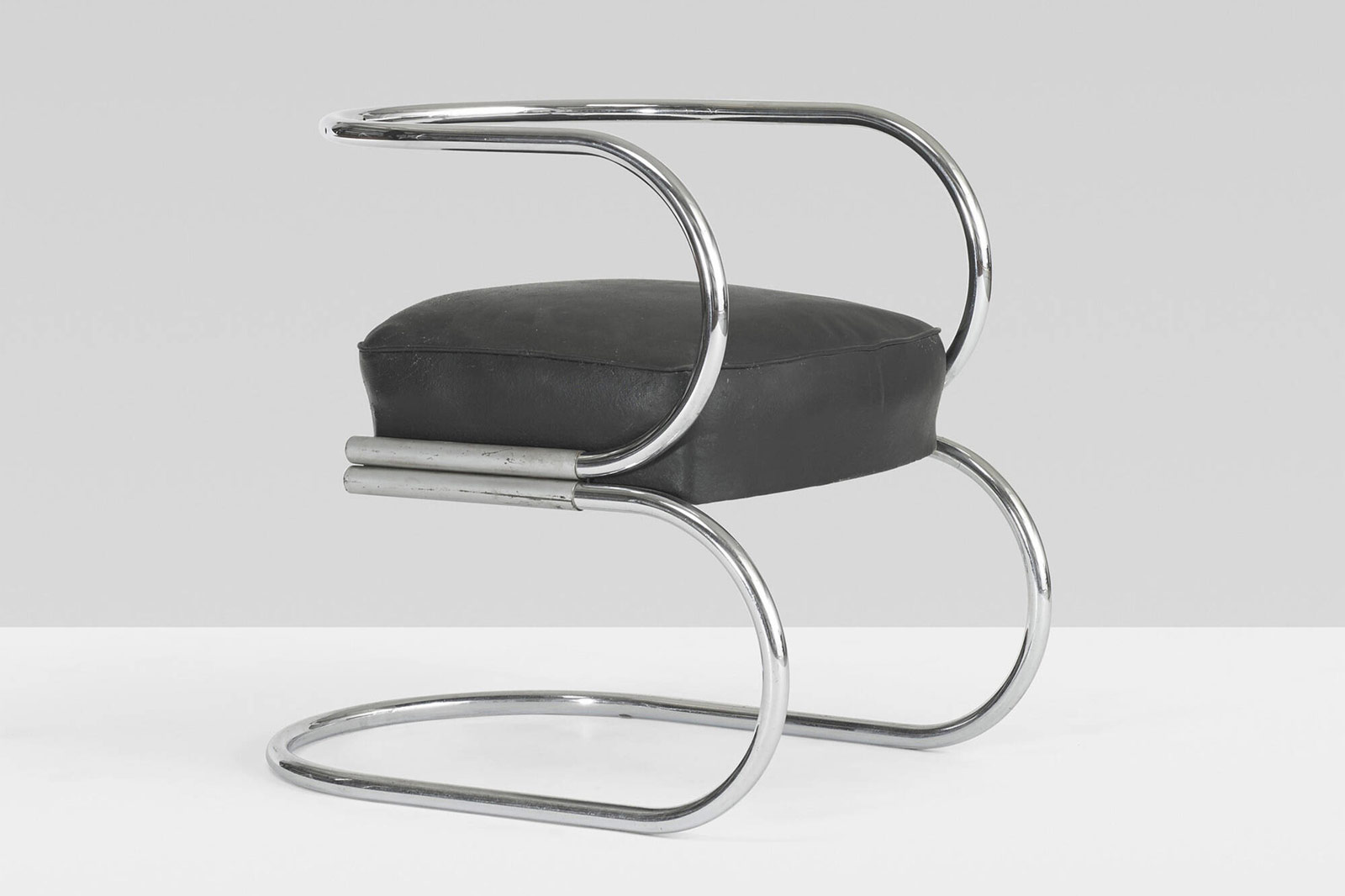
He became a Bauhaus-influenced modernist with 18 US patents to his name, including the Beta chair, a tubular steel design now held by the Brooklyn Museum.
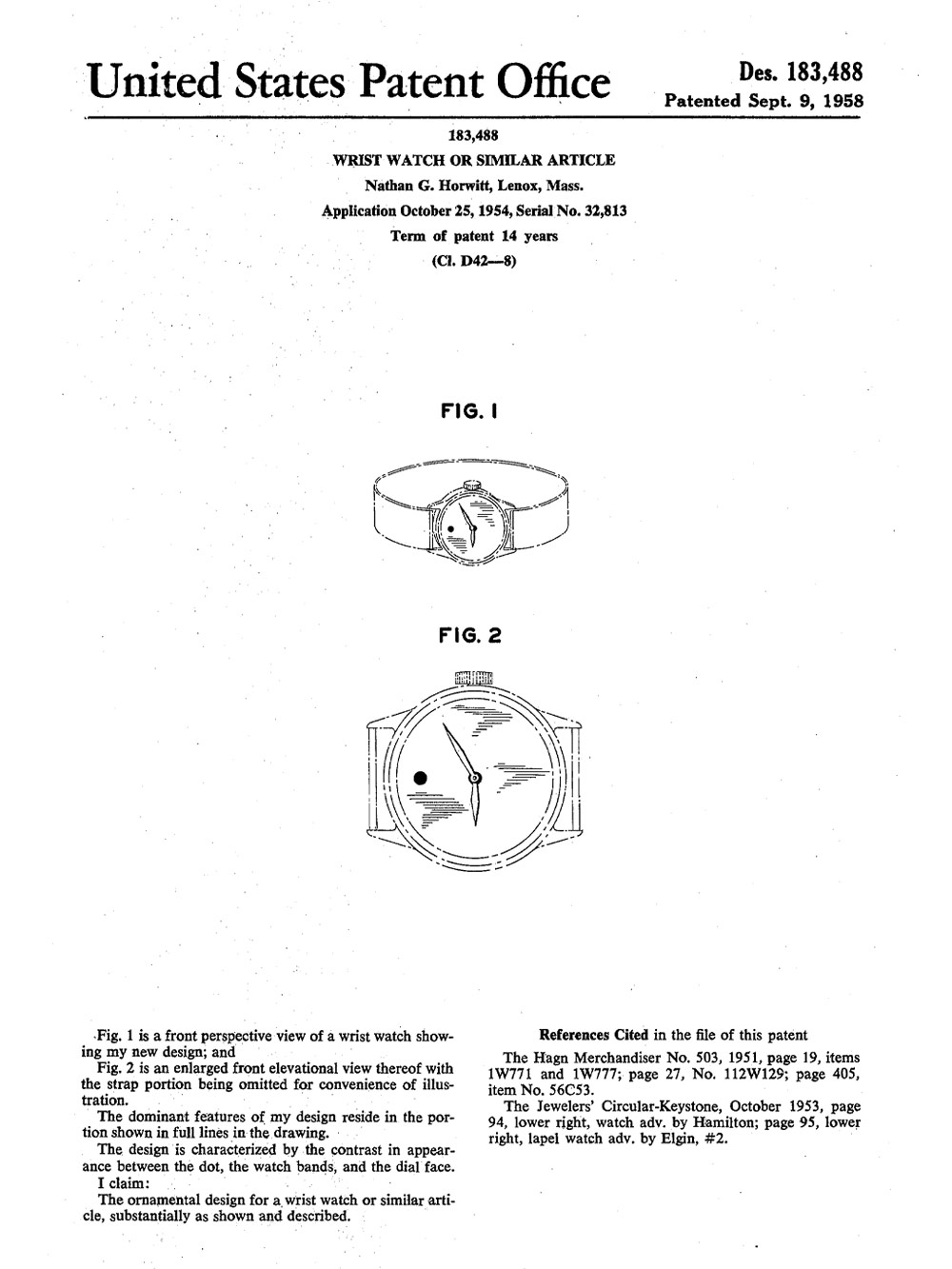
In 1947, Horwitt applied that eye for reduction to a wristwatch dial.
He removed numerals, indices and the minute track, leaving a plain black disc, two hands and a single gold dot at 12 o’clock.
Horwitt’s idea was that people don’t experience time as a sequence of printed numbers, but through the position of the sun.
For a wristwatch market still built around practical legibility, the concept was unusually severe.
That severity is exactly what made it endure.
The Museum dial and a disputed legacy
Movado’s connection to the design was complicated from the beginning.
Horwitt maintained that Movado began producing a version of the dial the following year without asking him, crediting him or paying him.
He later secured a patent in the mid-1950s and commissioned three examples through Vacheron & Constantin-LeCoultre’s New York arm.
One was made for him to wear, one was intended for the Brooklyn Museum, and one was accepted into MoMA’s design collection in 1960.
That MoMA connection is where the Museum dial name comes from.
The museum acquisition didn’t end the dispute between Horwitt and Movado.
After years of negotiations and court action, the two sides settled in 1975 for $29,000.
Horwitt died in 1990 aged 92 after spending his later years running an organic farm in Massachusetts.
The uncomfortable part of Movado’s modern identity is that the design most responsible for its cultural standing came from a designer who spent decades fighting to be recognised and paid for it.
Andy Warhol’s Times/5 gave Movado a sharper artistic edge
Movado changed direction after it was bought in 1983 by North American Watch Corporation, led by Gedalio Grinberg.
Grinberg understood the Museum dial less as a conventional watch product and more as a piece of design that could support a broader creative programme.
That same year, he went to see Andy Warhol.
Warhol was already interested in watches, but Times/5 was different because it was his own design.
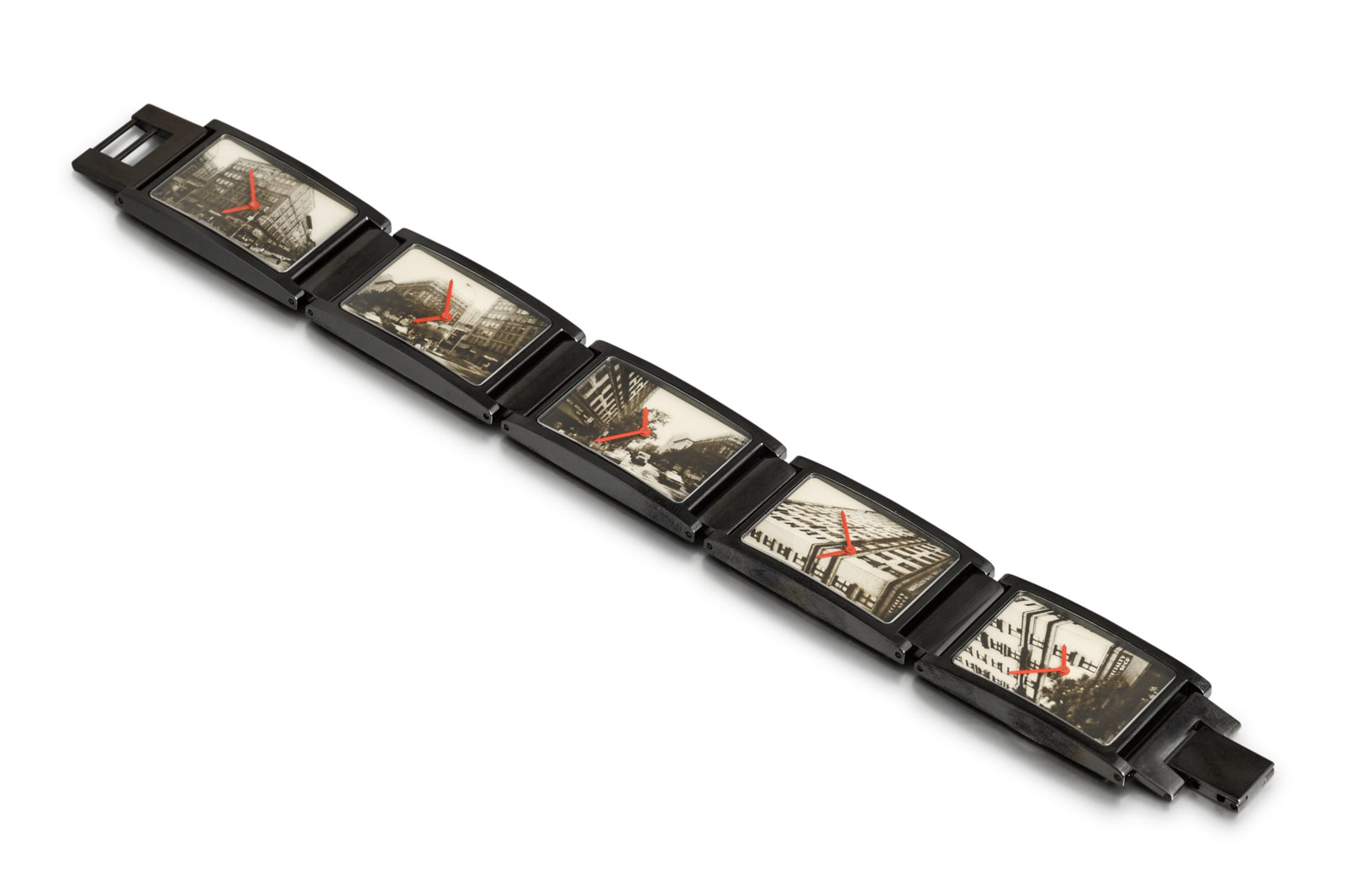
The piece consists of five separate rectangular quartz watches in blackened steel, linked into a single bracelet.
Each dial carries a black-and-white photograph of a Manhattan building with personal meaning to Warhol.
It is more art object than practical daily watch, which is part of its appeal.
Warhol discussed the final version with Grinberg six weeks before his death in February 1987, and his studio completed the project.
Movado released Times/5 in 1988 in a run of 250 pieces.
Christie’s recently offered one with an estimate of HK$80,000 to HK$160,000, roughly £7,500 to £15,000.
The Artists’ Series deserves more attention
Times/5 opened the door to Movado’s Artists’ Series, which gave the brand a more credible creative framework than a single famous dial could provide on its own.
In 1989, Israeli kinetic artist Yaacov Agam created Rainbow, wrapping the colour spectrum around the dial.
In 1990, the French-born sculptor Arman used painted brushstrokes as hour markers and rotating glass discs to indicate the time.
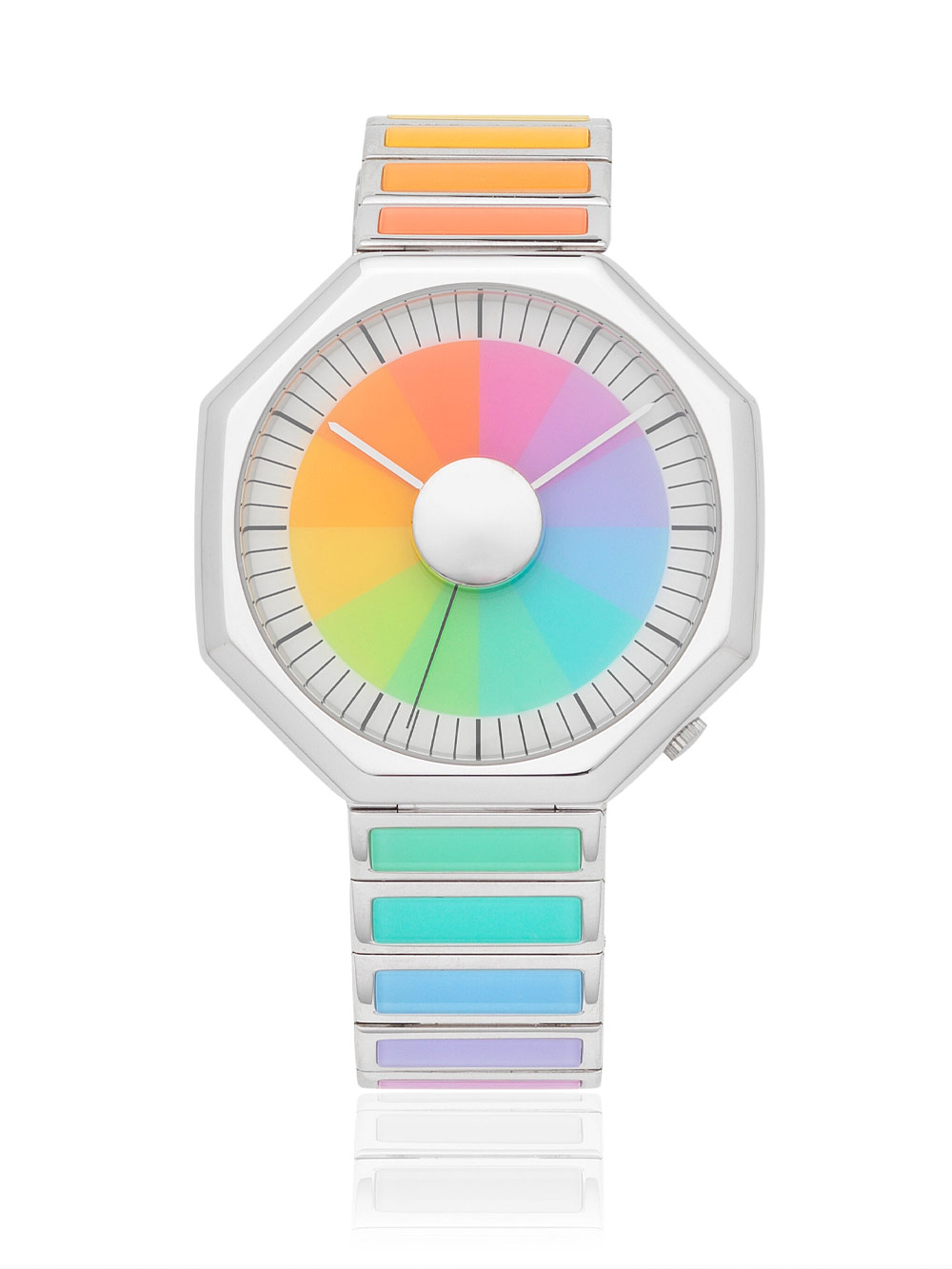
In 1993, Max Bill created a particularly compelling Movado with an enamel rainbow gradient inside a 45mm octagonal sterling silver case.
Only 99 examples of the Max Bill watch were made.
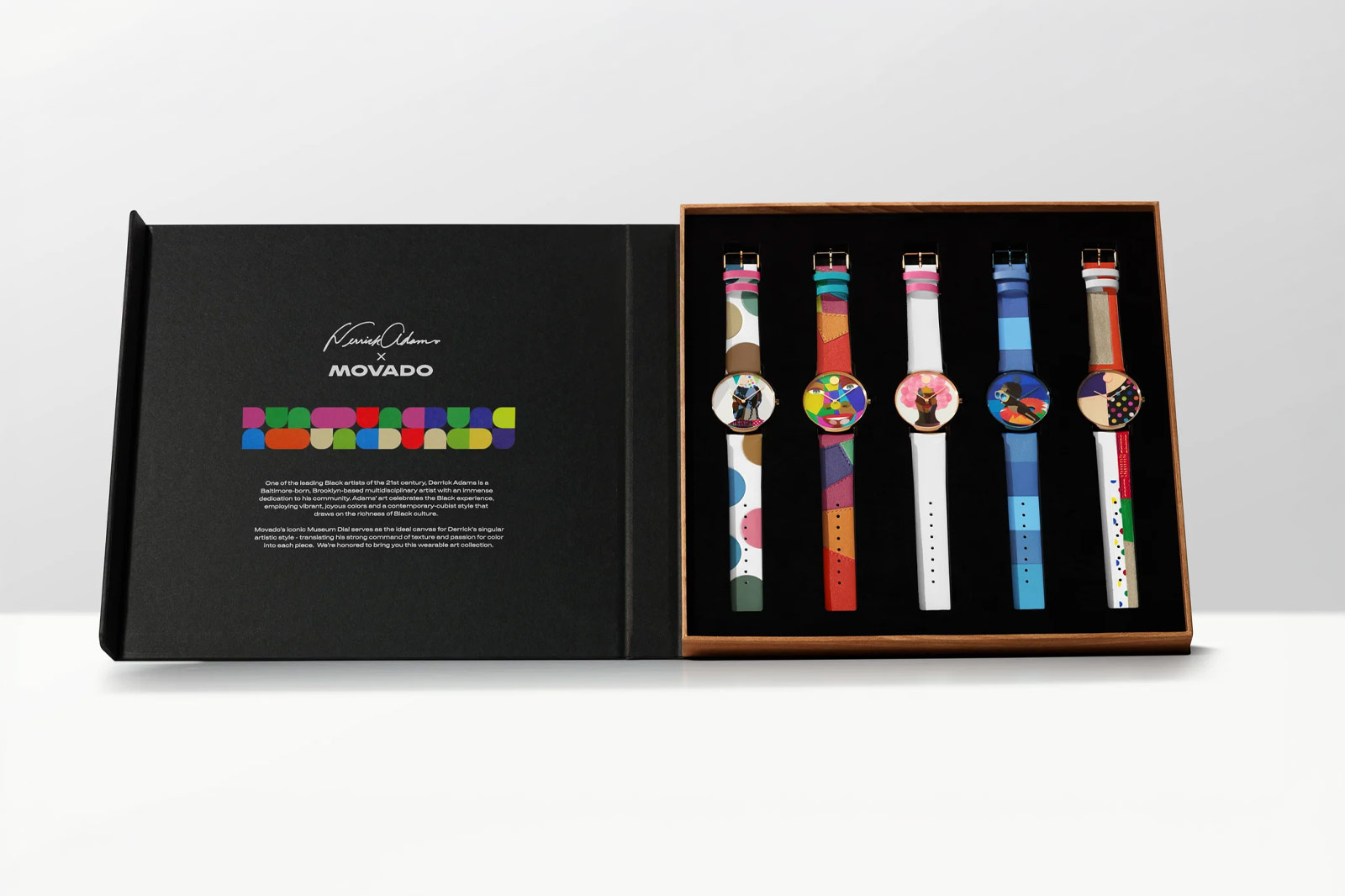
The series later moved through fashion and industrial design before returning to painters, including Carmen Herrera in 2021 and Derrick Adams in 2025.
| Work | Artist or designer | Confirmed detail |
|---|---|---|
| Museum dial | Nathan George Horwitt | Created in 1947 with a black dial, two hands and a gold dot at 12 o’clock |
| Times/5 | Andy Warhol | Five linked rectangular quartz watches in blackened steel, released in 1988 in 250 examples |
| Rainbow | Yaacov Agam | 1989 design using the colour spectrum around the dial |
| Arman artist watch | Arman | 1990 design using painted brushstrokes as hour markers and rotating glass discs |
| Max Bill artist watch | Max Bill | 1993 watch with enamel rainbow gradient, 45mm octagonal sterling silver case and 99 examples made |
The dot is still Movado’s strongest asset
The Museum dial has been adapted many times, including versions with chronographs, diamonds and mesh bracelets.
Not every variation strengthens the original idea.
The plainest executions still come closest to Horwitt’s point, because the design works best when almost nothing interrupts it.
That single dot remains one of the rare watch signatures recognisable even to people who may not know much about watches.
For collectors who value independent design history, modernist thinking and artist-led watchmaking, Movado is more interesting than its mainstream reputation suggests.
Its history is messy, but the work itself is too important to dismiss.