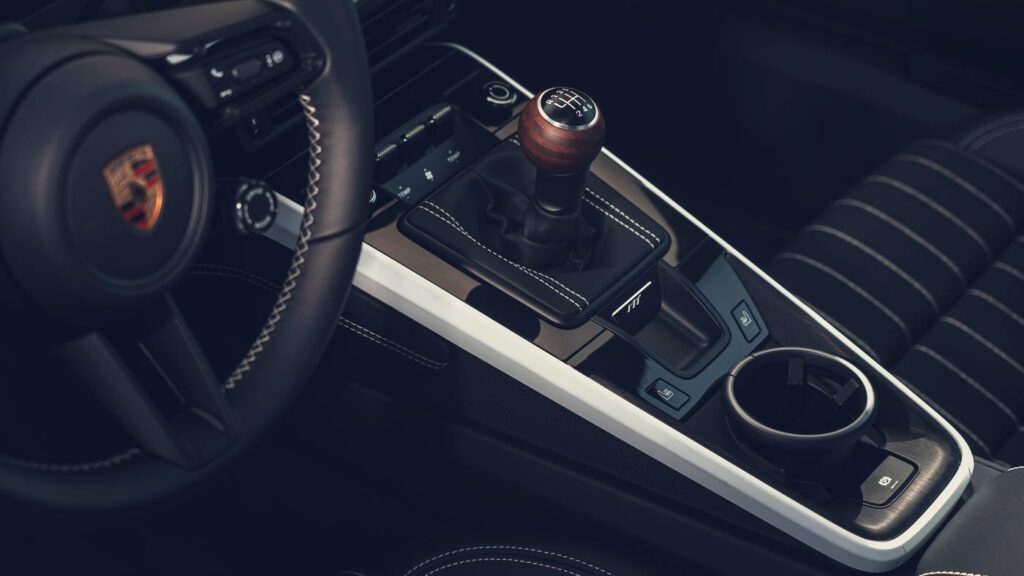
Porsche has built much of its modern performance reputation around the speed and precision of PDK, but the emotional pull of a manual gearbox hasn’t gone away.
A recent European Patent Office filing suggests the company is looking at a way to blend both worlds, using a dual-clutch transmission that can deliver manual-style interaction without abandoning automatic capability.
It’s the kind of idea that speaks directly to a familiar tension in sports cars, where speed keeps improving but driver involvement can be harder to preserve.
At a glance
- Porsche has filed a patent for a dual-clutch transmission with manual-style operating modes.
- The system could allow gear selection by paddles or lever, with another mode adding a clutch pedal for a more traditional feel.
- There’s no confirmation that the technology will reach production, but it aligns with a growing push to preserve driver engagement.
How Porsche’s manual-style gearbox would work
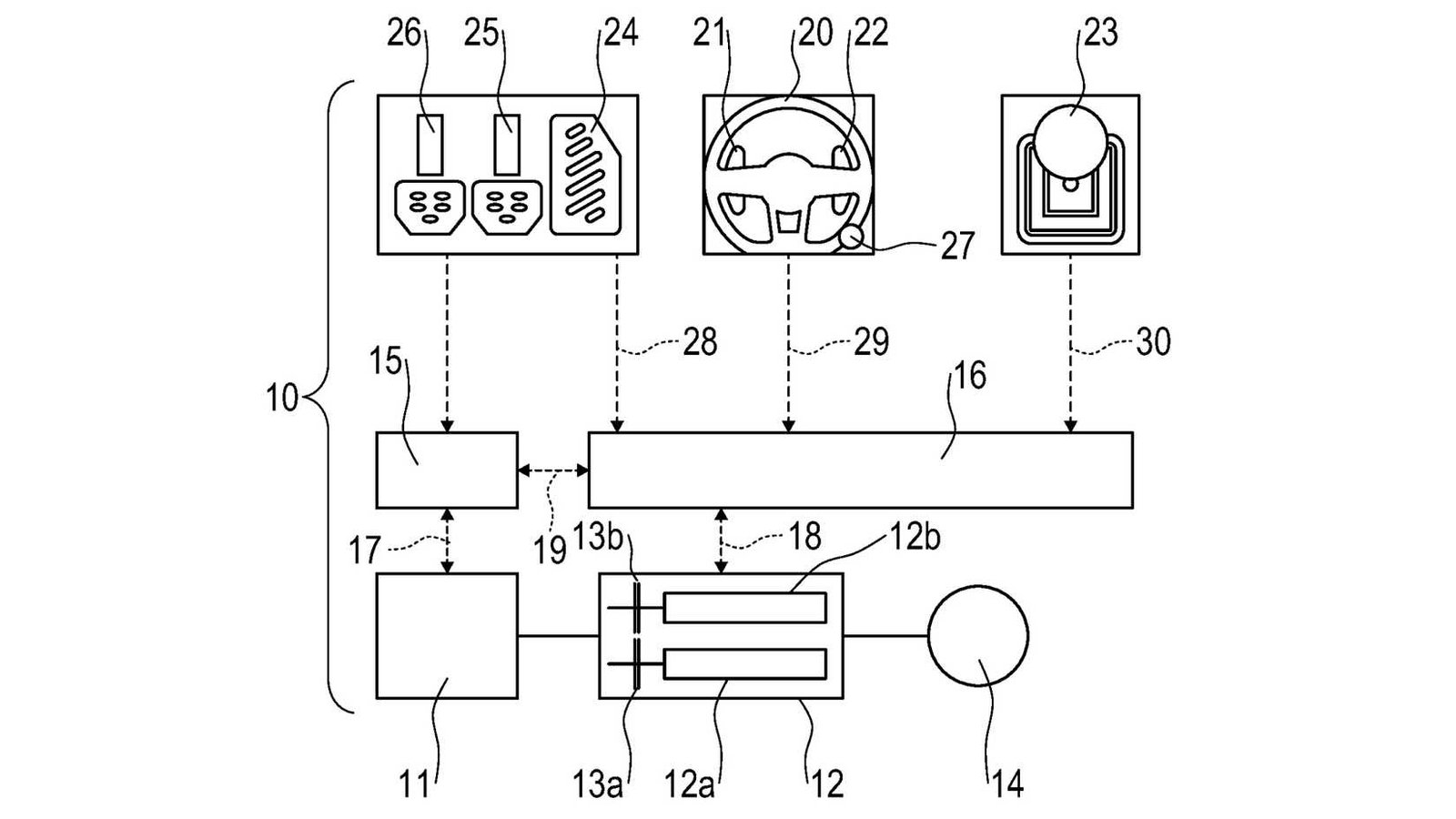
The patent describes a dual-clutch transmission that can function like a conventional automatic when the driver wants speed and ease.
The more interesting side of the system appears when the driver selects one of two manual modes.
In the first mode, the driver can choose gears using either shift paddles or a conventional gear lever, while the clutch operation is handled electronically.
That setup keeps the act of choosing a gear in the driver’s hands, but removes the need for a physical clutch pedal.
The second mode takes the idea further by introducing a clutch pedal, creating a more familiar manual-style rhythm even though the underlying gearbox remains a dual-clutch unit.
The point is feel, not nostalgia alone
This kind of system isn’t about beating a modern automatic on shift speed.
Dual-clutch transmissions already do that with cold efficiency, especially in high-performance road cars where acceleration figures and lap times matter.
The appeal here is different.
A clutch pedal and a physical shift action change how a driver relates to a car, even if the hardware and software underneath are doing more work than they would in an old-school manual.

For Porsche, that distinction matters because its enthusiast audience tends to care as much about process as outcome.
Ferrari and Koenigsegg have already explored the idea
Porsche wouldn’t be alone in looking for new ways to simulate the theatre of manual shifting in cars built around advanced transmissions.
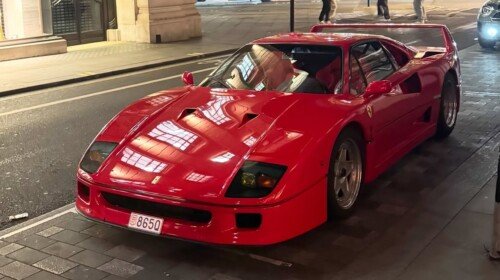
Ferrari and Koenigsegg have both developed concepts that bring back some of the tactile qualities of a manual gearbox while keeping the performance benefits of modern drivetrains.
That wider context makes Porsche’s patent feel less like a novelty and more like part of a broader industry response to a clear enthusiast demand.
As sports cars become more automated and increasingly electrified, brands are searching for ways to keep the driver physically involved.
What the patent doesn’t promise
A patent filing doesn’t mean a production Porsche with this system is around the corner.
Automakers regularly protect engineering ideas that may never appear on a showroom model.
Still, the concept is notable because it shows Porsche is thinking about gearbox feel as an active area of development rather than a solved problem.
That could prove especially relevant for future sports cars, where the character of the driving experience will need to be engineered as carefully as the performance numbers.
If Porsche does bring this technology to market, it could give drivers a rare combination of everyday dual-clutch convenience and a more deliberate, hands-and-feet driving experience when the road calls for it.