Porsche has closed the door on one of the most intriguing partnerships in the modern hypercar world.
The German marque has completed the sale of its stakes in Bugatti Rimac and Rimac Group after regulatory approval, a move expected to bring in around $1.16 billion.
It’s a clean financial reset for Porsche, but it also changes the balance of power around Bugatti after nearly three decades under the wider Volkswagen Group umbrella.
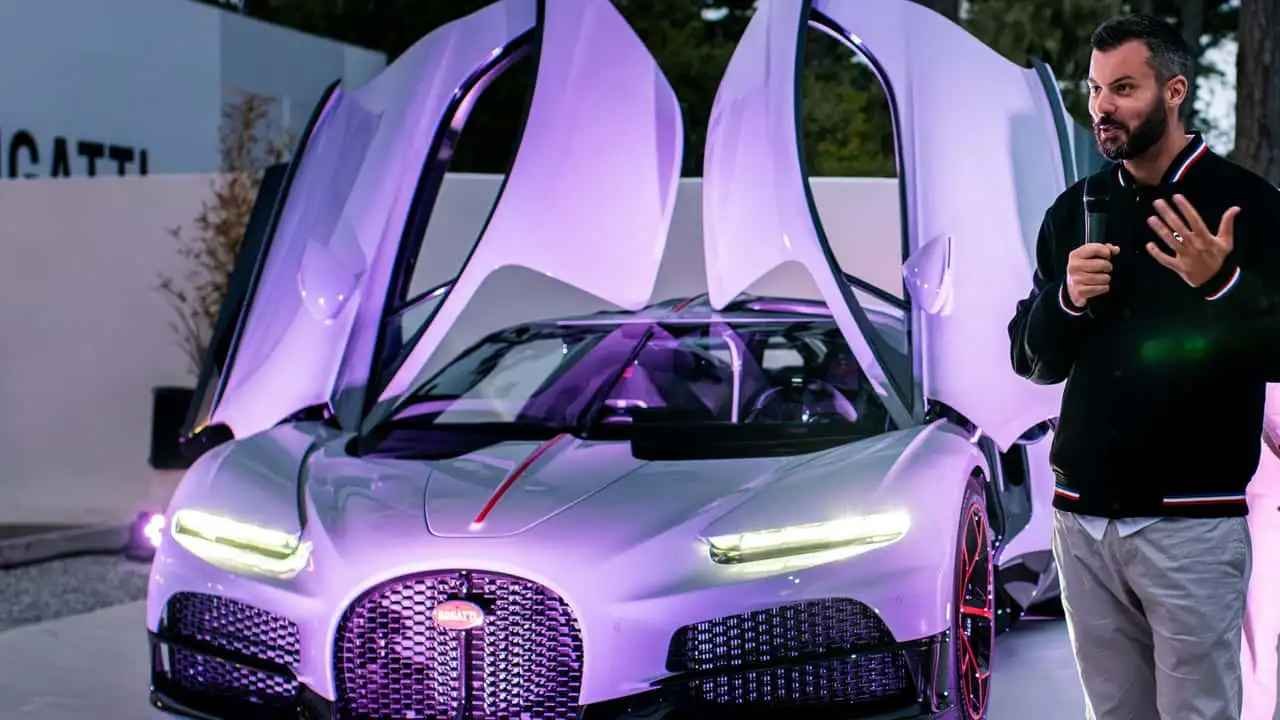
At a glance
- Porsche has completed the sale of its stakes in Bugatti Rimac and Rimac Group.
- The deal ends Volkswagen Group’s direct involvement with Bugatti after almost three decades.
- Porsche is expected to receive around $1.16 billion, with about $290.7 million directed toward pension obligations.
A major exit from the hypercar joint venture
The transaction was completed on Sept. 9 and covers Porsche’s 45 percent holding in Bugatti Rimac as well as its 20.6 percent interest in Rimac Group.
Bugatti Rimac was created in 2021 as a high-performance meeting point between Bugatti’s combustion-engine heritage and Rimac’s electric technology expertise.
At the time, the structure placed Rimac Group in control with a 55 percent stake, while Porsche retained the remaining 45 percent.
That arrangement gave Porsche a meaningful position in one of the most technically ambitious corners of the car industry, without folding Bugatti directly into Porsche’s own product strategy.
What the sale means for Porsche
For Porsche, the divestment is about capital discipline as much as corporate housekeeping.
The company is redirecting attention and investment toward its core business and future model programs, rather than maintaining a substantial position in an ultra-low-volume hypercar venture.
Roughly $290.7 million from the proceeds has already been earmarked for pension obligations, giving the deal an immediate balance-sheet purpose beyond the headline figure.
It’s also a reminder that even halo assets need to justify their place inside a manufacturer’s broader plan, especially as development costs rise across combustion, hybrid and electric platforms.
The end of Volkswagen Group’s Bugatti era
The sale draws a line under Volkswagen Group’s direct involvement with Bugatti, a relationship that began when the group acquired Bugatti, Lamborghini and Bentley in 1998.
That late-1990s expansion reshaped the luxury and performance-car landscape, giving Volkswagen Group a remarkable spread of prestige brands across grand touring, supercars and ultra-exclusive hypercars.
Bugatti became the most extreme expression of that ambition, building a reputation around monumental engineering, extraordinary speed and very small production numbers.
With Porsche now out of the ownership structure, Bugatti’s next chapter sits more clearly inside the Rimac orbit.
Mate Rimac’s expanding role at Bugatti
Rimac Group remains the majority owner of Bugatti Rimac following the transaction.
Mate Rimac also becomes president of Bugatti Automobiles while continuing as CEO, strengthening the leadership link between the Croatian technology company and the French hypercar marque.
That matters because Bugatti Rimac was never just a financial pairing.
It was designed to combine two different forms of performance credibility, with Bugatti bringing traditional engine-led drama and Rimac bringing deep electric-vehicle know-how.
For enthusiasts, the question now is how that blend shapes the next generation of Bugatti products without Porsche as a shareholder in the background.
Porsche leaves the partnership with a substantial return and a sharper corporate focus, while Bugatti’s future becomes more closely tied to Rimac’s leadership, technology and appetite for pushing the hypercar format forward.