Parmigiani Fleurier has never been the kind of watchmaker that needs to raise its voice.
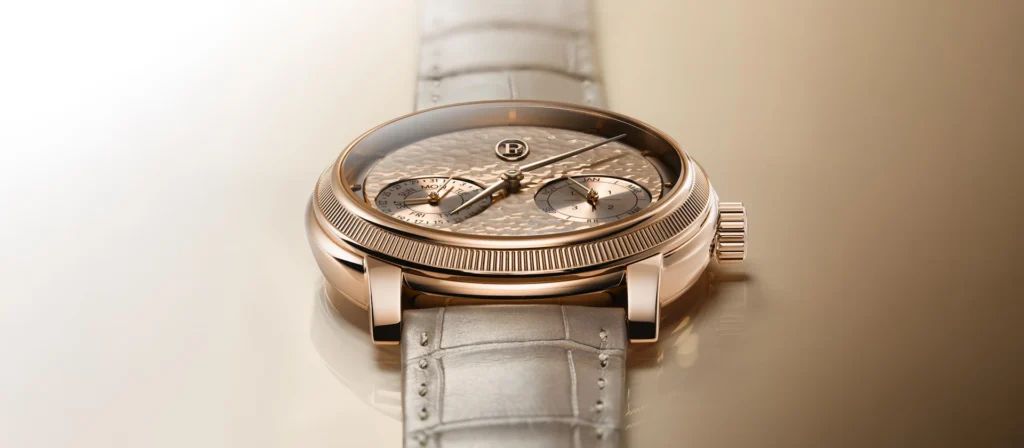
With the Toric Quantième Perpétuel, the Fleurier maison returns to one of its defining complications with a watch that feels deliberately restrained, richly made and deeply connected to the brand’s restoration-minded roots.
It arrives in a significant year for Parmigiani Fleurier, marking the company’s 30th anniversary and earning a 2026 Grand Prix d’Horlogerie de Genève nomination in the Calendar and Astronomy category.
At a glance
- Parmigiani Fleurier has introduced the Toric Quantième Perpétuel as a rose gold perpetual calendar for its 30th anniversary year.
- The watch combines a hand-hammered 18-carat rose gold dial with the hand-wound Calibre PF733.
- It has been nominated for the 2026 GPHG Calendar and Astronomy Prize, with the ceremony scheduled for 7 November.
A perpetual calendar rooted in the Toric story
The Toric has a particular weight inside Parmigiani Fleurier’s history.
When Michel Parmigiani founded the brand in 1996 with the support of the Sandoz Family Foundation, the first watch unveiled was the Toric QP, a perpetual calendar that translated his years as a restorer into a contemporary wristwatch.
That background still matters because Parmigiani Fleurier’s best work tends to feel less like novelty and more like continuity.
Michel Parmigiani built his reputation restoring automata, clocks and watches, a discipline that rewards patience, proportion and respect for the maker’s hand.
The new Toric Quantième Perpétuel follows that line rather than chasing visual drama for its own sake.
It brings one of watchmaking’s most admired calendar mechanisms into a case and dial architecture that prioritise clarity, texture and longevity.
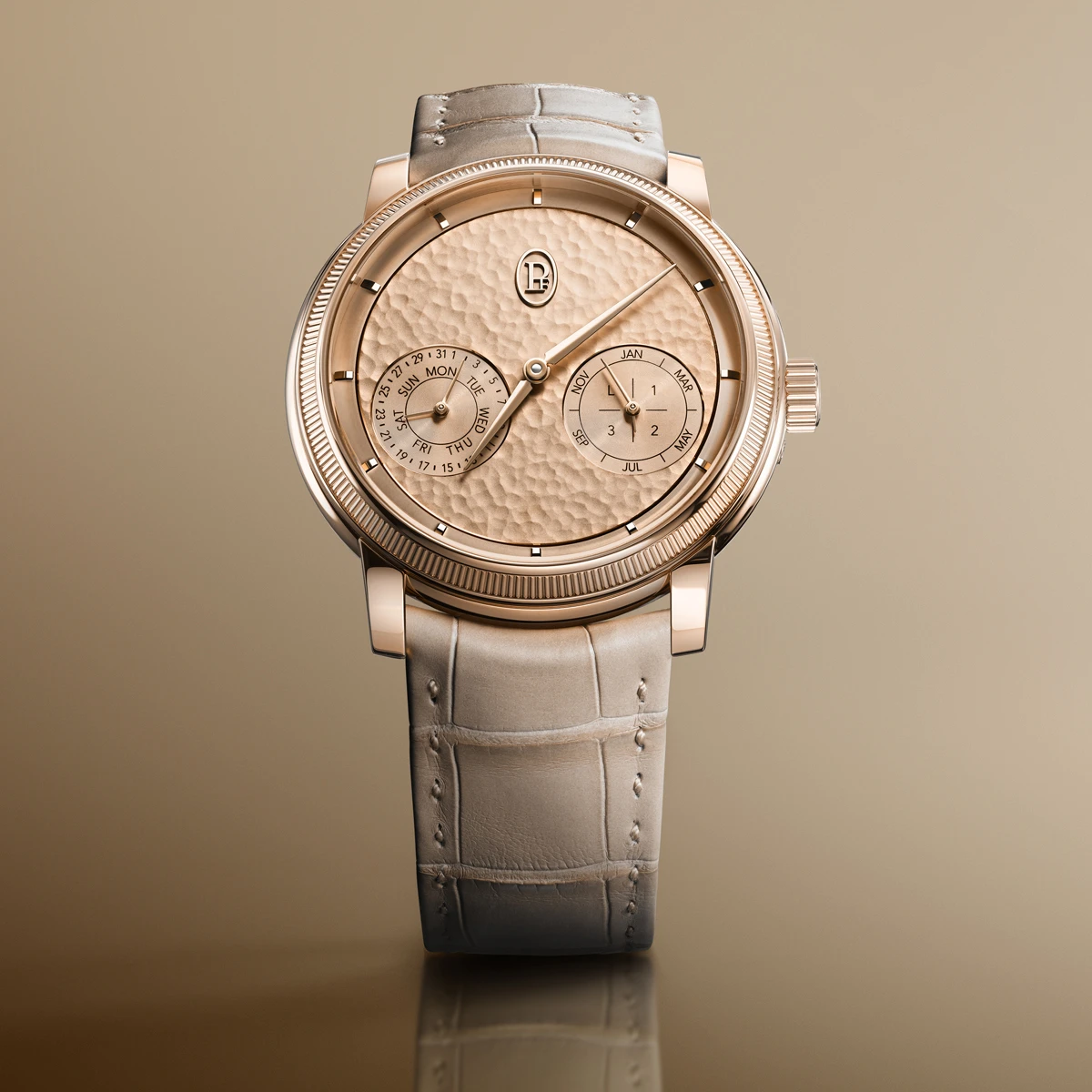
The Bright Peony dial is the centre of gravity
The dial is the element that gives this watch its character.
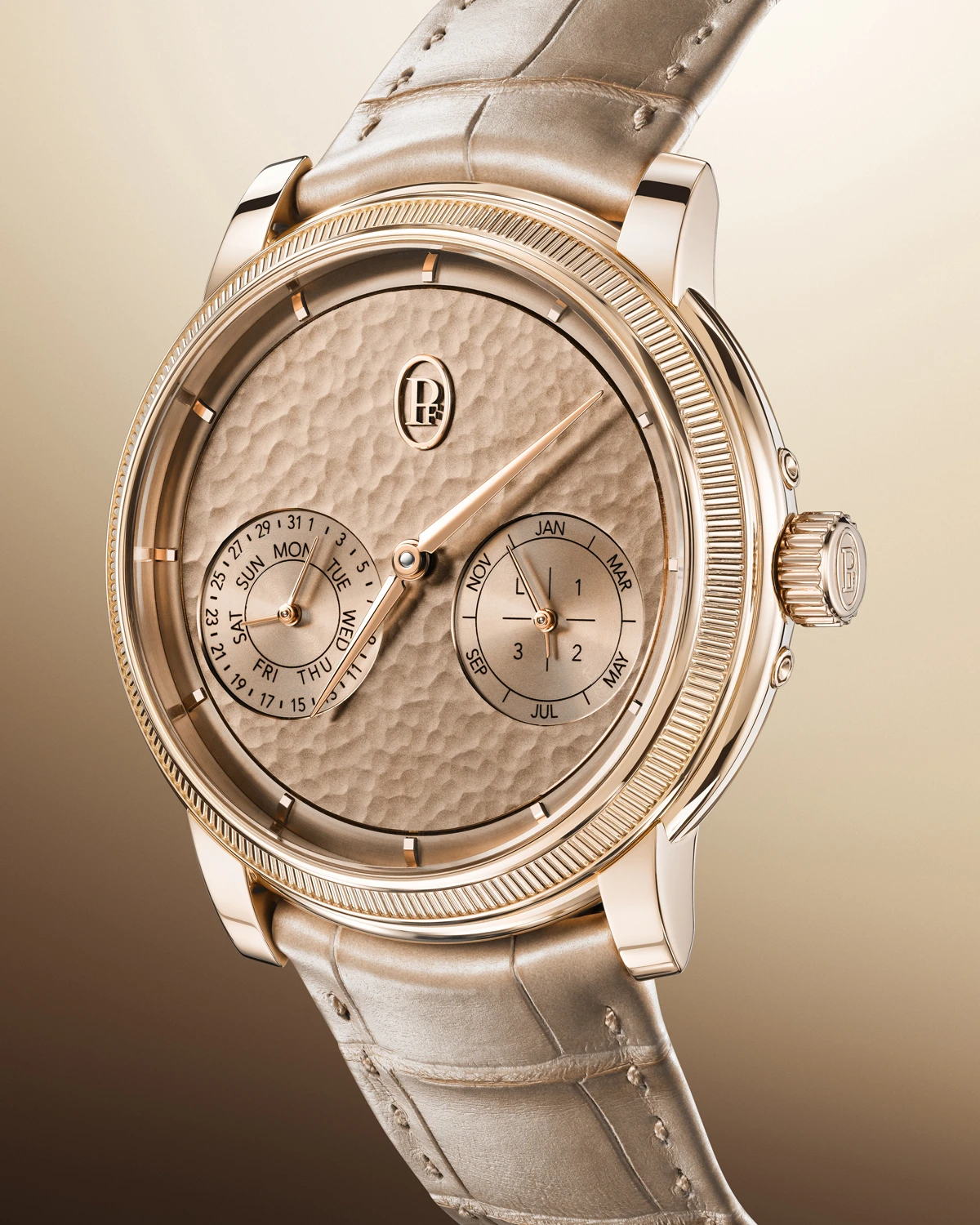
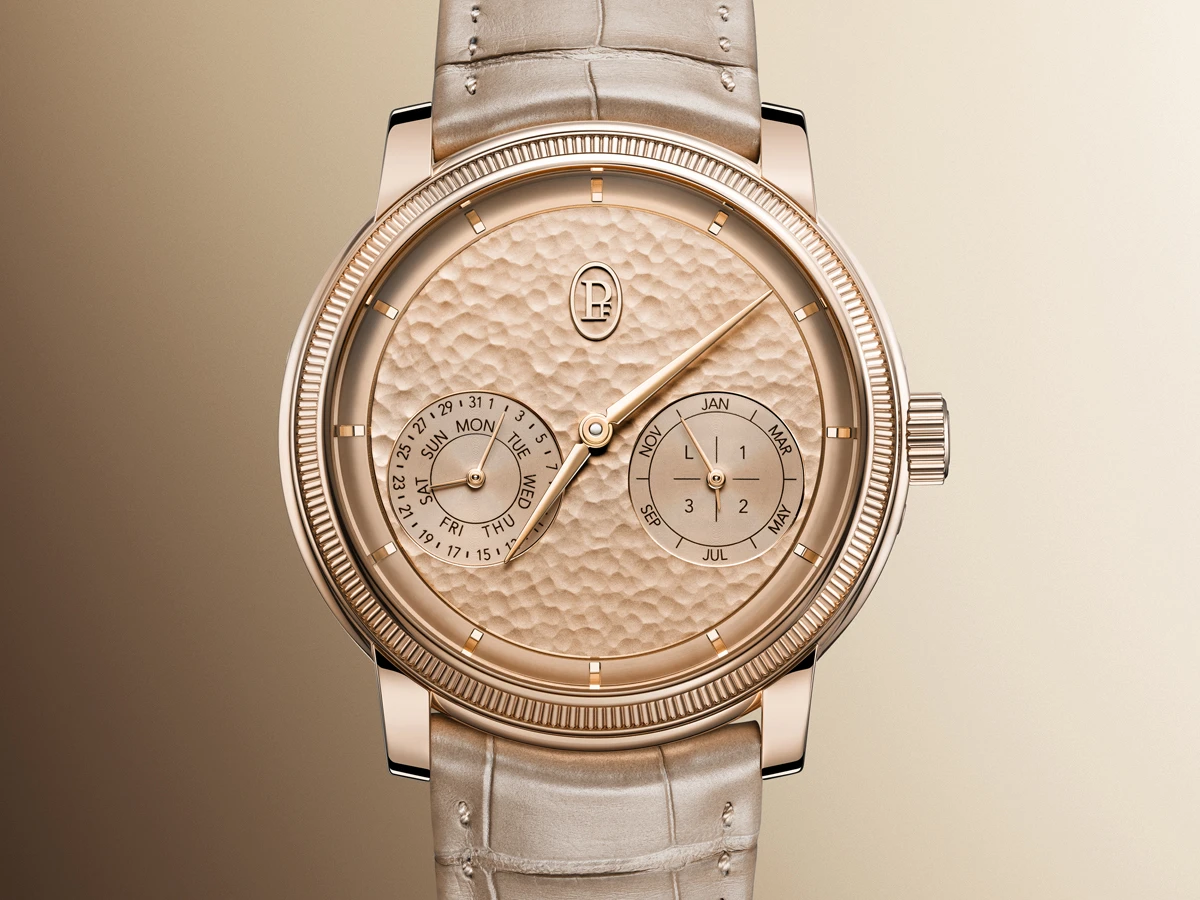
Instead of the more common brass base, Parmigiani Fleurier uses 18-carat rose gold for the dial, matching the case, hands, indexes and the precious-metal emphasis of the movement.
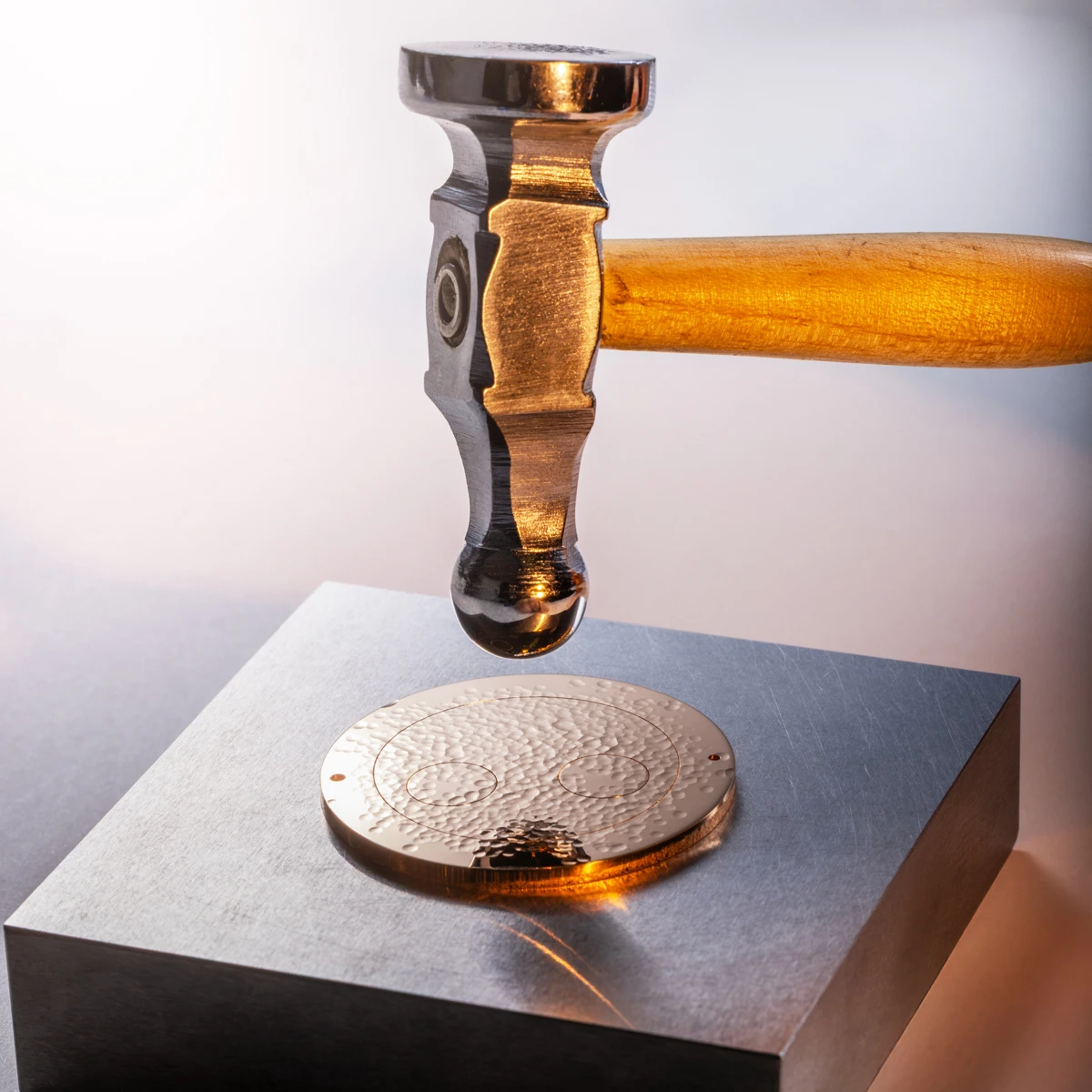
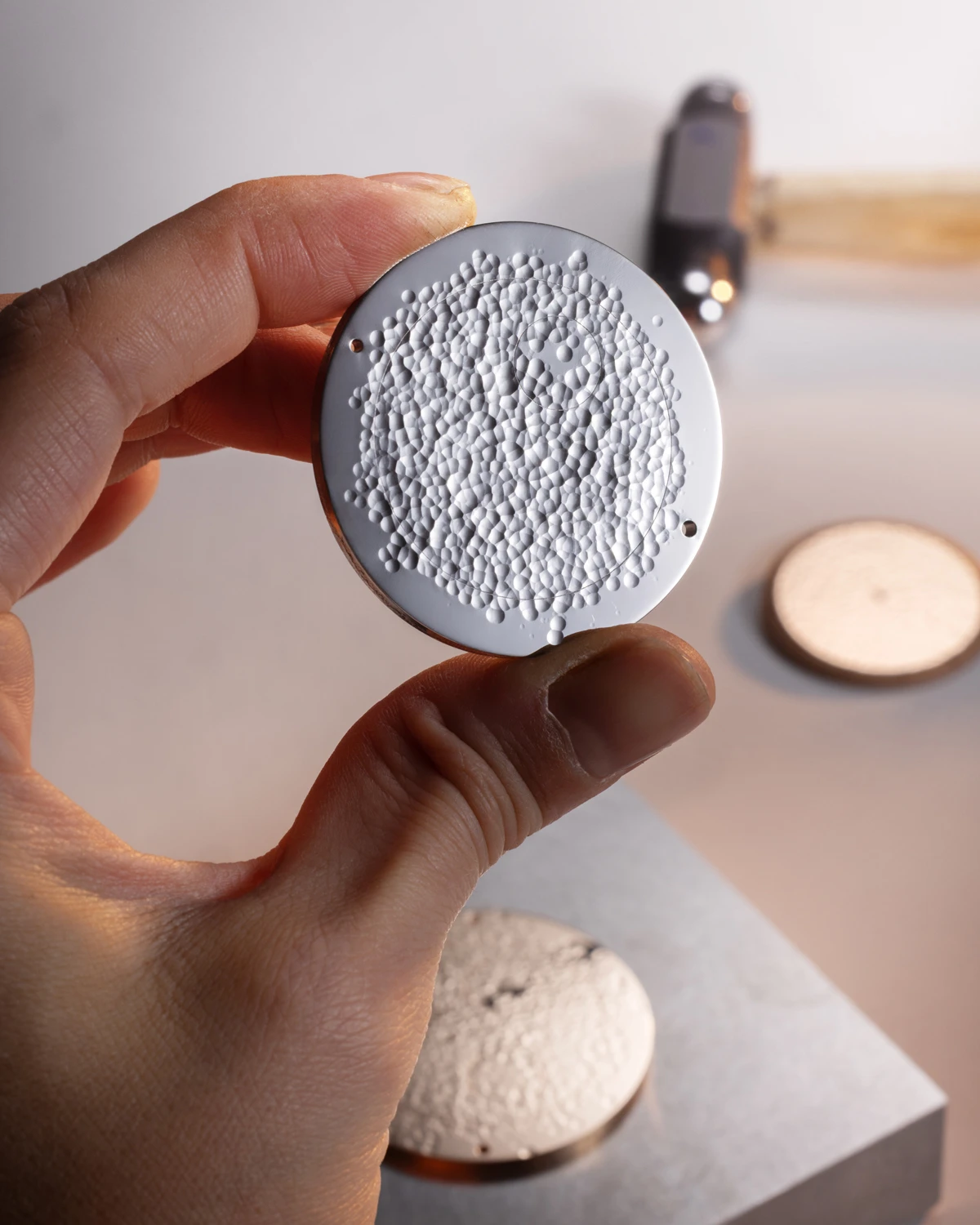
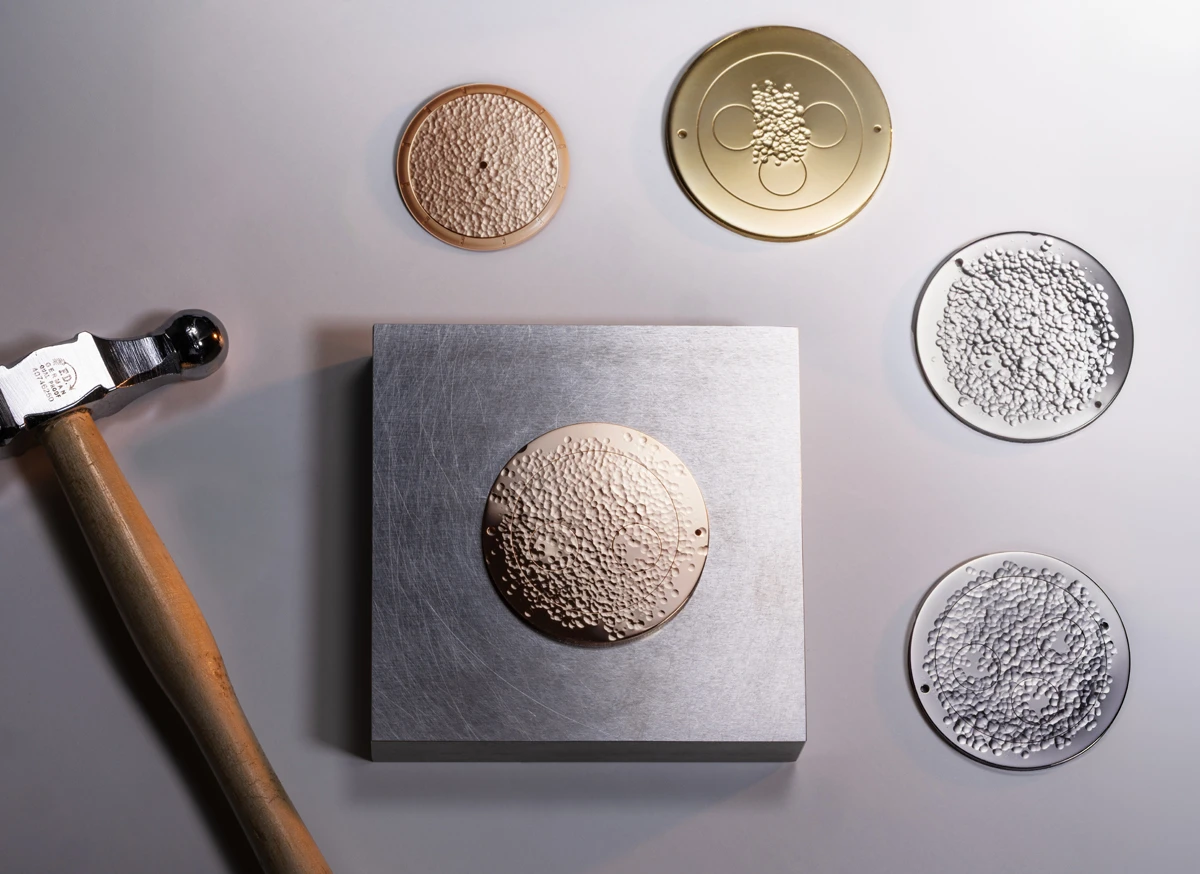
Its surface is hand-hammered, leaving a field of irregular impressions that catch the light without becoming decorative noise.
The effect is not perfectly uniform, and that’s the point.
Each dial carries the trace of individual handwork, with Parmigiani Fleurier noting that the hammered finish involves around sixty individual operations.
The colour, named Bright Peony, sits within the brand’s recent preference for nuanced tones rather than simple dial shorthand such as black, blue or white.
That approach has become more pronounced under CEO Guido Terreni, whose work at the manufacture has drawn on Le Corbusier’s Architectural Polychromy and its understanding of how colour shifts with light and context.
On this watch, the shade softens the formality of a rose gold perpetual calendar without making it casual.
Two recessed subdials interrupt the hammered surface cleanly, carrying the perpetual calendar indications for date, day, month and leap year.
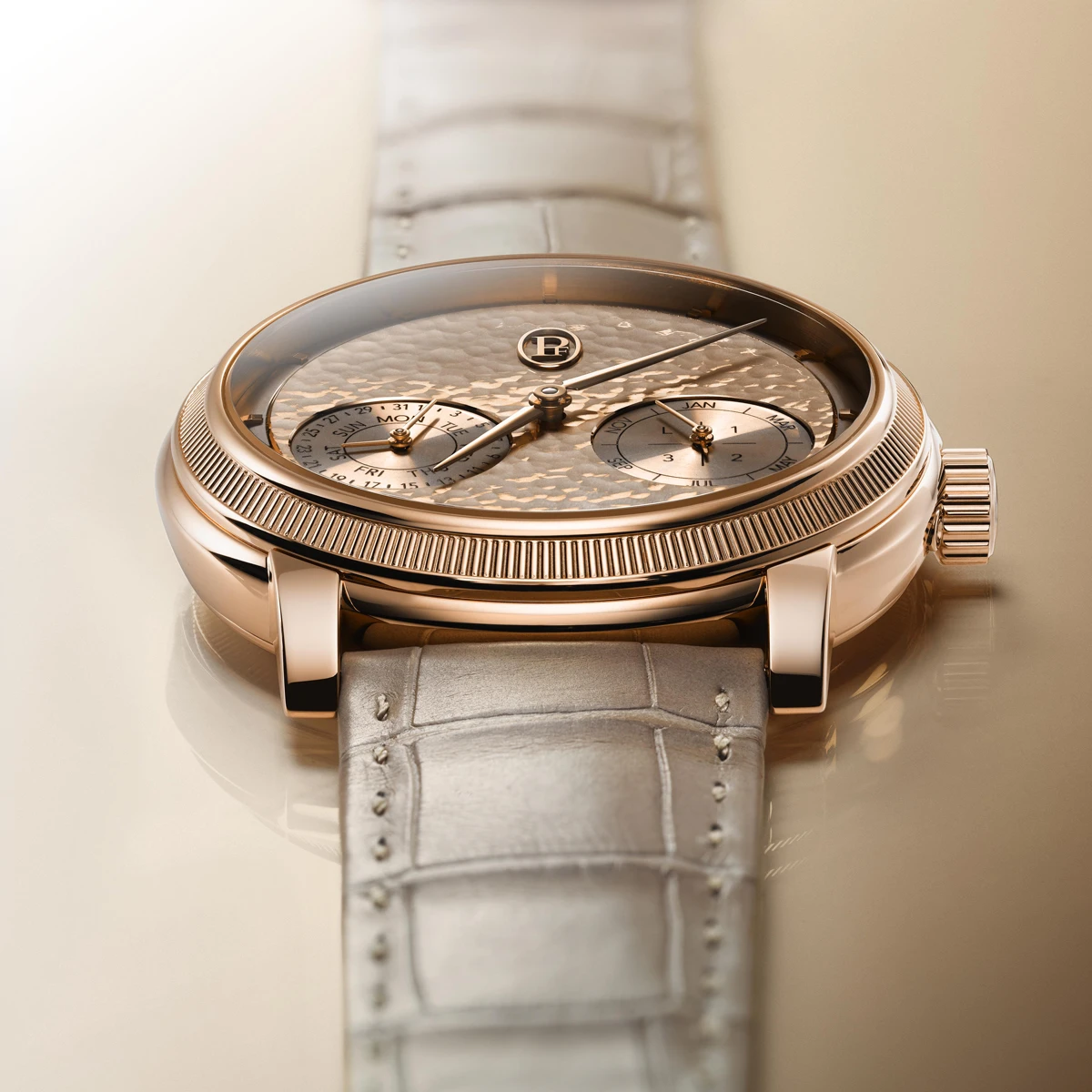
The contrast between the smooth counters and the rippled central field helps the information remain legible, which is no small achievement on a complicated calendar watch.
Rose gold architecture with restrained proportions
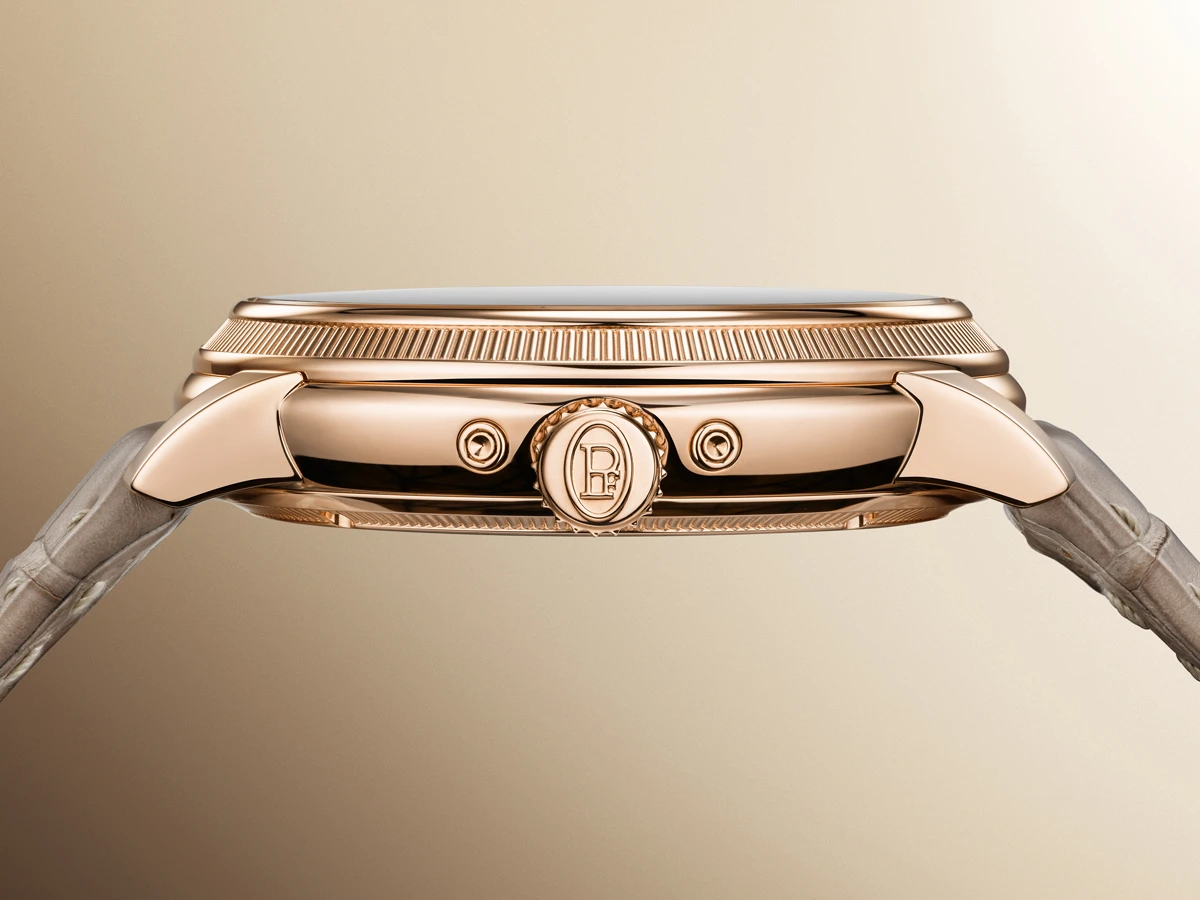
The case measures 40.6 mm across and 10.9 mm thick, figures that keep the watch comfortably within dress-complication territory.
In rose gold, that balance matters.
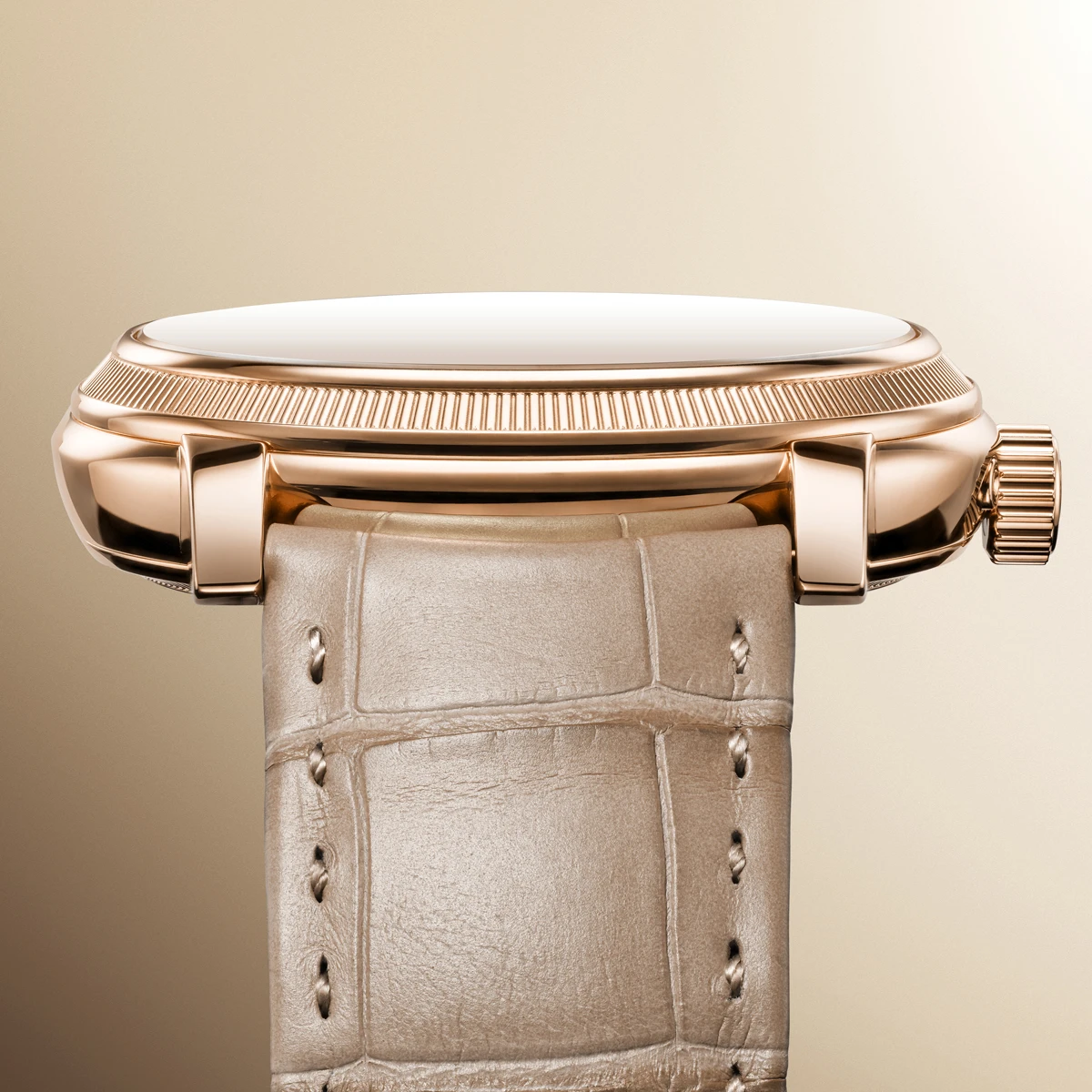
A perpetual calendar in a precious-metal case can easily become too assertive, but the Toric Quantième Perpétuel appears to rely on measured proportions and surface detail rather than mass.
The Toric identity is also tied to its bezel language, historically known for stepped detailing, gadroons and knurling produced through traditional metalwork.
That architectural framing is part of what separates the collection from simpler round-case dress watches.
The faceted rose gold hour and minute hands reach across the textured field, while faceted indexes sit in a recessed outer channel.
It’s a disciplined layout, with the calendar displays integrated into the dial rather than imposed on it.
The PF733 calibre keeps the craft visible
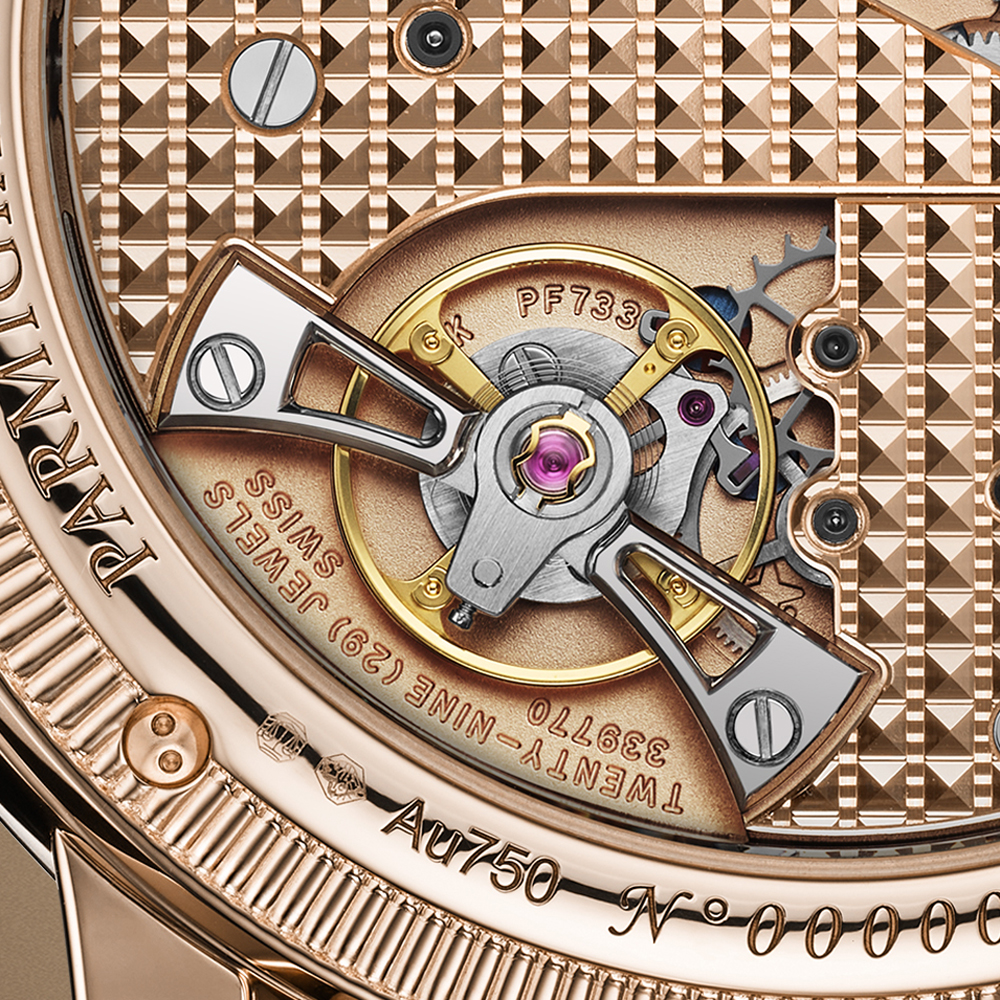
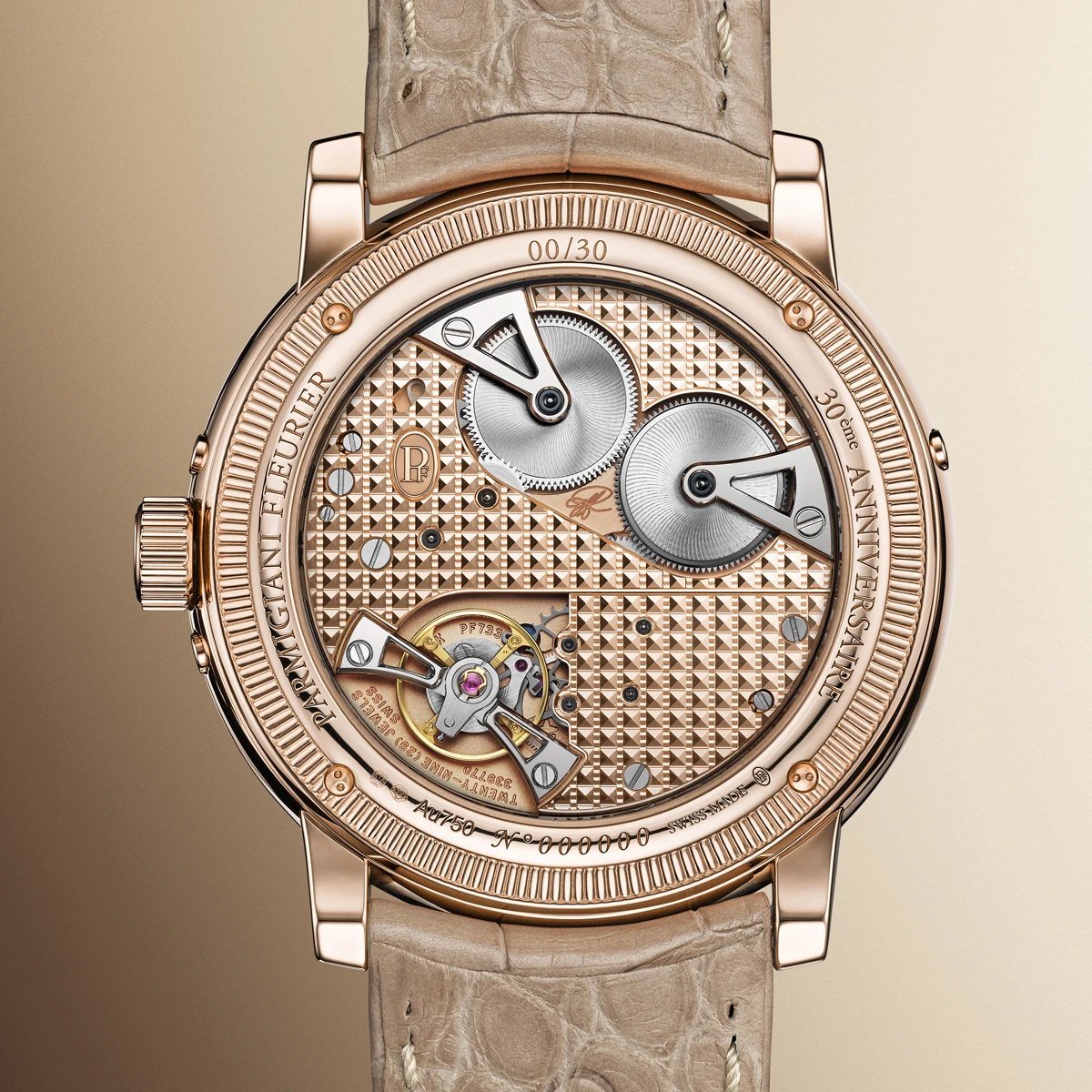
Inside the watch is the hand-wound Calibre PF733, a movement chosen for a complication that rewards regular interaction.
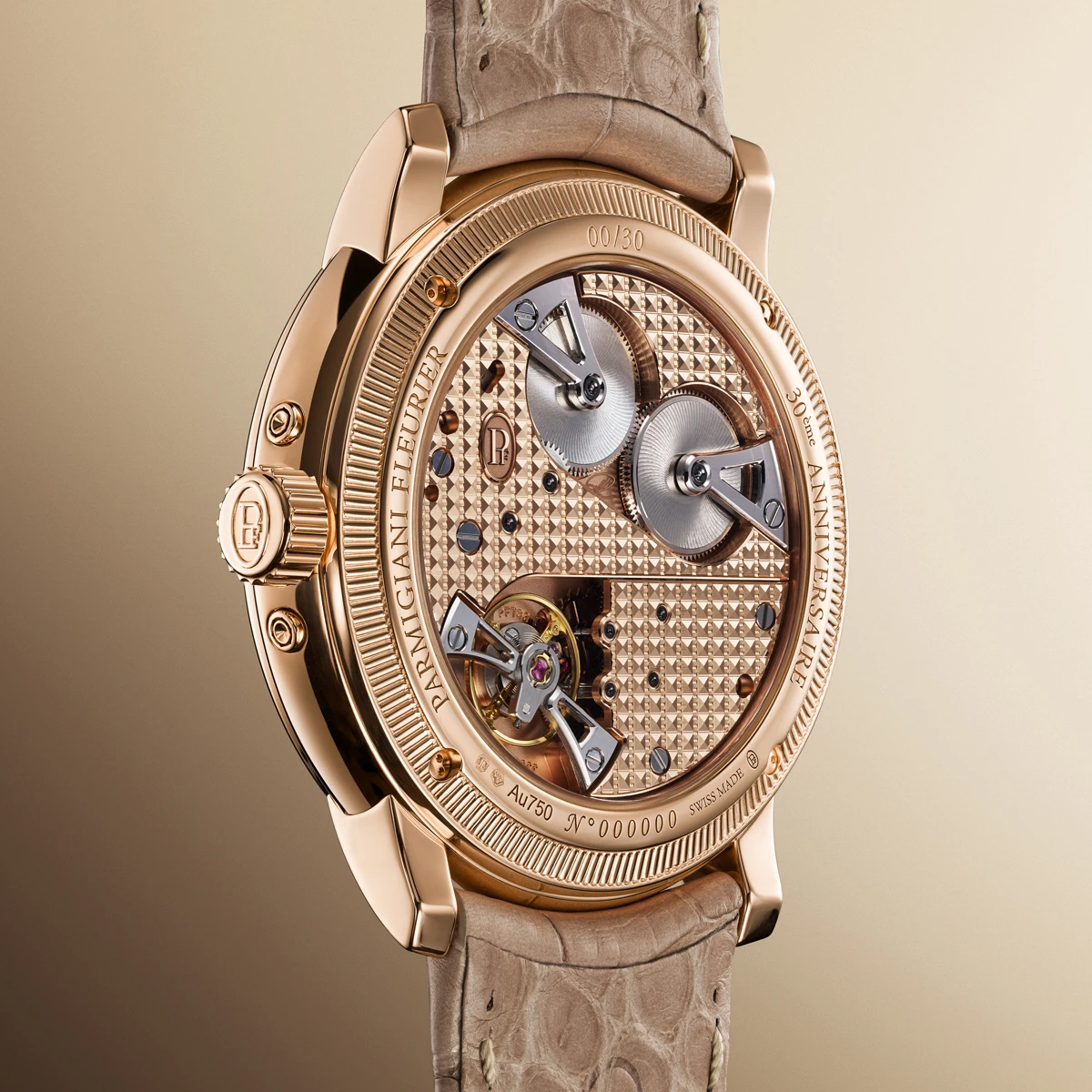
A manually wound perpetual calendar has a different rhythm from an automatic one.
It asks the wearer to engage with the watch more deliberately, which suits the Toric’s artisanal temperament.
The movement carries refined finishing throughout, reinforcing the sense that the watch is meant to be appreciated as much through its construction as through its calendar display.
For collectors, the appeal sits in that combination of practical complication, precious materials and a design language that doesn’t flatten itself into conventional dress-watch minimalism.
Details & Specifications
| Brand | Parmigiani Fleurier |
|---|---|
| Model | Toric Quantième Perpétuel |
| Case size | 40.6 mm |
| Case thickness | 10.9 mm |
| Case material | 18-carat rose gold |
| Dial | Hand-hammered 18-carat rose gold in Bright Peony |
| Hands and indexes | Faceted 18-carat rose gold |
| Movement | Hand-wound Calibre PF733 |
| Complication | Perpetual calendar with date, day, month and leap-year indication |
| Recognition | Nominated for the 2026 GPHG Calendar and Astronomy Prize |
| Introduction | Presented in 2026 for Parmigiani Fleurier’s 30th anniversary year |
The Toric Quantième Perpétuel is unlikely to be the loudest complicated watch of the year, and that may be exactly its strength.
For the collector drawn to texture, proportion and serious calendar watchmaking, it presents Parmigiani Fleurier at its most persuasive.