Pagani has spent years exploring an electric hypercar, but the idea hasn’t reached the showroom.
That’s not because the company ignored the shift toward electrification. It’s because, for a marque built around lightness, theatre and intimate mechanical feel, the business case and the driving experience both have to be right.
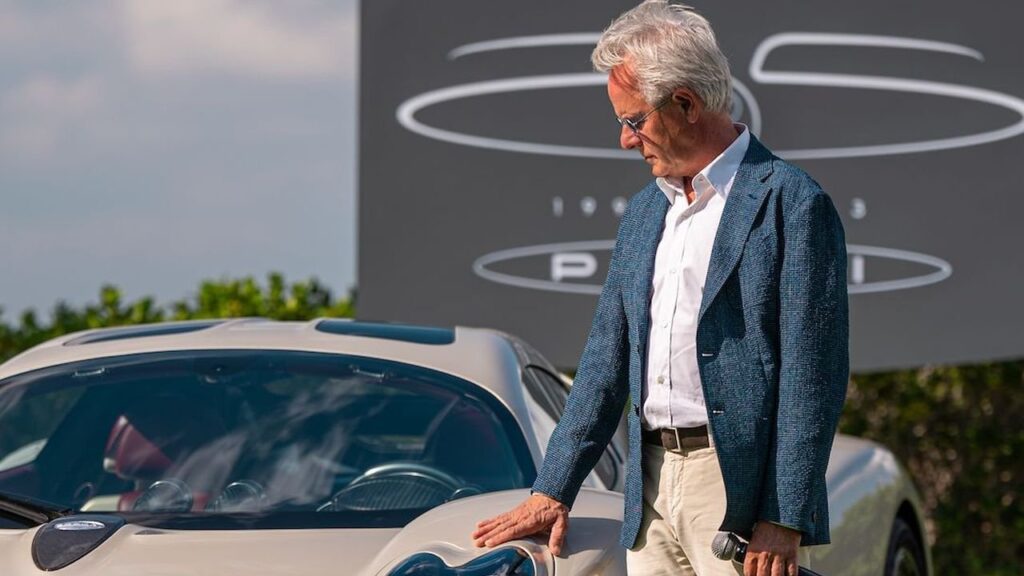
Founder Horacio Pagani has confirmed that an EV programme was developed in parallel with the Utopia, only for customer interest to fall short of what a company of Pagani’s scale needs before committing to production.

At a glance
- Pagani developed an electric hypercar alongside the Utopia but has put the programme on hold.
- Weight, driver emotion and the absence of strong buyer demand were central to the decision.
- The brand hasn’t ruled out an EV, but it will only proceed if the car feels true to Pagani.
A customer-led pause
For a major manufacturer, a niche electric flagship can be part of a broader strategy.
For Pagani, every new car has to carry far more weight commercially and culturally, because production is small and the customer base is highly specific.
Horacio Pagani has said the electric project absorbed serious engineering time and development effort, rather than existing as a casual experiment.
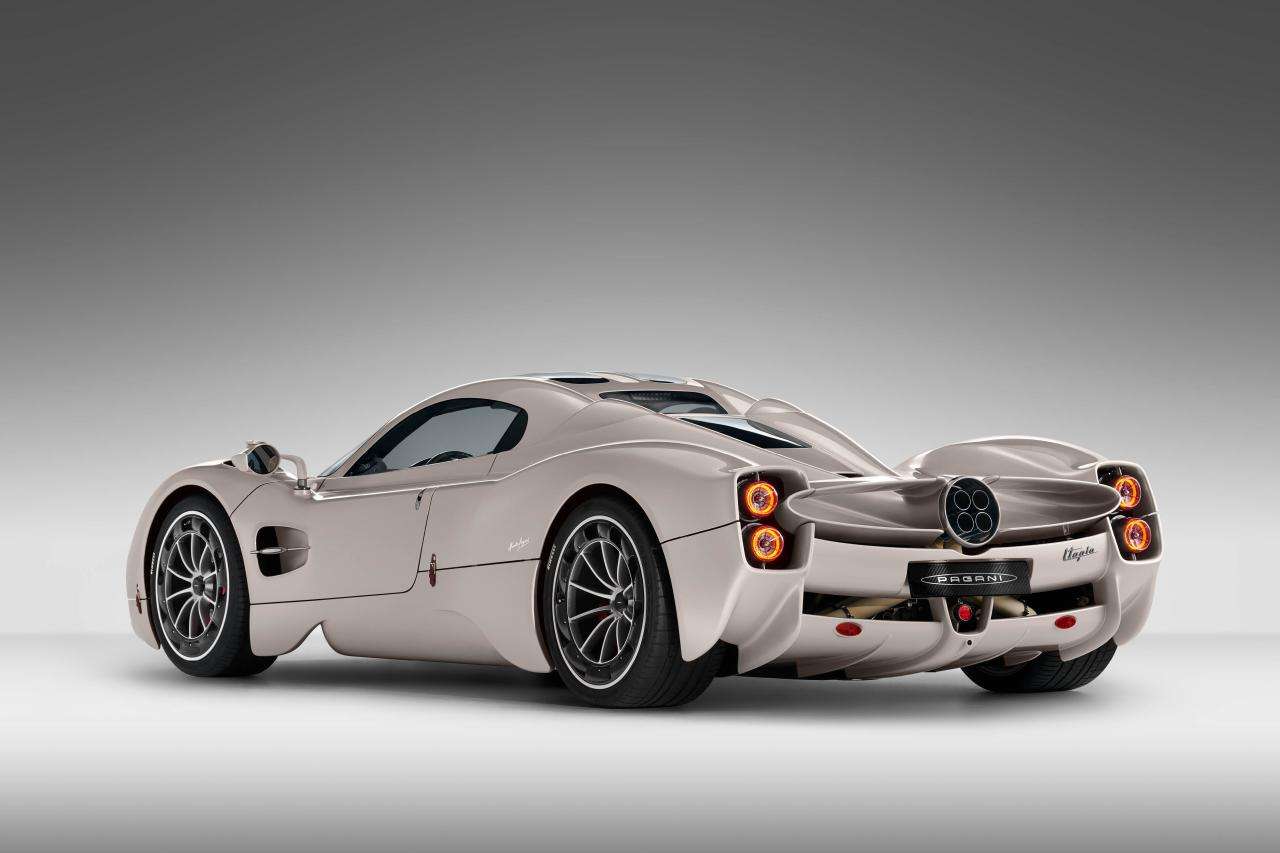
It was being worked on alongside the Utopia, the brand’s current V12 hypercar, which makes the decision to step back more significant.
The issue was simple but decisive: buyers weren’t asking for it.
Dealer feedback also failed to show the level of enthusiasm needed to justify pushing an electric Pagani into production.
Weight remains the hard problem
Pagani’s cars are not defined by headline power alone.
The company has built its reputation on lightweight construction, tactile control weights and the sense that every mechanical part has been considered as part of the whole experience.
Early simulations for an electric Pagani showed a notable weight increase compared with the brand’s current 6.0-litre twin-turbo V12 layout from AMG.

That matters because extra mass changes more than straight-line performance.
It affects braking feel, agility, tyre load, suspension tuning and the delicacy that separates a Pagani from heavier high-performance machines.
An electric hypercar can be brutally quick, but for Pagani, quick isn’t enough if the car loses the brand’s characteristic precision.
The V12 experience Pagani is protecting
The emotional argument may be just as important as the technical one.
Pagani customers are buying sound, vibration, gearshift drama and the sense of an engine working directly behind them.
The V12 is not just a power unit in this context.
It’s part of the ritual, from the start-up to the way the car builds speed and fills the cabin with mechanical character.
That makes electrification a complicated step for a company whose appeal is rooted in sensation as much as performance.
An EV may suit the numbers game, but Pagani has to answer a different question: would it still feel like a Pagani?
Details & Specifications
| Brand | Pagani |
|---|---|
| Project | Electric hypercar programme |
| Development context | Developed alongside the Pagani Utopia |
| Current status | Paused |
| Key concern | Buyer demand and projected weight increase |
| Current combustion benchmark | 6.0-litre twin-turbo V12 from AMG |
| Production decision | No confirmed production plan |
None of this means Pagani is closed to electrification.
It means the company is unwilling to build an electric hypercar simply because the wider industry is moving that way.
If a future EV can deliver the lightness, emotion and theatre expected by Pagani buyers, the idea may return.
Until then, the brand’s electric ambitions remain deliberately restrained, waiting for a version of the technology that fits the badge rather than forcing the badge to fit the technology.