Subaru’s electric future is starting to look more self-directed.
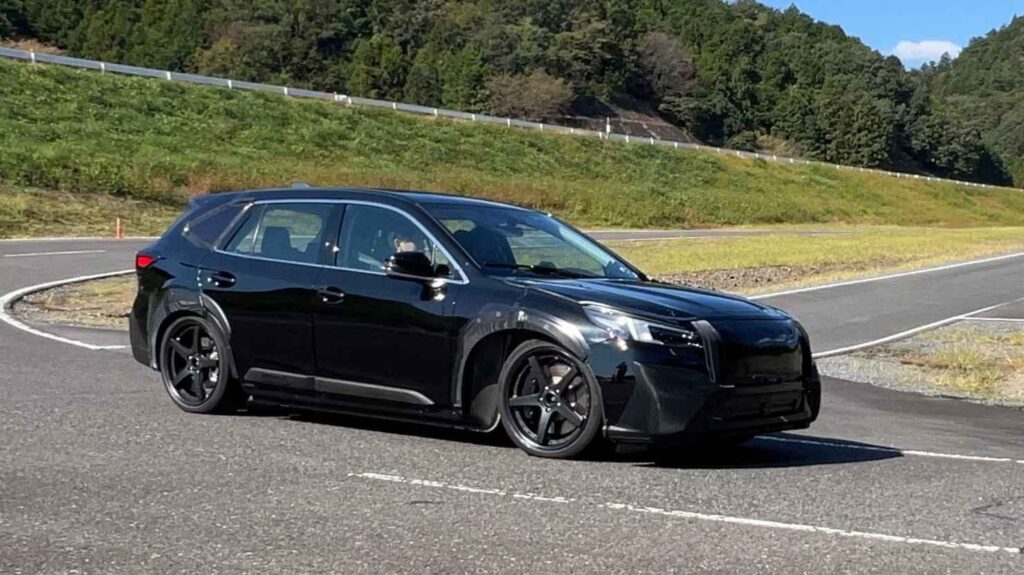
The Japanese automaker has previewed a dedicated EV platform using a prototype dressed in a modified Outback wagon body, giving an early look at technology intended for its next generation of electric cars.
It matters because Subaru’s current EV strategy has been closely tied to Toyota, while this architecture points toward a more independent path from 2029.
At a glance
- Subaru has previewed its own dedicated EV platform using a modified Outback-bodied prototype.
- The all-wheel-drive test vehicle uses two e-axle drive units developed with Aisin and produces a combined 380 kW, or more than 500 hp.
- Subaru has confirmed showroom models based on the new architecture are planned from 2029.
An Outback body hiding a new EV architecture
The prototype was demonstrated at a test track in Japan and wears a familiar-looking Outback wagon body, though the longer wheelbase hints at the substantial changes underneath.
Rather than previewing a production design, the vehicle functions as a rolling development platform for future Subaru EV hardware.
That makes the bodywork less important than the architecture beneath it, which is intended to support Subaru’s next wave of electric models.
For a brand whose identity has long been built around all-wheel drive and practical body styles, using an Outback-shaped shell is a fitting way to introduce the hardware without pretending the final showroom cars are already defined.
Dual e-axles and serious all-wheel-drive output
The prototype uses two e-axle drive units developed with Aisin, a supplier that also works with Toyota.
The front motor is rated at 150 kW, or 200 hp, while the rear unit produces 230 kW, or 308 hp.
Together, the system delivers 380 kW, which Subaru describes as more than 500 hp.
Subaru says that is enough for the test vehicle to accelerate from 0-100 km/h, or 0-62 mph, in under four seconds.
Those figures put the prototype well beyond the performance expectations usually associated with Subaru’s conventional wagon and crossover range, though its role remains developmental rather than showroom-ready.
Subaru’s EV sales target is moving back
Subaru still wants EVs to account for half of its annual global sales.
The company now expects to reach that target later than its original 2030 deadline.
That delay gives the new platform added significance, since the timing suggests Subaru is preparing a longer-term product shift rather than relying only on shared development routes.
The move also gives Subaru room to preserve the traits its buyers expect, particularly all-weather capability and all-wheel-drive confidence, while adapting them to a dedicated electric base.
Details & Specifications
| Brand | Subaru |
|---|---|
| Vehicle | EV platform prototype with modified Outback wagon body |
| Platform | Dedicated Subaru electric vehicle architecture |
| Drive layout | All-wheel drive |
| Drive units | Two e-axle units developed with Aisin |
| Front motor output | 150 kW / 200 hp |
| Rear motor output | 230 kW / 308 hp |
| Combined output | 380 kW / 500+ hp |
| Acceleration | 0-100 km/h / 0-62 mph in under four seconds, as stated by Subaru |
| Planned showroom timing | Models based on the platform planned from 2029 |
Subaru hasn’t shown the production cars yet, but this prototype gives a clear signal of where the brand wants to go, with high-output electric all-wheel drive developed around its own future architecture rather than simply borrowing someone else’s playbook.