Ming has never treated the worldtimer as a purely practical complication, and the 57.05 Comet makes that clear from the first glance.
Created for the brand’s ninth anniversary, it folds a genuinely useful daylight saving time solution into a watch that also feels deliberately theatrical on the wrist.
The result is a 40mm stainless steel travel watch that looks back to early jet-age romance while leaning heavily into Ming’s modern industrial design language.
At a glance
- Ming has launched the 57.05 Comet as a 200-piece anniversary worldtimer.
- Its patent-pending bezel separates DST and non-DST cities to make seasonal time changes easier to read.
- Pricing starts at CHF 6,950 on a Jean Rousseau cobalt blue goat leather strap.
A worldtimer built around daylight saving time
The defining idea here is the patent-pending worldtimer bezel, which tackles one of the more awkward realities of global travel.
Daylight saving time isn’t observed universally, so the relationship between cities can shift during the year.
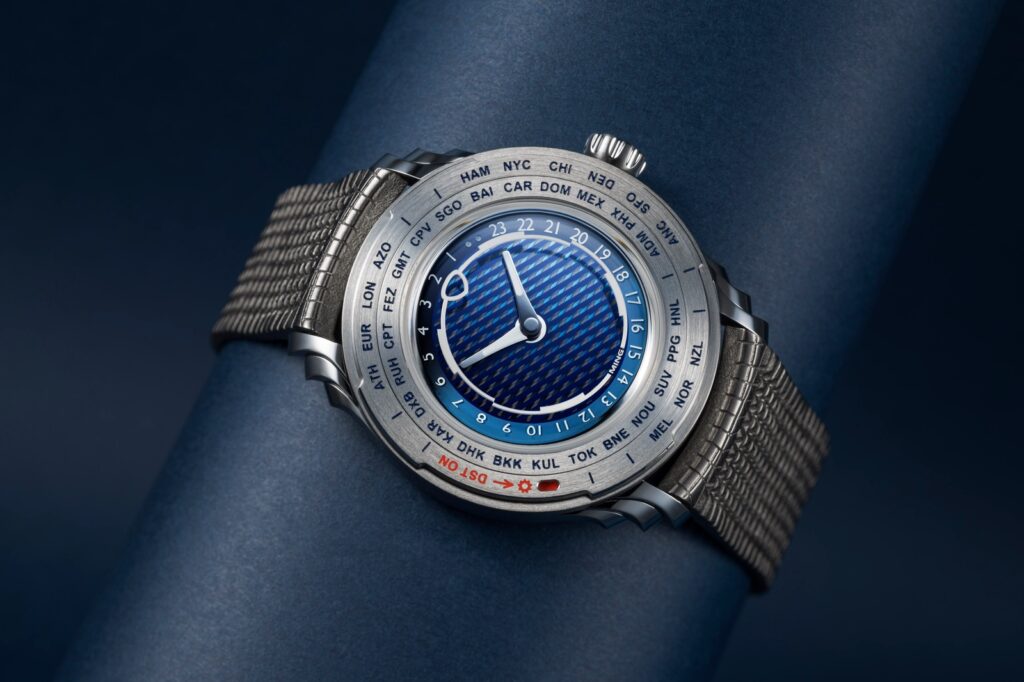
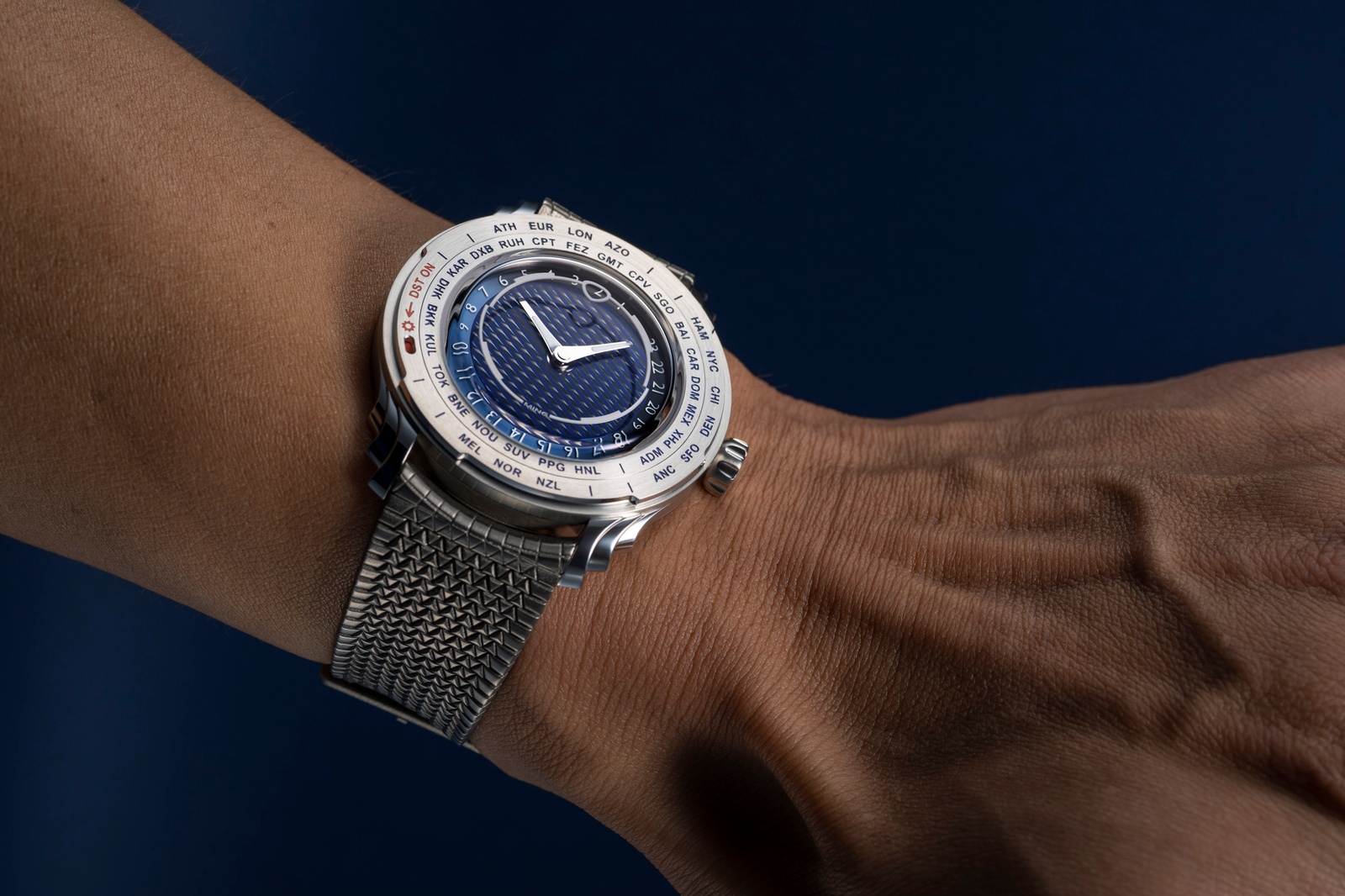
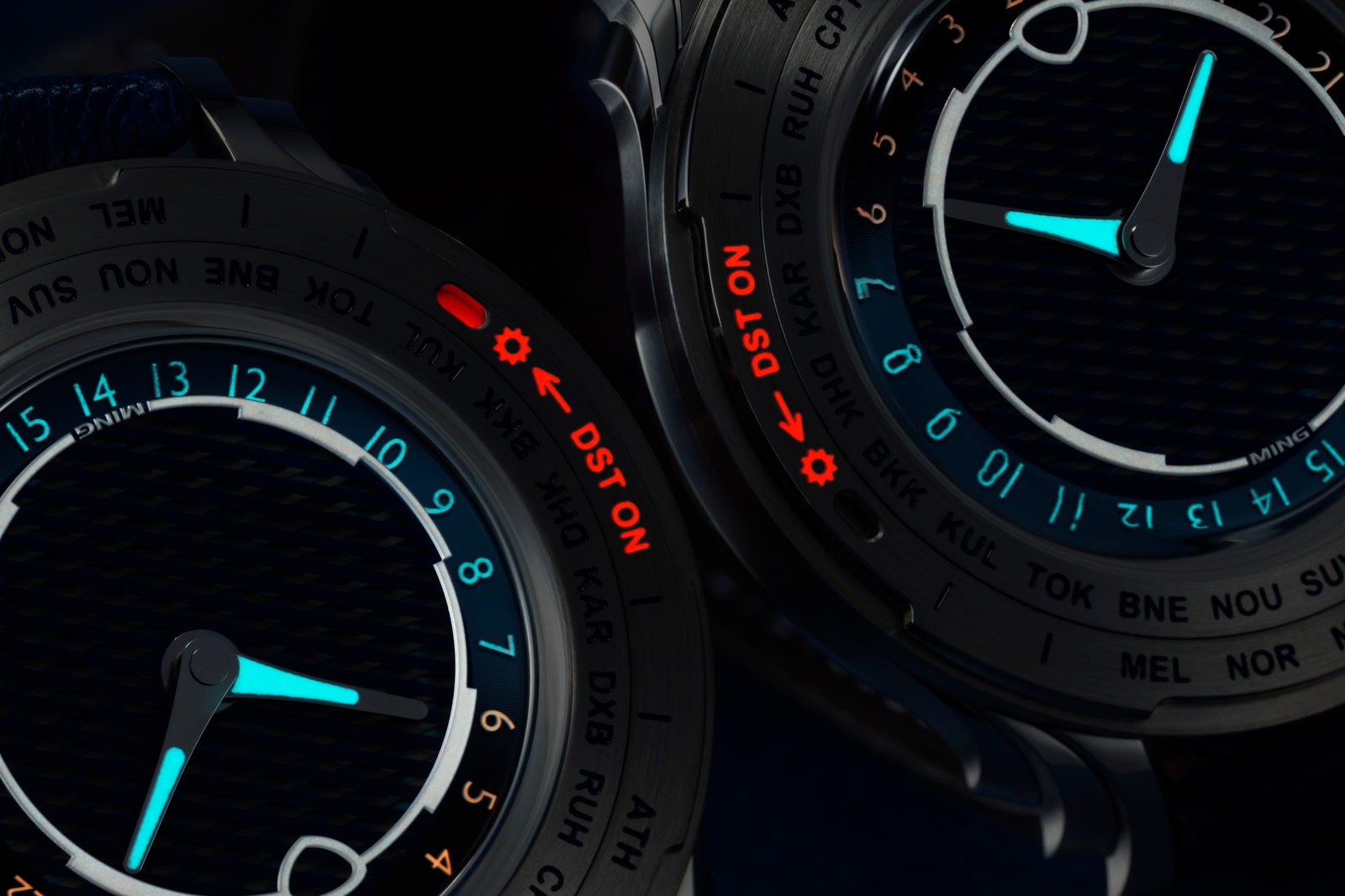
Ming’s solution divides the bezel into two parts, with a static inner ring for cities that don’t observe DST and a rotating outer ring for those that do.
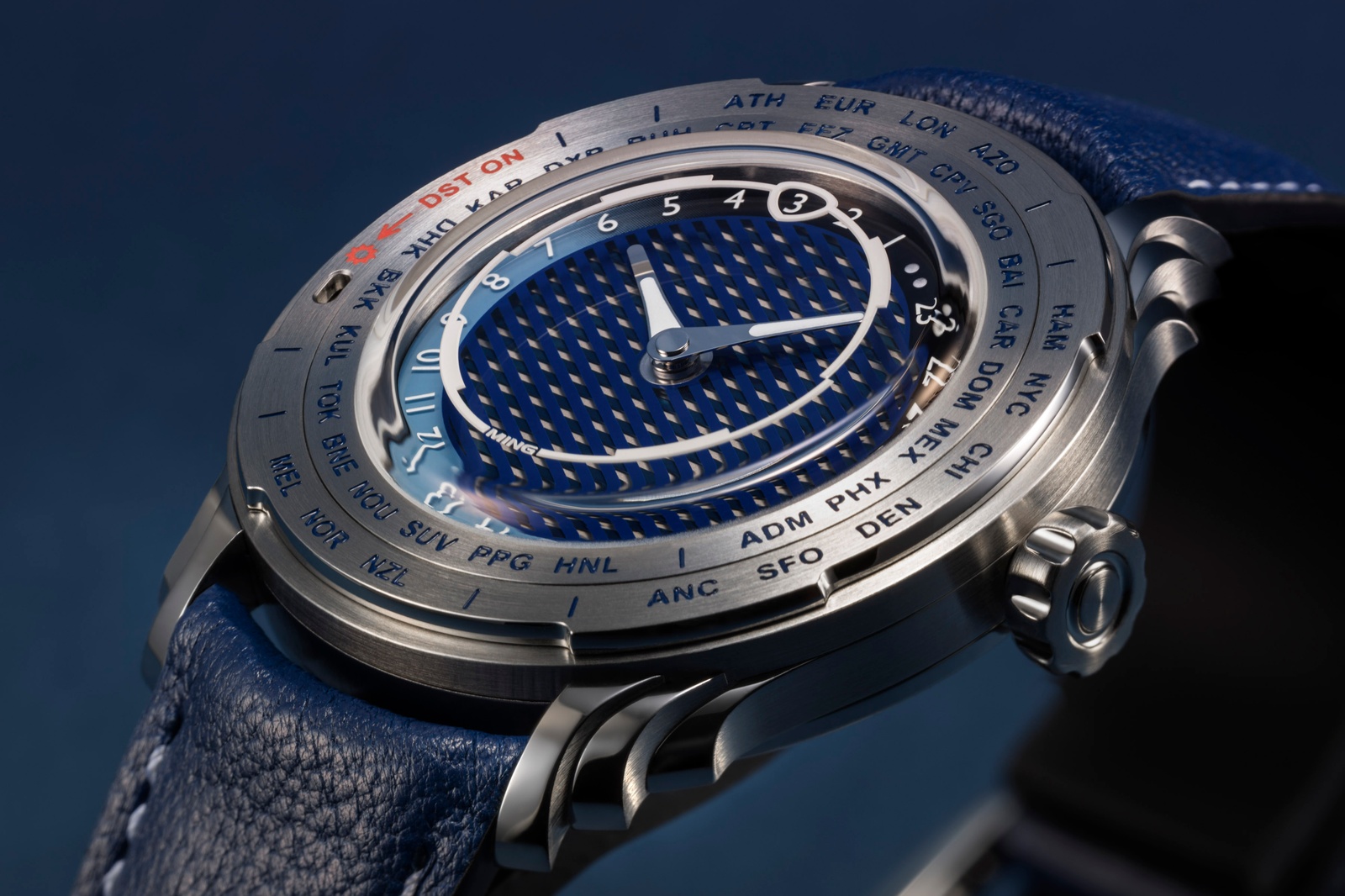
The outer ring has two lockable positions, allowing the watch to move between standard time and daylight saving time displays without asking the wearer to mentally reshuffle the world.
Because the inner city ring remains fixed, the 24-hour ring with day and night indication rotates around the outer edge of the dial to align the hours with the relevant cities.
It’s a small piece of mechanical logic that gives the 57.05 Comet a stronger practical argument than many decorative worldtimers.
The dial turns time into motion
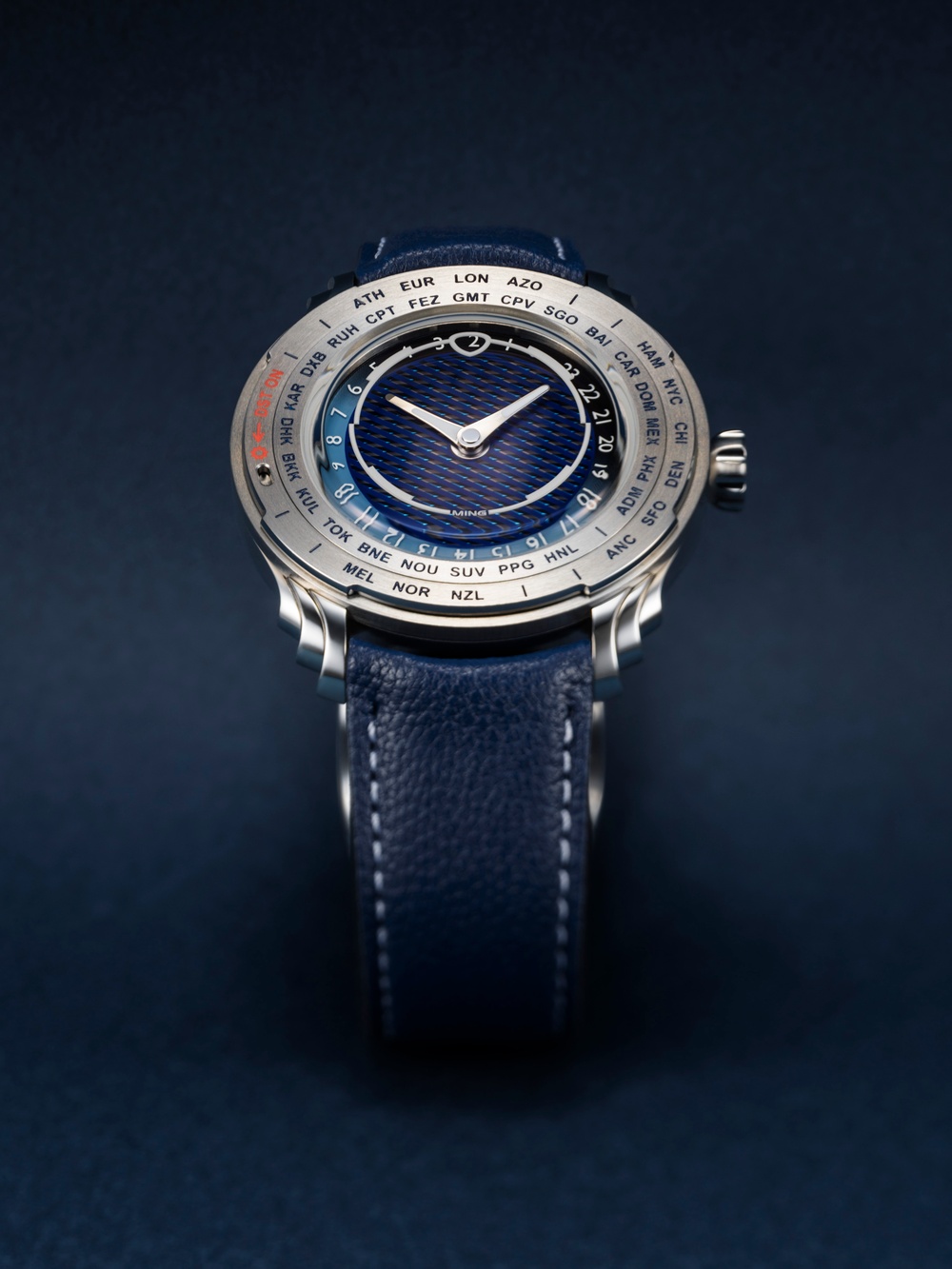
The 57.05 Comet’s blue multilayered dial is more animated than it may appear in still images.
At the centre, multiple rotating disks carry a geometric cut-out motif, creating a pattern that changes gradually through the day.
That moving centrepiece gives the watch a sense of orbital motion, which suits both the Comet name and the travel theme.
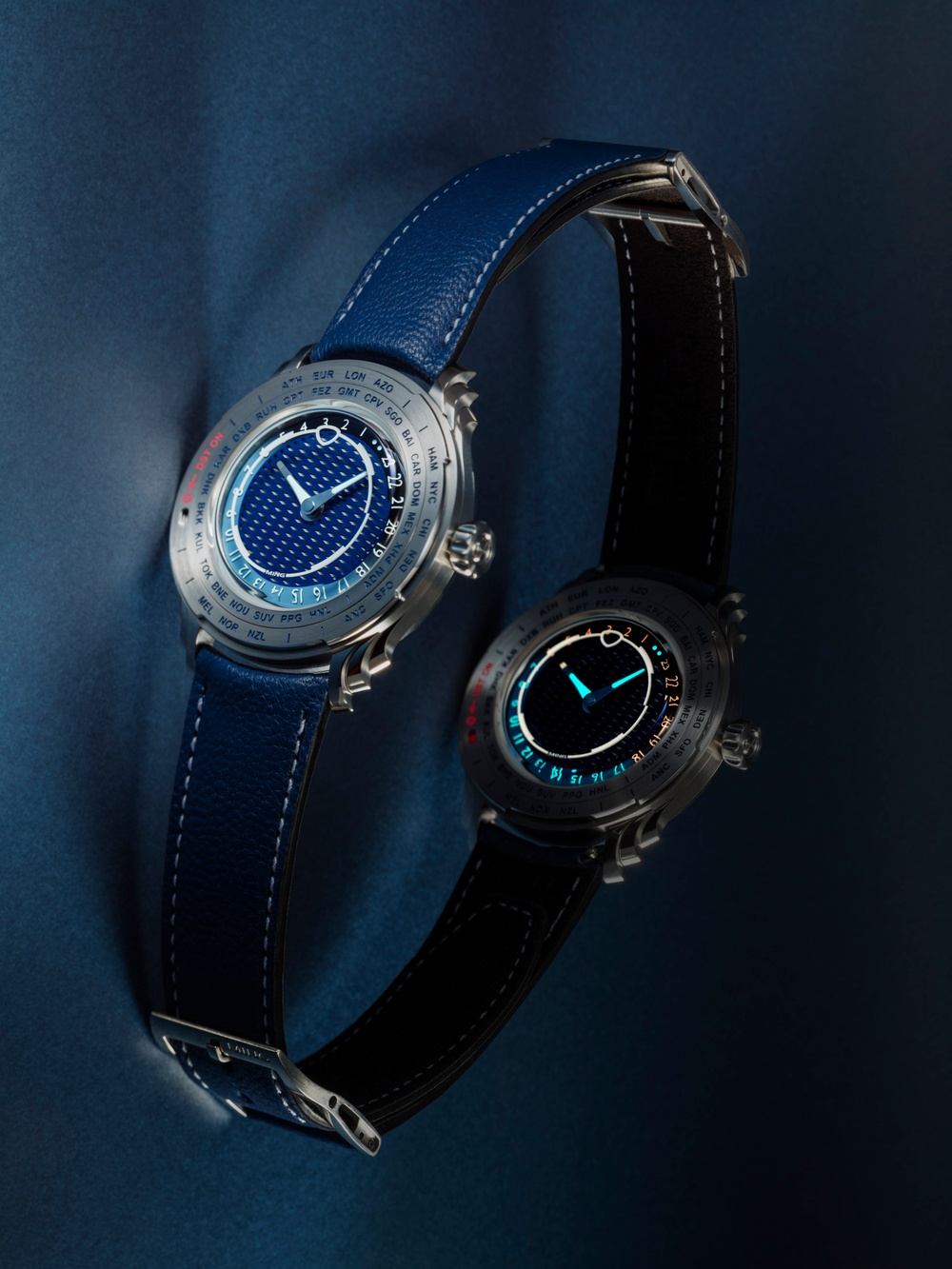
The worldtime layout also nods to Louis Cottier, whose city-ring and 24-hour scale architecture helped define the modern worldtime wristwatch.
Ming adds its own visual signature through a fifth-generation case language, including triple-stepped lugs that bring a sculptural, faintly Art Deco rhythm to the stainless steel case.
Jet-age reference with modern mechanics
The name Comet points to the de Havilland Comet, the world’s first commercial jet airliner and a landmark in long-distance travel.
That reference gives the watch a period-correct emotional thread without making the design feel nostalgic in a literal sense.
The case measures 40mm across and 10.33mm thick, with 100 metres of water resistance, so it keeps the dimensions practical for regular wear.
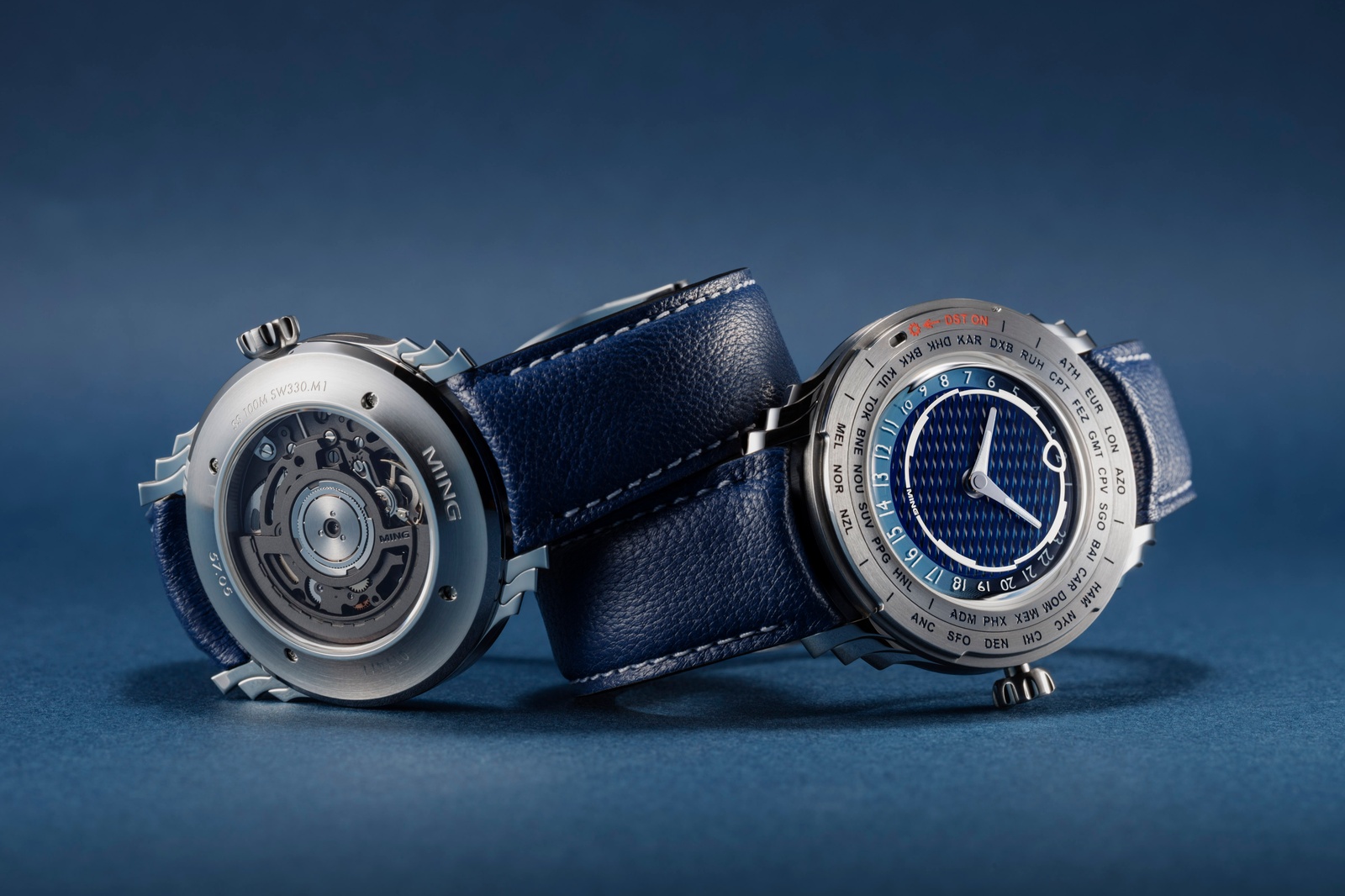
Inside is the Sellita for Ming calibre 330.M2, an automatic movement made specifically for the brand.
It runs at 28,800 vibrations per hour, offers a 50-hour power reserve and is visible through the exhibition caseback with skeletonised bridges and anthracite finishing.
The movement’s industrial appearance contrasts neatly with the stepped case and blue dial, which is very much part of the watch’s appeal.
Details & Specifications
| Brand | Ming |
|---|---|
| Model | 57.05 Comet |
| Case size | 40mm diameter, 10.33mm thickness |
| Case material | Stainless steel |
| Dial | Blue multilayered Comet Tail dial with rotating disks |
| Movement | Sellita for Ming calibre 330.M2, automatic |
| Frequency | 28,800 vph, 4 Hz |
| Power reserve | 50 hours |
| Functions | Hours, minutes, worldtime |
| Water resistance | 100 metres, 10 bar |
| Strap or bracelet | Jean Rousseau cobalt blue goat leather strap or titanium Ming Polymesh bracelet |
| Price | CHF 6,950 on leather strap, CHF 7,950 on Polymesh bracelet |
| Availability | Limited to 200 pieces |
The 57.05 Comet is the kind of anniversary watch that suits Ming well, not because it simply marks a date, but because it concentrates the brand’s taste for graphic design, mechanical problem-solving and compact wearability into one unusually considered travel piece.