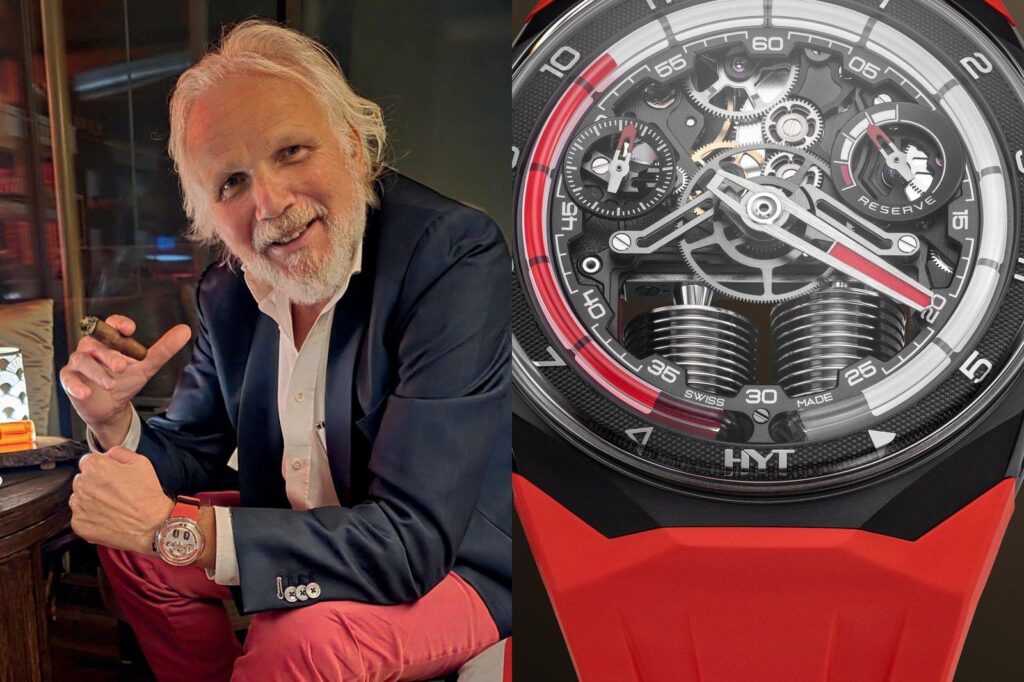
HYT has never behaved like a conventional independent watch brand, which is precisely the point.
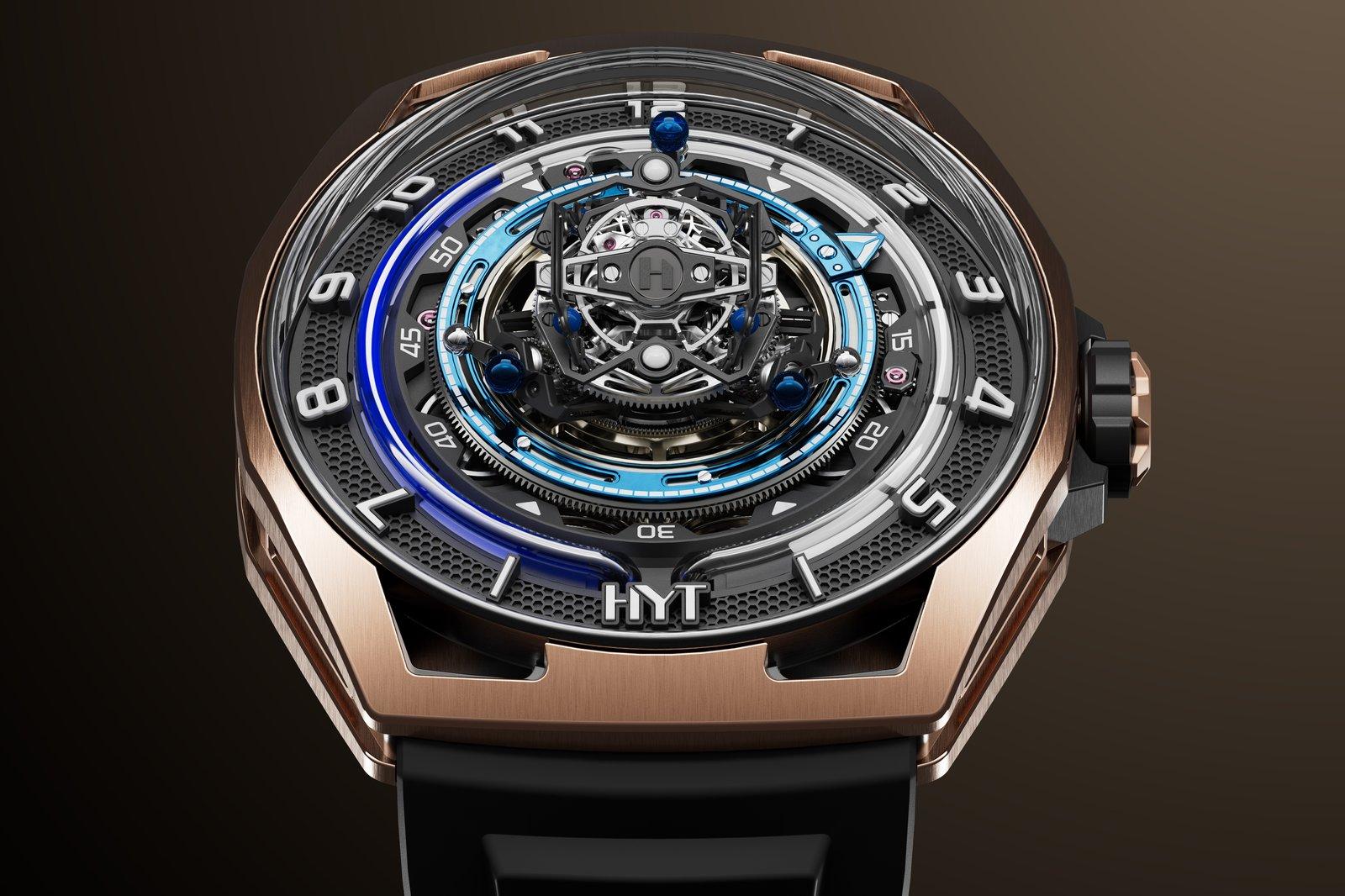
Its founding idea is wonderfully contrary, replacing traditional hands with a moving liquid display inspired by water clocks that predate mechanical watchmaking by millennia.
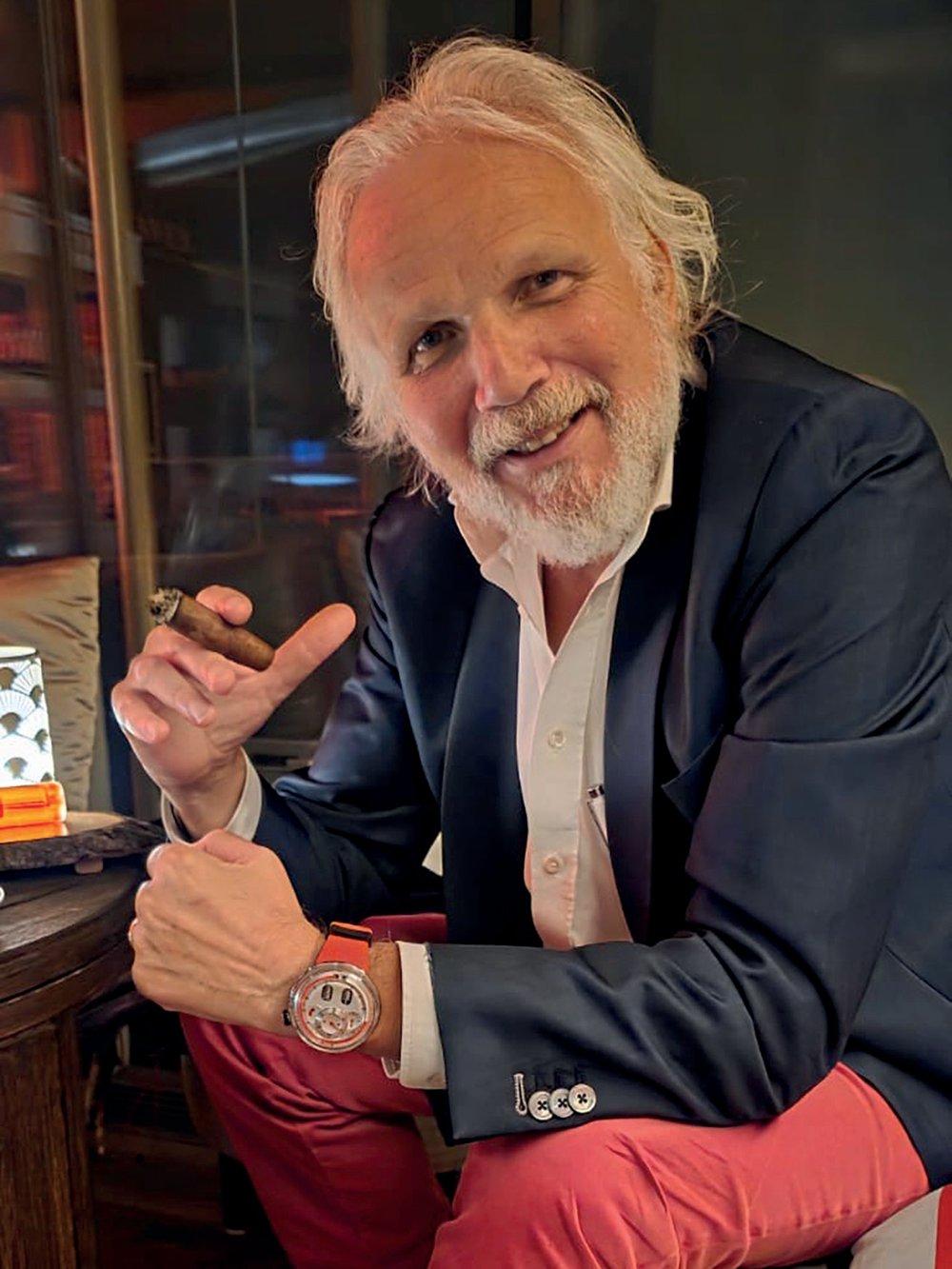
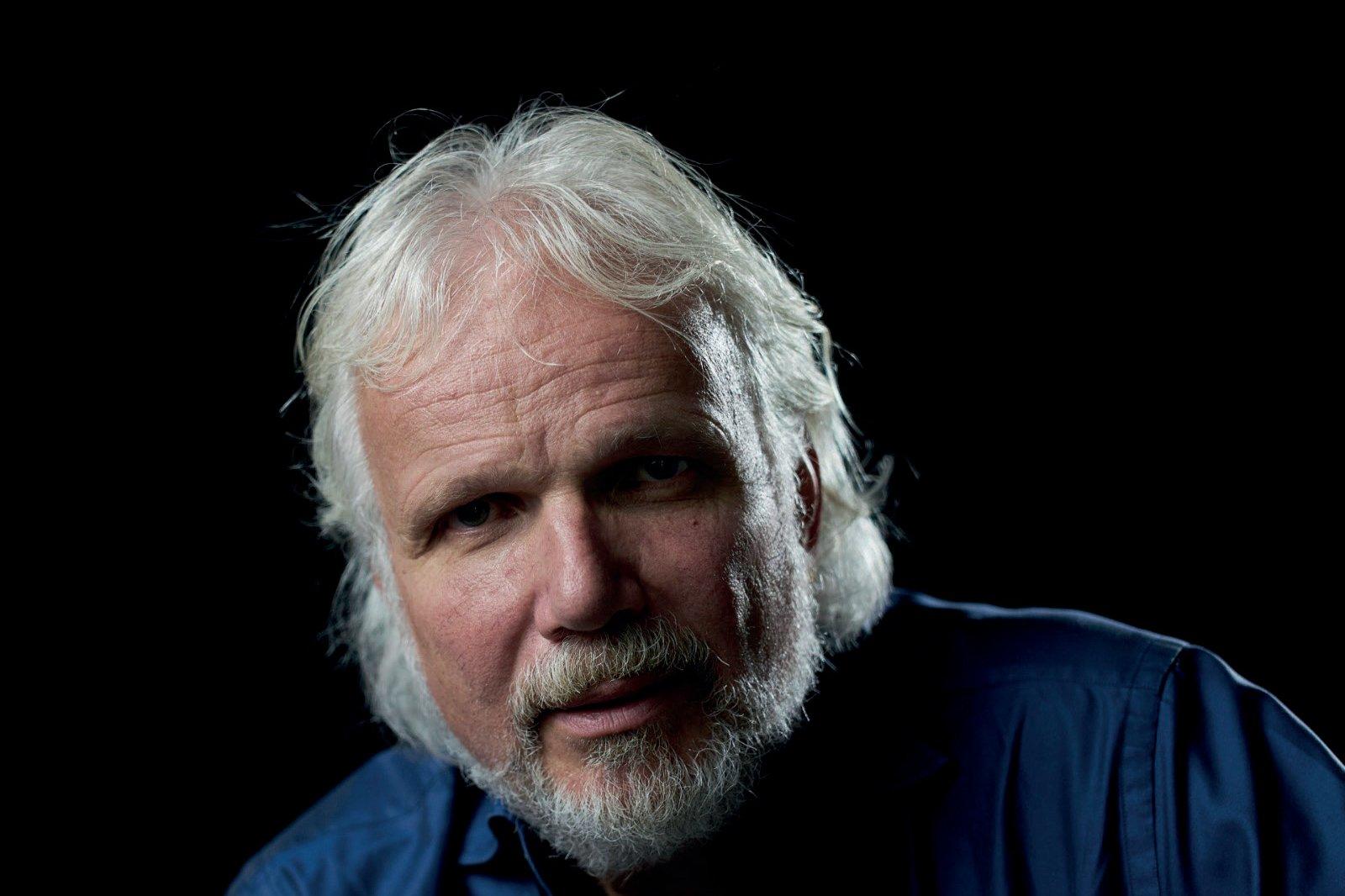
For years, the mind behind that idea stayed mostly out of sight, but co-founder Lucien Vouillamoz is now stepping forward as the public face of the company he helped build.
At a glance
- HYT co-founder Lucien Vouillamoz is now taking a more visible role after years working behind the scenes on the brand’s fluidic technology.
- The brand’s signature display uses coloured and transparent liquids in a glass capillary, requiring proprietary coatings, filling methods and manufacturing processes.
- Vouillamoz says HYT’s next priorities include delivering the current collection, expanding bespoke tourbillon work and developing future concepts around older ways of marking time.
The inventor steps into view
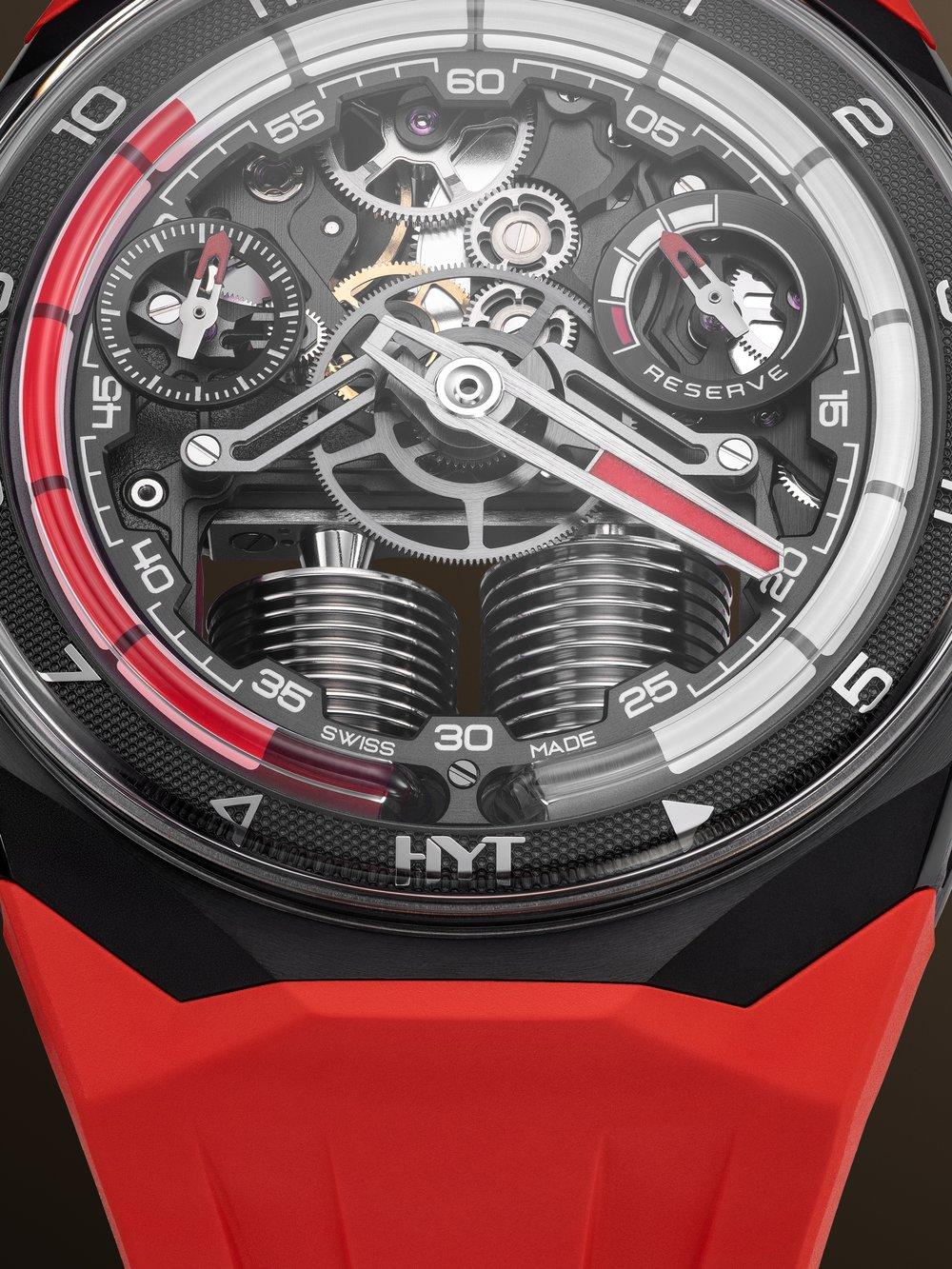
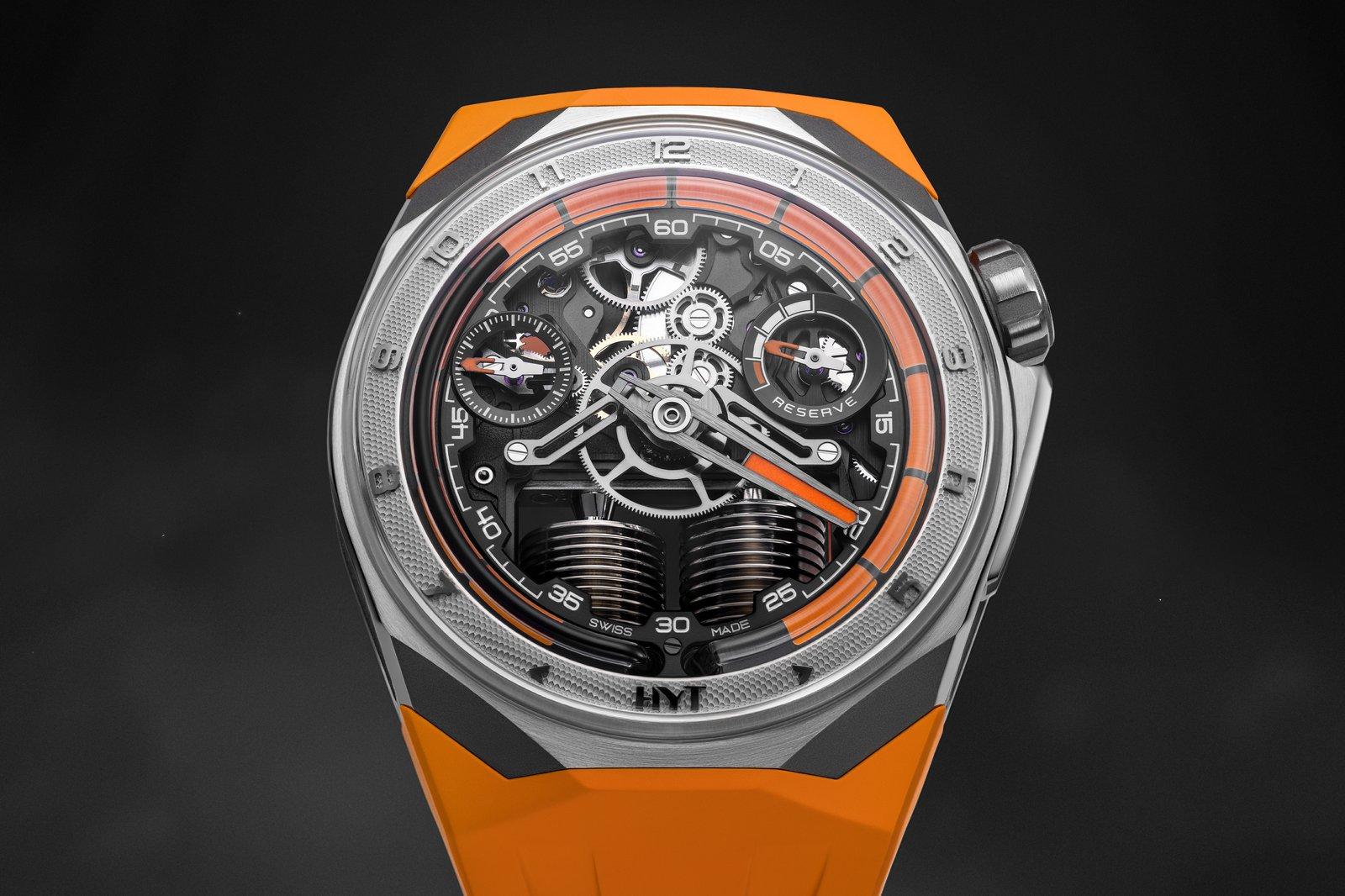
HYT’s central complication is easy to describe and difficult to make believable.
A coloured liquid advances through a thin glass capillary to indicate the hour, while a transparent liquid shares the same sealed system and retreats as the coloured one progresses.
The idea gives the watch a visual language that sits somewhere between ancient timekeeping, laboratory instrument and modern independent horology.
Vouillamoz traces the intellectual spark to the clepsydra, the water clock used around 3,500 years ago, but the modern provocation came later.
A conversation around Expo.02, the Swiss national exhibition staged across three lakes, led to a simple observation that still frames the brand’s attitude.
A phone already gives accurate, satellite-corrected time for free, so a high-end independent watch is selling something other than pure utility.
“If you buy an independent watch, you’re crazy, basically,” Vouillamoz says. “You spend an insane amount of money for basically a piece of art, a technological performance for your feelings.”
That line of thinking opened the door to a watch that didn’t need to look like a traditional watch at all.
It also gave HYT a mischievous way to talk about heritage.
“We can claim to have existed since around 1500 BC,” he says, teasing brands that lean heavily on old founding dates. “You are a bit young. We have 3,500 years more experience than you.”
From dare to working complication
The idea became harder to ignore in 2008, when Vouillamoz says his eldest daughter pushed him to act.
“Naomi said, ‘Lucien, do it or shut up,’” he says. “That pushed me to do it.”
He developed the liquid module through Preciflex, a company he co-founded, then turned to former business partner Patrick Berdoz for funding.
Berdoz is now chairman of both HYT and Preciflex.
Vouillamoz remembers the pitch less as a formal business plan than a shared risk.
“I don’t have the money you have, but I have my brain,” he told Berdoz. “We’ll go half and half. You bring the money, I bring the idea. After a year or two, we’re dead. You’ve lost your money, I’ve lost my idea, and we drink a beer together. Are you okay with that?”
Berdoz agreed, Vouillamoz says, on what amounted to 10 lines written on a sheet of paper.
For most of HYT’s life, though, Vouillamoz wasn’t the frontman.
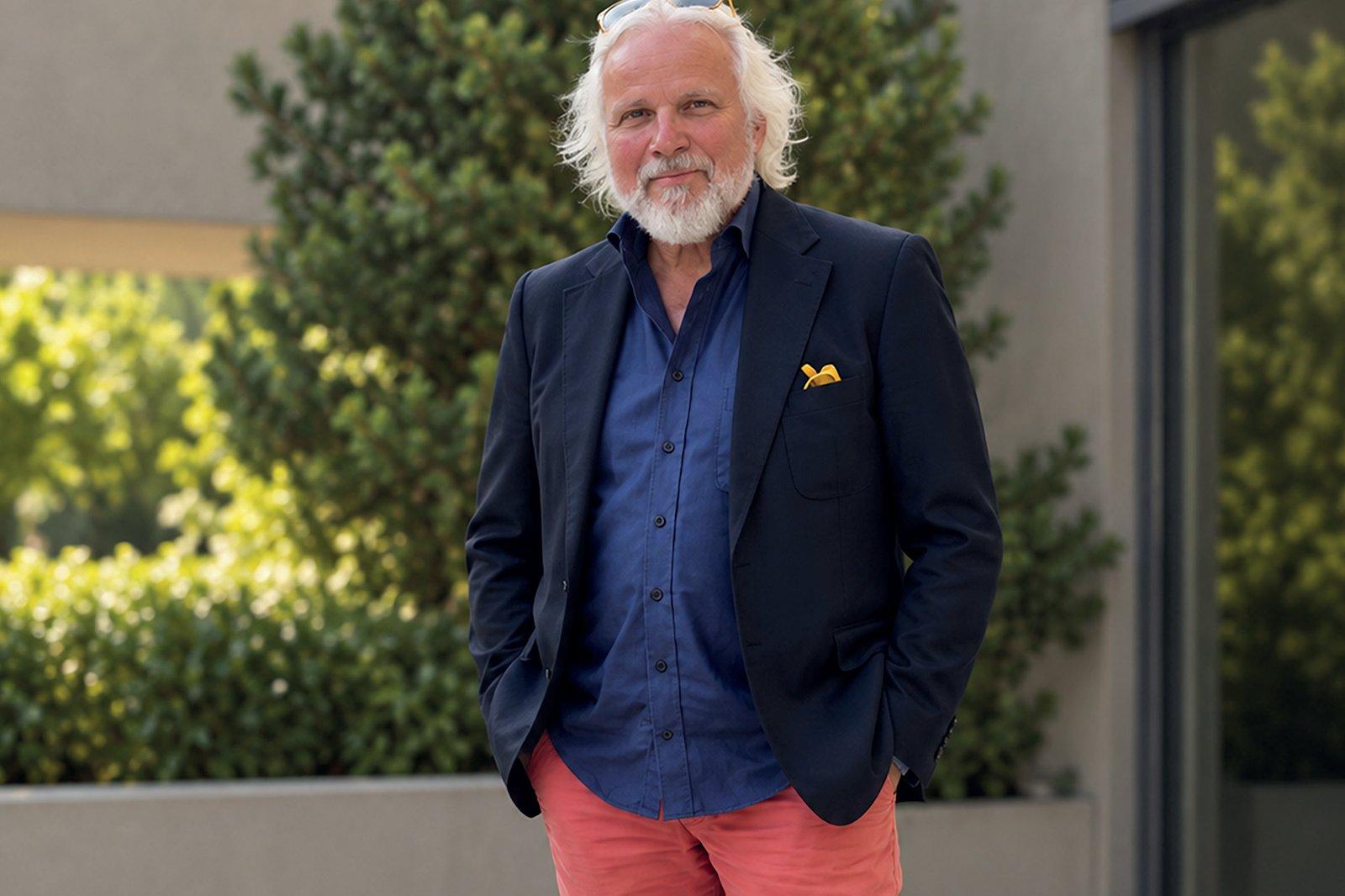
He had other companies and didn’t believe a brand could have multiple faces, so HYT hired external chief executives while he remained what he calls “the crazy inventor of the technology”.
That changed after a recapitalisation, when Vouillamoz reinvested in the business, and more recently when he returned to day-to-day operations in a simplified organisation.
“We decided, finally, to put the inventor forward as the face of the brand,” he says.
The move suits a company whose story has never been especially tidy.
“I love to be honest, I’m a transparent guy,” Vouillamoz says. “The HYT story is not a long, quiet river.”
The invisible component that makes the watch possible
The biggest technical obstacle was not the one Vouillamoz expected.
“It’s the unexpected one,” he says. “What was extremely surprising for me is the way liquids behave in a tube.”
In early development, the coloured liquid refused to release cleanly from the glass capillary on its return stroke.
His analogy is deliberately domestic.
“Do you know Tupperware? Have you ever washed it after it’s had salad inside? The oil sticks,” he says.
The solution was a bespoke surface coating developed with a Stanford-connected scientist in San Diego.
It was expensive at first, before the process was later brought in-house at Preciflex in Switzerland and the cost was reduced significantly.
“That’s the only component that isn’t visible,” Vouillamoz says. “Without it, the watch doesn’t run.”
The coating was only one part of the industrial problem.
HYT and Preciflex also had to work out how to mould glass to watchmaking tolerances and how to fill a sealed tube with two liquids without trapping air.
Vouillamoz estimates that several hundred new processes had to be developed from nothing.
That helps explain why HYT remains such an outlier, even in an independent sector that often celebrates unusual mechanics.
It wasn’t simply building a movement architecture around an existing display tradition, but creating the display technology, the manufacturing method and the surrounding watch at the same time.
Authenticity after the asset boom
Vouillamoz’s long spell outside the spotlight has given him a sharp view of independent watchmaking’s recent evolution.
He argues that private-banking money helped shape watches into alternative assets, grouped with contemporary art and classic cars, while auction results and grey-market prices distorted the conversation around value.
“My impression is that there’s currently a move towards more authenticity,” he says. “Buyers are really looking not only at the watches but also the history behind them.”
That plays directly into HYT’s current repositioning around the inventor rather than a hired executive voice.
It also speaks to the kind of collector HYT is likely to attract, someone less interested in discreet lineage and more interested in the machinery of an improbable idea.
Vouillamoz is not sentimental about the company’s achievements.
Asked what would make him feel HYT had truly succeeded, he says, “First, I think we didn’t succeed.”
His original benchmark was broader than building a functioning brand.
He wanted the industry to open an entire category around liquid-based complications, and that has not happened.
What he will claim is more focused.
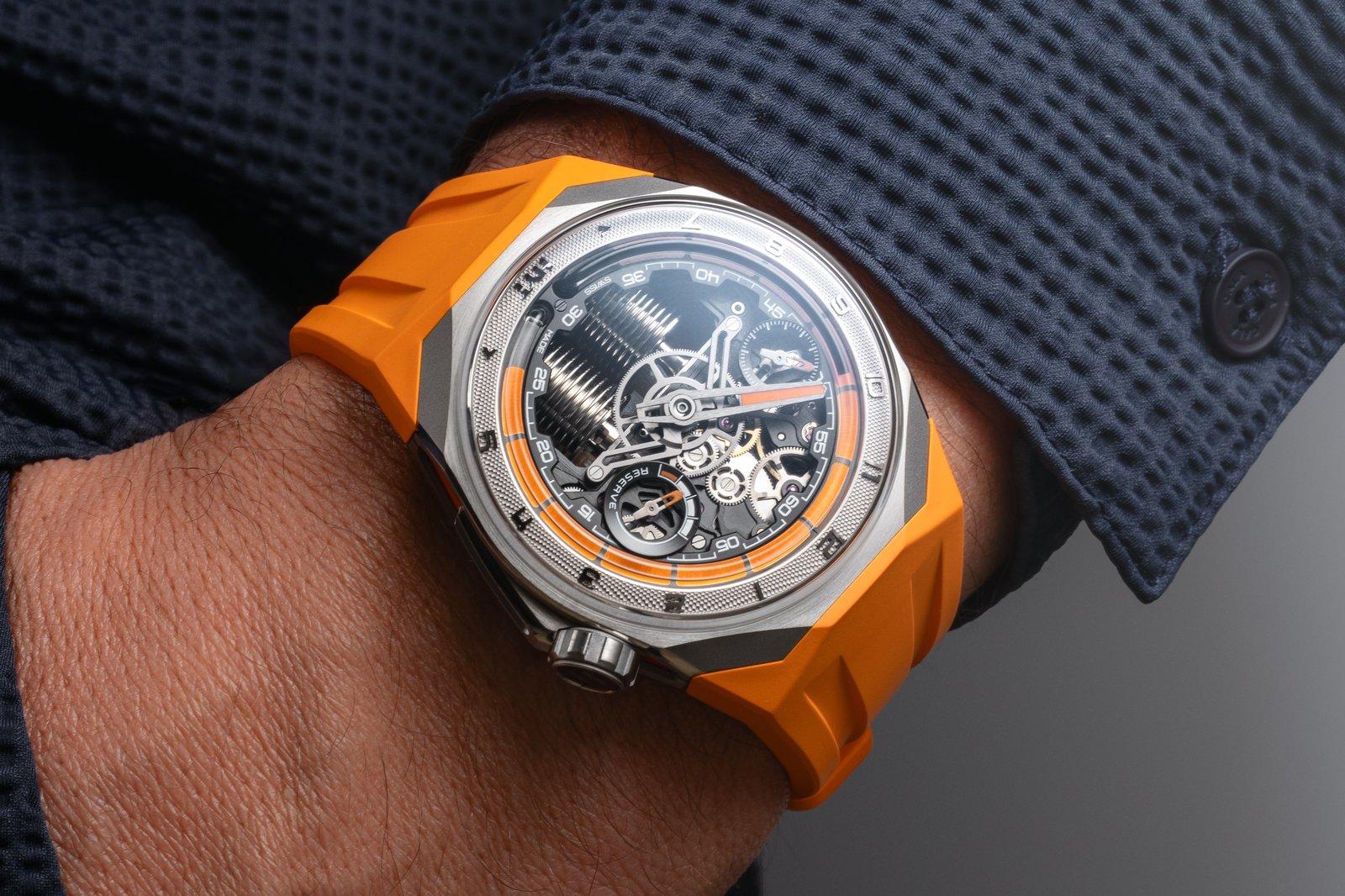
“I’m absolutely proud of the current models. To me, they’re crazy. We managed to make an extremely comfortable, wearable watch with this technology… you don’t feel that it’s 45mm,” he says.
He also points to the collaborations that helped give HYT its present technical range.
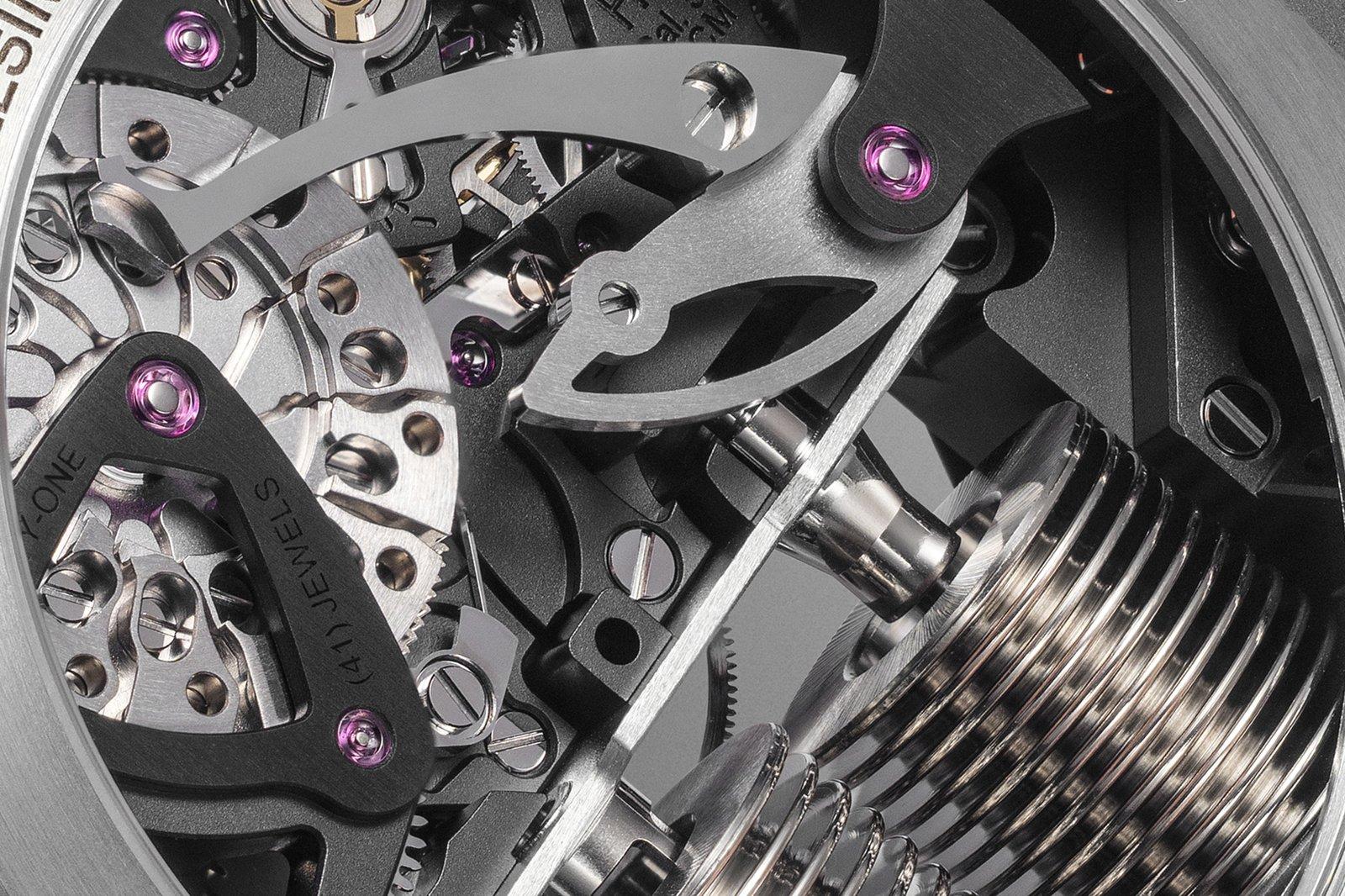
Watchmaker Eric Coudray designed the multiple-cam system at the heart of the T1 and S1, as well as the brand’s conical tourbillon, while Renaud & Papi worked with HYT on the H2.
“It’s a mix. I’m happy, but there’s still a lot to do ahead of us,” Vouillamoz says.
The next chapter for liquid time
Vouillamoz describes HYT’s immediate priorities in practical terms.
The brand needs to deliver the current collection on schedule, continue developing its bespoke tourbillon programme and rebuild trust after what he calls a chaotic story.
“Trust in the brand, because the story was, I’d say, a bit chaotic,” he says, “and reliability, a good personal connection, and respect for all our collectors.”
Further ahead, he outlines a more speculative path inspired by other pre-mechanical ways of measuring time, including the hourglass and the sundial.
He sums up that long-range direction as “time, casting, matter and light”, with a horizon of roughly 10 years.
For a brand built around making liquid behave inside a wristwatch, that feels less like a departure than a continuation of the original argument.
HYT was never trying to make timekeeping more practical.
It was trying to make time strange again, and with Vouillamoz finally taking his place at the front of the story, the strangest part may still be ahead.