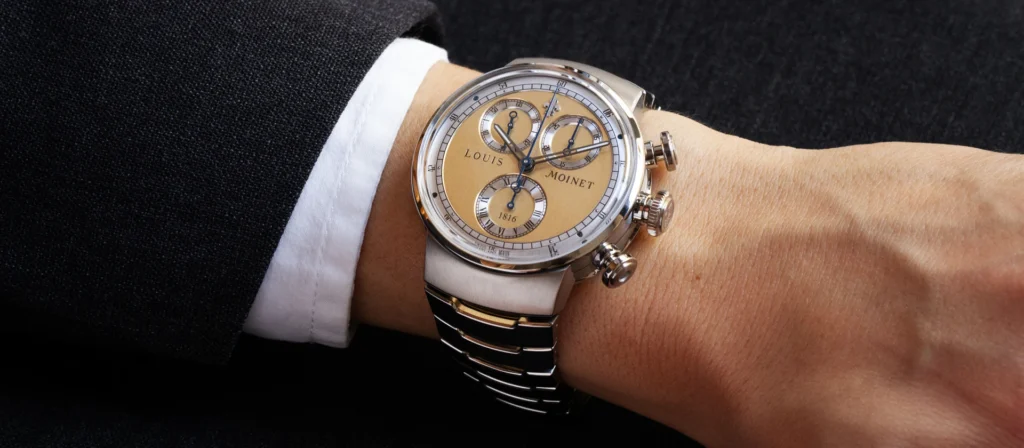
Louis Moinet has never been shy about leaning into horological history, but the 1816 Chronograph Champagne has a particularly direct line to the past.
The watch marks 210 years since the creation of the Compteur de Tierces, the timing instrument now recognised by Guinness World Records as the world’s first chronograph, and it arrives with added visibility as a nominee for the 26th edition of the Grand Prix d’Horlogerie de Genève.
Rather than producing a museum-piece homage, Louis Moinet has used the anniversary to create a modern hand-wound chronograph with a warmer dial treatment, a titanium case and an architectural bracelet that gives the watch a distinctly contemporary presence.
At a glance
- Louis Moinet’s 1816 Chronograph Champagne celebrates 210 years since the Compteur de Tierces, widely recognised as the first chronograph.
- The watch combines a champagne-toned three-counter dial with a 40.6 mm Grade 5 titanium case and matching bracelet.
- It has been nominated for the forthcoming 26th Grand Prix d’Horlogerie de Genève, scheduled for 7 November 2026.
A chronograph tied to Louis Moinet’s own invention
The historical anchor here is unusually strong.
Louis Moinet began work on the Compteur de Tierces in 1815 and completed it in 1816, creating a high-frequency instrument designed to measure the speed of moving celestial objects.
Its technical credentials remain striking even now.
The instrument used a cylinder escapement, a fusee-and-chain mechanism and stop work, while its movement ran at 216,000 vibrations per hour, or 30 Hz.
That frequency allowed the central hand to indicate 1/60th of a second, a degree of precision that gives the 1816 Chronograph more than a decorative connection to its namesake.
The modern Louis Moinet brand, based in Saint-Blaise, Switzerland, introduced the first 1816 Chronograph in 2025 with a cooler silver-toned dial and blue accents.
The Champagne edition shifts the atmosphere without abandoning the underlying layout, retaining the three-counter display that nods to the 1816 timing instrument.
The champagne dial changes the character
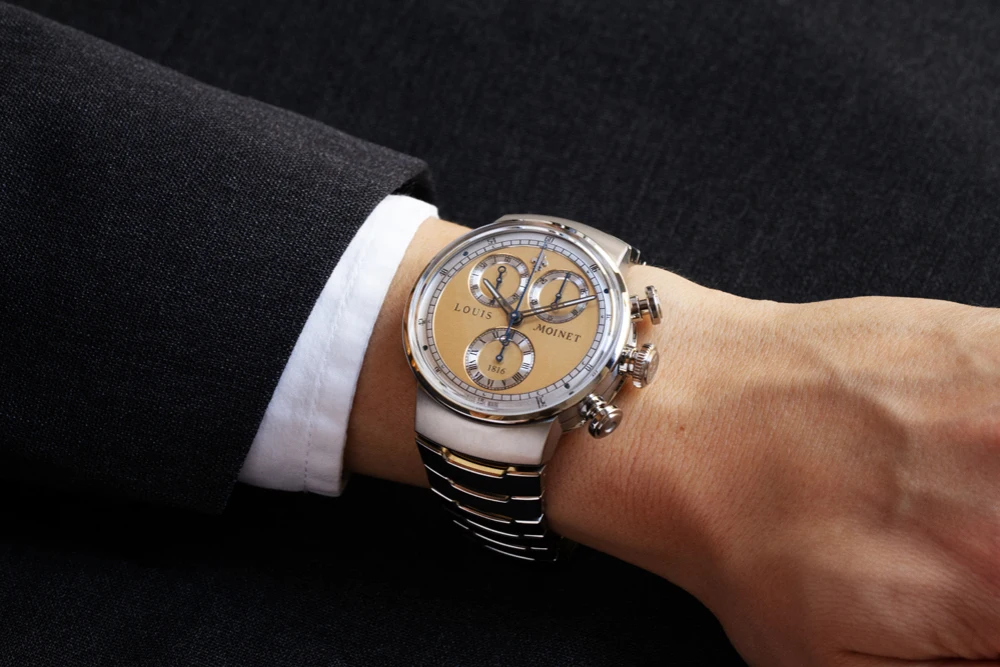
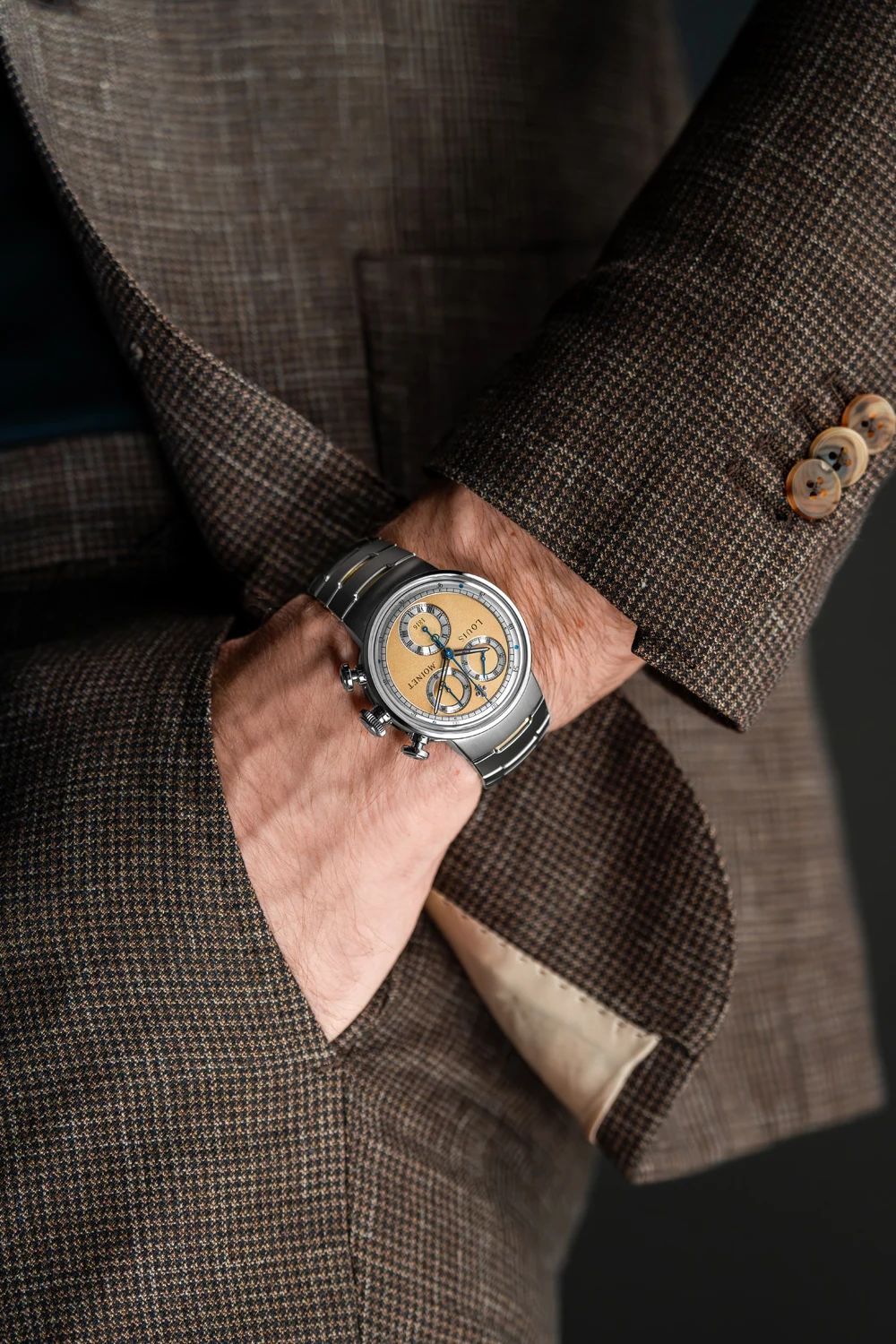
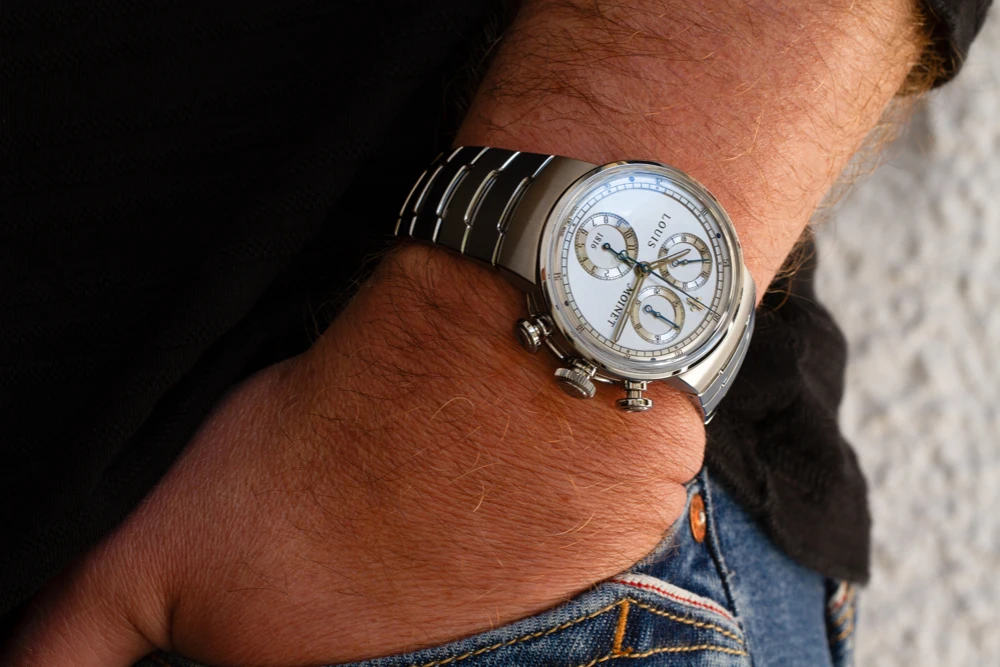
The most immediate change is the dial’s mix of rhodium and champagne tones.
Where the earlier version leaned closer to the pale metallic look of the Compteur de Tierces, this edition has a warmer centre framed by cooler outer elements.
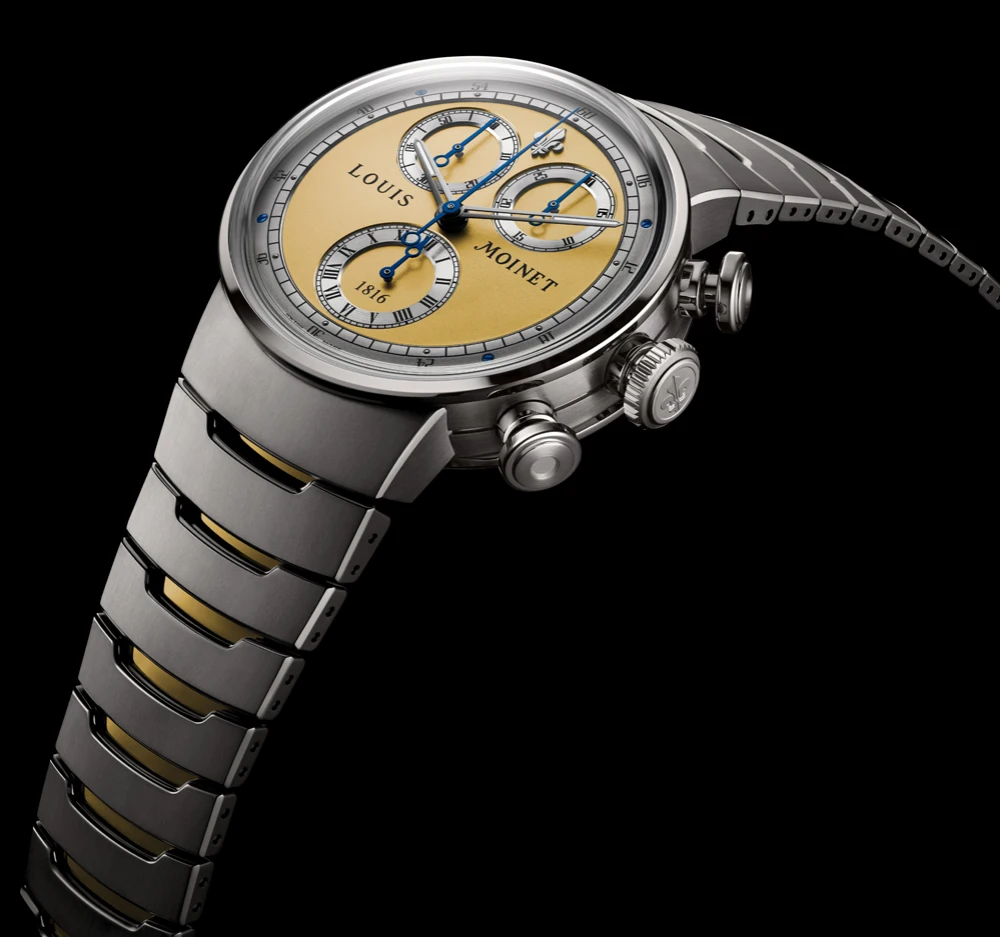
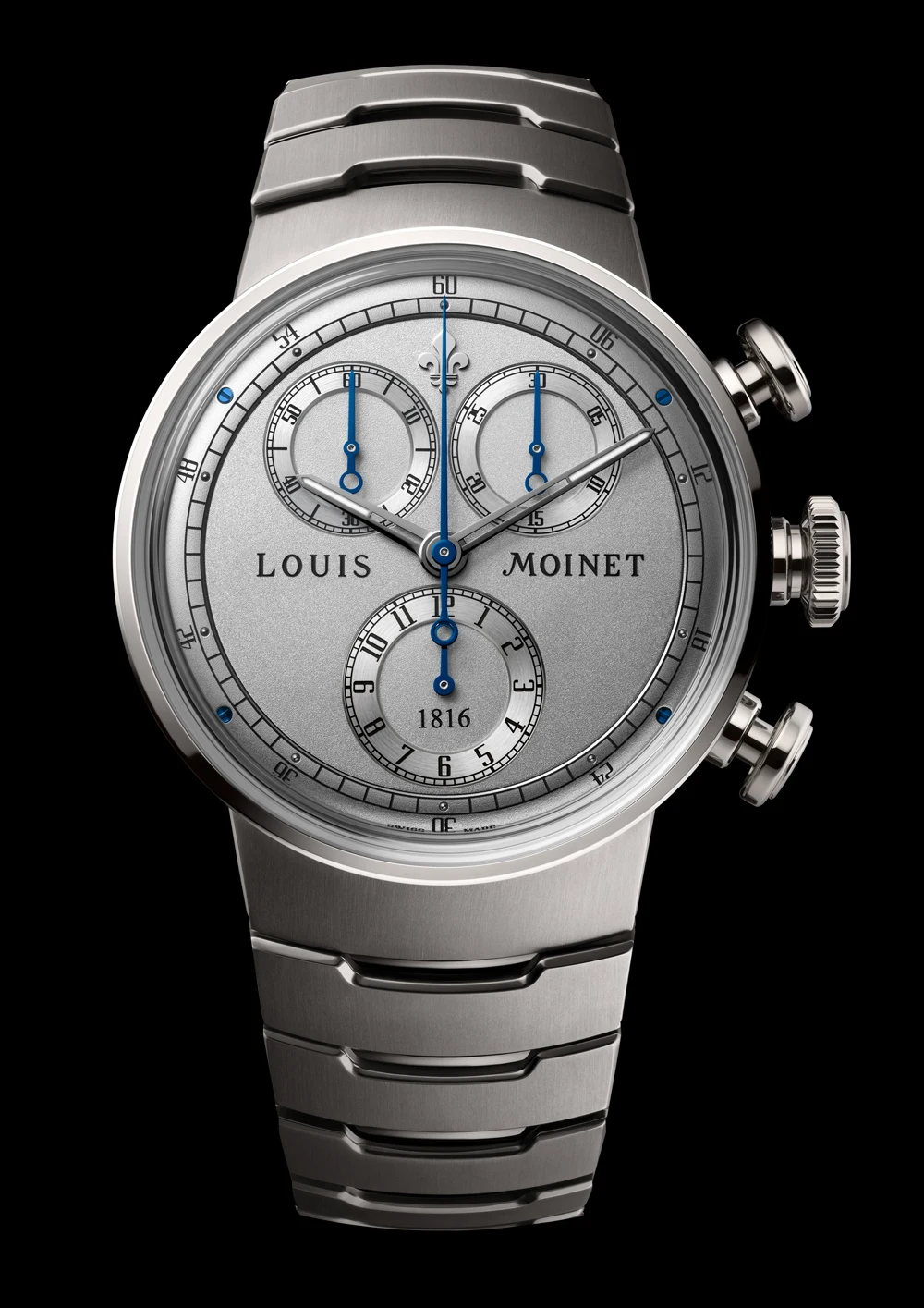
The central area carries three counters for the 30-minute chronograph register, 12-hour chronograph register and small seconds.
Each counter uses a blued-steel hand and a rhodium-plated track, creating a crisp contrast against the golden dial surface.
The 12-hour chronograph register is marked with Roman numerals on this Champagne version, a subtle departure from the Arabic-numeral treatment used on the previous silver-toned model.
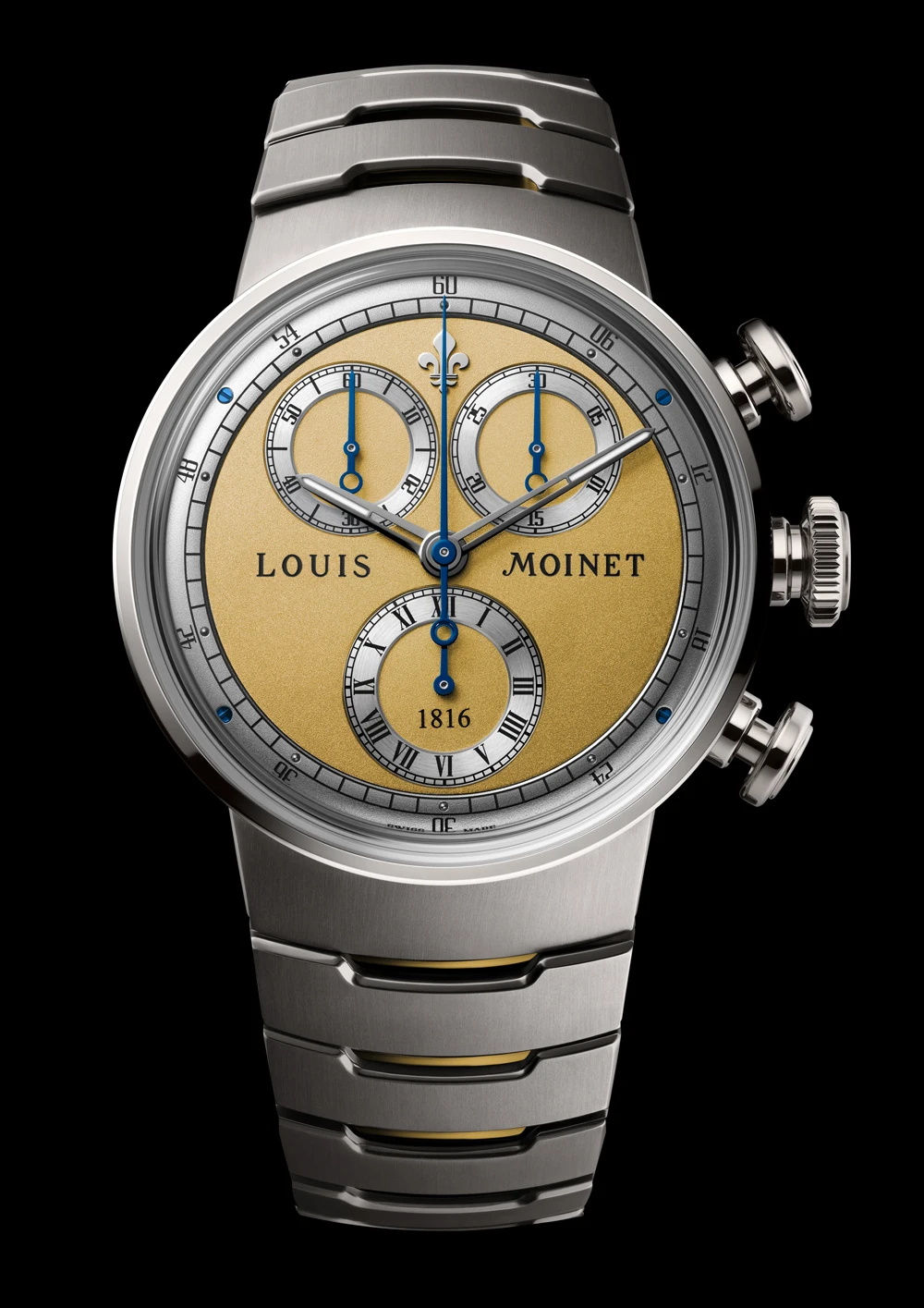
A heat-blued central chronograph seconds hand sweeps over a silver-toned chemin de fer scale, which incorporates 10 blackened nickel cabochons.
Beyond that sits a smooth ring with Arabic numerals placed at six-minute intervals, another detail drawn from the Compteur de Tierces.
The hour and minute hands are partially openworked and contemporary in shape, with luminescent tips that bring a practical note to an otherwise historically minded dial.
At 12 o’clock, the fleur-de-lys emblem references Bourges, the French city where Louis Moinet was born.
Titanium gives the case a modern edge
The 40.6 mm case is made from Grade 5 titanium, a material that suits the watch’s blend of historical reference and modern execution.
It’s strong, light, corrosion-resistant and hypoallergenic, while also taking a high polish more readily than some other titanium grades.
Louis Moinet uses that quality to create contrast across the case, combining polished surfaces with satin-brushed areas.
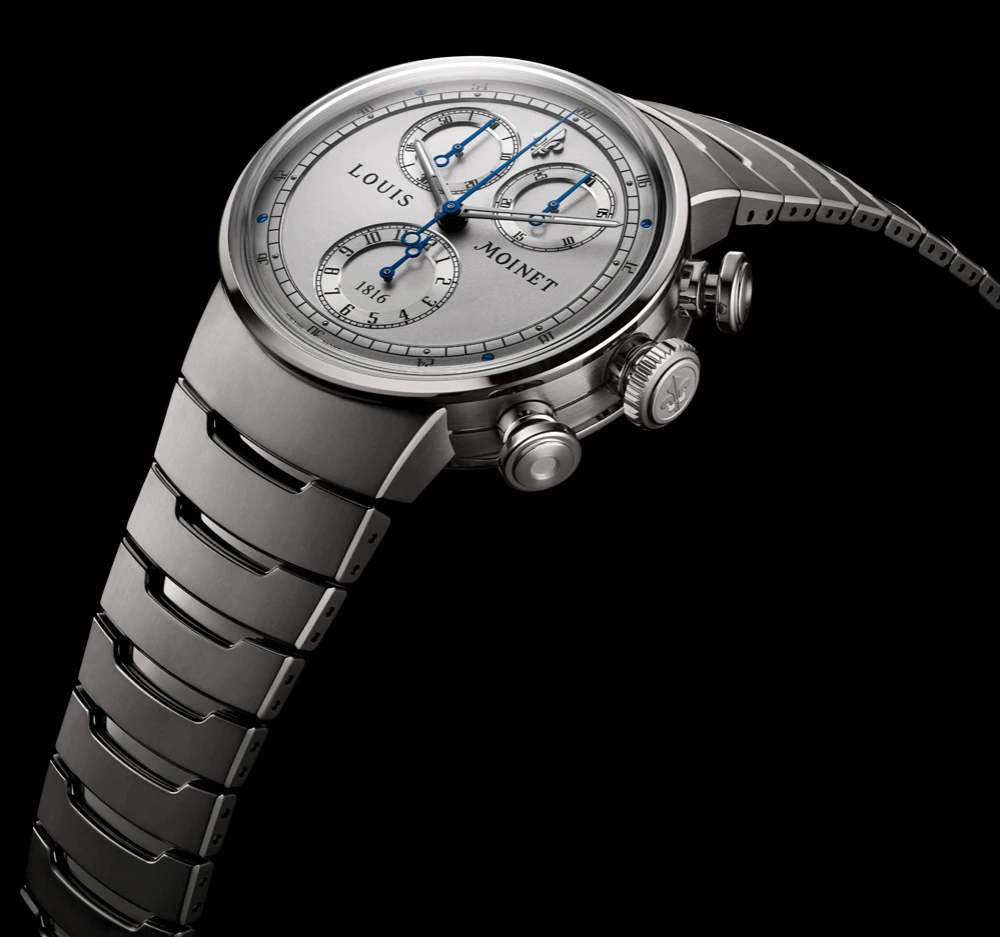
The bezel projects beyond the caseband, and the caseback follows a similar stepped approach, giving the profile more depth than a simple round chronograph case.
A horizontal recess runs around the satin-brushed caseband, breaking up the side view and adding a more engineered feel.
The crown and pushers repeat the polished and brushed contrast, so the finishing language continues across the watch rather than being limited to the main case.
The bracelet is one of the more distinctive visual elements.
It tapers toward the clasp and features U-shaped openings on the upper surface, revealing champagne-toned titanium beneath.
Those apertures are edged by polished titanium, while the underside of the bracelet is finished with champagne-toned DLC at its centre.
The LM1816 calibre beneath the caseback
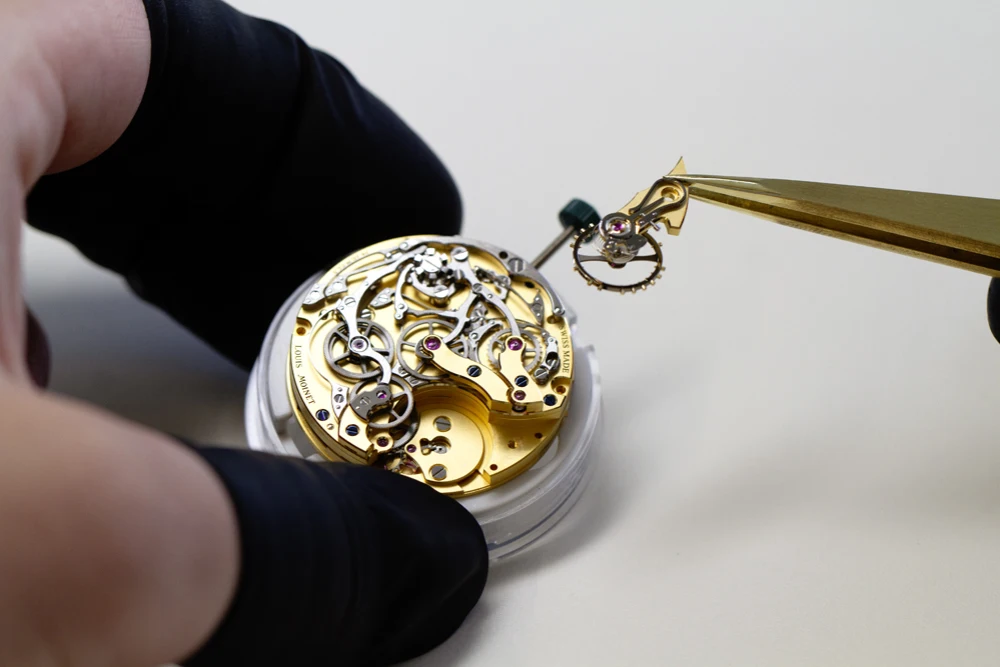
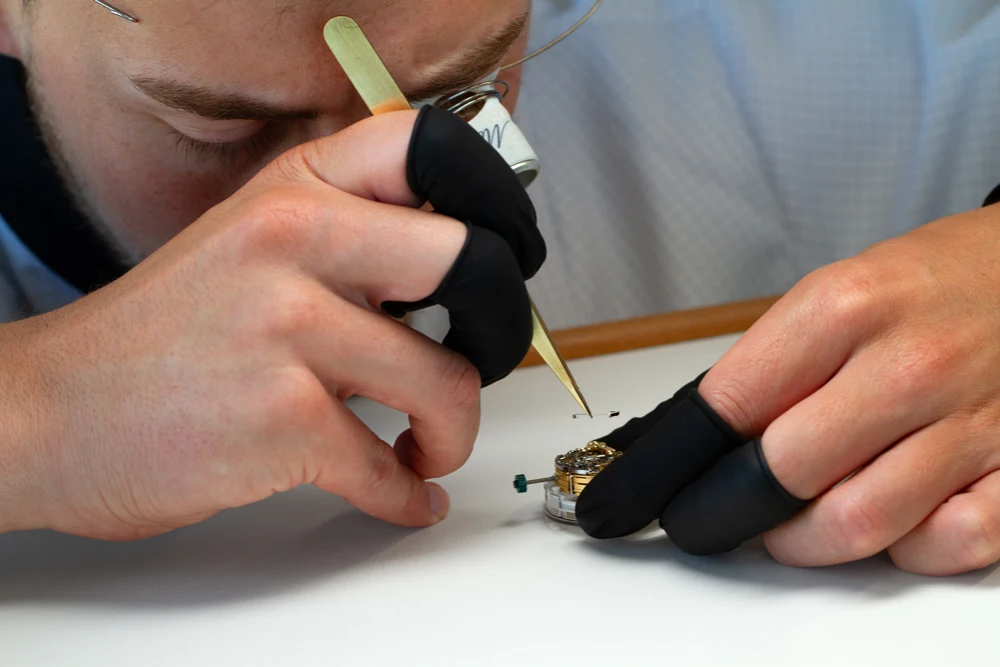
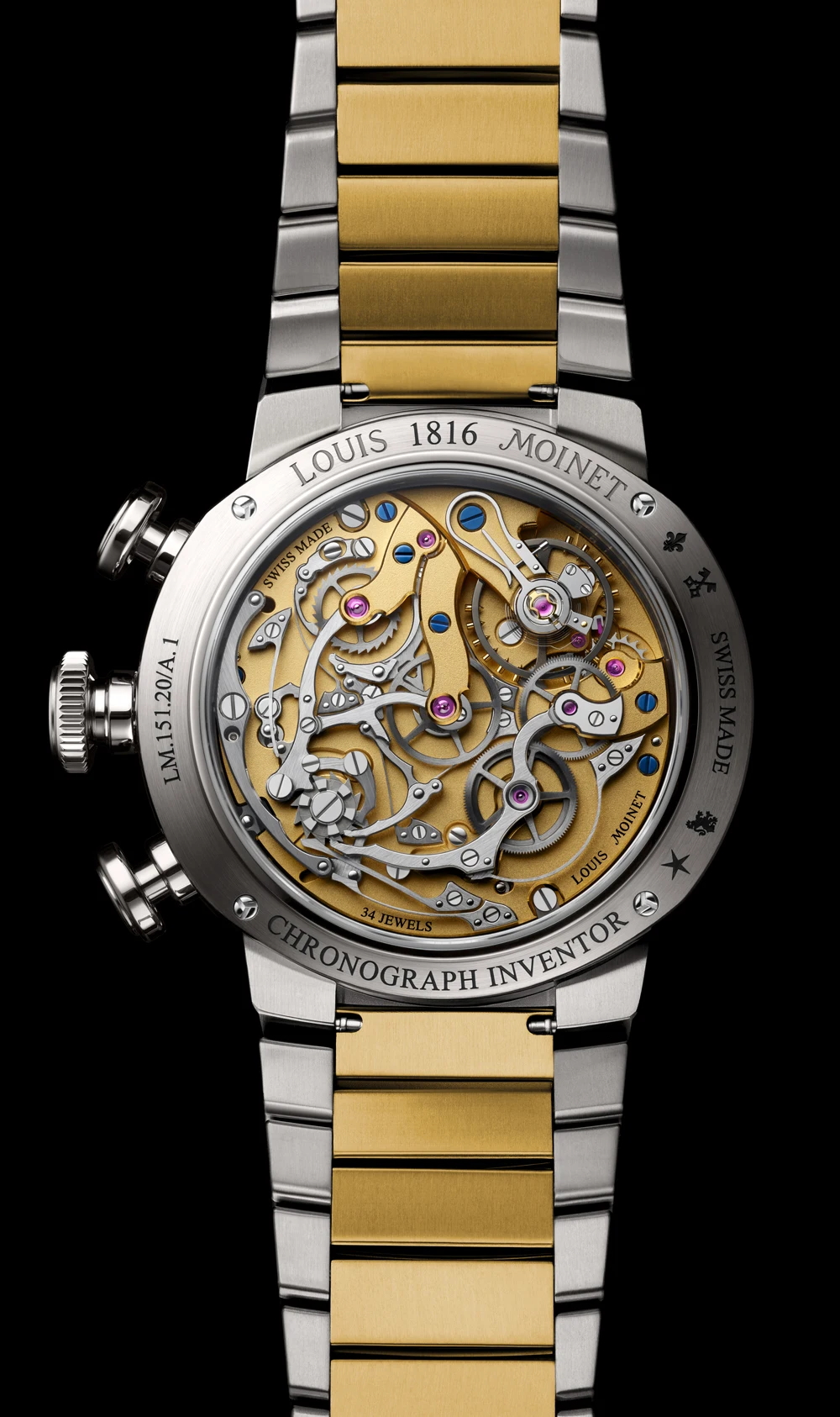
Inside is the LM1816 calibre, a hand-wound in-house chronograph movement developed around the visual and functional logic of the Compteur de Tierces.
The movement is visible through a sapphire exhibition caseback, giving the owner a view of the architecture rather than hiding the anniversary work behind a solid back.
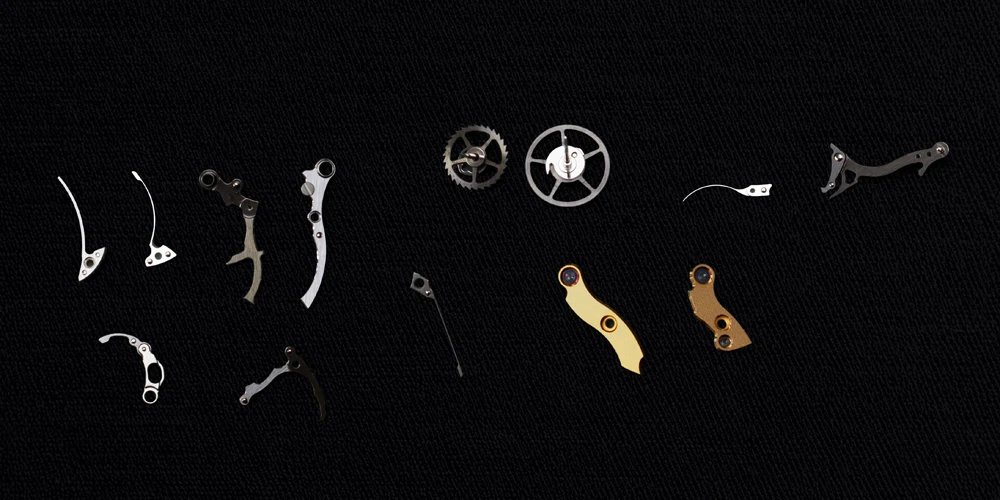
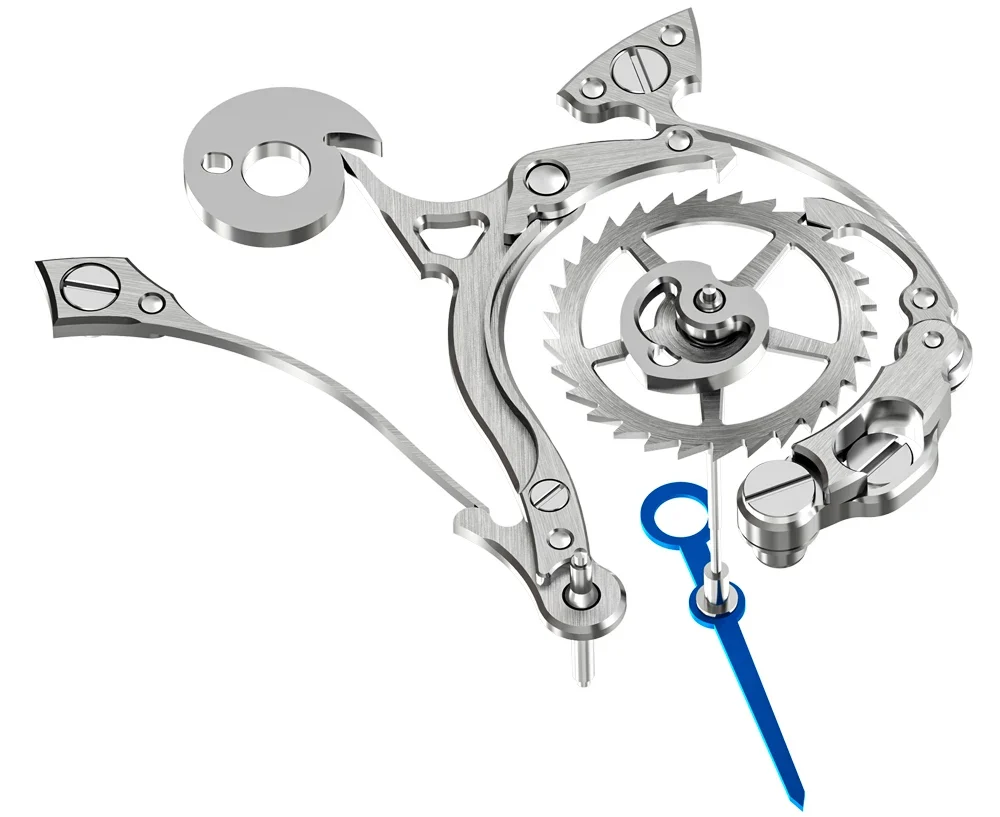
The calibre uses a column wheel, a traditional feature valued in chronograph construction for the way it coordinates the start, stop and reset functions.
A swan-neck regulator is also present, bringing a recognisable fine-adjustment detail to the movement side.
The bridges and mainplate are finished in 3N gold plating, which ties the mechanical view to the warmer dial treatment on the front.
It’s a fitting choice for a watch that wants to celebrate a historical technical achievement without looking like a direct reproduction.
Details & Specifications
| Brand | Louis Moinet |
|---|---|
| Model | 1816 Chronograph Champagne |
| Reference | LM-150.20.30 |
| Case size | 40.6 mm |
| Case material | Grade 5 titanium |
| Dial | Champagne and rhodium tones with three counters |
| Hands | Openworked hour and minute hands with luminescent tips, heat-blued central chronograph seconds hand |
| Movement | Louis Moinet LM1816 calibre |
| Winding | Manual winding |
| Chronograph construction | Column wheel |
| Regulation detail | Swan-neck regulator |
| Caseback | Sapphire exhibition caseback |
| Bracelet | Grade 5 titanium bracelet with champagne-toned titanium and DLC details |
| Recognition | Nominated for the 26th Grand Prix d’Horlogerie de Genève |
The 1816 Chronograph Champagne will appeal most to collectors who like their complications with a strong historical spine but don’t want a watch that feels trapped in the past.
Its strength lies in that balance, with a genuine chronograph lineage on one side and a modern titanium execution on the other.