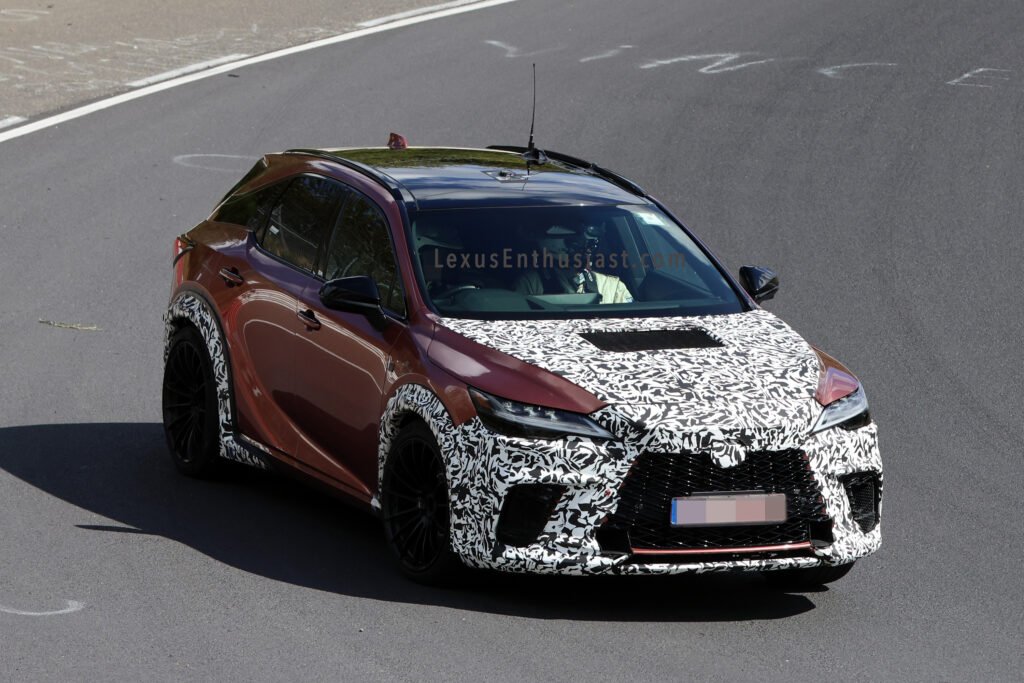
Lexus appears to be preparing a much more serious RX than the family SUV badge usually suggests.
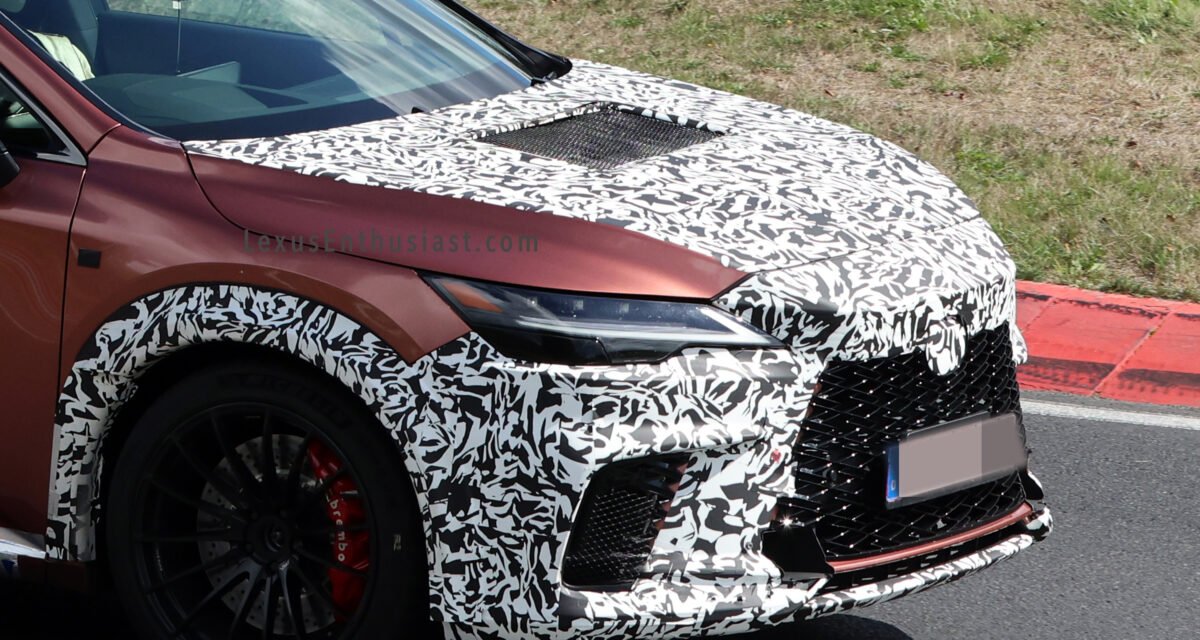
A prototype testing at the Nürburgring has shed enough camouflage to show new exterior and cabin details, including a large bonnet inlet and a heavily bolstered driver’s seat.
If the expected electrified powertrain lands with around 600 hp, this could become one of the most performance-focused Lexus SUVs yet.
At a glance
- A high-performance Lexus RX prototype has been seen testing hard at the Nürburgring.
- The car shows a mesh-covered bonnet inlet, a bucket-style driver’s seat and unfinished development hardware inside.
- Power is expected to come from a four-cylinder engine paired with electric motors on both axles, with output around 600 hp.
A Lexus RX with track-test intent
The Nürburgring setting matters because it suggests Lexus is doing more than adding a styling pack to the RX.
The German circuit remains a demanding place to validate cooling, braking, chassis balance and repeatability, particularly for heavier performance SUVs.
The prototype’s stance and visible development details point toward a model being engineered for much harder use than the regular RX range.
The most obvious exterior change is the large mesh-covered air inlet positioned on the bonnet ahead of the windscreen.
That placement is a strong visual clue that Lexus is managing additional cooling or airflow demands under the skin.
The bonnet inlet hints at a more complex powertrain
The RX prototype is expected to use a four-cylinder engine supported by electric motors on both axles.
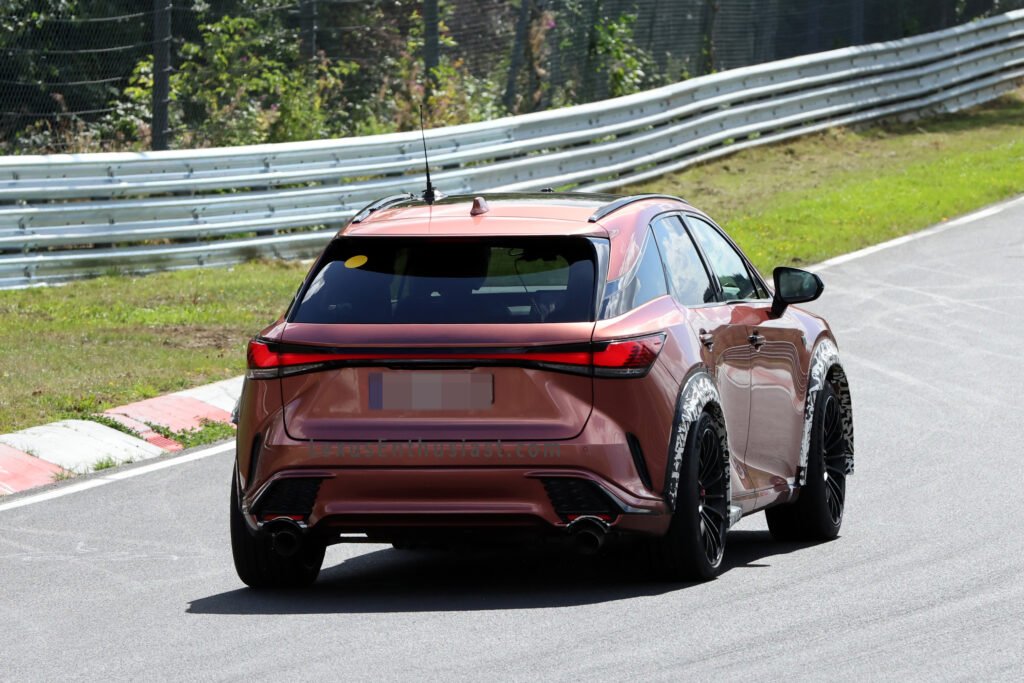
Combined output is being tipped at around 600 hp, which would give the SUV a very different character from Lexus’s mainstream luxury crossovers.
The bonnet opening also feeds speculation that forced induction may be part of the package.
That would fit the broader picture of a compact combustion engine working with electrification to deliver both power and all-wheel-drive traction.

Nothing about this prototype suggests a simple cosmetic exercise.
The visible hardware and high-speed development environment point to a more ambitious RX project, one with the potential to sit well above the current performance expectations for the nameplate.
A development cabin with a sportier driving position
The first clear look inside adds another useful piece to the puzzle.

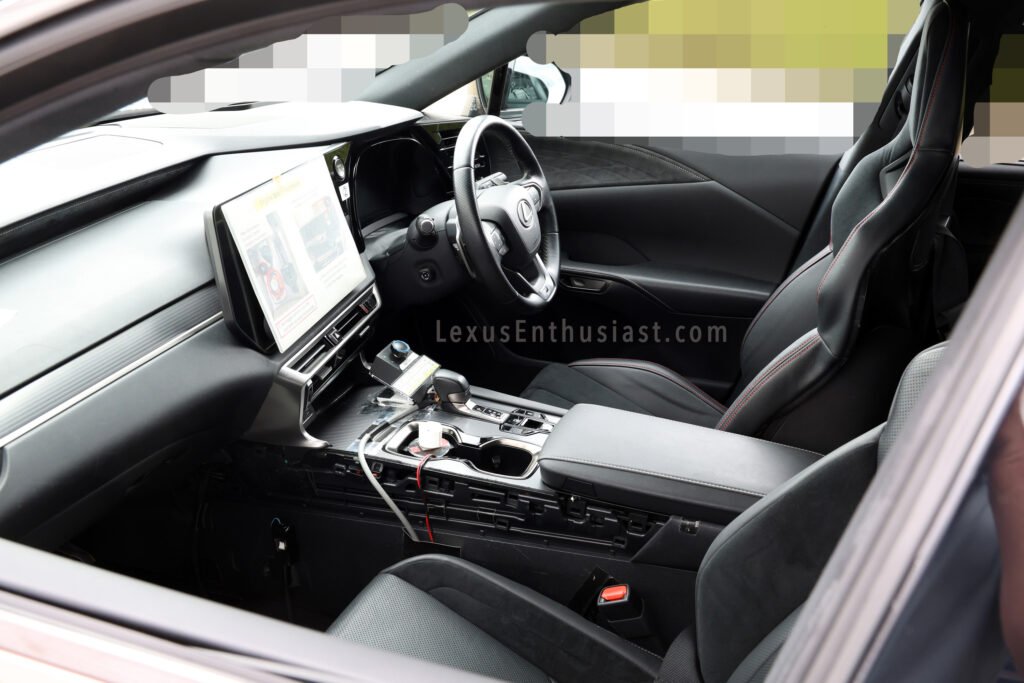
The driver’s seat is a heavily bolstered bucket-style item with red stitching, giving the cabin a more focused feel than the standard RX interior.
It’s a small but telling change because seats are central to how a performance SUV communicates intent before it even moves.
Elsewhere, the cabin is still very much a test environment.

The centre console is unfinished, exposed wiring is visible and a diagnostic tablet sits where a conventional infotainment screen would normally be expected.
That unfinished state is typical of a prototype at this stage, but it also makes the cabin details that are fitted more interesting.
Lexus clearly wants the driver interface to feel more purposeful, even if the production interior remains under wraps for now.
Details & Specifications
| Brand | Lexus |
|---|---|
| Model | High-performance RX prototype |
| Testing location | Nürburgring |
| Powertrain | Expected four-cylinder engine with electric motors on both axles |
| Output | Expected around 600 hp |
| Exterior detail | Large mesh-covered bonnet air inlet |
| Interior detail | Heavily bolstered driver’s seat with red stitching |
| Development hardware | Unfinished centre console, exposed wiring and diagnostic tablet |
For Lexus, a hardcore RX would be an intriguing move because it would bring serious performance intent to one of the brand’s most familiar SUV nameplates.
There’s still plenty left to learn, including final powertrain specification, timing and market availability, but the latest prototype makes one thing clear: Lexus is treating this RX as more than a styling experiment.