Lewis Hamilton’s garage now includes one of the most important road cars in Ferrari history.
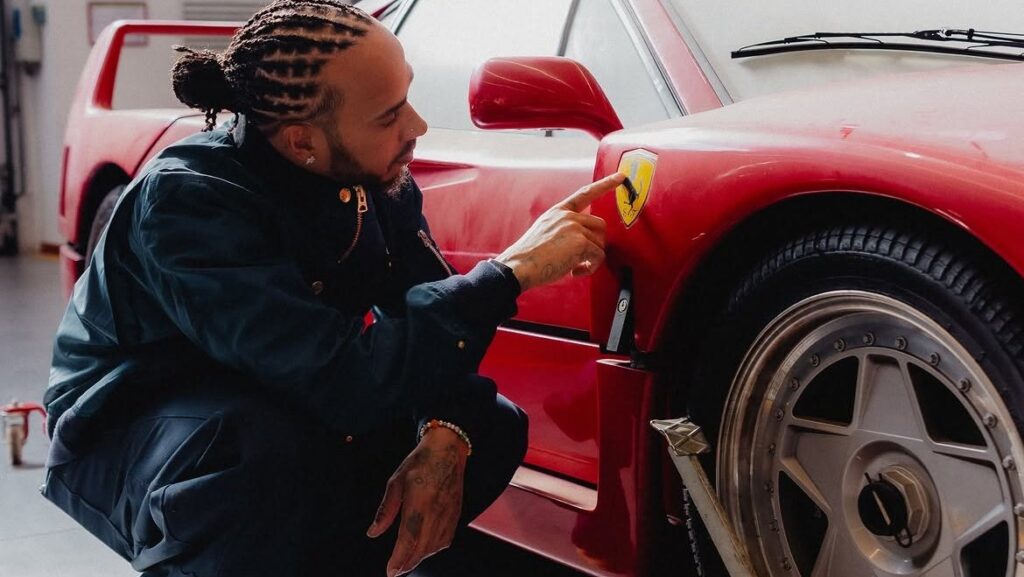
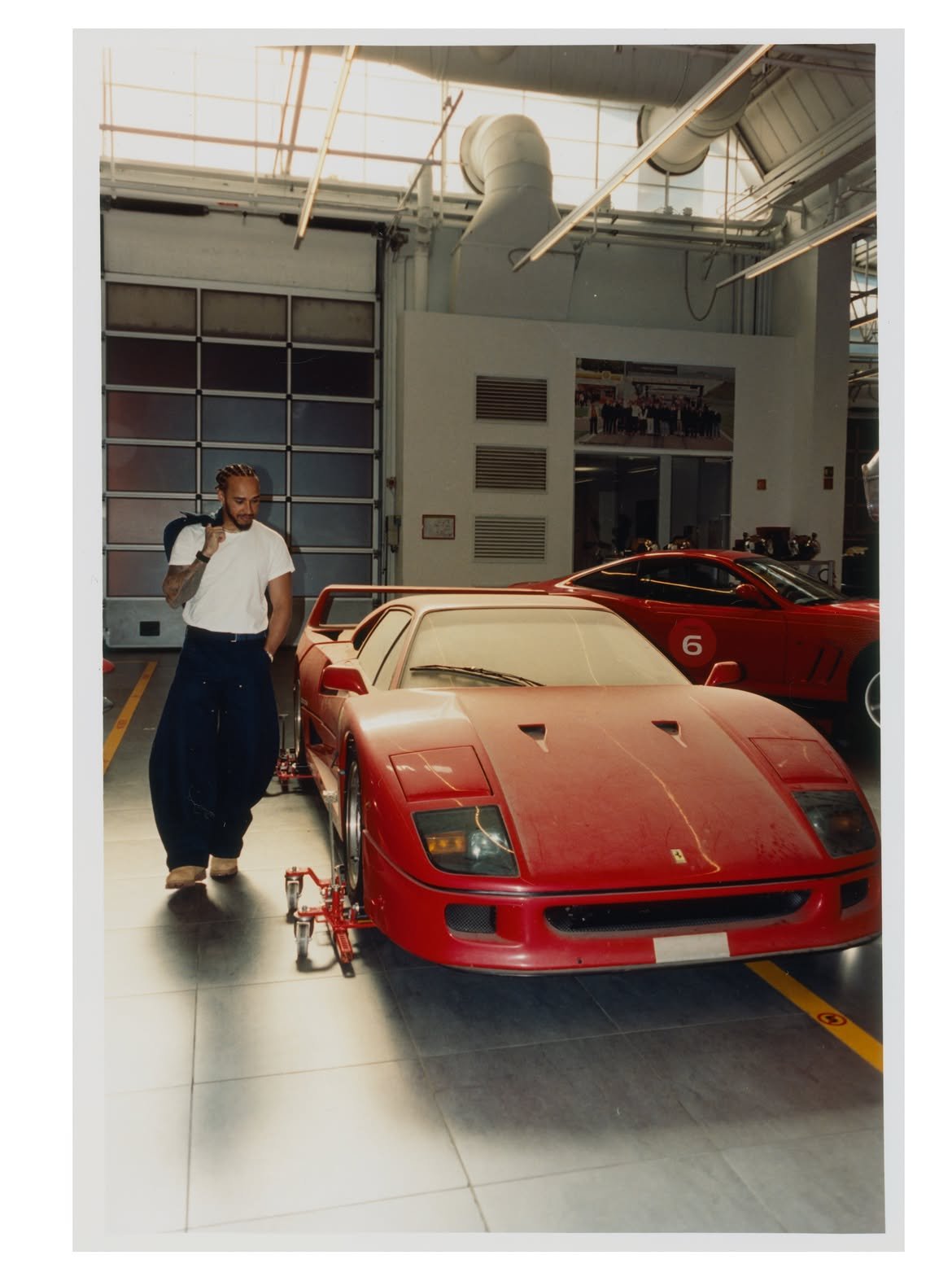
The seven-time Formula 1 world champion has acquired a Ferrari F40, with images shared on Instagram showing the car undergoing a substantial recommissioning at Ferrari’s factory in Maranello.
For a collector with access to almost anything on four wheels, the choice feels telling. The F40 isn’t simply another famous supercar, it’s the last production Ferrari personally approved by Enzo Ferrari.
At a glance
- Lewis Hamilton has added a Ferrari F40 to his collection after a factory restoration in Maranello.
- The recommissioning appears to have been extensive, with images showing the car stripped down and its engine removed.
- The F40 is one of just over 1,300 examples built and remains one of Ferrari’s most culturally significant road cars.
A Maranello return for a dormant F40
Hamilton’s F40 is understood to have spent more than 30 years sitting in a garage before it came into his ownership.
That kind of long-term storage can be both appealing and complicated for collectors.
A car may survive with originality intact, but a machine as highly strung as an F40 needs careful mechanical attention before it can be considered properly usable again.

The images from Maranello show more than a surface-level refresh.
The car was photographed in various stages of work, including with its engine removed, suggesting a deep recommissioning rather than a simple detailing exercise.
Having that work carried out at Ferrari’s own factory gives the project another layer of significance.

For a car this important, provenance isn’t just about who owns it, but who has maintained it and how carefully its history has been preserved.
Why the F40 still carries unusual weight
The Ferrari F40 sits in a rare category of cars that became legends while they were still new.
Built in a run of just over 1,300 examples, it remains instantly recognisable for its pared-back purpose, dramatic bodywork and raw late-1980s presence.

Its place in Ferrari history is even more important because it was the final production model personally approved by Enzo Ferrari.
That detail has helped shape the F40’s standing among collectors, but the car’s appeal goes beyond nostalgia.
It represents a particular moment when Ferrari road cars still felt closely tied to racing instinct, with little interest in softening the experience for casual use.

For Hamilton, the acquisition brings together two forms of Ferrari mythology.
There’s the F40 as an object of collector reverence, and there’s Hamilton himself, one of the defining drivers of the modern Formula 1 era.
Hamilton’s collector taste meets Ferrari history
Hamilton has long been associated with serious machinery, but an F40 occupies a different emotional space from many modern hypercars.
It isn’t defined by convenience, connectivity or headline-chasing complexity.
Its importance comes from scarcity, historical placement and the purity of its brief.
That makes this addition feel more personal than performative.
A pristine F40 restored at Maranello is the sort of car that appeals to collectors who care about lineage as much as performance.
It’s also a car that rewards patience, since examples with strong stories and careful restoration histories tend to matter more than simple ownership bragging rights.
Details & Specifications
| Brand | Ferrari |
|---|---|
| Model | F40 |
| Owner | Lewis Hamilton |
| Production | Just over 1,300 examples |
| Restoration location | Ferrari factory in Maranello |
| Restoration scope | Extensive recommissioning with engine removal shown |
| Historical note | Final production Ferrari personally approved by Enzo Ferrari |
Hamilton’s F40 is more than a new collector-car headline.
It’s a carefully revived example of one of Ferrari’s most important road cars, returned to form at the place where its story began.