Monaco has never been short of dining rooms that know how to make an entrance.
Le Fernet Monte-Carlo feels different because it isn’t trying to outshine the Principality. It’s a contemporary French brasserie built around ease, appetite and the kind of hospitality that makes a guest want to stay for one more glass.
That restraint is precisely what makes the 2026 opening worth watching.

At a glance
- Le Fernet Monte-Carlo is a new contemporary brasserie bringing a polished French dining rhythm to Monaco.
- The restaurant combines interiors by Rodolphe Parente, cooking by Chef Mathieu Dorlac and a terroir-focused cellar led by Head Sommelier Florine Huby.
- Its appeal lies in comfort, craft and conviviality rather than spectacle, positioning it as a serious new address for locals and visitors.
A brasserie mood shaped for Monaco
The brasserie is one of France’s most enduring dining formats because it understands something essential about restaurants.
People come for food, but they return for atmosphere, recognition and the pleasure of feeling unhurried.
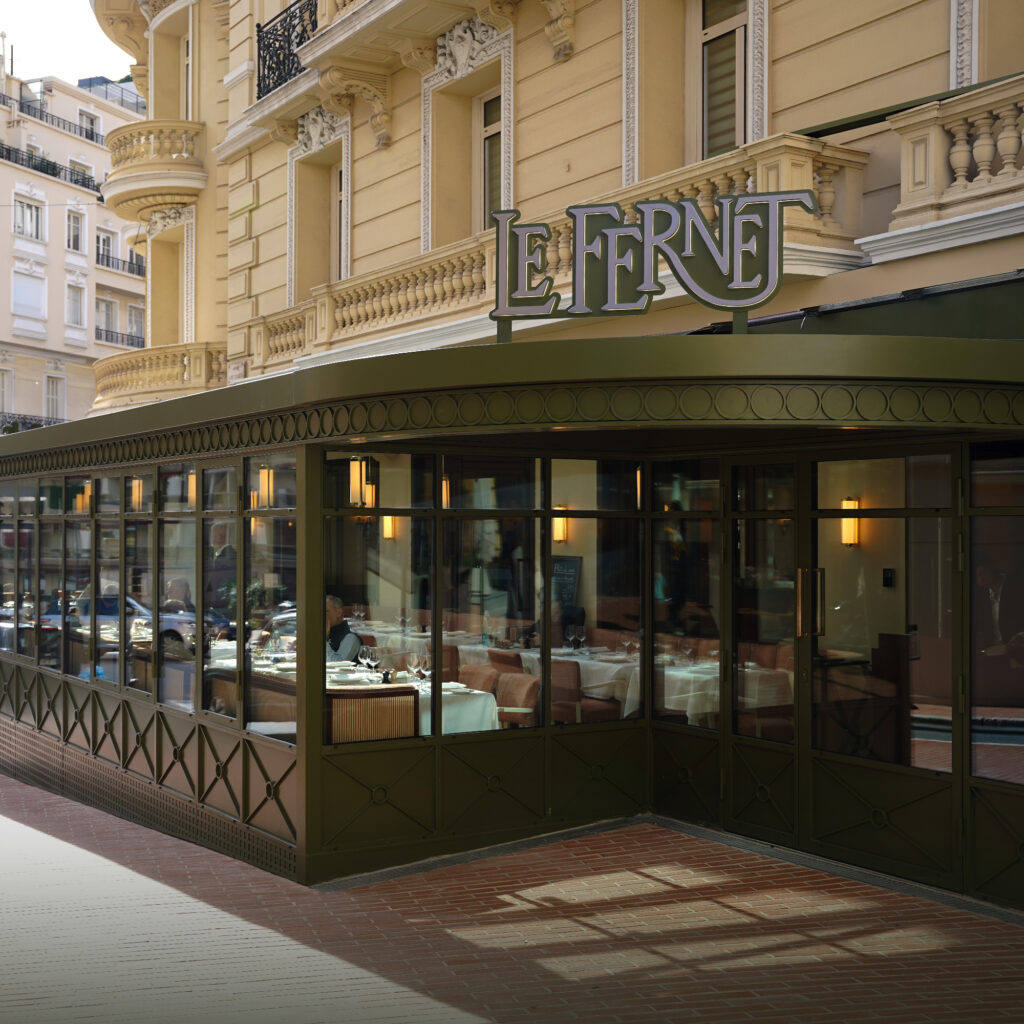
Le Fernet takes that familiar grammar and gives it a distinctly Monégasque cadence. The room is elegant without being stiff, the service is attentive without hovering, and the entire experience is designed to make lunch, dinner or a late glass of wine feel equally natural.

The restaurant’s founding idea is disarmingly simple. A generous meal among friends has a way of restoring mood, softening the day and turning ordinary conversation into something memorable.
That spirit runs through the address. Le Fernet doesn’t treat conviviality as a theme, but as the main event.
Rodolphe Parente’s layered dining room
For the interior, Le Fernet turned to Rodolphe Parente, the Parisian designer known for interiors that balance contemporary polish with a strong sense of craft.

Parente’s training under Andrée Putman is evident in the way the space avoids easy period imitation. It nods to the classic French brasserie while feeling composed for today’s Monaco.
Warm wood panelling, aged brass, mirrors and white tablecloths set the tone, but the room’s appeal comes from proportion and texture rather than decorative noise.
There’s a softness to the composition that suits the Mediterranean setting. Banquettes, patinated leather, noble woods and carefully tuned lighting create a rhythm of open and intimate spaces.

The restaurant also pays attention to something many fashionable dining rooms neglect.
Conversation matters here. The acoustics are handled with enough care that the room can feel alive without becoming tiring, which is one of those details guests notice even if they don’t name it.
It’s design made for use, not just for photographs.

Mathieu Dorlac’s precise brasserie cooking
Chef Mathieu Dorlac’s kitchen follows the same logic as the room.
The cooking is grounded in French brasserie tradition, but it doesn’t lean on nostalgia. Dorlac works with clarity, restraint and a visible respect for the ingredient.
Starters revisit familiar territory through careful produce and clean execution. Seasonal vegetables are given proper attention, seafood and shellfish are handled with freshness in mind, and richer preparations such as foie gras are approached with balance rather than excess.

Main courses continue the line of thought.
Meat, fish and elevated brasserie favourites are treated as dishes that don’t need unnecessary decoration when the fundamentals are right. The pleasure is in timing, seasoning and the confidence to let a plate speak plainly.
Desserts look to the heritage of French pâtisserie, closing the meal with elegance rather than heaviness.

Nothing about the menu feels engineered for a fleeting trend. Its strength is sincerity, which can be harder to achieve than spectacle.
A wine list for curious drinkers
Le Fernet’s cellar is one of its strongest signals of intent.
Under Head Sommelier Florine Huby, the wine programme has been shaped as a journey through terroir rather than a trophy cabinet of famous labels.

That distinction matters in Monaco, where prestige bottles are easy to find but genuinely personal lists are rarer.
Here, the emphasis is on character, region and discovery. The selections move beyond the expected names, with attention to places such as the Jura and Corsica alongside broader French depth.
The list is also presented with a sense of imagination, including illustrations linked to wine regions, which gives the experience a more tactile and exploratory quality.

For guests who know exactly what they like, the programme has enough structure to reassure. For guests who want to be led somewhere new, it offers room to wander.
A restaurant built for repeat visits
The strongest restaurants in Monaco rarely succeed because they are the loudest in the room.
They become part of the city’s rhythm because they understand occasion without making every meal feel like a performance.

Le Fernet Monte-Carlo has that quality. It can host a business lunch, a quiet dinner, a celebratory table or a casual return for wine and conversation without changing its character.
Its point of view is clear, but not rigid. It gives Monaco a brasserie that respects French tradition while speaking comfortably to the present.
For a Principality fluent in spectacle, Le Fernet’s real charm is its confidence in warmth, craft and time well spent.