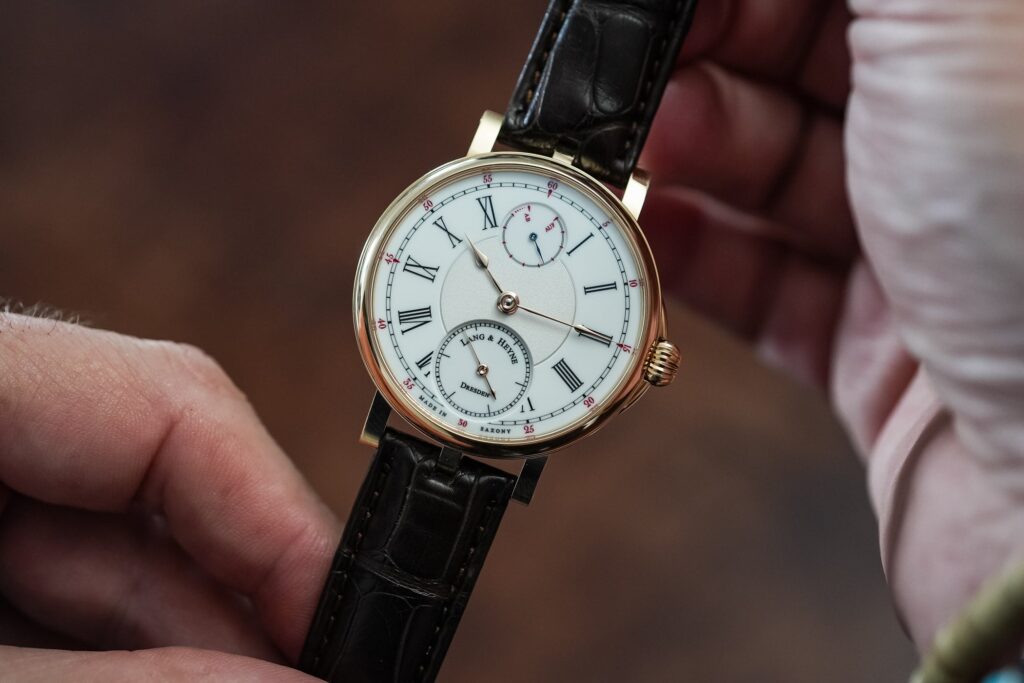
Lang & Heyne has a particular way of making a dress watch feel architectural rather than delicate.
The new Friedrich III Power Reserve keeps that Saxon character intact, then adds a complication that’s more mechanically involved than its quiet dial might suggest.
For collectors drawn to traditional German watchmaking, this is a measured evolution of one of the manufacture’s most restrained models.
At a glance
- Lang & Heyne has introduced the Friedrich III Power Reserve, a 25-piece limited edition in 18ct rose gold or platinum 950.
- The watch adds a 12 o’clock power-reserve display driven by a differential mechanism within the new hand-wound LH Caliber VI-II.
- Orders are open now, with prices from EUR 58,900 before taxes and first deliveries expected in the fourth quarter depending on demand.
A Saxon dress watch with a new complication
Lang & Heyne has been working near Dresden since 2001, building watches that lean into classical German proportions, visible hand-finishing and a strong regional identity.
The brand’s collections take their names from figures of the House of Wettin, the Saxon dynasty whose history runs through the region for centuries.
The Friedrich III has long been one of the cleaner expressions in the catalogue, a dress watch built around time and running seconds rather than visual drama.
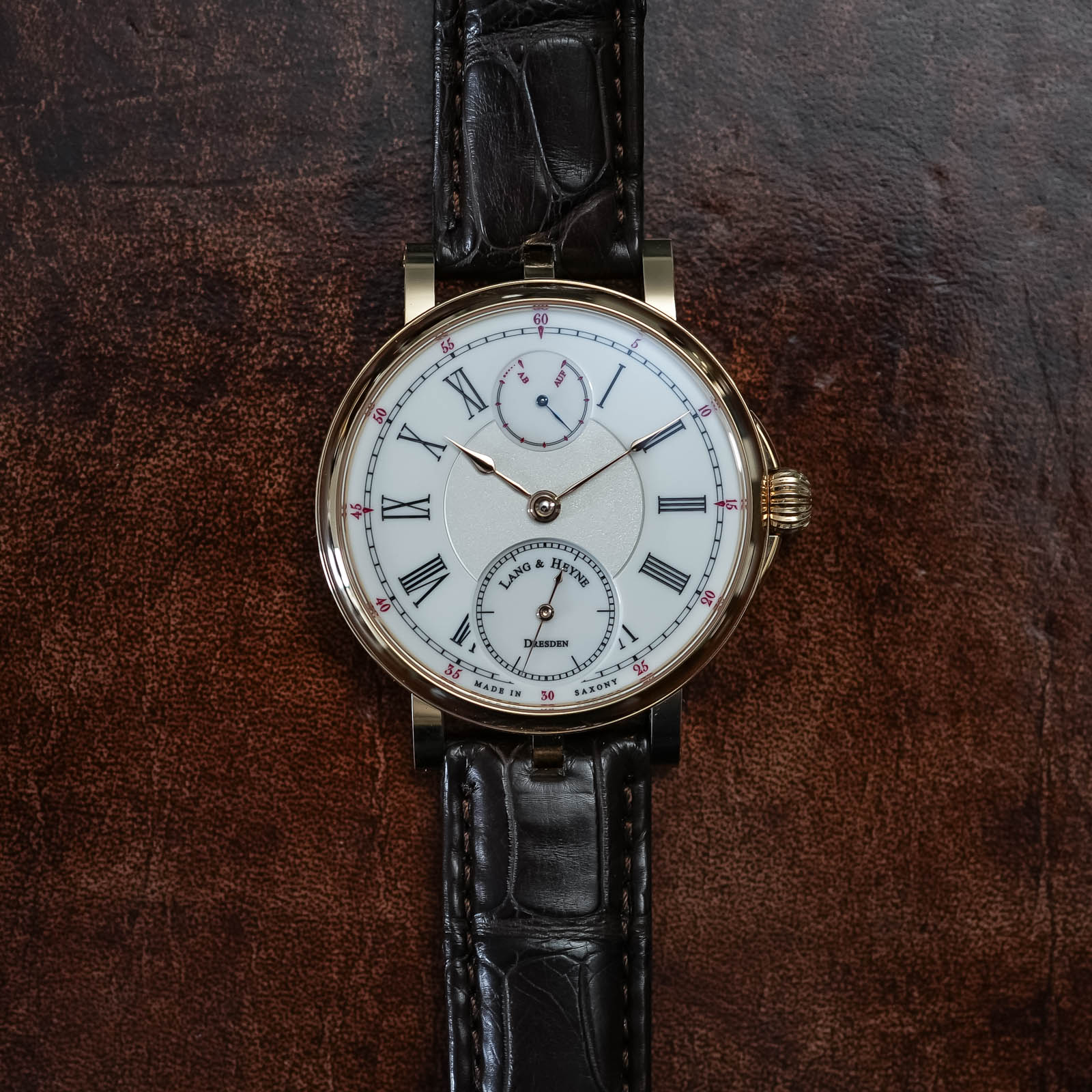
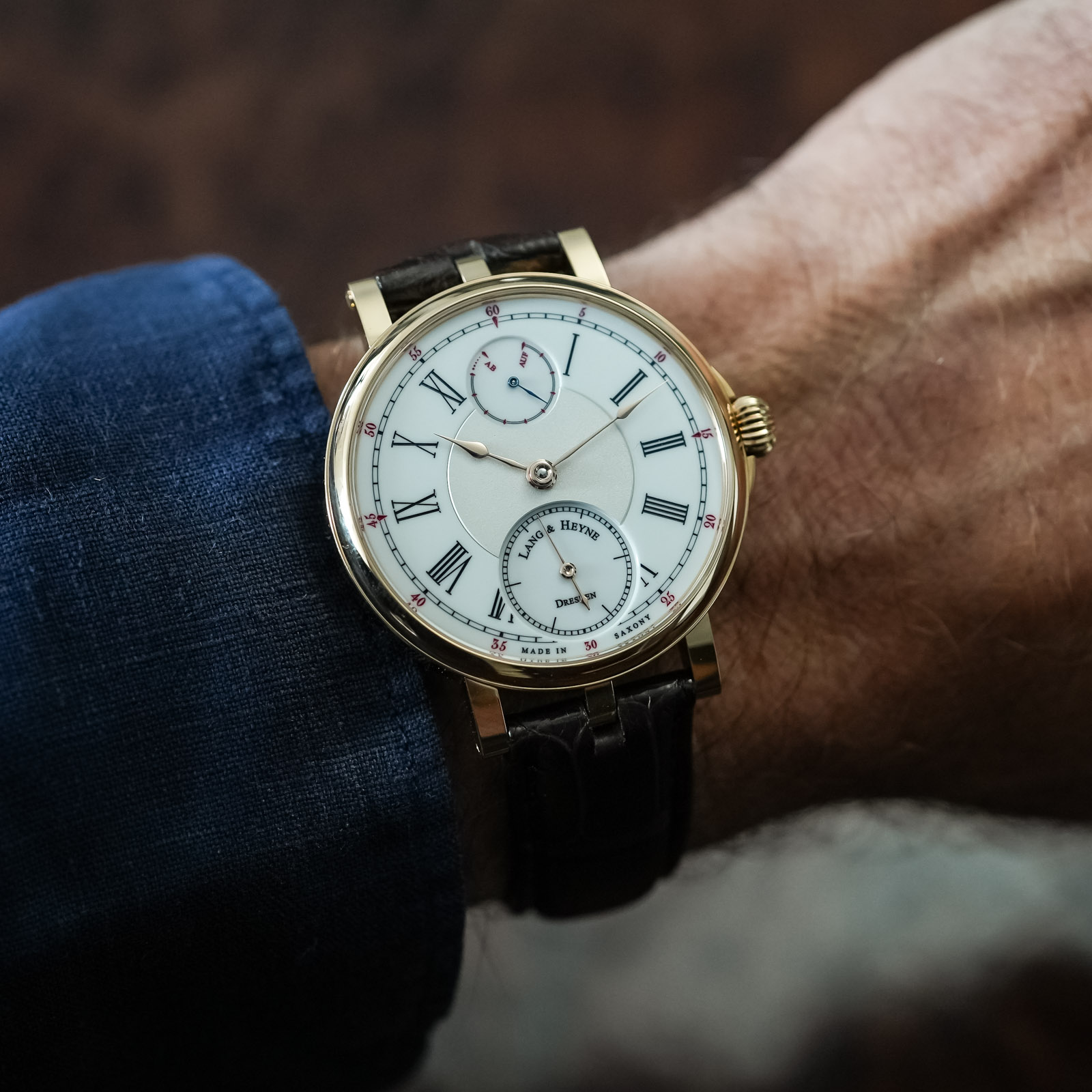
This new version keeps the familiar 39.2mm diameter and 10.5mm thickness, which places it firmly in elegant daily-wear territory.
The fully polished case is offered only in 18ct rose gold or platinum 950, both with the brand’s distinctive triple-lug construction.
That third lug is recessed and shorter than the outer pair, so the signature is present without overwhelming the profile.
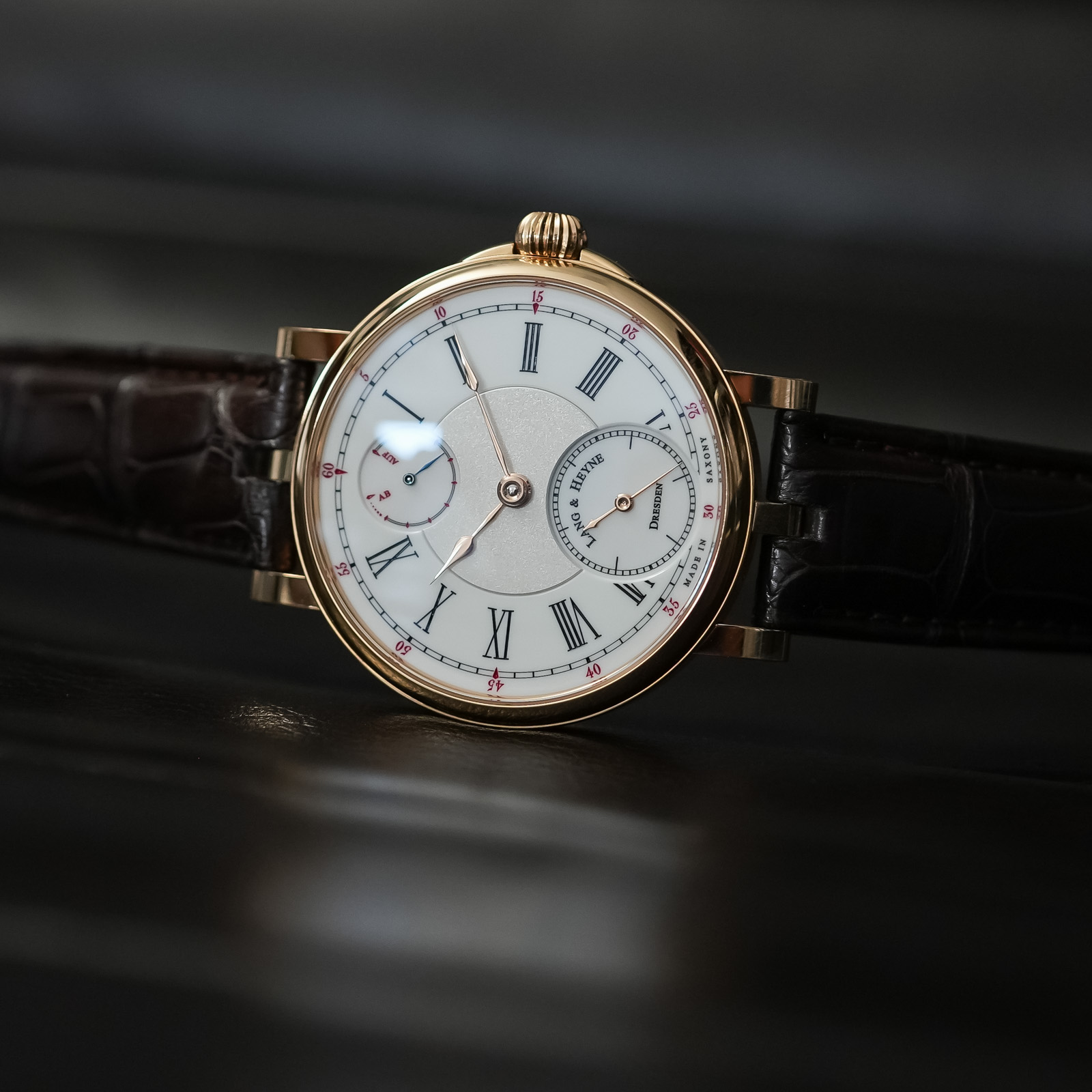
Clients who prefer a more conventional look can request a two-lug configuration.
An onion-style crown sits at 3 o’clock between subtle crown guards, while sapphire crystals front and back receive anti-reflective treatment on both surfaces.
Water resistance is rated to 30 metres, which is entirely in keeping with the watch’s formal character.
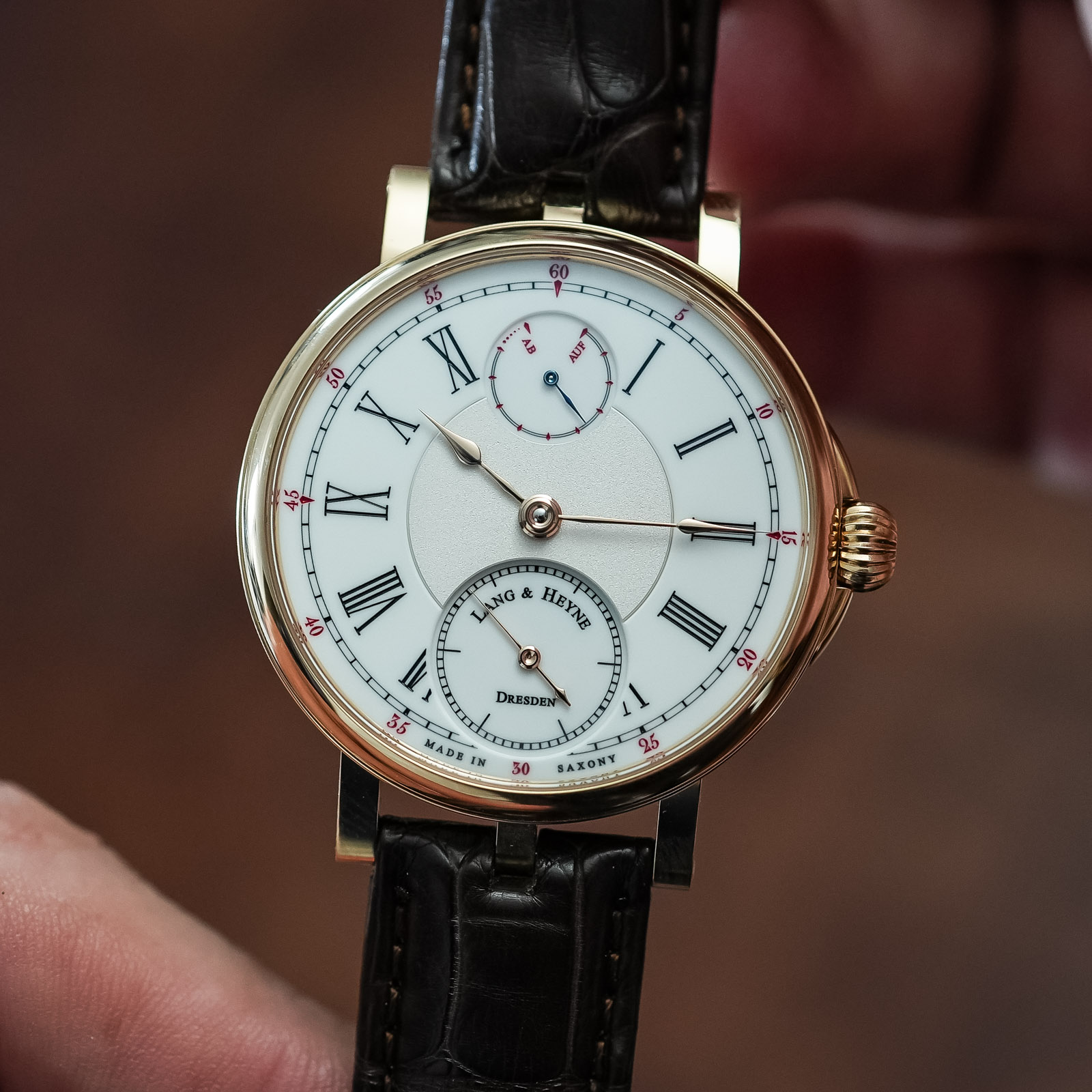
The ceramic dial keeps the display restrained
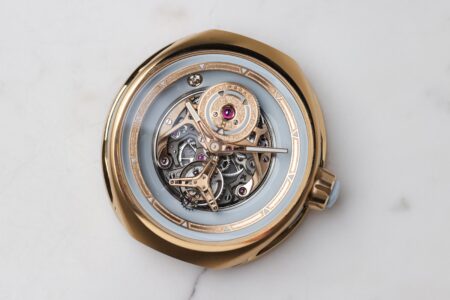
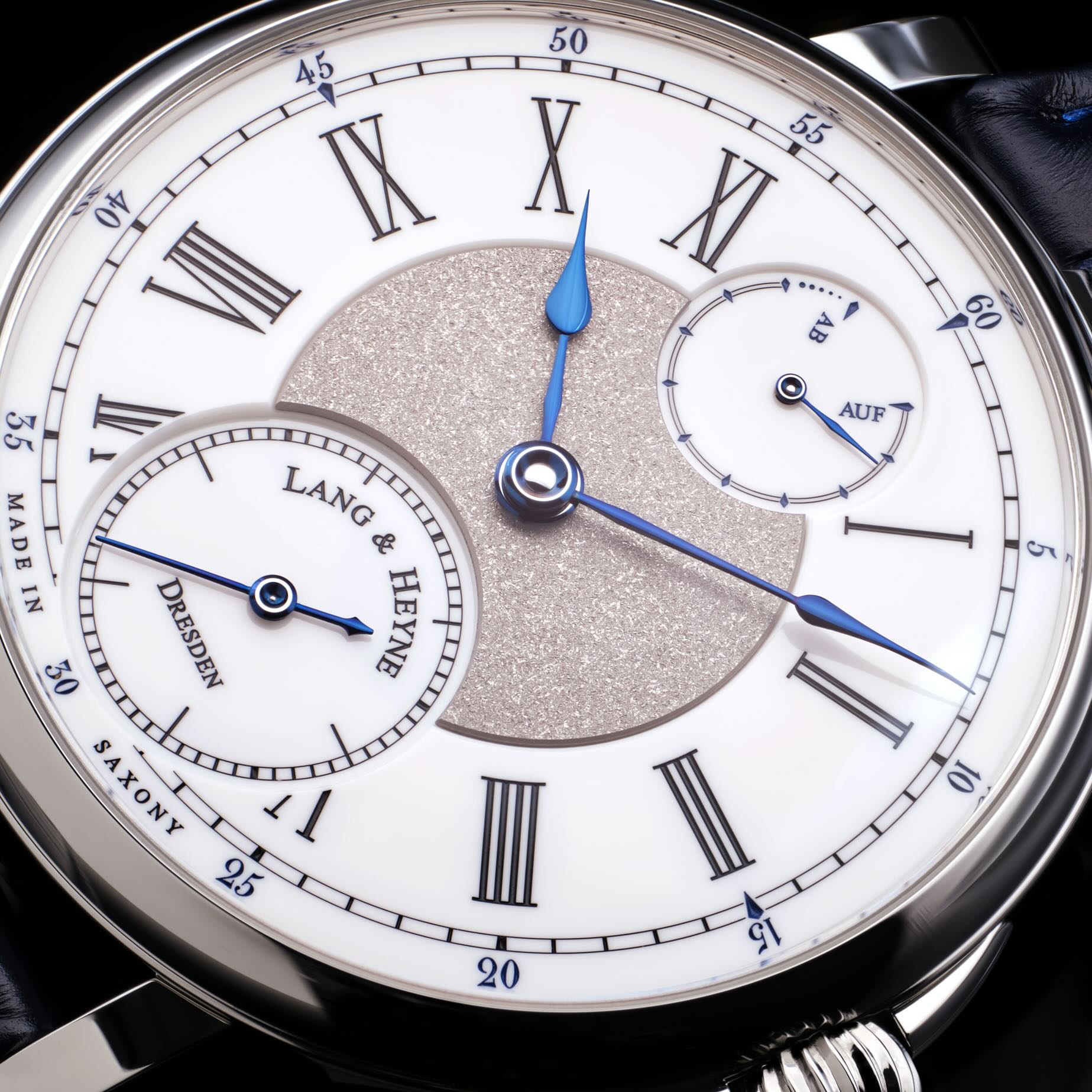
The dial is a three-piece, flat-polished ceramic construction with a central decorative medallion.
That medallion is finished with a fine givré texture and toned to match the case metal, adding depth without pushing the watch into ornament for its own sake.
The elongated Roman numerals are engraved into the ceramic and filled with black lacquer.
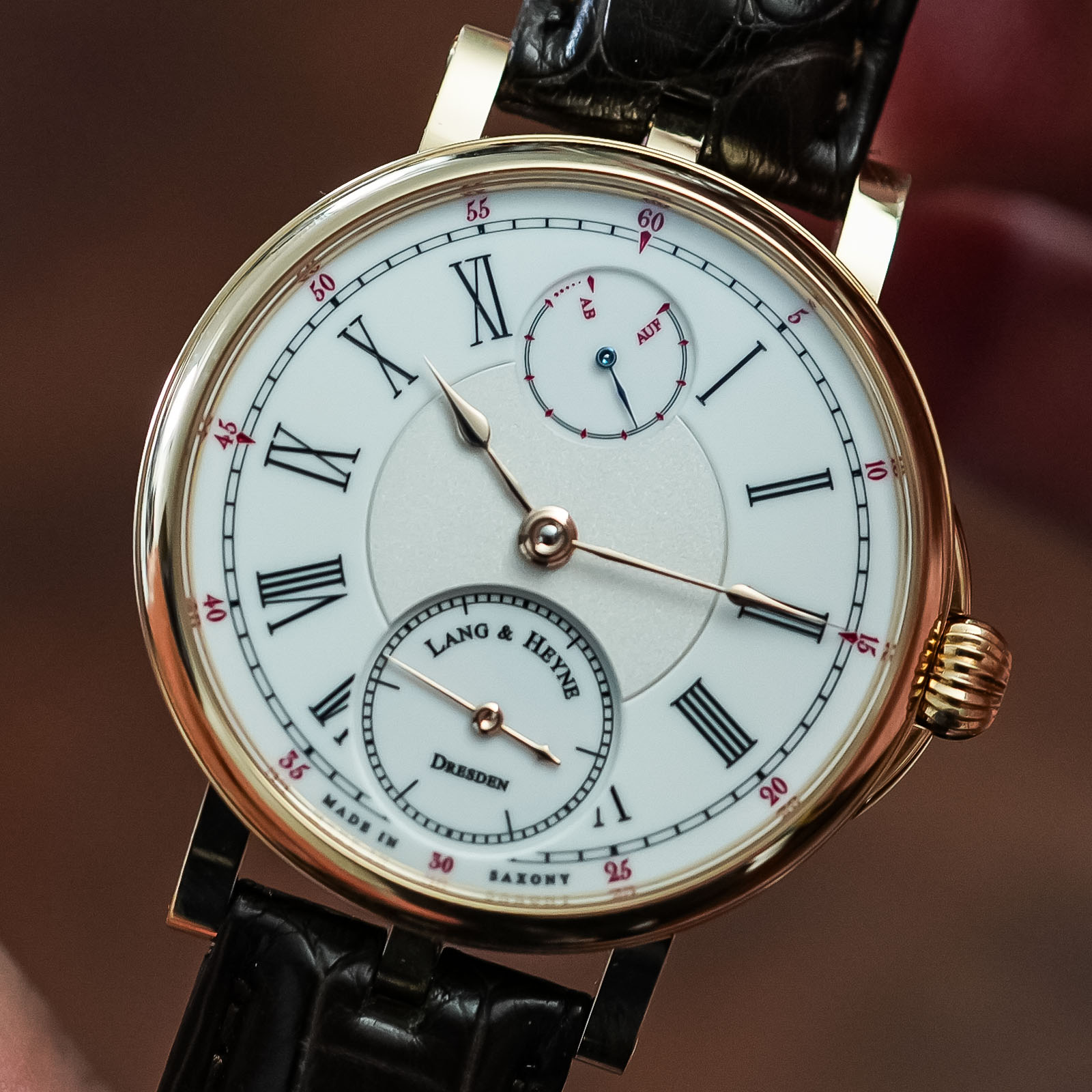
Minutes and power-reserve markings appear in either red or blue depending on the execution, while the broad spade-shaped hands are blued or gold.
The large running seconds display remains at 6 o’clock, giving the dial the vertical balance that has helped define the Friedrich III.
The new indication occupies the upper half of the dial at 12 o’clock.
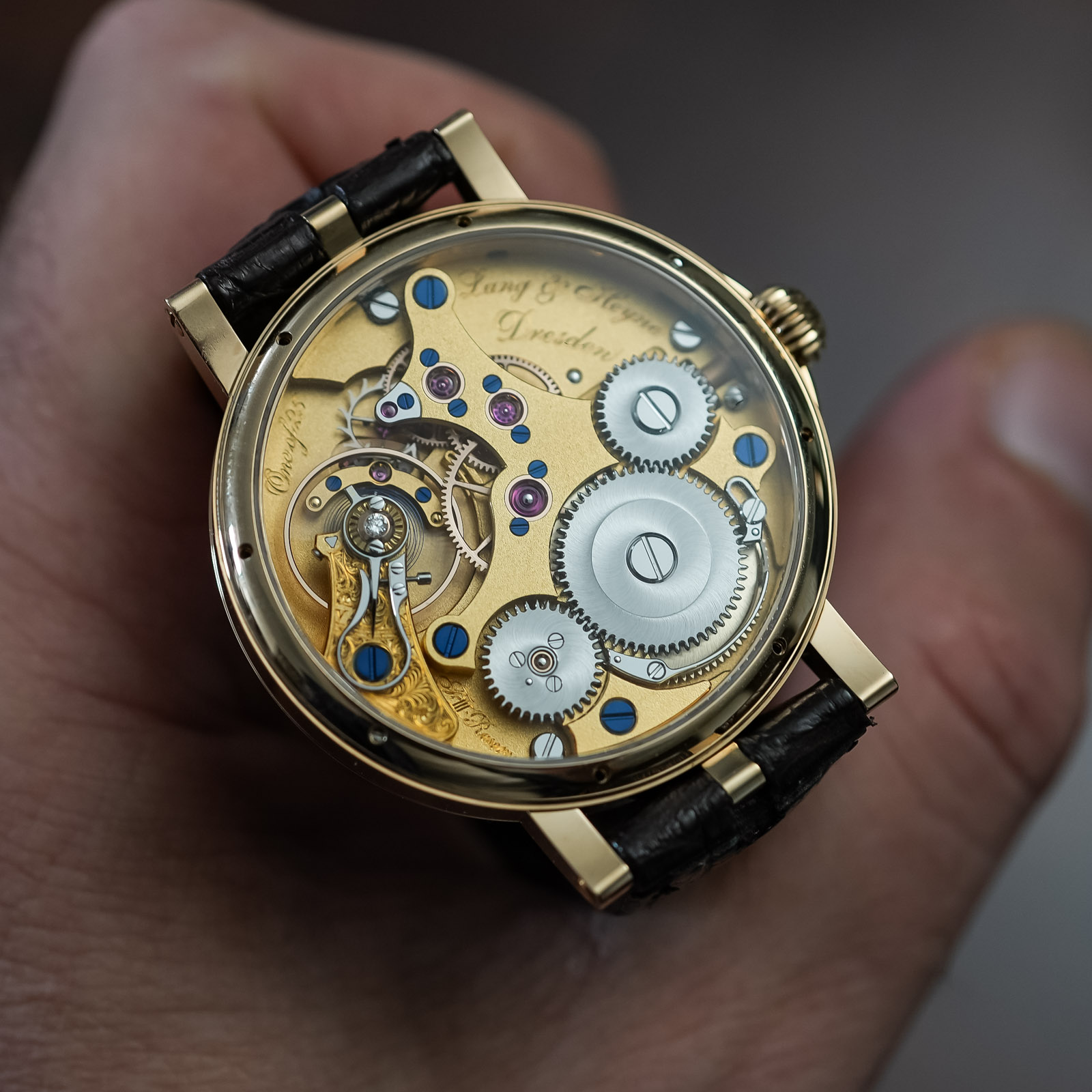
Its scale is split into ten segments and marked with the German terms “Ab” and “Auf” for empty and full.
At the beginning of the scale, a run of diminishing dots nods to the kind of power indication historically associated with marine chronometers.
The power-reserve hand is always made from heat-blued steel, a small but deliberate contrast against the case-matched dial architecture.
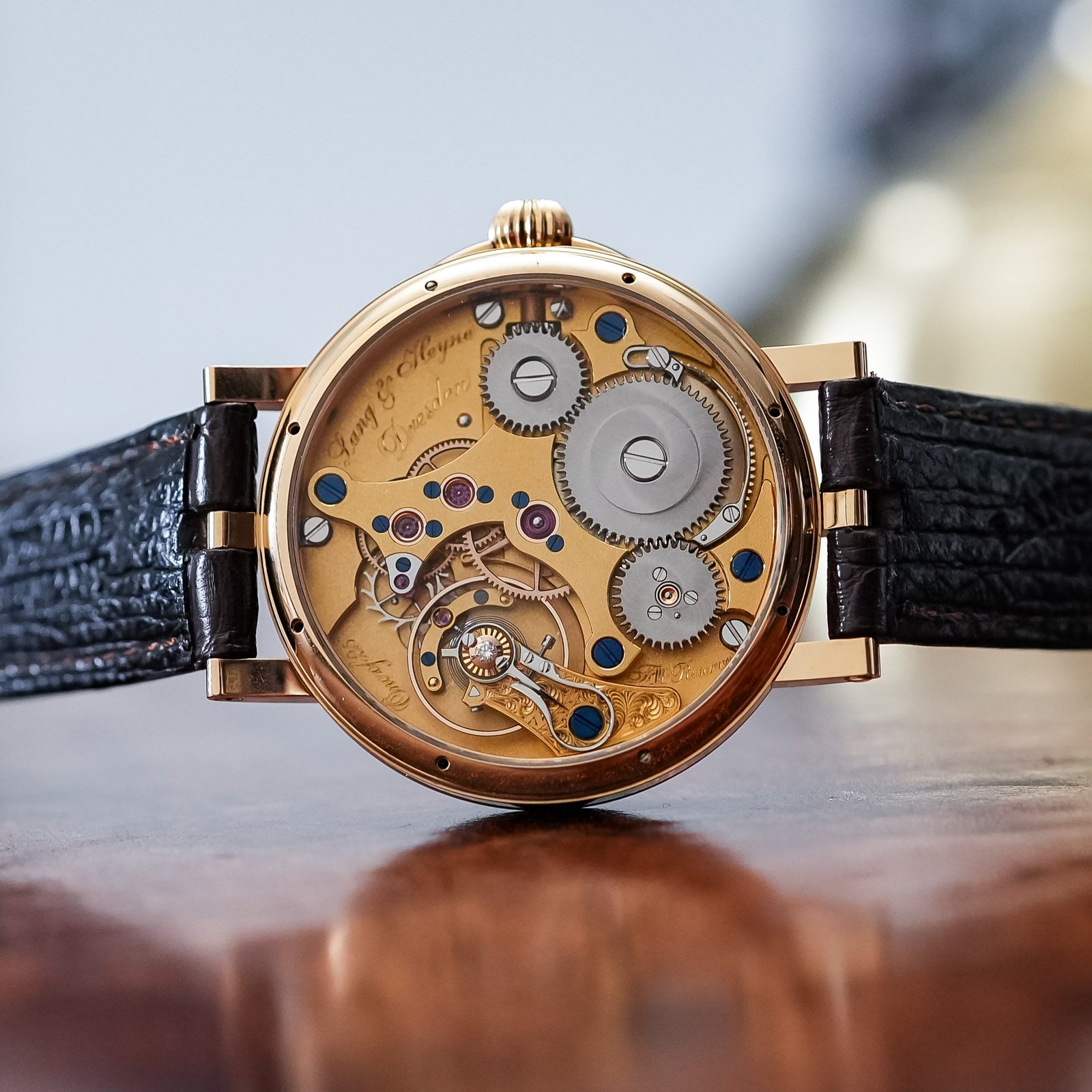
The LH Caliber VI-II uses a differential solution
The real interest sits behind the dial, where Lang & Heyne has developed the new LH Caliber VI-II from its established Caliber VI.
It remains manually wound and measures 33.5mm wide by 4.9mm thick, with a traditional 18,000 vibrations per hour frequency and 55 hours of power reserve.
Adding a power-reserve display can be mechanically simple, but Lang & Heyne has taken the longer path.
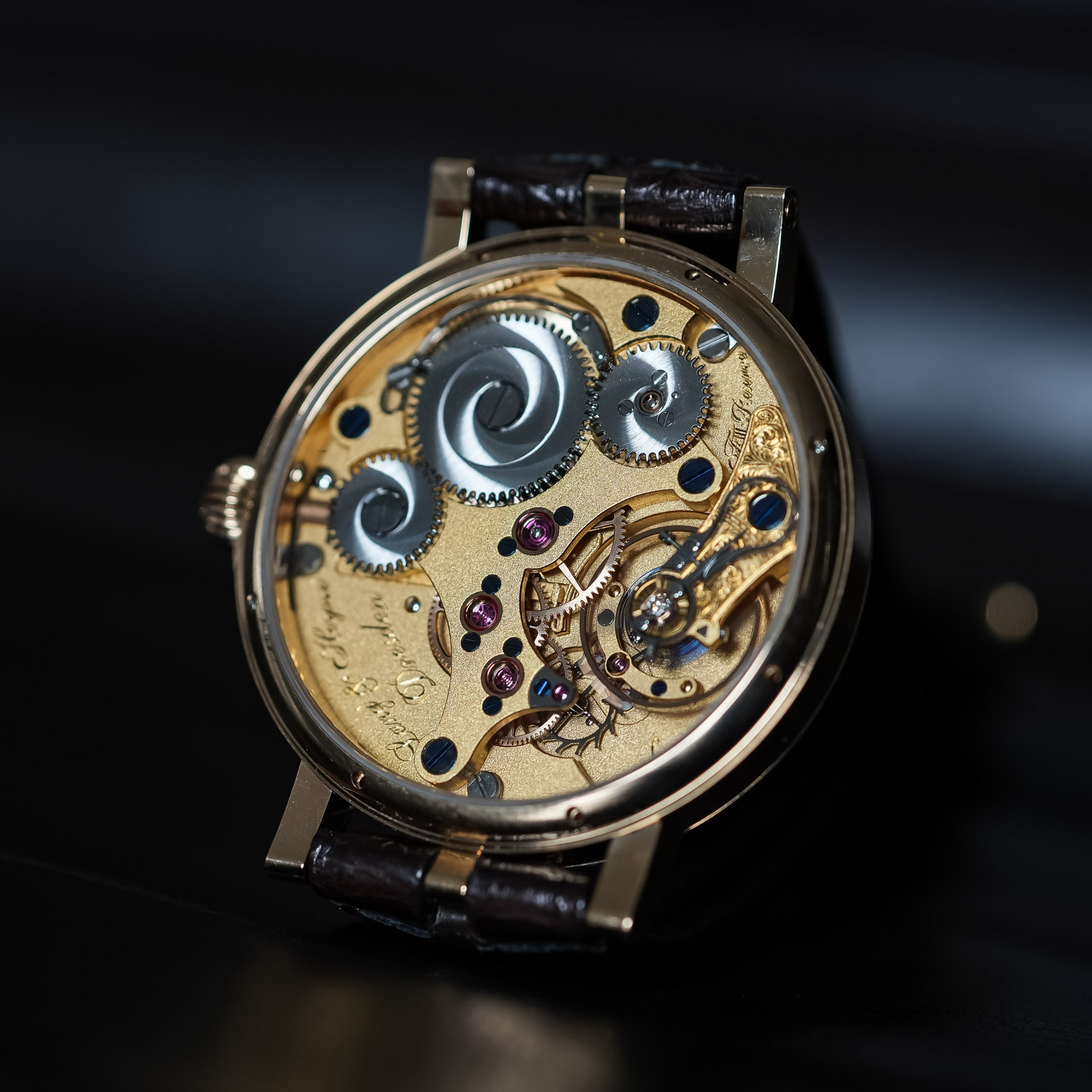
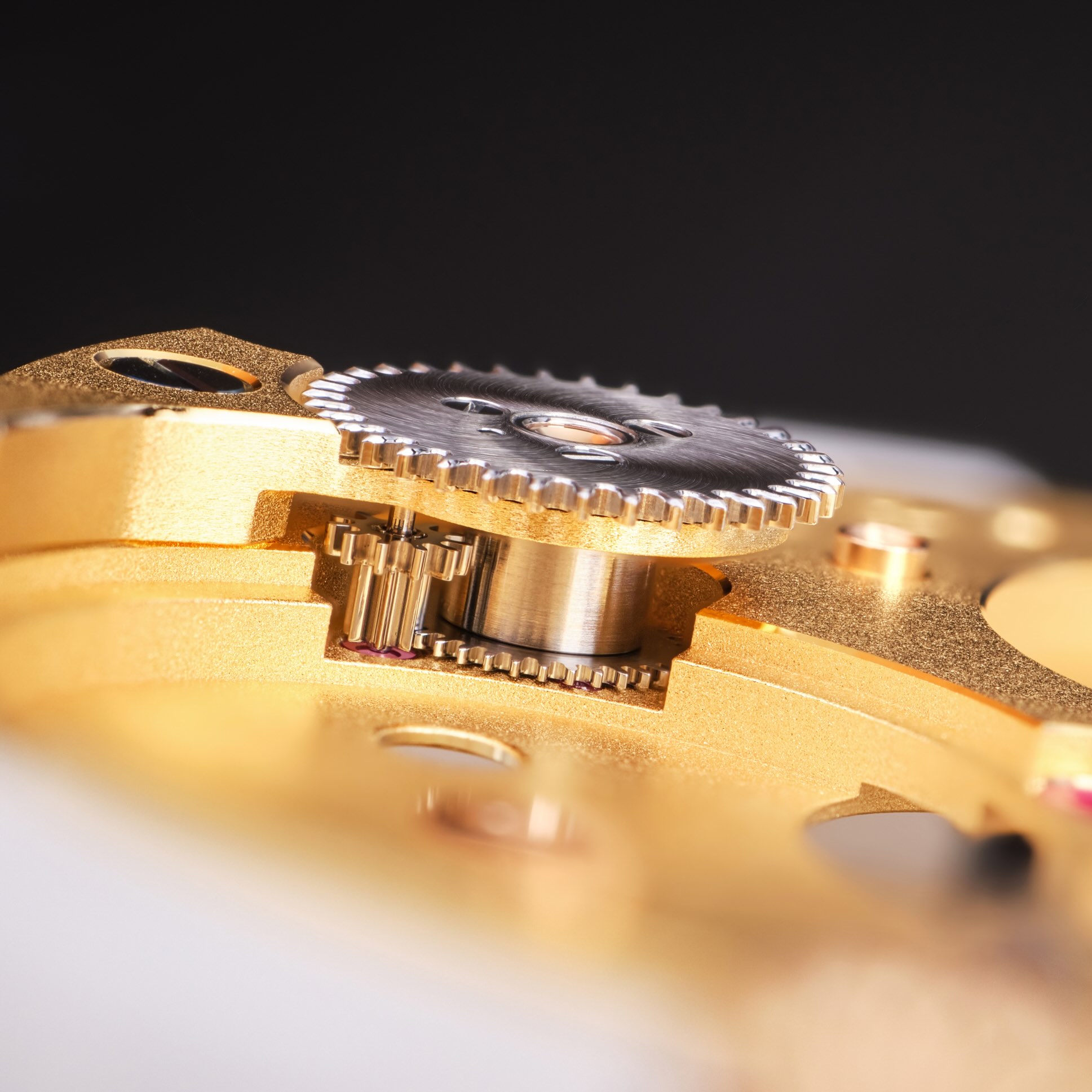
Instead of merely tracking the barrel’s state of wind, the calibre uses a differential mechanism that combines information from the barrel and ratchet wheel onto a single axis.
The differential sits under its own bridge next to the mainspring.
Two crown-toothed wheels transmit their respective motions to a satellite gear on a separate rotating axis, which becomes the display shaft for the indication.
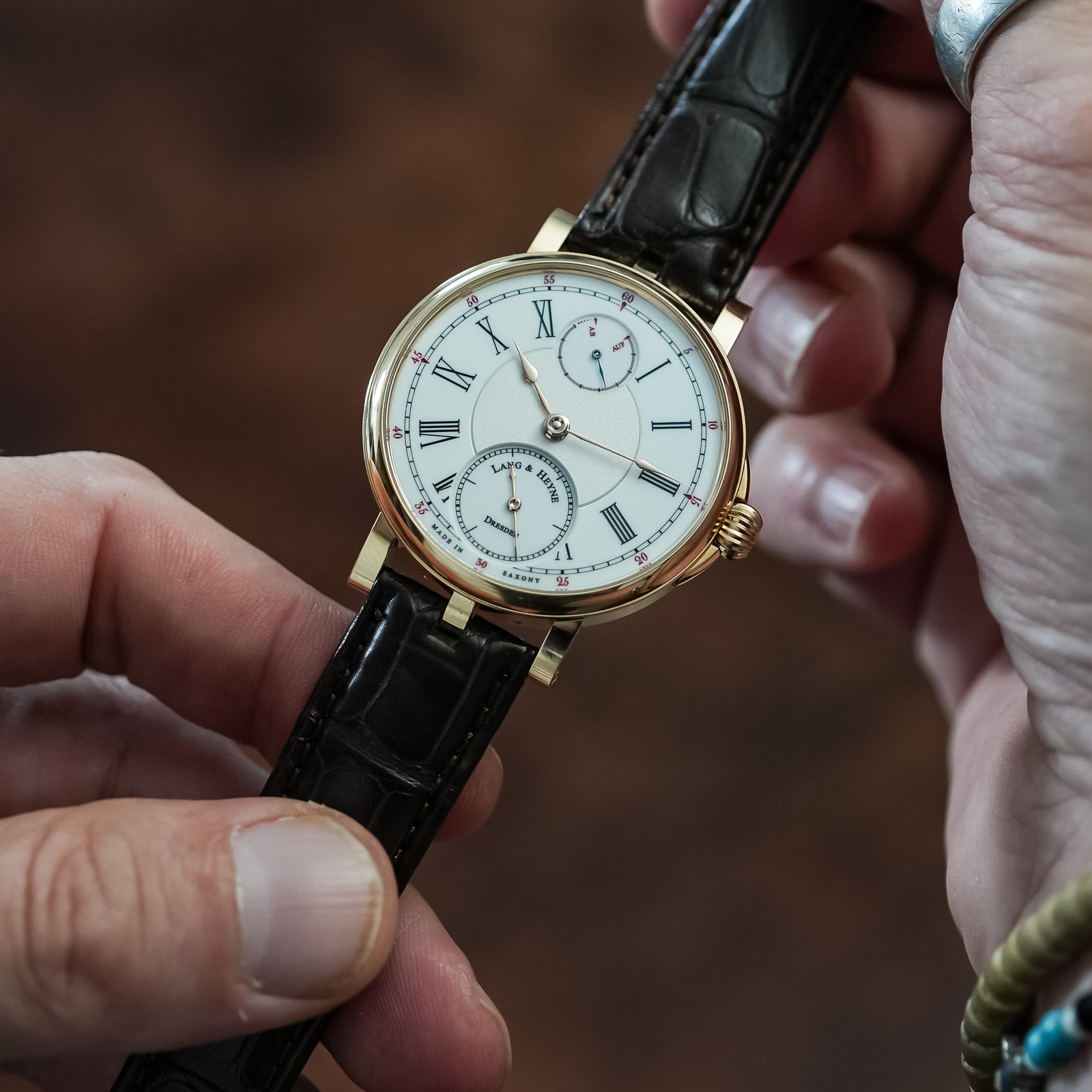
An additional gear then drives the power-reserve hand, helping the wearer wind the watch before the mainspring reaches a lower-energy state where force delivery becomes less consistent.
There’s no stop-work mechanism on the barrel, so the watch runs down naturally and the dial display reflects that behaviour.
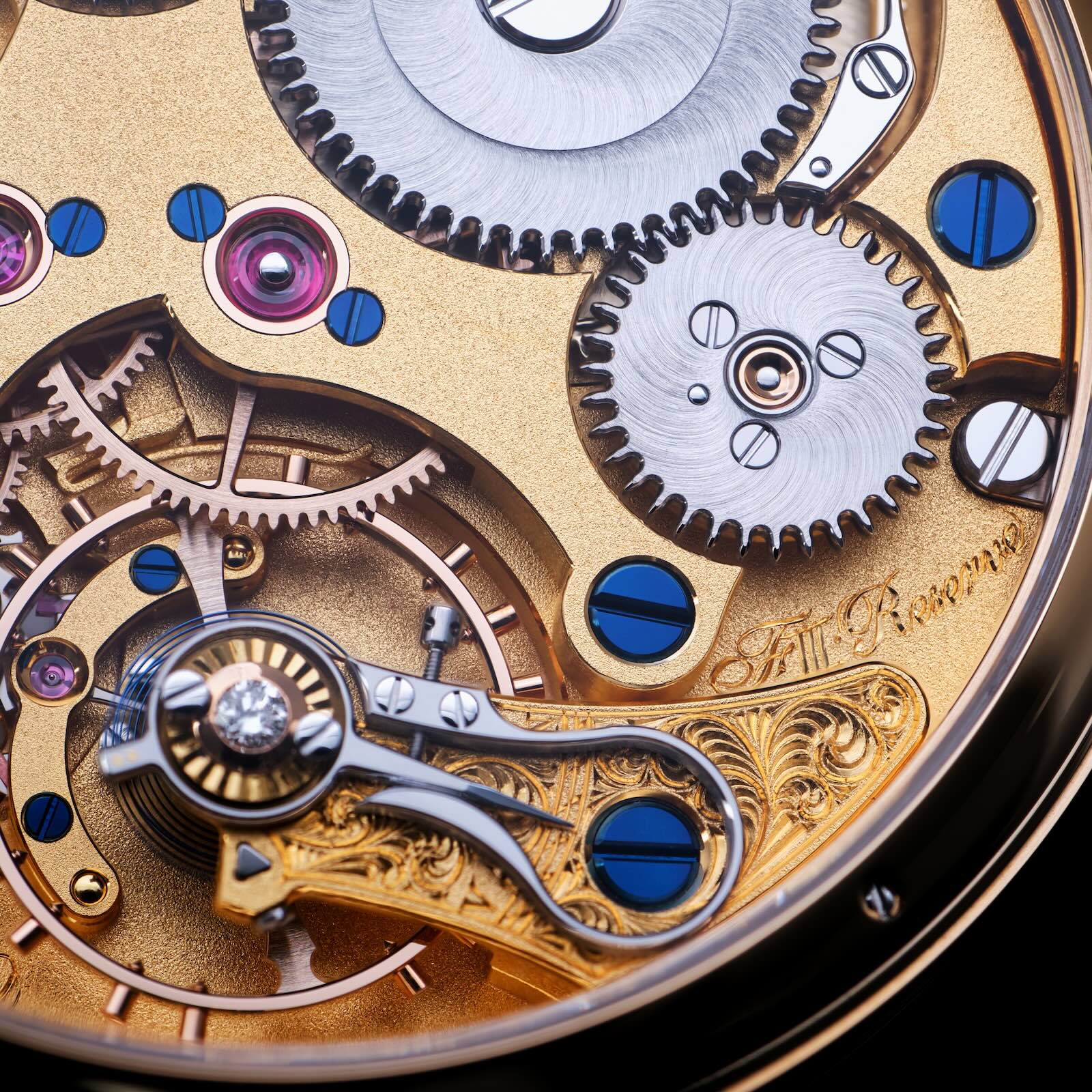
Viewed through the sapphire caseback, the finishing is exactly the kind of detail that gives Lang & Heyne its collector following.
The calibre has a hand-engraved balance cock, polished bevels, sharp internal angles finished by hand, 27 rubies and a brilliant-cut diamond end stone over the balance staff.
Details & Specifications
| Brand | Lang & Heyne |
|---|---|
| Model | Friedrich III Power Reserve |
| Case size | 39.2mm diameter, 10.5mm thickness |
| Case material | 18ct rose gold or platinum 950 |
| Case construction | Fully polished case with triple-lug design, two-lug configuration available by request |
| Crystal | Sapphire crystal and sapphire caseback with anti-reflective treatment on both sides |
| Water resistance | 30 metres |
| Dial | Three-piece flat-polished ceramic with givré-finished central medallion |
| Indications | Hours, minutes, running seconds and power reserve |
| Movement | LH Caliber VI-II, in-house manual winding |
| Movement size | 33.5mm diameter, 4.9mm thickness |
| Frequency | 18,000 vibrations per hour |
| Power reserve | 55 hours |
| Components | 174 parts, 27 rubies and one brilliant-cut diamond end stone |
| Strap | Alligator leather strap with case-matching pin buckle |
| Production | Limited to 25 pieces |
| Price | EUR 58,900 in rose gold and EUR 63,500 in platinum, excluding taxes |
| Availability | Orders open now, with first deliveries expected in the fourth quarter depending on demand |
The Friedrich III Power Reserve is a quiet watch on the wrist, but not a simple one.
It will make the most sense to collectors who value classical Saxon finishing and mechanical problem-solving more than conspicuous complication display.