Some cars don’t need an event lawn, a velvet rope or a concours card to make an entrance.
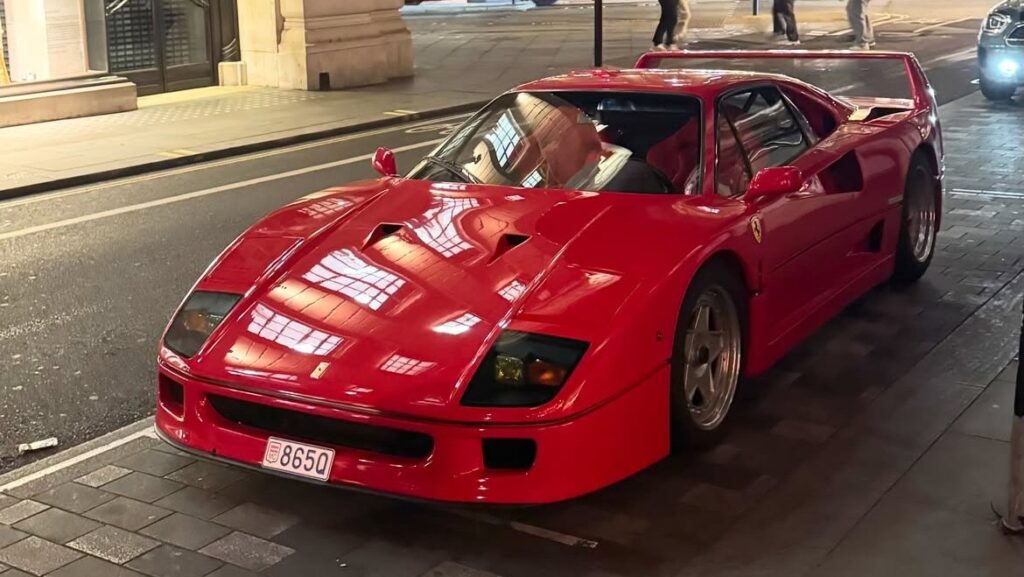
Lando Norris’ red Ferrari F40 has been seen parked on a London street at night, wearing Monaco plates and looking exactly as a great analogue supercar should. Under city lighting, the car’s shape feels almost impossibly purposeful, with the kind of presence modern performance machinery often chases but rarely matches.
At a glance
- Lando Norris’ Ferrari F40 has been seen on the streets of London with Monaco licence plates.
- The car’s low nose, dramatic side profile and huge rear wing stood out under night-time street lighting.
- The F40 remains one of Ferrari’s defining lightweight supercars, powered by a twin-turbo V8 and a five-speed manual gearbox.
A Monaco-plated F40 under London lights
There’s a particular theatre to seeing a Ferrari F40 in the open, away from climate-controlled garages and pristine show stands.
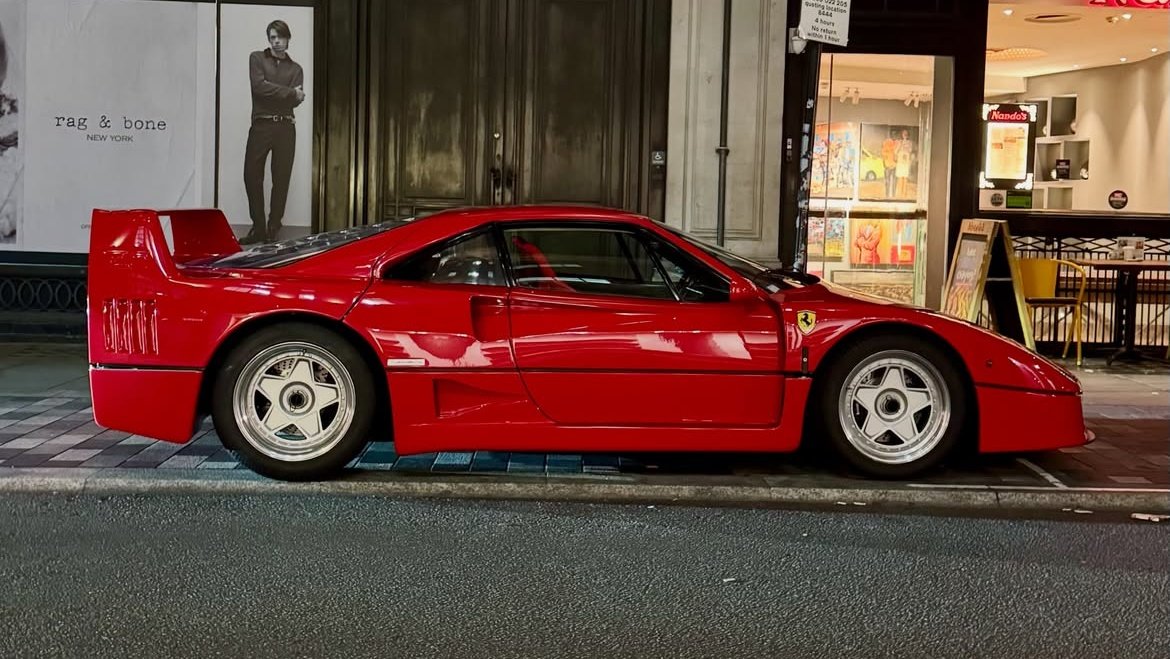
On a London street at night, the car’s red paint and hard-edged bodywork take on a different character, less museum piece and more machine waiting to be driven.
The Monaco plates add another layer to the sighting, fitting for a Formula 1 driver and for a car so closely tied to speed, wealth and late-1980s excess.
Norris, currently one of Formula 1’s biggest names, choosing an F40 says something about the appeal of older supercars among modern racing drivers.

It isn’t simply a status object.
It’s a car with weight, noise, boost and manual control at the centre of the experience.
The side profile still does the talking
The F40 has always been a car best understood from the side.

The nose sits low and sharp, the cabin is pushed into a compact central section, and the bodywork rises into one of the most recognisable rear wings Ferrari has ever built.
Seen in profile, the car looks engineered rather than styled for decoration.
The vents, ducts and surfaces have an exposed logic to them, which is part of why the shape has aged so well.

Many supercars from the same era now look charmingly dated.
The F40 still looks severe, fast and slightly intimidating.
That quality is especially clear at night, where the simpler forms stand out and the proportions do most of the work.
Why F1 drivers keep coming back to the F40
Norris isn’t the only Formula 1 figure drawn to Ferrari’s most famous twin-turbo icon.
Lewis Hamilton has also added an F40 to his collection, fulfilling a long-standing personal dream around the model.
That shared interest makes sense.
The F40 sits in a space that modern supercars can’t easily recreate, combining huge historical significance with a relatively raw mechanical layout.
Its 2.9-litre twin-turbocharged V8 produces around 478 hp, sent to the rear wheels through a five-speed manual gearbox.
By today’s numbers, that output is no longer shocking, but the way the car delivers it remains central to its reputation.
Lightweight construction was a major part of the F40’s identity, and the car’s lack of unnecessary softness is exactly what keeps collectors and drivers fascinated.
For an F1 driver used to the extreme precision of contemporary race machinery, the F40 offers a very different kind of challenge.
It’s fast, physical and direct, with the driver far more involved in the process.
Details & Specifications
| Brand | Ferrari |
|---|---|
| Model | F40 |
| Engine | 2.9-litre twin-turbocharged V8 |
| Power | Around 478 hp |
| Transmission | Five-speed manual |
| Drive | Rear-wheel drive |
| Construction focus | Lightweight design |
| Observed detail | Monaco licence plates |
A Ferrari F40 in London will always stop people in their tracks, but Norris’ example carries extra intrigue because of the worlds it connects.
It links modern Formula 1 stardom with one of Ferrari’s most enduring road cars, and on a quiet city street at night, that combination feels far more compelling than any staged reveal.