Ferrari has pushed the manual gearbox back into the supercar conversation with the 12Cilindri Manuale, but Lamborghini isn’t preparing a similar turn toward nostalgia.
The message from the brand is clear enough. Three pedals may still stir enthusiast emotion, but Lamborghini’s current focus is on extracting more character, speed and involvement from its new generation of hybrid supercars.
At a glance
- Lamborghini isn’t expected to follow Ferrari by bringing back a manual gearbox.
- The brand is concentrating on the continued development of its latest hybrid supercar architecture.
- Product line director Paolo Racchetti acknowledged ongoing customer interest in manual gearboxes, but said Lamborghini is focused on the future.
Ferrari’s manual move won’t reset Lamborghini’s plans
The return of a manual-style gearbox at Ferrari was always going to raise questions across the Italian supercar landscape.
Lamborghini, however, doesn’t seem interested in treating its rival’s decision as a cue to revisit old hardware.
Product line director Paolo Racchetti has acknowledged that some customers continue to ask for a manual gearbox, along with other touches connected to Lamborghini’s past.
That demand is real, but it doesn’t appear strong enough to redirect the company’s product strategy.

For Lamborghini, the manual gearbox belongs more to a broader emotional conversation than to the immediate development roadmap.
Hybrid performance is where Lamborghini sees the next step
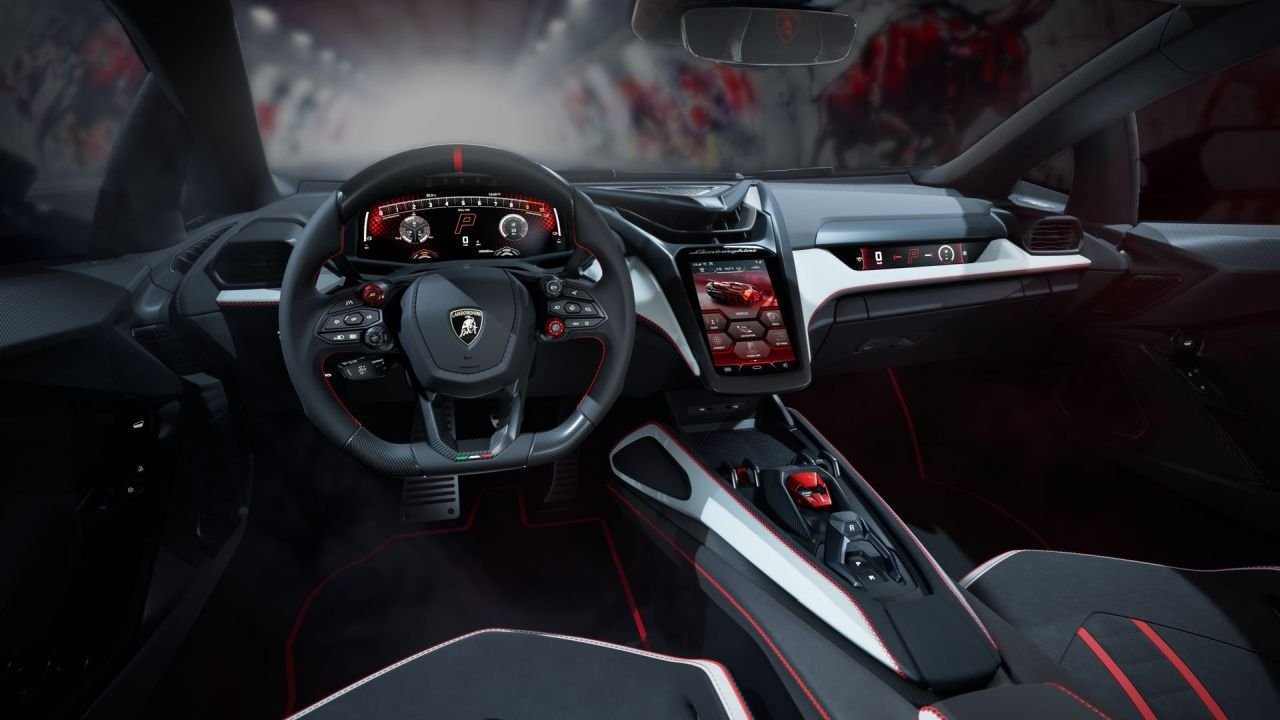
The company’s current priority is the evolution of its new hybrid supercars.
Racchetti’s position is that Lamborghini is defined by moving forward rather than rebuilding around earlier technologies.

That framing matters, because Lamborghini’s modern identity is now tied to the challenge of making electrification feel dramatic rather than merely efficient.
The brand believes there is still more performance and emotion to find in its latest architecture.
In practical terms, that means the engineering effort is going into hybrid systems, calibration, response and the way the car communicates with the driver.
A manual gearbox would answer a very specific kind of nostalgia, but it would also sit outside the direction Lamborghini has chosen for its current generation of cars.
What manual demand says about modern supercar buyers
The continued appetite for a manual Lamborghini is easy to understand.
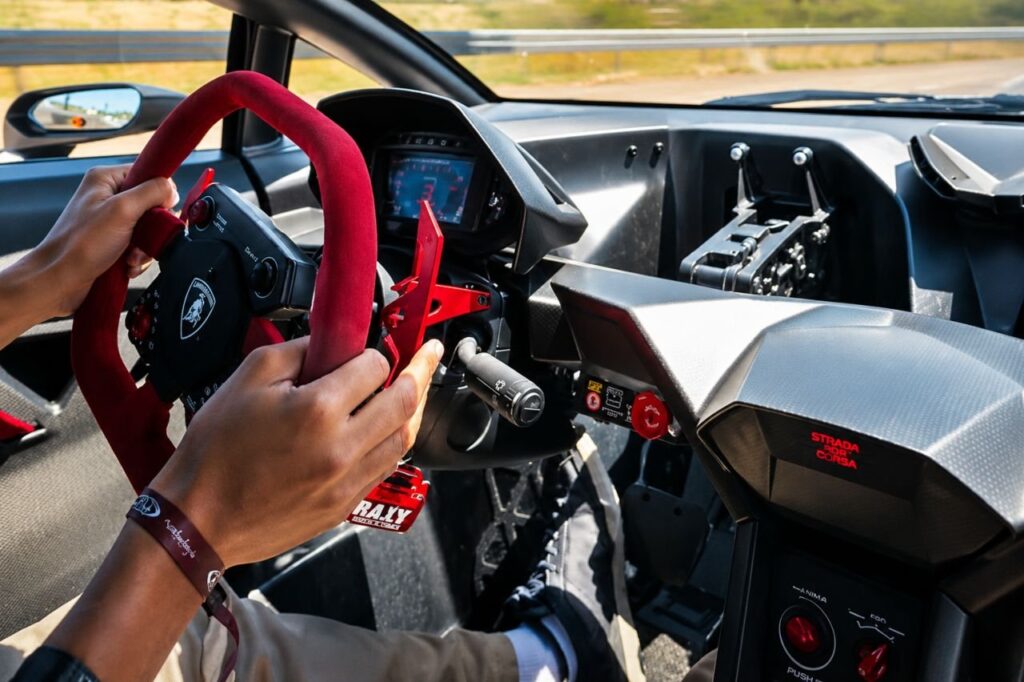
For many enthusiasts, a manual gearbox represents participation, rhythm and a mechanical bond that even the quickest automated transmissions can’t fully replicate.

It also carries cultural weight, especially in a segment where analogue details have become rarer and therefore more emotionally charged.
But the supercar market has changed.
Performance expectations are higher, powertrains are more complex and manufacturers are increasingly defining driver engagement through software, hybrid integration and chassis behaviour.
Lamborghini’s stance suggests it wants to prove that emotion doesn’t have to depend on a return to three pedals.
A clear line between heritage and direction
Lamborghini has never been short of heritage, and the manual gearbox remains part of that story for many collectors and long-time fans.
The difference now is that the brand is treating that history as context, not as a template.
That may disappoint purists who want a modern Lamborghini with a clutch pedal, but it also fits the company’s long-running habit of leaning into spectacle, technology and forward motion.
For now, anyone hoping for a new manual Lamborghini will likely have to keep looking to the past.
The future Lamborghini is building is hybrid, high-performance and deliberately modern, even if the romance of the manual gearbox refuses to disappear.