Vintage watch collecting is often shaped by chance, condition and patience.
Jaeger-LeCoultre’s The Collectibles gives that pursuit a more curated form, bringing historically important watches back through the manufacture’s own restoration program before presenting them for sale.
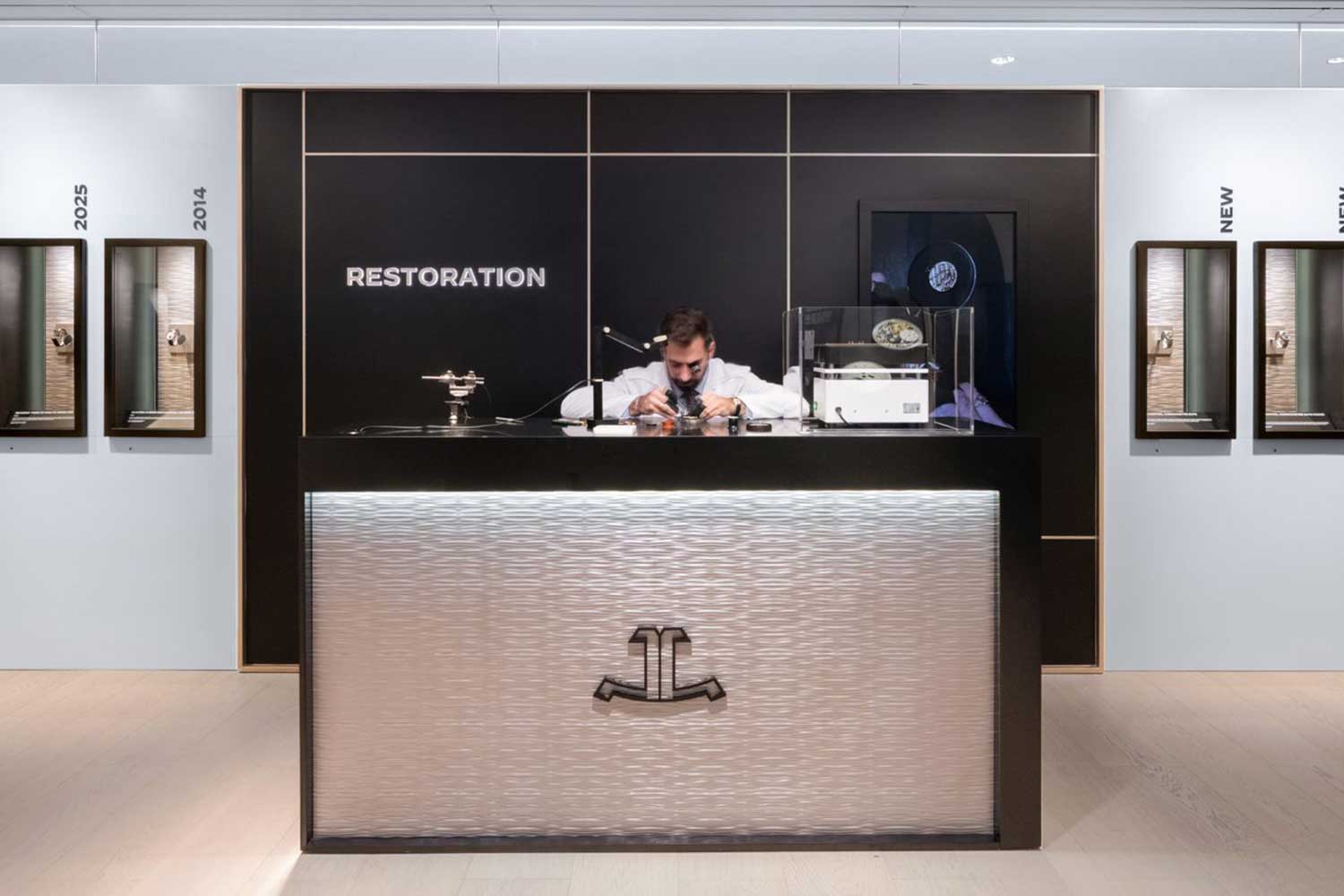
The seventh capsule collection was introduced in Hong Kong with the vintage program’s first exhibition in the city, placing restored mid-century watches alongside modern evolutions of the same design families.
At a glance
- Jaeger-LeCoultre has presented The Collectibles VII, the latest capsule in its manufacture-led vintage watch program.
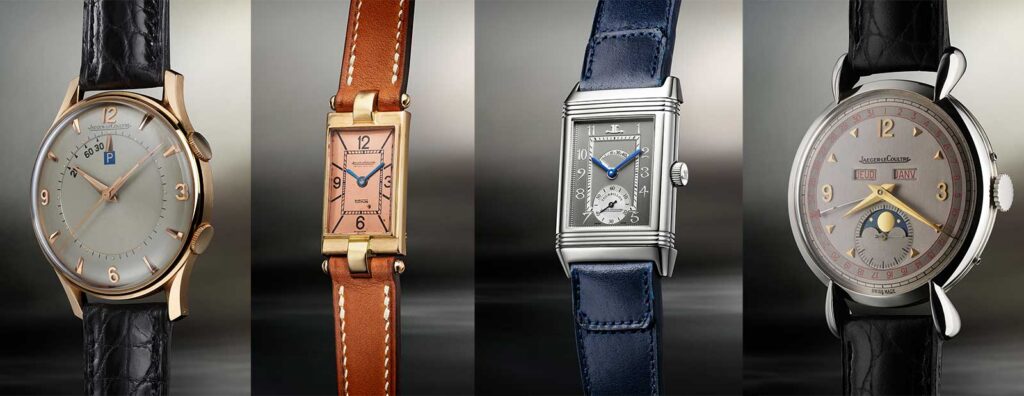
- The selection spans Duoplan, Reverso, Memovox and Precision pieces, including restored watches from the 1930s through the early 2000s.
- The Collectibles pieces are offered for sale with an extract from Jaeger-LeCoultre’s archives, and original accessories where available.
A restored route into Jaeger-LeCoultre history
The Collectibles was launched in 2023 for Jaeger-LeCoultre’s 190th anniversary, alongside a book dedicated to the maison’s emblematic watches from 1925 to 1974.
The idea is unusually direct for a major manufacture.
Jaeger-LeCoultre identifies historic watches, restores or rebuilds them through in-house expertise where needed, then presents selected examples to collectors.
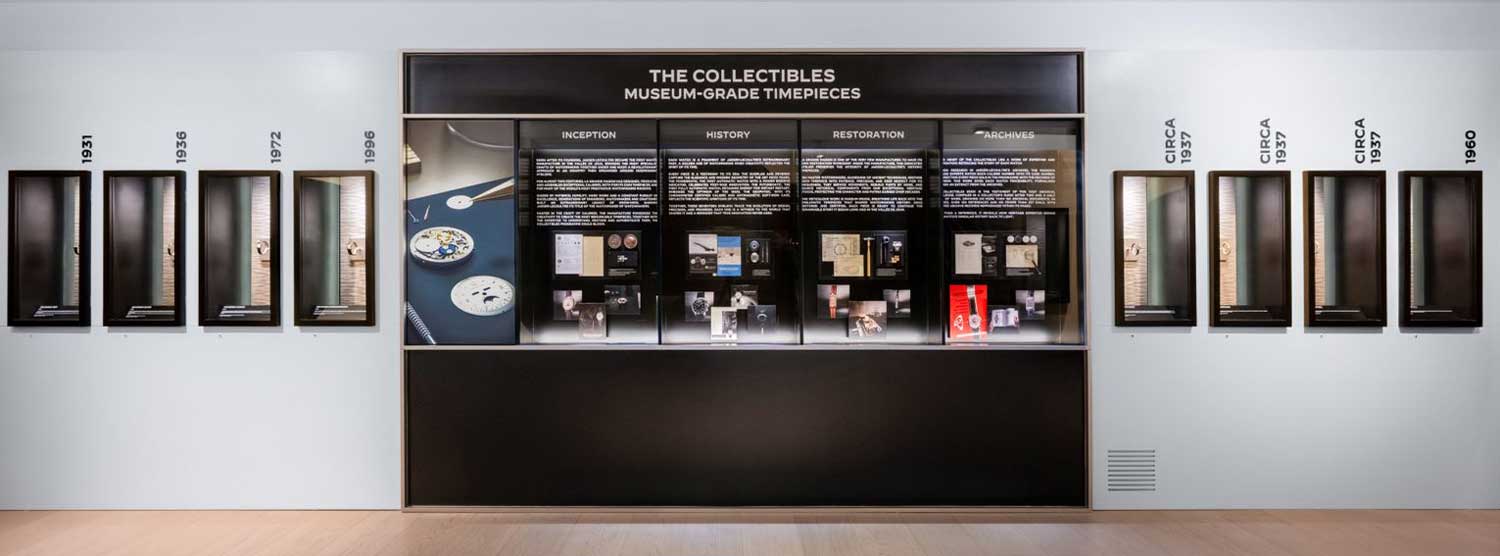
Each watch in the program is accompanied by an extract from the maison’s archives, with original box, papers, strap or bracelet included when available.
That factory link is the real appeal here, especially in a vintage market where originality, servicing history and condition can be difficult to assess from the outside.
The Hong Kong exhibition showed sixteen watches across Duoplan, Reverso, Memovox and a broader Precision category, with eight restored vintage pieces joined by modern interpretations of their design language.
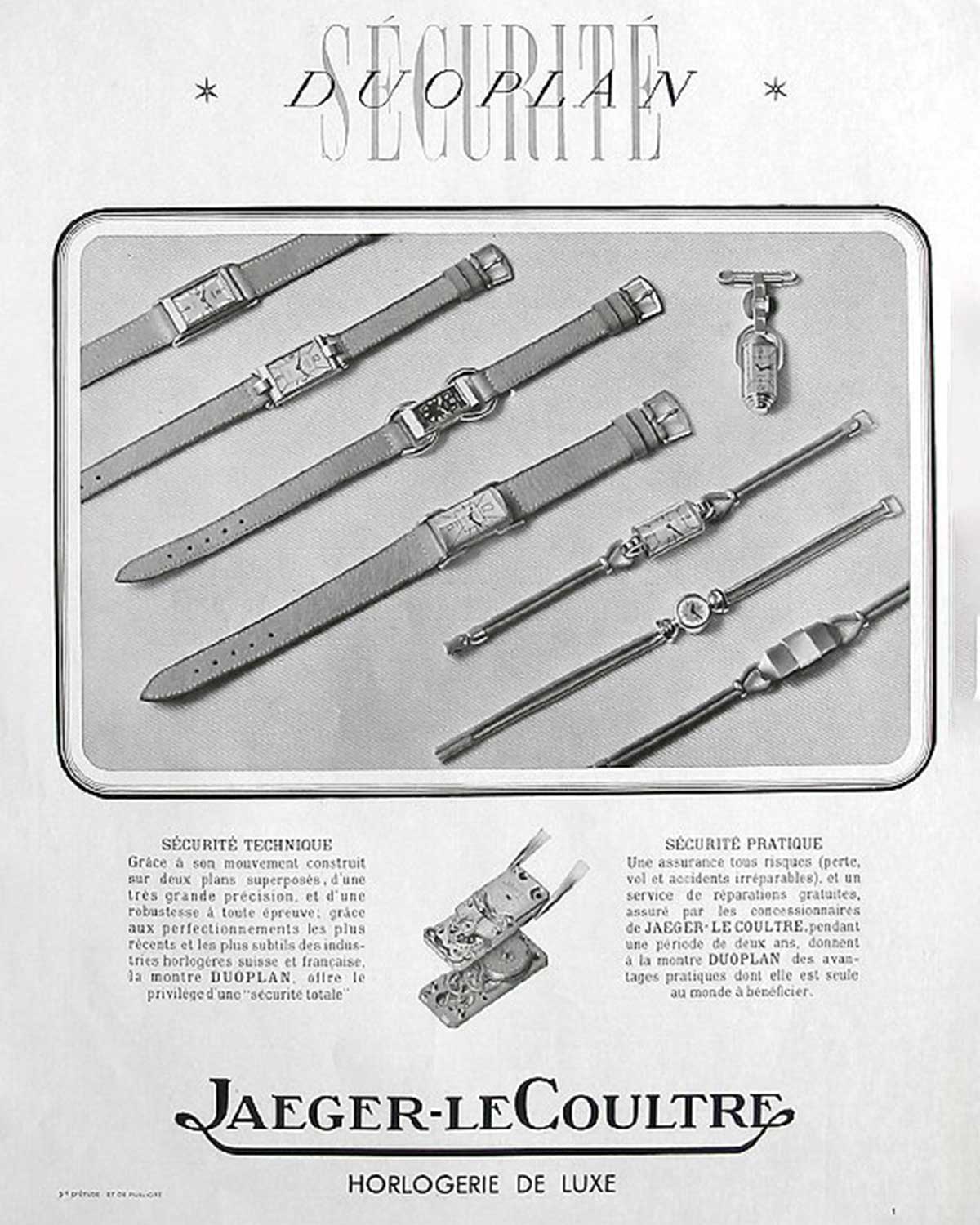
Duoplan still feels radical a century later
The seventh capsule places strong emphasis on Duoplan, one of Jaeger-LeCoultre’s most technically intriguing early watchmaking ideas.
First unveiled in 1925, the Duoplan concept was developed from an idea by Henri Rodanet, a Parisian watchmaker who became technical director of Etablissements Ed. Jaeger in Paris after the First World War.
Its purpose was simple but difficult to execute, as it sought to preserve precision while making the movement extremely small.
The solution was a two-plane construction, with a large balance wheel oscillating at 18,000 vibrations per hour on one level and the gear train operating on another level below.
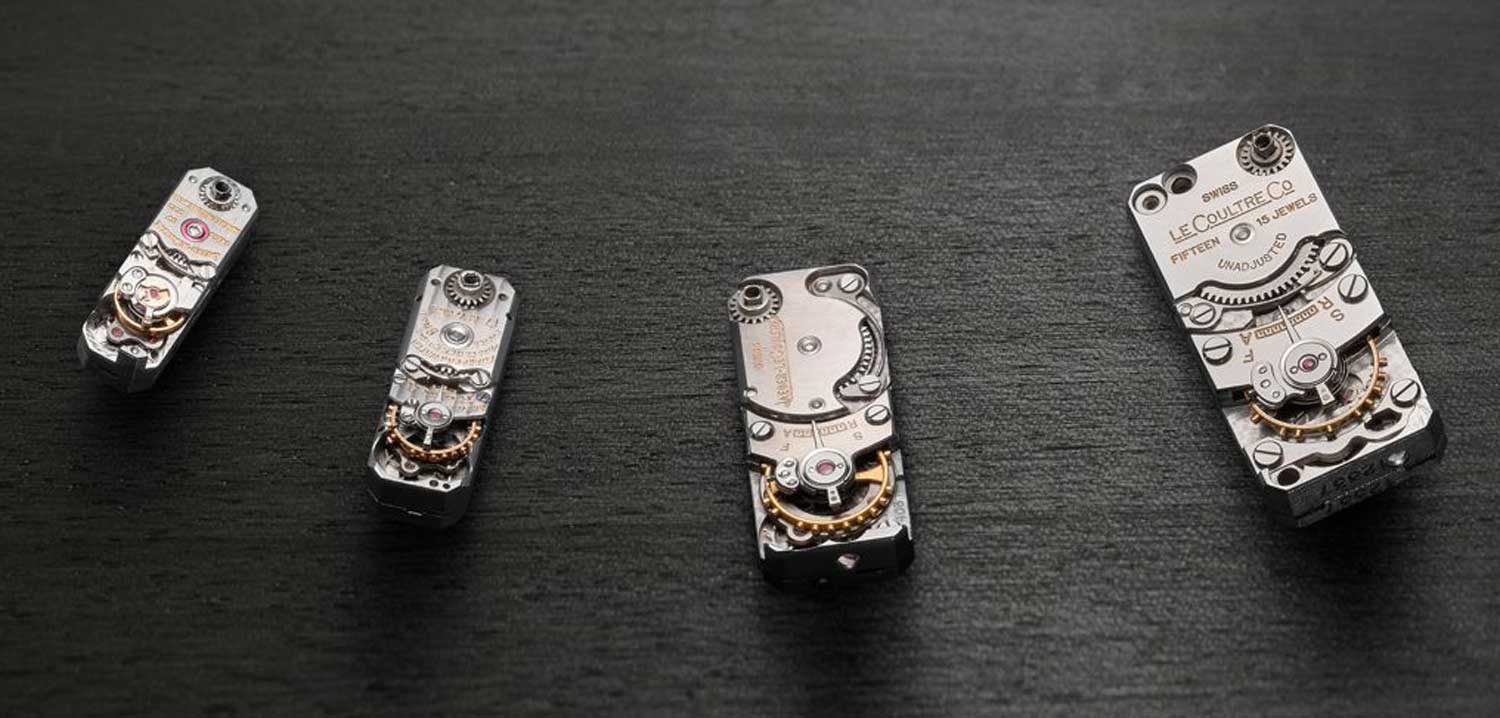
Four main Duoplan calibres were made from 1925, and the best known is Calibre 101.
Introduced in 1929, Calibre 101 measured 14mm long, 4.8mm wide and 3.4mm thick, and Jaeger-LeCoultre identifies it as the world’s smallest mechanical movement at launch.
The movement remains in production today, which gives the vintage Duoplan pieces a direct line into the maison’s current high-jewellery watchmaking.
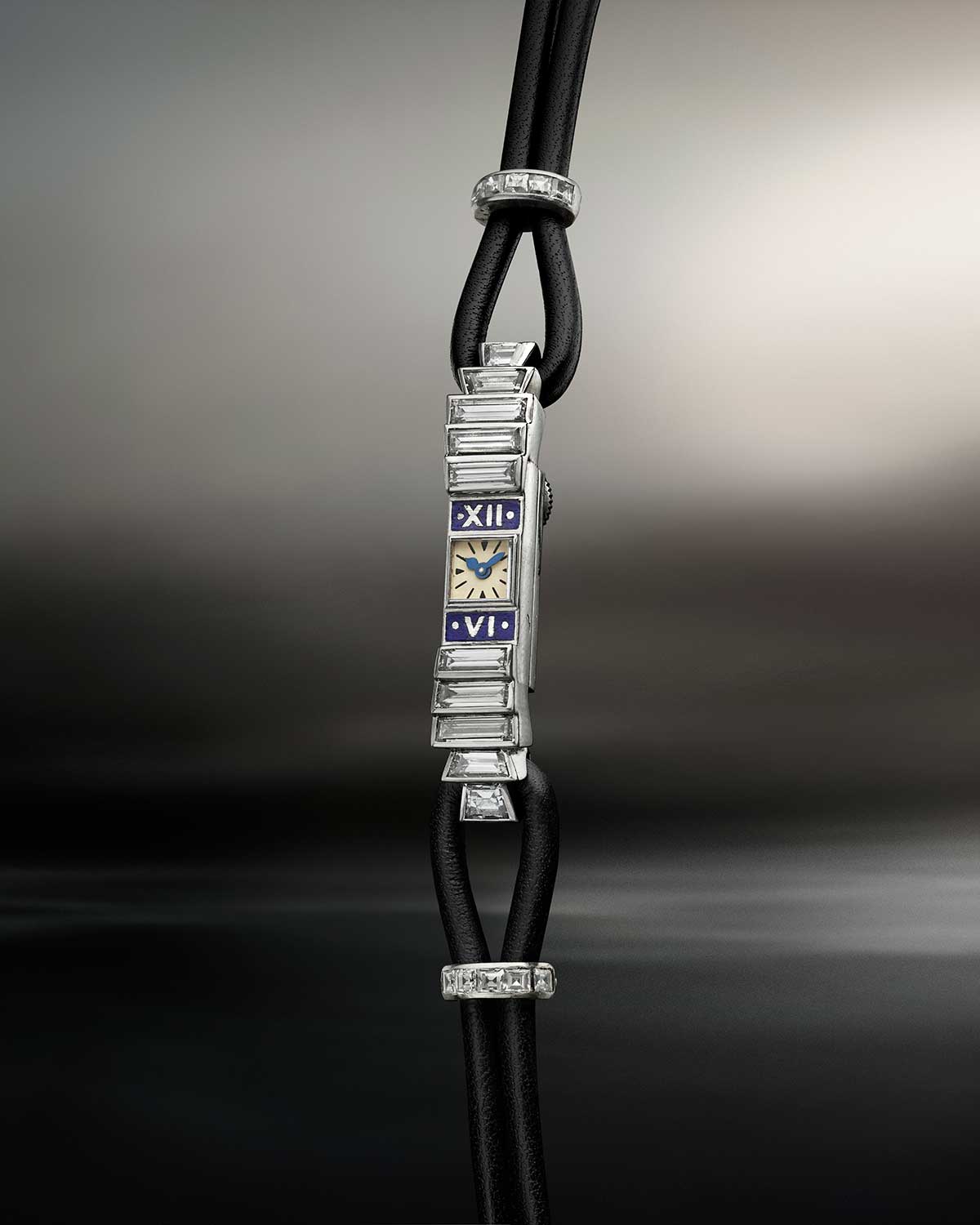
One highlight of the capsule is an Art Deco-style Calibre 101 watch from the 1950s, set in a platinum case measuring just 6.15mm wide and 5.84mm thick.
It is decorated with 22 baguette-cut diamonds, including those set on the two rings of its cordonnet bracelet.
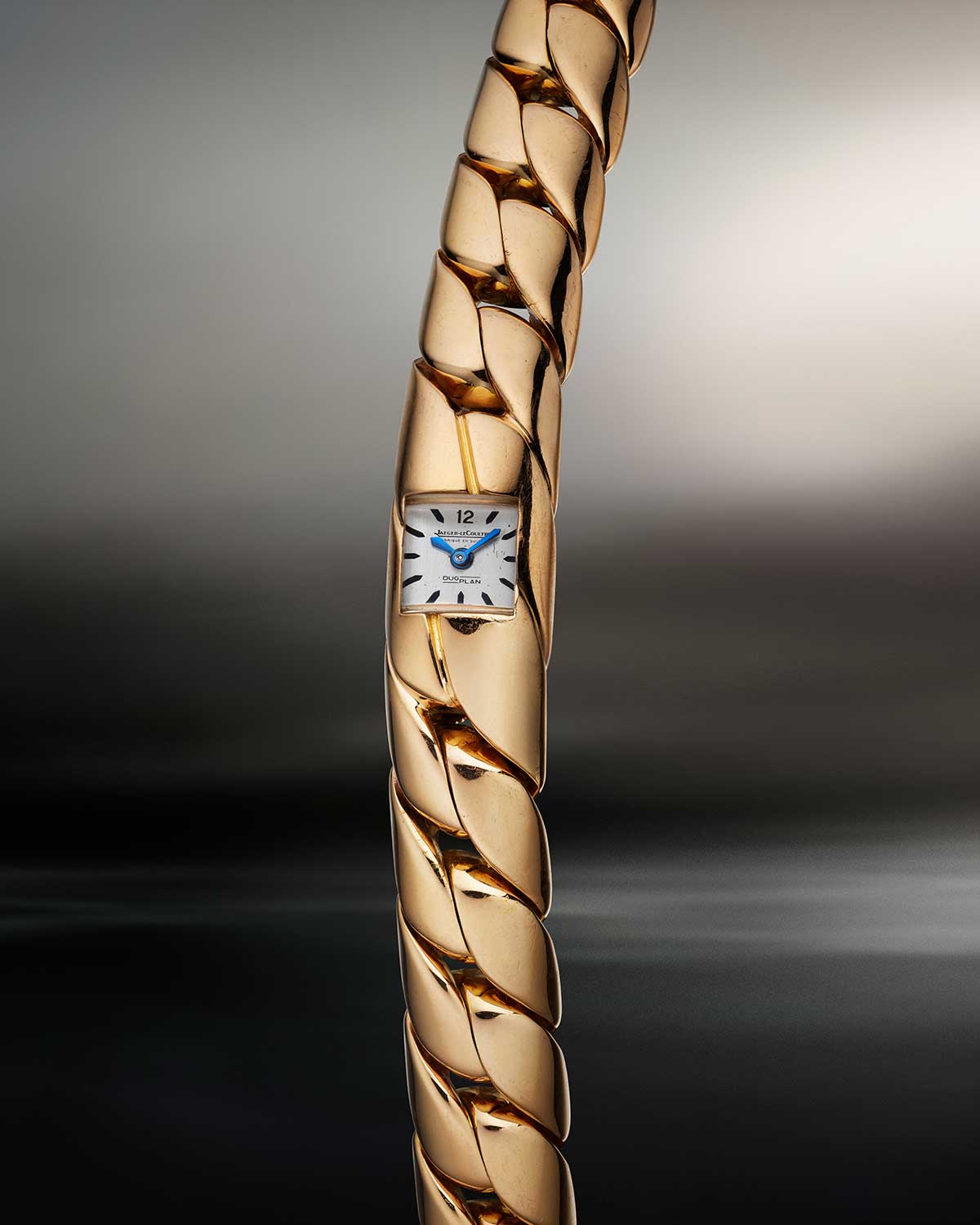
The collection also includes a Duoplan Chain from 1955 in solid 18K pink gold, with the watch and bracelet weighing 73.9g.
It is powered by Duoplan Calibre 403, introduced in 1927 and produced until 1966.
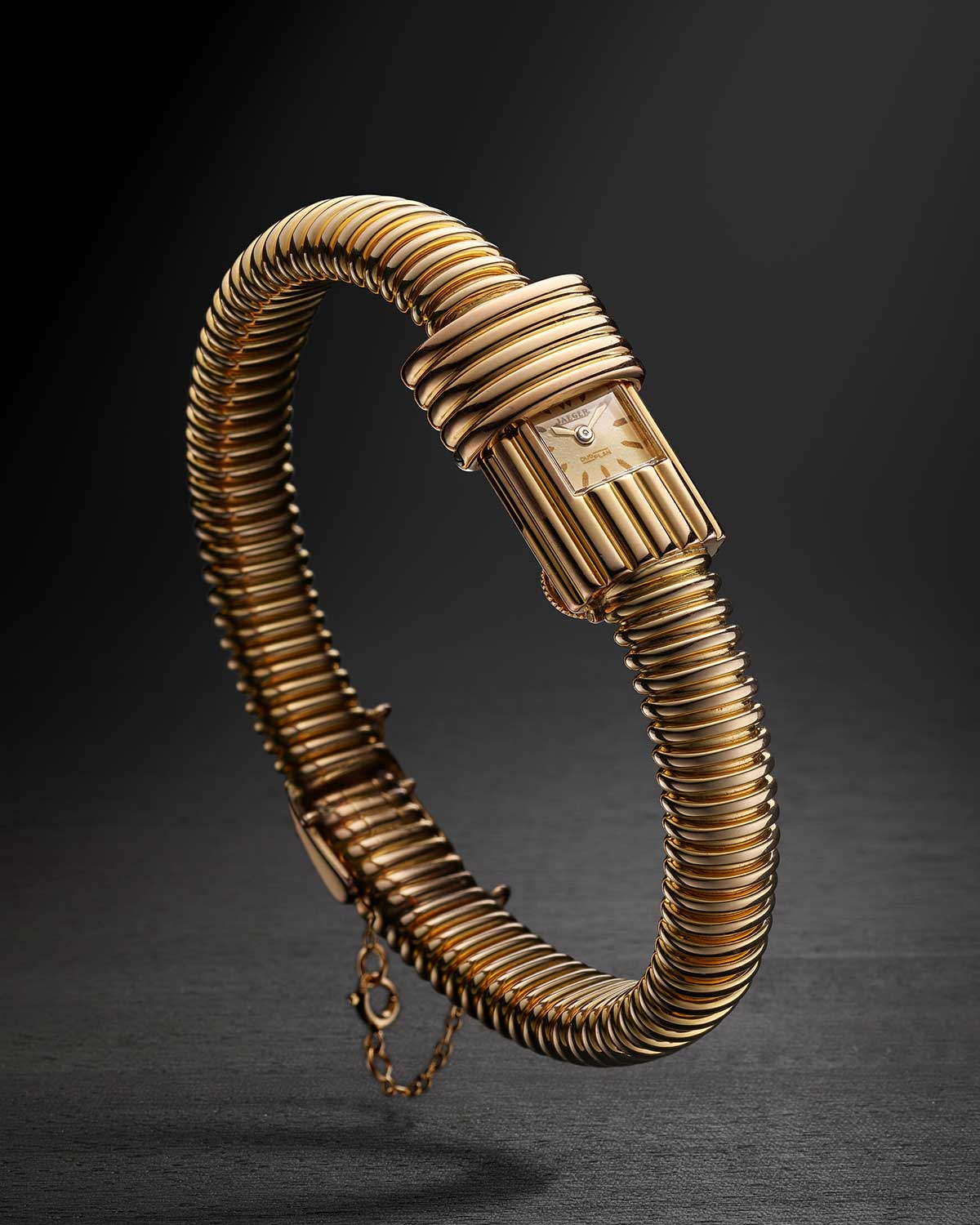
The same calibre appears in a 1949 Duoplan Tubogas secret watch, combining a ribbed pink gold bracelet with a contrasting yellow gold cover that slides over the dial.
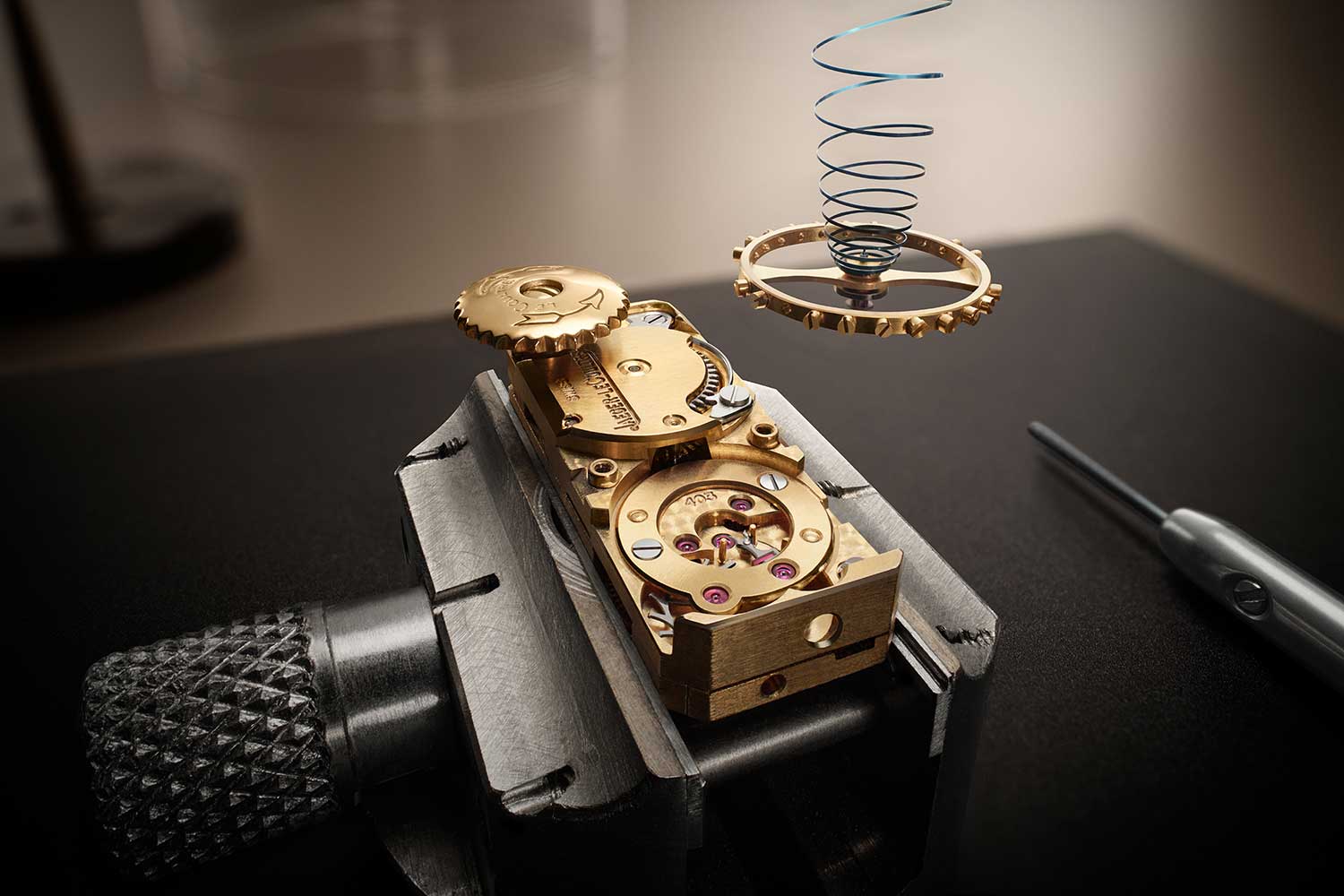
Another earlier Duoplan in the selection dates to around 1935 and uses Calibre 409, with a distinctive single rounded lug on each side of the case and a polished attachment bar.
Reverso moves from sporting origins to platinum showcases
The Reverso entries show how far one of watchmaking’s most recognisable cases has travelled since 1931.
The capsule includes a first-generation 1931 Reverso Cordonnet in steel, fitted with Calibre T051 supplied by Tavannes.
That detail matters because it predates Jaeger-LeCoultre’s own rectangular Calibre 410, which arrived in 1933 and was developed for the Reverso case.
The selection then moves to two limited-edition platinum Reverso watches from the early 2000s.
The Reverso Platinum Number 1 from 2001 has a sapphire crystal caseback displaying a skeletonised and hand-engraved calibre.
The Reverso Platinum Number 2 from 2003 also uses a sapphire caseback and features a tourbillon with a mirror-polished bridge.
Taken together, the three watches trace the Reverso from its formative years into a period when the reversible case became a canvas for movement finishing and high complications.
Calendar, Futurematic and a parking alarm with charm
The final group in The Collectibles VII broadens the story beyond the two most famous design lines.
A 1949 Triple Calendar customised for the Portuguese market features day and month indications in Portuguese, along with teardrop lugs.
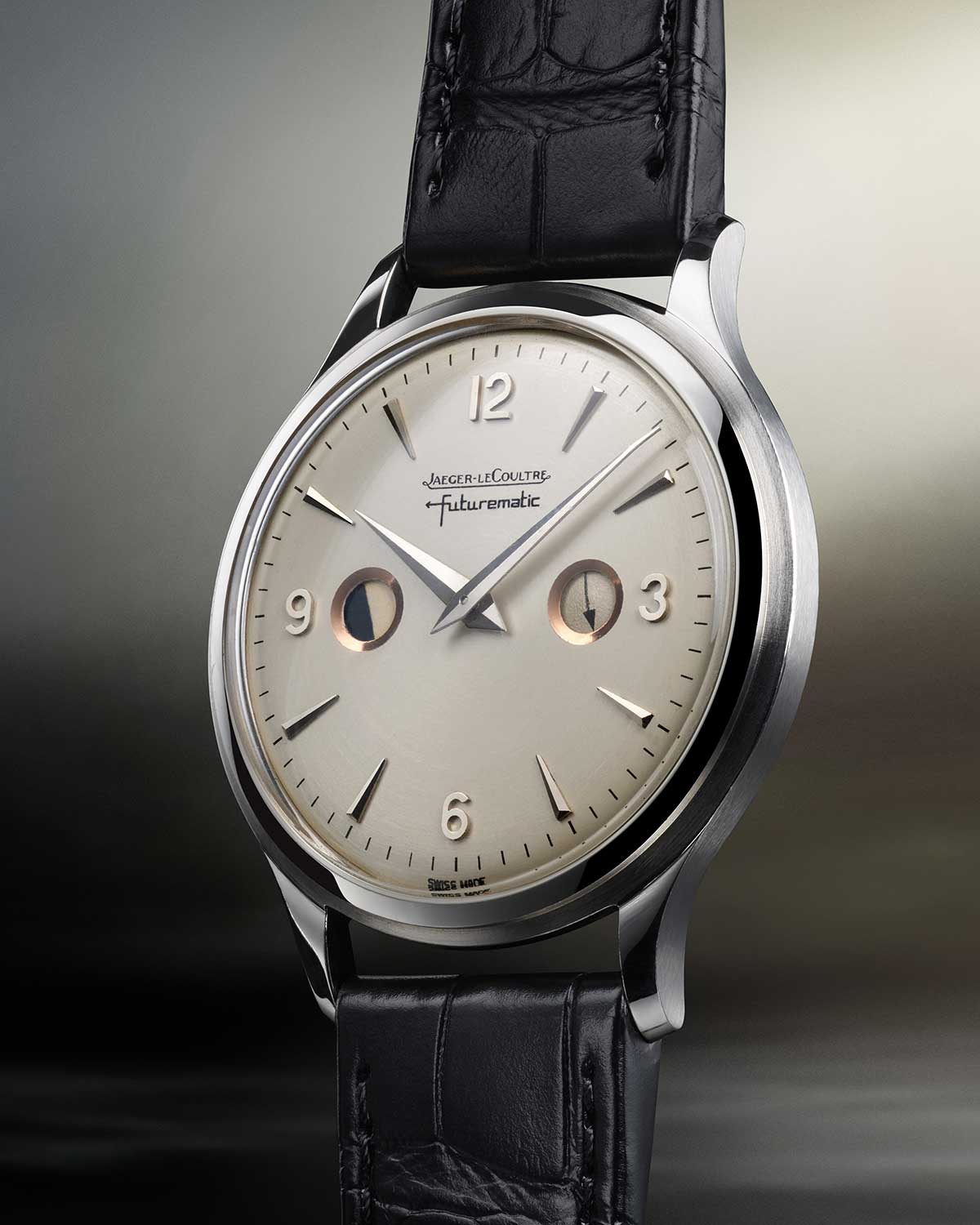
There is also a 1958 Futurematic E502, nicknamed “Porthole” for the two small windows used to show the power reserve and small seconds.
The most playful watch in the capsule is the 1958 Memovox Parking.
Its blue and white pictogram gives away its purpose, as the watch was designed to remind the wearer when parking time was up.
Inside is the hand-wound Calibre 814, built around the Memovox alarm function.
A central disc carries graduations for 30, 60, 90 and 120 minutes, reflecting standard parking durations of the period.
Details & Specifications
| Label | Value |
|---|---|
| Brand | Jaeger-LeCoultre |
| Program | The Collectibles |
| Latest capsule | The Collectibles VII |
| Program launch | 2023, marking Jaeger-LeCoultre’s 190th anniversary |
| Hong Kong exhibition | First exhibition in Hong Kong for the vintage program |
| Exhibition focus | Duoplan, Reverso, Memovox and Precision watches |
| Capsule scope | Ten historic pieces curated for the seventh capsule |
| Documentation | Extract from Jaeger-LeCoultre’s archives with each program watch |
| Included where available | Original box, papers, strap or bracelet |
| Notable Duoplan movement | Calibre 101, 14mm by 4.8mm by 3.4mm |
| Notable alarm watch | Memovox Parking from 1958 with hand-wound Calibre 814 |
The Collectibles VII works because it doesn’t reduce vintage to nostalgia.
It shows Jaeger-LeCoultre’s range at its most persuasive, from micro-mechanical jewellery watches to alarm-equipped daily tools, and gives collectors a rare chance to approach that history through the manufacture itself.