Hyundai’s design ambitions have been stretching well beyond sensible hatchbacks and family SUVs for some time now.
The latest clue is a patent that describes the kind of engineering needed for an open-top grand tourer with a long bonnet, a cabin pushed rearward and the proportions usually associated with front-engine performance cars.
It doesn’t confirm a showroom model, but it does suggest the idea is being studied with more than sketchbook enthusiasm.
At a glance
- Hyundai has patented structural work related to an open-top, long-hood GT-style vehicle.
- The filing focuses on crash-load management, a reinforced firewall and dashboard area, and packaging for electrified components.
- A production version remains unconfirmed, though the layout aligns with Hyundai and Genesis concept-car themes.
A convertible problem with a structural answer
Open-top cars are rarely simple engineering exercises, particularly when they use dramatic proportions and a cabin set far back on the chassis.
In a fixed-roof coupe, the roof, pillars and upper body structure help distribute crash forces through several load paths.
Remove that roof and those pillars, and the front structure has to do more work on its own.
Hyundai’s patent addresses that exact challenge with a redesigned firewall and dashboard structure intended to better manage impact forces in a long-bonnet convertible.
The concern is that, without the usual upper structure helping redirect energy, parts of the dashboard area could be pushed rearward in a crash.
The proposed solution includes a structurally integrated strut-tower brace, tying key front-end elements together to improve how loads move through the vehicle.
Electrified packaging under the skin
The patent also refers to a dedicated mounting area for a charging system and battery module.
That detail makes the project especially interesting because it points away from a purely conventional petrol layout.
The car could be fully electric, though the same packaging language could also suit a plug-in hybrid or a range-extender arrangement.
Nothing in the patent confirms a final powertrain, but the inclusion of charging hardware suggests Hyundai is considering a heavily electrified approach.
That would fit neatly with the wider direction of Hyundai Motor Group, which has been using electric architecture not only for efficiency, but also for performance and design experimentation.
Grand touring proportions with performance intent
The layout reads like a classic GT formula, even if the underlying hardware may be modern and electrified.
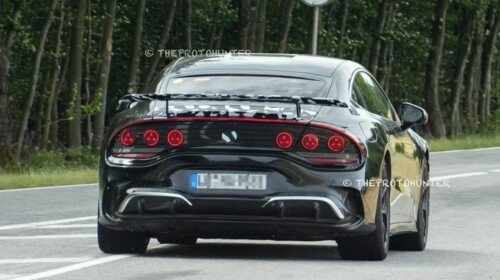
A long bonnet, rearward cabin and double-wishbone front suspension all point toward a car designed for dynamic credibility rather than pure styling theatre.
Those cues are often associated with rear-drive or rear-biased performance cars, though Hyundai has not confirmed a drivetrain layout for any production model tied to this work.
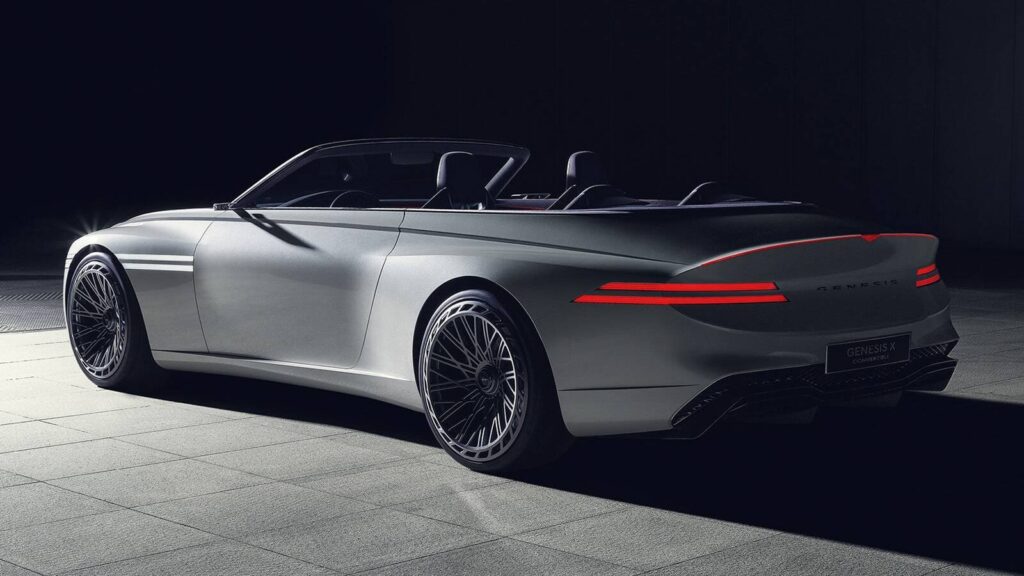
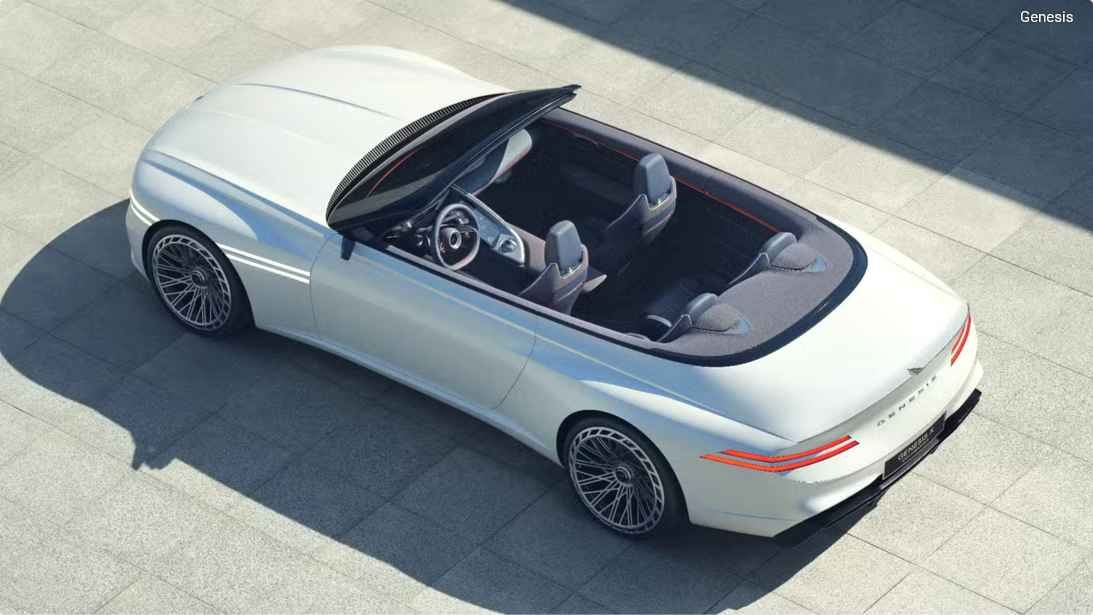
The proportions also echo the more aspirational side of Genesis design, particularly the Genesis X Convertible and X Gran Convertible concepts.
Those show cars helped establish a visual language for an elegant, open-top grand tourer within Hyundai Motor Group’s luxury orbit.
This patent adds an engineering layer to that design conversation.
Details & Specifications
| Company | Hyundai |
|---|---|
| Vehicle type described | Open-top grand tourer-style vehicle |
| Key proportions | Long bonnet and rear-set cabin |
| Structural focus | Firewall, dashboard area and crash-load management |
| Notable component | Structurally integrated strut-tower brace |
| Electrified packaging | Mounting area for charging system and battery module |
| Suspension detail | Double-wishbone front suspension referenced |
| Production status | Unconfirmed |
Patents don’t guarantee production cars, and many serious engineering ideas never reach a dealership floor.
Still, this one is notable because it deals with the unglamorous problems that sit beneath a glamorous shape.
If Hyundai or Genesis does move toward an open-top GT, the groundwork appears to be more substantial than a styling exercise.