Long before a wristwatch could disappear under a shirt cuff, mechanical timekeeping was already looking up.
The earliest astronomical clocks didn’t simply divide the day into hours; they mapped the apparent motion of the sun, moon, zodiac and planets with a level of ambition that still feels audacious.
Today’s celestial watches continue that tradition in miniature, translating lunar cycles, planetary orbits and the theatre of the night sky into mechanical displays worn on the wrist.
At a glance
- Celestial complications trace a line from medieval astronomical clocks to modern wristwatches with moon phase and planetarium displays.
- The most common version is the moon phase, while rare orrery-style watches mechanically depict planetary motion.
- High-end examples include Christiaan van der Klaauw’s Grand Planetarium Eccentric and Jacob & Co.’s Astronomia Solar.
Mechanical timekeeping began by watching the sky
The Prague Astronomical Clock, introduced in 1410, remains one of the great surviving monuments of mechanical astronomy.
It displays the relative positions of the sun, moon and zodiac, and its continued operation makes it a living reminder that horology was never just about telling the hour.
Even earlier, Richard of Wallingford’s 14th-century clock could follow the sun through the year and predict moon phases, lunar eclipses and tides.
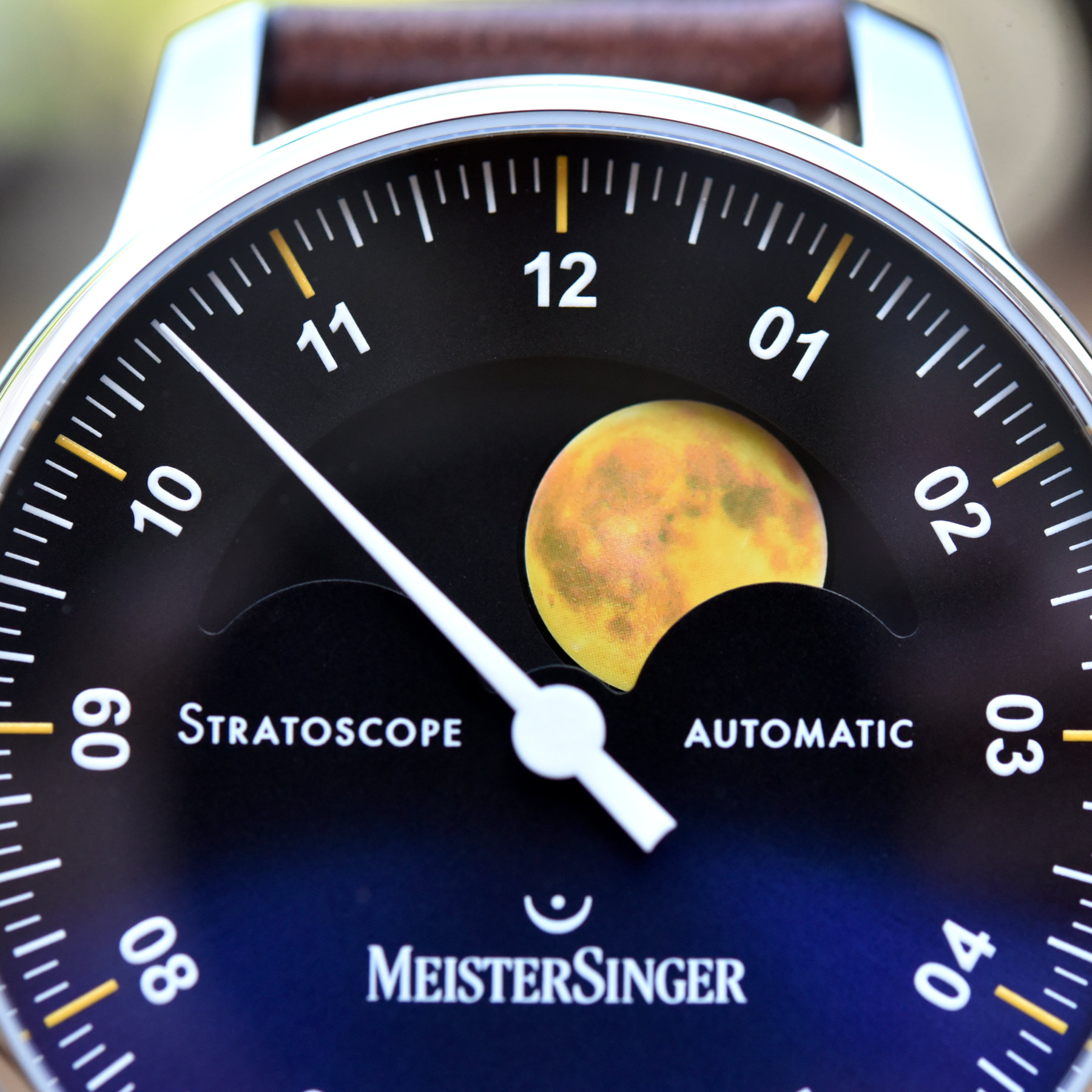
Giovanni Dondi’s Astrarium, completed in 1364, went further still with seven dials tracking the sun, moon and the five planets known at the time.
Mechanical clocks emerged around the late 13th century, so astronomical displays arrived remarkably close to the beginning of the discipline.
That matters because it shows how naturally timekeeping and astronomy were linked before clocks became domestic objects, status symbols or precision instruments.
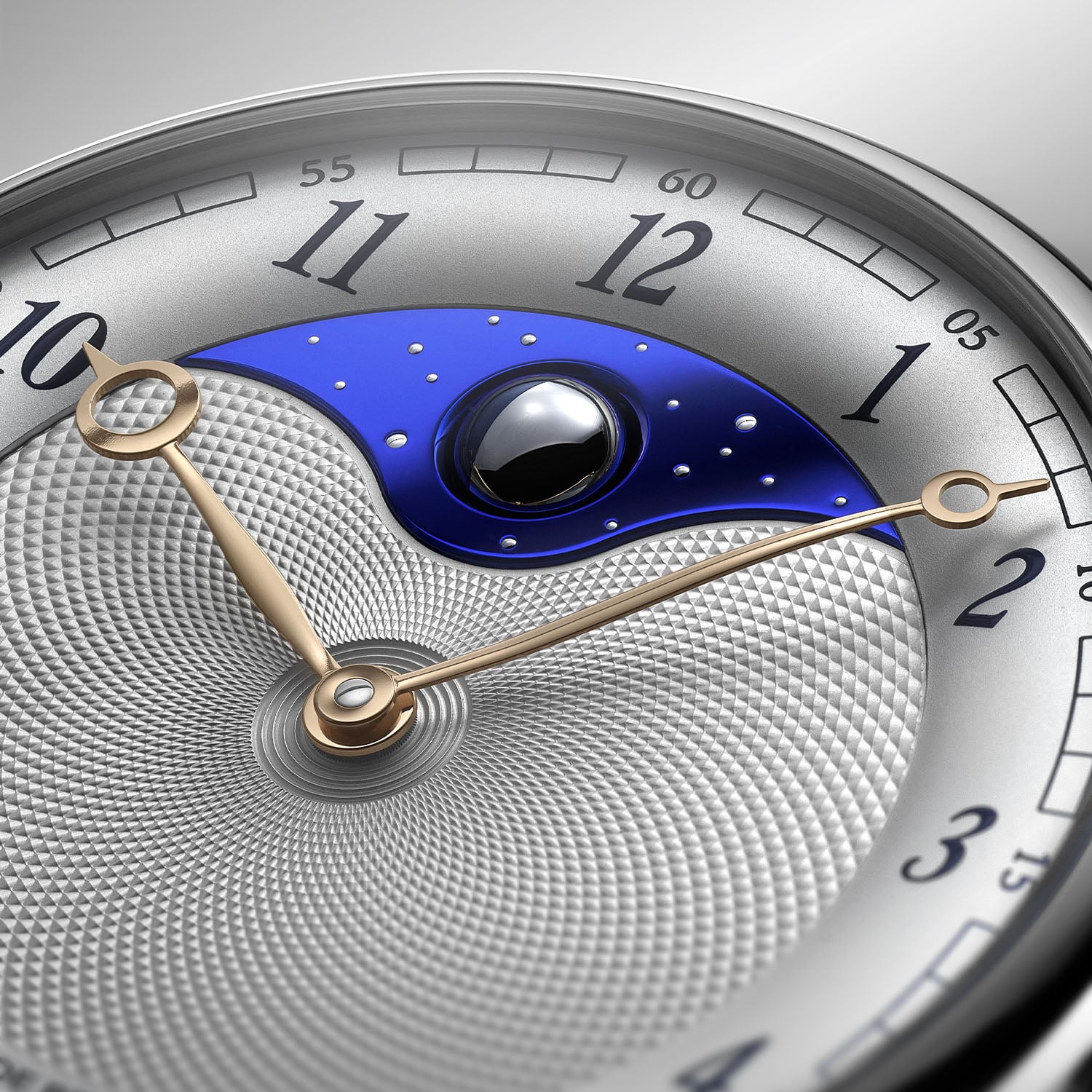
The moon phase became the practical celestial complication
When portable timekeeping developed in early 16th-century Germany with spring-driven “Nuremberg eggs,” astronomical ideas began the long journey from public clock towers to personal objects.
Early moon phase displays were rudimentary, partly because the watches themselves were still imprecise.
With verge escapements and foliots, daily errors could be significant, making any celestial indication more poetic than exact.
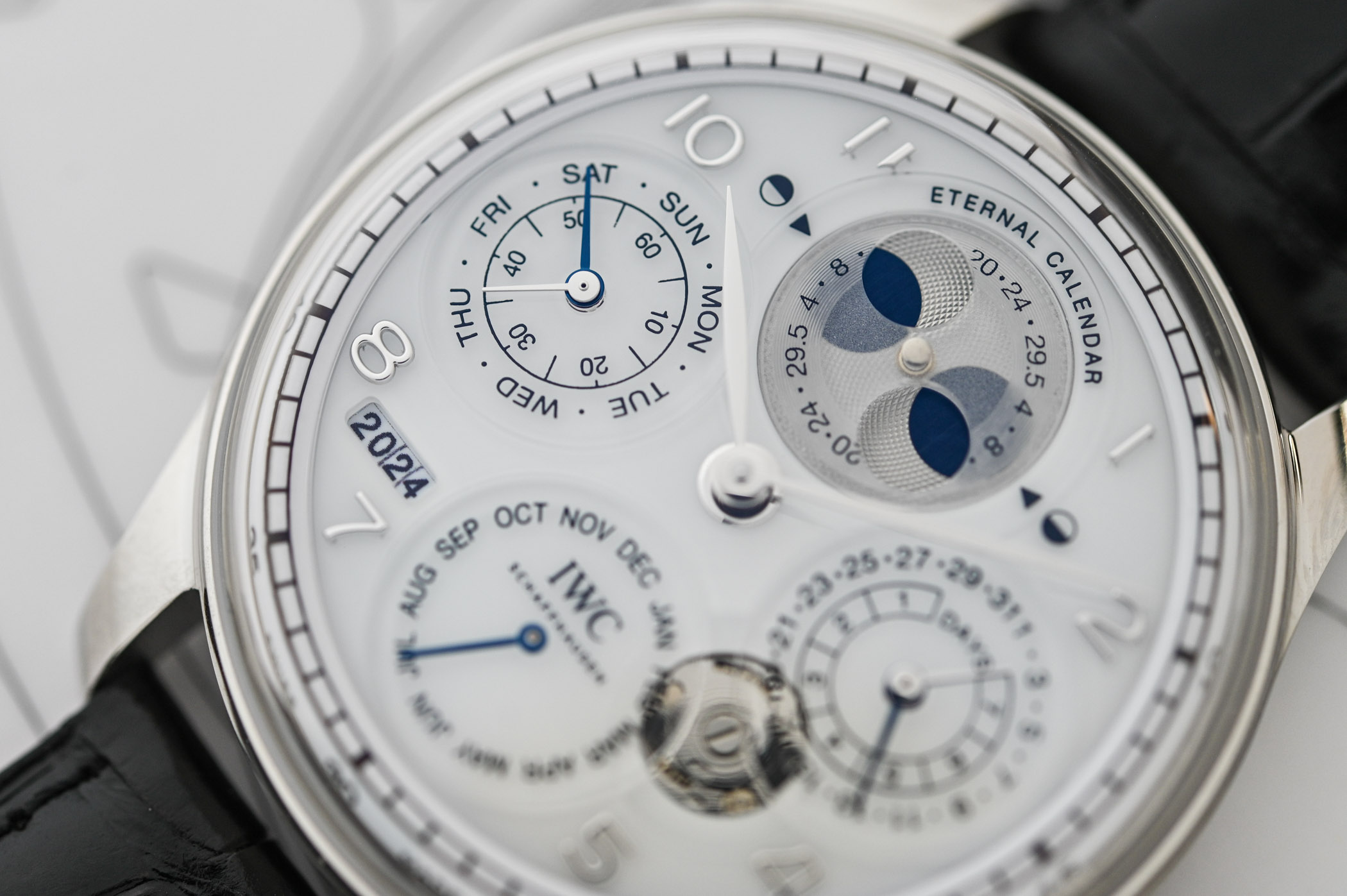
By the start of the 17th century, English watchmakers were producing more recognisable moon phase indications in pocket watches.
A surviving London example from around 1605 points to how useful the complication could be in everyday life.
For sailors, the moon helped in understanding tides; for travellers, it hinted at brighter nights; for farmers, it could help guide seasonal work.
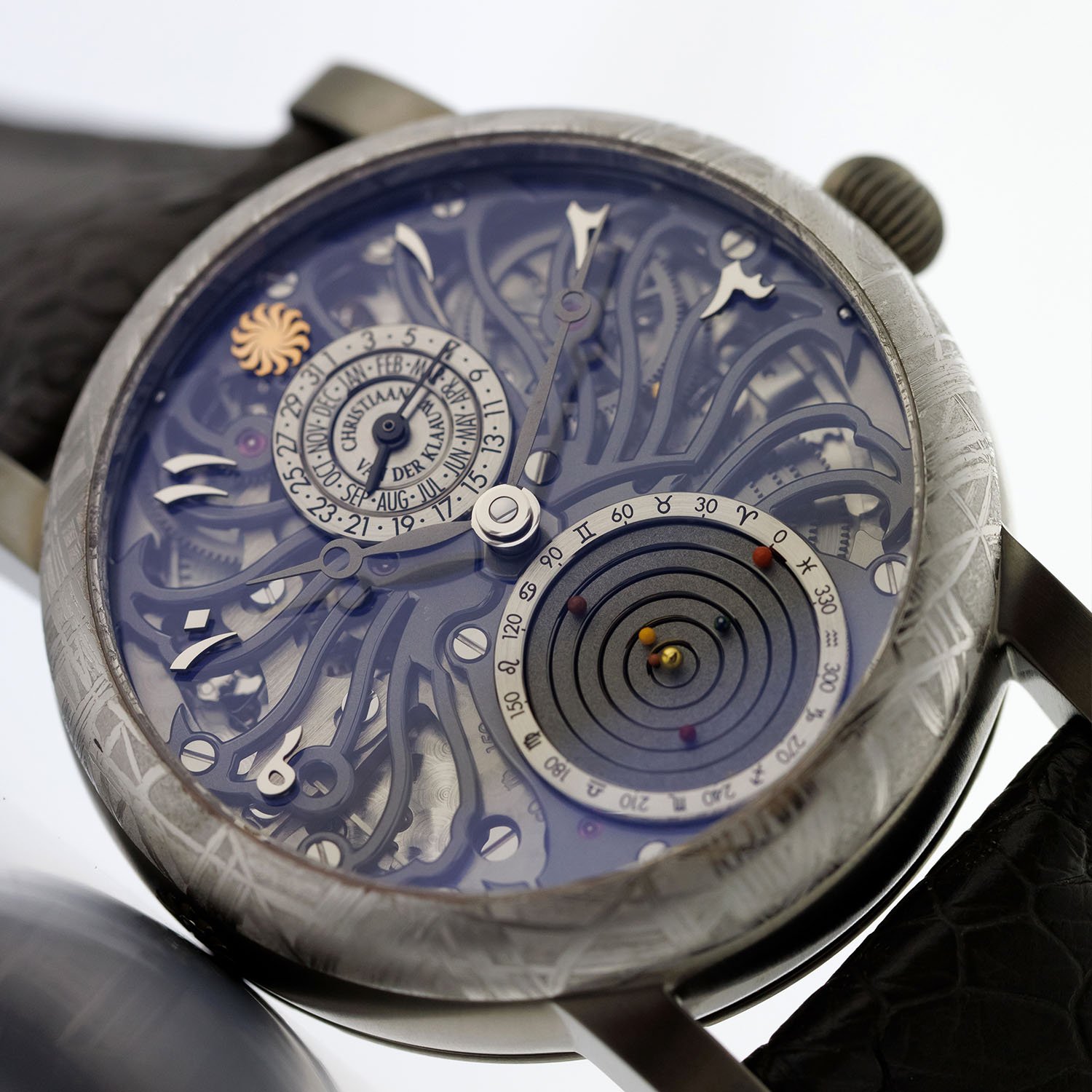
The technical challenge sits in the lunar month itself.
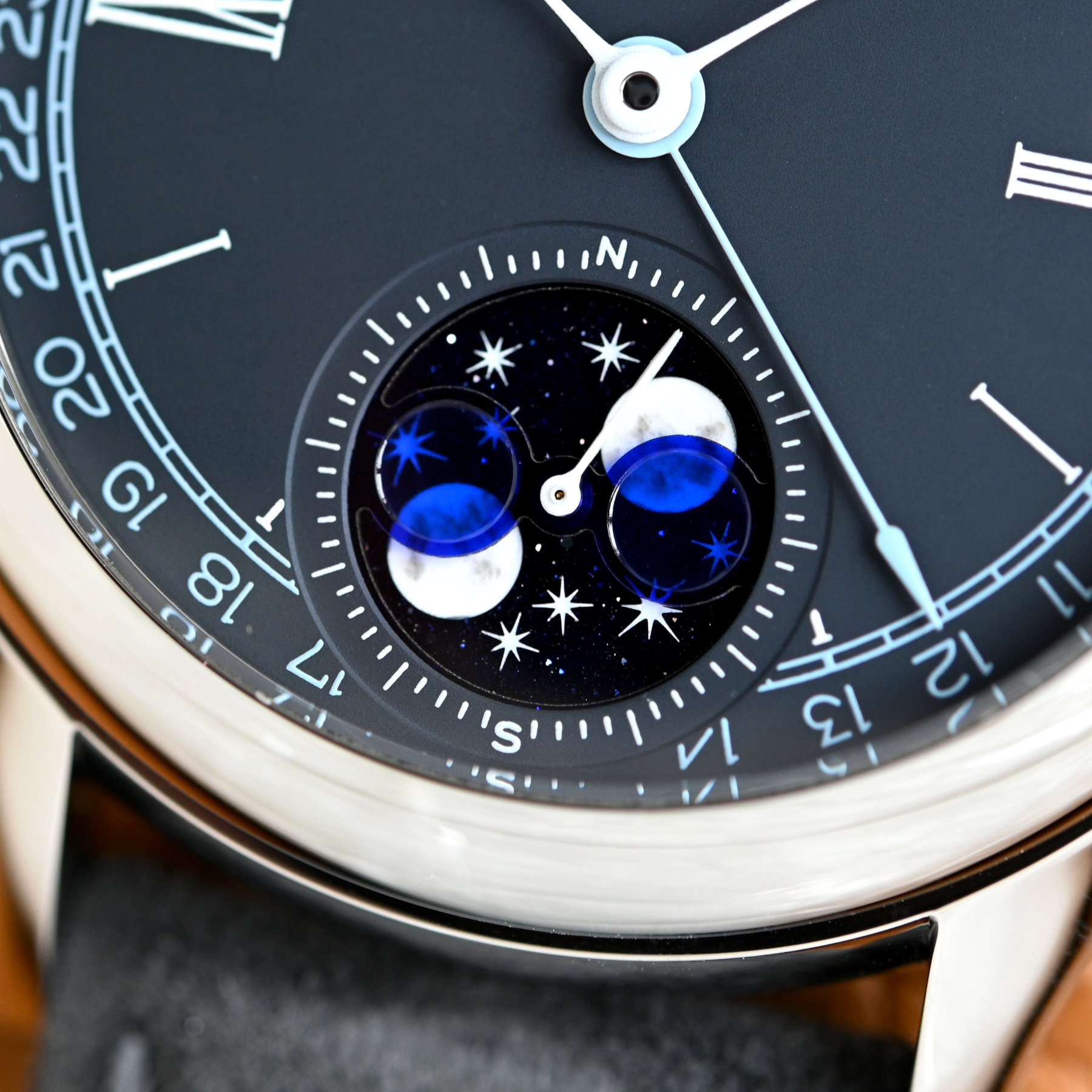
A synodic month, from new moon to new moon, lasts about 29.53 days, while the traditional moon phase mechanism often used a 59-tooth wheel to represent two cycles of 29.5 days.
That small rounding error meant the display could drift by a day in roughly two years, seven months and 20 days, even before the watch’s own timekeeping errors were considered.
Perpetual calendars made the moon more precise
The leap forward came as calendar mechanisms became more sophisticated.
Thomas Mudge’s perpetual calendar of 1762 pushed watchmaking toward more specialised gear trains capable of handling irregular month lengths and leap years.
That same logic helped improve moon phase indications, replacing the simpler 59-tooth approach with gear systems calculated for much longer accuracy.
In modern watchmaking, a high-precision moon phase may remain accurate to within a day over a century or more, at least in theory.
In practice, watches stop, oils age and movements need servicing, so the romance of a hundred-year moon phase is always balanced by the realities of ownership.
The moon phase remains a natural partner to the perpetual calendar because both complications translate calendar time into mechanical memory.
They’re independent systems, but aesthetically and intellectually they belong together.
Planetarium watches bring the solar system to the wrist
Moon phases are the accessible end of celestial watchmaking; planetarium and orrery watches occupy the other extreme.
The idea reaches back to the Antikythera mechanism, built around 150 BC and widely regarded as the world’s first mechanical computer.
Its geared construction tracked the sun, moon and the five planets known in antiquity, showing how deep the connection between astronomy and mechanics runs.
The term “orrery” arrived in 1712 after London engineer John Rowley built a sophisticated mechanical model for Charles Boyle, the 4th Earl of Orrery.
By the 18th and 19th centuries, large orreries became learned status objects, admired in wealthy homes and schools.
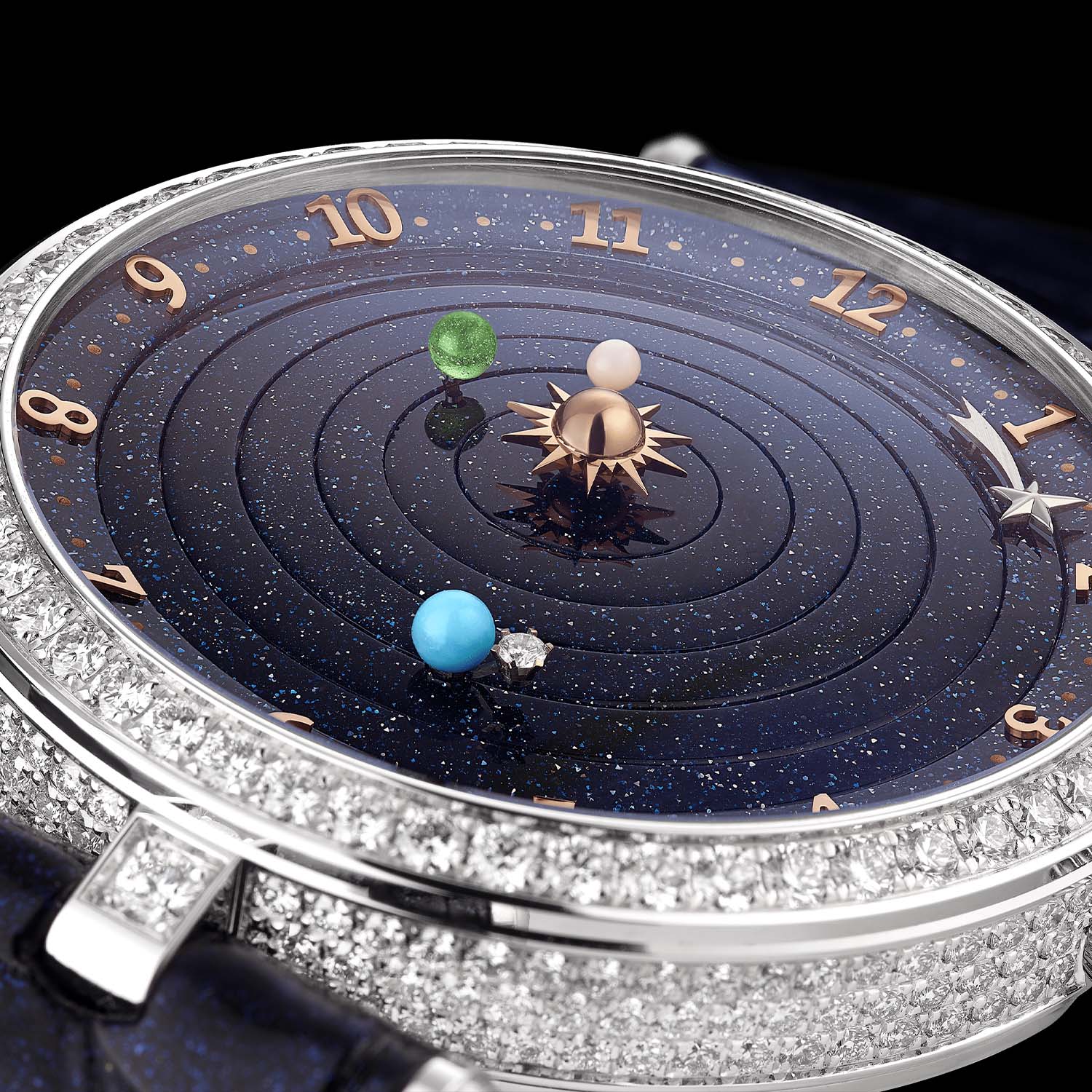
On the wrist, the same concept becomes exponentially harder.
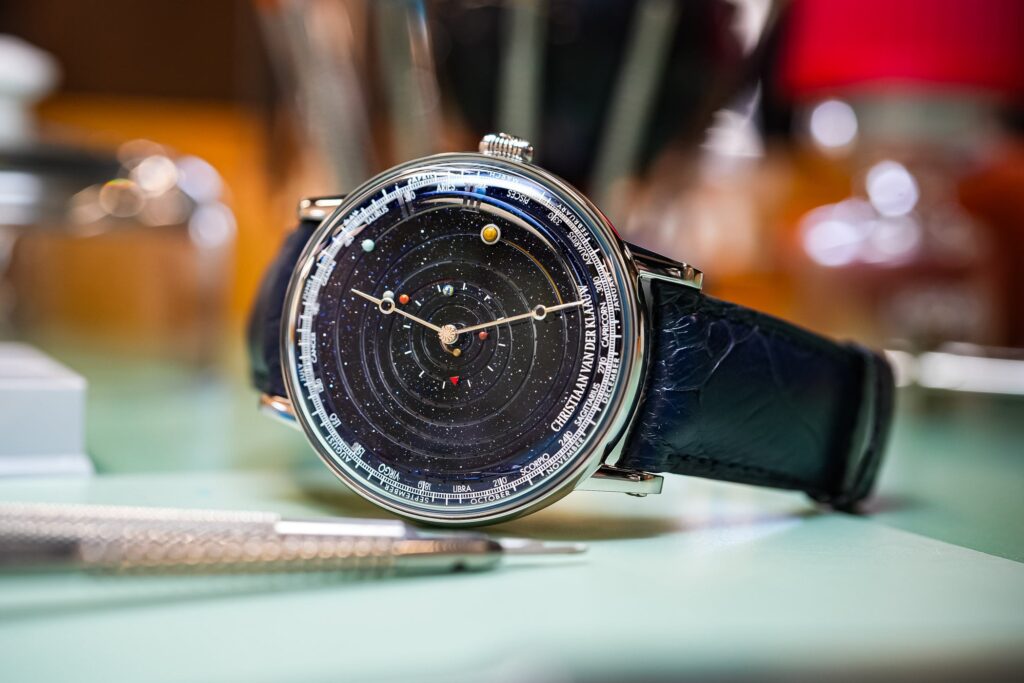
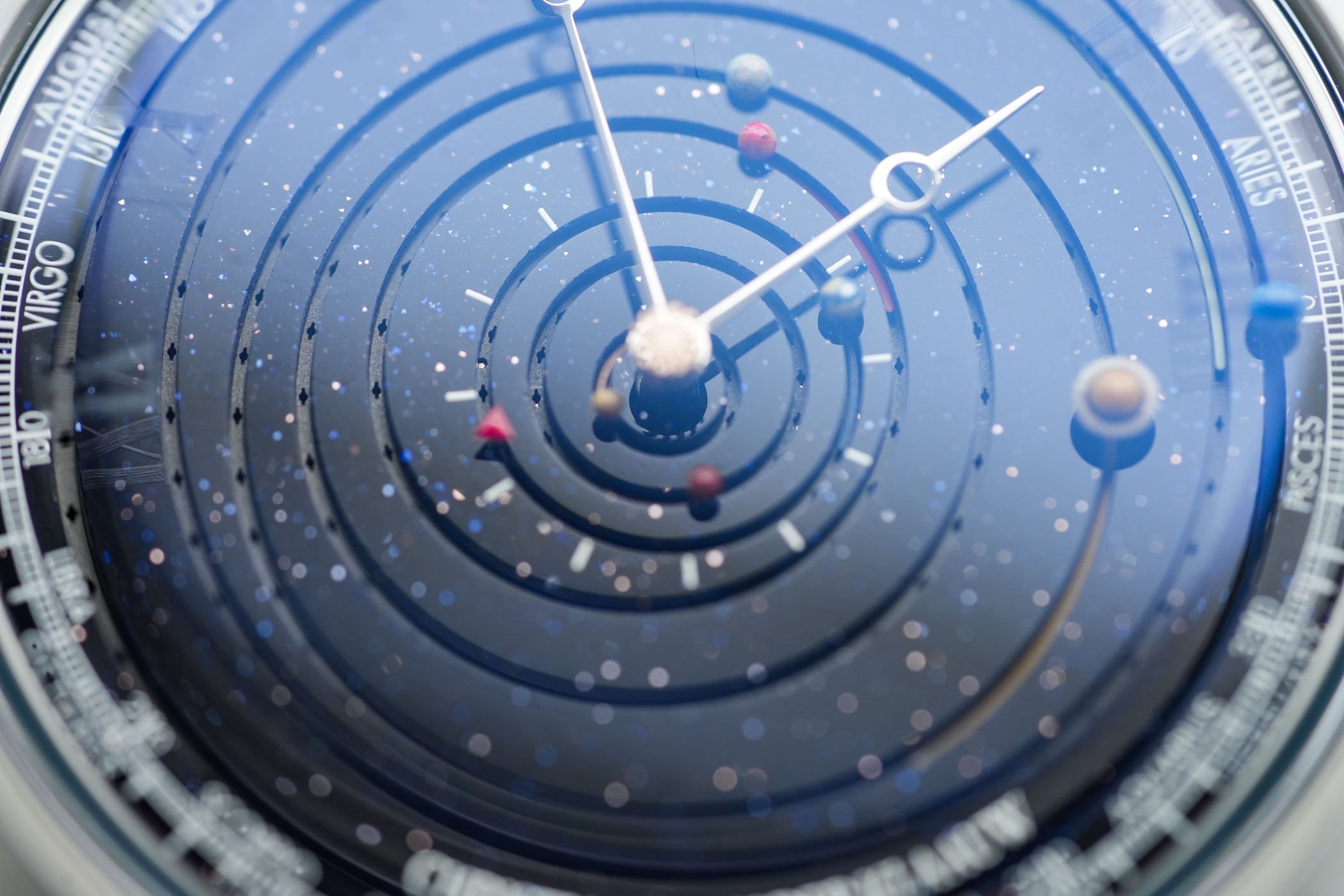
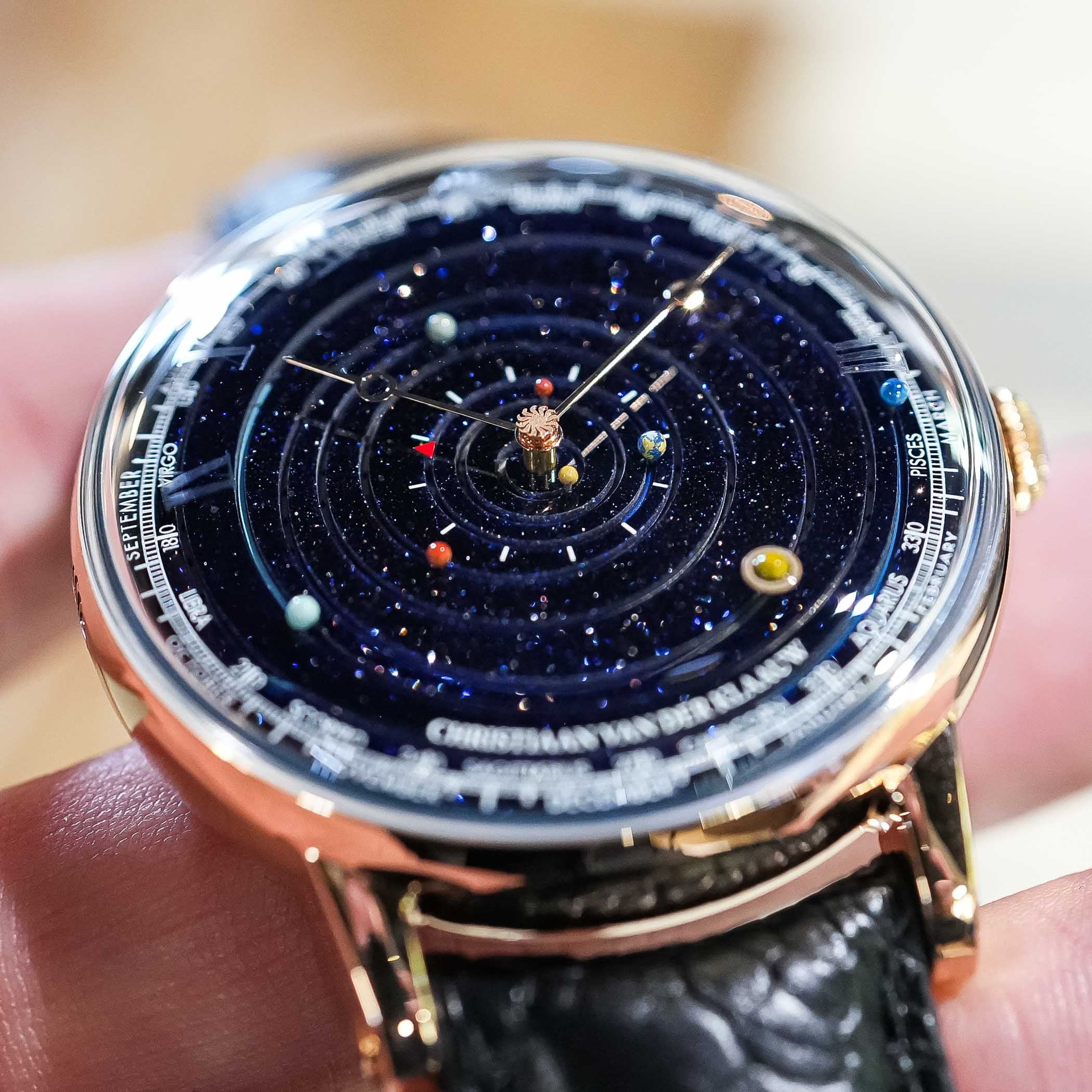
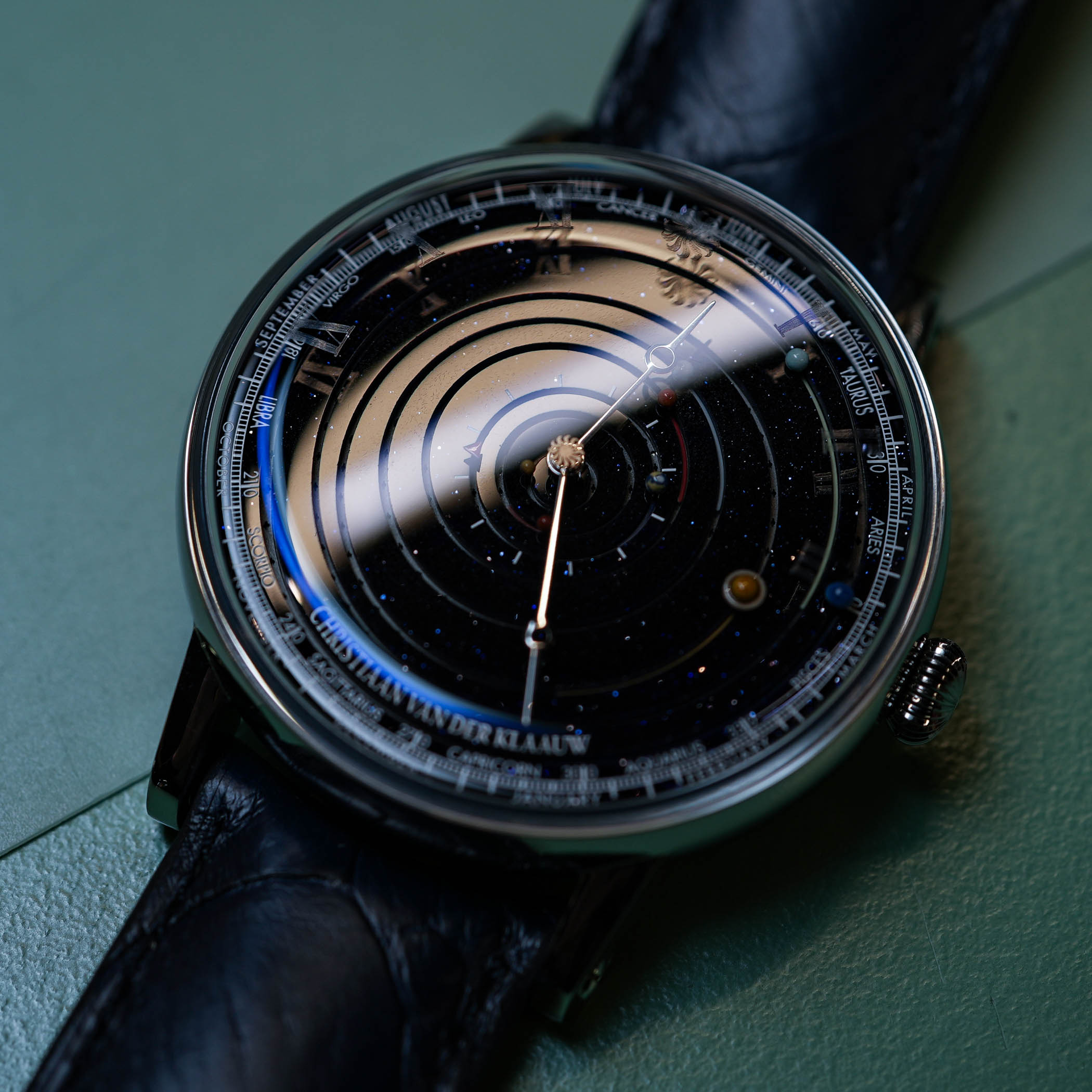
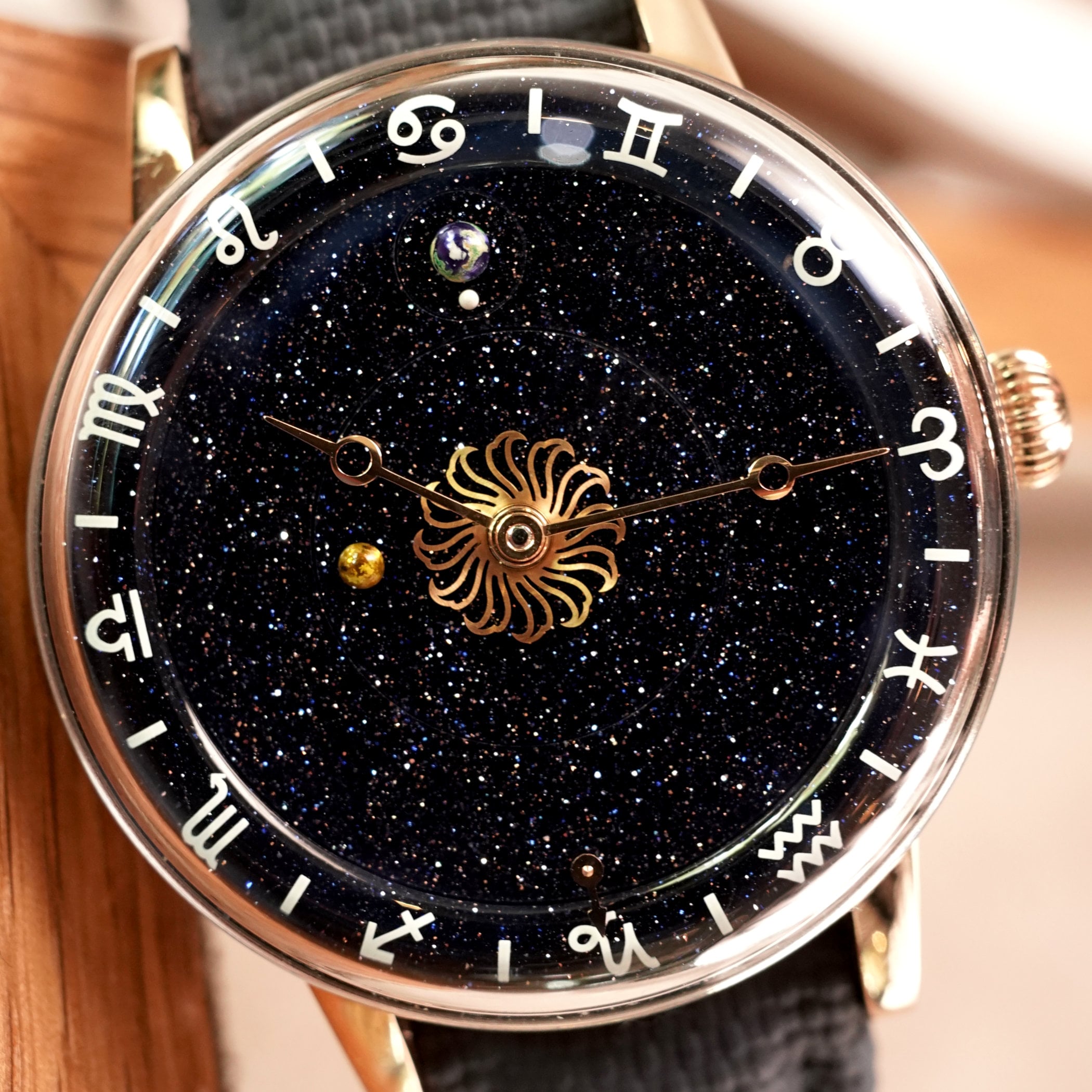
Christiaan van der Klaauw’s Grand Planetarium Eccentric is one of the most compelling modern examples, using spherical satellites over a starry aventurine dial to track the elliptical orbits of Mercury, Venus, Earth, Mars, Jupiter, Saturn, Uranus and Neptune.
Its planetary cycles range from about 90 days to more than 160 years, with the sun positioned centrally above the time display.
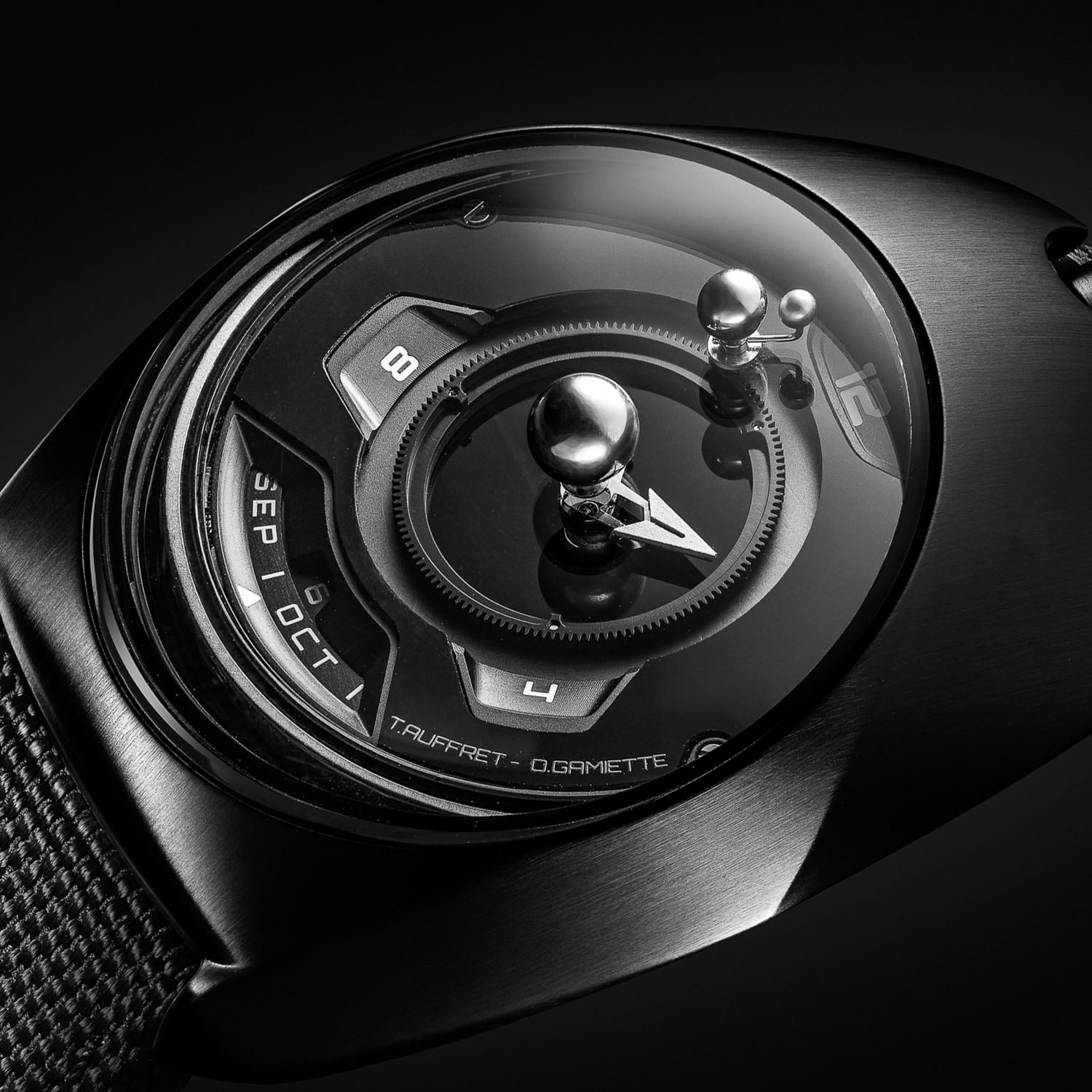
Jacob & Co.’s Astronomia Solar takes a more sculptural route, placing a miniature celestial theatre inside a tall 44.5mm 18k gold case.
Cut stones stand in for the sun and planets, while the Earth is depicted in rose gold and blue lacquer.
Its aventurine base, rotating planetary architecture and bi-axial flying tourbillon make it less a conventional dial than a mechanical display case for motion.
Details & Specifications
| Christiaan van der Klaauw Grand Planetarium Eccentric | Tracks all eight planets with elliptical orbits on a starry aventurine dial |
|---|---|
| Grand Planetarium Eccentric orbital range | Planetary cycles from about 90 days to more than 160 years |
| Jacob & Co. Astronomia Solar case | 44.5mm 18k gold case with 21mm height |
| Astronomia Solar celestial elements | 1.5-carat citrine crystal sun, with amethyst, garnet and smoked quartz planets |
| Astronomia Solar Earth display | Rose gold and blue lacquer representation of Earth |
| Astronomia Solar tourbillon | Bi-axial flying tourbillon with 60-second horizontal rotation and 10-minute vertical rotation |
| Astronomia Solar motion | Planets rotate every 10 minutes, with the dial base rotating counterclockwise every 10 minutes |
Celestial complications sit at a fascinating point in watchmaking because they’re rarely about urgency.
They ask the wearer to think beyond minutes and meetings, toward tides, seasons, lunar light and planetary time, which is exactly why they still feel alive in a mechanical watch.