Some watchmaking ideas are radical because they add complexity.
The inclined tourbillon is different because its provocation begins with geometry.
By tilting the regulating organ away from the flat plane of the movement, a watchmaker could ask a sharper version of an old question: if gravity changes a watch’s rate, why should the oscillator meet gravity from only one familiar angle?

At a glance
- The inclined tourbillon traces back to Andrew Holden Potter, a Boston watchmaker linked to the earliest known tourbillon with an inclined balance axis.
- The idea repositions the oscillator at an angle so it spends less time in the most extreme horizontal and vertical orientations.
- Potter’s work, made around 1860, remains one of the most intriguing under-recognised episodes in tourbillon history.
The tourbillon problem was always geometric
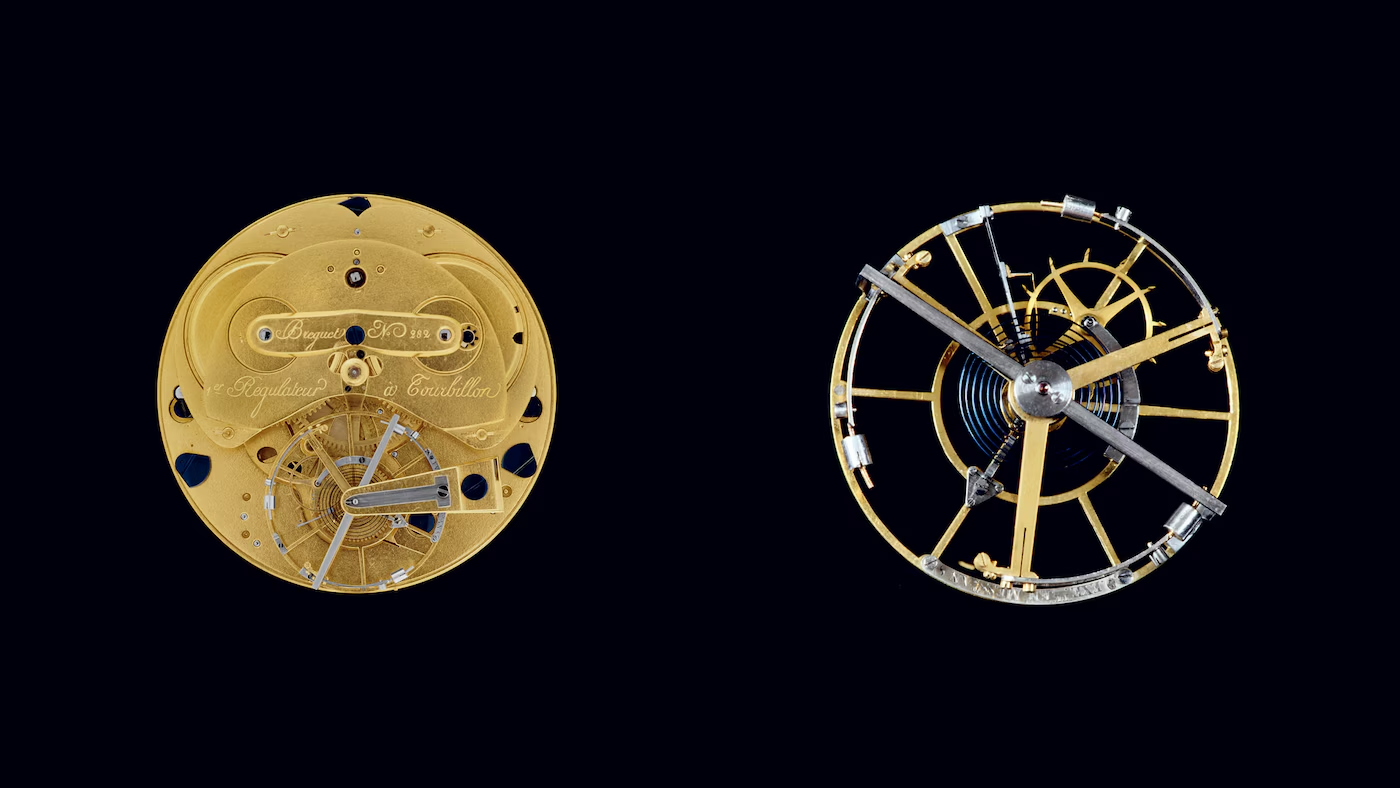
Abraham-Louis Breguet’s tourbillon, patented in 1801, was conceived for the habits of pocket watches.
A pocket watch spent much of its life upright in a waistcoat or fob pocket, so Breguet placed the balance, hairspring and escapement inside a rotating cage to average the errors created by gravity in the vertical position.
In that context, the logic is beautiful.
The cage turns in the plane of the movement plate, carrying the regulating system through different vertical positions so that no single gravitational error dominates the rate.
But a pocket watch doesn’t remain vertical forever.
Lay it flat on a desk and the balance staff becomes vertical, leaving gravity to act along the axis rather than across the pivots.
That position is often friendlier to the oscillator because the contact at the pivot tip is tiny and friction is comparatively low.
The conventional tourbillon can’t average the flat position against the vertical ones.
It keeps rotating, consuming space and energy, while no longer addressing the positional problem it was most directly designed to solve.
Andrew Holden Potter’s angled answer
Andrew Holden Potter’s contribution was to think beyond the flat architecture of the traditional tourbillon cage.
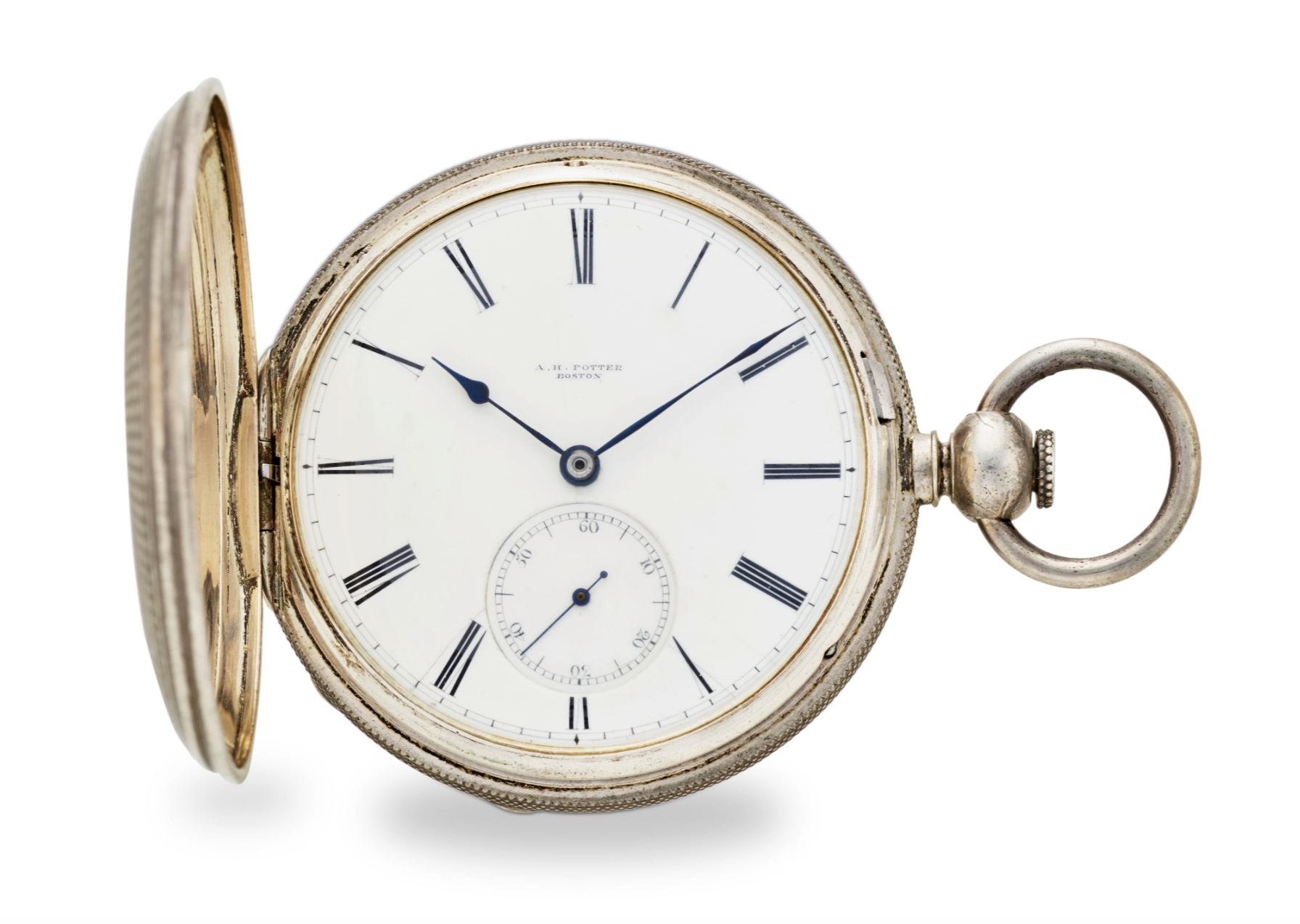
Working in Boston around 1860, Potter produced what is regarded as the earliest known tourbillon with an inclined balance axis.
The essential move was simple to describe and difficult to execute.
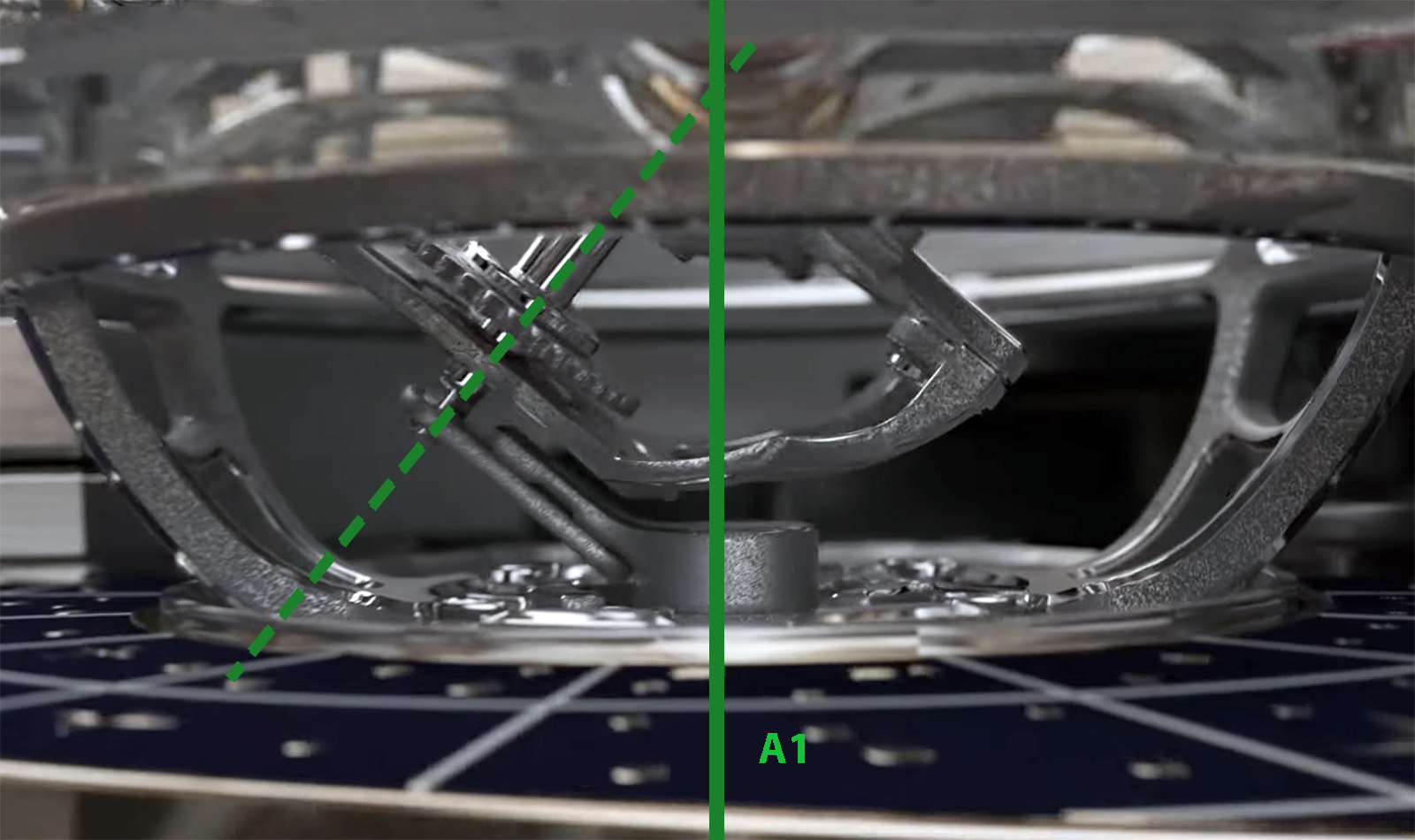
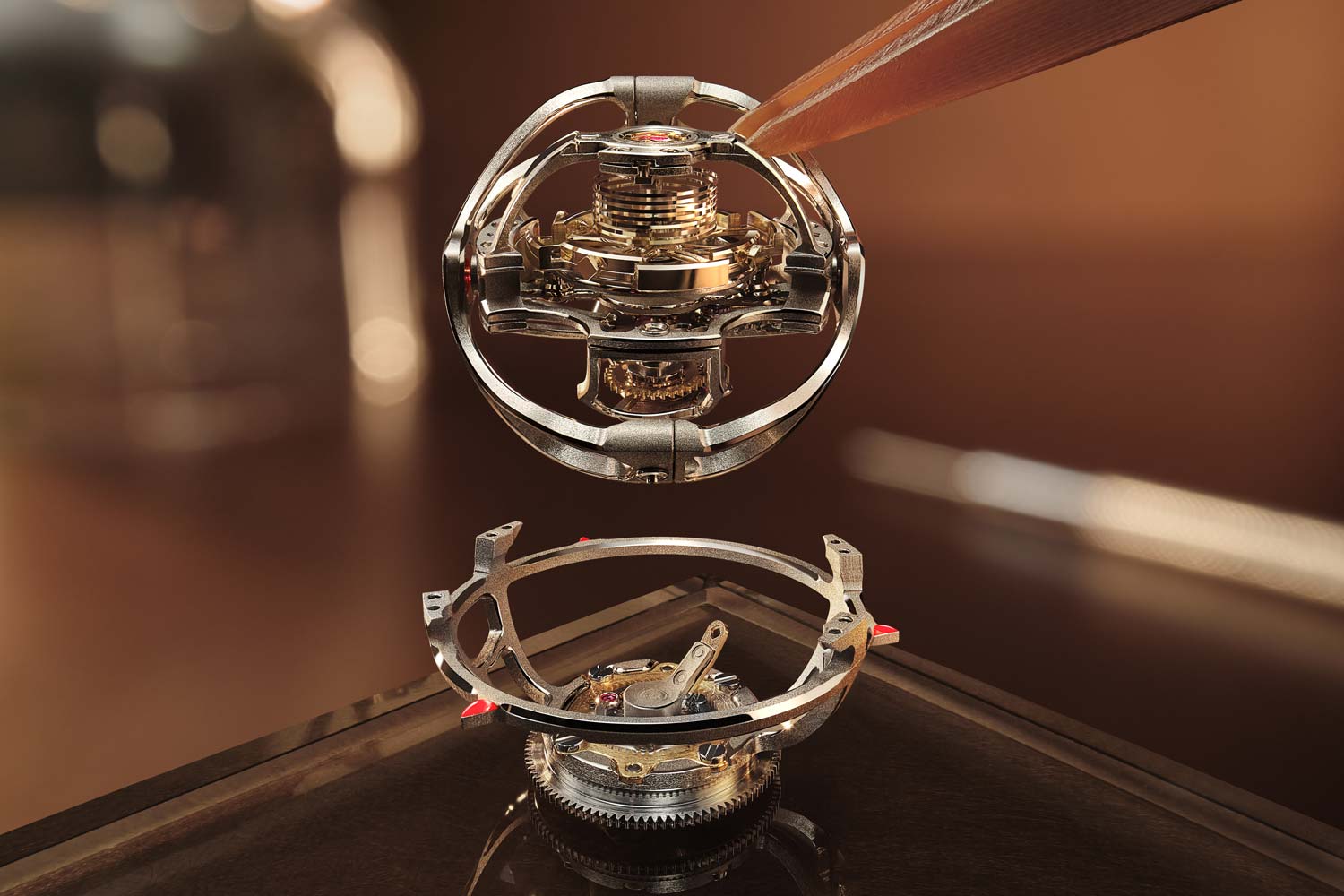
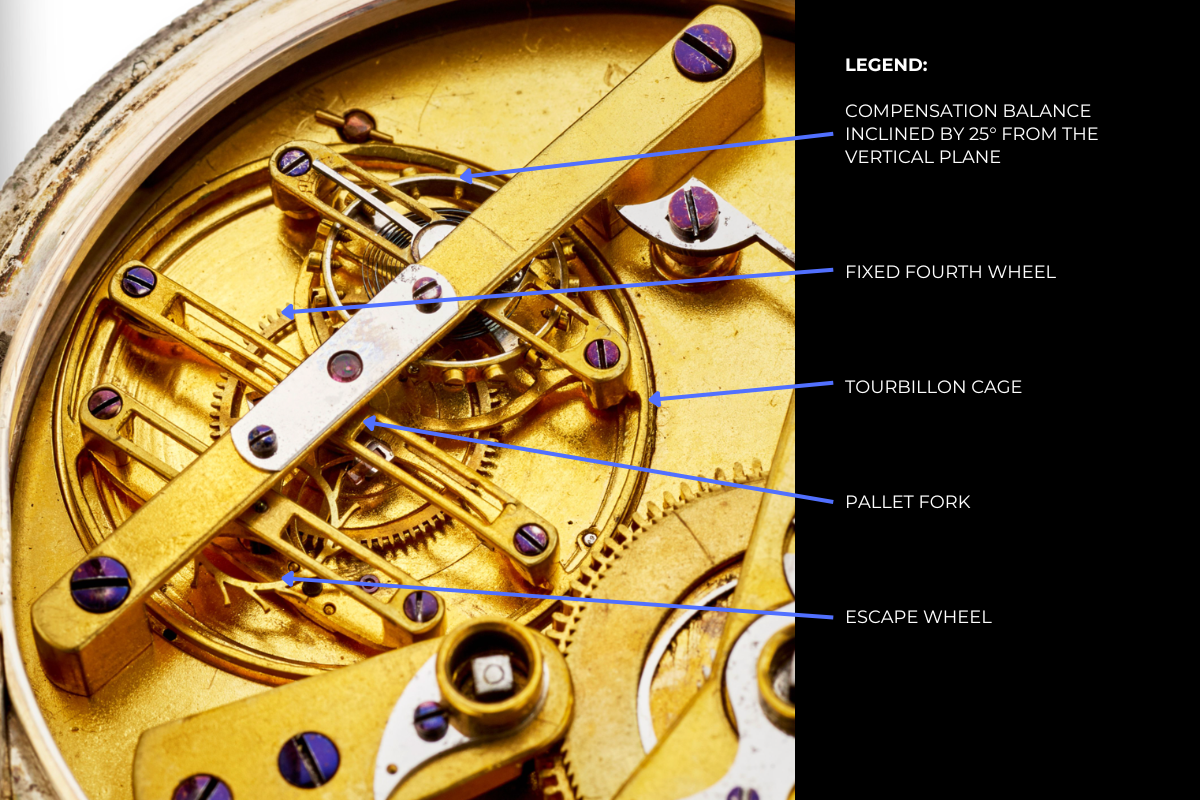
Instead of keeping the balance parallel to the movement plate, Potter tilted it, creating an oscillator that moves through a wider range of relationships to gravity as the cage turns.
Viewed from the side, the balance no longer travels in the expected flat rotational plane.
It describes a conical path, reducing the time spent in the most rate-sensitive extremes between pure horizontal and pure vertical positions.
That doesn’t make the inclined tourbillon a magic correction for every position.
It does make it one of the most intellectually elegant attempts to expand what a tourbillon could average, especially for a watch that might move between pocket, hand and desk.
The two A. H. Potters
Part of the reason Potter’s place in the story remained clouded is almost absurdly fitting for horological history.
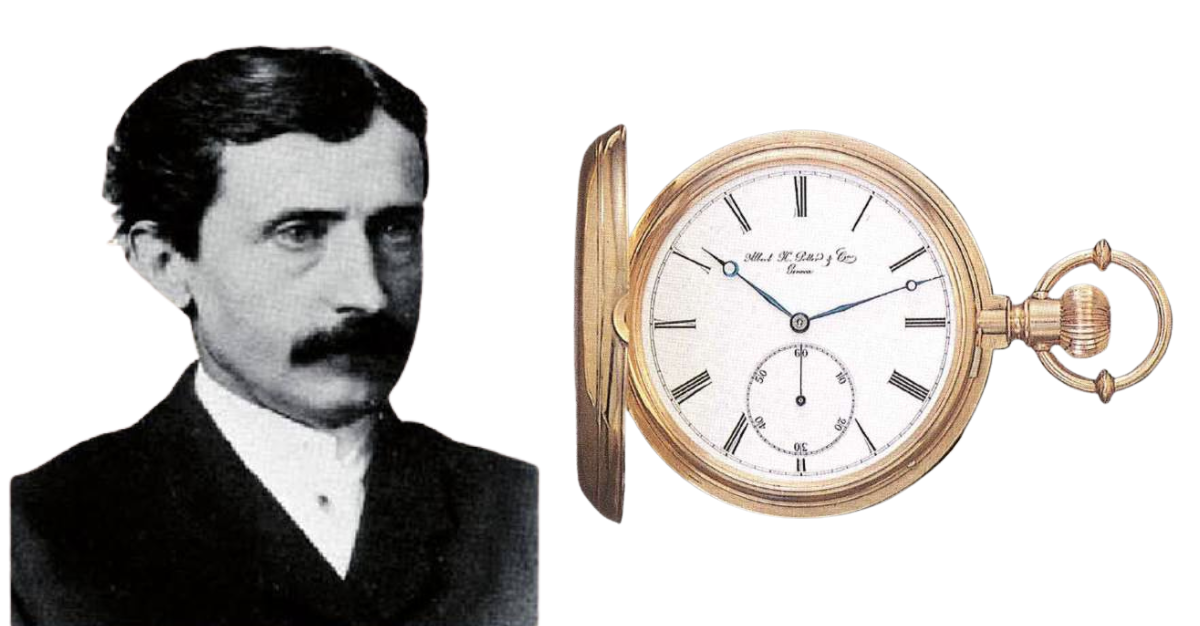
There were two important 19th-century watchmakers known as A. H. Potter.
Albert Henry Potter, born in Mechanicville, New York in 1836 and later active in Geneva, became the better-known name.
He was celebrated for highly refined pivoted detent pocket chronometers and was admired by serious Swiss makers of his era.
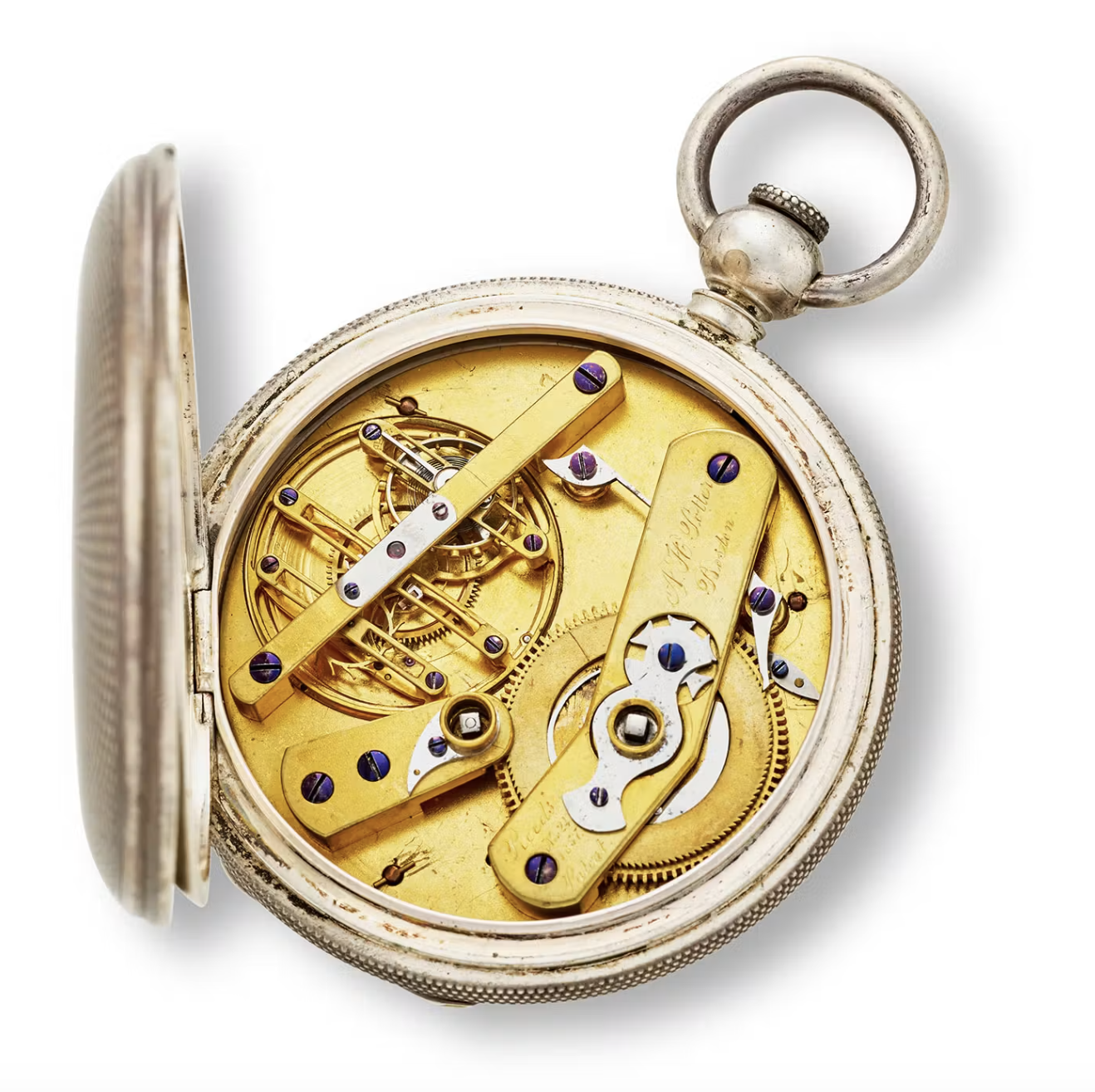
Andrew Holden Potter is the figure connected with the inclined tourbillon pocket watch made in Boston.
The similarity of the names helped blur attribution for generations, especially as both men belonged to the same broad period and both were genuinely accomplished craftsmen.
That confusion matters because watchmaking history often remembers the people who fit neatly into established centres.
A Boston-made inclined tourbillon from around 1860 sits outside the expected map, which makes it easier to overlook and more fascinating when properly understood.
From pocket watches to the modern wrist
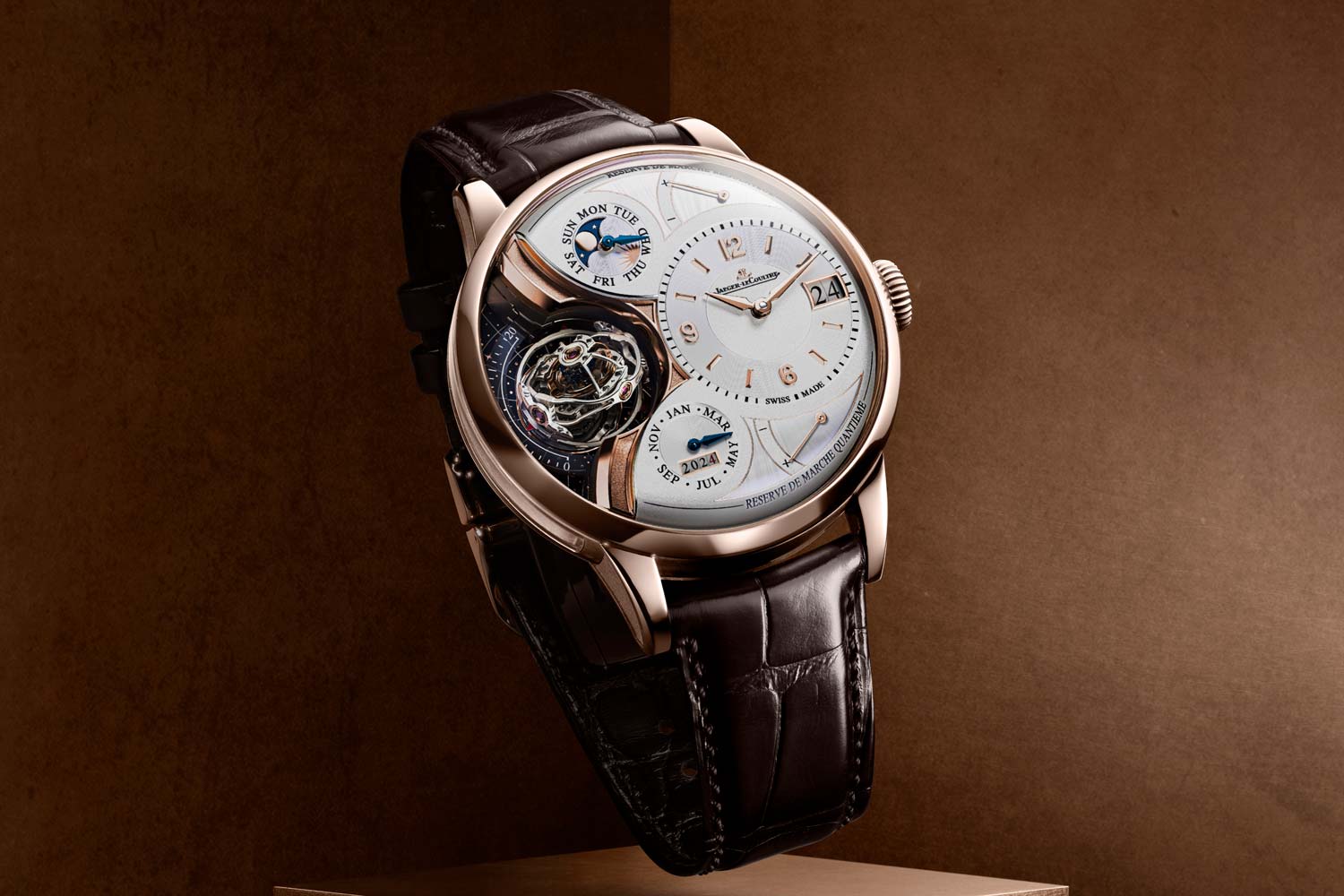
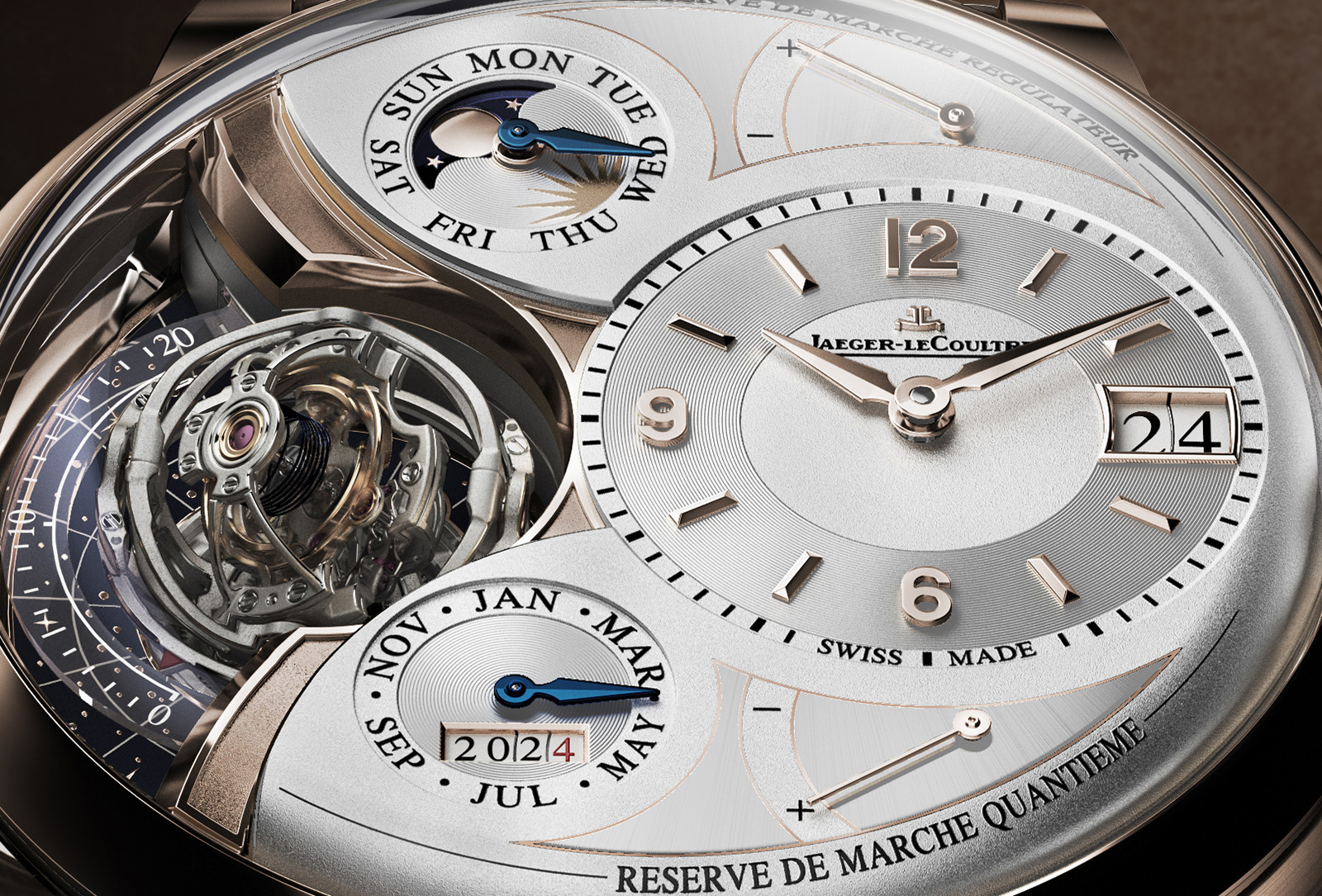
The attraction of the inclined tourbillon didn’t end with the pocket watch.
The same geometric argument applies even more naturally to a wristwatch, where the watch is rarely held in one fixed orientation for long.
A moving wrist makes positional variation part of daily life.
Tilting the oscillator doesn’t erase gravity, but it changes the conversation by refusing to let the balance live mostly in the conventional flat relationship to the movement.
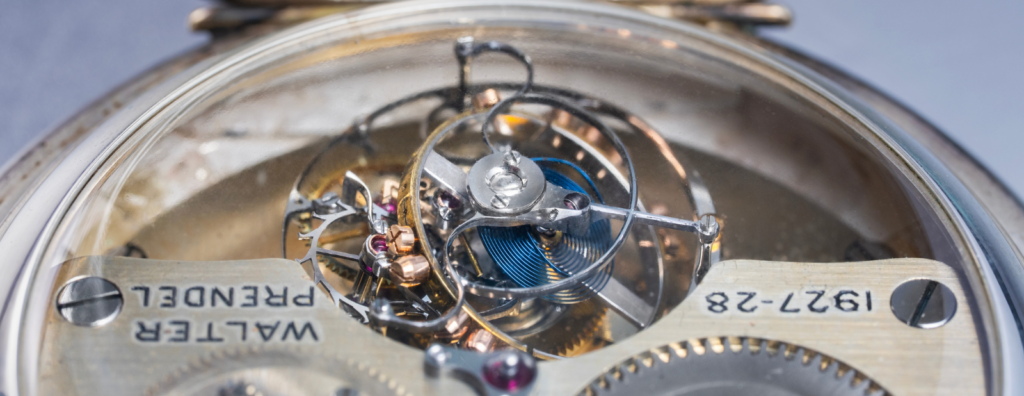
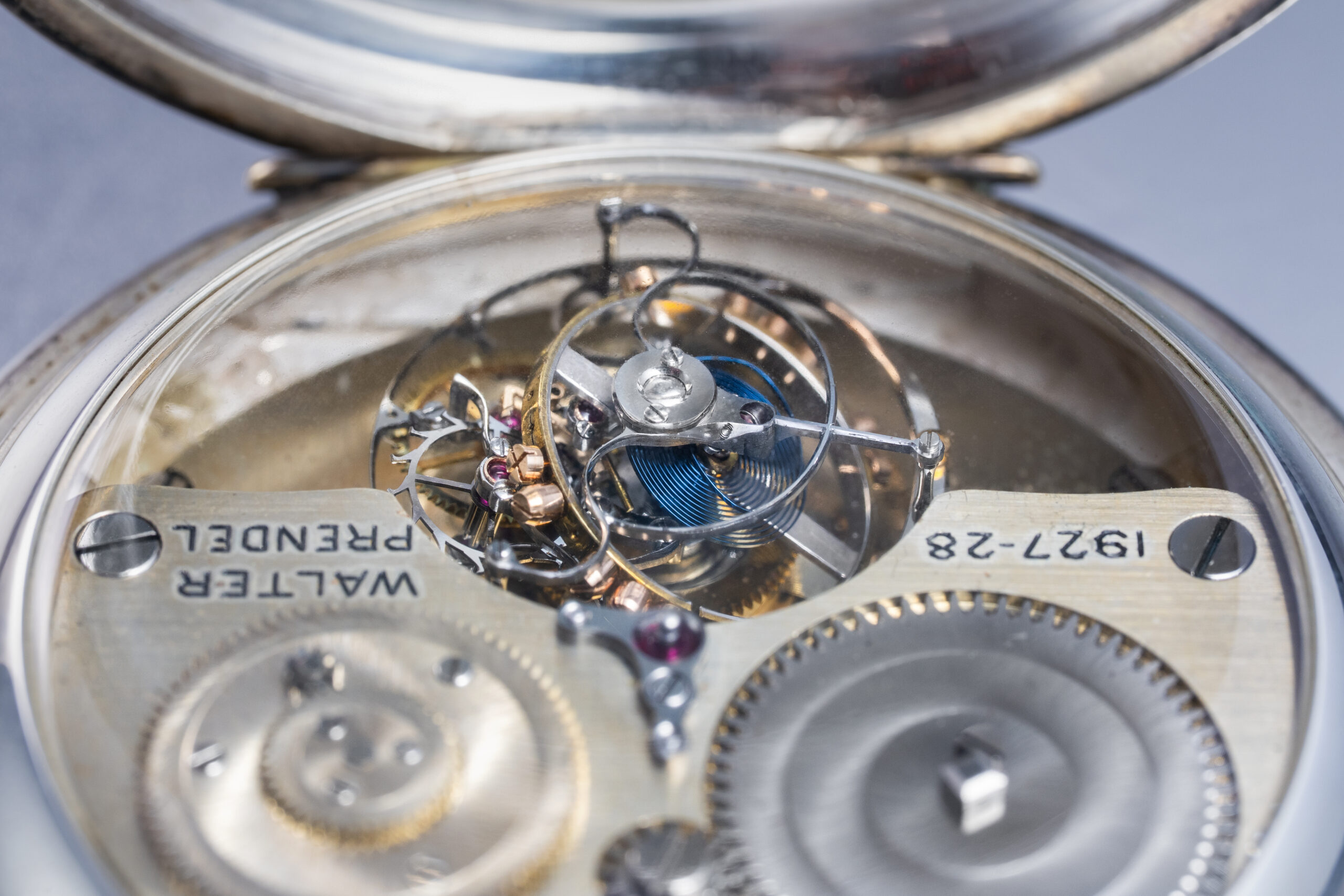
Later examples, including Walter Prendel’s six-minute tourbillon pocket watch with an inclined tourbillon, show that the idea continued to attract serious makers willing to test the limits of the form.
Its appeal is not only technical.
An inclined tourbillon has a visual drama that comes from function rather than decoration, with the regulating organ presented as a miniature mechanical object caught in dynamic tension.
Details & Specifications
| Watchmaker | Andrew Holden Potter |
|---|---|
| Type | Pocket watch |
| Complication | Tourbillon with inclined balance axis |
| Approximate date | Around 1860 |
| Place associated with the work | Boston |
| Historical significance | Earliest known tourbillon with an inclined balance axis |
The inclined tourbillon remains compelling because it shows watchmaking at its best, where theory, hand skill and a stubborn sense of curiosity meet inside a tiny space.

Potter’s angled solution didn’t merely add spectacle to the tourbillon; it asked whether the entire problem could be approached from a different plane.