Mechanical watch accuracy has always involved a little theatre.
A movement can leave the workshop beautifully adjusted, pass chronometry testing and still behave differently once it has travelled, been worn and settled into someone’s daily routine.
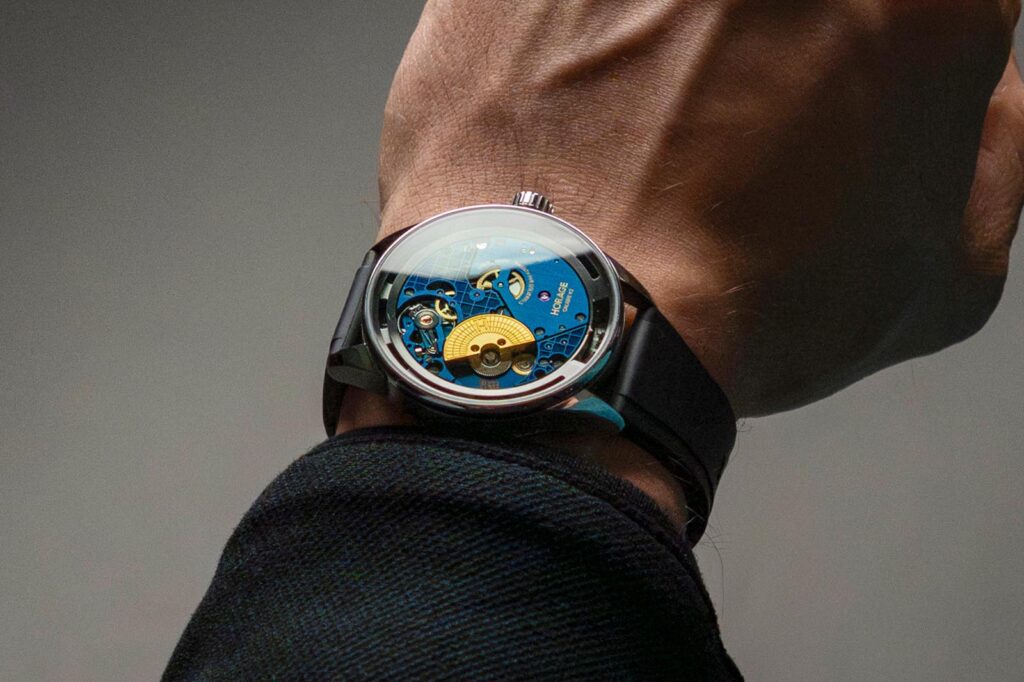
Horage is taking aim at that gap with the Revolution 3 MicroReg, the first production watch to use its proprietary MicroReg regulation system developed with Miniswys SA.

The concept is unusually direct for modern watchmaking. Instead of sending the watch away for a small timing correction, the owner can regulate it from outside the case.
At a glance
- Horage’s Revolution 3 MicroReg is the first production watch to feature the brand’s MicroReg self-regulation system.
- The system uses a miniature ultrasonic actuator to adjust the effective length of the balance spring without opening the caseback.
- The watch is priced at CHF 6,900, with delivery planned for late summer 2026.
MicroReg targets the least glamorous part of precision
Regulation is one of the quiet fundamentals of mechanical watchmaking.
In simple terms, it’s the process of adjusting how a watch keeps time by changing the behaviour of the balance assembly.
Traditional approaches usually involve either moving tiny weights on a free-sprung balance or altering the effective length of the balance spring with a regulator.
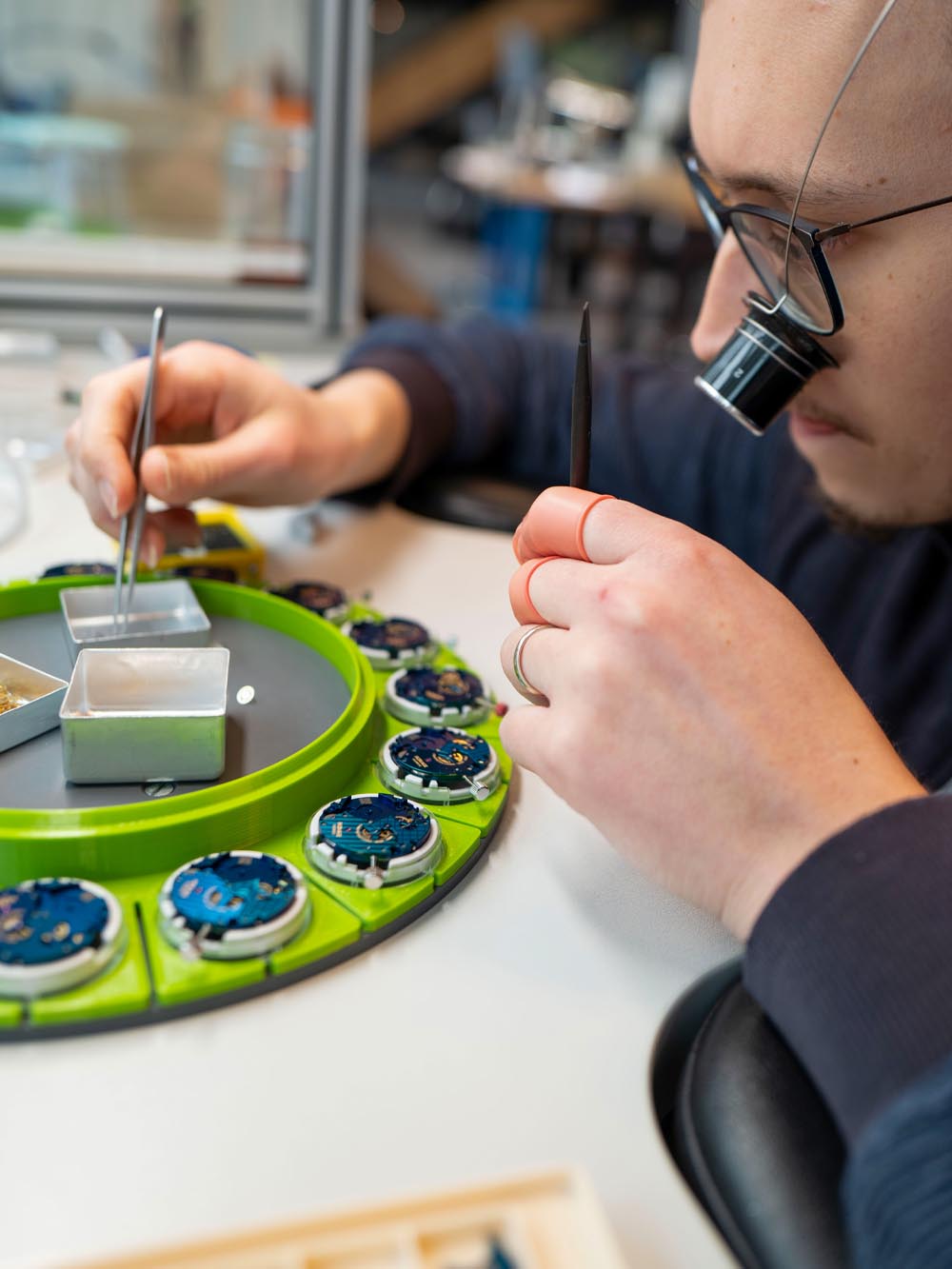
Both methods require the case to be opened and the movement to be handled by someone with the tools, patience and skill to work around one of the most delicate areas of a watch.
That final adjustment stage can be slow, and for a smaller independent manufacturer it can become a meaningful production bottleneck.
There’s also the more human issue of ownership.
A watch can be carefully regulated before it leaves the manufacture, then experience transport, vibration and real-world wear that nudge its performance away from the numbers achieved on the bench.
For the owner who notices a few seconds gained or lost each day, the conventional answer is rarely convenient.
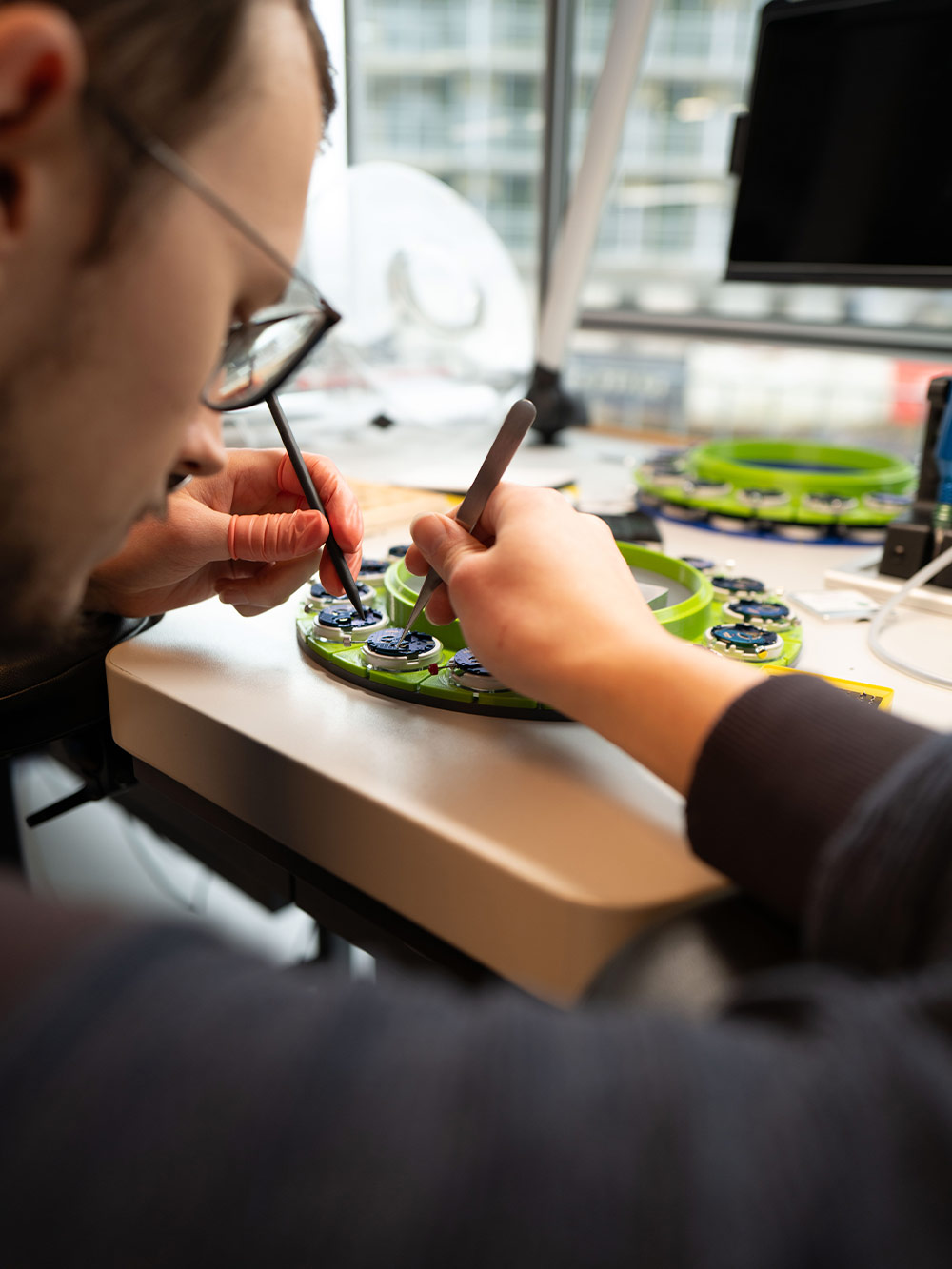
The watch typically has to go back to a watchmaker, the case must be opened, and a small correction becomes a service experience.
How the ultrasonic regulator works
MicroReg approaches the problem with a miniature ultrasonic actuator integrated into the movement.
The system was developed by Horage in collaboration with Miniswys SA, a Swiss technology company working with vibration-based micro-actuation.
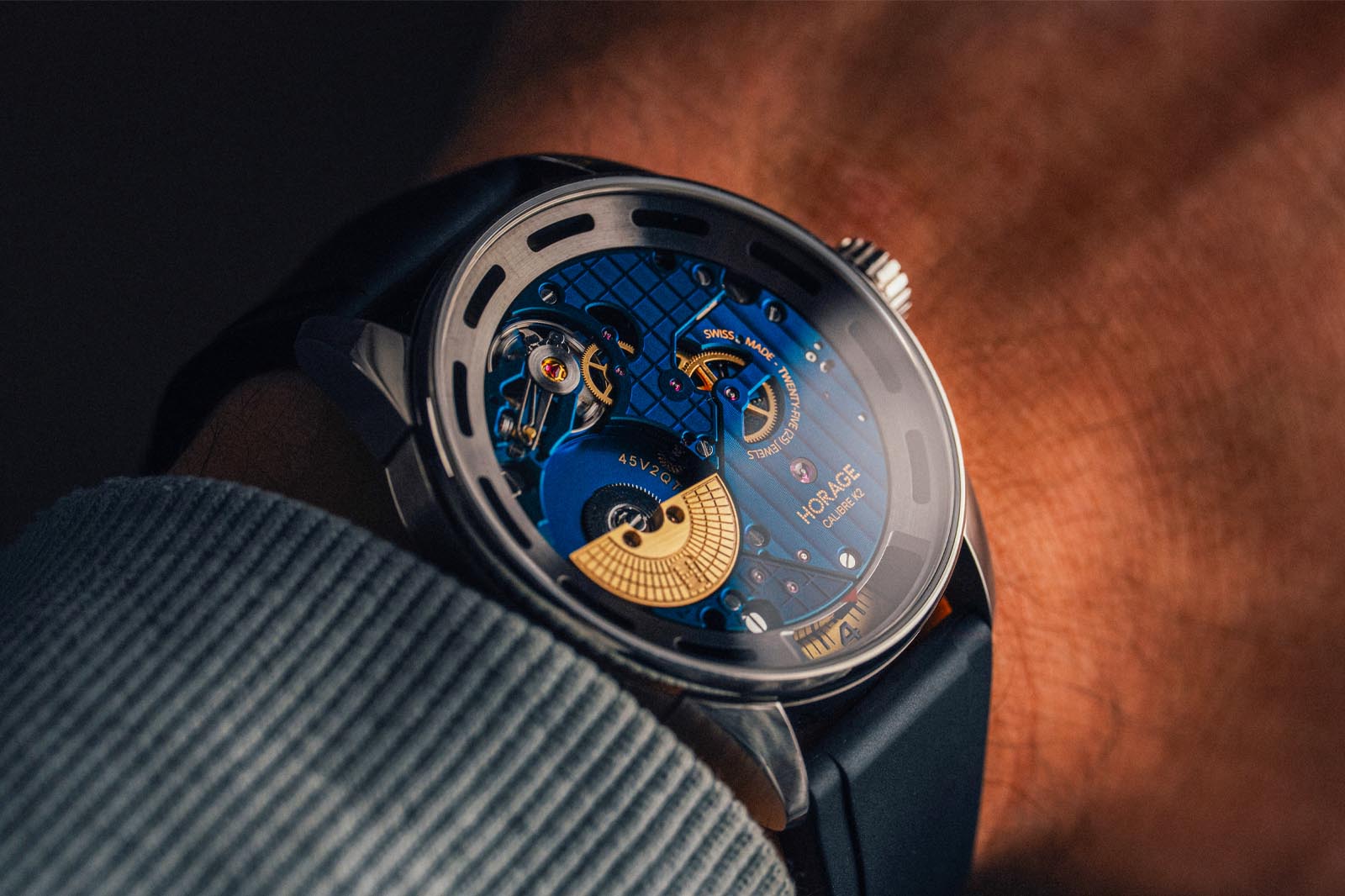
When ultrasonic waves pass through the actuator, it can move a small component with enough control to affect the regulator mechanism.
In the Horage system, that movement is used to adjust the effective length of the balance spring from outside the case.
The stated adjustment resolution is 0.1 seconds, which gives the system a level of granularity that will appeal to owners who actually track daily rate rather than simply reading a certification card.

The important point is not just that the adjustment can be made finely.
It’s that it can be made without opening the caseback, reducing handling risk and turning a specialist intervention into something far more accessible.
A tool for owners, not only watchmakers
Horage could have kept MicroReg as a workshop aid for faster post-assembly regulation.

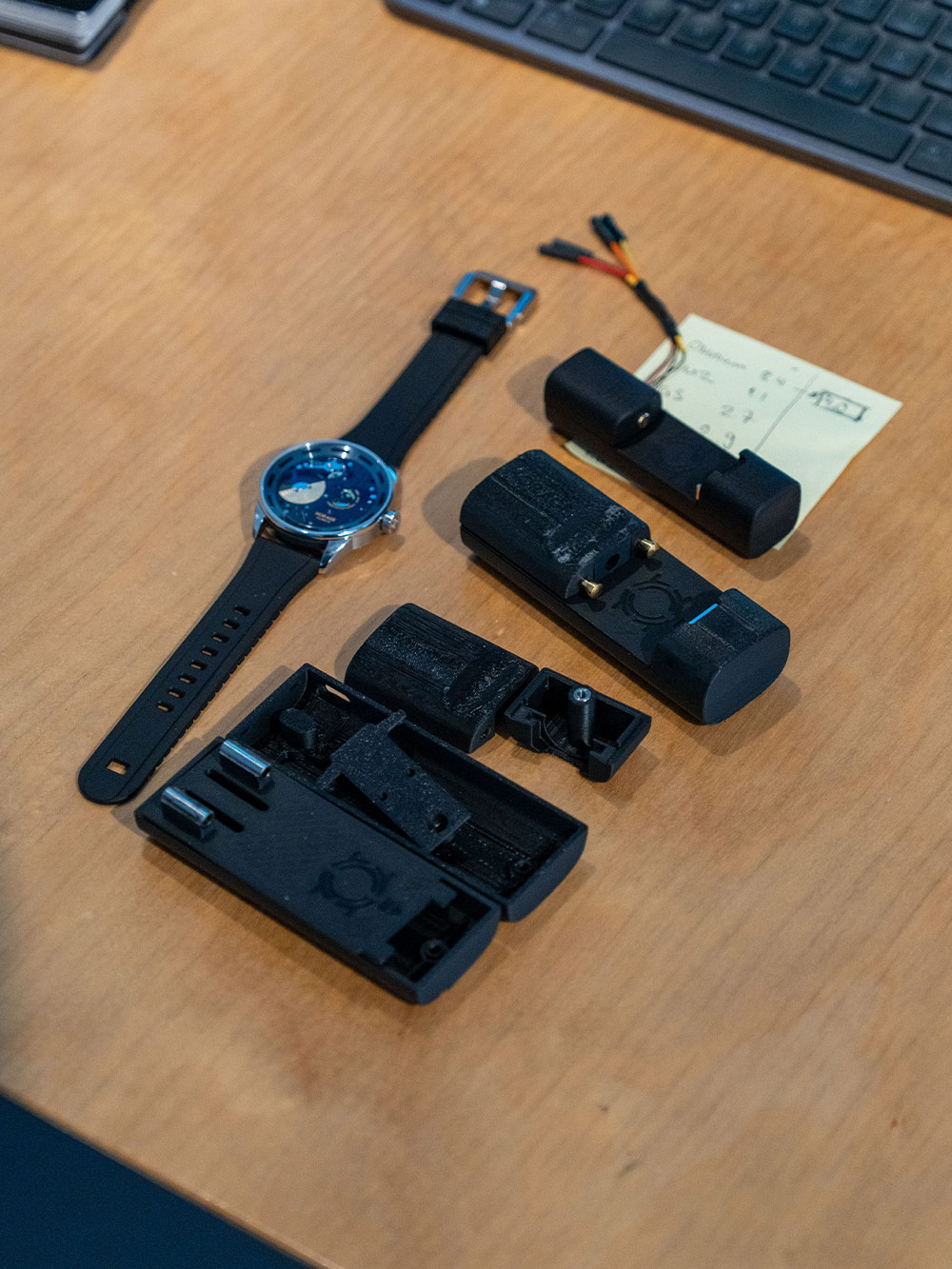
Instead, the Revolution 3 MicroReg is intended to package the technology for the owner, with an ultrasonic adjustment tool and a companion app.
The app is designed to guide the regulation process, although the final production interface is still part of the watch’s path toward delivery.
That matters because MicroReg isn’t being presented as a decorative complication or a sealed-off engineering boast.

Its value is practical.
If your watch is consistently running a little fast or slow, the promise is that you can make an informed correction without shipping the watch back or asking a watchmaker to open it.
This won’t be for everyone.
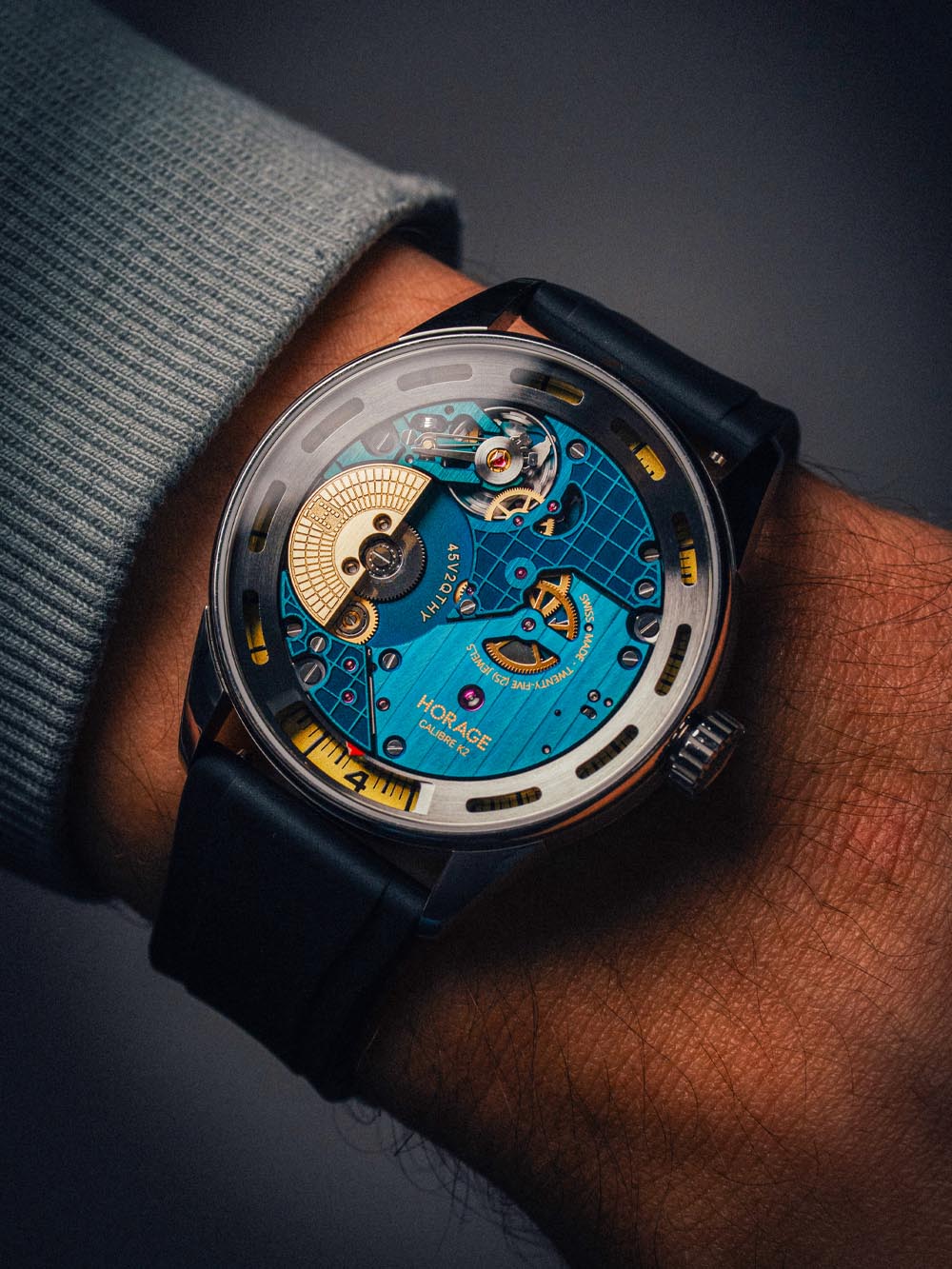
Plenty of mechanical watch owners are content with a healthy daily rate and never think about the seconds that accumulate over a week.
But for the enthusiast who times a watch in different positions, checks the rate after travel or simply likes the idea of mechanical control, MicroReg is a rare piece of modern functionality that doesn’t feel like a gimmick.
Production context and industry potential
The Revolution 3 MicroReg is especially interesting because Horage is putting the system into a production watch rather than treating it as a one-off laboratory exercise.

That distinction matters in an industry where many promising mechanisms remain prototypes, concept pieces or limited-run curiosities.
Horage has also built a business around movement development, which gives MicroReg a broader possible future beyond the Revolution 3.
The idea of licensing the technology to other brands is already part of the conversation around the system, and it’s easy to see why smaller makers would pay attention.

External regulation could simplify manufacturing, reduce turnaround times for timing adjustments and give technically minded buyers a more direct relationship with their watches.
It’s not a replacement for good movement construction, proper casing or long-term servicing.
It is, however, a clever answer to a very old friction point in mechanical watch ownership.
Details & Specifications
| Brand | Horage |
|---|---|
| Model | Revolution 3 MicroReg |
| Regulation system | Horage MicroReg |
| Technology partner | Miniswys SA |
| Adjustment method | Miniature ultrasonic actuator integrated into the movement |
| Adjustment access | From outside the case, without opening the caseback |
| Adjustment increment | 0.1 seconds |
| Owner interface | Ultrasonic adjustment tool and companion app |
| Price | CHF 6,900 |
| Delivery | Planned for late summer 2026 |
The Horage Revolution 3 MicroReg won’t make the mechanical watch as effortless as a connected device, and that isn’t the point.
Its appeal lies in giving owners a new kind of agency over a traditional mechanism, without sacrificing the physical charm that makes mechanical watchmaking worth caring about in the first place.