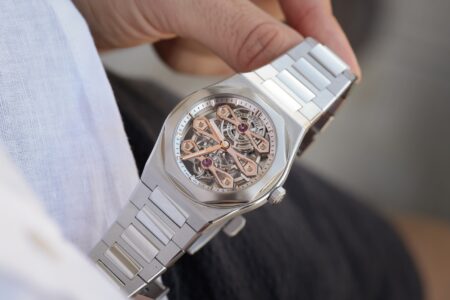
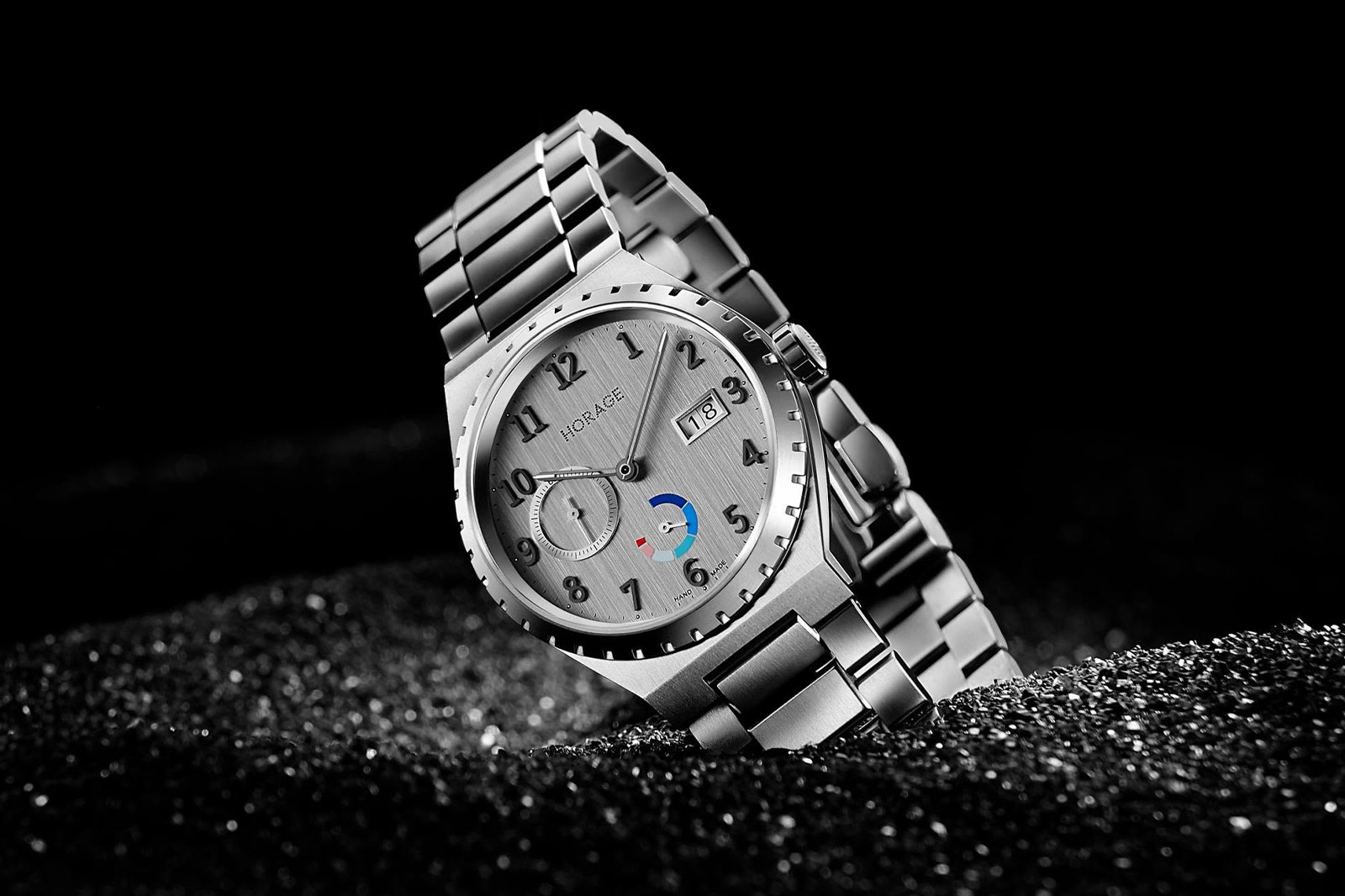
The Horage Autark has always been more than a sports watch with an integrated bracelet.
Since its 2015 debut, it has acted as a running proof of concept for the Biel-based independent, showing how far a small watchmaker can go when it controls its own engineering.
A decade on, the Autark has become the closest thing Horage has to a continuous collection, moving from the brand’s first in-house developed movement to slim microrotor tourbillons that put the mechanics directly on display.
At a glance
- The Horage Autark has reached its tenth year as the brand’s clearest expression of self-sufficient watchmaking.
- The collection began with the in-house K1 movement and has evolved into K2 microrotor and tourbillon variants.
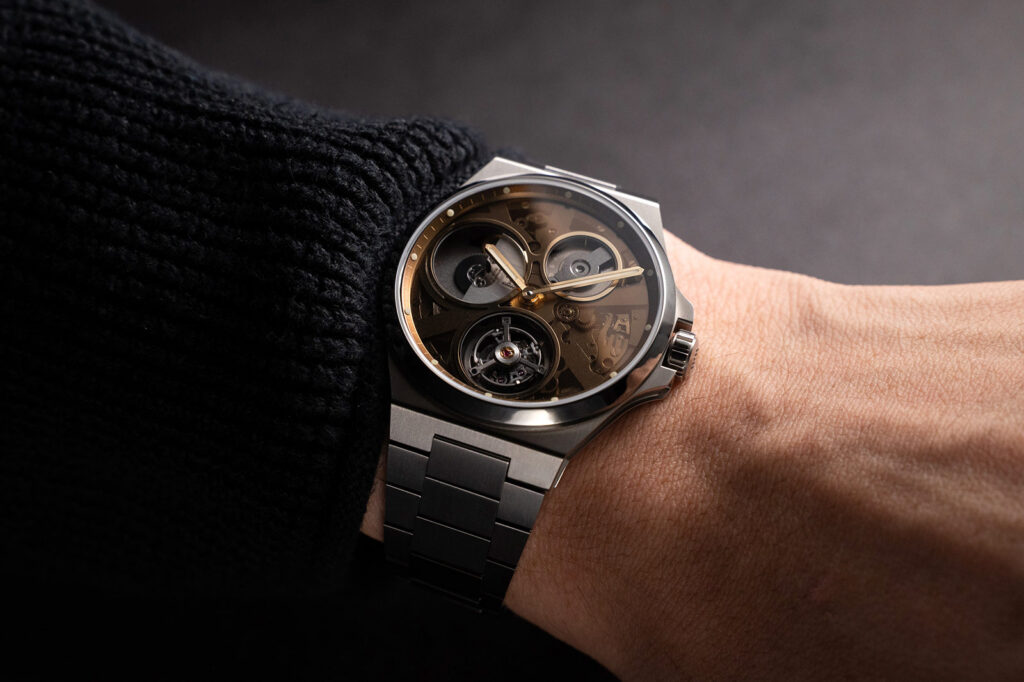
- The 2026 Autark Tourbillon Bubbles brings the microrotor, mainspring and tourbillon to the dial side in a Grade 5 titanium case under 9mm thick.
The Autark began with the K1 movement
Horage was founded in 2007, but the Autark gave the brand’s independence a physical form when it arrived in 2015.
The name is taken from German and broadly points to self-sufficiency, an idea that neatly matched the watch’s central feature.
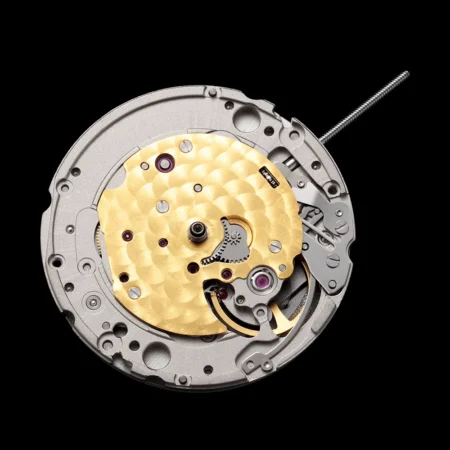
Inside was the Horage K1, the brand’s first in-house developed movement.
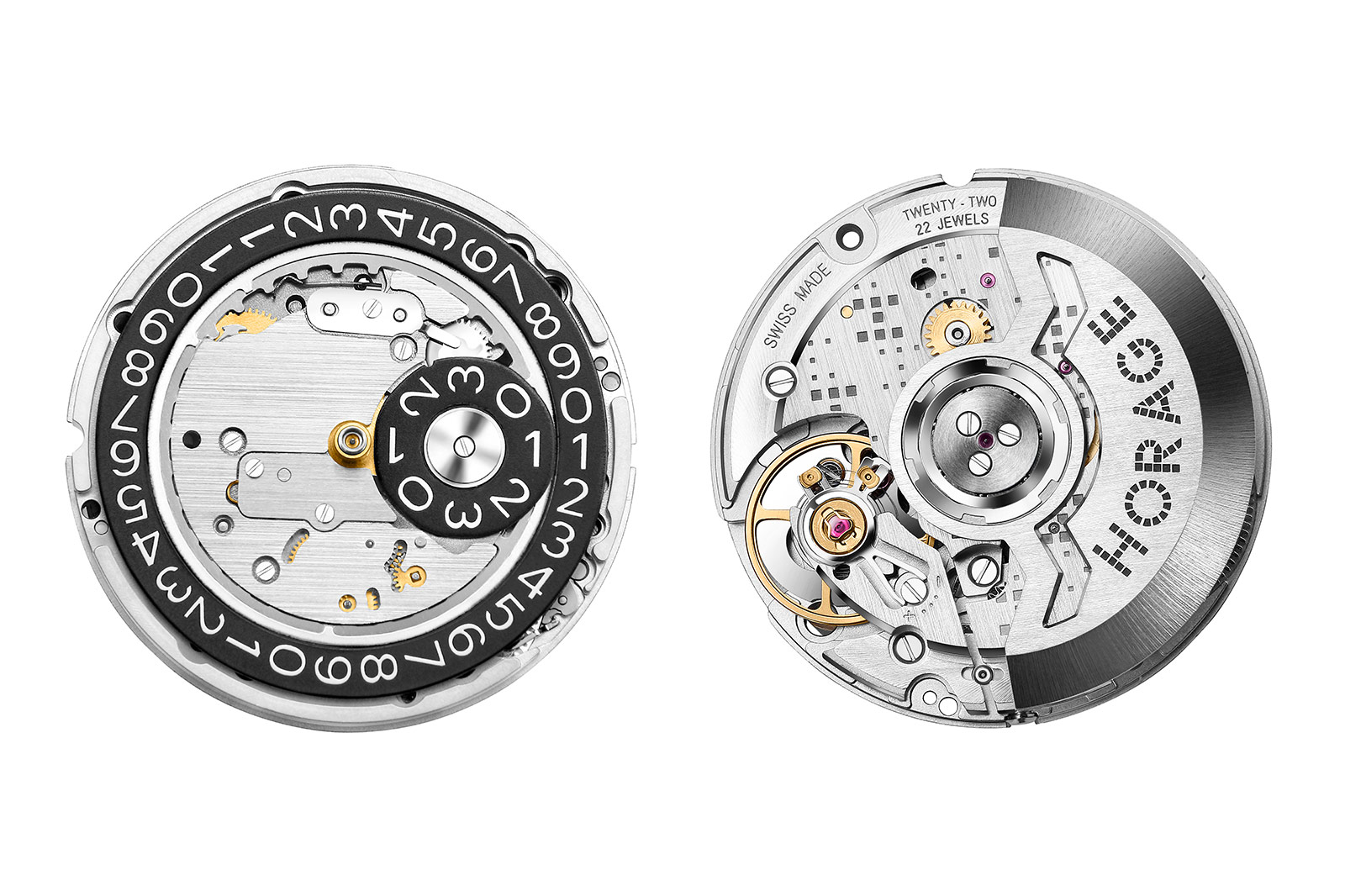
That mattered because movement development remains one of the hardest and most resource-heavy parts of watchmaking, particularly for an independent company outside the large industrial groups.
The K1 took nearly a decade to develop, and its timing was significant.
As supplies of third-party movements became less predictable, Horage’s decision to build its own calibre gave the brand a degree of control that many small watchmakers don’t have.
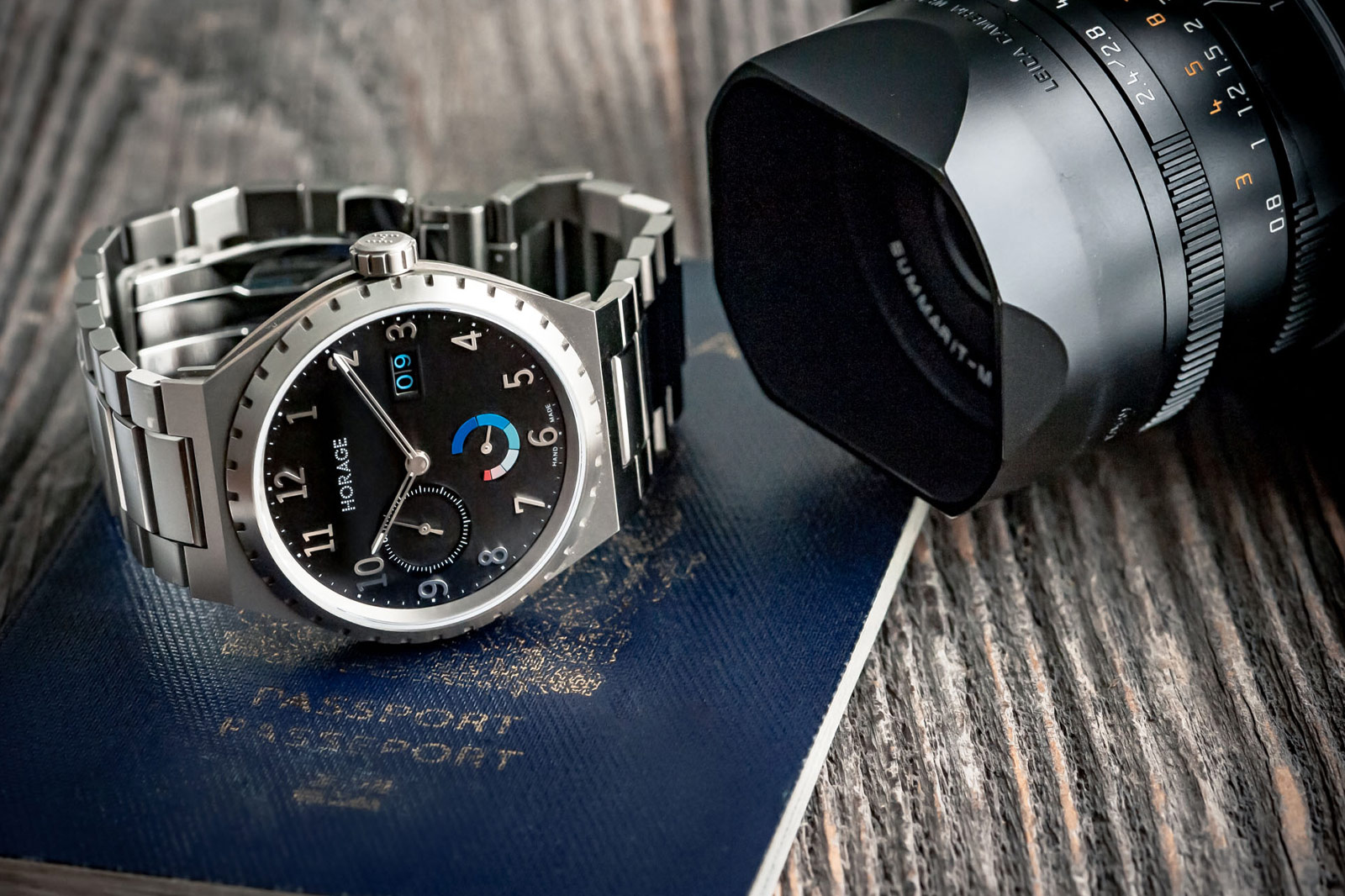
Titanium, sharp architecture and a feedback loop
The first Autark wasn’t simply a vessel for a new movement.
It leaned into the integrated-bracelet sports watch format before that space became as crowded as it is today, but it did so with a very specific Horage language.
The case used flat planes, a deeply notched bezel and an architectural side profile that made the watch more demanding to produce than it needed to be.
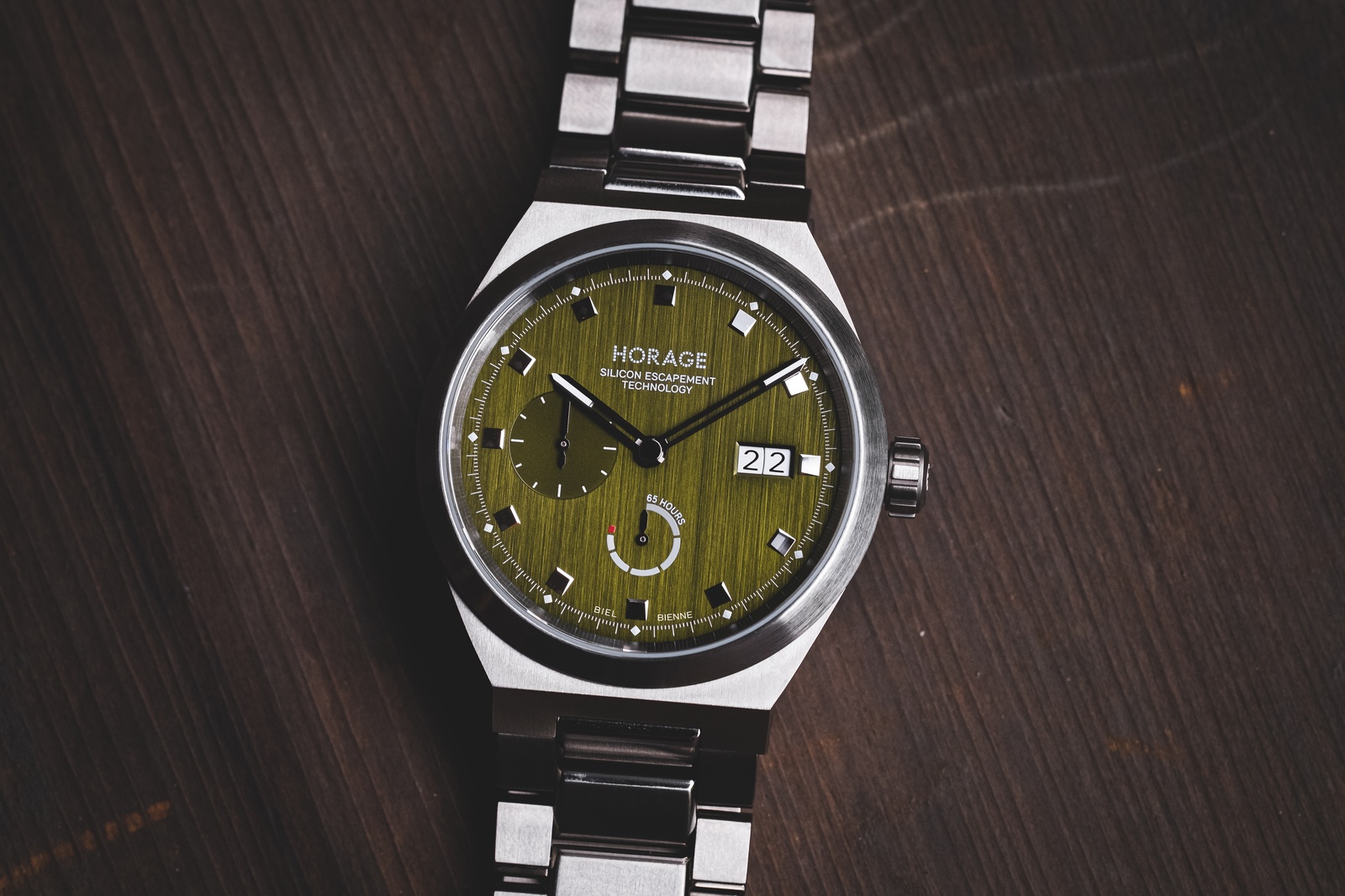
It was also made in Grade 2 titanium, a material that was far less common in 2015 than it is now.
Horage returned to the Autark in 2019 with a 99-piece limited edition, keeping the broad visual identity while adding a smooth bezel and a vertically brushed dial.
The more meaningful changes were in the material and movement.
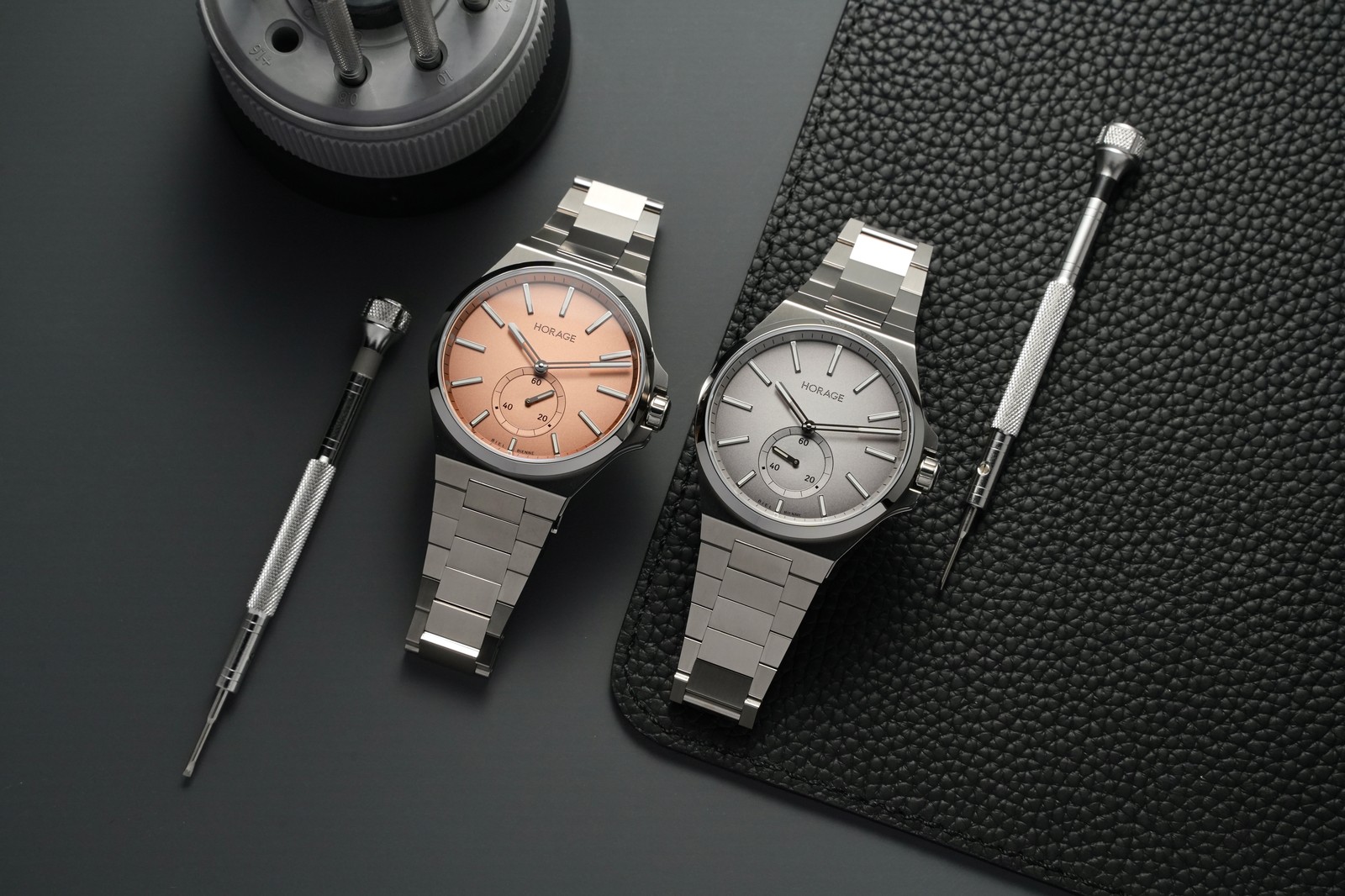
That edition moved to Grade 5 titanium, a harder and more difficult alloy to work with than Grade 2, and the K1 continued to evolve rather than remain frozen in its original form.
Because Horage controls the movement, servicing became part of the development loop.
As watches returned to the manufacture, the brand could identify weak points, refine tolerances and improve precision, with earlier watches benefiting from later updates rather than being restored only to their first specification.
The K2 made the Autark slimmer and more ambitious
The Autark’s next major chapter arrived in 2024 with the introduction of the K2 movement.
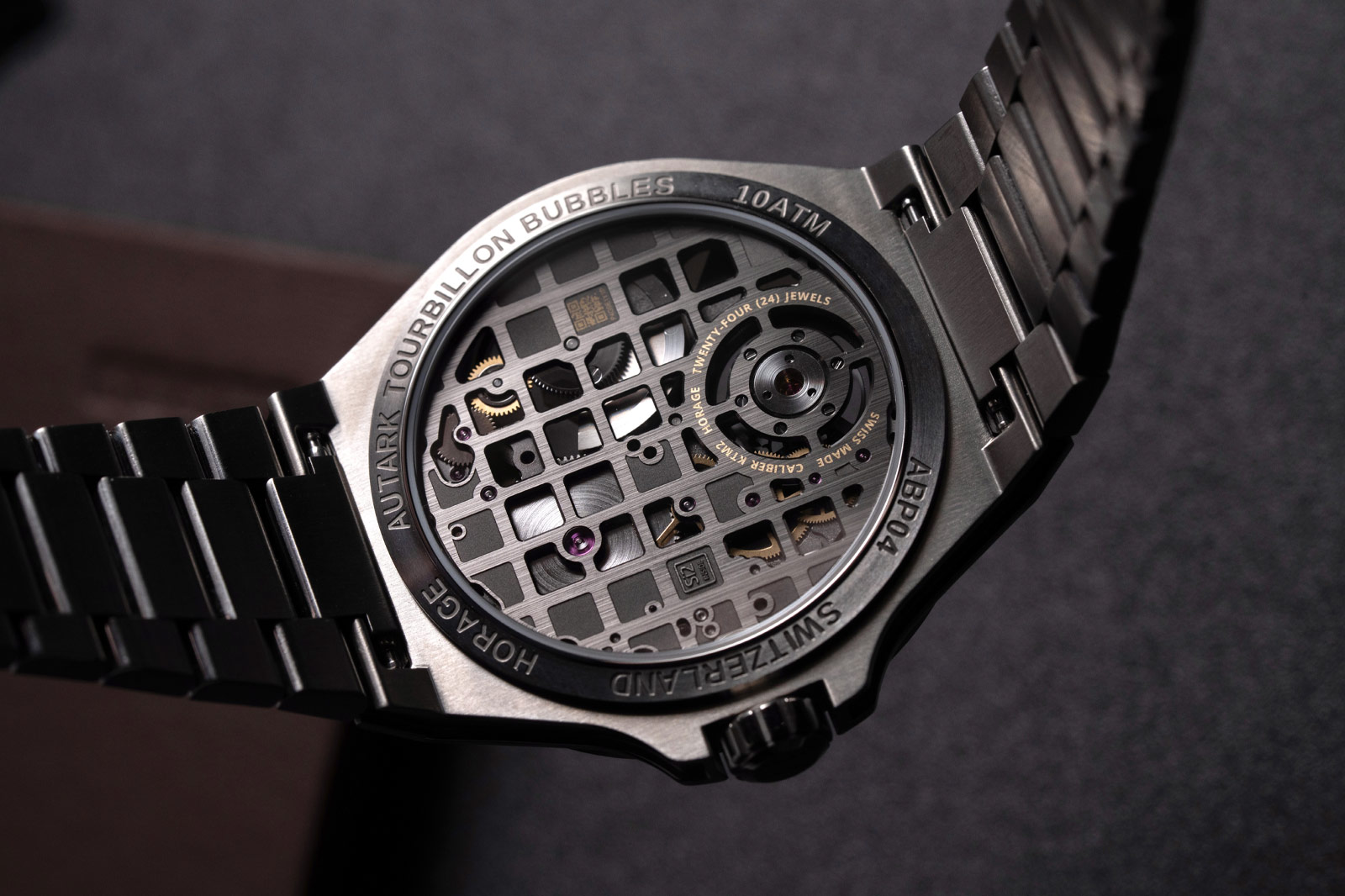
Rather than follow the standard architecture of a conventional automatic calibre, the K2 used a microrotor layout and measured 3.6mm thick.
It also delivered a 72-hour power reserve from a single mainspring.
The movement allowed Horage to rethink the Autark case, reducing thickness from 10.05mm to 8.8mm.
That change required a redesign of the five-part case construction.
Instead of making the mid-case from three separate components, Horage reengineered it as a single monobloc piece, with the movement sealed by the caseback and dial.
The result reduced the number of gaskets, seals and potential points of failure while keeping the Autark’s established profile intact.
Horage also introduced an in-house titanium bracelet with up to 10mm of micro-adjustment, a practical detail that showed the brand was thinking beyond the movement alone.
Tourbillons bring the engineering to the surface
Horage had already drawn attention with its first in-house Swiss tourbillon in 2020, but the Autark gave the complication a different platform.
The 2024 Autark tourbillon was automatic and drew on lessons from the Tourbillon 1 while incorporating the microrotor thinking behind the K2.
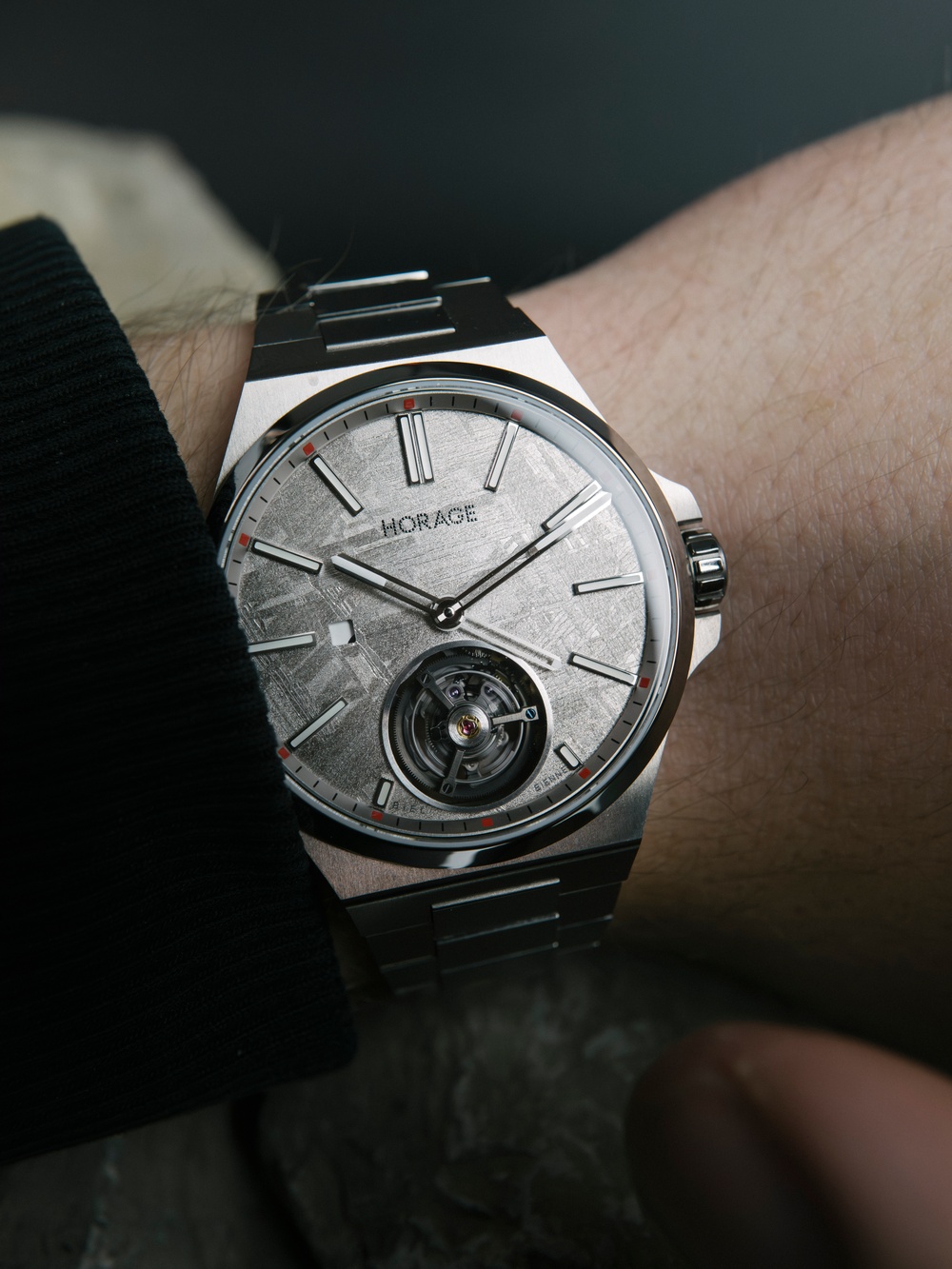
In 2025, Horage followed with the Autark Tourbillon GMT Meteorite, which the brand describes as the first microrotor-powered traveller GMT tourbillon.
That is a highly specific claim, but the combination of a traveller GMT, tourbillon and microrotor remains unusual, particularly from an independent brand.
The meteorite dial added another challenge, as meteorite dials are typically thicker than standard dials, yet the watch retained the Autark’s slim profile.
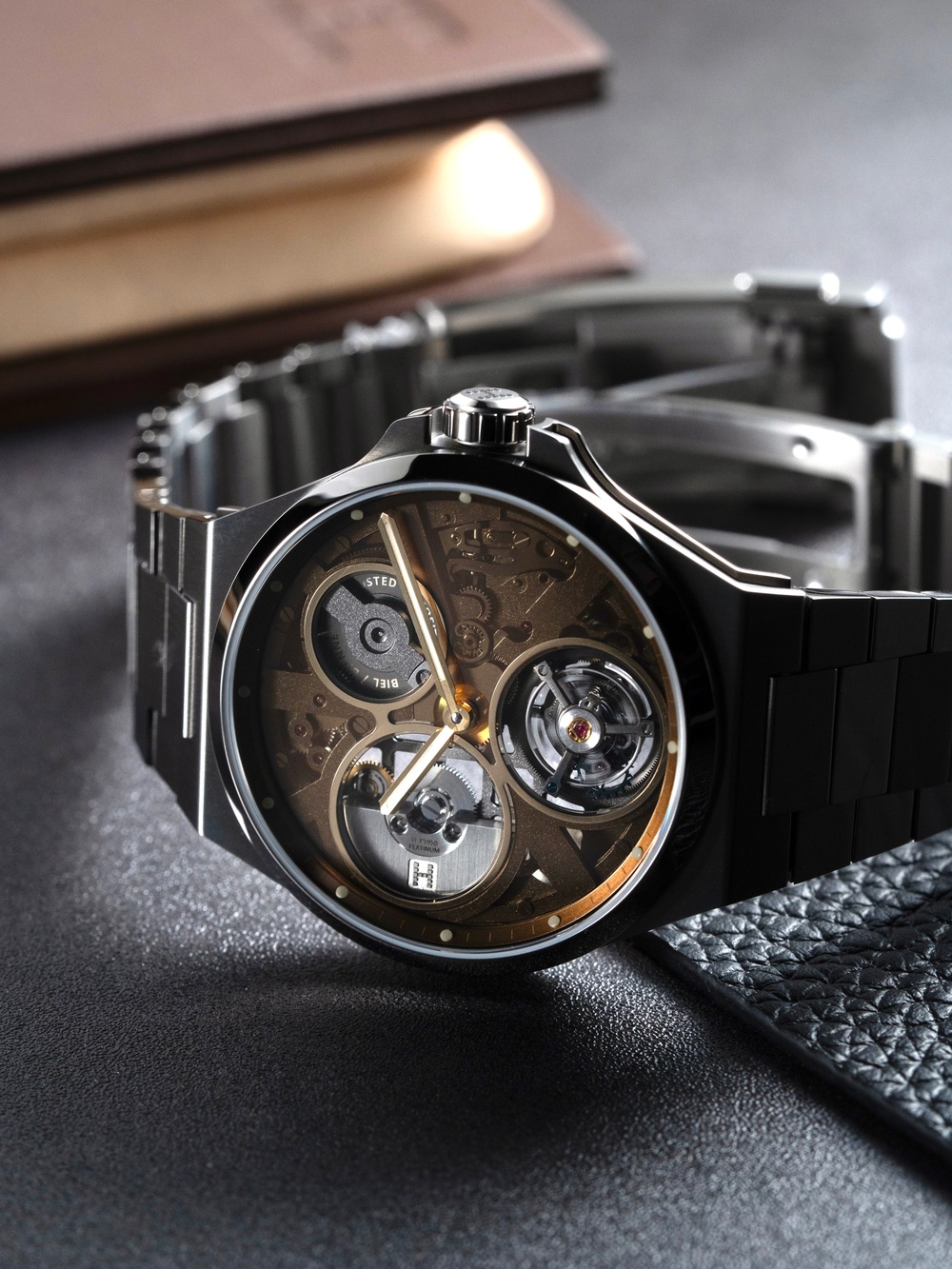
The 2026 Autark Tourbillon Bubbles pushes the original idea further by reversing and opening the architecture so the key mechanical elements can be seen from the dial side.
Three circular openings frame the mainspring at 1 o’clock, the microrotor at 10 o’clock and the tourbillon at 6 o’clock.
It’s not a restrained design, and it isn’t meant to be.
The point is to make the movement architecture part of the watch’s face, turning Horage’s self-sufficient engineering into the defining aesthetic.
Details & Specifications
| Brand | Horage |
|---|---|
| Model | Autark Tourbillon Bubbles |
| Case material | Grade 5 titanium |
| Case height | Under 9mm |
| Movement | Automatic microrotor tourbillon movement |
| Power reserve | 72 hours |
| Key display elements | Mainspring at 1 o’clock, microrotor at 10 o’clock and tourbillon at 6 o’clock |
| Collection origin | Autark line launched in 2015 with the Horage K1 movement |
The Autark’s appeal is not that it follows the safest route through modern independent watchmaking.
Its interest lies in the opposite approach, with Horage treating the collection as a decade-long engineering platform for movements, titanium cases and ideas that large-scale brands would rarely risk in the same way.
For collectors drawn to independent watchmaking with genuine mechanical development behind it, the Autark remains one of the clearest statements of what self-sufficiency can look like on the wrist.