Holthinrichs Watches has always occupied an unusual corner of independent watchmaking.
The Dutch atelier began with an architectural idea, a bespoke commission and a 3D-printed stainless steel watch that helped define its point of view. Ten years on, it’s marking the moment with two limited-edition models that revisit its earliest themes while pushing its case and dial work further.
At a glance
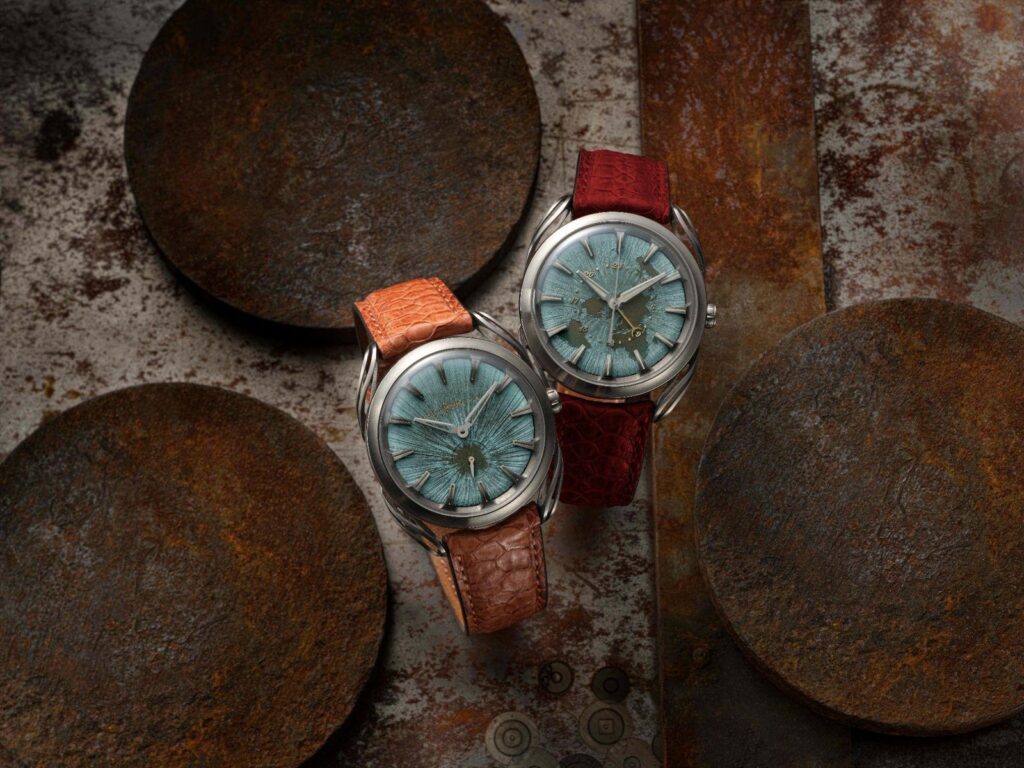
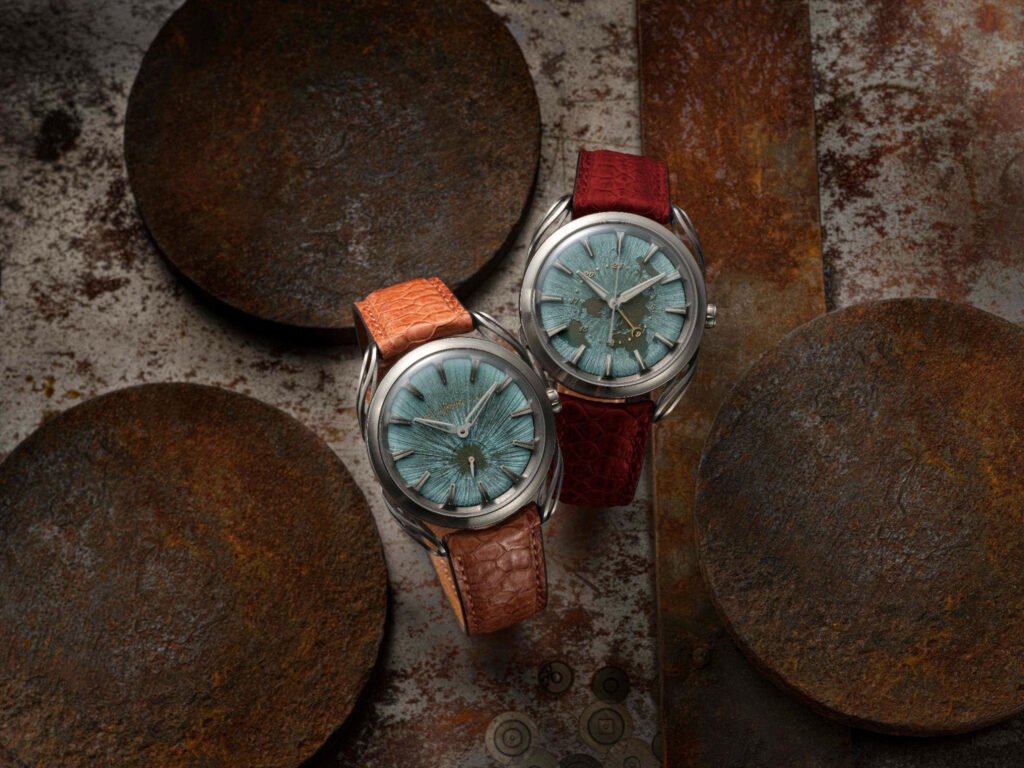
- Holthinrichs Watches is celebrating its tenth anniversary with the SIGNATURE LAB 1.S and SIGNATURE LAB 1.GMT.
- Both watches use 3D-printed titanium cases, in-house copper oxide patina dials and Sellita SW300-based movements.
- Each model is limited to 100 pieces, with the 1.S focused on small seconds and the 1.GMT adding a travel complication.
An independent brand shaped by architecture
Founder Michiel Holthinrichs came to watches through architecture, and that background still shows in the brand’s sculptural cases and layered surfaces.
The company’s early Ornament 1 was significant for more than its looks, becoming known as the first 3D-printed stainless steel watch and setting the tone for a workshop interested in modern manufacturing without losing the hand of the maker.
That tension has become the brand’s signature.
Holthinrichs doesn’t use 3D printing to make watches look machine-perfect; it uses the process to create forms and textures that would be difficult to achieve through conventional case making.
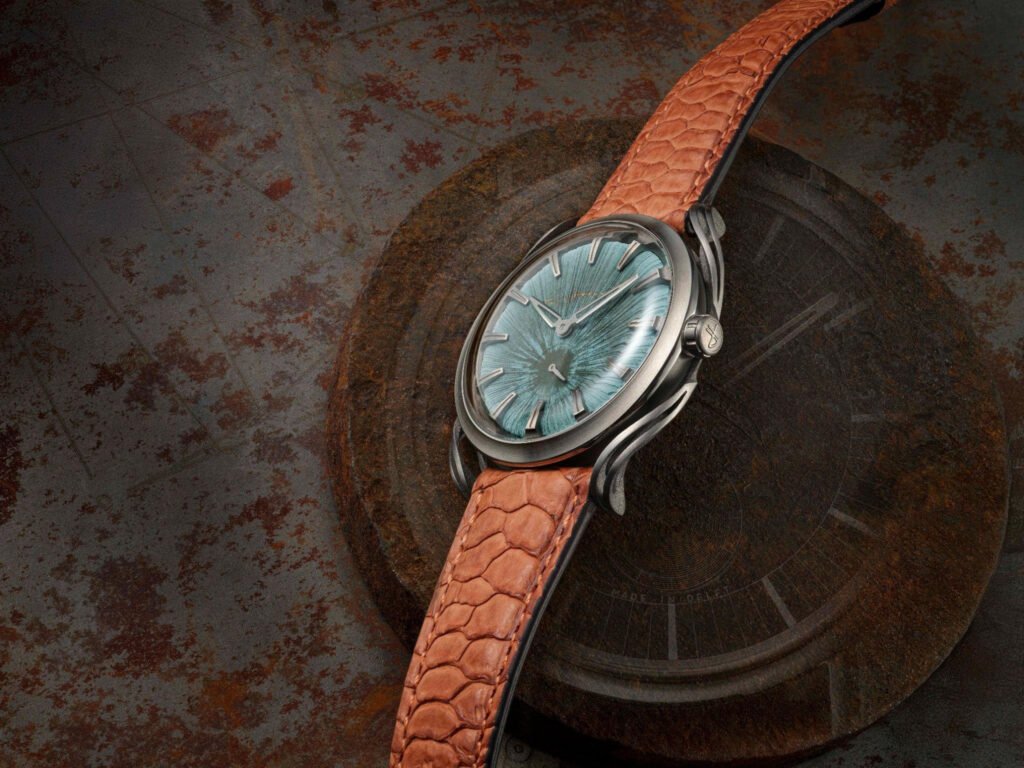
The result is a kind of controlled rawness, especially in the pieces connected to the brand’s Horlogerie Brut philosophy.
The SIGNATURE LAB 1.S returns to small seconds
The SIGNATURE LAB 1.S is the more direct nod to the brand’s beginning.
Its sub-second display recalls the layout that helped define the Ornament 1, giving the dial a familiar asymmetry while keeping the watch grounded in classical time-only language.
That simplicity matters because the dial itself is far from plain.
Holthinrichs produces the dials in-house, using copper oxide patinas to create depth, colour variation and a surface that feels closer to material experimentation than standard dial decoration.
On the 1.S, bold relief work draws attention toward the small-seconds register, turning a traditional layout into something more architectural.
The 1.GMT brings travel into the story
The SIGNATURE LAB 1.GMT adds a practical complication without stepping outside the brand’s design vocabulary.
The GMT function reflects the reality of an independent watchmaker now working with collectors and partners across different time zones.
Its dial includes a subtle globe motif, paired with Breguet-inspired typography that gives the watch a slightly more worldly, old-meets-new character.
It’s a smart direction for Holthinrichs because the complication has everyday usefulness, yet the execution remains visually tied to the brand’s more experimental work.
3D-printed titanium with hand-finished character
Both anniversary models use lightweight titanium cases made through advanced 3D printing.
The technique allows Holthinrichs to create sculptural case forms with pronounced texture and depth, while extensive hand finishing brings the watches back into the realm of traditional fine watchmaking.
Inside, both models run on the Sellita SW300 platform, a reliable base that gives the watches a practical foundation beneath their more expressive surfaces.
A hand-finished, patinated rotor completes the visual connection between movement and dial, echoing the colours and material language seen from the front.
Details & Specifications
| Brand | Holthinrichs Watches |
|---|---|
| Models | SIGNATURE LAB 1.S and SIGNATURE LAB 1.GMT |
| Case | 3D-printed titanium, hand-finished |
| Dial | In-house copper oxide patina dial |
| Movement | Sellita SW300 platform |
| Complications | Small seconds on the 1.S, GMT on the 1.GMT |
| Rotor | Hand-finished patinated rotor |
| Edition | Limited to 100 pieces each |
The SIGNATURE LAB 1.S and 1.GMT feel like natural anniversary pieces because they don’t simply celebrate age.
They show what Holthinrichs has been building toward for a decade, a watchmaking language where architectural thinking, visible process and careful finishing all carry equal weight.