H. Moser & Cie. is often framed through the Streamliner, Pioneer and Endeavour families, but the Heritage collection has always carried a quieter kind of charm.
Its latest return puts that archival language back in focus with two limited models, including a new chronograph that steps away from Moser’s more familiar modern chronograph formula.
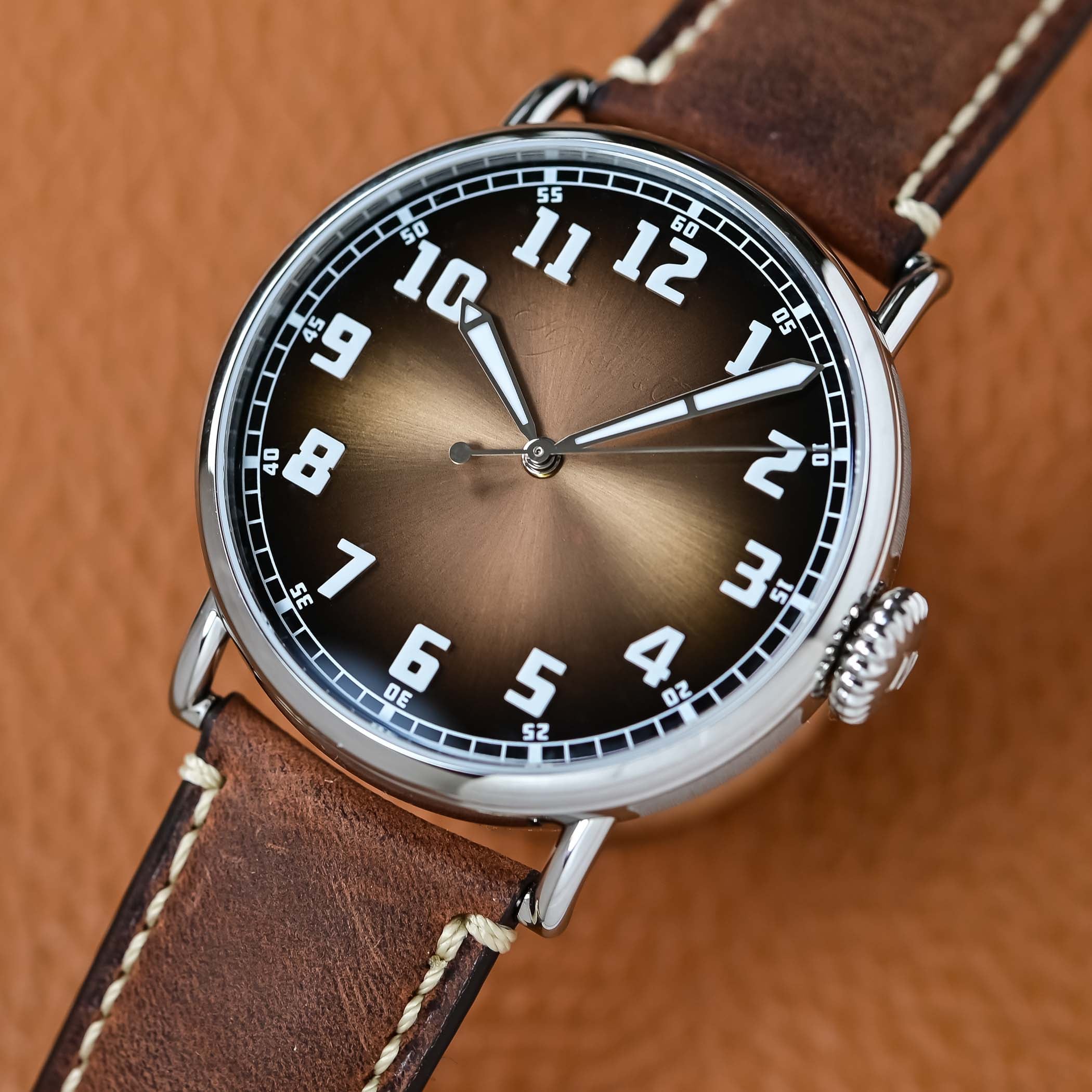
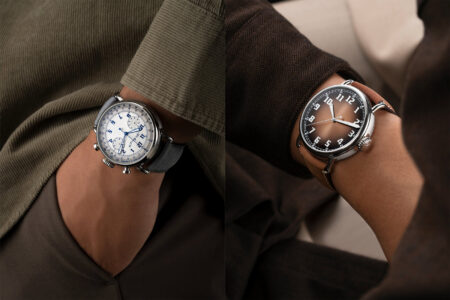
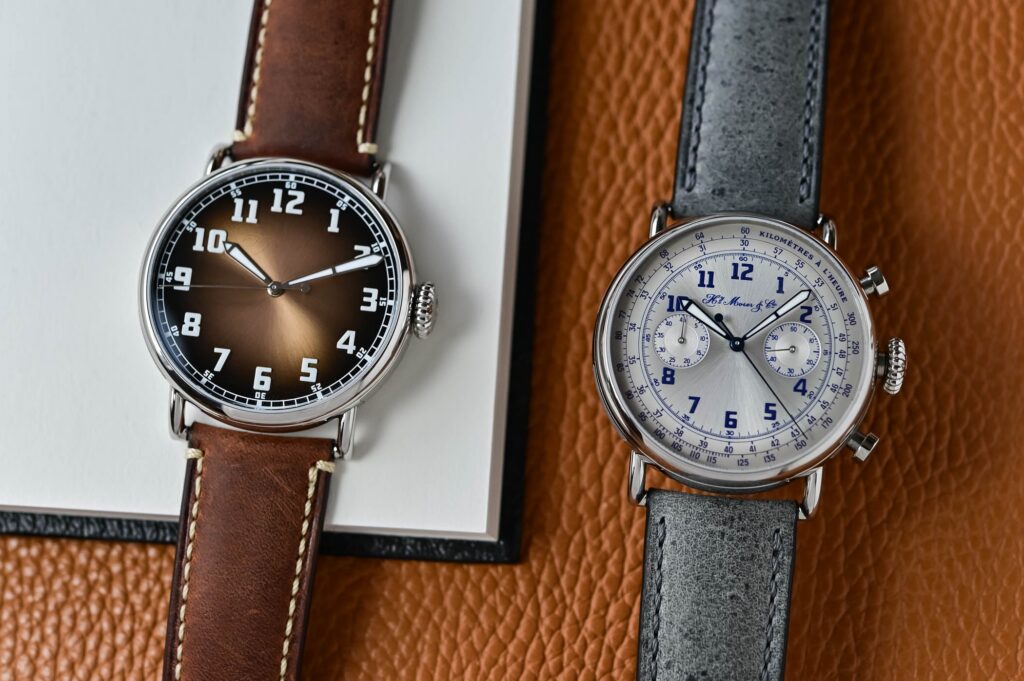
The pair comprises the Heritage Chronograph White Fumé and the Heritage Centre Seconds Espresso Fumé, both built around the collection’s pocket-watch-meets-wristwatch silhouette.
At a glance
- H. Moser & Cie. has introduced two new limited Heritage models, led by the Heritage Chronograph White Fumé.
- The chronograph uses an HMC 220 automatic base movement with a Dubois Dépraz chronograph module for a classic bi-compax display.
- The Heritage Chronograph White Fumé is limited to 100 pieces, while the Heritage Centre Seconds Espresso Fumé is limited to 200 pieces.
A quieter Moser line with real historical pull
The Heritage collection sits apart from Moser’s cleaner contemporary designs.
Its drum-shaped case and fine wire-like lugs deliberately lean into early wristwatch proportions, when pocket-watch design codes were still finding their way onto the wrist.
The line first appeared with Bucherer in 2018 in a 1920s pilot-style execution, and has since been used for time-only, tourbillon, dual time and perpetual calendar references.
For this latest chapter, Moser shifts the mood toward a 1940s-style chronograph, while keeping the case architecture that makes the Heritage family instantly recognisable.
The White Fumé chronograph chooses a more traditional route
The Heritage Chronograph White Fumé is the more unexpected of the two releases.
Moser’s modern chronographs are commonly associated with the AgenGraphe, the chronograph movement developed by Jean-Marc Wiederrecht of Agenhor, but this model takes a different route in order to achieve a classical two-register layout.
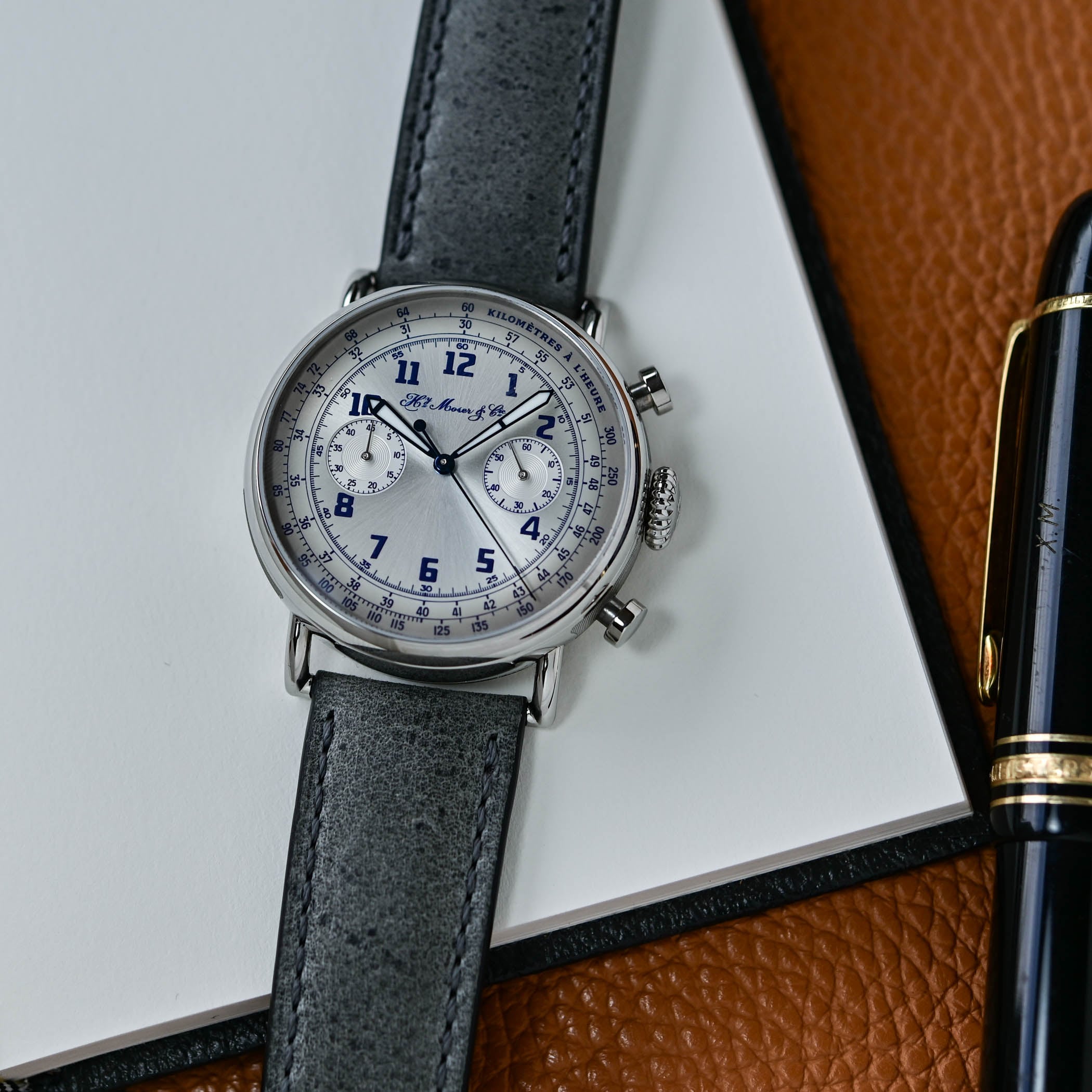
The watch measures 42mm across and 13.8mm thick, so the design may be vintage-led, but the proportions are contemporary.
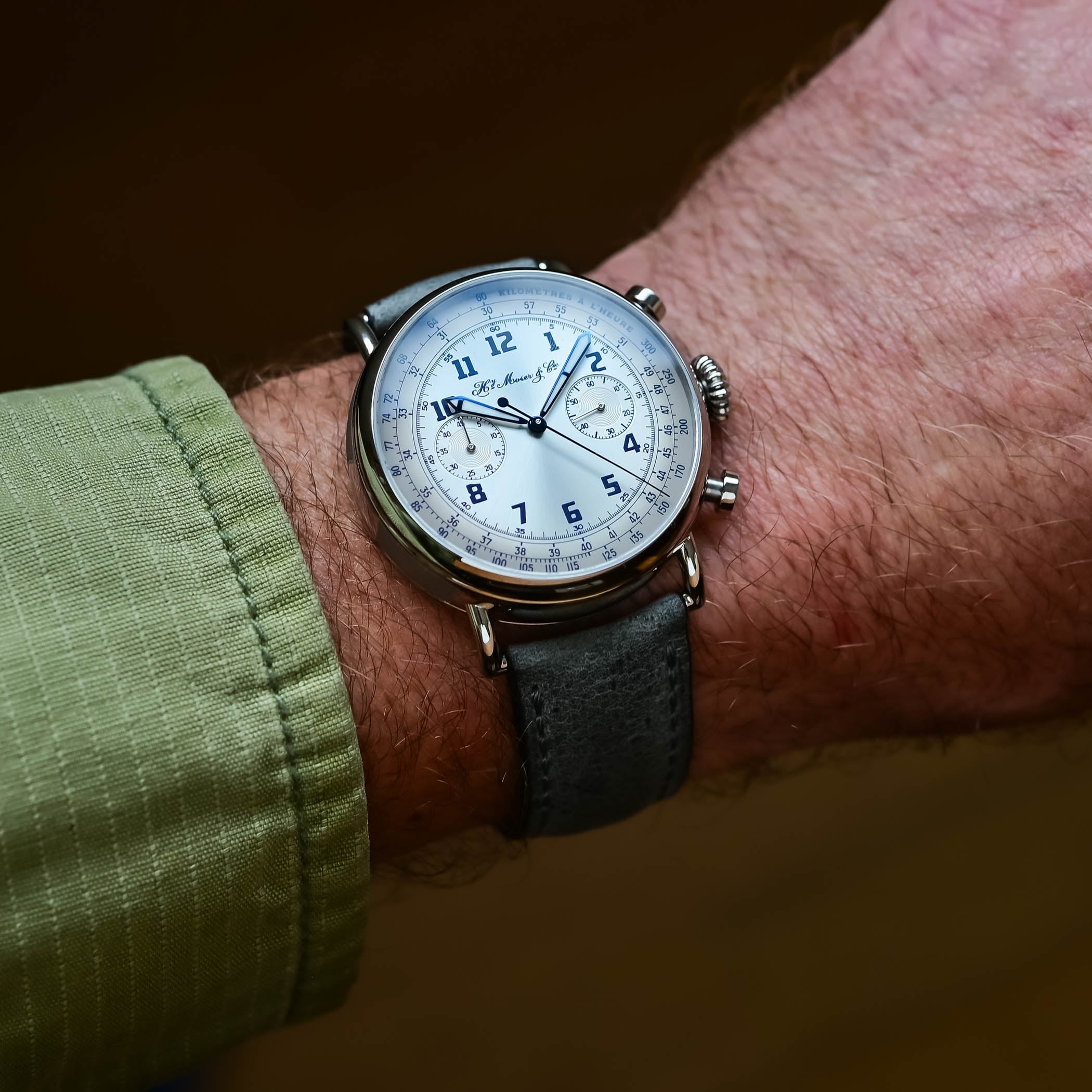
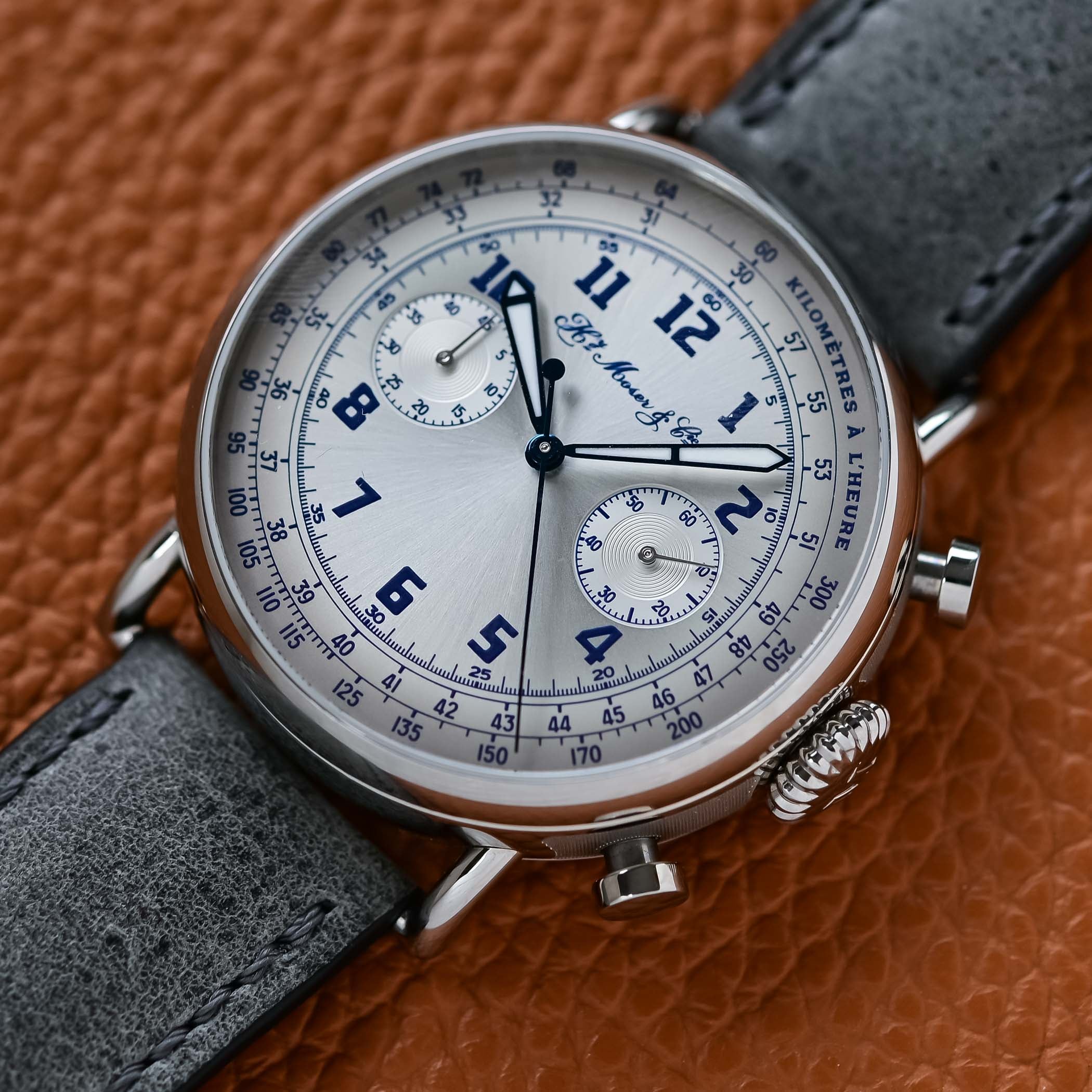
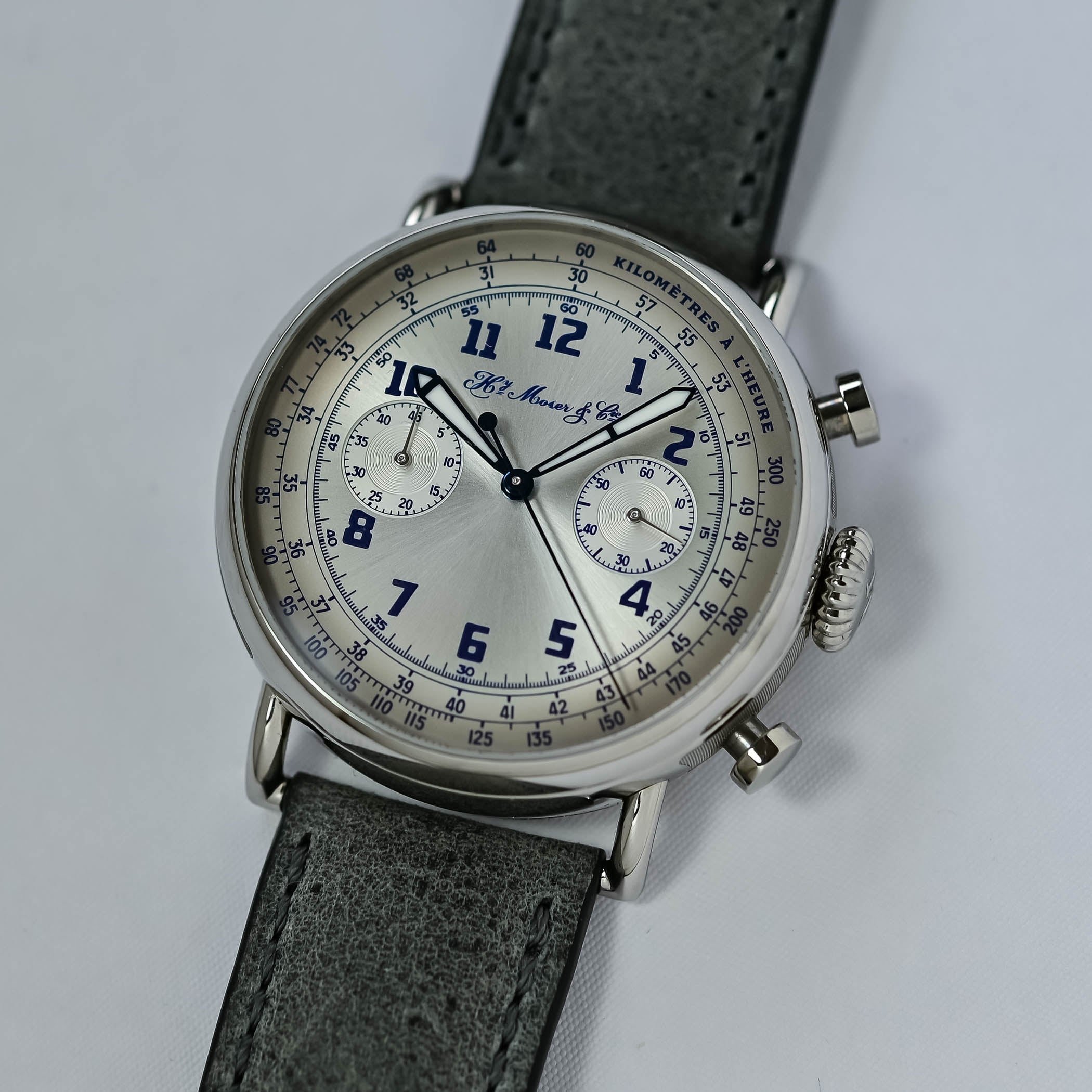
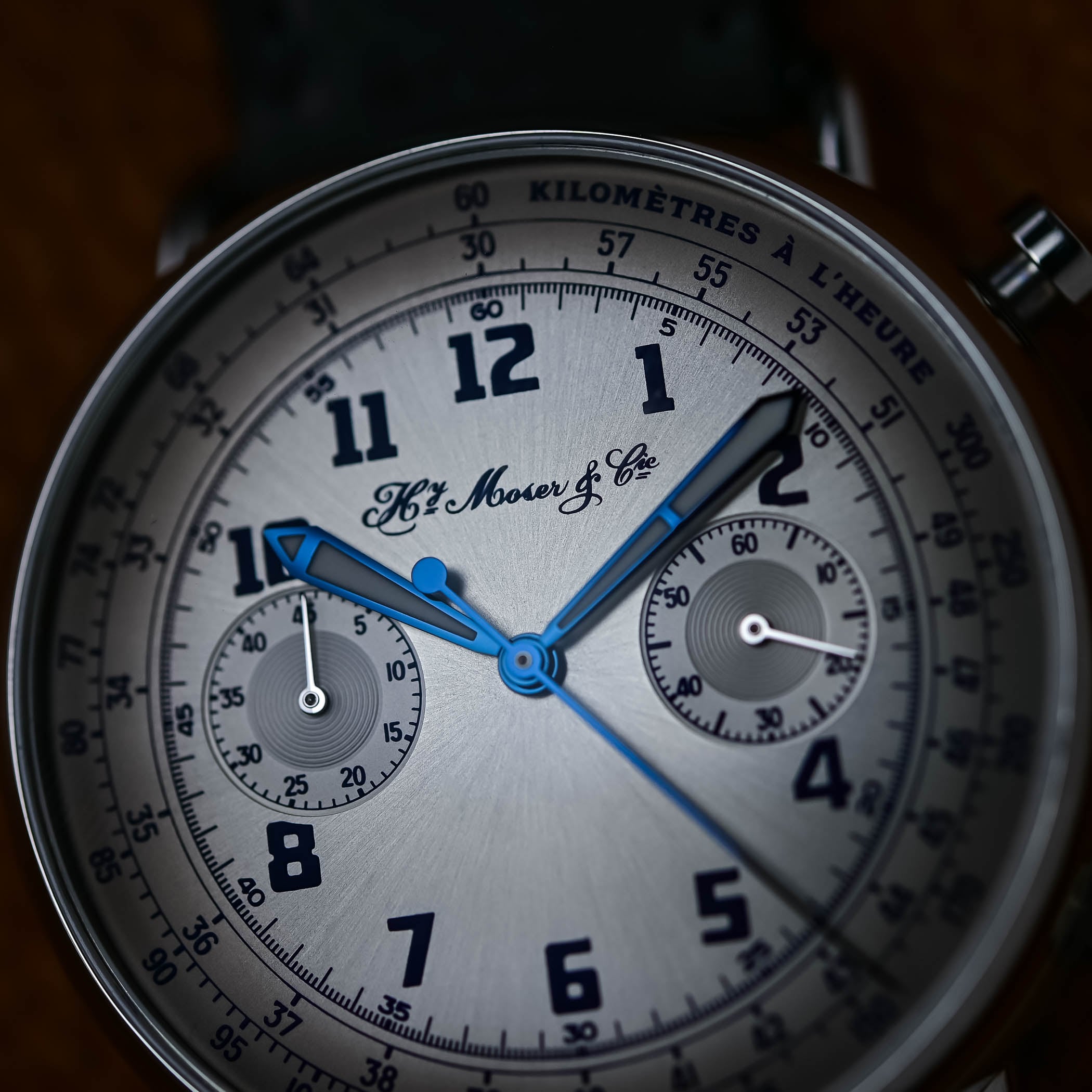
Its silvery-white sunray-brushed dial uses a restrained smoked effect around the edge, giving the familiar fumé treatment a lighter touch than many of the brand’s more dramatic dials.
The layout is deliberately old-school, with large Arabic numerals, a bi-compax display, a precision seconds track and a double tachymeter scale for measuring speeds from 300 to 30kph.
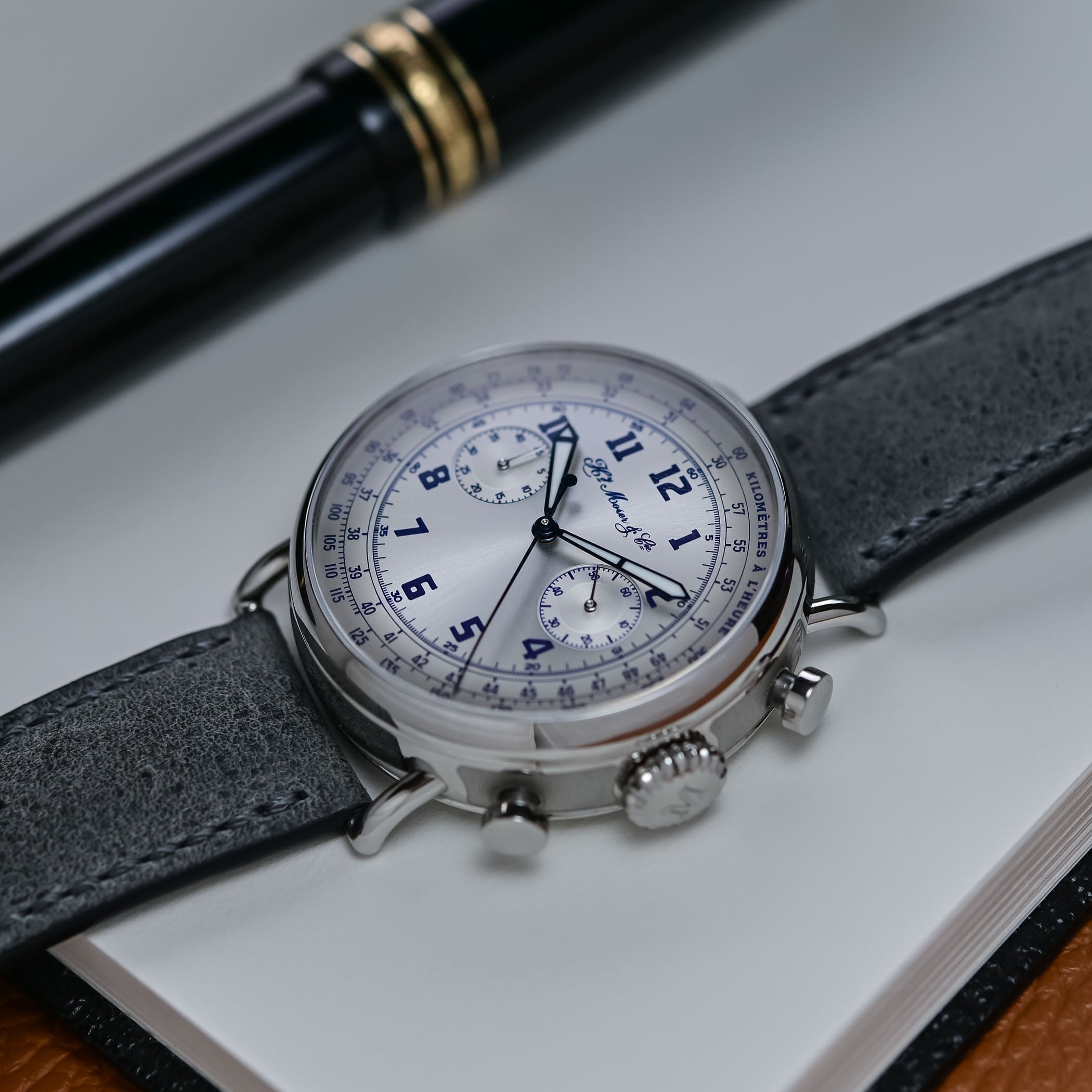
Blued sword-shaped hands add contrast, while the dark blue printing keeps the dial from feeling stark.
Moser also uses a 1947-inspired logo here, a small but pointed detail that suits the watch’s mid-century reference points.
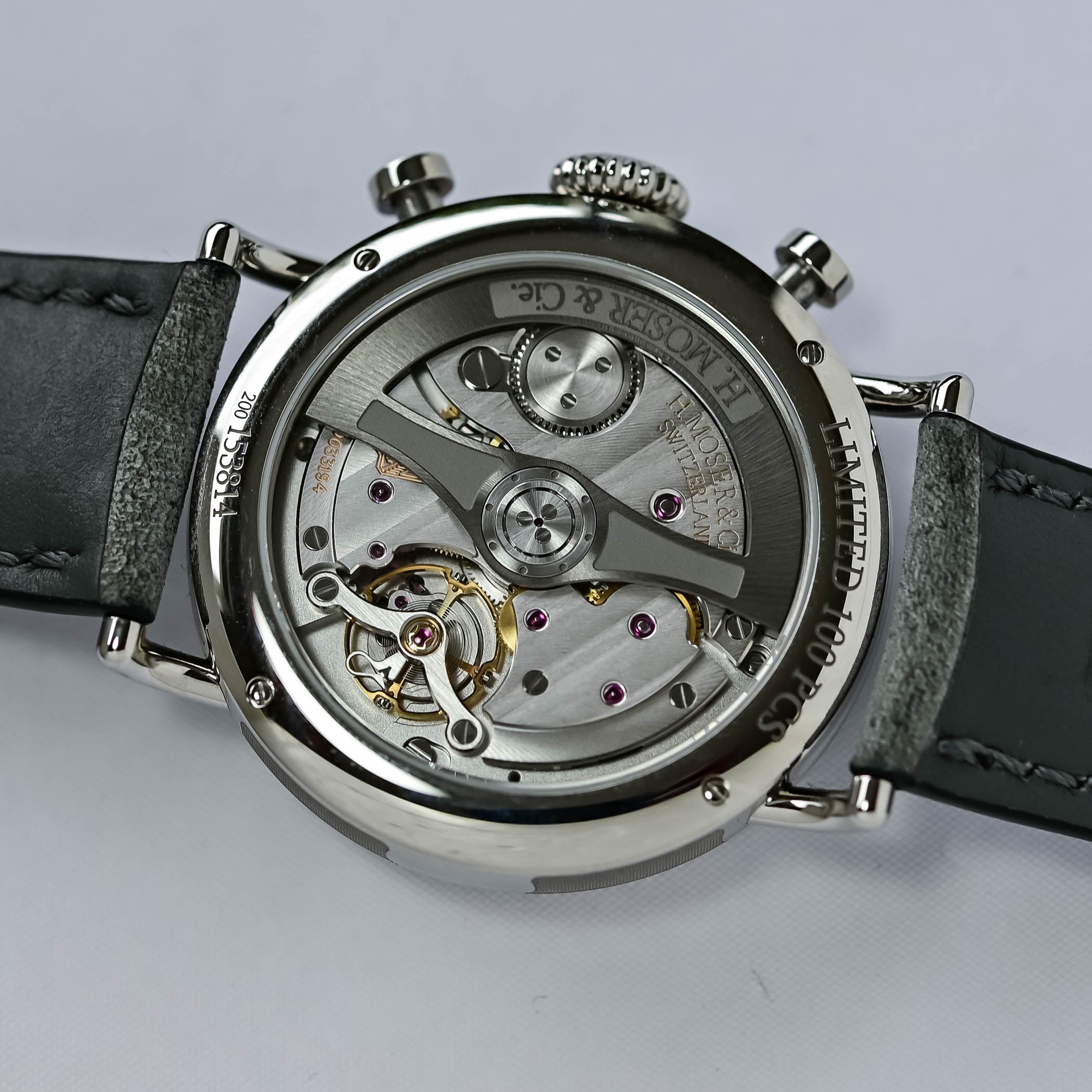
Inside, the chronograph pairs Moser’s automatic HMC 220 calibre with a Dubois Dépraz module.
The movement runs at 3Hz, offers 72 hours of power reserve and uses a Straumann hairspring and bi-directional pawl winding system.
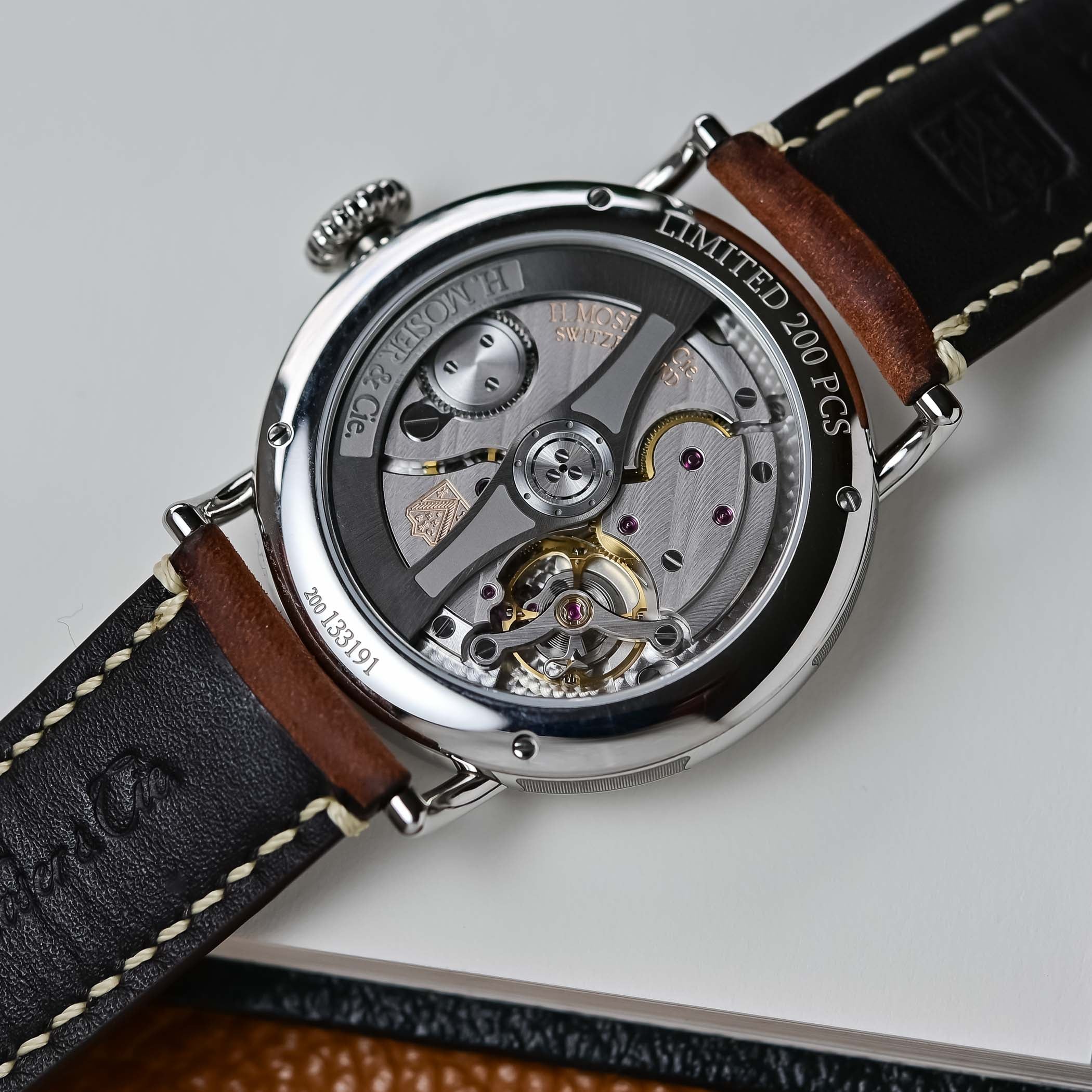
Decoration includes a darkened rotor and Moser’s double stripes, visible through the caseback.
Espresso Fumé gives the time-only model a warmer tone
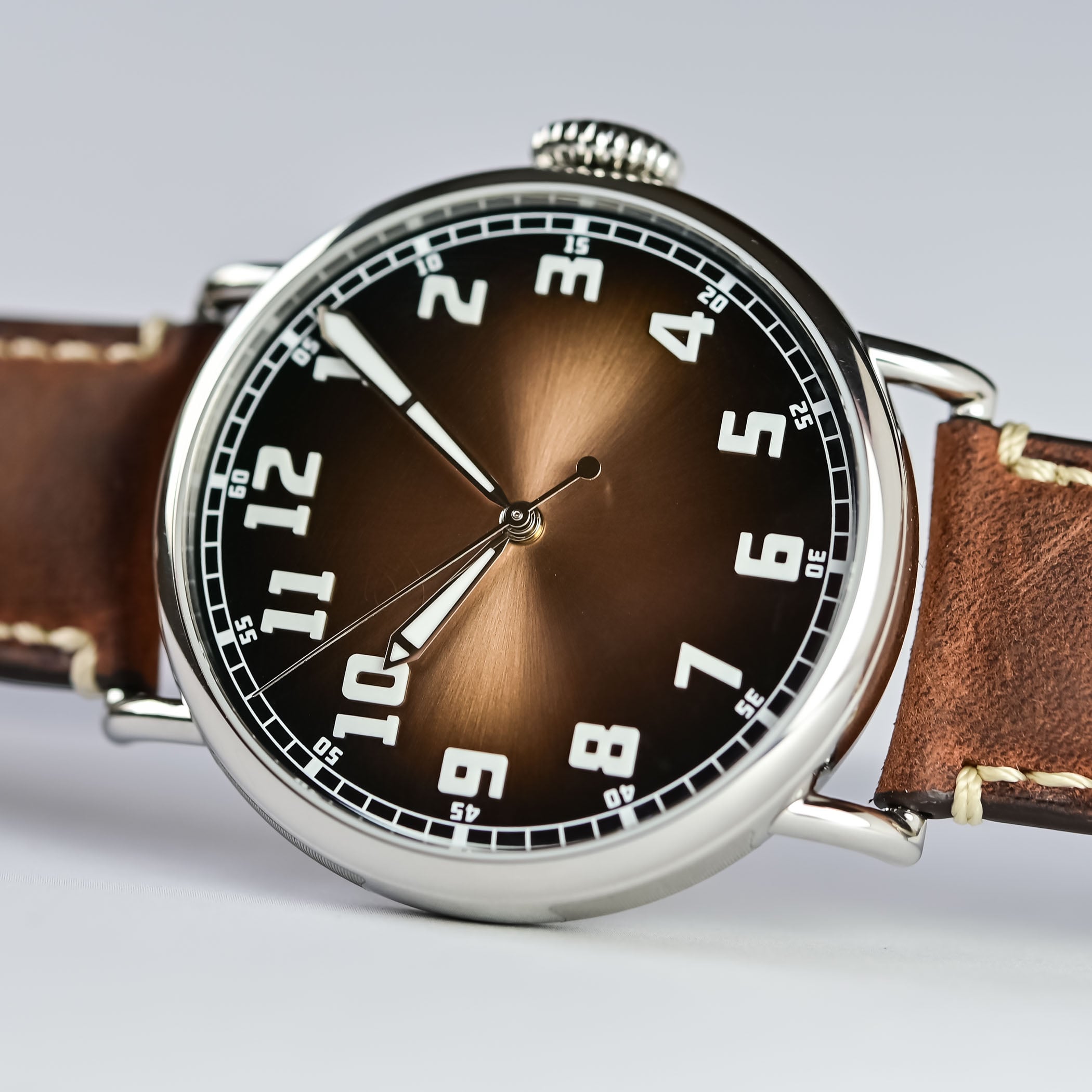
The Heritage Centre Seconds Espresso Fumé takes the more straightforward path, but it’s arguably the easier daily-wear proposition.
It uses the same broad design language as earlier Heritage Centre Seconds models, including the round drum-style case and slender vintage-inspired lugs.
The steel case measures 42mm in diameter and 11.1mm thick, making it slimmer than the chronograph while still maintaining a strong wrist presence.
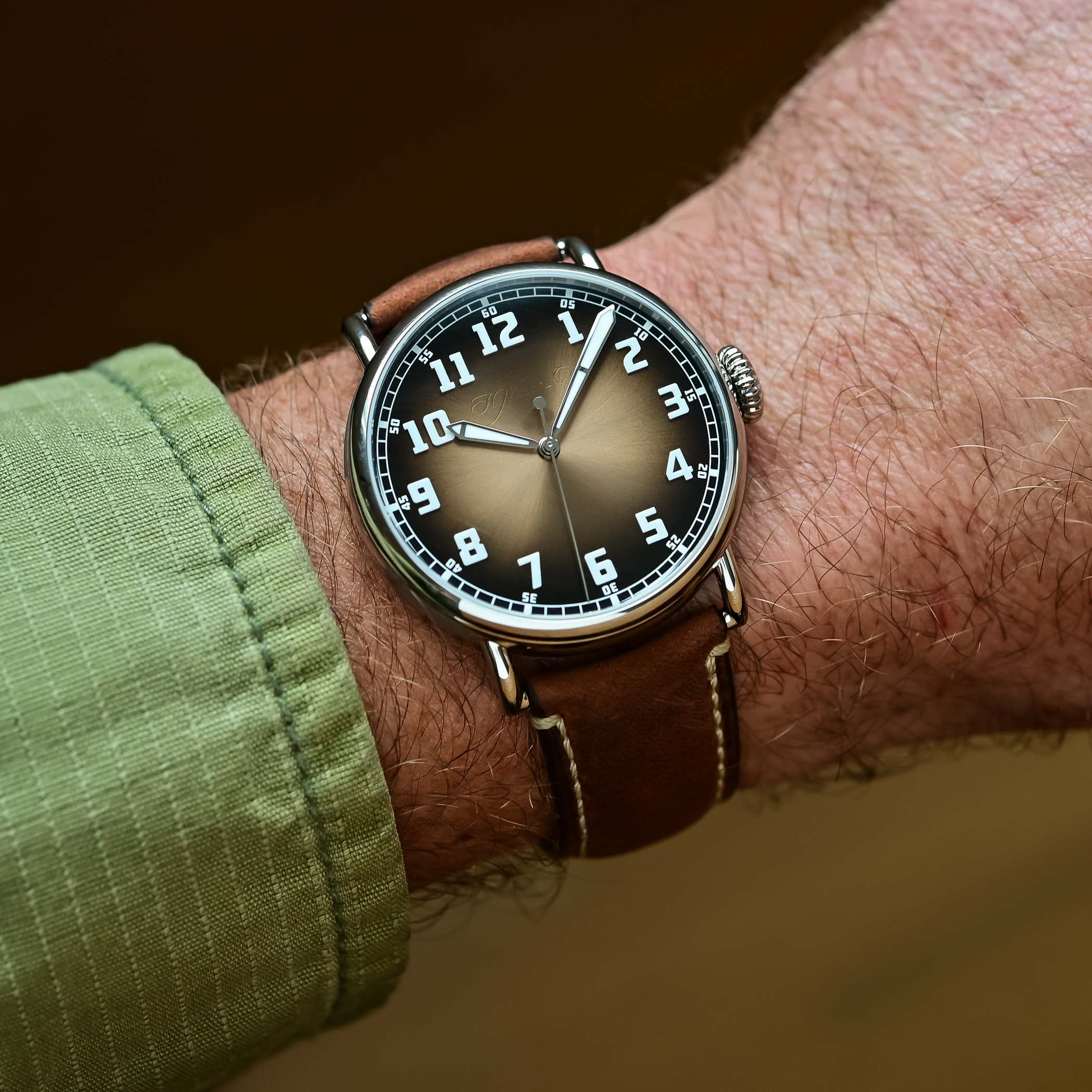
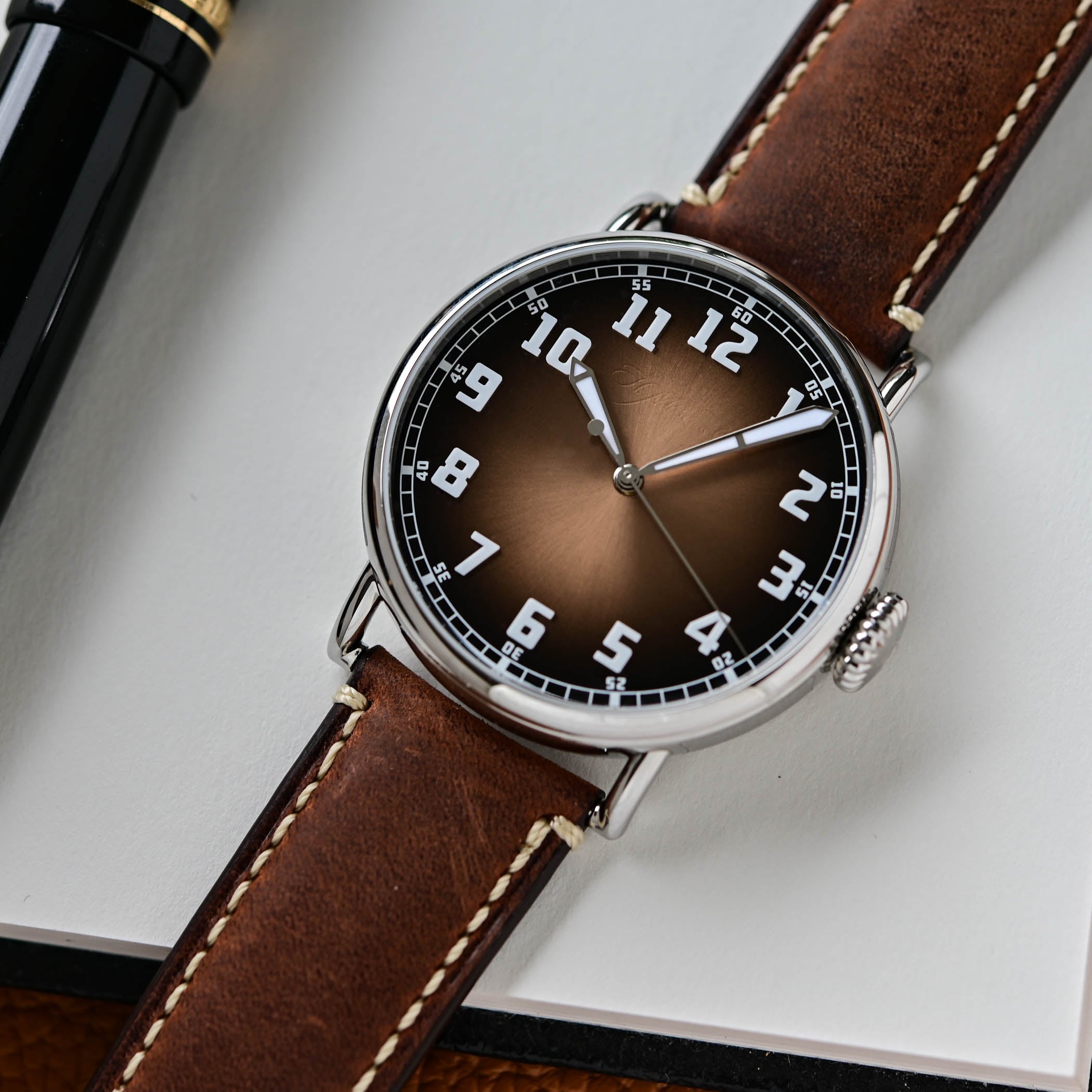
The dial is the main update, moving into a coffee-brown gradient with Moser’s transparent logo.
That restrained branding keeps attention on the oversized Arabic numerals, which are made from Globolight, a ceramic-based material containing Super-LumiNova.
The luminous sword-shaped hands follow the same practical spirit, giving the watch a pilot-influenced look without turning it into a strict reproduction.
Power comes from the automatic HMC 200 calibre, a time-only movement running at 3Hz with a stated three-day power reserve.
Limited production and pricing
Both watches are fitted to kudu leather straps that complement their respective dial colours.
The Heritage Chronograph White Fumé comes on a grey kudu leather strap, while the Heritage Centre Seconds Espresso Fumé is paired with a brown kudu leather strap and steel pin buckle.
The chronograph is limited to 100 pieces and is priced at CHF 29,200, EUR 34,100 or USD 34,100.
The Centre Seconds is limited to 200 pieces and is priced at CHF 15,700, EUR 18,300 or USD 18,300.
Details & Specifications
| Model | Heritage Chronograph White Fumé |
|---|---|
| Case size | 42mm x 13.8mm |
| Dial | Silvery-white sunray-brushed fumé dial with bi-compax chronograph layout, Arabic numerals, precision seconds track and double tachymeter scale |
| Movement | HMC 220 automatic calibre with Dubois Dépraz chronograph module |
| Frequency | 3Hz |
| Power reserve | 72 hours |
| Notable movement details | Straumann hairspring, bi-directional pawl winding system, darkened rotor and double stripes |
| Strap | Grey kudu leather |
| Limited edition | 100 pieces |
| Price | CHF 29,200, EUR 34,100 or USD 34,100 |
| Model | Heritage Centre Seconds Espresso Fumé |
| Case size | 42mm x 11.1mm |
| Dial | Coffee-brown gradient fumé dial with transparent logo, oversized Globolight Arabic numerals and luminous sword-shaped hands |
| Movement | HMC 200 automatic calibre |
| Frequency | 3Hz |
| Power reserve | 3 days |
| Strap | Brown kudu leather strap with steel pin buckle |
| Limited edition | 200 pieces |
| Price | CHF 15,700, EUR 18,300 or USD 18,300 |
What makes these Heritage models interesting is that they don’t chase the most familiar version of modern Moser.
The chronograph, in particular, shows the brand using its historical language to frame a complication in a more classical way, while the Espresso Fumé gives the same case family a warm, legible and quietly distinctive time-only expression.