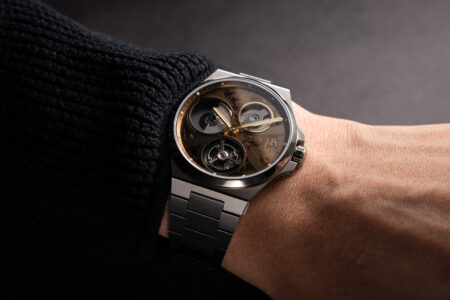
Girard-Perregaux’s latest Laureato is less a simple line extension than a meeting point for two of the brand’s most recognisable ideas.
The Laureato Fifty Three Gold Bridges takes the integrated sports-watch form that traces back to the 1975 original and places it around the maison’s signature three-bridge movement architecture.
It’s a deliberate contrast, pairing steel sportiness with visible haute horlogerie and a tourbillon-led display that wants to be seen.
At a glance
- Girard-Perregaux has launched the Laureato Fifty Three Gold Bridges, combining the Laureato Fifty with its Three Gold Bridges architecture.
- The 41mm steel watch features a white gold bezel, skeletonised dial, rose gold bridges, tourbillon and a platinum micro-rotor.
- The watch is priced at £144,000, placing it firmly in Girard-Perregaux’s high-complication territory.
A sport watch frame for a high-watchmaking movement
The Laureato has always worked because its geometry is direct and recognisable without being overdrawn.
Here, Girard-Perregaux keeps the integrated architecture intact, using a steel case and H-link bracelet with the familiar octagonal bezel sitting above the case body.
The dimensions step up from the 39mm size associated with previous Laureato Fifty models, including tourbillon versions, to 41mm in diameter and 10.85mm thick.
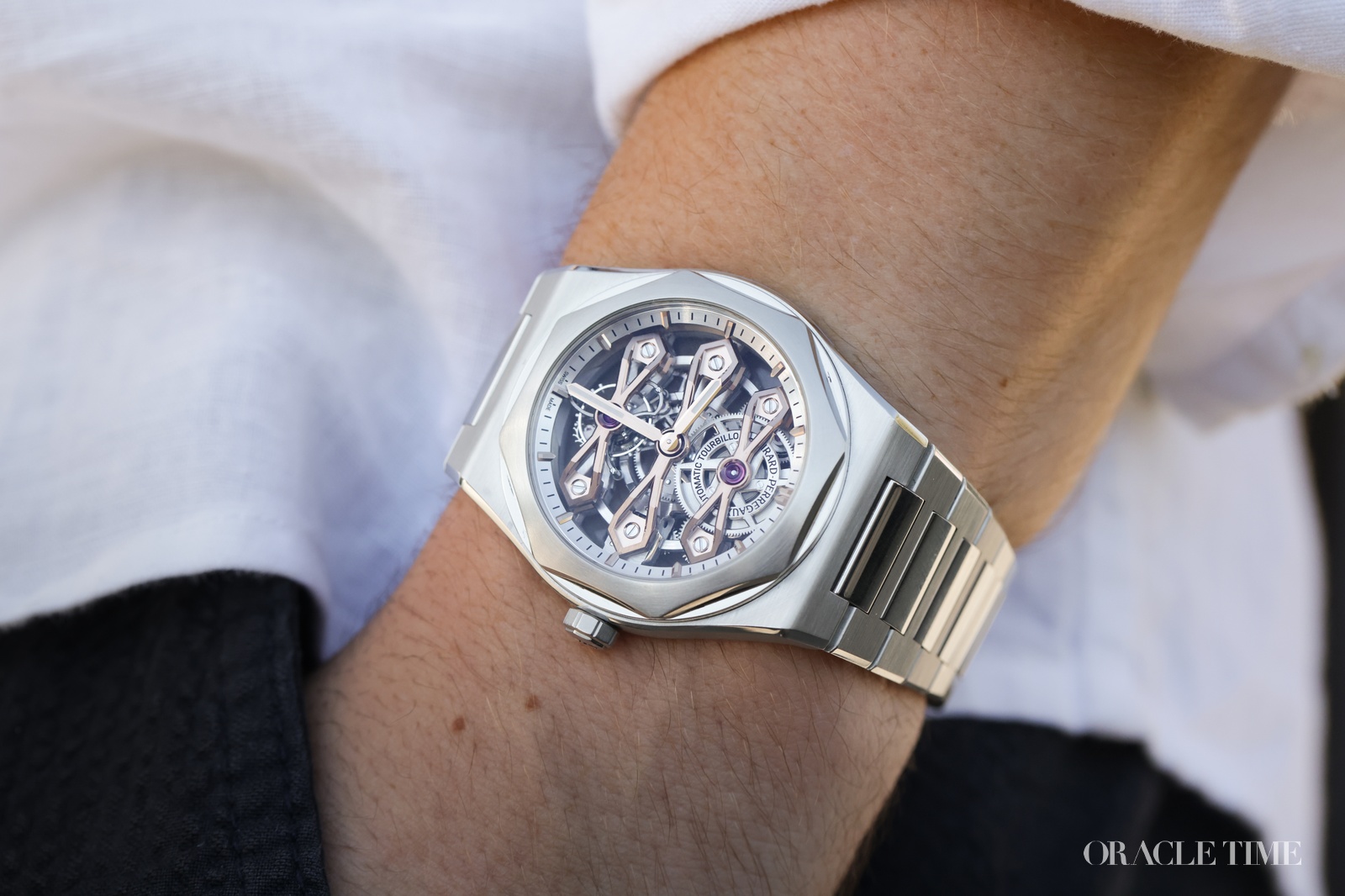
That larger format gives the openworked calibre more room to breathe, and it also suits the watch’s more demonstrative intent.
The white gold bezel is the clearest external signal that this is not a standard steel Laureato.
Its brighter lustre separates the watch from the surrounding steel while keeping the overall design within the established Laureato language.
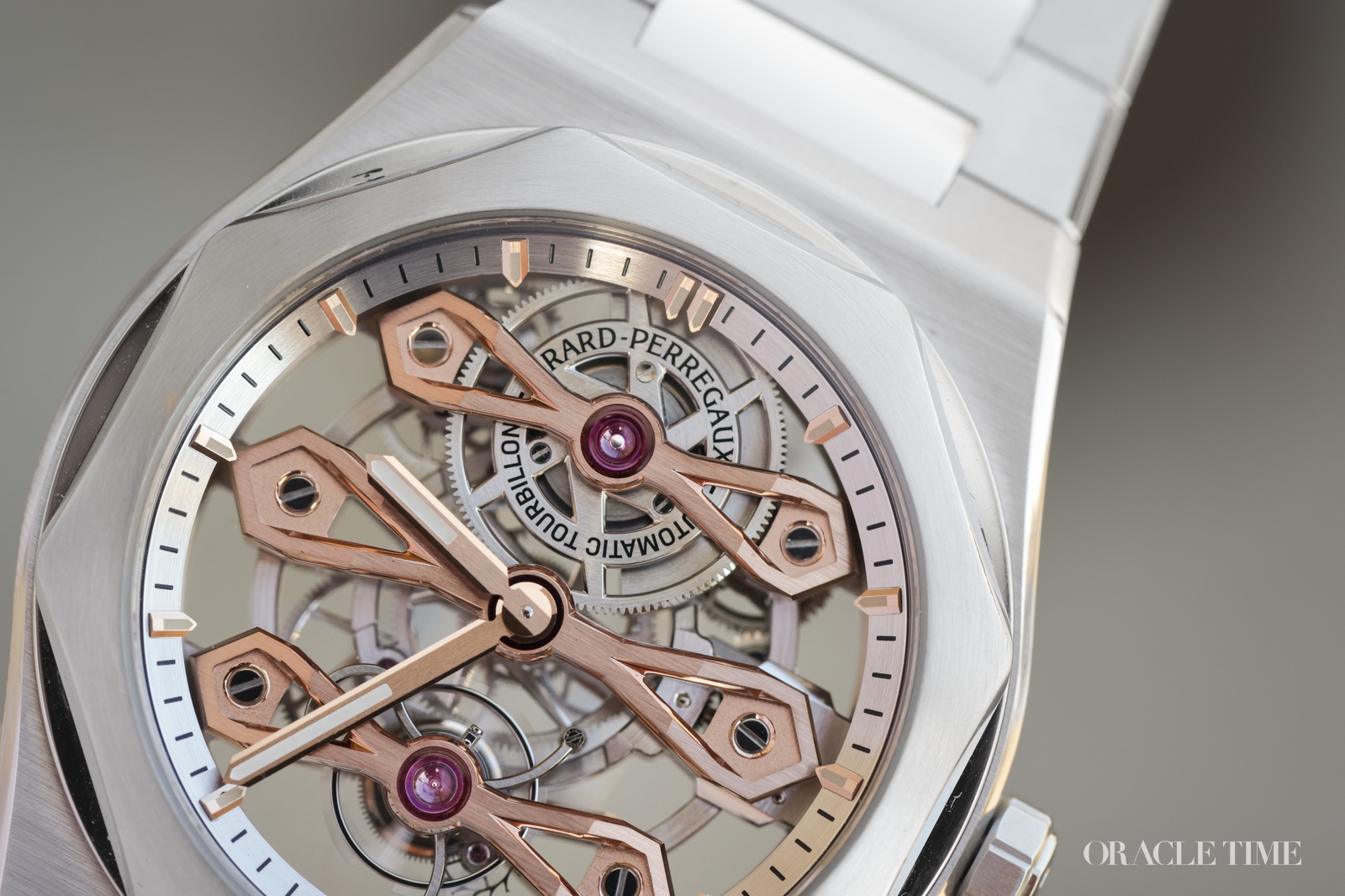
Finishing across the case, bezel and bracelet uses a mix of polishing, circular brushing and straight-line brushing, a detail that matters on an integrated bracelet watch where every surface is part of the design.
The three rose gold bridges take over the dial
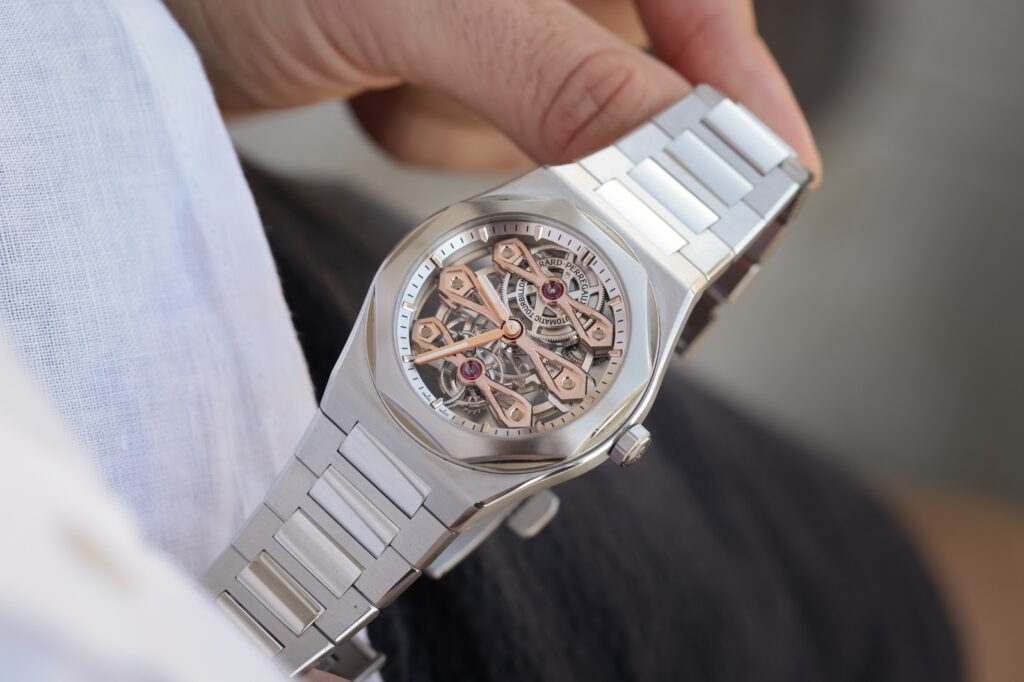
The dial is really a display of movement architecture rather than a conventional dial in the usual sense.
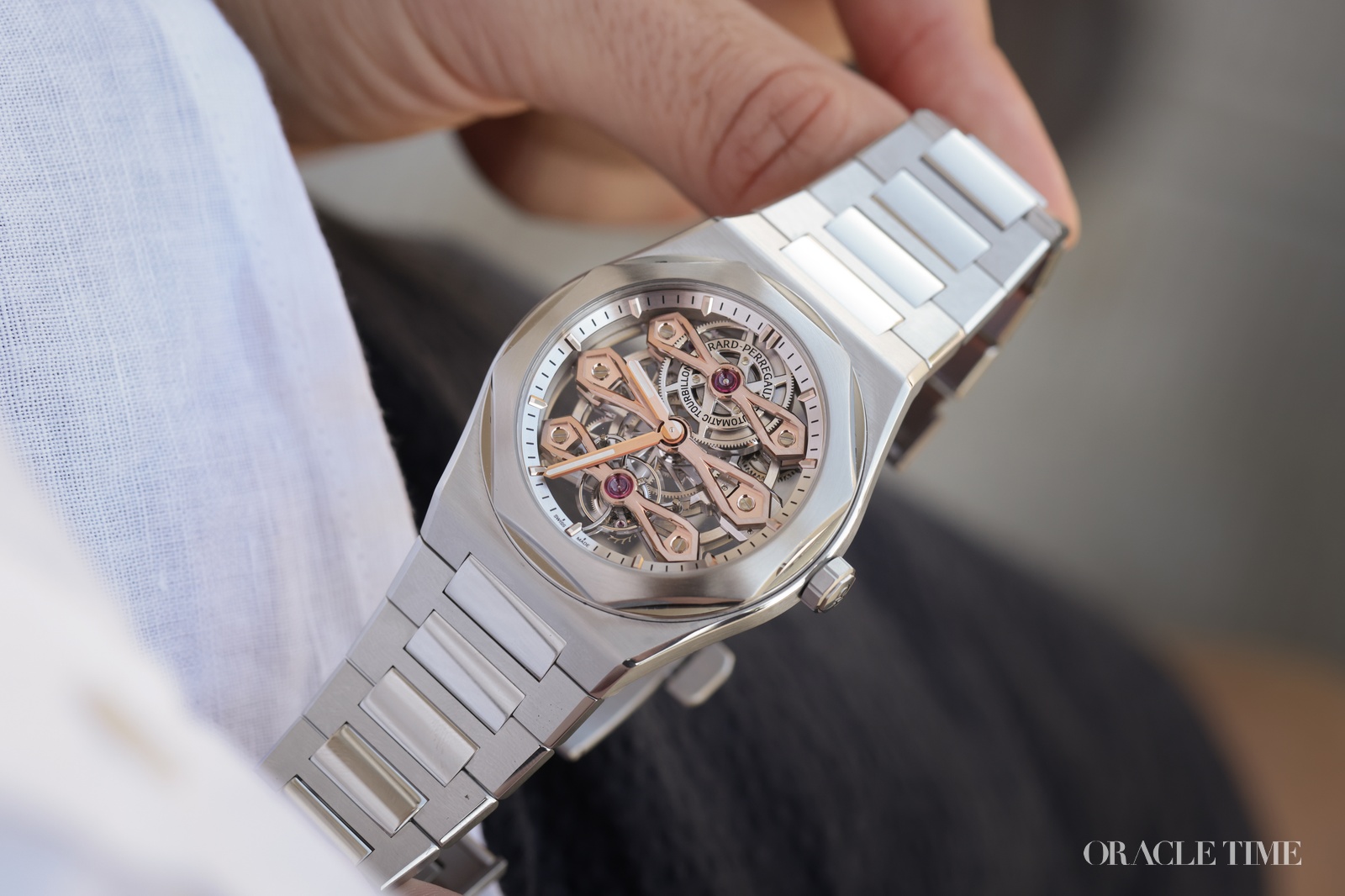
Girard-Perregaux skeletonises the construction and picks out the three bridges in rose gold, setting them against the steel case, the peripheral minute scale and the exposed mechanics beneath.
The lowest bridge at 6 o’clock supports the tourbillon and its lyre-shaped cage.
The central bridge carries the hour and minute hands, while the upper bridge supports the power barrel and platinum micro-rotor.
It’s a layout with deep brand significance, but it also creates a strong visual hierarchy, with the eye moving vertically through the watch from regulating organ to time display to winding system.
The trade-off is legibility, which is often the pressure point for skeletonised watches.
The solid rose gold hands can blend into the rose gold central bridge when the two align, softening the contrast at certain times.
Girard-Perregaux offsets that partly with lume on the hands and hour markers, which means the watch may read more clearly in low light than its intricate daytime appearance suggests.
A dedicated variation of the GP09620 calibre
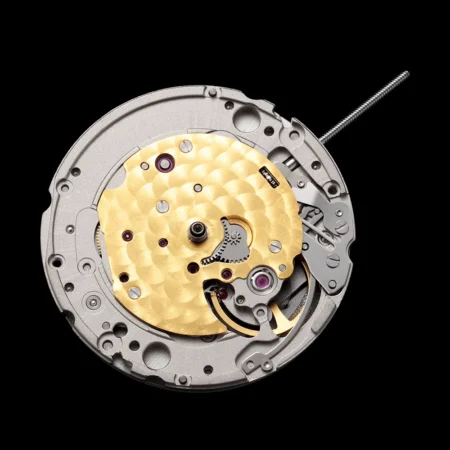
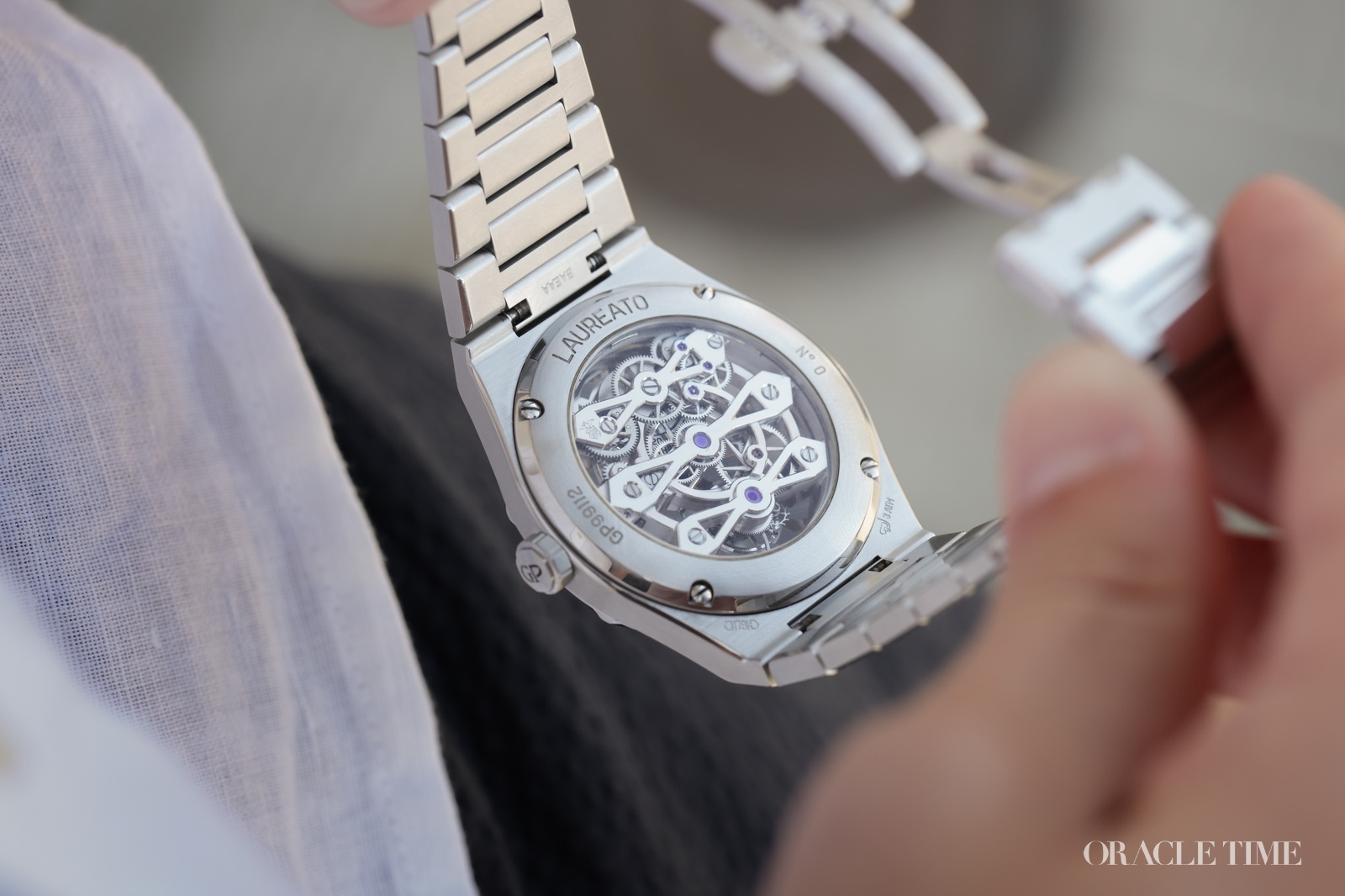
The movement is a new variation of the GP09620, developed specifically for the Laureato Fifty Three Gold Bridges.
It consists of 303 components and includes 418 hand-polished angles, a figure that speaks to the amount of finishing work visible through the open architecture.
Each watch and movement is assembled from start to finish by a single watchmaker.
Girard-Perregaux marks that individual involvement by engraving the watchmaker’s initials on the movement alongside the brand logo.
The calibre runs at 3 Hz and offers a 55-hour power reserve.
The platinum micro-rotor keeps automatic winding integrated into the upper section of the movement display rather than hidden behind a full rotor.
Where it sits in the Laureato family
The Laureato Fifty Three Gold Bridges is priced at £144,000, which puts it far beyond the everyday integrated sports-watch conversation and into the realm of collector-focused high watchmaking.
Its appeal is specific.
This is for someone who wants the Laureato case shape but is more interested in Girard-Perregaux’s historic movement architecture than in understatement.
It also underlines how flexible the Laureato platform has become, stretching from relatively restrained steel models to complicated pieces that place the calibre at the centre of the watch’s identity.
Not every Laureato buyer will want the movement to dominate this completely, but that’s also the point.
The Fifty Three Gold Bridges is a statement piece within the collection, one that treats the integrated sports watch as a stage for Girard-Perregaux’s most recognisable mechanical signature.
Details & Specifications
| Brand | Girard-Perregaux |
|---|---|
| Model | Laureato Fifty Three Gold Bridges |
| Case size | 41mm |
| Thickness | 10.85mm |
| Case material | Steel with white gold bezel |
| Dial | Skeletonised with rose gold Three Gold Bridges |
| Movement | New variation of the GP09620 |
| Complication | Tourbillon |
| Components | 303 |
| Finishing | 418 hand-polished angles |
| Frequency | 3 Hz |
| Power reserve | 55 hours |
| Rotor | Platinum micro-rotor |
| Bracelet | Integrated steel H-link bracelet |
| Price | £144,000 |
As a Laureato, this is not the quietest expression of the line, but it’s one of the clearest demonstrations of how Girard-Perregaux can pull its sport-watch and haute horlogerie identities into the same object.