Ferrari has never treated aerodynamics as decoration, but its latest patent filing suggests Maranello is looking at a more dramatic kind of active aero.
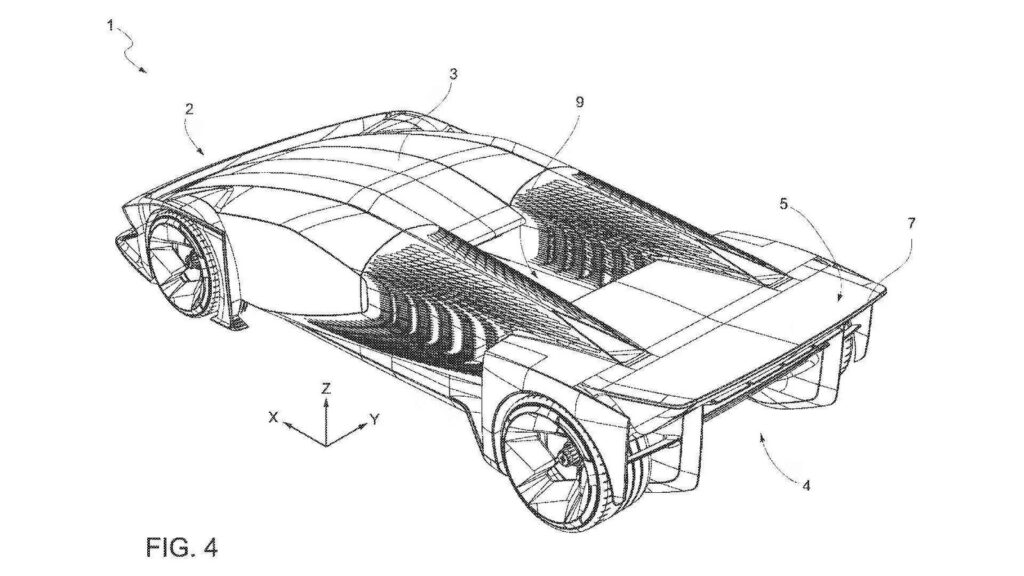
The filing, made with the US Patent and Trademark Office, depicts a futuristic mid-engined hypercar with a rear section that can physically extend to alter the car’s aerodynamic profile.
It’s not a confirmed production model, and patent drawings often explore ideas rather than preview showroom cars, but the thinking behind it is hard to ignore.
At a glance
- Ferrari has filed a patent showing a mid-engined hypercar concept with advanced active aerodynamics.
- The standout feature is a rear aero element that can move backwards, effectively creating a longer tail when needed.
- There’s no confirmed production plan, but the idea points to Ferrari’s growing focus on intelligent aero rather than simply adding power.
A longer tail without a longer car
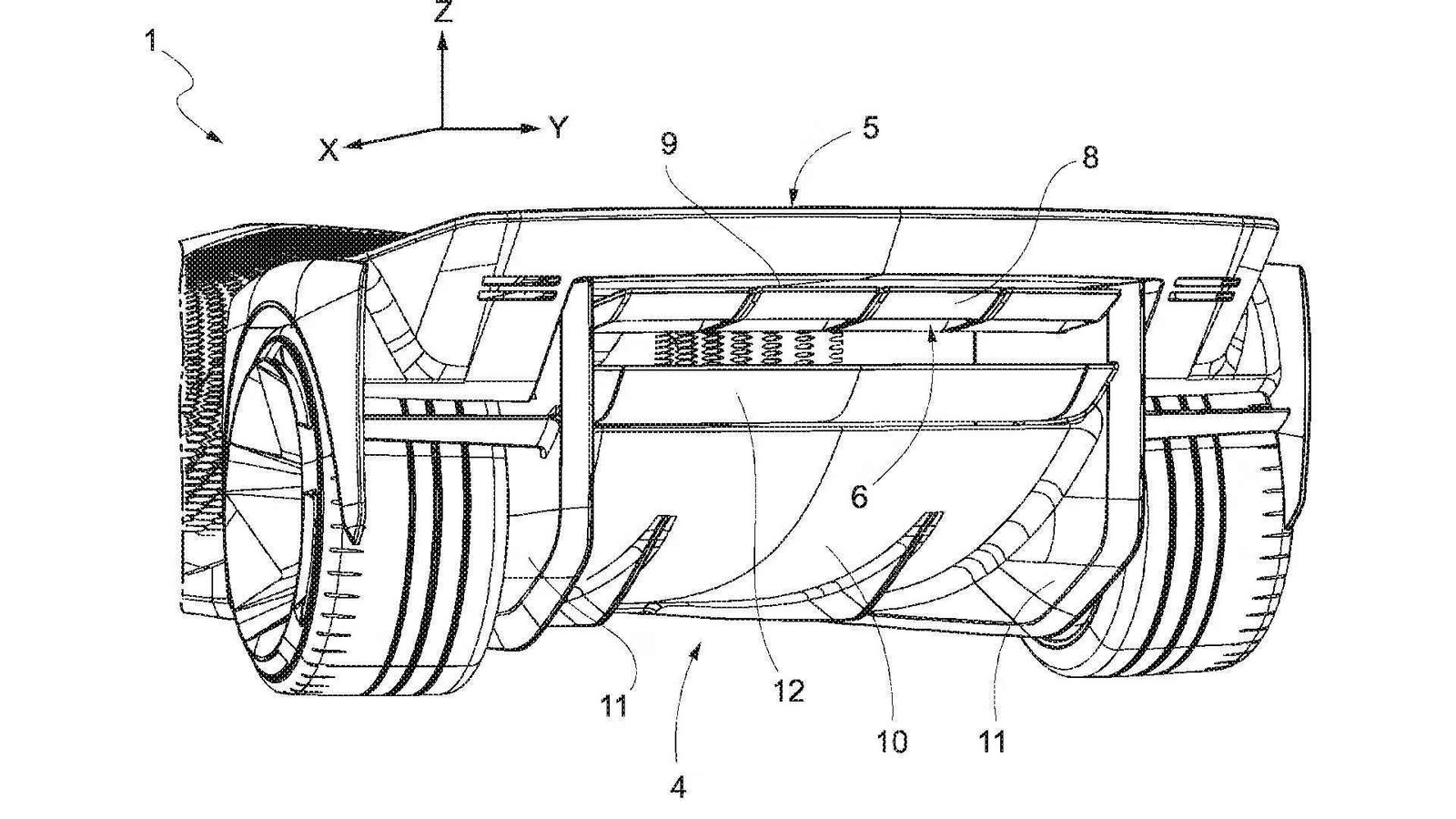
The most interesting detail sits at the rear, where Ferrari illustrates an extendable aerodynamic element that can slide rearwards from its normal position.
In simple terms, the car could behave like a shorter, more compact machine when the aero system is stowed, then adopt a longer-tail profile when stability or efficiency demands it.
That matters because length is a powerful aerodynamic tool, especially at speed.
A longer tail can help manage airflow more cleanly as it leaves the body, reducing turbulence and potentially improving stability without requiring a permanently stretched silhouette.
For a brand that has to balance design, packaging and performance, the idea is appealing because it allows the car to change character without changing its fundamental proportions.
The patent drawings also show a large diffuser, F1-inspired venting and an integrated rear light bar, all arranged around a body that reads as unmistakably exotic rather than merely experimental.
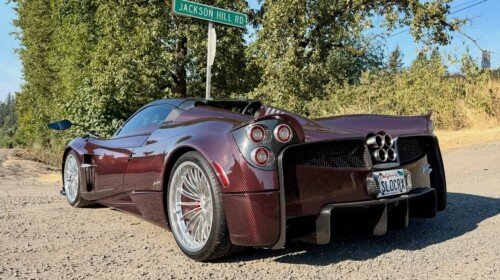
Active aero is becoming Ferrari’s next performance frontier
Modern supercars have reached a point where extra power alone doesn’t always translate into a better road car.
Traction, tyre performance, braking stability and high-speed balance all place limits on how effectively huge outputs can be used outside a circuit.
That’s where smarter aerodynamics start to matter.

Instead of relying on a fixed wing or a single deployable flap, the next wave of performance cars may use bodywork that changes more subtly and more intelligently across different driving conditions.
Ferrari already has deep experience in this area, from racing programmes to road cars that use carefully managed air channels, underbody flow and active devices.
This patent suggests the company may be studying a broader solution, where the rear volume of the car itself becomes part of the aerodynamic system.
The Purosangue idea shows a wider strategy
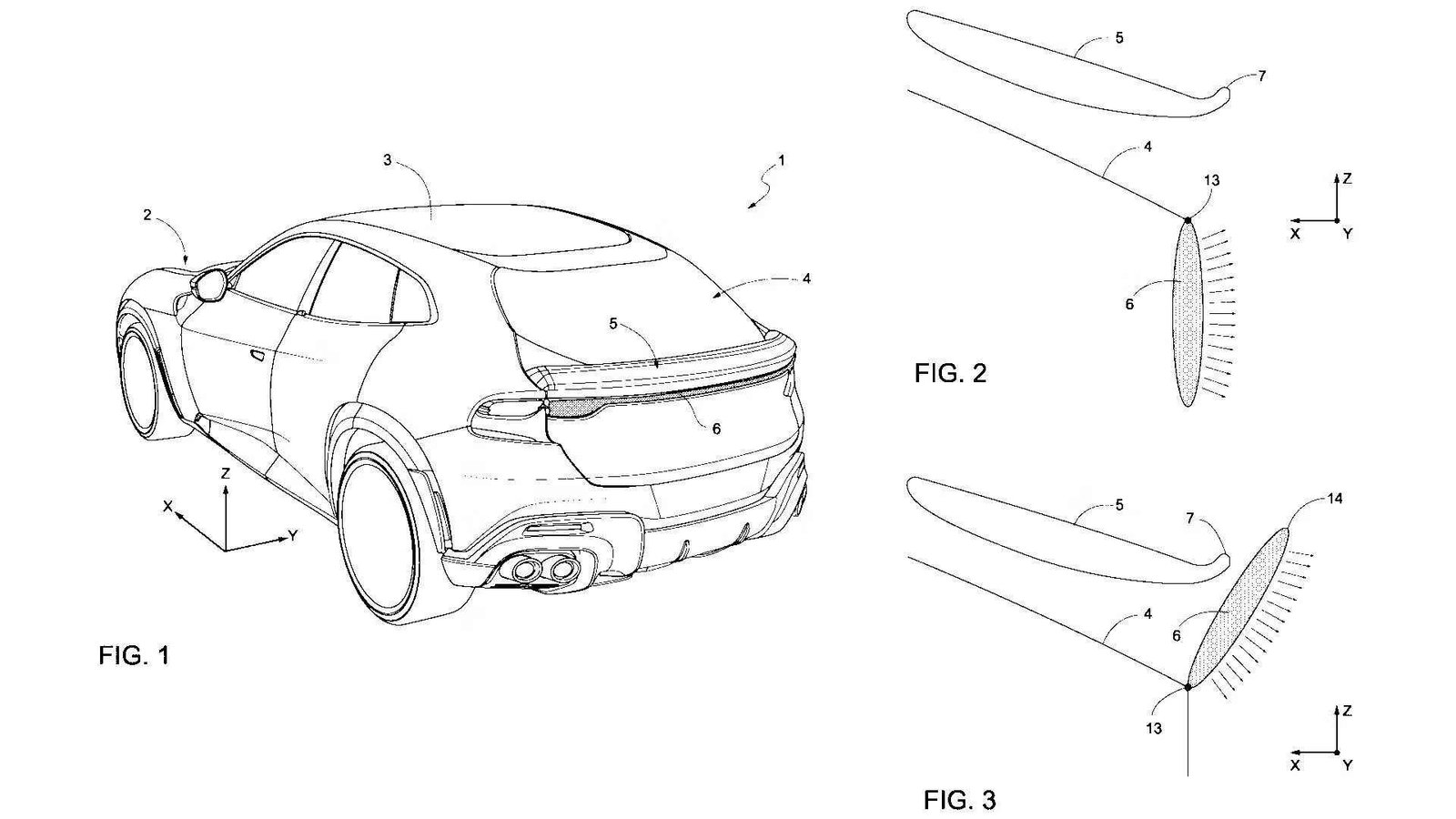
The same direction can be seen in Ferrari’s patent work around the Purosangue.
In that application, the rear lighting elements are shown as movable pieces that can angle downwards and work with a small rear spoiler.
It’s a very Ferrari way of approaching the problem, because it tries to add aerodynamic function without simply bolting on a large conventional wing.
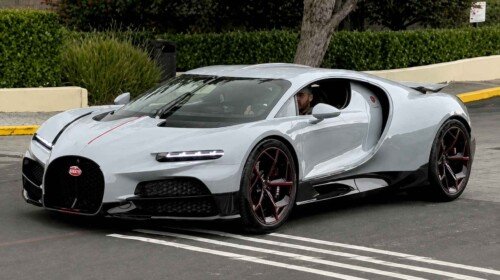
That approach is especially relevant for a car like the Purosangue, where visual restraint and everyday usability matter as much as outright speed.
If lighting, bodywork and spoiler elements can work together, Ferrari can extract aero gains while keeping the shape cleaner and more integrated.
The hypercar patent takes that thinking further by making the rear of the car more physically transformative.
Details & Specifications
| Brand | Ferrari |
|---|---|
| Subject | Patent filing for advanced active aerodynamics |
| Vehicle type shown | Futuristic mid-engined hypercar concept |
| Key aero feature | Extendable rear element that moves rearwards to create a longer-tail profile |
| Rear aero details | Large diffuser, F1-inspired vents and integrated light bar |
| Related Ferrari concept | Purosangue rear lighting elements that may angle downward to work with a small spoiler |
| Production status | No confirmed production plan |
There’s no guarantee that this exact system will appear on a future Ferrari, and patent filings often remain as engineering possibilities rather than finished products.
Still, the direction is telling.
As the performance conversation moves beyond horsepower, Ferrari’s most important gains may come from bodywork that thinks, moves and adapts before the driver ever notices it working.