Innsbruck is the kind of city where the mountains don’t sit politely in the distance.
They rise sharply above the streets, which makes the idea of a family cycling route into the Nordkette feel ambitious before you’ve even clipped a helmet on.
An e-mountain bike changes that calculation, not by removing the effort, but by making the experience more sociable, more balanced and far more enjoyable.
At a glance
- An e-mountain bike ride from central Innsbruck into the Nordkette made a demanding Alpine route manageable for a mixed-ability family group.
- The route covered more than 20 kilometres with about 700 metres of climbing, using electric assist modes to smooth out steep ascents.
- The guided ride started and finished at Die Börse in Innsbruck, with lunch at Arzler Alm and around 70% battery remaining at the end.
The e-bike advantage on Alpine terrain
Innsbruck’s scale can be misleading for cyclists, especially when the group includes riders with different fitness levels.
The city-to-mountain transition is quick, and the gradients soon make it clear that this isn’t a gentle riverside spin.
The e-mountain bikes used on the ride were serious machines, with a stated retail price of around €6,000 each and several levels of power delivery.
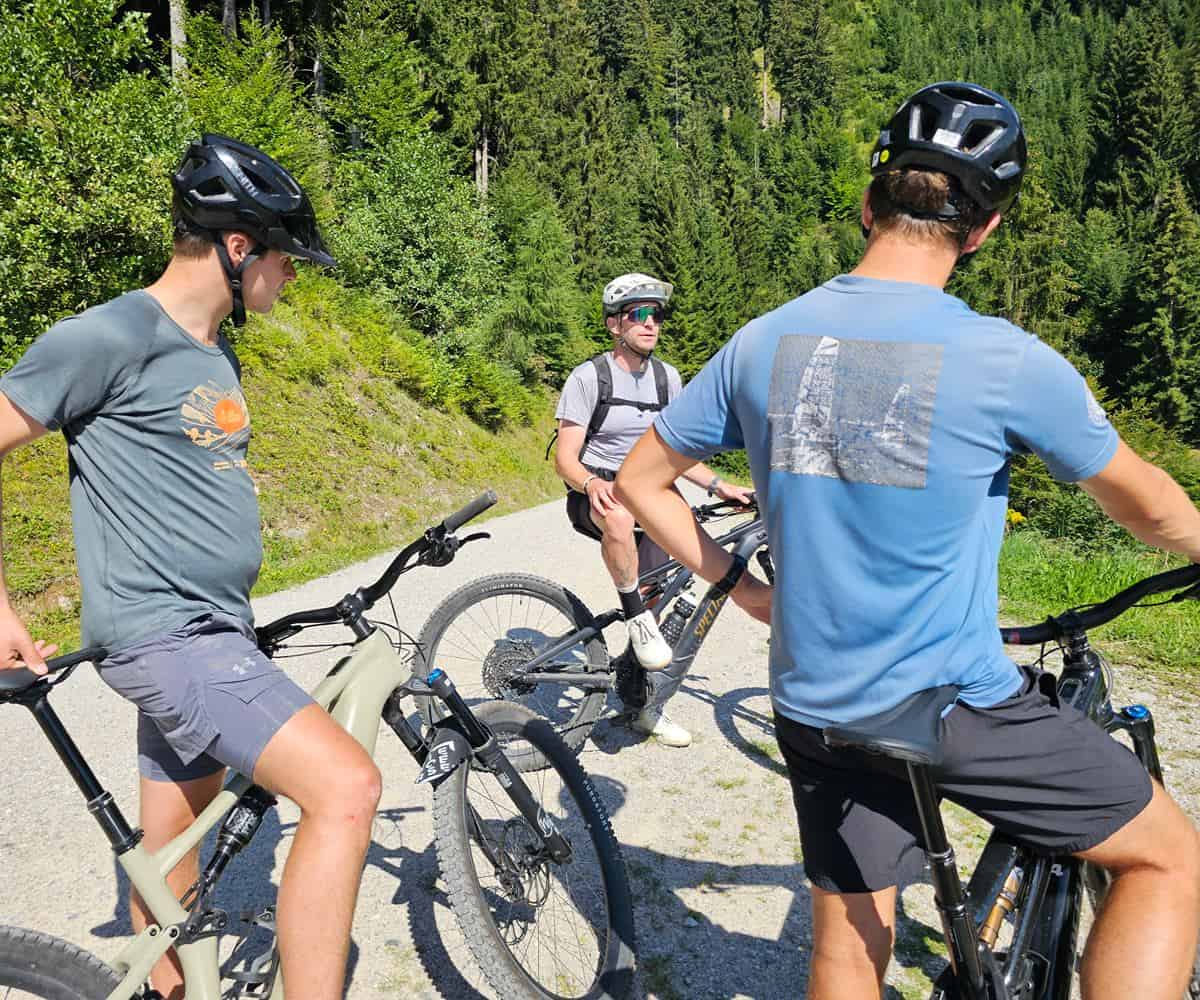
Off mode meant pure leg power, with the extra weight of the e-bike immediately noticeable.
Eco mode gave a light push that helped offset that weight on flatter gravel paths.
Trail mode was the sweet spot for climbing, adding responsive assistance without making the ride feel detached.
Turbo mode delivered the strongest support, turning the steeper sections from a test of survival into something controlled and rideable.
The important point is that the bike still demands pedalling.
What it removes is the punishing gap that can open between stronger and less experienced riders on sustained Alpine climbs.
For a family ride, that’s a meaningful shift because it lets everyone stay together rather than turning the route into a staggered procession.
From Die Börse into the Nordkette
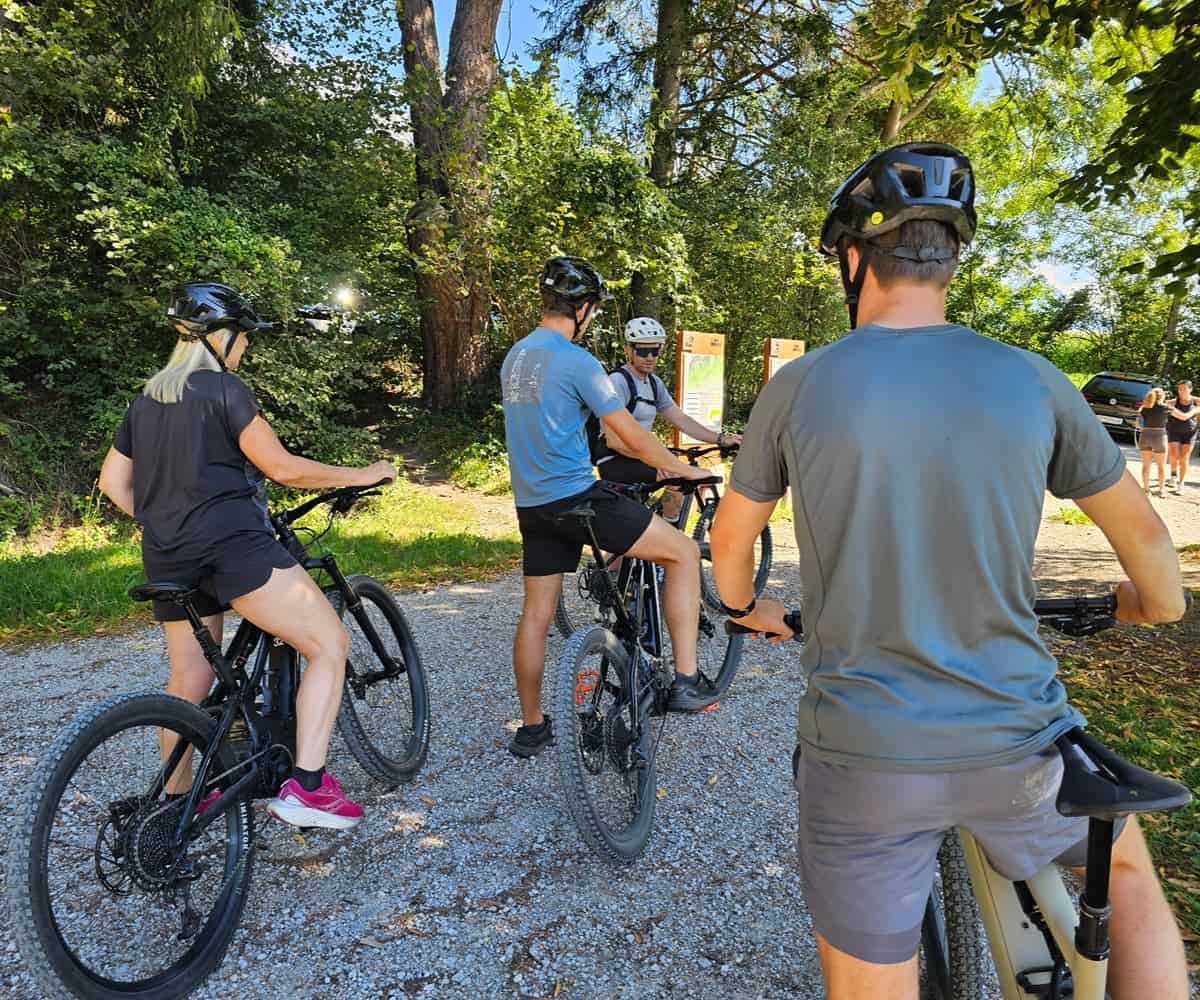
The ride began at Die Börse, which operates as a bike base in summer and a winter sports depot in the colder months.
Rob from Bike School Innsbruck guided the route out of the city and towards the trails leading into the Nordkette range.
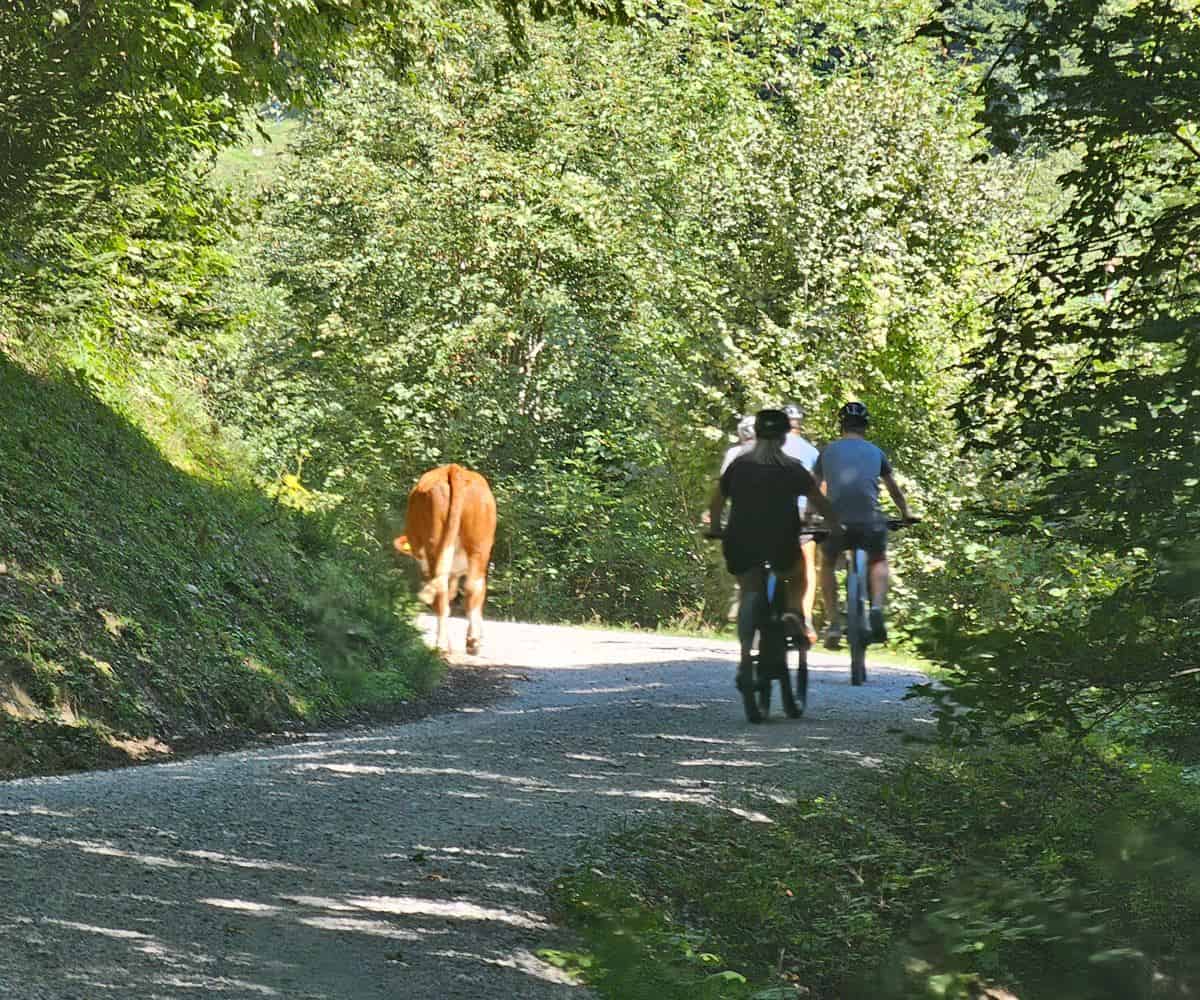
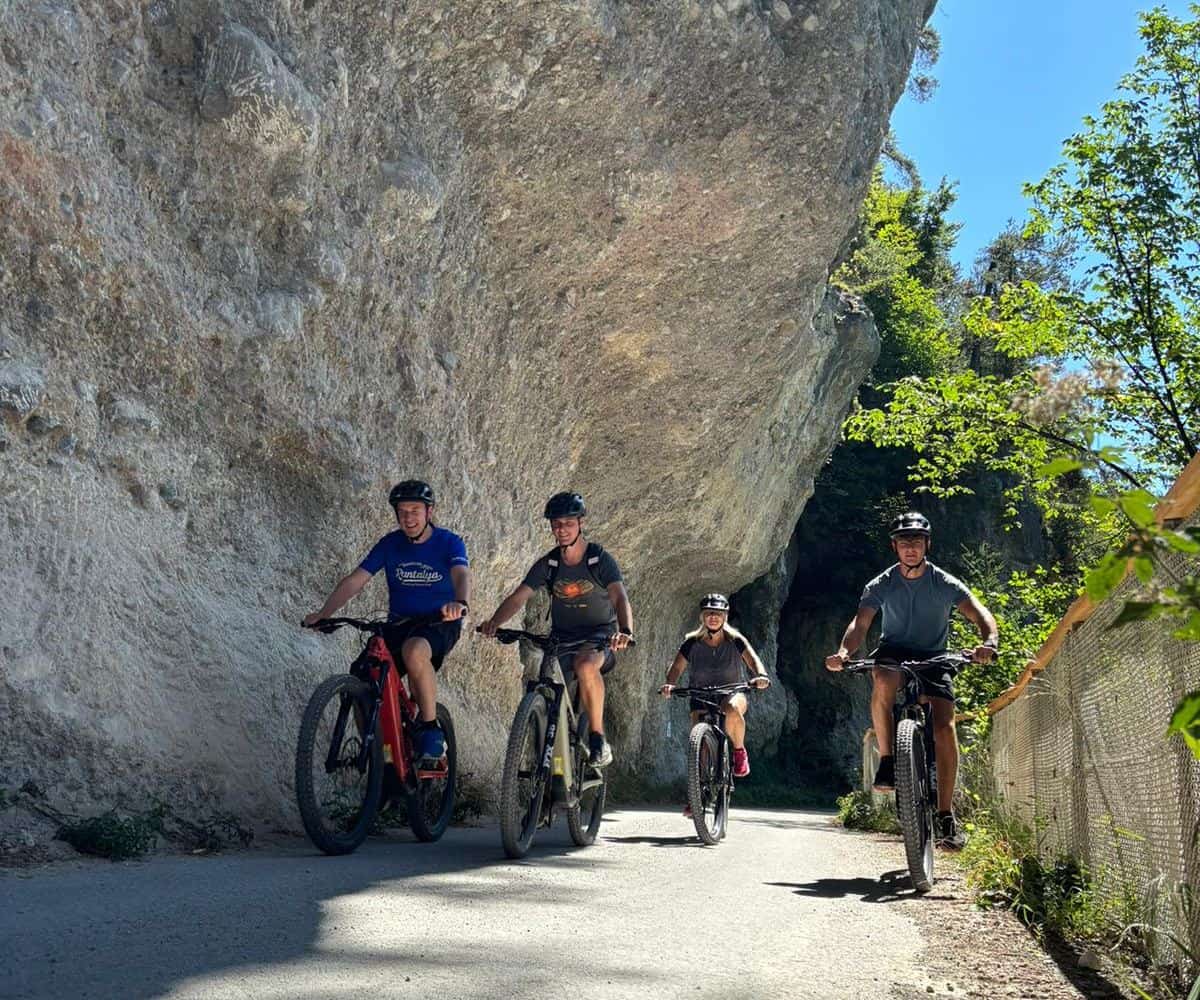
Within minutes, the ride left the asphalt behind and moved onto forest tracks, with Trail mode helping the heavier bikes climb at a steady rhythm.
The transition from city noise to mountain quiet was one of the ride’s pleasures.
Traffic faded quickly, replaced by cowbells carrying across Alpine pastures.
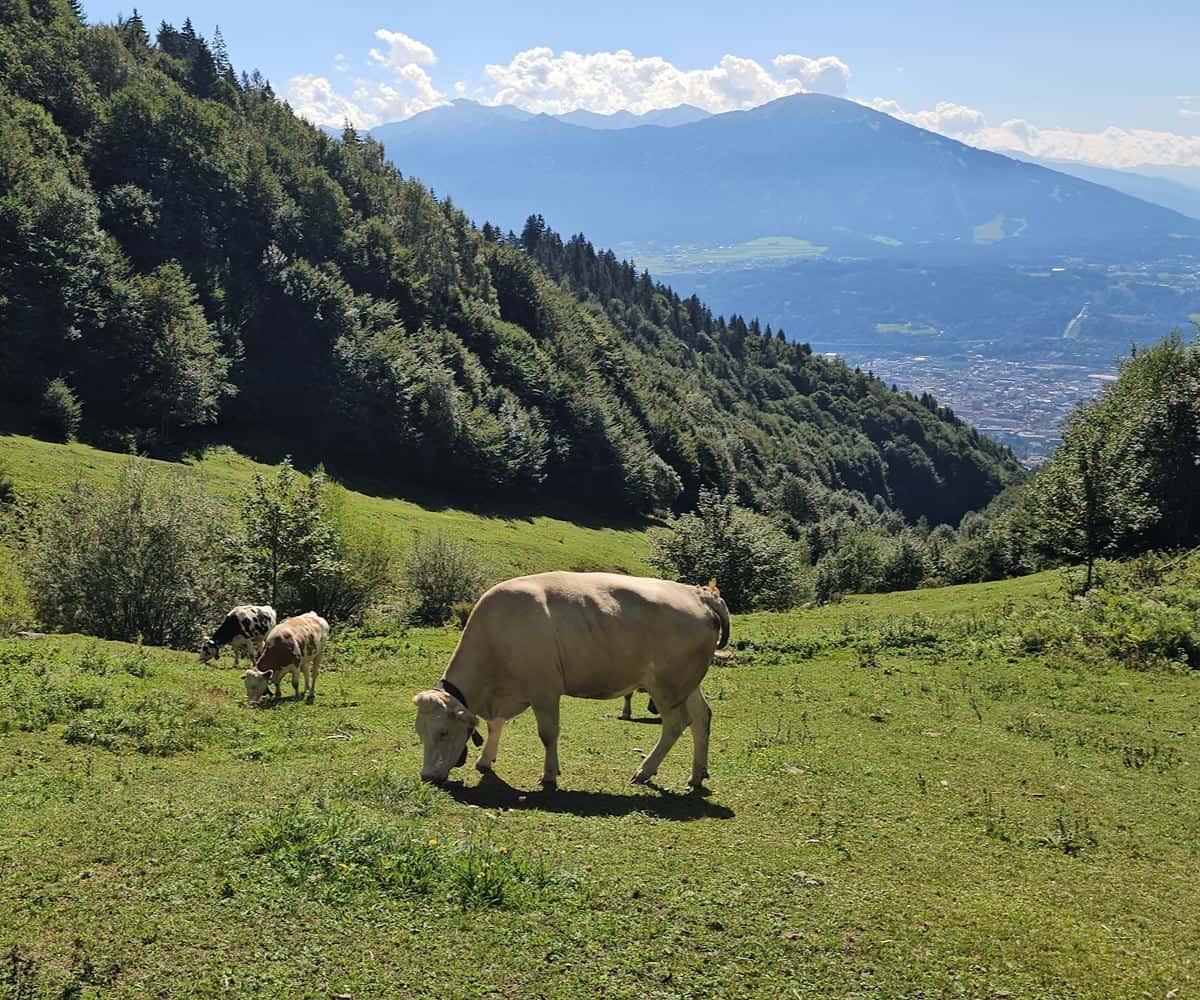
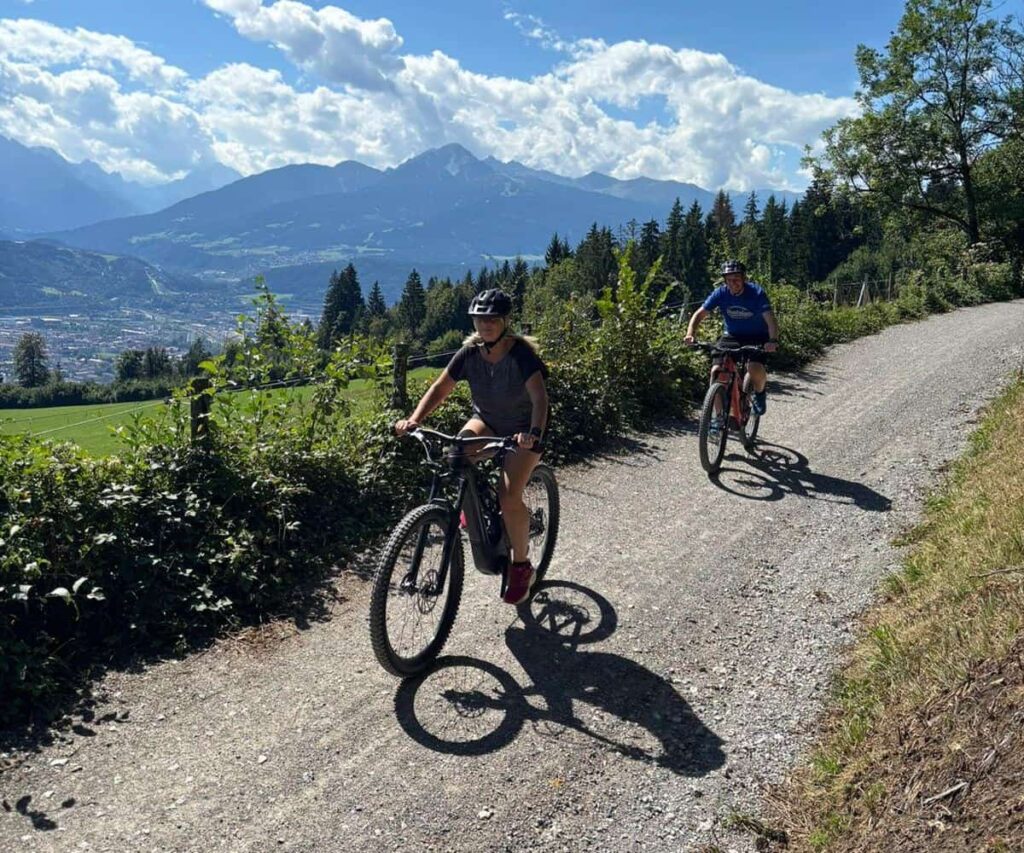
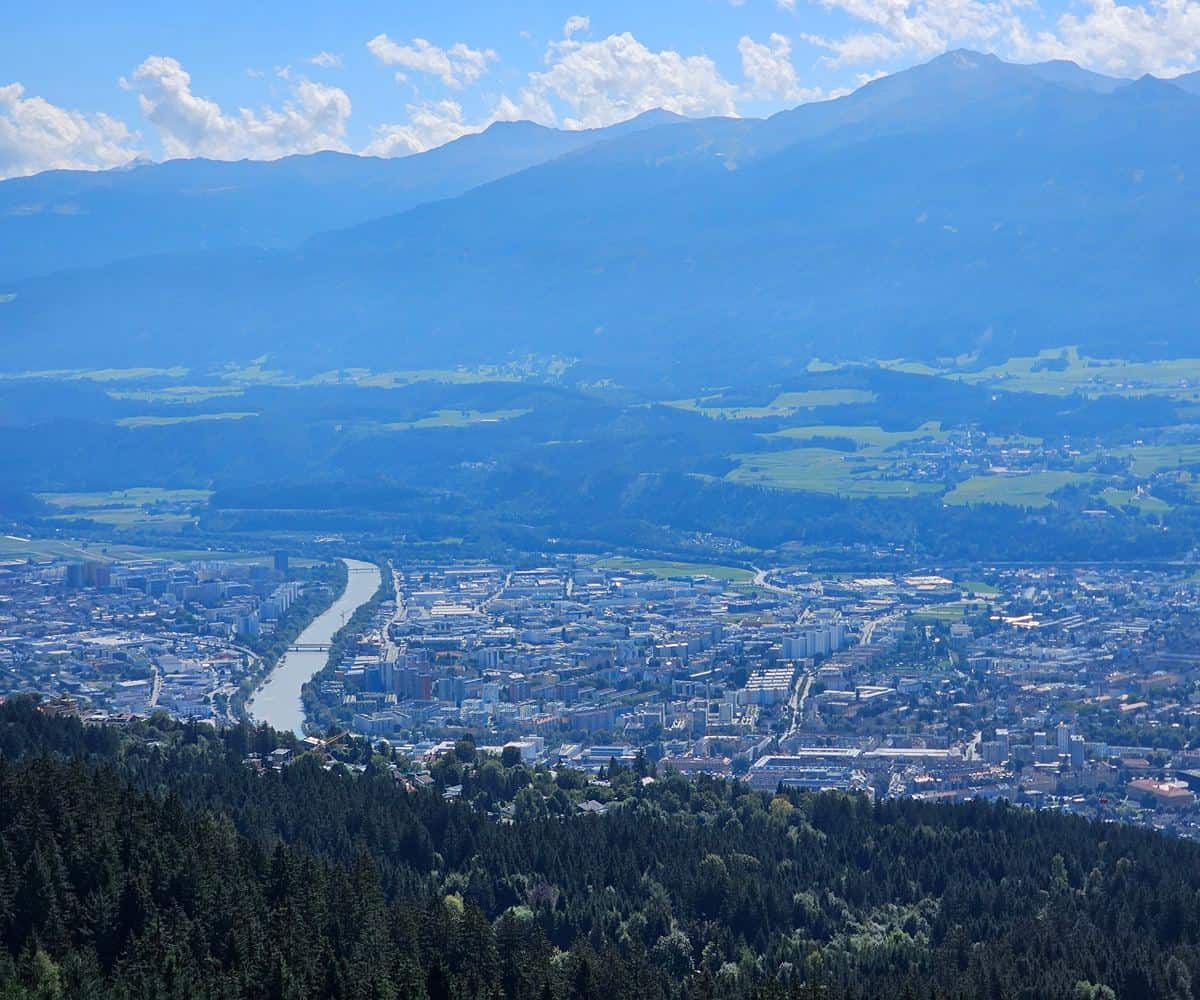
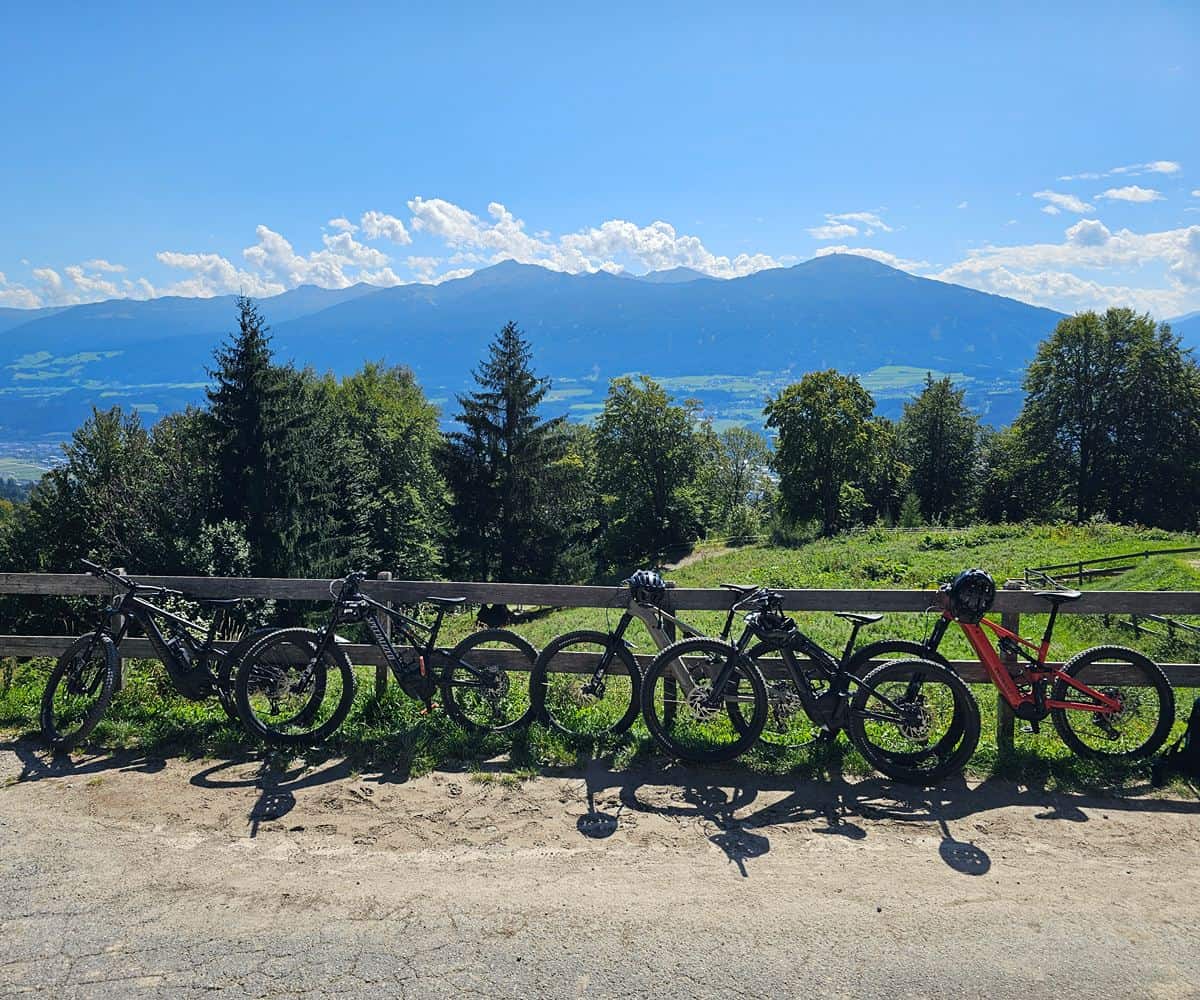
Before long, the reward for the climbing was visible in broad views back over Innsbruck and the valley below.
The Innsbruck e-bike route in numbers
| Route | Central Innsbruck to trails in the Nordkette and back via the historic city centre |
|---|---|
| Distance | More than 20 kilometres |
| Vertical ascent | Approximately 700 metres |
| Moving time | About 2 hours |
| Total outing time | About 3.5 hours including lunch, stops and photos |
| Battery remaining | Around 70% from a full charge at the end of the ride |
| Guide | Rob from Bike School Innsbruck |
| Starting point | Die Börse, Innsbruck |
Lunch above the Inn Valley
Higher on the mountain, the route offered a choice of places to stop.
Umbruggler Alm was an option, known here for its striking architecture, but the ride continued to Arzler Alm for a more traditional Tyrolean atmosphere.
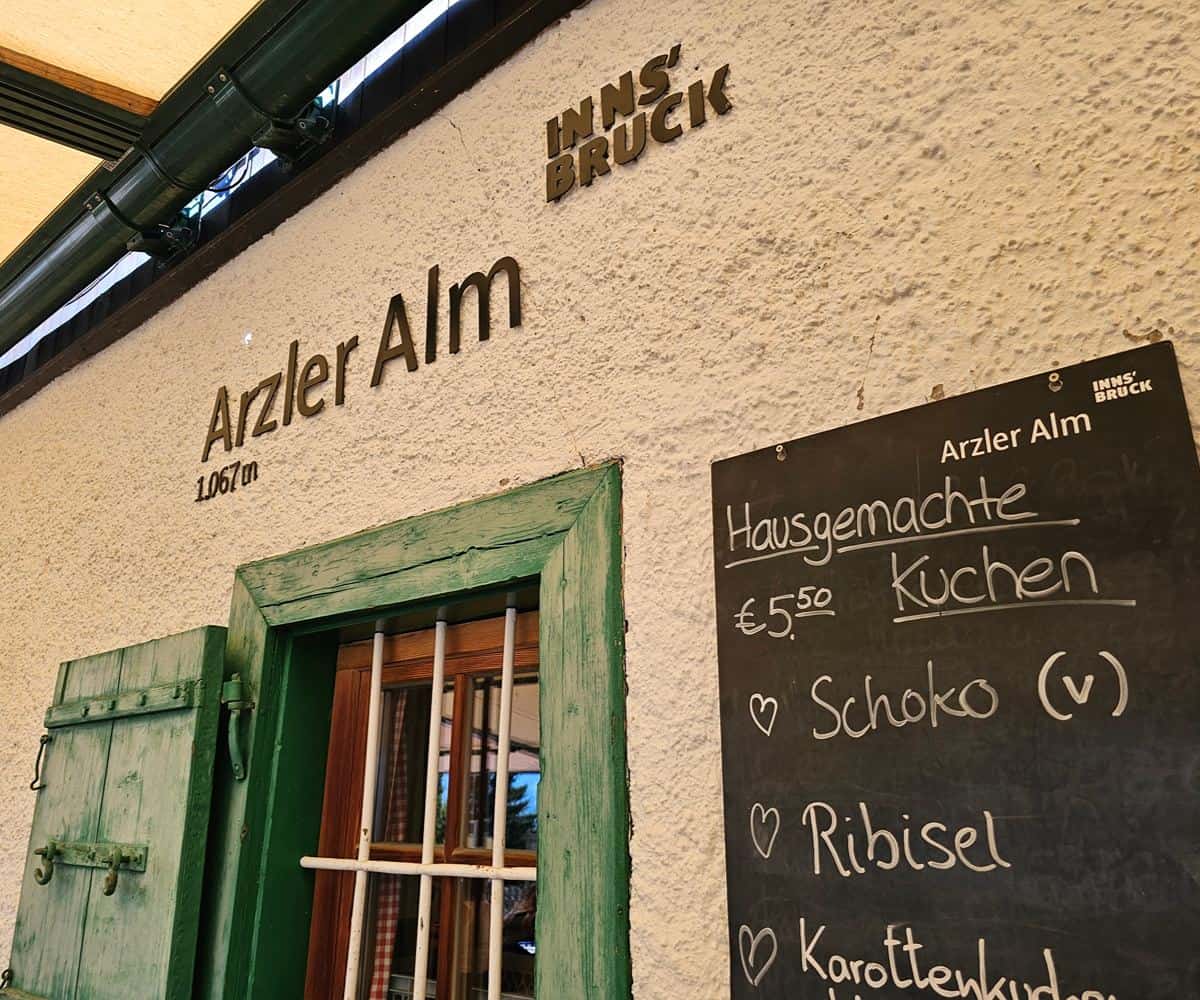
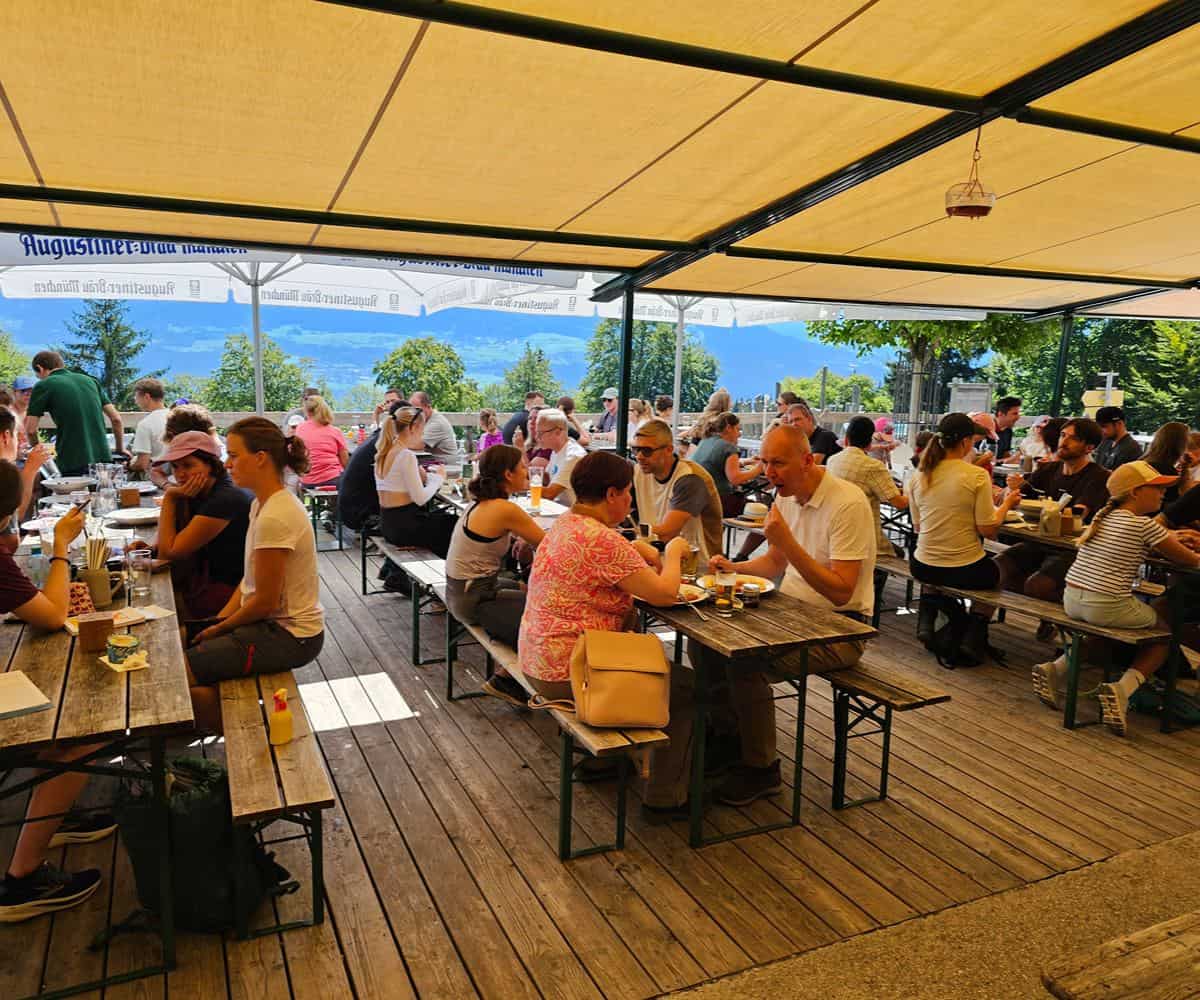
Set at 1,067 metres, Arzler Alm was busy during the stop, with panoramic views over the Inn Valley providing a natural pause in the ride.
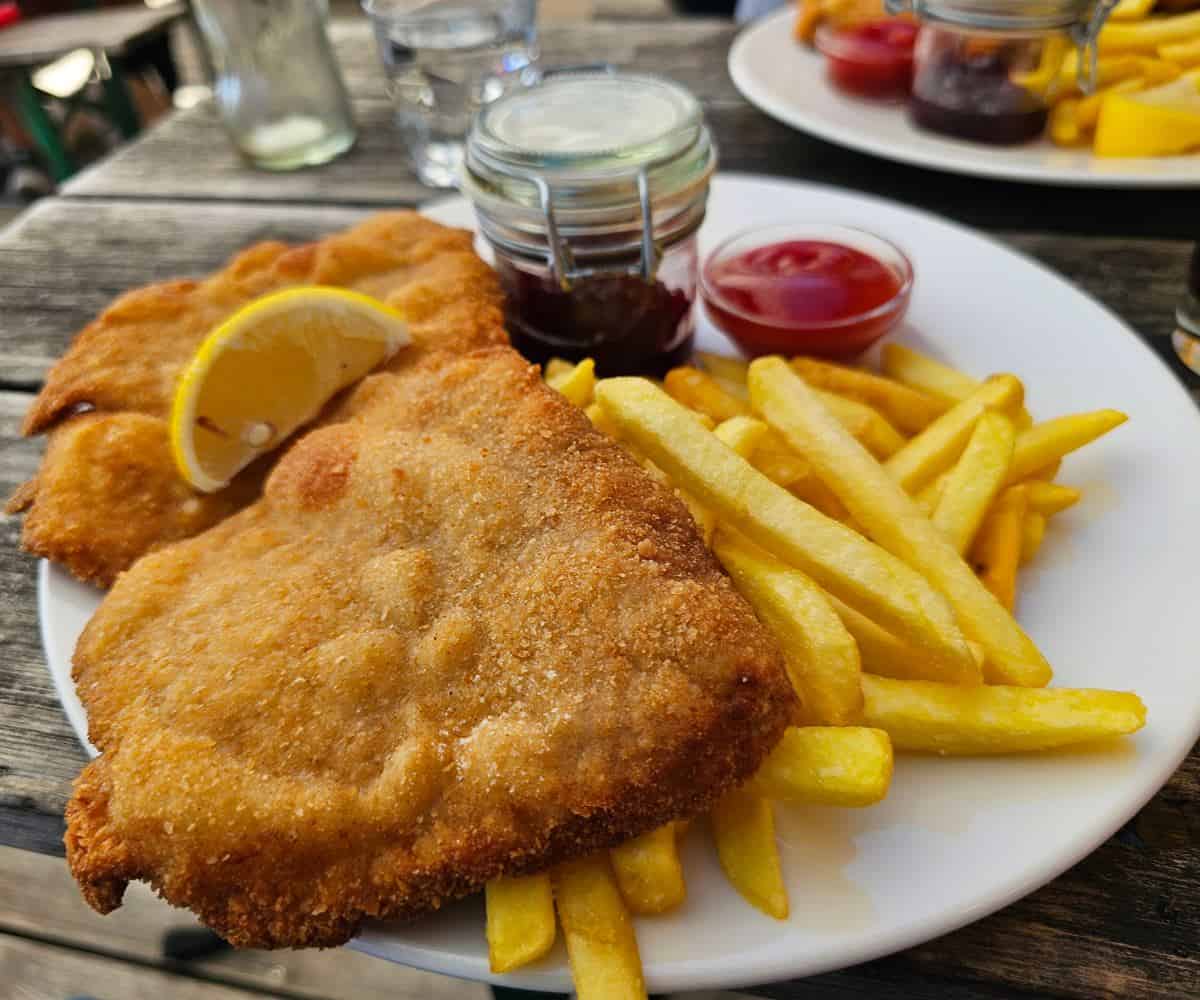
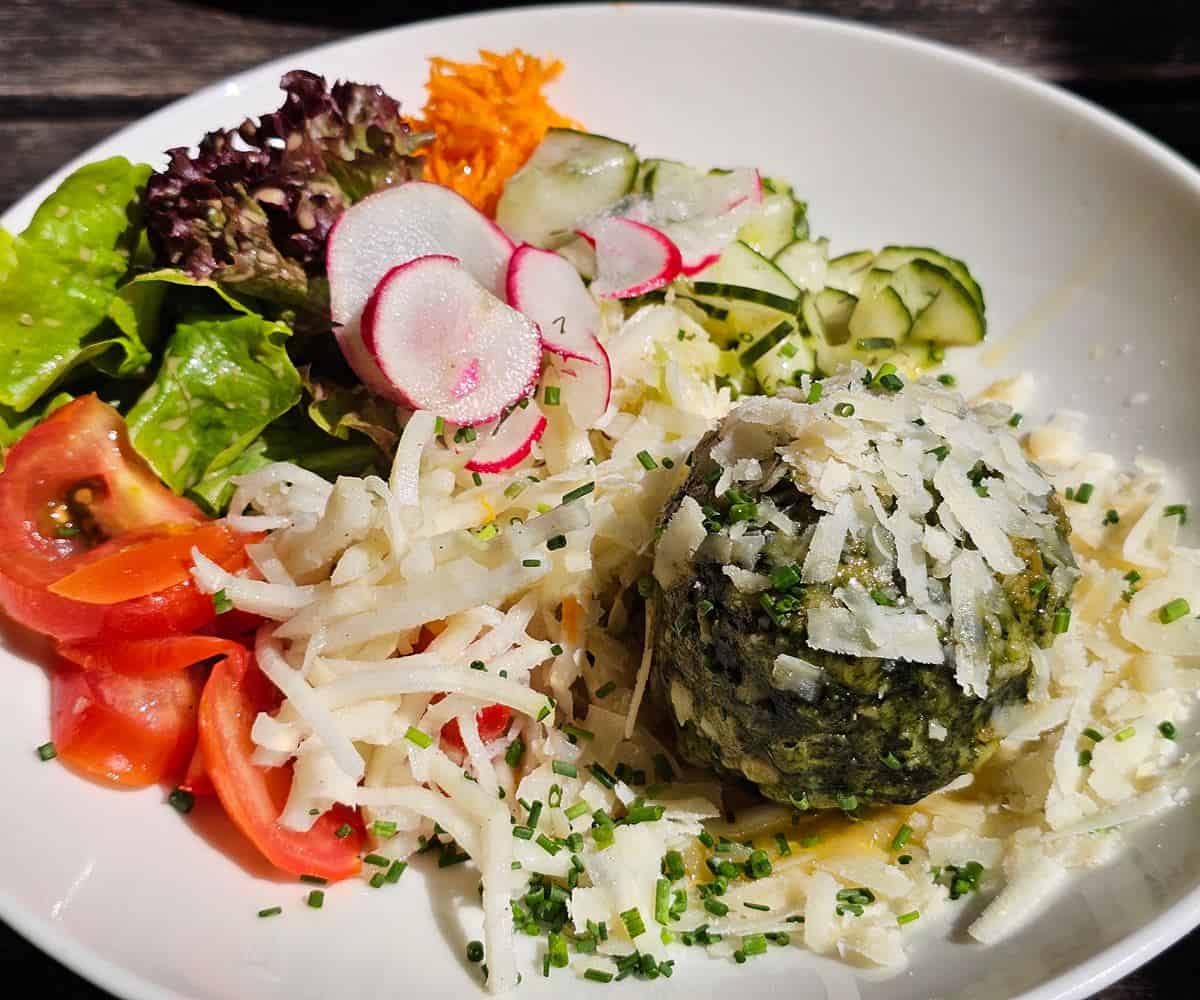
Schnitzel and spinatknödel made the break feel properly local without turning the day into a long lunch.
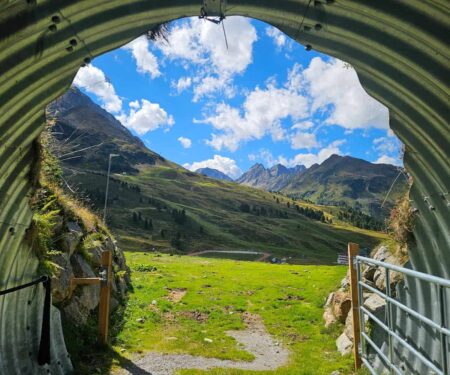
There was also a short detour to a curious structure built directly into a sheer rock face.
The wooden lodge-like shelter had the feel of a mountain refuge, giving the route a small architectural surprise as well as its broader landscape drama.
The descent back through Innsbruck
The return brought a different kind of pleasure.
After climbing through forest and pasture, the descent ran past farmland, through winding tracks and onto tarmac, where the bikes could be ridden in off mode.
On the road sections, controlled speeds of more than 50 kilometres per hour were possible.
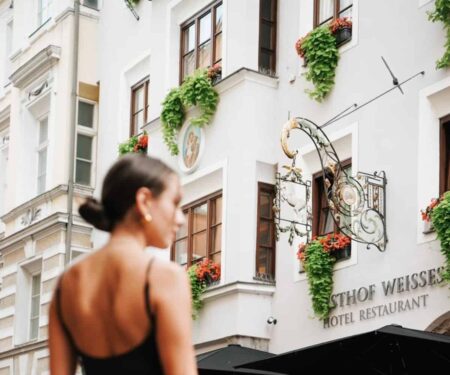
Back on the valley floor, the route folded into Innsbruck’s historic centre rather than ending abruptly at the edge of town.
The ride passed beneath the Triumphpforte, the triumphal arch built in 1765 by Empress Maria Theresa, before returning to Die Börse.
What makes the experience memorable isn’t simply the scenery, though Innsbruck supplies plenty of that.
It’s the way an e-mountain bike opens up a route that might otherwise feel too steep, too divided by ability or too demanding for a shared family outing.
For riders who like the idea of Alpine cycling but don’t want the day defined by exhaustion, Innsbruck makes a persuasive case for electric assist.
This ride was supported by Innsbruck Tourism.