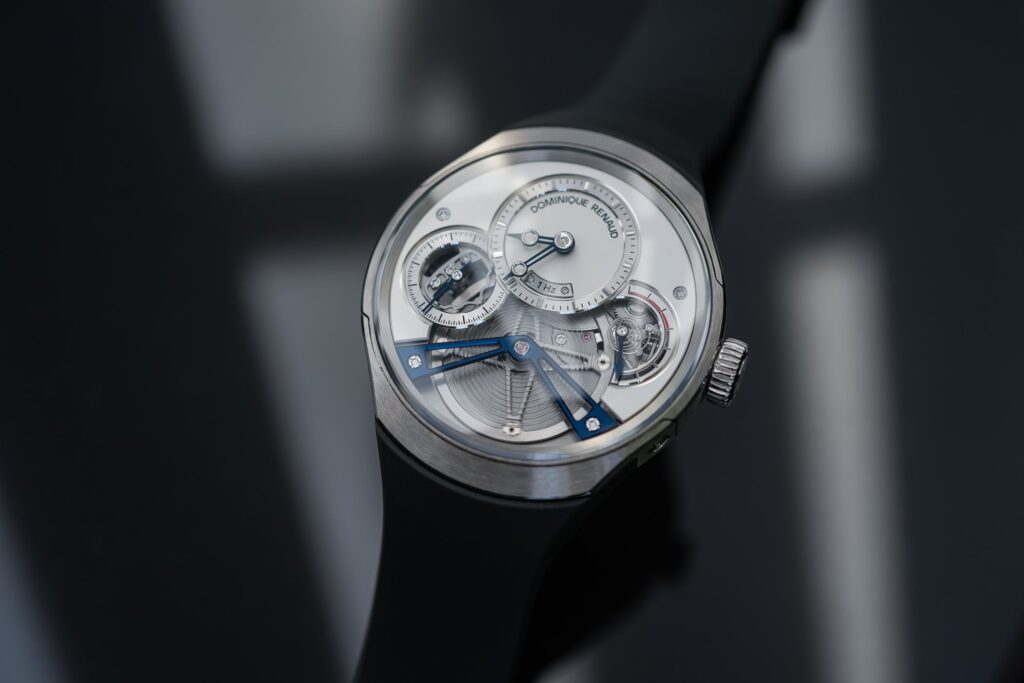
Dominique Renaud’s Pulse 60 is the sort of watch that makes you look twice, then slow down with it.
Its purpose isn’t to chase ever-higher frequency or hide its mechanics behind a familiar dial layout. Instead, the watch puts a large, low-frequency regulating organ in full view, turning the rhythm of timekeeping into the central visual and technical idea.
For a watchmaker whose work helped shape modern complicated watchmaking through Renaud & Papi, that makes the Pulse 60 more than a debut model under his own name. It feels like a considered argument about how mechanical precision can be pursued differently.
At a glance
- The Dominique Renaud Pulse 60 debuts the watchmaker’s eponymous brand with a manually wound movement regulated at one hertz.
- Its 20mm balance wheel dominates the dial and beats at 7,200 vibrations per hour, creating a slow, highly visible mechanical rhythm.
- The watch is offered in titanium or pink gold with titanium, with an integrated rubber strap and no confirmed public price in the supplied product details.
A slow-beating answer to high-frequency watchmaking
Modern watchmaking often treats frequency as a straightforward route to better stability.
A 4Hz movement, running at 28,800 vibrations per hour, has long been the practical standard because it balances rate performance, durability and energy use.
Many notable calibres have gone faster, from historic 5Hz high-beat movements to far more experimental chronograph and regulating systems.
Renaud takes the opposite route with the Pulse 60.
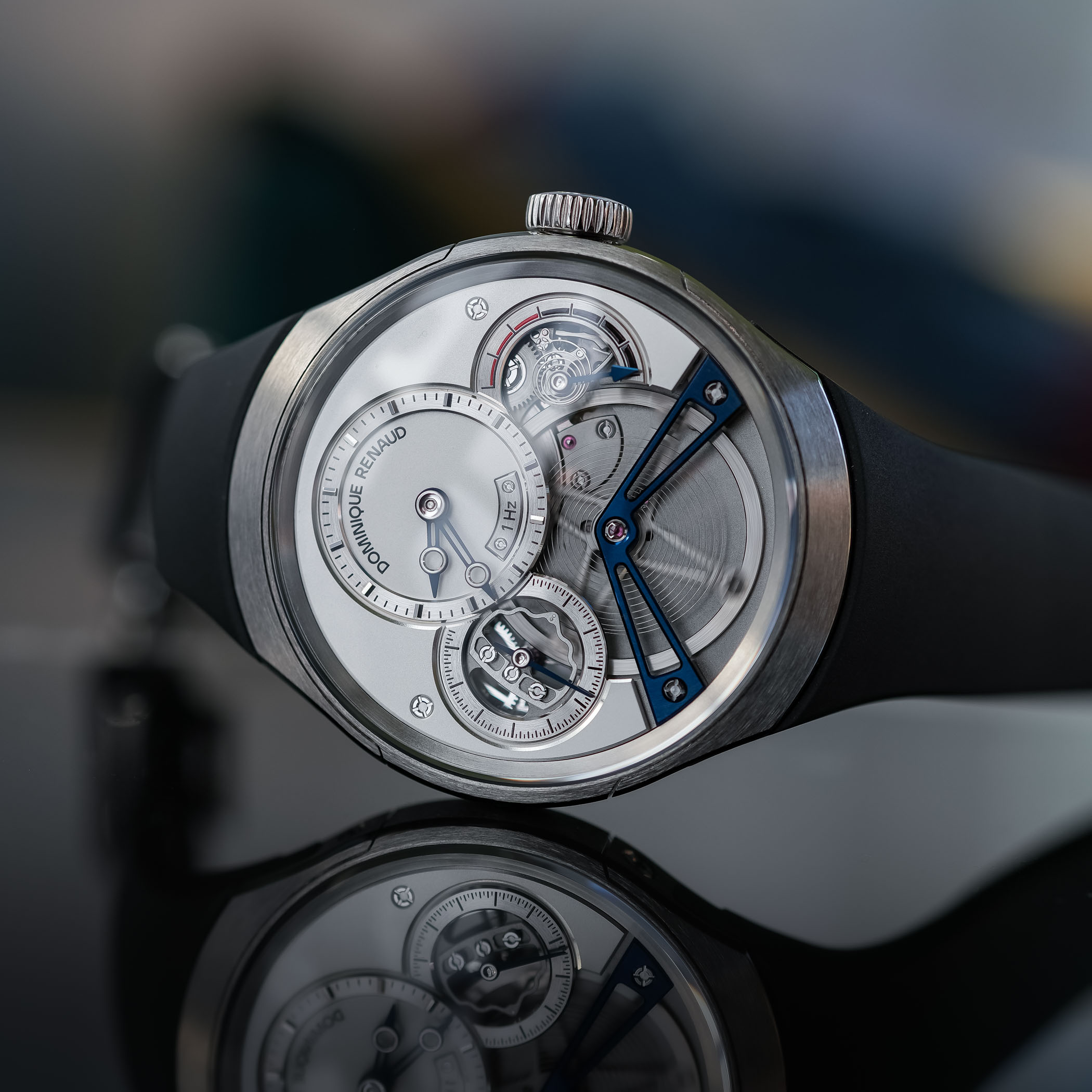
The watch beats at one hertz, or 7,200 vibrations per hour, which gives the regulating organ a visible cadence closer to a pulse than the rapid flicker of a conventional modern balance.
That slower rhythm also connects the watch to an older chronometric idea.
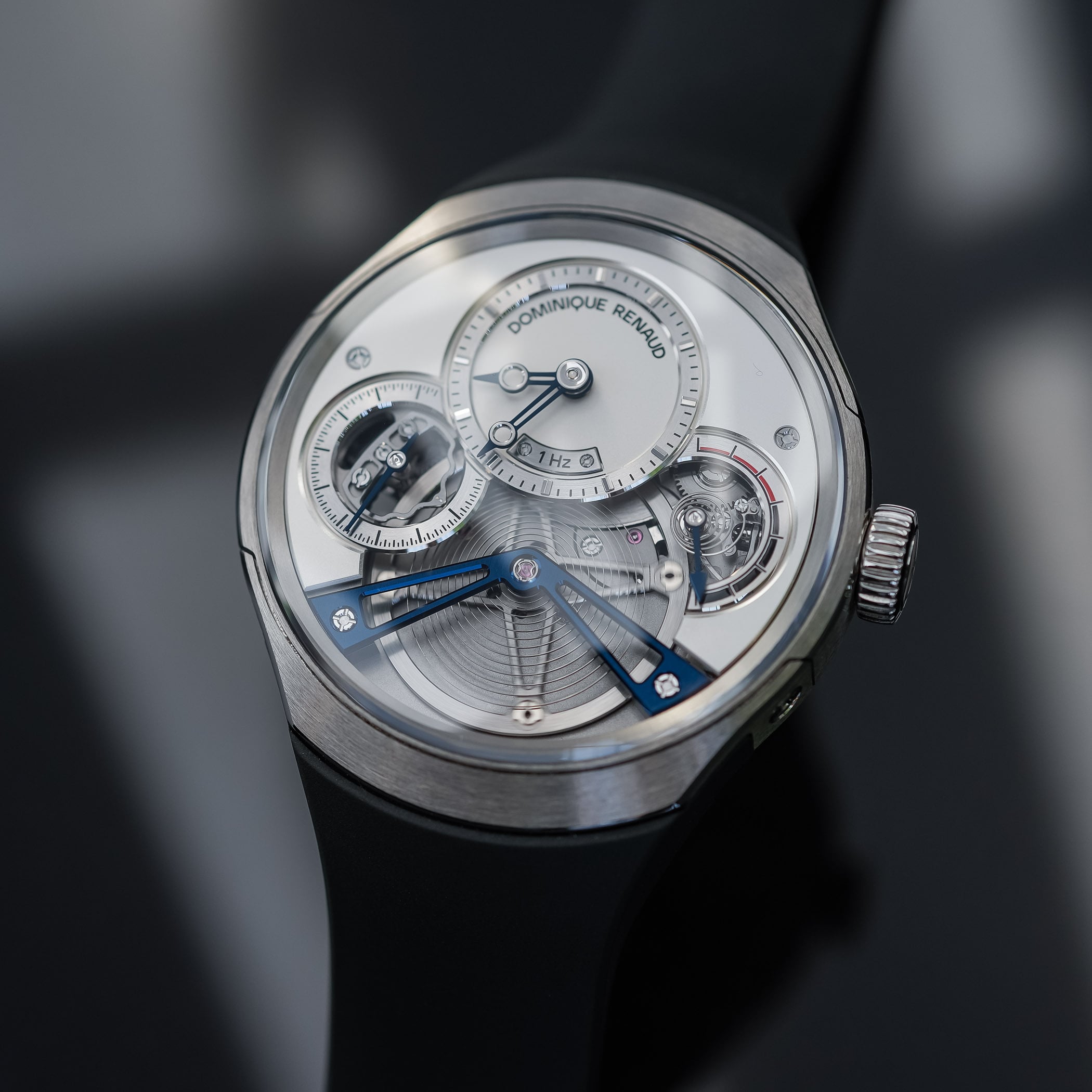
Marine chronometers historically relied on large, slow-moving balances with significant inertia, resisting disturbance through mass and stability rather than simply averaging out errors at a higher frequency.
The dial belongs to the 20mm balance
The Pulse 60 doesn’t try to make its engineering discreet.
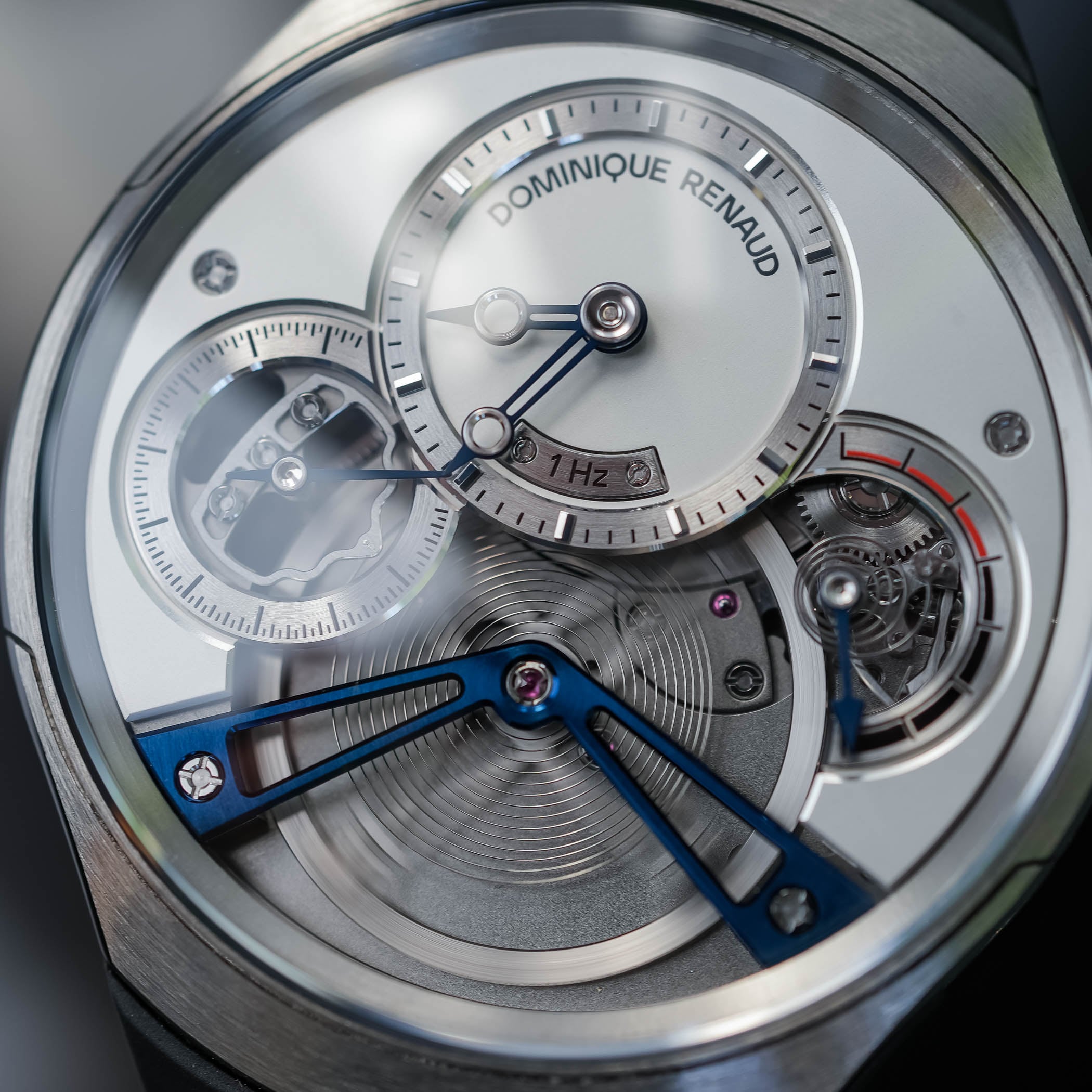
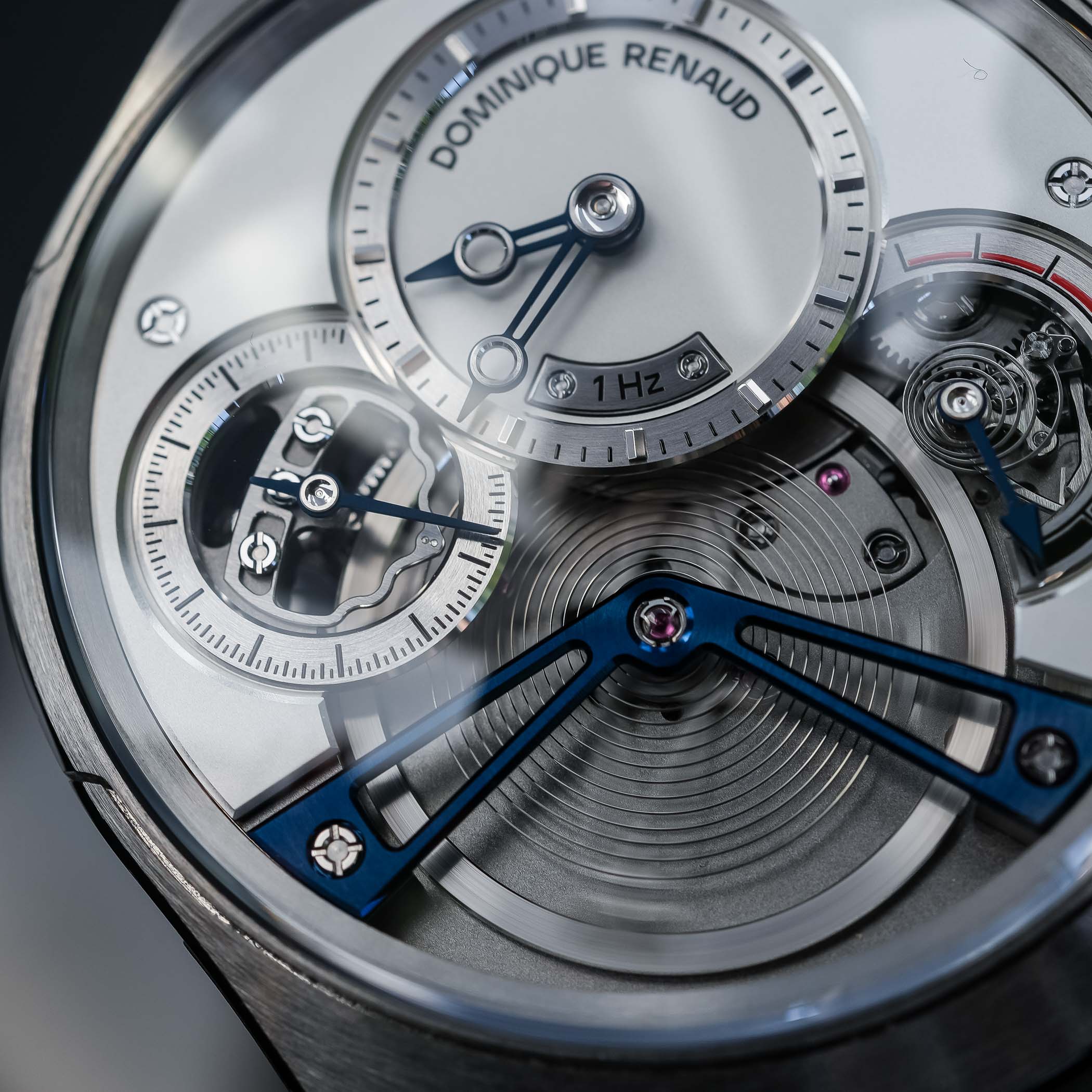
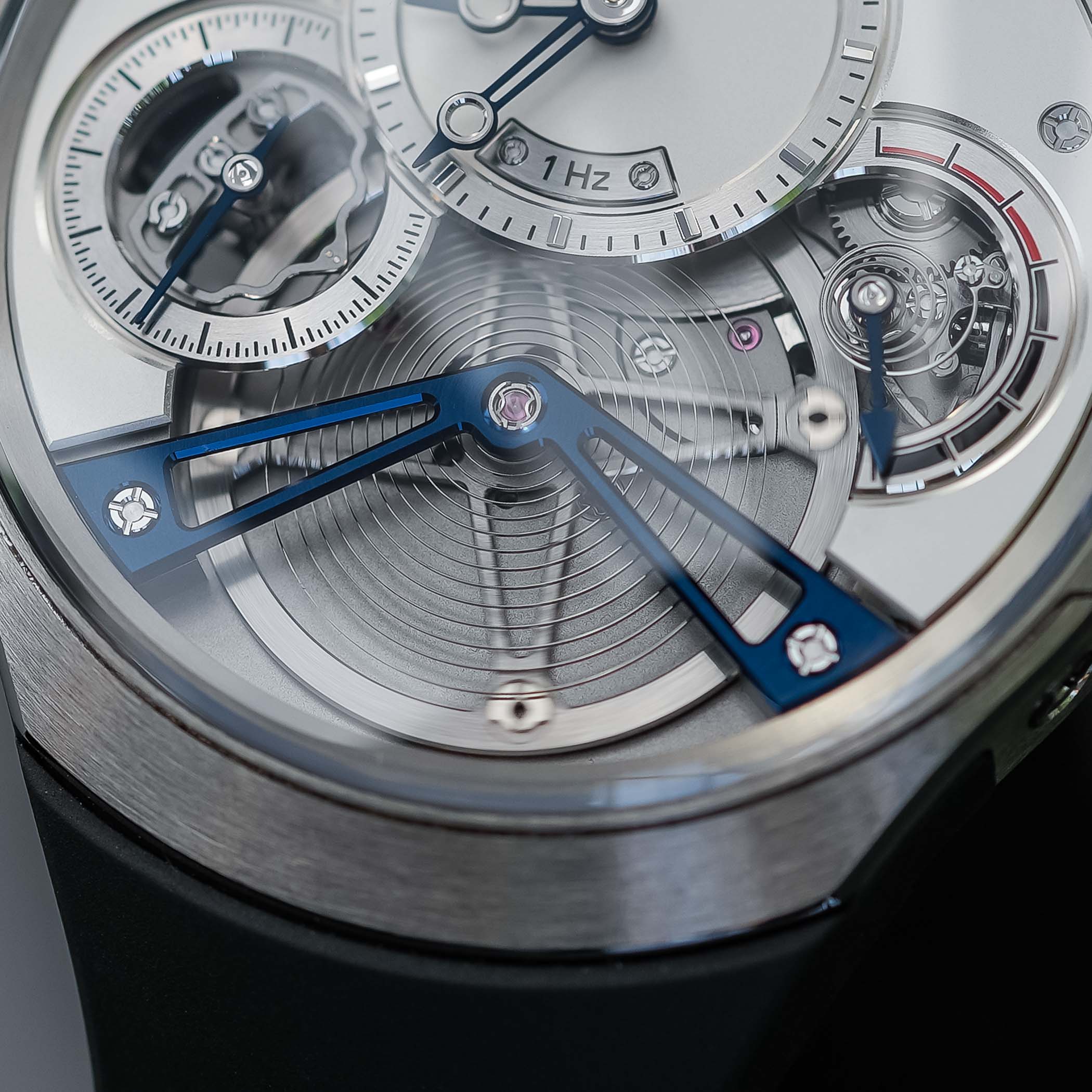
The oversized 20mm balance wheel occupies much of the dial side, sitting beneath an openworked bridge and moving with a deliberate pace that’s unusually easy to follow.
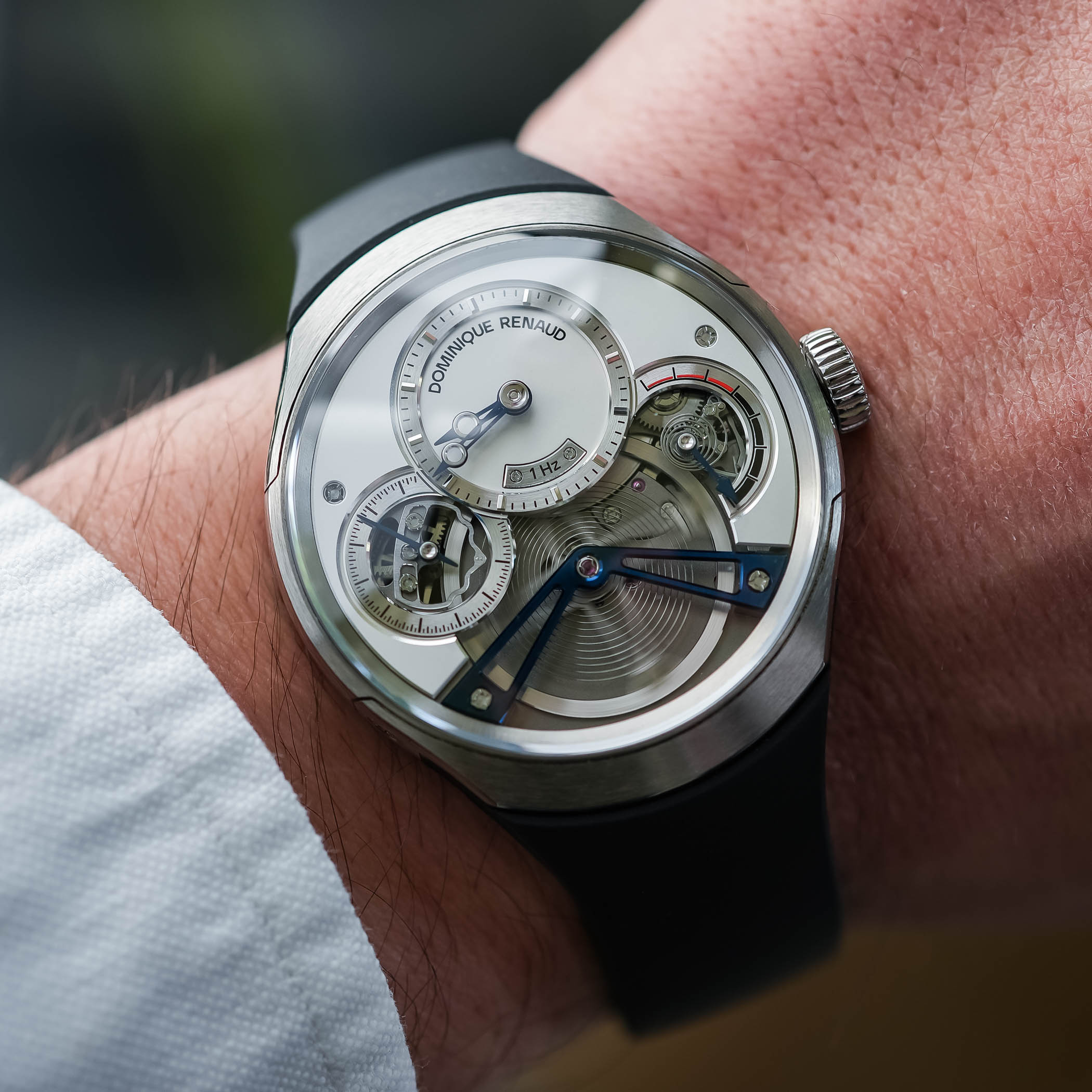
There’s none of the familiar blur of a 4Hz regulator.
Each swing feels like a distinct mechanical event, which gives the watch a presence usually associated with more theatrical complications.
The time display is kept compact at 12 o’clock, using openworked hands on a small subdial so the regulating organ remains the focal point.
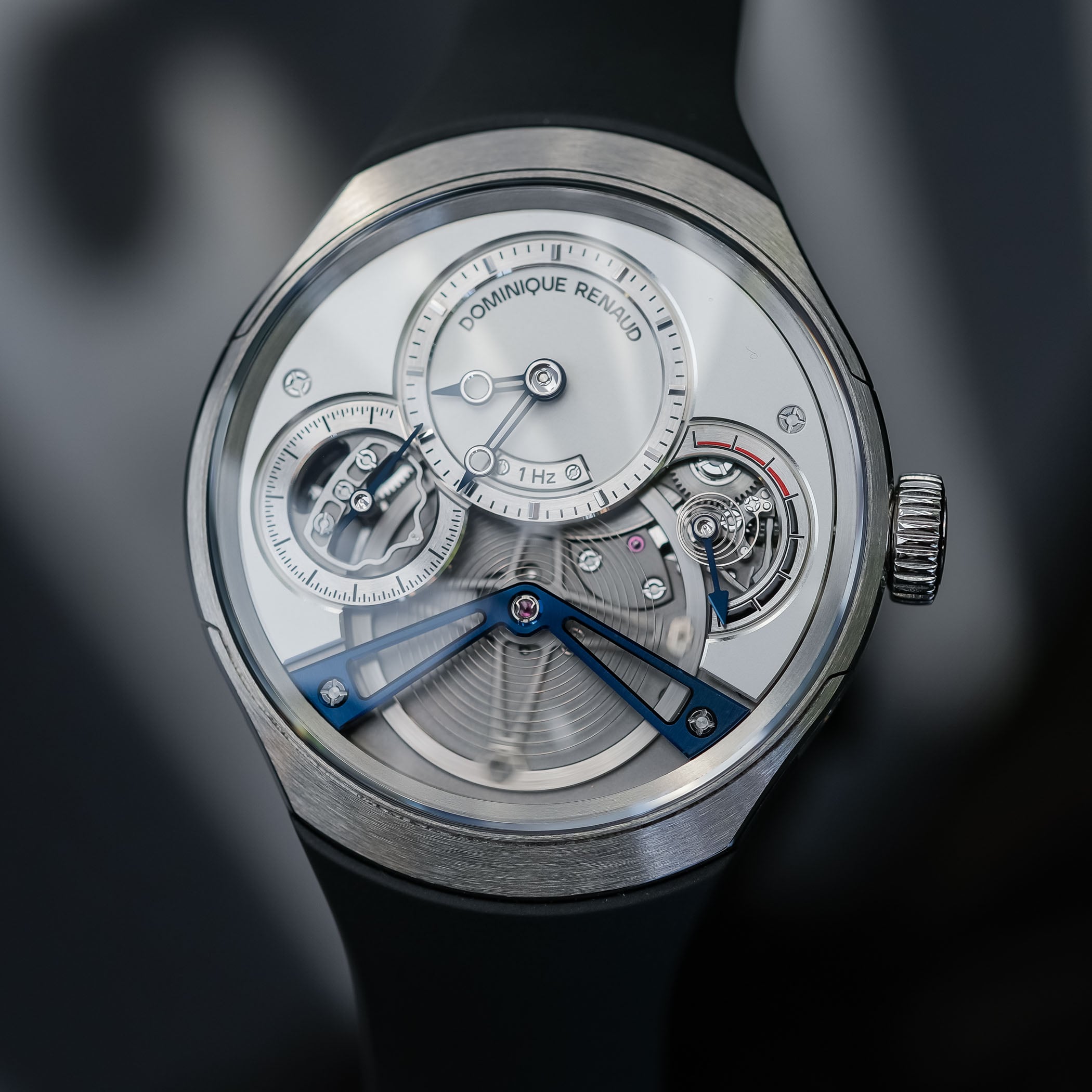
At 3 o’clock, a torque indicator takes its reading directly from the barrel, while the small seconds at 9 o’clock moves in natural half-second steps.
The display options vary by case version.
The titanium models are paired with silver grey or black opaline dials, while the pink gold version uses a grey guilloché treatment.
Case architecture with an industrial edge
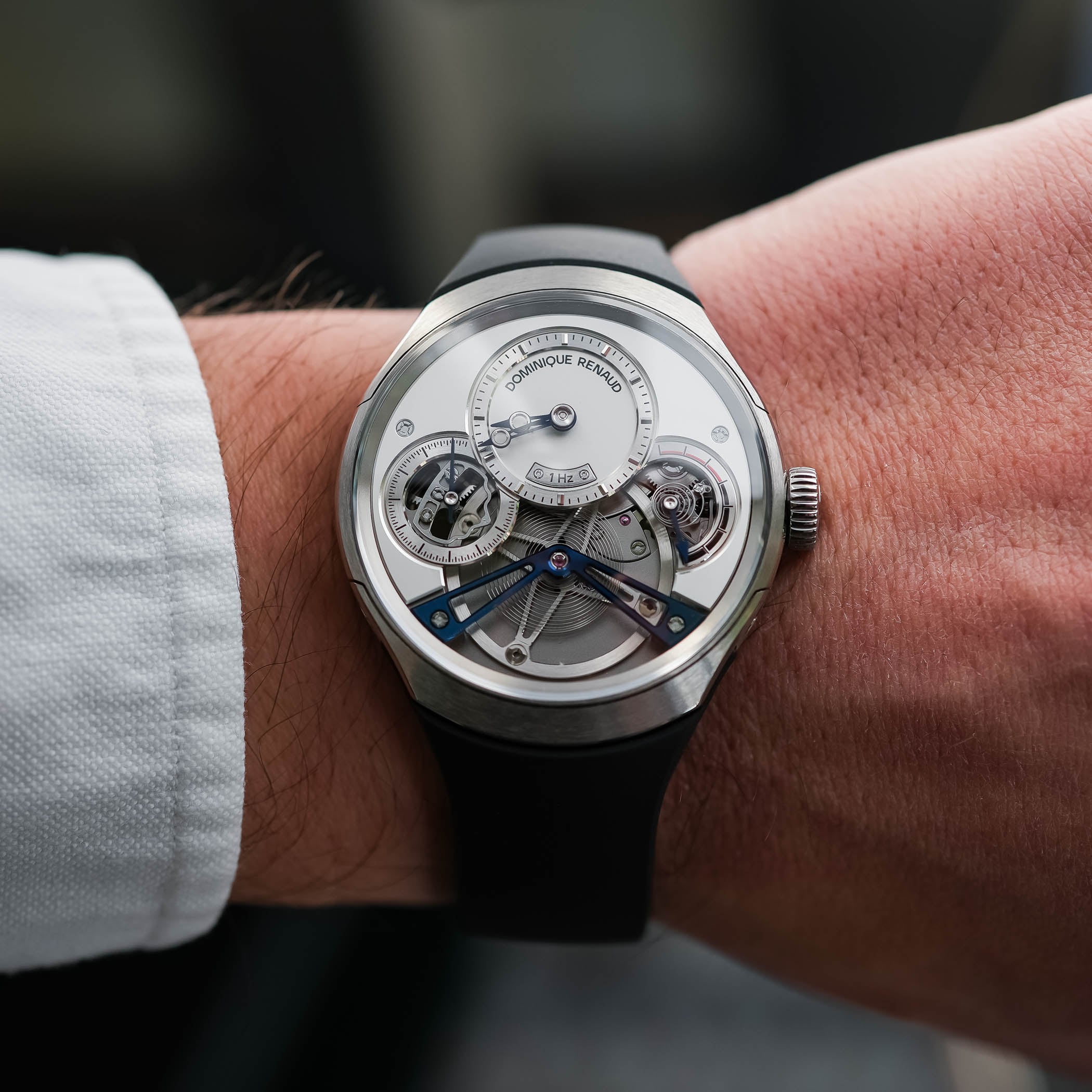
The case is 40mm across and 12mm thick, but the Pulse 60 doesn’t read like a conventional round watch with lugs added as an afterthought.
Integrated, laterally screwed lugs flow into the rubber strap, giving the watch a compact and purposeful profile.
The case is available in titanium or in a combination of pink gold and titanium.
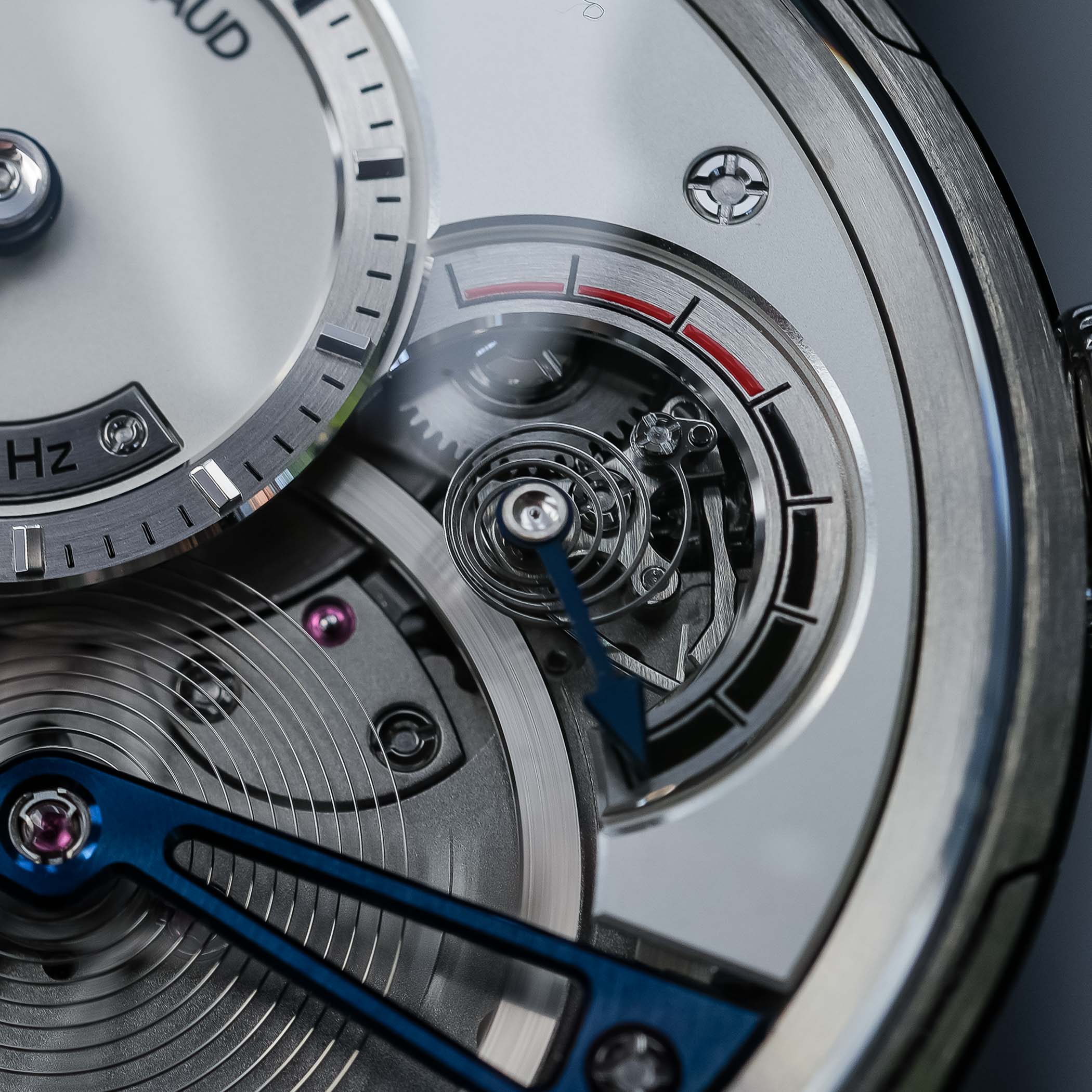
A circular satin-brushed upper surface contrasts with polished flanks, while the domed sapphire crystal blends smoothly into the case and avoids the hard visual break of a traditional bezel.
The result is technical without feeling cold.
It has the restrained, functional language of a serious experimental watch, but with enough finishing contrast to avoid becoming purely instrumental.
The BUA2024 calibre and its high-amplitude idea
Inside the Pulse 60 is the manually wound BUA2024 calibre, with “Balancier Ultra Amplitude” pointing directly to its central technical idea.
A larger balance wheel alone wouldn’t be enough to make the concept work.
Conventional Swiss lever escapements have practical amplitude limits, and if pushed too far the impulse pin can interfere incorrectly with the pallet fork, a problem known as knocking.
Renaud’s regulating organ is engineered to operate beyond 360 degrees of amplitude, with a theoretical maximum of 700 degrees.
That gives the slow, large balance more room to breathe mechanically, while its greater inertia helps resist small disturbances.
The escapement also receives fewer impulses than it would in a typical 4Hz calibre, which can reduce friction and limit wear in that part of the movement.
There are trade-offs, as there always are in watchmaking.
A larger balance carries more mass and may be more exposed to heavy shocks than a smaller high-frequency regulator.
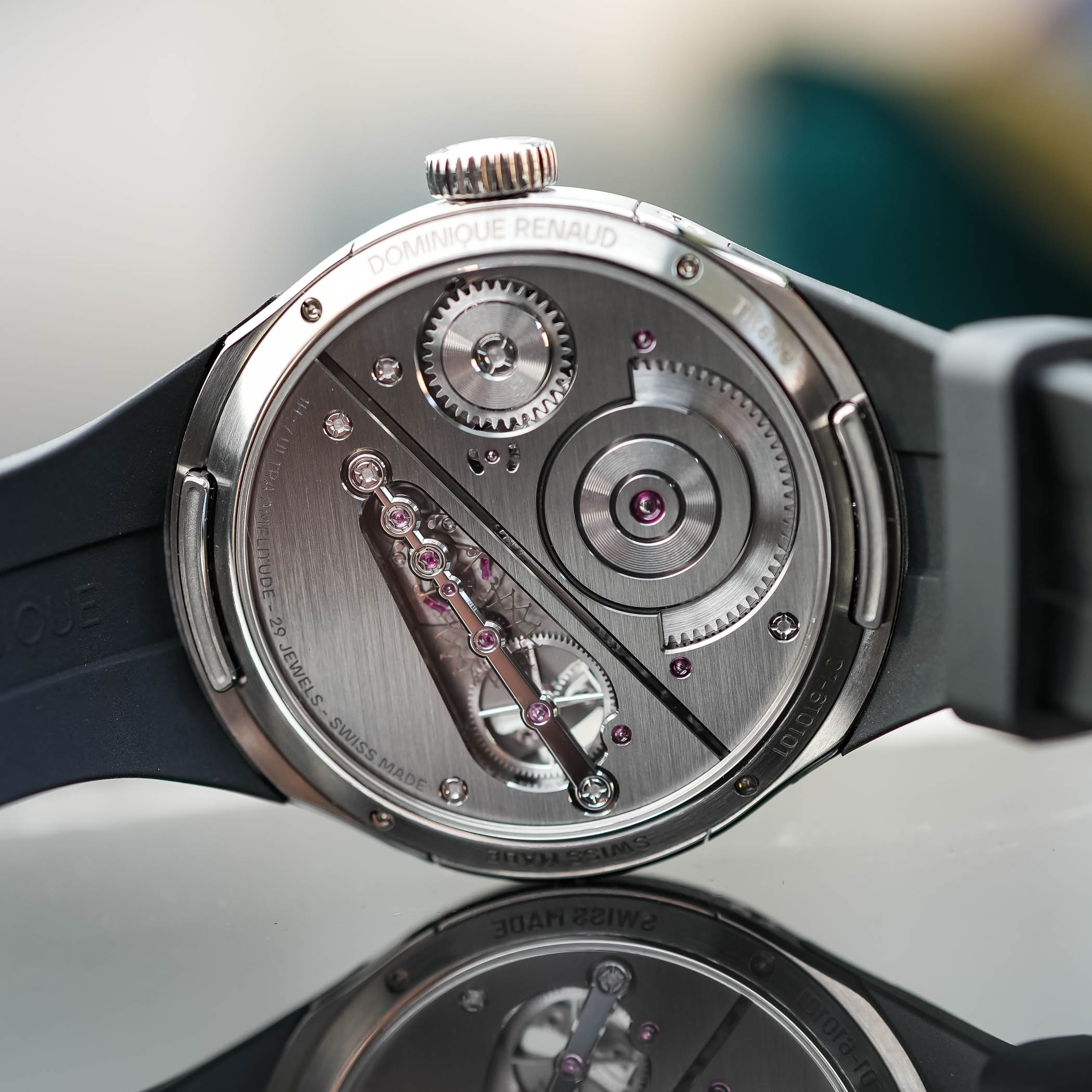
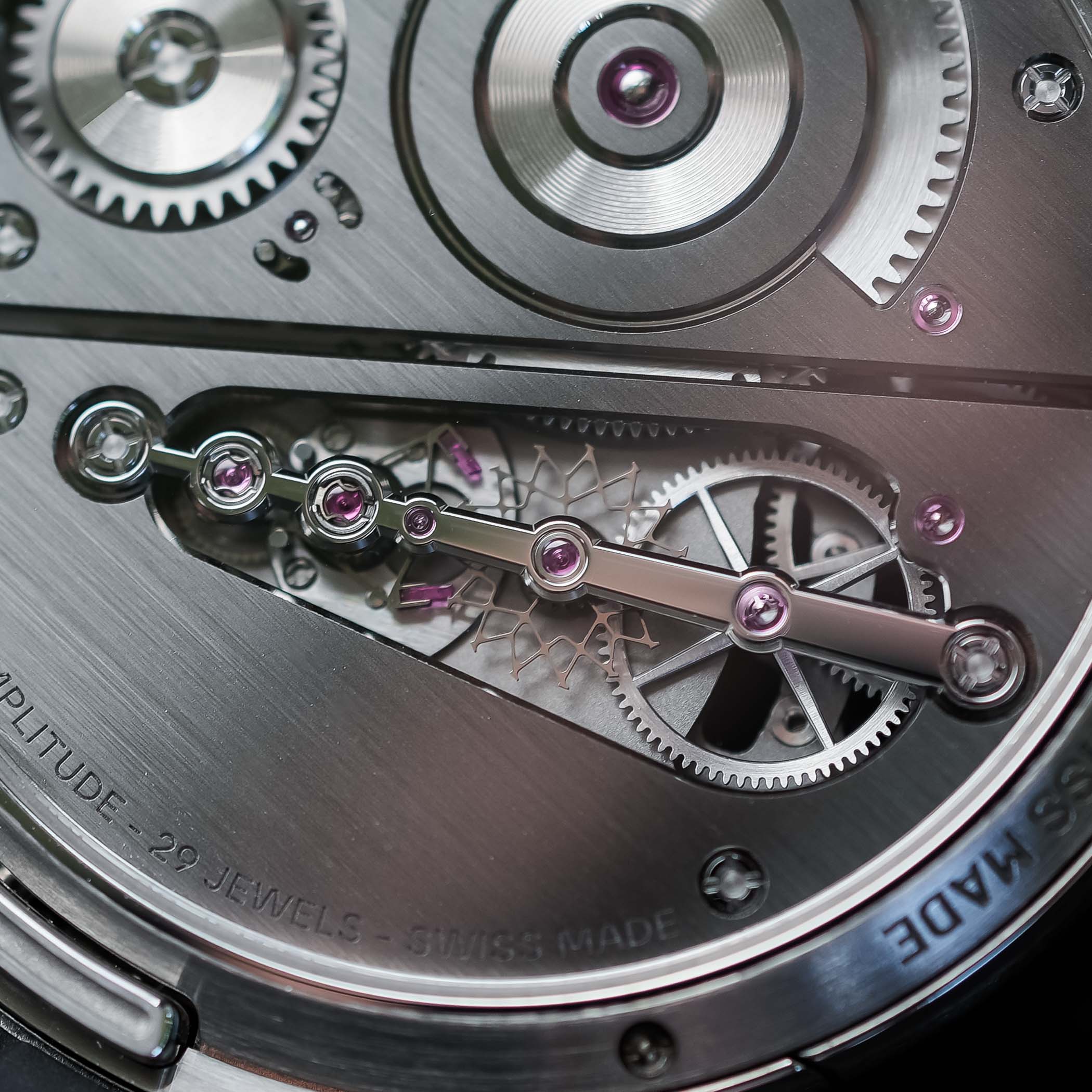
The movement view from the back is deliberately restrained, with two large straight-grained bridges framing the crown wheel, ratchet wheel and escapement.
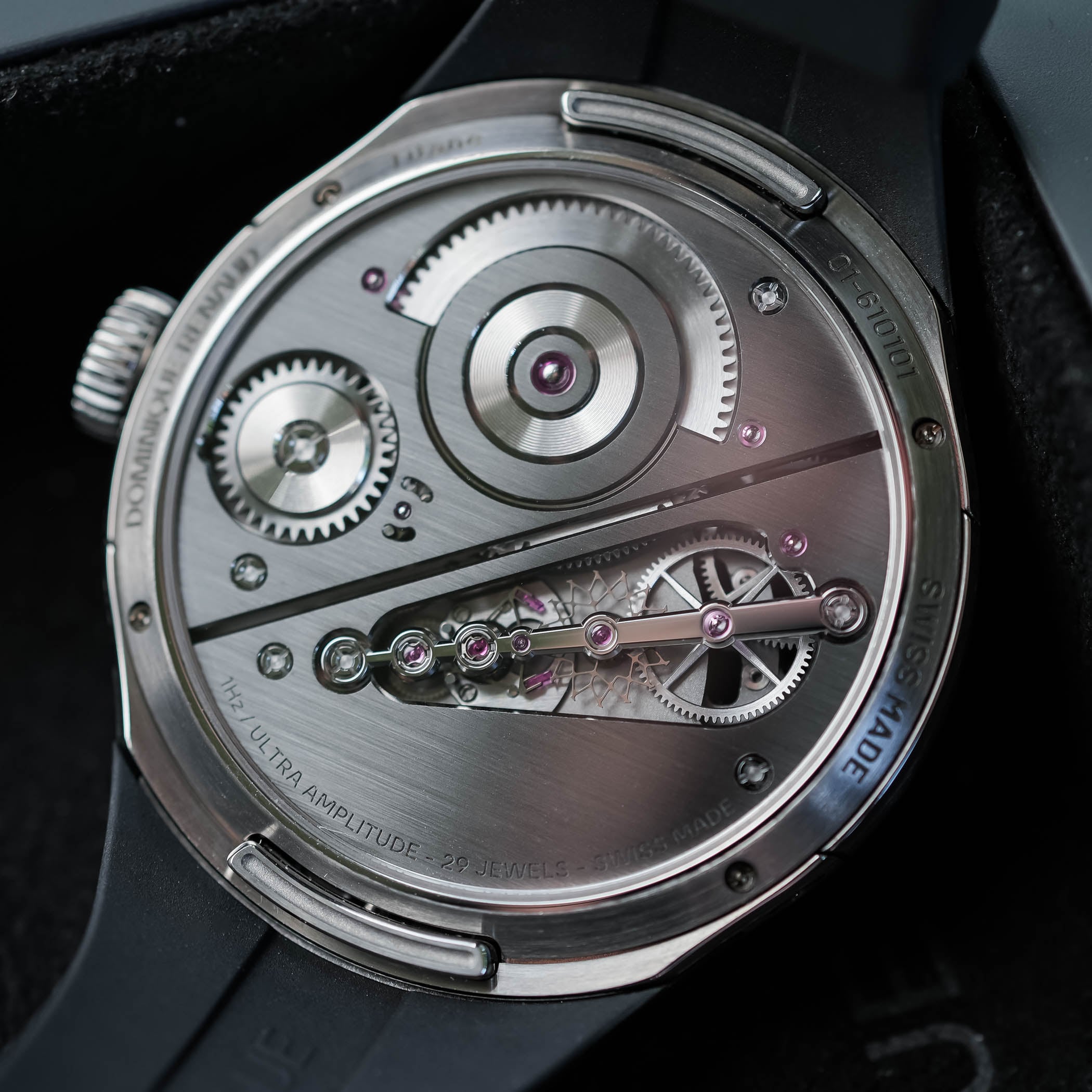
A cut-out opens the architecture, while a polished and bevelled escapement bridge carries the balance assembly, escapement and seconds wheel.
The finishing language is clean, geometric and almost architectural, which suits the watch’s experimental character.
Details & Specifications
| Brand | Dominique Renaud |
|---|---|
| Model | Pulse 60 |
| Case size | 40mm diameter, 12mm thick |
| Case material | Titanium or pink gold with titanium |
| Dial | Silver grey or black opaline for titanium models, grey guilloché for the pink gold version |
| Movement | Manually wound BUA2024 calibre |
| Frequency | 1Hz, 7,200 vibrations per hour |
| Balance wheel | 20mm oversized balance, visible dial-side |
| Indications | Hours and minutes, small seconds, torque indicator |
| Amplitude | Engineered beyond 360 degrees, with a theoretical maximum of 700 degrees |
| Crystal | Domed sapphire crystal |
| Strap | Integrated rubber strap with push-button interchangeability |
The Pulse 60 won’t appeal to someone looking for conventional refinement or familiar daily-watch cues.
It’s for collectors who enjoy seeing a watchmaker question a basic assumption of modern horology, then build the entire object around that answer.
In a landscape where technical progress is often framed as faster, smaller or more complex, Dominique Renaud’s first watch under his own name makes slowness feel radical.