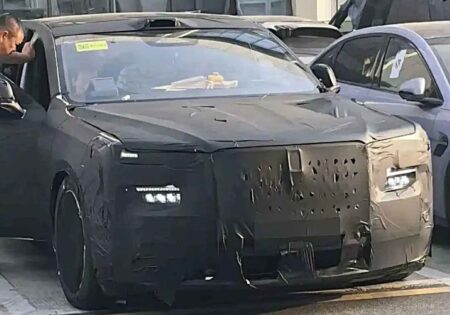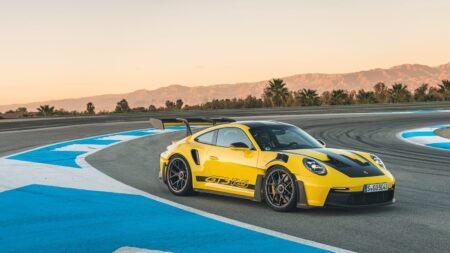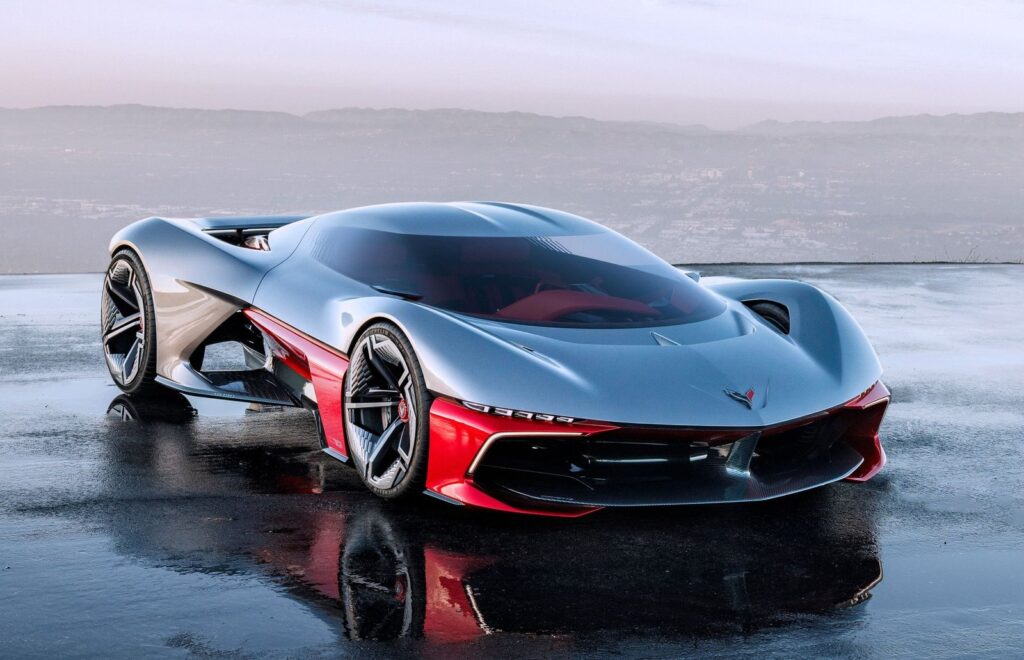
The next Chevrolet Corvette is heading into an unusually delicate moment.
After the C8 moved the model to a mid-engine layout and pushed it closer to supercar territory, the temptation would be obvious: keep climbing until it stands nose-to-nose with Europe’s most famous exotics.
That isn’t the plan, at least not according to Corvette chief engineer Tony Roma.

At a glance
- The next-generation Chevrolet Corvette C9 is being positioned as a better and faster Corvette, not a direct Lamborghini or Ferrari rival.
- Corvette chief engineer Tony Roma says the car must preserve the model’s core mix of strong performance and value.
- A manual gearbox has customer interest and Roma’s personal support, but its technical and financial viability remains uncertain.
A faster Corvette without an exotic brief
Roma’s view of the C9 sounds less like a reinvention and more like a sharpening of the same idea that has carried the Corvette for decades.
“It needs to be a Corvette at its core,” Roma said, while explaining that the next model should give customers more performance without walking away from the car’s value proposition.
That point matters because the Corvette’s current trajectory could easily be misread.

The C8’s mid-engine architecture changed how the car is perceived, especially among buyers who once saw that configuration as the territory of Ferrari, Lamborghini and McLaren.
But a mid-engine layout doesn’t automatically mean Chevrolet wants the Corvette to become a European exotic with a Chevrolet badge.
“Even though we’re a mid-engine car now, there’s a lot of people that think that means we need to go chase Lamborghini and Ferrari tit-for-tat,” Roma said. “That’s not the core of what a Corvette is.”
Mid-engine credibility, American priorities
The C8 already proved that Chevrolet could move the Corvette into a more serious performance category without abandoning the model’s identity.
The coming C9 now has to build on that shift without turning the car into something culturally and commercially different.
Roma’s stated approach is straightforward: make the next Corvette better, newer and faster.
That may sound simple, but it draws a clear line between improving the Corvette and chasing a rival’s personality.
The distinction is important for a car that has always occupied its own lane.
The Corvette’s appeal has never rested solely on lap times or badge theater, but on the idea that serious performance could be delivered with a more accessible, distinctly American character.
That balance is what gives the next car its real challenge.
If the C9 becomes more capable, it will inevitably invite comparisons with far more expensive machinery, but Roma’s comments suggest Chevrolet is more interested in protecting the Corvette formula than winning every exotic-car comparison by imitation.
The manual question is still alive
One of the more enthusiast-focused possibilities around the next Corvette is the return of a manual gearbox.
Roma acknowledged that customer demand exists, and he also said he would personally love to see one.
That doesn’t make it a certainty.
The obstacle is whether Chevrolet can make a manual transmission work from both a financial and technical standpoint.
In today’s performance-car market, that’s a serious question rather than a small packaging decision.
A manual could give the C9 a more emotional connection with long-time Corvette buyers, particularly those who still associate the model with driver involvement as much as outright speed.
For now, though, it remains a possibility rather than a confirmed feature.
What the C9 needs to protect
The next Corvette doesn’t need to pretend it isn’t fast enough to be mentioned in supercar company.
The more interesting point is that Chevrolet seems unwilling to let that attention dictate the brief.
For buyers, that could be good news.
A C9 shaped around Corvette values rather than exotic-car mimicry would still have room to become quicker and more sophisticated, while keeping the sense of purpose that has made the nameplate endure.
The message from Roma is measured but clear: the next Corvette may move forward, but it won’t do so by forgetting what it is.