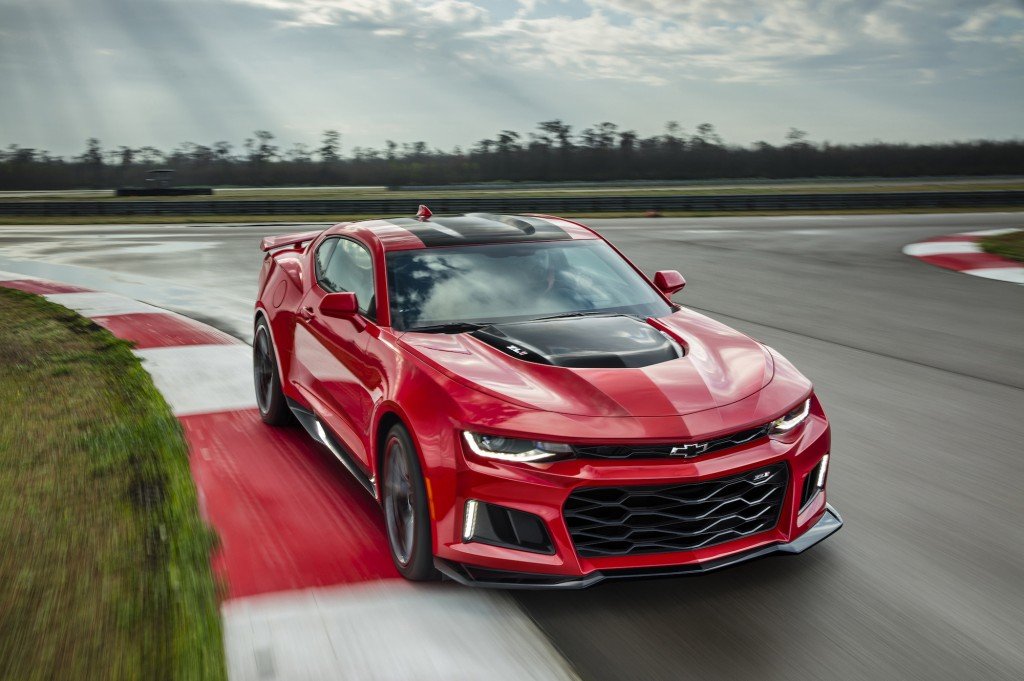
The Camaro name has always carried coupe-shaped baggage, but Chevrolet may be looking at a more unexpected way to bring it back.
Fresh product-plan chatter points to a sporty, rear-wheel-drive sedan wearing the Camaro badge, powered by an internal-combustion engine and aimed at keeping Chevrolet in the performance-car conversation beyond the current muscle-car era.
If it happens, the move would be a major shift for one of GM’s most recognisable nameplates.
At a glance
- Chevrolet is understood to be considering a Camaro revival as a sporty sedan rather than a traditional coupe.
- The proposed model could use rear-wheel drive, gasoline power and architecture shared with the next Cadillac CT5.
- An arrival around 2028 has been suggested, with Michigan production at GM’s Lansing Grand River Assembly plant under discussion.
A Camaro badge on four doors
A four-door Camaro would be a significant departure, but not necessarily a strange one.
The performance sedan has become a rare thing in the mainstream American market, and that scarcity may be exactly where Chevrolet sees an opening.
The Camaro coupe left showrooms with a fiercely loyal following, but its packaging was always narrow in appeal.

A sedan could give the nameplate more daily usability while preserving the fundamentals that matter most to enthusiasts, namely rear-wheel drive, a low stance and a gasoline engine.
That last point is important.
With many future performance projects leaning heavily into electrification, a combustion-powered Camaro sedan would give Chevrolet a more traditional enthusiast offering at a time when that formula is becoming less common.

Shared bones with the next Cadillac CT5
The most intriguing detail is the expected connection to the next-generation Cadillac CT5.
Using a shared GM architecture would make the business case easier, especially for a sedan in a market that has been dominated by crossovers and trucks.
Cadillac’s CT5 already sits in the rear-drive performance-sedan world, and that gives Chevrolet a logical foundation if it wants to build something sportier without starting from scratch.

It also helps explain why the Camaro name might return in a different shape.
A clean-sheet Camaro coupe would be a romantic idea, but a sedan with shared underpinnings could be more practical for production, pricing and showroom relevance.
Michigan production and a possible 2028 window
The car is believed to be part of Chevrolet’s broader five-year product planning, with a potential debut around 2028.

Production has been linked to GM’s Lansing Grand River Assembly plant in Michigan, a facility already closely associated with rear-drive GM passenger cars.
Nothing has been formally locked in publicly, so the timeline should be treated with some caution.
Still, the idea fits a wider industry pattern where brands are looking for ways to keep emotional nameplates alive without simply repeating the past.
A new rival for Ford’s rumoured Mustang Mach-4
If Chevrolet does move ahead, the obvious competitive shadow is Ford’s long-rumoured Mustang Mach-4.
A Camaro sedan would give Chevrolet a direct answer to the idea of a four-door performance model built around a famous American name.
That contest would be less about old-school pony-car purity and more about who can translate heritage into something buyers will actually use every day.
Analyst Stephanie Brinley of AutoIntelligence at Mobility Global has noted that a sedan could still contribute meaningfully to Chevrolet’s portfolio, which is a useful reminder that not every future product has to be a crossover to make sense.
For Chevrolet, the appeal is clear.
A rear-drive Camaro sedan could add personality to the lineup, give loyalists something to debate and attract buyers who want performance without sacrificing four-door practicality.
The risk is just as clear.
The Camaro name is emotionally loaded, and a sedan would need to feel genuinely sharp rather than simply borrow a badge.
If Chevrolet gets the proportions, powertrain and chassis tuning right, this could be more than a nostalgic revival.
It could be a smart way to keep one of America’s great performance names relevant in a very different market.